Categories
Video Analysis

Best Video Analysis Software for XbotGo Falcon 2026 | Upload & Analyse Your Footage

Contents

Best Video Analysis Software for XbotGo Falcon 2026 | Upload & Analyse Your Footage

The launch of the XbotGo Falcon has changed the game for portable sports recording. By delivering a standalone 4K AI camera that captures every play with stunning clarity—all without a mandatory hardware subscription—XbotGo has given coaches a powerful, independent filming solution.

But as any experienced coach knows, recording the game is only the beginning.

Once the final whistle blows, you’re left with a full 4K match file—either on a microSD card or in the cloud. And while the Falcon excels at capturing the game, it doesn’t include built-in video analysis software.

To turn your recordings into real coaching insights, you need video analysis software for XbotGo Falcon, that allows you to upload and work with your own footage. In 2026, the most effective solution for this workflow is zone14 COACH.

What Can You Do With XbotGo Falcon Footage?

After recording with the Falcon, most coaches quickly realize that simply watching the match back isn’t enough. You want to understand, why nd why things happened—not just what happened. That means being able to isolate key moments, review tactical decisions, and build a clearer picture of performance over time.

In practical terms, coaches typically use zone14 COACH, to:

  • Review key phases of playwithout scrolling through 90 minutes of raw video.

  • Organize clips into themes (e.g., Corner Defense, Pressing Structure).

  • Track patternsacross multiple matches to see if errors are recurring.

  • Give clear, visual feedbackthat players can actually digest.

Without dedicated software, this becomes a manual and time-consuming process. With the right tools, your footage becomes something you can actively coach from—not just store in a "digital graveyard."

zone14 COACH

Your camera. Our cloud. Full flexibility.

Why Your Players Need More Than Just a 4K Recording

The Falcon is an elite cameraman—but it’s not a tactical analyst. Watching a full match from start to finish can give you a general impression, but it rarely reveals consistent patterns or recurring issues. Important details get lost in the noise, and feedback stays broad rather than actionable.

To properly develop your team, you need a way to break the game down into moments, themes, and decisions. Players—especially in youth academies—learn best through short, punchy clips. A 90-minute raw video is often overwhelming for them. zone14 COACH acts as the analysis layer on top of your XbotGo recordings, helping you turn raw footage into structured insight you can actually use in training and match preparation.

Upload and Store Your XbotGo Falcon Footage in the Cloud

One of the biggest advantages of using dedicated video analysis software for XbotGo Falcon is having a reliable system to upload and manage your footage.

Instead of moving files between SD cards, phones, and laptops, you can upload your matches into a secure cloud environment where everything is organized automatically. Over the course of a season, this becomes essential for monitoring player development.

Your full match library is accessible from any device, whether you’re reviewing games at home or preparing a session at the pitch. The platform also handles large 4K files efficiently, ensuring smooth playback during analysis—something that quickly becomes a limitation when working locally or via standard cloud drives.

Identify Tactical Patterns with Professional Playlists

Basic highlight clips show the "what," but our Playlist feature helps you understand the "how." In zone14 COACH, you can curate specific clips into thematic reels that serve a higher strategic purpose.

This allows you to move beyond isolated moments and understand how your team is consistently behaving:

  • Analyze Trends: Are you consistently losing possession in the same zone? In a playlist, these patterns become undeniable.

  • Monitor Player Development: Create a playlist of a specific player's involvements over four games to track their growth. It’s the ultimate tool for showing a player side-by-side clips of their technical execution.

  • Targeted Feedback: Produce specific, short reels for your units (Defenders, Midfielders, Attackers) to make your tactical meetings 10x more efficient.

zone14 REPLAY

Analyse in minutes, not hours.

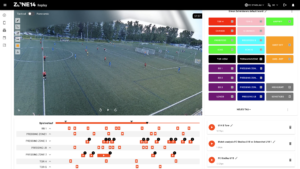
Analysis becomes significantly more effective when players can clearly see what you’re explaining. Within zone14 COACH you can pause your Falcon footage and draw directly onto the video to highlight positioning, movement, and space.

Whether you’re showing where a defensive line lost its shape or illustrating a missed run, these visual cues make feedback concrete. Because these annotations are saved within your clips, you’re always ready to present structured, visual feedback—whether in a team meeting or on the training ground.

Taktische Zeichnungen für dein XbotGo Material

Bring Analysis to the Pitch with Mobile Access

Coaching doesn’t happen behind a desk—it happens on the pitch. With mobile access through the zone14 REPLAY App you can take your analysis with you.

Clips can be reviewed during training sessions or shown to players immediately after a drill. This shortens the feedback loop considerably. Instead of describing a situation from memory, you can show it instantly, making your coaching more direct and easier for players to understand. You can also easily extract and download clipsto share via team messaging apps or for use in external presentations.

The Workflow: 4 Steps from Falcon to Feedback

The transition from recording to structured analysis is designed to be straightforward:

  1. Record: Capture the match with your XbotGo Falcon in 4K.

  2. Transfer: Move the file from your camera to your computer (or pull from the XbotGo Cloud).

  3. Upload Drag and drop the .mp4 into the zone14 Cloud.

  4. Analyse: Use your COACHdashboard to tag moments, draw tactical lines, and build your playlists.

Video Analysis Software for XbotGo and Self-Recorded Footage

Many traditional platforms are built around closed ecosystems or full-club infrastructure. While we offer the zone14 TWO for clubs wanting a fully automated, fixed-camera experience, zone14 COACH is designed for the modern, mobile coach.

If you’re specifically looking for football video analysis software that allows you to upload your own footage—rather than being forced into a specific hardware contract—this approach fits naturally alongside the XbotGo Falcon.

zone14 COACH

Your camera. Our cloud. Full flexibility.

Conclusion: Don’t Just Record. Coach.

The XbotGo Falcon gives you the ability to capture the game. zone14 COACH gives you the ability to understand it.

If your footage is only being watched back without structure—or not reviewed at all—you’re missing a major opportunity to improve performance. With the right video analysis software for XbotGo Falcon, every match becomes something you can learn from, build on, and use to guide your team forward.

Categories
Frauen im Fußball

KURIER über unseren Partnerverein USC Litschau: Ein starkes Zeichen für Frauen im Fußball

Contents

KURIER über unseren Partnerverein USC Litschau: Ein starkes Zeichen für Frauen im Fußball

Fokus: Frauen im Fußball 2026

Im Rahmen unserer Initiative „Frauen im Fußball“ teilen wir mit freundlicher Genehmigung des Kurier den aktuellen Beitrag über unseren Partnerverein USC Litschau. Der Artikel beleuchtet die Entwicklung des neu gegründeten Frauenteams in der Gebietsliga und zeigt, mit welchem Einsatz und Zusammenhalt dort gearbeitet wird.

Als Teil unserer Community bei zone14 steht der USC Litschau beispielhaft für strukturellen Aufbau und kontinuierliche Entwicklung im Vereinsfußball. Der Beitrag macht sichtbar, was auf dieser Ebene tagtäglich geleistet wird – oft abseits großer Schlagzeilen.

Mehr über unsere Partnerschaft mit dem USC Litschau erfahren Sie hier.

Den vollständigen Originalartikel können Sie hier auf der Website von Kurier lesen.

Der Höhepunkt unserer Kampagne „Fokus: Frauen im Fußball“ ist „Frauen im Fußball – The Talk“, der 2026 bereits zum dritten Mal stattfindet. Im Mittelpunkt stehen aktuelle Entwicklungen, bestehende strukturelle Hürden sowie konkrete Ansatzpunkte für Vereine, Verbände und Ausbildung – mit anschließendem offenen Austausch und Networking. Sichere dir deine kostenlosen Tickets hier.

Torverhältnis 0:60 - warum dieses Frauen-Team trotzdem Spaß hat

Die Frauen des USC Litschau haben noch keine Partie gewonnen und warten auch noch auf ihren ersten Treffer. Der Freude am Spiel tut das jedoch keinen Abbruch.

Wenn Nadine Polt, Hannah Zemansky, Angelika Hauer und Stefanie Altmann über Fußball reden, dann glaubt man nicht, dass sie bisher noch kein Spiel gewonnen haben. 60 Tore hat der USC Litschau in den neun Partien im Herbst kassiert, kein einziges geschossen. Immerhin steht aber ein Punkt auf der Habenseite. Die Motivation ist dennoch ungebrochen, die Vorfreude aufs Frühjahr groß. In der nördlichsten Stadt Österreichs, dort, wo der Ball schon einmal in Tschechien landen kann, wenn man nicht genau zielt, sind Siege und Tore nicht alles, was zählt. Aber schön wären sie schon.

Es war im Herbst 2024, als sich Initiatorin Lina Blach und ein paar junge Frauen dachten, sie würden selbst auch gerne Fußball spielen. „Die Vorgabe des Obmanns waren neun, zehn Spielerinnen, dann könnten wir das ganze im Verein machen“, erinnert sich Hannah Zemansky. Und dann ist alles schnell gegangen. Aus einem Facebook-Aufruf wurde eine WhatsApp-Gruppe, wo dann auch das erste Training am 21. Dezember angekündigt wurde. Und es kamen tatsächlich mehr als 20 junge Frauen. „Der Verein ist von Anfang an voll hinter uns gestanden“, erinnert sich Nadine Polt. Bis zum ersten Spiel sollte es aber noch dauern, zunächst war Training angesagt.

Voller Einsatz

Und da kommt Trainer Markus Steiner ins Spiel, der gemeinsam mit seinem Co Markus Blach die Fäden zieht. Zu Beginn hat es auch noch Unterstützung von der Waldviertler Trainerlegende Werner Grubeck gegeben. „Wir schaukeln das mit den Mädels“, sagt Steiner stolz. Der 44-Jährige hat früher selbst gekickt, den Trainerjob bei einem Frauen-Team hat er nicht kommen sehen. „Das war Zufall. Ich bin da reingerutscht“, erklärt er. „Und jetzt kommt er nicht mehr los“, ergänzt Nadine Polt lachend. Der Spaß und die Gemeinschaft dürfen nicht zu kurz kommen bei den Frauen des USC Litschau, das merkt man sofort.

Im Rahmen des 100-Jahr-Jubiläums der Männer-Mannschaft gab es am 1. Mai 2025 ein erstes Match – das verloren ging. Aber der Hunger war geweckt. Im Sommer stieg Litschau in die Gebietsliga Mostviertel/Waldviertel ein.

Frauen im Fußball: The Talk

17. März | FH Technikum Wien

Frauen im Fußball – The Talk“ bringt Expertinnen, Spielerinnen und Entscheidungsträger*innen zusammen, um über Entwicklungen, Herausforderungen und Zukunftsperspektiven von Frauen im Fußball zu sprechen. Die Veranstaltung bietet Impulse, Diskussion und Raum für Austausch.

Auf den Punkt gebracht

Wer jetzt aber glaubt, dass in Litschau der Ernst des Lebens begann, der irrt. Der Spaß steht im Vordergrund. Das hat auch eine 0:20-Niederlage im ersten Liga-Spiel gegen Herzogenburg nicht geändert. „Im zweiten Spiel haben wir dann nur 0:7 verloren“, erinnert sich Coach Steiner, „und dann habe ich gewusst, dass ich den Mädels das Feiern nicht beibringen muss.“ Das Ziel, in der zweiten Partie einstellig zu bleiben, wurde erreicht – und Feste gehören nun einmal gefeiert, wie sie fallen. Der Zusammenhalt ist groß, die Truppe bunt durchgemischt. Altersmäßig ist von 14 bis 32 alles dabei, Schülerinnen, Lehrerinnen, Studentinnen, Schichtarbeiterinnen, Polizistinnen – und auch Mütter. „Das ist toll“, sagt der Coach, der sich über eine rege Trainingsbeteiligung freuen darf. „16 bis 18 sind schon jedes Mal da.“

Und so war auch das nächste Erfolgserlebnis nur eine Frage der Zeit. In der vierten Runde war Ferschitz/Neuhofen/Amstetten zu Gast. Die Stimmung war wieder einmal toll (Nadine Polt: „Unsere Fans unterstützen uns großartig“) – und die Gastgeberinnen brachten es auf den Punkt. Auf ihren ersten und bisher einzigen Punkt. Dass das 0:0 wie ein Sieg gefeiert wurde, muss nicht extra erwähnt werden.

Vom letzten Platz lassen sich die Mädels nicht verunsichern. „Bei uns steht die Platzierung nicht im Vordergrund, es geht mehr um die Entwicklung“, erklärt Kapitänin Polt. Und das nicht nur auf dem Feld, sondern auch abseits des Platzes. Was jetzt noch fehlt, weiß der Trainer: „Ein Tor.“ Wie sagt man so schön: Ein Tor würde ihrem Spiel gut tun. Und wenn dann auch noch der erste Sieg gelingt, dann sollte man die Party in Litschau keinesfalls verpassen.
„Wir freuen uns sehr, dass ‚Fokus: Frauen im Fußball‘ bereits in das dritte Jahr geht. Was als Initiative begonnen hat, ist zu einem festen Bestandteil unseres Jahres geworden. Die kontinuierliche Unterstützung der Vereine und unserer Partner*innen zeigt, wie relevant dieses Thema ist. Mehr Sichtbarkeit und Chancengleichheit für Frauen im Fußball entstehen nicht durch einzelne Aktionen, sondern durch langfristiges Engagement.“
Simon Schmiderer
zone14 - Co-CEO und Mitbegründer
Share on Facebook
Share on Twitter
Share on Linkedin
More related content from zone14
Categories
Frauen im Fußball

Interview mit Irene Göschl: Mit Herzblut für mehr Sichtbarkeit von Frauen im Fußball

Contents

Interview mit Irene Göschl: Mit Herzblut für mehr Sichtbarkeit von Frauen im Fußball

Fokus: Frauen im Fußball 2026

Im Rahmen unserer Kampagne „Frauen im Fußball – Fokus“ freuen wir uns, diesmal eine besonders engagierte Stimme aus dem österreichischen Fußball vorzustellen: Irene Göschl. Mit großer Leidenschaft setzt sie sich seit Jahren für mehr Sichtbarkeit und Wertschätzung ein. 

Im Interview spricht sie über ihren persönlichen Weg zum Fußball, prägende Erlebnisse und strukturelle Herausforderungen. Mit beeindruckender Reichweite in den sozialen Medien zeigt sie, welches Potenzial in authentischem, ehrenamtlichem Engagement steckt – und wo aus ihrer Sicht noch entscheidende Schritte notwendig sind.

Der Höhepunkt unserer Kampagne „Fokus: Frauen im Fußball“ ist „Frauen im Fußball – The Talk“, der 2026 bereits zum dritten Mal stattfindet. Im Mittelpunkt stehen aktuelle Entwicklungen, bestehende strukturelle Hürden sowie konkrete Ansatzpunkte für Vereine, Verbände und Ausbildung – mit anschließendem offenen Austausch und Networking. Sichere dir deine kostenlosen Tickets hier.

Wer bist du und wie bist du zum Fußball gekommen?

Mein Name ist Irene Göschl, ich bin seit 27 Jahren mit meinem Mann Heimo verheiratet, Mutter von zwei wunderbaren, inzwischen erwachsenen Kindern, Julian (27) und Helena (21). Mein Mann und ich leben im schönen Ennstal mit Blick auf den Grimming. Bei uns zuhause herrscht leichte Überzahl an Vierbeinern, unsere Hündin Amy und die beiden Katerchen Wasabi und Maki sorgen dafür, dass es nie langweilig wird.

Fußball begleitet mich eigentlich, seit ich denken kann. In meiner Kindheit und Jugend habe ich jede freie Minute mit den Jungs gekickt, ich habe es einfach geliebt. 

Irene Göschl im Stadion von Austria Wien. Foto: Gerhard Breitschopf

Es stand auch ein Angebot vom 1. DFC Leoben im Raum, damals höchste Liga. Für mich wäre das ein Traum gewesen. Aber mein Vater hatte große Bedenken wegen der Verletzungsgefahr, weil ich im elterlichen Betrieb mitarbeitete. War schon bitter für mich, aber damals war es halt so.

Ich verschrieb mich dann mit Haut und Haar dem Männerfußball bis ins Jahr 2017. Der Wendepunkt kam eigentlich im Urlaub 2017. Die Schulfreundin meiner Tochter Ines, damals im LAZ Stainach, war mit uns unterwegs. Und plötzlich saßen wir nicht nur am Strand, sondern auch gemeinsam vor dem Fernseher bei den EM Spielen der österreichischen Frauen-Nationalmannschaft. Ich war völlig begeistert.

Als sie später in die Akademie nach St. Pölten wechselte und 2019 bei der U17-EM in Bulgarien spielte, war ich in Bulgarien dabei. Dieses Erlebnis war für mich unvergesslich. Da habe ich gemerkt, das ist mehr als nur Zuschauen. Das ist Herzblut.

Ich begann, Bilder und Eindrücke auf meinen privaten Facebook- und Instagram-Accounts zu teilen. Weil Ines in der 1. Bundesliga spielte, war ich oft live bei ihren Spielen – und irgendwann wurde aus dem „ein bisschen posten“ auf meinen privaten Accounts eine echte Mission.

Was war der Moment, in dem dir klar wurde: Frauen im Fußball bekommen nicht die Aufmerksamkeit, die sie verdienen – und ich will daran etwas ändern und starte mit Social Media?

Der entscheidende Moment war kein einzelner Augenblick, sondern ein Prozess.

Ich habe gesehen, welchen unglaublichen Aufwand Spielerinnen und Eltern betreiben, schon im LAZ, später in der Akademie St. Pölten. Fahrten, Trainingszeiten, Organisation, finanzielle Belastung und trotzdem kaum mediale Aufmerksamkeit und nur minimale finanzielle Unterstützung und so gut wie keine Wertschätzung. Gleichzeitig bekommen Burschen teilweise schon ab der Oberliga eine deutlich bessere Förderung.

Da stimmt einfach etwas nicht.

Ich begann immer aktiver zu posten, Fotos zu teilen, Kommentare zu schreiben bei Vereinen, beim ÖFB, überall dort, wo ich dachte: Jetzt muss man doch hinschauen!

Seit zwei Jahren mache ich das sehr intensiv. Und ganz ehrlich: Für jemanden, der mit Social Media vorher wenig am Hut hatte, war das Learning by Doing.

Da ich aus gesundheitlichen Gründen schon seit Jahren zuhause bin, die Kinder sind ausgezogen und der Frauenfußball hat mir unglaublich viel Kraft gegeben. Ich konnte endlich das leben, was ich in meiner Jugend nicht durfte. Vielleicht mit ein paar Jahren Verspätung – aber mit voller Leidenschaft.

Ich habe Spielerinnen, Trainer, Eltern kennengelernt, obwohl ich eigentlich eher zurückgezogen lebe. Und aus meinen privaten Accounts ist etwas entstanden, womit ich nie gerechnet hätte.

Mein Tag beginnt mittlerweile damit, Nachrichten zu beantworten – und das sind nicht wenige. Danach geht es mit Content weiter. Es erfüllt mich, wieder eine Aufgabe zu haben. Eine, die Sinn macht.

Dass ich perfektionistisch bin, macht es nicht immer einfacher – ich will immer noch mehr machen. Mein Körper zeigt mir aber immer sehr deutlich auf, wo meine Grenzen sind.

Umso dankbarer bin ich, dass mein Mann selbst großer Fan des Frauenfußballs ist. Er bringt unglaublich viel Verständnis auf, fährt mich zu Spielen – und unterstützt mich voll und dafür bin ich sehr dankbar.

Welche Hürden hast du aus deiner eigenen Erfahrung im Leistungs- und Amateurfusball am Stärksten wahrgenommen – und wo siehst du den größten Reformbedarf?

Ganz ehrlich: Meine größte Hürde war damals schlicht und einfach, dass ich nicht spielen durfte. Ich hätte alles dafür gegeben, beim 1. DFC Leoben aufzulaufen.

Heute sehe ich andere Hürden – strukturelle.

Und ich meine damit nicht, dass Frauen das Gleiche verdienen müssen wie Männer. Das ist Blödsinn. Aber es geht um Grundlagen:

  • strukturierte Trainingsprogramme
  • ordentliche Versicherungen
  • Zugang zu Fitnessmöglichkeiten
  • Physiotherapie
  • Sportpsychologische Betreuung
  • und vor allem: Wertschätzung
Irene Göschl mit Laura Wienroither. Foto: ÖFB

Es muss das Ziel sein, dass man in der Admiral Frauen-Bundesliga irgendwann vom Fußball leben kann. Vielleicht nicht morgen – aber doch bald. Wenn das nicht das Ziel ist, dann fehlt die Vision.

Manchmal habe ich leider das Gefühl, dass der Frauenfußball in Österreich eher gebremst als gefördert wird.

Auch bei den neuen Lizenzbestimmungen bin ich skeptisch. Natürlich braucht es Professionalität – aber es darf nicht so sein, dass am Ende nur noch große Vereine eine Chance haben. Es sollten die Besten spielen.

Viel wichtiger wäre meiner Meinung nach eine Aufstockung auf 12 Teams. In Deutschland ist man diesen Weg längst gegangen – die Frauen-Bundesliga wurde bereits auf 14 Mannschaften erweitert und eine weitere Aufstockung steht im Raum.

Da muss Österreich aufpassen, nicht den Anschluss zu verlieren.

Und dann kommen wir zu Social Media – der größten Chance überhaupt.
Ich hatte in der Herbstsaison zwischen 800.000 und 950.000 Aufrufe. Als Privatperson. Ehrenamtlich. Aus Leidenschaft. An dieser Stelle möchte ich mich besonders bei den vielen großartigen Fotografen bedanken, die mir ihre Fotos kostenlos zur Verfügung stellen und damit maßgeblich dazu beitragen, den Frauenfußball sichtbarer zu machen.

Stell dir vor, was möglich wäre, wenn es von offizieller Seite professionell betreute Accounts gäbe – vom ÖFB oder der Liga – die täglich hochwertigen Content liefern.

Und ganz wichtig: Jeder Verein der Admiral Frauen-Bundesliga sollte einen eigenen, gut betreuten Account haben – nicht „irgendwo“ beim Männerverein mitlaufen. Das ist keine Wertschätzung. Sichtbarkeit beginnt bei der eigenen Bühne.

Welche Chance im Frauenfußball wird aktuell am meisten unterschätzt-und was müsste passieren, damit sie genutzt wird?

Am meisten unterschätzt wird meiner Meinung nach die emotionale Kraft des Frauenfußballs.

Die Identifikation ist unglaublich hoch. Die Spielerinnen sind nahbar, authentisch, bodenständig – junge Mädchen haben echte Vorbilder, die erreichbar wirken. Das ist ein riesiges Potenzial.

Was passieren müsste?

  • Mehr mediale Präsenz
  • Professionelle Social-Media-Strategien
  • Ausbau der Liga
  • Klare langfristige Vision
  • Und vor allem: Mut

Frauenfußball ist kein „Nebenprodukt“. Er ist eine eigenständige, starke Sportart mit enormem Wachstumspotenzial.

Und ich werde weiter meinen Teil dazu beitragen, so gut es mir möglich ist – mit Herz, mit Leidenschaft und wahrscheinlich weiterhin mit sehr wenig Zeit für mein Privatleben. Aber wenn ich sehe, wie sich junge Spielerinnen entwickeln und mehr Aufmerksamkeit bekommen, dann weiß ich: Es lohnt sich.

Frauen im Fußball: The Talk

17. März | FH Technikum Wien

Frauen im Fußball – The Talk“ bringt Expertinnen, Spielerinnen und Entscheidungsträger*innen zusammen, um über Entwicklungen, Herausforderungen und Zukunftsperspektiven von Frauen im Fußball zu sprechen. Die Veranstaltung bietet Impulse, Diskussion und Raum für Austausch.

Was ist die wichtigste persönliche Botschaft, die du Menschen mitgeben möchtest, die den Frauenfußball verfolgen, fördern oder selbst darin aktiv sind?

Meine wichtigste Botschaft ist: Nehmt den Frauen im Fußball ernst – und nehmt euch selbst ernst. Jede Spielerin investiert genauso viel Herzblut, Disziplin und Leidenschaft wie jeder andere Leistungssportler auch und verdient dafür Respekt und faire Bedingungen. Sichtbarkeit entsteht nicht von allein – sie entsteht, wenn Fans kommen, wenn Verantwortliche mutig investieren und wenn wir alle darüber sprechen. Frauenfußball ist kein Randthema, sondern eine echte Chance mit enormem Potenzial. Und wenn jeder ein kleines Stück beiträgt, können wir gemeinsam Großes bewegen. 

Zu dieser Anmerkung: “Manchmal habe ich leider das Gefühl, dass der Frauenfußball in Österreich eher gebremst als gefördert wird”.

Nach zwei sehr erfolgreichen EM-Teilnahmen wurde jedes Mal groß angekündigt, dass man diese Chance nicht wieder verschlafen dürfe – und trotzdem habe ich immer wieder das Gefühl, dass der Frauenfußball in Österreich eher gebremst als gefördert wird. Die Worte sind schnell gesagt, aber die Taten danach wirken oft halbherzig. Es beginnt bei den Signalen nach außen: Ein Spiel gegen die Europameisterinnen in einem kleinen Stadion wie Wiener Neustadt, obwohl man mit der richtigen Planung deutlich größere Stadien hätte füllen können. Genau solche Entscheidungen zeigen, welchen Stellenwert der Frauenfußball tatsächlich hat.

Sportlich wirkt es ähnlich konsequent los. Irene Fuhrmann halte ich für eine sehr gute Trainerin, aber das Amt als Teamchefin kam meiner Meinung nach zu früh. Statt die Chance zu nutzen, eine wirklich erfahrene Lösung für diese starke Generation zu holen, wurde intern nachbesetzt – nach dem Motto: „wird schon passen“. Was das bedeuten kann, sehen wir gerade. Wenn nicht rasch gegengesteuert wird, befürchte ich, dass wir in naher Zukunft weder EM noch WM erreichen – und das wäre besonders bitter für die erfahrenen Spielerinnen, die sich das verdient haben.

Dazu kommt die finanzielle Schieflage: Im Frauenfußball heißt es schnell, es sei zu teuer oder nicht machbar – während bei den Herren große Budgets und riesige Delegationen zu Großereignissen selbstverständlich sind. Warum wird im Frauenbereich nicht endlich aufgestockt?

Ich habe gesehen, wie stark Teams wie die Wildcats und Rapid sind. Umso mehr sorgt mich, dass neue Lizenzbestimmungen in der Admiral Frauen Bundesliga ausgerechnet jetzt zum Thema werden – und dass es am Ende sportlich erfolgreiche Vereine, aber kleine Vereine wie z.B. die Wildcats, treffen könnte, weil die Rahmenbedingungen plötzlich so gesetzt sind, dass es für manche kaum mehr machbar ist.

Diese Schieflage zeigt sich leider oft auch in der täglichen Praxis. Viele, die sich – oft sogar ehrenamtlich und mit viel Leidenschaft – für die Sichtbarkeit des Sports einsetzen, stoßen auf unnötige bürokratische Hürden. Wenn der Zugang zu Pressematerial oder offizieller Unterstützung so erschwert wird, bleibt viel Potenzial für mehr Reichweite ungenutzt. Es wirkt manchmal so, als stünde man sich hier bei der aktiven Förderung der Sichtbarkeit selbst im Weg. Dabei wäre genau das der Schlüssel, um mehr Menschen zu begeistern und dem Frauenfußball die Wertschätzung zu geben, die er längst verdient.

„Wir freuen uns sehr, dass ‚Fokus: Frauen im Fußball‘ bereits in das dritte Jahr geht. Was als Initiative begonnen hat, ist zu einem festen Bestandteil unseres Jahres geworden. Die kontinuierliche Unterstützung der Vereine und unserer Partner*innen zeigt, wie relevant dieses Thema ist. Mehr Sichtbarkeit und Chancengleichheit für Frauen im Fußball entstehen nicht durch einzelne Aktionen, sondern durch langfristiges Engagement.“
Simon Schmiderer
zone14 - Co-CEO und Mitbegründer
Share on Facebook
Share on Twitter
Share on Linkedin
More related content from zone14
Categories
Frauen im Fußball

Fokus: Frauen im Fußball | KURIER-Interview mit Alexander Schriebl

Contents

Fokus: Frauen im Fußball | KURIER-Interview mit Alexander Schriebl

Fokus: Frauen im Fußball 2026

Im Rahmen unserer Kampagne „Frauen im Fußball – Fokus“ freuen wir uns über die Partnerschaft mit Kurier, um die Sichtbarkeit von Frauen im Fußball weiter zu stärken und zentrale Themen einem noch breiteren Publikum zugänglich zu machen.

Mit freundlicher Genehmigung von Kurier veröffentlichen wir hier das Interview mit ÖFB-Frauenteamchef Alexander Schriebl, in dem er über die Entwicklung des Nationalteams, sportliche Zielsetzungen sowie die Herausforderungen auf dem Weg zur WM-Qualifikation spricht.

Den vollständigen Originalartikel können Sie hier auf der Website von Kurier lesen.

Der Höhepunkt unserer Kampagne „Fokus: Frauen im Fußball“ ist „Frauen im Fußball – The Talk“, der 2026 bereits zum dritten Mal stattfindet. Im Mittelpunkt stehen aktuelle Entwicklungen, bestehende strukturelle Hürden sowie konkrete Ansatzpunkte für Vereine, Verbände und Ausbildung – mit anschließendem offenen Austausch und Networking. Sichere dir deine kostenlosen Tickets hier.

Ein Jahr ÖFB-Teamchef: "Gegen Stärkere brauchen wir einen Plan B"

Ein Jahr, heißt es, braucht man, um in einem neuen Job anzukommen. Am 21. Jänner 2025 trat Alexander Schriebl, zuvor Coach des FC Bergheim, die Nachfolge von Irene Fuhrmann beim ÖFB-Frauenteam an. Im KURIER blickt er zurück und nach vorne.

Sind Sie in Ihrem Amt angekommen?

Ja. Man kennt die Abläufe, kennt die Spielerinnen. Am Anfang war es schon sehr herausfordernd. Es gab wenig Anlaufzeit, es ging sofort um Ergebnisse. Das Jahr ging schnell vorbei. Erst im Dezember, nach Trainingslager und Testspielen, war etwas Zeit zum Durchschnaufen und Zurückblicken.

Was hat sich verbessert in dem Jahr?

Ich bin sehr zufrieden mit dem Start. Und mit vielen Spielen, wenn auch nicht immer mit den Ergebnissen. Wir hatten riesige Herausforderungen, etwa die Verletzten vor den Play-offs – es war richtig toll, wie die Spielerinnen das gemeistert haben. Wir mussten uns erst finden: Wie wir spielen wollen, unsere neue Ausrichtung, eine Identität schaffen – einen Fußball mit Wiedererkennungswert.

Dieser Spielstil hat auch Herausforderungen offenbart. Die hohe Intensität zum Beispiel. Wie kann man als Teamchef dafür sorgen, dass das intensive Spiel 90 Minuten durchgehalten wird?

In erster Linie braucht man das Commitment der Spielerinnen. Das war von Anfang an da. Dass man sich körperlich verbessert, ist etwas, das die Spielerinnen selbst übernehmen müssen – auch mit Unterstützung unserer Athletikabteilung. Wir können Gegner, die auf ähnlichem Niveau sind wie wir, mit unserer Spielweise kontrollieren, teilweise auch dominieren. Gegen Stärkere haben wir gemerkt, dass wir einen Plan B brauchen.

Was ist der Plan B?

Vielleicht eine andere Grundordnung schaffen, Pressinglinien verschieben. Wir wollen aber trotzdem, wenn wir den Ball haben, so schnell wie möglich unser Spiel durchziehen und wieder nach vorne kommen.

Wie kann man dem anfänglichen Mangel im Spielaufbau entgegenwirken?

Die Frage ist, wo man das Spiel aufbauen will. Es muss nicht immer vor dem eigenen Tor sein. Wir haben viele Chancen kreiert, auch wenn es nicht immer zu einem Tor gekommen ist. Wenn dann kein Tor fällt, ist die Chance schnell vergessen. Ich bin nicht der Meinung, dass wir die Spiele gewinnen, indem wir gut im Spielaufbau sind, sondern in der Spielfortsetzung und vor allem im Spiel gegen den Ball.

Wie steht es um Commitment und mentale Stärke im Team?

Daran fehlt es sicher nicht! Es braucht eben alles seine Zeit. Wir haben durch die vielen Verletzungen in kürzester Zeit fast 500 Länderspiele an Erfahrung verloren. Die „Wirbelsäule“ des Teams war weg – mit Manuela Zinsberger, Sarah Zadrazil und dann auch noch Marie Höbinger und Lilli Purtscheller. Auf einmal hast du eine Situation, in der von heute auf morgen andere in die Verantwortung rutschen.

Frauen im Fußball: The Talk

17. März | FH Technikum Wien

Frauen im Fußball – The Talk“ bringt Expertinnen, Spielerinnen und Entscheidungsträger*innen zusammen, um über Entwicklungen, Herausforderungen und Zukunftsperspektiven von Frauen im Fußball zu sprechen. Die Veranstaltung bietet Impulse, Diskussion und Raum für Austausch.

Sie haben die Chancenauswertung erwähnt. Fehlt dem Team der „Killerinstinkt“?

Das sind die Zusatzaufgaben der Profis. Daran kann jede nur selbst arbeiten. Manchmal kriegst du nur ein, zwei Möglichkeiten im Spiel, da sollte es dann funktionieren. Und wenn nicht, fängt man zum Überlegen an. Als Trainerteam legen wir nicht den Fokus darauf, dass die Chancen nicht verwertet werden, sondern darauf, dass wir sie uns erspielt haben. Natürlich wäre es schön, wenn wir aus jeder Chance ein Tor machen. Aber vielleicht sind wir das nicht. Vielleicht müssen wir daran arbeiten, uns die eine Chance mehr zu erarbeiten. Und wenn wir gut verteidigen, wird das auch reichen.

Haben Sie die richtigen – und auch genügend – Spielerinnen für Ihren Spielstil?

Wir haben auf jeden Fall die richtigen. Das war mir von Anfang an klar. Wenn alle fit sind, dann haben wir auf jeden Fall auch genügend.

Kommt genug nach im Nachwuchs? Tut Österreich genug für den Frauenfußball?

Es werden große Schritte gemacht. Wir sollten mehr in die Professionalität gehen, müssen mehr Mädchen zum Fußball bringen. Da setzen wir mit ÖFB und Frauenakademie die Schritte. In der Bundesliga kommen die Traditionsvereine immer mehr in Schwung, was dem Frauenfußball generell guttut.

Wo steht Österreichs Frauenfußball international?

An die Spitzennationen heranzukommen, wird schwer. Wir müssen darum kämpfen, die Position zu halten. Auch hinter uns wird investiert, ich denke an Polen und Finnland. Ein U23-Team würde uns guttun, damit der Sprung zur Kampfmannschaft nicht so groß ist. Wir müssen Werbung machen und auf Dinge hinweisen, die gut sind. Auf diese Weise können wir neue Vorbilder schaffen.

„Wir freuen uns sehr, dass ‚Fokus: Frauen im Fußball‘ bereits in das dritte Jahr geht. Was als Initiative begonnen hat, ist zu einem festen Bestandteil unseres Jahres geworden. Die kontinuierliche Unterstützung der Vereine und unserer Partner*innen zeigt, wie relevant dieses Thema ist. Mehr Sichtbarkeit und Chancengleichheit für Frauen im Fußball entstehen nicht durch einzelne Aktionen, sondern durch langfristiges Engagement.“
Simon Schmiderer
zone14 - Co-CEO und Mitbegründer
Share on Facebook
Share on Twitter
Share on Linkedin
More related content from zone14
Categories
Frauen im Fußball

zone14 startet die dritte Auflage der Initiative für mehr Sichtbarkeit von Frauen im Fußball

Contents

zone14 startet die dritte Auflage der Initiative für mehr Sichtbarkeit von Frauen im Fußball

Pressemitteilung

Fokus: Frauen im Fußball 2026

Wien, 18. Februar 2026 – Das Wiener KI-Unternehmen zone14 startet heute die dritte Auflage der Initiative „Fokus: Frauen im Fußball“. Von 17. Februar bis 17. März 2026 stehen Frauen im Fußball erneut im Mittelpunkt – mit digitalen Formaten, Interviews, Blog zusammen mit Partnern und einer spannenden Abschlussveranstaltung.

Ziel der Kampagne ist es, die Sichtbarkeit von Frauen im Fußball weiter zu stärken, erzielte Fortschritte sichtbar zu machen und den offenen Austausch über bestehende strukturelle Herausforderungen zu fördern. Gemeinsam mit Vereinen, Spielerinnen, Trainerinnen, Partnerorganisationen und Expert:innen möchte zone14 einen nachhaltigen Beitrag zur Weiterentwicklung und Professionalisierung von Frauen im Fußball leisten.

„Wir freuen uns sehr, dass ‚Fokus: Frauen im Fußball‘ bereits in das dritte Jahr geht. Was als Initiative begonnen hat, ist zu einem festen Bestandteil unseres Jahres geworden. Die kontinuierliche Unterstützung der Vereine und unserer Partner*innen zeigt, wie relevant dieses Thema ist. Mehr Sichtbarkeit und Chancengleichheit für Frauen im Fußball entstehen nicht durch einzelne Aktionen, sondern durch langfristiges Engagement.“
Simon Schmiderer
zone14 - Co-CEO und Mitbegründer

„Fokus: Frauen im Fußball“: The Talk

Den Höhepunkt der Kampagne bildet erneut die Veranstaltung „Frauen im Fußball – The Talk“, die am 17. März 2026 an der FH Technikum Wien (Höchstädtplatz 6, 1200 Wien) stattfindet.

Im Rahmen einer hochkarätig besetzten Podiumsdiskussion diskutieren Spielerinnen, Trainer:innen und Vertreter:innen aus dem Sportbereich über aktuelle Entwicklungen rund um Frauen im Fußball, wirtschaftliche und strukturelle Herausforderungen, konkrete Handlungsfelder für Vereine und Entscheidungsträger:innen sowie die Rolle von Innovation und Technologie für mehr Chancengleichheit. Im Anschluss bietet die Veranstaltung Raum für Austausch und Networking.

Early-Bird-Tickets sind ab sofort kostenlos auf unserem Eventbrite erhältlich.

Get involved!

zone14 lädt Vereine, Sportler:innen, Unternehmen, Medienvertreter:innen und alle Fußballinteressierten ein, sich aktiv an der Kampagne zu beteiligen und Teil des Dialogs zu werden. Weitere Informationen zur Initiative sowie Details zur Veranstaltung finden Sie hier. 

About zone14:
zone14 ist ein Unternehmen im Bereich der KI-basierten Videoanalyse und spezialisiert sich auf innovative und zugängliche Lösungen für den Fußball. Ziel ist es, Vereinen aller Leistungsstufen professionelle Analysetools bereitzustellen und gleichzeitig Initiativen zu unterstützen, die Vielfalt und Chancengleichheit im Sport stärken.

Kontakt für Rückfragen
Oswald Schwarz
Tel: +43 664 3642015
E-Mail: oswald@zone14.ai

Meldemannstraße 18
1200 Wien

Share on Facebook
Share on Twitter
Share on Linkedin
More related content from zone14
Categories
Spieldaten

Objective performance data in amateur football arrives with zone14

Objective performance data in amateur football arrives with zone14

Video-basierte Leistungs- und Taktikanalyse auf Profi-Niveau – ganz ohne GPS-Westen

VIENNA, AUSTRIA - 28th January 2026 - The Austrian Sportstech company zone14 startet mit STATS ein neues Analyse-Modul innerhalb der zone14-Plattform. STATS berechnet Leistungs- und Taktikdaten direkt aus der Spielaufnahme – ohne GPS-Westen, Sensoren oder zusätzliche Hardware auf dem Platz.

Technisch bedeutet das: Das System analysiert das Kamerabild, erkennt Spielerbewegungen und wertet diese automatisch aus. Für den Verein heißt das ganz einfach: Ein Spiel aufnehmen reicht aus, um messbare Leistungsdaten zu bekommen.

Nach dem Abpfiff verlassen sich Trainer oft auf ihr Gefühl. STATS ergänzt dieses Gefühl durch objektive Daten, die zeigen, was wirklich passiert ist – nicht nur, was man glaubt gesehen zu haben.

Aber was macht STATS eigentlich?

STATS nutzt die vorhandene Spielaufnahme, um die Positionen und Bewegungen der Spieler über die gesamte Spielzeit zu verfolgen. Aus diesen Bewegungen berechnet das System unter anderem Laufdistanzen, intensive Läufe, Sprints und die Abstände zwischen Spielern und Mannschaftsteilen.

Das Besondere dabei:
Statt Sensoren am Körper zu messen, entstehen alle Werte aus den Bildern selbst. Die Kamera wird damit zur Messgrundlage – vergleichbar mit GPS-Systemen, aber ohne deren organisatorischen Aufwand.

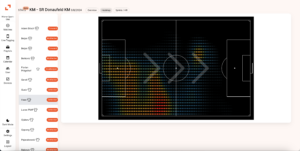
Heatmaps by zone14 (Zoomed)

So lassen sich nicht nur Fitnesswerte auswerten, sondern auch taktische Fragen beantworten:

  • Stand die Abwehrkette konstant hoch oder ist sie im Spielverlauf abgekippt?
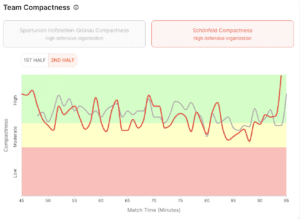
  • Wie kompakt war die Mannschaft zwischen den Linien?
  • Ab welcher Minute ging Intensität verloren – und bei welchen Spielern?

Entwickelt im echten Spielbetrieb

Bevor STATS jetzt offiziell veröffentlicht wurde, lief das System über mehrere Monate in einer intensiven Testphase. Vereine aus verschiedenen europäischen Ländern nutzten STATS im normalen Trainings- und Spielalltag – über unterschiedliche Spielklassen, Platzgrößen und Kamerapositionen hinweg.

Lukas Grömer, verantwortlich für die technologische Entwicklung bei zone14, erklärt:
Die Beta-Phase war unser Trainingslager. Wir haben STATS unter Realbedingungen getestet und das Feedback unserer ersten NutzerInnen direkt umgesetzt, um sicherzustellen, dass unsere Algorithmen auch in herausfordernden Umgebungen zuverlässig performen. Der offizielle Launch ist ein Meilenstein für unser Team und unser Versprechen an die TrainerInnen-Welt: Dieses Werkzeug ist nicht nur innovativ, sondern praxiserprobt, verlässlich und bereit, in jedem Spiel den entscheidenden Vorteil zu liefern.

Welche Auswertungen STATS liefert

  • Heatmaps, die zeigen, wo sich Spieler tatsächlich aufgehalten haben
  • Compactness-Werte, die Abstände zwischen Mannschaftsteilen messbar machen
  • High-Intensity Runs (HIRs) zur Bewertung der Spielintensität
  • Automatisierte Spieler-Reports, direkt aus der Videoanalyse erzeugt

    Alle Kennzahlen sind direkt mit dem Video verknüpft: Trainer können jede Zahl im Bild überprüfen und einordnen.

    Parallel zum STATS-Launch wurde auch die gesamte zone14-Plattform weiterentwickelt – mit einem schnelleren Video-Player, einfacherem Schneiden von Szenen und flexiblen Spielzeiten.

Marktstart mit Early-Adopter-Angebot

Zum offiziellen Start bietet zone14 ein zeitlich begrenztes Early-Adopter-Angebot an. Vereine erhalten Zugang zum vollständigen STATS-Paket ab 79 € pro Monat – ohne zusätzliche Hardware anschaffen oder verwalten zu müssen.

Weitere Informationen zu zone14 STATS

Categories
Fußball Kamera

The 5 Best Cameras for Football Video Analysis in 2026

Contents

The 5 Best Cameras for Football Video Analysis in 2026

Choosing the right camera for football video analysis has become one of the most important strategic decisions for your club in 2026. The market is full of excellent options for match analysis, but the technology has evolved. It's no longer just about who has the highest resolution. It's the choice between a strategic club infrastructure for automated video analysis and a flexible team tool.

This guide compares the top 5 AI cameras for video analysis and helps you make the right choice for your ambitions, your infrastructure, and your philosophy. We'll start with the most comprehensive solution and work our way to the specialized alternatives.

Which system is the right fit for you?

Answer these 3 questions:

  1. Who will primarily be using the camera?
    (A) A single team, including away games? or (B) The entire club for video analysis at your home ground?
  2. What is your primary sporting goal?
    (A) Capturing key moments? or (B) In-depth tactical video analysis of the entire team?
  3. What is your biggest operational challenge?
    (A) A tight budget? or (B) The limited time of your volunteers?

If you mostly answered "A," portable cameras like Veo or XbotGo are likely a great starting point. If you leaned towards "B" on the important questions, read on to see why an infrastructure solution like zone14 is the more strategically sustainable choice for your football videoanalysis.

For those who prioritize automation and tactical depth over portability, these permanently installed systems are the top choice on the market.

1. zone14

The Foundation for the Entire Club

zone14 occupies a clear niche: the transformation of amateur clubs through professional, fixed infrastructure. The philosophy is based on solving the two biggest problems in grassroots football: the lack of time for volunteers and the lack of objective data for coaches.

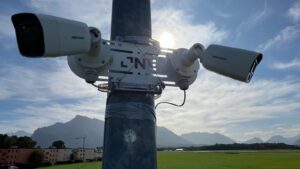
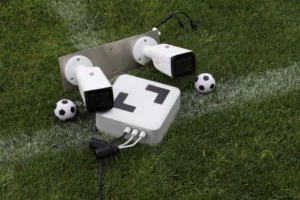
  • Camera: zone14 is less a single camera product and more a customized camera system. Typically, a weatherproof outdoor unit with multiple 4K lenses is installed high above the pitch (e.g., on a floodlight mast). These lenses create a seamless 180-degree panoramic view of the entire field. The defining feature is the "Set-and-Forget" nature of the hardware, which operates fully automatically after a one-time setup and is deeply integrated into the software ecosystem (REPLAY, STATS).

  • System Type: Fixed installation for automated Video Analysis.
  • Analysis Perspective: High, tactical bird's-eye view (the gold standard). This perspective is the only way to see all 22 players simultaneously and objectively assess the distances between the lines, pressing behavior, and spatial organization.
  • Main Advantages:
    • Complete Automation & Relief for Volunteers: The system is installed once and then runs by itself. It's a liberation for volunteers by reducing the personnel effort on match day to zero and raising reliability to 100%.
    • Superior Tactical Perspective: The high camera position enables professional-level analysis that is impossible with ground-based systems. Coaches can finally make well-founded tactical decisions based on facts.
    • Objective Performance Data without the Hassle (STATS): In addition to tactical analysis, the system delivers valuable physical performance data like distance covered, sprints, and heatmaps with STATS – fully automated from the video feed. This eliminates the high costs and enormous logistical effort of GPS vests (charging, distributing, washing, assigning data) and makes objective performance data accessible to every team in the club for the first time.
    • An Integrated Ecosystem for All: The platform (REPLAY, STATS, Livestreaming) is designed to develop the entire club – from youth to senior teams – athletically while simultaneously generating new revenue through professional sponsoring in the stream.
  • The Reality at the Club: The solution is a deliberate, strategic investment in the home ground's infrastructure – comparable to purchasing a new floodlight system. It is the foundation for the club's digital future and professionalization on-site.
  • Conclusion: zone14 is the strategic choice for ambitious clubs with their own facility that want to take the next step towards professionalization. It is the solution for boards that want to develop the club sustainably and for coaches who want to get the most out of their tactical and physical analysis.

2. Hudl Focus

The Choice for Data-Driven Performance Centers

Hudl is a giant in the sports analysis space with deep roots in US college and high school sports. Their philosophy is data-centric: the camera is primarily a data capture device for a vast ecosystem focused on performance diagnostics, player development, and scouting.

  • Camera: The hardware falls under the Hudl Focus camera family, which includes models like the Focus Outdoor . The technical features are geared towards reliability and capturing footage from multiple angles, often connecting several cameras into one system. However, the crucial feature is less the camera's resolution and more the deep hardware-software integration with the extremely powerful Hudl analysis platform.
  • System Type: Mostly fixed installation (Indoor & Outdoor)
  • Analysis Perspective: High, often sideline perspective, optimized for the analysis of individual players.
  • Main Advantages:
    • Deep Ecosystem: Seamless integration into the extensive Hudl software suite, which offers extremely detailed statistics, telestration tools, and professional tools for creating highlight tapes for recruiting.
    • Focus on Performance Data - The system is designed to generate a wealth of individual performance data and track players throughout their careers.
  • The Reality at the Club: The immense range of features can quickly become overwhelming and unnecessarily complex for the average European amateur club. The focus is heavily on individual player performance and recruiting, which is less relevant for a U15 district league team than a simple, understandable analysis of team movement. Operating it often requires more intensive training.
  • Conclusion: Hudl Focus is the top choice for professional academies, performance centers, and clubs that are already deeply integrated into the Hudl ecosystem and prioritize detailed, data-driven individual player analysis and scouting.

For clubs where maximum mobility is the priority, the following cameras are the best alternatives on the market.

3. Veo Cam 3

The Market Leader in Portability

Veo is undoubtedly one of the pioneers and most recognized names in mobile sports cameras. Their philosophy is to provide individual teams with a flexible tool they can take anywhere. With the Cam 3, they have further refined their technology, offering a robust and user-friendly system.

  • Camera: The centerpiece is the Veo Cam 3. It's equipped with two 4K lensesthat together capture a 180-degree field of view. Key features include an improved design for better wind stability, built-in 4G/5G connectivity for direct live streaming, and a portable housing designed for quick setup and takedown on a tripod.

  • System Type: Portable camera on a tripod
  • Analysis Perspective: Ground-level perspective (approx. 4-7 meters high). This view is well-suited for tracking individual player runs and duels, but it makes it difficult to objectively assess the tactical distances between team sections (e.g., defense and midfield).
  • Main Advantages:
    • Maximum Mobility: The camera can easily be transported to every home and away game.
    • Mature Platform: Veo offers an established and feature-rich analysis software with tools for tagging, drawing, and sharing scenes.
    • Strong Brand: A large community and numerous online resources make it easy to get started. Newer models also offer improved connectivity for live streaming.
  • The Reality at the Club: Its greatest strength – flexibility – is inextricably linked to its biggest operational challenge: dependency on personnel. Imagine this: it's Saturday, 10 minutes before kickoff, it's drizzling, and an assistant coach realizes the camera's battery is at only 30% because it wasn't charged after the last away game. Every match requires a responsible person to remember to transport it, charge the battery, set it up, and start the recording. This responsibility often falls on the coach, who should actually be focusing on the team.
  • Conclusion: The Veo Cam 3 is an excellent tool for individual, self-sufficient teams or clubs without a permanent home ground who are looking for a proven, highly flexible solution and are willing to accept the recurring manual effort on match day.

4. XbotGo X1

The Innovative Challenger

XbotGo has shaken up the market as an agile tech company with a strong focus on AI algorithms and an attractive price model. Their positioning clearly aims to be a smart and accessible alternative to established providers.

  • Camera: The main product is the XbotGo X1. Unlike some competitors, it uses a single 4K camera with an advanced gimbal system. The most important feature here is the advanced AI tracking software, which can follow not just the ball but also the movements of specific players. The housing is especially lightweight and designed for maximum mobility.

  • System Type: Portable camera on a tripod
  • Analysis Perspective: Ground-level perspective (approx. 4-7 meters high), with similar tactical limitations as other mobile systems.
  • Main Advantages:
    • Attractive Price: Often more affordable to purchase than its direct competitors.
    • Smart AI: The AI is trained not only to follow the ball but also to proactively anticipate player actions, resulting in dynamic, broadcast-style footage.
    • Simple Operation: Control and streaming via the smartphone app are very intuitive.
  • The Reality at the Club: The setup is quick, but it still has to be done. This means the coach's or a volunteer's pre-game focus shifts from the team talk to the technical setup. As with all portable systems, the reliance on a tripod, battery, and a responsible person remains a potential point of failure during the often hectic reality of a match day.
  • Conclusion: The XbotGo X1 is ideal for price-conscious clubs and individual teams looking to enter the world of AI recording and needing a maximally flexible solution for constantly changing venues.

5. Pixellot Air / Show – The Automation Solution for Leagues & Federations

Pixellot has specialized in automating the video production process at a massive scale. Their philosophy is aimed less at the individual coach and more at leagues, federations, and large clubs that need a reliable solution for capturing and broadcasting a huge volume of games.

  • Camera: Pixellot offers various models, including the fixed installation Pixellot Show and the mobile Pixellot Air. Their unique technological feature is a multi-camera array, consisting of several lenses whose images are stitched together by software to create a single, ultra-wide panoramic view. This enables automated, TV-like video production that follows the action.

  • System Type: Fixed installation or mobile (Air)
  • Analysis Perspective: High, wide "broadcast" perspective, optimized for televising the game for a spectator.
  • Main Advantages:
    • Scalability: A leader in fully automated production. Once set up, entire match days across multiple fields can be covered without any personnel.
    • Partnerships: Often integrated directly into the platforms of federations, which simplifies content distribution.
  • The Reality at the Club: Pixellot thinks from the perspective of a broadcaster, not a coach. While the recording automation is top-notch, the analysis software is often less intuitive and not as deeply tailored to the individual coach's needs as more specialized providers. You often get "just" the raw footage; the detailed work of creating coaching scenes remains with the coach.
  • Conclusion: Pixellot is the dominant solution for federations, leagues, and large clubs whose primary goal is the automated broadcast and recording of a maximum number of games, rather than deep and efficient coaching analysis.

More Than Just the Purchase Price: Hidden Costs and the True ROI

A camera is an investment. But the true costs often only reveal themselves during operation.

  • With portable systems: Consider the "invisible" costs – the man-hours for setup and takedown, charged batteries, potential defects of tripods, or the need for expensive 5G data plans for stable streaming.
  • With infrastructure systems: The greatest ROI lies in time savings. Do the math: if you eliminate just 1 hour of effort per game over 20 home match days in a season, you save 20 hours of valuable volunteer time. Added to this is the predictable revenue from professional sponsoring in the livestream, which is only made possible by a reliable, automated solution.

Comprehensive Conclusion: Your Strategic Decision for 2026

Choosing the right camera system is a decision that sets a direction. The core question is: Are we investing in a mobile tool for individual games, or in a strategic asset that enhances the club as a whole?

Portable systems are the sprinters on the market – fast, agile, and perfect for the moment. Infrastructure systems are the marathon runners – reliable, durable, and designed to elevate the entire club to a new level for years to come.

Your decision should be based on three key questions:

  1. Effort vs. Relief: Are you looking for a solution that requires manual work before every game, or one that automatically provides relief for the entire club?
  2. Perspective & Ambition: Is a good view of individual actions enough, or do you need a professional, tactical perspective to analyze complex team movements?
  3. Vision & Sustainability: Do you want a recording solution, or a platform for athletic development AND new revenue streams?

The best camera is the one that best supports your vision for your club. If your vision is a professional, hassle-free, and future-proof infrastructure for your sporting home, then the choice is clear.

Share on Facebook
Share on Twitter
Share on Linkedin
More related content from zone14
Categories
Coaching

The Winter Break in Football: Your Ultimate Guide to the Perfect Second Half of the Season Preparation

Contents

The Winter Break in Football: Your Ultimate Guide to the Perfect Second Half of the Season Preparation

How to use the most important phase of the season for regeneration, in-depth analysis, and the decisive performance leap – and the role smart video analysis plays in it.

The final whistle of the year sounds. The players are tired, the coaches are burned out, and the pitches are often heavy and difficult to play on. The winter break in football has arrived – a time that is like a double-edged sword for many clubs. On one hand, it's the much-needed recovery phase for body and mind. On the other hand, it's the crucial, often underestimated period where the course for success in the second half of the season is set.

Many clubs make the mistake of seeing the break only as a football-free time. But the most successful teams know: Championships are made in the winter. It is the only time of the year when you can dive deep into analysis and make fundamental adjustments without the pressure of the next game.

This comprehensive guide shows you how to divide the winter break into its three decisive phases, get the most out of each phase, and how modern tools like video analysis can help you send your team into the second half of the season not just fitter, but also tactically smarter and mentally stronger.

Phase 1: The Art of the Break – Targeted Regeneration & Reflection (The First 1-2 Weeks)

Before getting back to work, the battery needs to be recharged – and properly. Simply "doing nothing" is often the wrong approach and can make getting back into training more difficult.

  • Active Recovery Instead of Complete Rest: Light, alternative sports activities promote blood circulation and help the body to break down lactate. Recommendations: Light swimming, cycling, or jogging.
  • The Mental Reset for Players and Coaches: The most important task at the beginning of the break is to switch off mentally. No tactical meetings, no performance pressure talks. Use the time to recharge your own creative and strategic batteries.
  • Nutrition & Sleep: Remind your players to maintain a balanced diet and get enough sleep to maximize regeneration.
  • Individual Goal Setting: Give your players a small "homework" assignment: to formulate 1-2 personal goals for the second half of the season (e.g., "improve my weak foot").

Phase 2: The Truth is in the Video – The Unsparing First Half Analysis

Once the mind is clear, the most important strategic work begins. Now is the time you never have during the season: the unsparing but fair analysis of the entire first half. This is where gut feelings are replaced by irrefutable facts.

The Game-Changer: Video Analysis with zone14

Instead of relying only on vague memories, video analysis gives you the objective truth. With a platform like zone14 REPLAY, this process becomes incredibly efficient and in-depth.

No zone14 camera? No problem: Getting started with zone14 COACH Perhaps you already have a dedicated volunteer filming with a drone, a tripod, or even a phone. That's a great foundation! This is exactly why we developed zone14 COACH. It's the pure power of our REPLAY analysis platform as a standalone software solution. Simply upload your existing video material and use the same professional analysis tools (tagging, drawing, playlists) to turn your video chaos into structured insights. It's the perfect first step to experience the efficiency and quality of the zone14 software before perfecting the workflow with our automated camera.

Step 1: Team Tactical Analysis – The Big Picture

Look for recurring patterns across the entire first half of the season.

  • Offensive Patterns: How do we score our goals? From set pieces? On the counter?
  • Defensive Patterns: What types of goals do we concede repeatedly?
  • The zone14 Advantage: With the tagging system in REPLAY or COACH, you can filter all scenes of a specific category from all games and watch them in a single playlist. This makes patterns instantly visible.

Step 2: Group Tactical Analysis – The Interaction of Team Units

Now, go deeper into the analysis. The panoramic view in REPLAY (available with the zone14 TWO camera) is indispensable for this.

  • Defensive Line: How well does the back four shift? What are the distances?
  • Central Midfield: What is the staggering like? Do the holding midfielders cover each other?

Step 3: Individual Analysis – The Fusion of Tactics and Physics

Now, you look at individual players. This is where the combination of video and data excels.

  • Decision-Making: Does the player make the right decision under pressure?
  • Technical Execution: How clean is their first touch or their finishing?

The zone14 STATS Advantage - Combine your tactical observation with the objective performance data that zone14 STATS extracts directly from the video. Imagine not only seeing that a player seemed unfocused but being able to prove it with data. The number of his High-Intensity Runs dropped significantly. This fusion of tactical video (the 'Why?') and physical data (the 'How Much?') gives you a complete picture.

Phase 3: From Plan to Pitch – The Perfect Second Half Preparation

The insights from your analysis are the blueprint for your preparation.

  • Training Plan with a Common Theme: Derive your training priorities from the 2-3 most important findings from your analysis.
  • Individual Development Talks: Use the winter break for short, effective one-on-one meetings. Create a playlist in REPLAY or COACH for each player with 2-3 positive scenes and 1-2 learning moments.
  • Use Friendly Matches as an opportunity: Friendly matches are perfect for testing tactical adjustments.
    • The zone14 Advantage: Record your friendly matches as well. Analyze immediately afterward whether the new running paths are working. This direct before-and-after comparison is the fastest way to measure progress.
  • Opponent Preparation: Also use the break to analyze the first few opponents of the second half of the season (if video material is available).
zone14 STATS

Statistics for football without a GPS Tracker.

Your Checklist for the Perfect Winter Break

  • Week 1-2: Active regeneration & mental reset. Players formulate personal goals.
  • Week 3-4: Intensive analysis of the first half with zone14 REPLAY/COACH & STATS.
    • Identify team tactical patterns.
    • Prepare individual player playlists for feedback talks.
    • Evaluate physical performance development.
  • Week 5: Create a training plan, conduct individual talks.
  • Week 6-8: Start of preparation. Film & analyze friendly matches. Analyze opponents.

Conclusion: Use the Winter Break to Rewrite the Story of Your Season

The winter break is the strategic heart of the season. While other clubs switch off, the most successful teams lay the foundation for their success here. A thorough, data-driven analysis is the decisive lever.

Solutions like those from zone14 make this process accessible and efficient – whether you start with the software-only solution COACH or unleash the full potential with the automatic TWO camera and STATS. Use this opportunity to make your team not just fitter, but above all, smarter in the winter break.

zone14 REPLAY

The football video analysis software for coaches and clubs.

Share on Facebook
Share on Twitter
Share on Linkedin
More related content from zone14
Categories
Video Analysis

The Analyst's Dilemma: Hudl Sportscode vs. ONCE vs. zone14 – Which Software is Right for You?

Contents

The Analyst's Dilemma: Hudl Sportscode vs. ONCE vs. zone14 – Which Software is Right for You?

An honest look at the tools of the pros and why the best solution for your club might be one you haven't considered yet.

It's Monday morning. On your laptop, you have 90 minutes of video footage from the weekend. Somewhere in this digital maze of passes, tackles, and runs lie the answers to the questions that have been haunting you since the final whistle: Why didn't our press work? Where exactly was the gap before we conceded the goal? And how can we replicate that one brilliant play?

The search for the right video analysis software to find these answers often feels just like that: an impenetrable jungle. The choice of platform is one of the most important strategic decisions for the professionalization of any club. In this comprehensive comparison, we take an honest look at three of the most prominent names on the market: Hudl Sportscode, the undisputed industry standard; ONCE, the modern challenger for live analysts; and zone14, the architect of a holistic club ecosystem.

The Two Worlds of Football Data The "What" and the "How Much"

Before we compare the tools, we need to understand the two fundamental types of data in football, which often exist in separate worlds:

  1. Tactical Event Data (The "What?"): This data describes what happened in the game. A pass from A to B, a shot on goal, a tackle. It is the heart of tactical analysis and is traditionally captured manually by an analyst.
  2. Physical Performance Data (The "How Much?"): This data describes how much a player has physically invested. Running distance, number of sprints, top speed. It is the core of athletic analysis and is traditionally collected via expensive GPS vests.

The crucial question is: How well does a software solution represent these worlds and – more importantly – connect them?

The Providers: A Character Check – Three Philosophies, Three Worlds

Hudl Sportscode: The Architect
  • The Philosophy: Hudl Sportscode is the "Photoshop" of video analysis – infinitely powerful, endlessly customizable, and the standard in almost every professional club in the world. It is a software designed for the full-time professional analyst who is willing to endure a steep learning curve to create their own perfect, customized analysis universe.
  • A Day in the Life with Sportscode: The analyst spends hours programming complex tagging windows (Code Windows) with hundreds of buttons. In the meticulous post-match analysis, they click through the game, tagging every conceivable tactical event. The result is a massive amount of data and statistical dashboards. The strength lies in the incredible depth of data capture. The weakness? It's a pure tool for capturing event data and solves neither the problem of video recording nor that of physical performance data.
ONCE: The Live Reporter
  • The Philosophy: ONCE recognized the complexity of Sportscode and specialized in one thing: efficiency and live analysis. It is the tool for the modern, agile analyst who doesn't want to waste time.
  • A Day in the Life with ONCE: The analyst sits in the stands with their laptop during the game. They use ONCE's intuitive interface to tag the most important scenes live as they happen. A goal? One click. A key tactical change? One click. At halftime, they can already show the coach a finished playlist with the decisive moments on a tablet. The post-match work the next day is done in a fraction of the time.
  • The Limitations: ONCE is an excellent tool that solves one problem: the speed of event capture. However, it remains a highly specialized tool for the analyst. The question of video recording remains unanswered, and the world of physical performance data remains locked away, unless you invest in a separate GPS system.
zone14: The Integrated Brain of the Club
  • The Philosophy: zone14 asks a different question: Why should you have to choose between different tools, systems, and data worlds? Here, the software is not the sole product but the heart of a holistic ecosystem for the entire club. The target audience is the modern club looking for a simple yet powerful all-in-one solution.
  • A Day in the Life with zone14: The crucial difference begins even before the analysis: The zone14 TWO AI camera has automatically recorded the game. The coach opens the REPLAY App on their phone on the way home, reviewing the key moments suggested by the AI. The next day, with two clicks, they filter all scenes related to "turnovers in build-up." They notice that one player seemed unfocused after the 70th minute. A click on zone14 STATS reveals the truth: the number of his high-intensity runs dropped by 50% in the final phase. The coach now has the complete picture: the tactical decision (the "What?") AND the physical condition (the "How Much?") in a single, inseparable context.
  • Already have your own video footage, or want to test the waters with a software-only solution? zone14 COACH is your perfect entry point. It unleashes the full power of our REPLAY analysis platform as a standalone tool. Upload footage from any source—be it a tripod, phone, or drone—and you'll immediately access the same intuitive analysis tools trusted by users of our integrated system. It's the ideal way to elevate your analysis with the quality of zone14's software, before taking the next step to automate your entire workflow with our camera.
  • The Strength: zone14 is the only solution in this comparison that fuses the two data worlds without additional hardware like GPS vests.

The Comparison in Detail: Workflow, Data Philosophy, and Ecosystem

When it comes to the workflow, Hudl Sportscode's manual, extremely detailed post-match process stands in contrast to ONCE's fast, live-tagging-optimized workflow. zone14 goes a step further by automating the very first, often most tedious step – the recording.

In terms of data philosophy, the difference is greatest. Sportscode and ONCE are masters of tactical event capture: they measure what the analyst manually inputs. zone14 follows a hybrid approach: it not only captures tactical events but also enriches them with automatically extracted physical performance data (STATS) . This creates a complete, contextualized picture of player performance.

The decisive difference, however, lies in the ecosystem. ONCE is primarily an excellent software solution. Hudl offers a broad product range. zone14 is the only system in this comparison designed from the ground up as a fully integrated ecosystem: the automatic camera, the analysis platform, the mobile apps, the performance data (STATS), and the livestreaming work together seamlessly. It is a strategic platform for the development of the entire club, not just a tool for a single analyst.

Conclusion: Which Software DNA Fits Your Club? A Quick Self-Test

  • Are you a full-time professional analyst who loves to configure every detail yourself and dive into the deepest statistical evaluations? Then Hudl Sportscode is your powerful but demanding tool.
  • Are you an analyst or assistant coach whose main focus is on live analysis on matchday and maximum efficiency in tactical evaluation? Then ONCE is the perfect, modern solution for you.
  • Are you a head coach, sporting director, or club official looking for a holistic, easy-to-use, and integrated solution that eliminates the effort of recording and provides the complete picture of tactics AND performance data? Then the ecosystem approach of zone14 is second to none.

If your goal is a hassle-free, reliable, and qualitatively superior video analysis that provides a complete picture of your team and serves as the foundation for sporting success and new revenue streams, there is hardly any way around an integrated, intelligent solution like that from zone14.

Share on Facebook
Share on Twitter
Share on Linkedin
More related content from zone14
Categories
Coaching

Your Goalkeeper's Playbook: The Best Drills & Analysis Techniques

Contents

Your Goalkeeper's Playbook: The Best Drills & Analysis Techniques

He is the last bastion, the first attacker, often the loneliest, but also the most decisive player on the pitch: the goalkeeper. While club football often focuses on outfield play, specialized goalkeeper training frequently falls short. But the days when it was enough to put a "good catcher" in goal are long gone. The modern goalkeeper is a complex athlete whose abilities extend far beyond just saving shots and who actively shapes the game.

This comprehensive guide dives deep into the world of modern goalkeeper training. We break down the complexity into understandable components, present the best goalkeeper drills with detailed step-by-step instructions, and show how video analysis – especially with specialized tools like a behind-the-goal camera – can revolutionize your coaching.

1. The 4 Pillars of Complete Goalkeeper Training

Holistic training is based on four inseparable pillars that intertwine and should be present in every drill:

  1. Technique: The clean execution of fundamentals (catching, punching, diving, 1-on-1s).
  2. Tactics: Game understanding (positioning, decision-making, coaching the players in front).
  3. Athleticism: The physical requirements (jumping power, speed, agility, reflexes).
  4. Psyche: Mental strength (courage, concentration, dealing with mistakes, presence).

2. The Best Goalkeeper Drills: Explained Step by Step

Here are three practical goalkeeper drills that specifically train these pillars and can be adapted for different age and performance levels.

Drill 1: "The Wall" – Reaction, Technique & Rebound Control

Focus: Technique (hand shape, body position), Athleticism (reaction), Psyche (concentration)

  • Goal of the Drill: To improve reaction speed to shots from close range and the ability to control rebounds.
  • Setup (Step 1):
    • The goalkeeper stands centrally in the goal.
    • The coach is positioned approx. 6-8 meters in front of the goal with several balls.
    • Two small cones are placed approx. 2 meters to the left and right of the goalkeeper.
  • Execution (Step 2):
    • The coach shoots 5-8 balls in quick succession, medium-height and hard, towards the goalkeeper's body.
    • The goalkeeper does not try to catch the balls but uses a clean blocking technique (firm hands, tensed body) to parry them in a controlled manner to the outside, behind the cones.
    • The last ball of the series is shot low next to the goalkeeper, requiring them to dive and secure the ball.
  • Coaching Points & Variations:
    • Ensure the goalkeeper maintains a stable, slightly forward-leaning body position.
    • The hands should form a "scoop" to direct the ball down and to the side.
    • Variation (harder): A second player tries to score from the rebounds, increasing the pressure.
  •  
Drill 2: "Decision in the Box" – Tactics for Crosses

Focus: Tactics (decision-making, commanding the area), Technique (catching/punching), Psyche (communication, courage)

  • Goal of the Drill: To train the goalkeeper's timing and decision-making on whether to come off their line for a cross or to stay.
  • Setup (Step 1):
    • The goalkeeper is in the goal.
    • Two players (or coaches) are positioned as crossers on the wings, roughly level with the penalty area.
    • One or two attackers are positioned inside the penalty area.
  • Execution (Step 2):
    • The crossers alternate delivering different types of crosses into the box (high looping ball, driven cross, low ball to the six-yard box).
    • For each cross, the goalkeeper must make a clear decision: "Am I coming?" or "Am I staying?".
    • They must communicate their decision loudly and clearly (e.g., "Keeper's!" or "Away!").
    • If they come out, they must catch the ball at its highest point or punch it away decisively.
  • Coaching Points & Variations:
    • The decision depends on the trajectory of the ball, the position of the opponents, and the keeper's own position.
    • Encourage the goalkeeper to see the six-yard box as their "fortress."
    • Variation (harder): Add a defender to train the communication between the goalkeeper and the defense.
Drill 3: "The Playmaker in Goal" – Build-up Play Under Pressure

Focus: Tactics (game intelligence, press resistance), Technique (passing), Psyche (composure on the ball)

  • Goal of the Drill: To improve the goalkeeper's ability to make the right decision in build-up play when under pressure from an opponent.
  • Setup (Step 1):
    • The goalkeeper is in the goal.
    • Two teammates are positioned as available center-backs or full-backs.
    • An opponent starts at the halfway line.
  • Execution (Step 2):
    • The coach plays a back-pass to the goalkeeper.
    • At that moment, the opponent starts their run, approaching the goalkeeper in an arc to cut off one passing option.
    • The goalkeeper must quickly assess the situation and find the best solution: the safe pass to the free defender, beating the opponent with a body feint, or playing a long, accurate ball forward.
  • Coaching Points & Variations:
    • The goalkeeper's first look should always be forward.
    • Encourage the goalkeeper to find brave but safe solutions.
    • Variation (harder): Add a second opponent to further increase the pressure.

3. The Game-Changer: Video Analysis in Goalkeeper Training

The complex and lightning-fast movements of a goalkeeper are nearly impossible to assess objectively from the sideline. Milliseconds and centimeters determine success or failure. This is where video analysis is the key to the truth. Imagine being able to show your goalkeeper in slow motion why their hand shape in the "Wall" drill wasn't optimal, or to analyze frame-by-frame whether their decision in "Decision in the Box" was the right one.

The Power of the Right Perspective: The Behind-the-Goal Camera

The normal tactical recording from the side is good, but for detailed goalkeeper training, the perspective from behind the goal is pure gold. A behind-the-goal camera allows you to see things that would otherwise remain hidden:

  • Precise Positioning: Is the goalkeeper truly central to the ball's position? How are they narrowing the angles?
  • Organization on Set Pieces: How are they directing their wall? How do they position themselves for corners?
  • Evaluation of Distribution: What passing lanes do they see (or miss) during build-up play?

4. Insights from the Pros: The zone14 Analysis Workflow

Even at the highest level, automation and the right perspective are crucial. The importance of this is demonstrated in our case study with the SK Rapid Academy. There, based on the specific requirements of the professional coaches, a dedicated behind-the-goal camera from zone14 was designed to provide exactly these decisive insights.

A professional analysis workflow with zone14 REPLAY looks like this:

  1. Automatic Recording: The zone14 TWO main camera and the behind-the-goal camera automatically record the training session.
  2. Targeted Tagging: The goalkeeper coach marks all relevant scenes from the drills or game in REPLAY.
  3. Analysis with Drawing Tools: In the post-session review, the runs, positions, and passing options are visualized using the drawing tools in the behind-the-goal perspective.
  4. Individual Playlists: The goalkeeper receives a short playlist with their most important scenes to learn from for the next training session.

From Video back to the Pitch: The Analysis-Training-Cycle

The best analysis is useless if it doesn't flow into the next training session. Don't just show your goalkeeper the video scene; recreate the exact game situation from the "Playmaker in Goal" drill in training. Let them play through the situation again, but this time with the knowledge gained from the video analysis. Record this attempt as well. This direct before-and-after comparison is the fastest and most motivating way to make learning progress visible.

And what about the field players? To objectively evaluate the physical performance of your field players, zone14 STATS tracks valuable performance data such as running distances and sprints directly from the video—without the need for GPS vests.

Conclusion: The Complete Goalkeeper Starts with Complete Training

Modern goalkeeper training is a complex discipline that combines technique, tactics, athleticism, and psyche. The drills presented here are an excellent foundation, but only objective and detailed analysis enables targeted and rapid development. Video analysis, especially from the invaluable perspective of a behind-the-goal camera, is no longer a luxury but a crucial tool for unlocking a goalkeeper's full potential.

Solutions like those from zone14 make these professional methods accessible to every club today and help you make the decisive man between the posts even stronger.

Share on Facebook
Share on Twitter
Share on Linkedin
More related content from zone14
Categories
Fußball Kamera

Video Analysis in Football: A Comparison of Camera Systems from Veo, Trace, and zone14

Contents

Video Analysis in Football: A Comparison of Camera Systems from Veo, Trace, and zone14

Which Philosophy Fits Your Club? A Decision-Making Guide Between Mobile Flexibility, Individual Highlight Focus, and Integrated Club Intelligence.

Video analysis has definitively conquered amateur and youth football. The question is no longer if, but how to use it. For clubs wanting to take the next step in their development, choosing the right automatic AI camera system is one of the most important strategic decisions of recent years. The market is full of promises, but the philosophies behind the providers could not be more different.

In this comprehensive comparison, we shed light on three of the most prominent names: Veo, the pioneer of mobile sports cameras; Trace, the specialist in player-centric highlights; and zone14, the architect of a holistic club ecosystem. We dive deep into the DNA of each system to help you find the solution that truly fits the goals, resources, and culture of your club.

The Crucial Questions Every Club Must Ask Itself

Before we compare the providers, we should sharpen the criteria that really matter in the often-hectic daily life of a club:

  1. The Human Factor & Effort: How much does the system tie up the scarce time resources of our volunteers on matchday?
  2. The Analytical Perspective: Does the camera provide a high-quality, tactical analysis of the entire game or just individual actions?
  3. The Data Capture Philosophy: Is the team, the individual player, or the entire game the focus of the technology?
  4. The Digital Ecosystem: Are we just getting a camera, or an integrated platform for analysis, communication, and even club development?

The Providers in Detail: Three Philosophies, Three Solutions

Veo: The Freedom of Mobility

Veo has established itself as a major player in the field of mobile sports recording. Their solution is well-known and used by many clubs.

  • Core Philosophy: Veo's DNA is flexibility. The system, consisting of a camera and a high telescopic mast tripod, is designed to be taken everywhere – to home games, away games, and training camps.
  • Practical Implementation & Consequences: The strength of mobility is simultaneously its greatest operational challenge. Every single matchday requires a dedicated volunteer who is responsible for transport, the time-consuming setup and teardown (often 15-20 minutes), and operation. The dependence on this one person is a constant risk in the analysis process. The good tactical perspective gained from the high mast is a clear advantage over ground-level recordings but can be compromised by wind and an uneven setup. Veo's analysis platform offers solid tools for coaches to edit the recorded game.
  • Ideal for: Clubs for whom recording away games is the highest priority and who have reliable personnel resources to handle the recurring effort on every matchday.
Trace: The Specialist for Individual Player Highlights

Trace pursues a different, very player-centric approach that is particularly popular in US youth and college sports. Here, the focus is not on the coach's tactical analysis, but on the experience and development of the individual player.

  • Core Philosophy: The focus of Trace is to automatically provide each player with their personal moments from a game. The system uses, similar to Veo, a mobile AI camera on a tripod that follows the action. The crucial difference lies in the software: after the game, an intelligent AI identifies the actions of each individual player on the field and automatically edits personal highlight clips for each player.
  • Practical Implementation & Consequences: The unbeatable strength of Trace is its automated and personalized content creation. After the game, every player receives their individual scenes (goals, ball touches, important actions) directly on their smartphone – without any further action from the coach. For young players who want to share their best moments on social media or compile them for applications to scouts and colleges, this system is a dream. It promotes self-motivation and makes one's own performance immediately visible.
    The downside of this strong player-centricity is that the overall tactical analysis for the coach often plays a secondary role. The camera perspective and the software are primarily optimized to capture individual actions well, which does not always provide the best total overview for assessing team tactical behavior. So, if the club's primary goal is an in-depth, coach-led analysis of the entire team, other systems might be more suitable. As with any mobile tripod solution, the recurring effort for setup and teardown on matchday remains.
  • Ideal for: Clubs and academies (especially in the youth sector) whose absolute focus is on the automatic creation of individual player clips for social media, scouting, or personal development.
zone14: The Integrated Brain of the Club

zone14 was developed with a clear focus on the reality and strategic needs of European club football at all levels.

  • Core Philosophy: zone14 focuses on maximum reliability, zero effort on home matchdays, and the creation of a holistic, digital ecosystem for the entire club. The motto is "Set-and-Forget."
  • Practical Implementation & Consequences: The zone14 TWO AI camera is permanently installed once and from that moment on is a fixed, always-available part of the club's infrastructure. The effort on matchday is reduced to zero, which completely relieves the volunteers and guarantees a seamless recording of all home games and training sessions. The always-identical, optimal tactical perspective from above is the basis for professional analysis in the panoramic view of zone14 REPLAY.
    However, the true strength lies in the integration: zone14 is not just a camera but a strategic platform. With zone14 STATS, performance data like running distances are extracted directly from the video without sensors, inseparably linking data and tactics. The REPLAY iPhone App also makes the analysis flexible and mobile. Furthermore, the system introduces a live dimension that elevates the matchday itself: All home games can be streamed effortlessly and without a paywall, enabling clubs to reach their fans and create new, attractive sponsorship opportunities. At the same time, coaches can use the REPLAY App to tag live from the sidelines, preparing their halftime analysis in minutes and allowing them to react immediately to the on-field action.
  • Ideal for: Clubs that see their home ground as their fortress and want to rely on uncompromising, professional, and reliable analysis conditions there. It is the solution for clubs that want to relieve their volunteers, professionalize their entire sporting and administrative operations, and grow sustainably through an integrated system of analysis, data, livestreaming, and sponsorship opportunities.
Start your video analysis.

Sign up now for a completely free demo account.

The Philosophies in Direct Comparison

Let's summarize: When we compare the systems directly, it becomes clear that it's about more than just technical data. It's about fundamentally different approaches.

Veo offers you the freedom to record anywhere but demands the price of constant manual effort. Trace gives every player their personal spotlight but puts team analysis on the back burner. zone14 offers you absolute peace of mind and professionalism at home, with a deeply integrated ecosystem that goes far beyond mere recording. The decision is therefore not a question of "better" or "worse," but a question of priorities.

Conclusion: Which DNA Fits Your Club? A Clear Decision-Making Guide

Choosing the right camera system is a strategic turning point.

  • Profile A: "The Nomad" – Mobility is Everything.
    If your top priority is recording away games and you have reliable and dedicated volunteers to handle the weekly setup and teardown, then Veo is an established choice that gives you the necessary flexibility.
  • Profile B: "The Talent Developer" – The Player is the Focus.
    If your main goal is the automatic creation of individual highlight clips for your youth talents to promote their development and visibility, and tactical team analysis is a lower priority, then Trace could be the right solution for you.
  • Profile C: "The Strategist" – Reliability, Professionalism, and Club Development.
    If, however, your goal is to turn your home ground into a fortress of analysis, to maximally relieve your volunteers, and to implement a holistic system for sporting success, fan engagement, and financial development, then the integrated approach of zone14, designed for reliability and professionalism, is an advanced and sustainable solution.

If your goal is a hassle-free, reliable, and qualitatively superior video analysis that serves as the foundation for sporting success and new revenue streams, there is hardly any way around a permanently installed, intelligent solution.

Share on Facebook
Share on Twitter
Share on Linkedin
More related content from zone14
Categories
Fußball Kamera

The Tripod Dilemma in Amateur Football & How to Solve It

Contents

The Tripod Dilemma in Amateur Football & How to Solve It

Which Camera Solution Truly Fits Your Club's Goals? A Detailed Comparison of Perspective, Effort, and the Potential of a Complete League Solution.

Every dedicated coach and club official in amateur football knows the challenge: to keep up in the modern game, video recordings for game analysis are essential. However, the implementation is often a compromise. Usually, a brave soul—a "cameraman"—is found to stand on the sidelines for 90 minutes. The tripod is a constant companion, and the result is often footage that is valuable for memories but only partially suitable for in-depth tactical football analysis.

But what are the alternatives? Is the classic tripod the only option? What do modern high tripods (masts) really offer? And what revolutionary potential lies in permanently installed, automatic AI cameras, especially when considered not just for a single club, but as a networked solution for an entire league?

This comprehensive guide illuminates the various options for game recording in football. We analyze the pros and cons of each method and provide you with a clear basis for deciding which solution is right for your club.

1. The Classic: The Standard Tripod on the Sideline – Maximum Flexibility with Analytical Compromises

The simple three-legged tripod is the undisputed standard in amateur football. It is the most obvious and, at first glance, the cheapest solution.

  • The Advantages: Low initial cost and high mobility, as it can be taken to every away game.
  • The Reality in Practice: The recording depends on the reliability of a volunteer, which poses a high risk. Far more crucial, however, is the inadequate perspective for serious tactical analysis. From the sideline, formations and distances are nearly impossible to assess. Added to this are inconsistent video quality and a high, recurring effort on matchday.

2. The Evolution: The High Tripod (Telescopic Mast) – An Important Step Up

To solve the perspective problem, high tripods for sports recording have become increasingly popular.

  • The Approach: An extendable telescopic mast raises the camera to an elevated position, significantly improving the overview.
  • The Advantages: A significantly better tactical perspective makes the analysis of formations meaningful for the first time. The system also remains portable.
  • The Remaining Challenges: The high personnel effort for transport, setup, and teardown persists and is often even greater. Additionally, the masts are often susceptible to wind, and battery life remains a critical issue.

3. The Advanced Option: The Permanently Installed, Automatic AI Camera

What if the camera were simply always there? Perfectly positioned, always ready, completely automatic. This is precisely the philosophy behind the permanently installed camera for football pitches. This is precisely the approach that zone14 pursues.

  • The Concept: "Set-and-Forget" – Install and Benefit:
    An intelligent AI camera is installed once in an optimal, elevated, and central position—typically on a floodlight mast. It stays there, permanently connected to power and the network.
  • The Clear Advantages of This Option:
    • Maximum Reliability & Relief for Volunteers: The camera automatically records every scheduled home game. The dependency on personnel on matchday is completely eliminated.
    • The Perfect Perspective for Pro-Level Analysis: The high, central position is the "holy grail" for any top-down game analysis. A panoramic view provides an invaluable tactical overview.
    • Professional & Consistent Video Quality: Modern AI camera systems for football intelligently follow the action and deliver a stable, broadcast-quality feed.
    • Zero Effort on Matchday: No setup, no teardown, no battery charging. Coaches and officials can fully concentrate on the essentials.
Start your video analysis.

Sign up now for a completely free demo account.

4. The Future, Today: The Networked League Solution – A Game-Changer for Everyone

So far, we have looked at camera systems from the perspective of a single club. But what happens when you expand the potential of permanently installed cameras to an entire league? This creates a revolutionary added value that mobile solutions can never offer.

  • The League Solution Concept:
    Imagine every club in your league equips its main pitch with a permanently installed AI camera from providers like zone14. All cameras are part of a networked system.
  • The Groundbreaking Advantages:
    • EVERY Game is Recorded – Home & Away: The problem of missing footage from away games is completely solved. No matter where you play, a recording in the usual high, professional quality is guaranteed.
    • Seamless Video Exchange for Opponent Analysis: Gone are the days of hoping to somehow get a video of the next opponent. The recordings can be easily and fairly shared between clubs via the platform. Opponent analysis in amateur football is thereby raised to a completely new, professional level.
    • Increased Attractiveness for League Sponsors: An entire league that can livestream every game and produce professional highlights becomes an extremely attractive advertising partner. League-wide sponsorship packages can be created, from which every single club benefits.
    • Fairness and Transparency: The complete documentation of all games can also provide valuable, objective insights into controversial scenes or for the work of the referees.

Such a league solution is the logical next step in the professionalization of amateur football. It creates a win-win-win situation for players, coaches, and the league as a whole.

5. One Recording, Countless Possibilities: The Smart Content Cycle for Your Club

  • For Coaches/Analysts: The raw material for detailed tactical analysis in REPLAY.
  • For Players: Short, individual feedback clips and motivational highlights.
  • For Fans/Community: Spectacular highlight videos for social media and the club website.
  • For Sponsors: Professional livestreams with ad integration and branded highlight clips as a measurable ROI.
  • For the Press/Media: Easy provision of high-quality footage for local newspapers or online portals.

6. More Than Just a Camera: An Honest Cost-Benefit Analysis (ROI)

For club officials, the financial side is crucial. The Return on Investment (ROI) of a video analysis solution must be clear.

  • The Hidden Costs of Mobile Solutions: If one considers the "implicit personnel costs" (what is the time of a volunteer worth?), the wear and tear of equipment, and the opportunity costs (lost sponsorship revenue), the seemingly low price of tripods is quickly put into perspective.
  • The ROI of a Permanent Installation (especially as a League Solution): A permanently installed camera is a strategic investment. The reliability and high quality of the recordings create the foundation for new revenue streams through professional highlight clips and livestreams with sponsor integration. In a league solution, this effect is potentiated. The time saved for volunteers frees up resources. It is an investment in the athletic and financial health of the club.

Conclusion: It's Not About the Tripod – It's About the Right Strategy for Your Club and Your League

The choice of recording method is a strategic decision.

  • The classic tripod remains a flexible entry-level solution with clear compromises in quality and reliability.
  • The high tripod improves the perspective but does not solve the problem of recurring effort.
  • The permanently installed, automatic AI camera is the most advanced option for clubs that value maximum reliability, unsurpassed analysis quality, and relieving their volunteers.

However, the revolutionary potential only unfolds when thinking about a networked league solution. It not only professionalizes the individual club but also elevates the entire league to a new level in terms of analysis, marketing, and sporting fairness. If the goal is continuous, high-quality, and low-effort video analysis in amateur football, there is hardly any way around a permanently installed, intelligent, and networked solution.

Share on Facebook
Share on Twitter
Share on Linkedin
More related content from zone14
Categories
Video Analysis

Football match analysis: Your ultimate guide – From the basics to professional analysis with zone14 REPLAY

Contents

Football match analysis: Your ultimate guide – From the basics to professional analysis with zone14 REPLAY

The final whistle blows. Emotions are running high – the joy of victory, the frustration of defeat. But for dedicated coaches, analysts, and forward-thinking club officials, a crucial part of the work is just beginning: the analysis. It is the key to learning from past performances, identifying tactical patterns, developing players in a targeted way, and preparing optimally for the next opponent. But where do you start? How do you transform 90 minutes of pure chaos into clear, actionable insights?

Many rely on their gut feeling and notes. But a structured, in-depth analysis can make the difference between stagnation and sustainable success. This comprehensive guide takes you step-by-step through the process of a professional game analysis – from basic preparation and the psychological aspects of communication to the use of modern tools like zone14 REPLAY, which make this process easier, faster, and more effective than ever before.

1. Preparation: The First Step to Successful Game Analysis (Before the Game)

Good analysis doesn't start after the final whistle, but before it. A clear set of expectations and targeted questions will help you watch the game with an analytical eye.

  • Define Your Game Idea: What did you want to implement as a team today? What were the tactical instructions? (e.g., high press, fast transitions, a compact defensive unit). Your analysis will always be benchmarked against your own game philosophy.
  • Ask the Right Guiding Questions: Formulate 2-3 central questions you want to observe during the game.
    • Offensively: How well does our build-up play work against the opponent's press? Are we creating scoring chances from the wings?
    • Defensively: How stable is our central defense against long balls? How do we react to fast counter-attacks?
  • Consider the Opponent Analysis: What do you know about the opponent? Do you know their strengths, weaknesses, and key players? This helps you to better contextualize certain situations in the game.

2. Observation: How to Watch a Game with the Eyes of an Analyst (During the Game)

During the game, you are often emotionally involved. Nevertheless, try to maintain an analytical distance and observe systematically.

  • Forget the Ball (Sometimes): Don't just follow the ball; observe the behavior of players without the ball. How do the team units move? Where do open spaces appear? What is the formation like when possession is lost?
  • Take notes manually – the traditional way: Have a notepad or laptop ready. Write down the minute of play and a short keyword for notable scenes (e.g., “12th minute – counterattack opportunity missed,” “28' – poor spacing in midfield,” “55' – good pressing scene RV”). These notes will be invaluable later on for finding the scenes in the video.
  • Live tagging with zone14 – The modern, faster alternative: Instead of using pen and paper, you can revolutionize this process with modern systems such as zone14. With your laptop, tablet, or simply on your smartphone with the REPLAY App, you can mark important moments during the game with predefined or custom tags. Just click on “Goal opportunity,” “Bad pass,” or “Good defensive action,” and the scene will be automatically with the exact time stamp for later analysis. This not only saves time, but is also much more accurate than any manual note.
  • The limits of live observation: Be aware that it is impossible to capture everything live. You are stressed, distracted, and cannot rewind a scene. The real, in-depth analysis always takes place after the game.

3. The Post-Match Debrief: Conducting the Actual Game Analysis (After the Game)

Now the real work begins. With the video footage in front of you, you can analyze the game objectively and at your own pace.

  • Step 1: The "Cool-Down" & First Viewing
    Never analyze right after the game when emotions are still high. Watch the entire game video once without interruption to get a feel for the overall flow.
  • Step 2: Structuring the Game (Tagging & Clipping)
    Now you begin to break the game down into relevant scenes. This process is called tagging or clipping. Watch your video a second time and create short clips of all the moments you noted earlier or that stand out to you now. Categorize these scenes to maintain an overview. Typical categories are:
    • Own Offense: Build-up play, scoring chances, counter-attacks, wing play
    • Own Defense: Pressing behavior, defending against counters, tackling behavior
    • Transition Moments: From defense to offense and vice versa
    • Set Pieces: Own and opponent's corners, free kicks, throw-ins
    • Individual Actions: Special performances or mistakes by individual players
  • Step 3: The "Deep Dive" – Detailed Analysis of the Scenes
    Now, go through your created clips and analyze them in detail. For each scene, ask the "What-Why-How" questions:
    • What happened? (e.g., We conceded a goal from a corner.)
    • Why did it happen? (e.g., The marking in the penalty area was off, player X lost sight of his opponent.)
    • How can we do better in the future? (e.g., Practice clear assignments, improve communication on set pieces.)
  • Step 4: Drawing Conclusions and Deriving Actionable Recommendations
    At the end of your analysis, you shouldn't have 50 different findings, but 2-3 clear key points that are most important for your team's development. These could be, for example: "We need to improve our transition play after winning the ball" or "Our compactness in central midfield is a weakness."

4. The Game-Changer: How zone14 REPLAY Revolutionizes Your Analysis Workflow

The process described above is effective, but when done manually, it is extremely time-consuming. This is exactly where modern tools like zone14 REPLAY come in, taking your football tactical analysis to a new level.

  • Automatic Recording & Immediate Availability: The biggest hurdle – getting the video footage – is eliminated. The zone14 TWO camera automatically records your games in high quality. Shortly after the game, the material is available to you on the zone14 REPLAY platform.
  • Efficient Tagging & Clipping: Instead of tediously writing down timestamps, you can mark, cut, and organize scenes into playlists in REPLAY with just a few clicks. 
  • Professional Drawing Tools: You don't have to be a graphic designer. With the intuitive drawing tools in REPLAY, you can visualize running paths with arrows, mark players with circles, or highlight open spaces with zone tools. This makes your instructions immediately understandable for every player.
  • The Panoramic View for a Tactical Overview: One of the most powerful features! Switch from the tracking camera view to the full panoramic view of the entire pitch. This allows you to see the movements and distances of all players and analyze tactical formations and shifts like never before.
  • The Fusion of Tactics and Physics with zone14 STATS: Imagine not only seeing your full-back's wrong run but also that he ran 2 km less in this game than usual. With zone14 STATS , you get these physical performance data (running distance, sprints, heatmaps) directly from the video, without GPS vests. This combination of tactical observation and objective data gives you a complete picture of player performance.
  • Easy Sharing & Collaboration: Share your finished analyses, playlists, or individual clips with comments directly with your coaching team or individual players. Everyone is on the same page, and the feedback gets exactly where it needs to go.

So, zone14 REPLAY doesn't do the thinking for you, but it automates the time-consuming processes and gives you powerful tools so you can focus on what matters most: the substantive analysis and the improvement of your team. Here you can find out, how to get started with video analysis in your club.

5. More Than Just the Team: The Analysis of the Individual Player

Video analysis is a powerful tool for individual player development. Use its capabilities to focus specifically on individual players:

  • Create Individual Playlists: Compile a short "highlight reel" for each player with their best actions to boost their confidence. At the same time, you can create a "learning reel" with 2-3 scenes worthy of improvement.
  • Conduct Constructive Development Talks: These individual clips are the perfect basis for a one-on-one conversation. The player sees objectively what is meant and can understand the instructions much better. With zone14 REPLAY, you can filter and compile such playlists with just a few clicks.

6. Between Motivation and Criticism: The Right Tone in the Video Debrief

A good analysis is one thing, communicating it correctly is another. A poorly conducted video session can do more harm than good. Consider the following psychological aspects:

  • Create a Positive Learning Atmosphere: Make it clear that it's about collective improvement, not about calling out mistakes.
  • Use the "Sandwich Method": Start with a positive scene (praise), then show a learning-intensive scene (constructive criticism), and conclude with something positive again.
  • Avoid Public Shaming: Discuss general tactical errors with the group. Very individual or repeated mistakes of a single player should rather be discussed in a one-on-one conversation. The sharing functions of modern tools allow for discreet communication here.
  • Ask Questions Instead of Just Lecturing: Actively involve the players. "What could you have done differently in this situation?" "What options do you see here?" This promotes game understanding and personal responsibility.

7. The Perfect Video Session: 7 Tips for an Effective Presentation

Start your video analysis.

Sign up now for a completely free demo account.

  1. Keep it short: A video session should never last longer than 15-20 minutes. The players' attention span is limited.
  2. Focus on 2-3 topics: Choose the most important findings from your analysis. Don't try to address everything.
  3. Positive scenes first: Start with a successful action to get the team in a positive mood and capture their attention.
  4. Show solutions: Don't just show the mistake; also present a scene (perhaps from the same game) where the situation was solved correctly.
  5. Be prepared: Make sure the technology (projector, laptop, screen) is working properly and your clips run smoothly.
  6. Conclude with a clear message: At the end, summarize the main take-away message that the team should take into the next training session or game.

8. Why an Investment in Video Analysis Also Pays Off Financially

Implementing a professional video analysis system like zone14 is not only a sporting decision but also a strategic one for the entire club. The Return on Investment (ROI) is evident on multiple levels:

  • Better Player Development: Players who can develop optimally within their own club reduce the need to sign expensive external newcomers.
  • Increased Attractiveness for Sponsors: Professionally created highlight clips and the possibility of livestreaming are highly attractive advertising spaces. They allow you to offer your sponsors modern and measurable benefits, which strengthens your negotiating position.
  • Retention and Motivation of Volunteers: When you provide your dedicated, often volunteer, coaches with modern tools that make their work easier and better, it increases their satisfaction and long-term commitment to the club.

Conclusion: Game Analysis is the Cycle of Success

Structured game analysis is not rocket science, but rather the crucial process that transforms gut feelings into knowledge and assumptions into facts. It is the key to learning from every performance and laying the foundation for the continuous development of your team.

In the past, this process was often time-consuming and complex. Today, modern solutions such as zone14 REPLAY make a professional analysis workflow accessible to every club. They automate the tedious steps and provide you with powerful tools to efficiently break down games, clearly visualize insights, and easily share them with your team.

By systematically preparing and conducting your analyses and transferring the results into training, you close the cycle of success. Use these opportunities to give your team, your players, and yourself the decisive advantage.

Share on Facebook
Share on Twitter
Share on Linkedin
More related content from zone14
Categories
Spieldaten

A comparison of statistics tools in soccer: Catapult, zone14, and others put to the test

Contents

A comparison of statistics tools in soccer: Catapult, zone14, and others put to the test

“We just weren’t aggressive enough today.”
“We lacked the willingness to run.”
“The decisive pass didn’t come.”

If you're involved in soccer—whether as a coach, player, analyst, or club official—you’ve probably heard these phrases countless times. For years, this was the foundation of match analysis: a coach’s intuition, a trained eye, and gut feeling.

And while that instinct will always play a role, modern football has evolved. Massively.

Today, performance data and match statistics are not a luxury—they’re essential for training management, tactical planning, and long-term player development. They turn assumptions into facts and help coaches make more objective decisions—whether it's selecting a starting eleven, planning recovery, or preparing for match day.

How do clubs access performance data?

In professional leagues like the Bundesliga, GPS vests and performance science teams have long been standard. But for most amateur clubs, these tools seemed far out of reach—until recently. Thanks to recent technological advances, the game is changing even at the grassroots level.

What do GPS trackers actually measure?

What looks like a tight-fitting vest is actually a powerful device. Inside is a GPS tracker that collects a wide range of physical performance data in real time.

Examples?

  • How far has a player run? And not just in total, but also broken down: how many meters in sprints, how many in jogging or walking?
  • How fast was it? What was its top speed?
  • How often did he accelerate explosively or brake abruptly?
  • Where exactly did he move on the pitch? So-called Heatmaps show in which zones a player was active.
  • How high was the total load? A special value such as “player load” summarizes load, intensity, and movement effort in a single number.

All this is provided by GPS trackers from suppliers such as Catapult, the market leader in professional sports. And yes: for fitness trainers and performance diagnosticians at the highest level, this data is pure gold.

They help to precisely control the load on each player, prevent injuries, adjust training intensity individually, and ensure that everyone is at 100% on game day.

Why are such systems rarely seen in amateur football?

As exciting as this technology is, it has two major drawbacks for us in the amateur and semi-professional sector.

Firstly: the price.
The cost of equipping an entire team with GPS trackers and the corresponding vests is enormous. And that's just the beginning: there are also regular license fees for the software, server access, updates—in most cases, this exceeds the budget of any club.

Secondly: the effort involved.
Before each training session, vests must be handed out, trackers assigned and charged. Then everything has to be collected again, data read out, assigned to players and evaluated. Anyone who has ever done this knows that it's not something you can do quickly on the side – especially not as a volunteer.

But from a trainer's perspective, the biggest disadvantage is something else entirely – namely, a conceptual one:

GPS tracking does not provide answers to tactical questions.

A tracker shows you that your full-back has run 11 kilometers. But it doesn't tell you why.

Was his movement tactically smart in order to create space? Or did he run back and forth aimlessly because he was in the wrong position beforehand?

He did 36 sprints – okay. But:
Was that because he anticipated correctly? Or because he constantly had to iron out mistakes?

These questions remain unanswered. The bare figures do not help us here.

The modern alternative: AI-based video analysis – When the camera thinks for itself

This is precisely where the real revolution begins—and it affects not only the professionals, but above all of us amateurs.

Instead of relying on expensive devices worn on the body, modern systems use artificial intelligence (AI) to extract performance data directly from video footage. One or more cameras film the game, and smart software automatically analyzes what is happening on the field.

This has two huge advantages:

  1. The logistical effort is reduced to a minimum. No vests. No trackers. No reading out.
  2. The performance data is directly linked to the game. You don't just see that a player has run 10.5 km – you see where, when, and why.

Whether the run was tactically sound or completely pointless—you can check that out directly in the video. And that's exactly what makes the difference.

A look inside the toolbox: zone14 and other alternatives at a glance

The market for analysis tools is changing. Today, there are various systems that rely on video data and/or performance data—but with very different approaches and philosophies. To find the right solution for your club, it's worth taking a look at the toolbox:

Catapult – The specialist for pure performance data

If you are a professional team that wants to control the physical strain on your players down to the smallest detail, then Catapult is the tool for you. Data is collected via GPS vests, and the performance data is extremely accurate—but the tactical context is completely missing. What's more, the price is high and the effort involved is considerable.

Hudl – The digital tactics board

Hudl is ideal if you want to share, comment on, and analyze tactical scenes. You can upload your video footage, edit scenes, add drawings, and share them directly with your players. Hudl is strong in communication and visual feedback—but does not provide automatically captured performance data.

Wyscout – The spy in the scouting sector

Wyscout is not a platform for your own games, but a tool for analyzing opponents and scouting. You get access to a huge video database with countless teams and players worldwide—including statistics. Perfect if you are looking for new players or want to prepare specifically for opponents.

zone14 – The all-in-one solution for ambitious clubs

And then there is zone14 – the system that integrates tactical video analysis and performance data in one. No GPS, no extra effort. With an automated camera, AI-supported game analysis, and a clear focus on the reality of amateur and semi-professional clubs.

zone14 in detail: The best of both worlds – without any extra effort

At zone14, we asked ourselves:
Why do you actually have to choose between performance data on the one hand and tactical context on the other?

Why can't both work simultaneously and fully automatically?

That was precisely the starting point for our system: a complete, integrated solution specially developed for the needs of amateur and semi-professional soccer clubs.

The eye: The zone14 TWO AI camera

The fully automatic camera is mounted once on the floodlight mast or grandstand and records all games and training sessions in crystal-clear 4K quality. No cameraman needed, no operation, no effort.

The Platform: REPLAY + STATS

All footage is automatically uploaded to zone14 REPLAY where coaches can edit clips, add drawings, and analyze tactics.
The key, however, is zone14 STATS:
It extracts performance data directly from the footage:

  • Running track
  • Sprint speed
  • Heatmaps
  • Player workload metrics

And every data point is directly linked to the game context.

Start your video analysis.

Sign up now for a completely free demo account.

How does that look?

For example, you click on “10.5 km running distance” for your central midfielder and see every single run in the video.
You will immediately notice:

  • Was the run clever?
  • Did he create spaces?
  • War er taktisch sinnvoll oder hat eher nur Energie verbraucht?

So könnt ihr Training und Spielanalyse nicht nur auf Daten, sondern immer auch auf dem „Warum dahinter“ aufbauen. Genau das macht moderne Fußballanalyse aus.

Conclusion: The data-driven future for your club is here—and it's easier than you think.

The question is no longer whether performance data and video material should be used in soccer. The question is: How can this be done in the smartest way possible—and in a way that fits in with everyday club life?

Catapult remains an exciting tool for pure performance diagnostics in the professional arena.

For coaches who want to share tactical feedback and video clips with their team, Hudl is a strong choice.

And when it comes to scouting and opponent analysis, there's hardly any way around Wyscout.

But:  If you are looking for a comprehensive, affordable, and easy-to-use system that will help you advance on all levels—physically, tactically, and organizationally—then zone14 is exactly the right tool for you.

It is the only system that automatically records and extracts performance data and links it to tactical gameplay. No frills, no additional hardware, no half-baked solutions—just modern game analysis tailored to everyday life in amateur and semi-professional soccer.

Share on Facebook
Share on Twitter
Share on Linkedin
More related content from zone14
Categories
Livestreaming

Boosting Revenue for Amateur Football Clubs: With Video Analysis & Modern Sponsorship Strategies

Contents

Boosting Revenue for Amateur Football Clubs: With Video Analysis & Modern Sponsorship Strategies

Let’s be honest – who in amateur football doesn’t know this feeling? The passion for your local club knows no bounds. You give up evenings and weekends, stand by the pitch in wind and rain, wash kits, organize away trips, and cheer every goal as if it were the World Cup final. This passion is the invaluable engine that keeps our clubs alive. But while the love for the game is burning, the cold reality of the club’s bank account often hurts. The costs of pitch maintenance, equipment, association fees, and referees keep rising, while income, at best, remains flat. You go from season to season and ask yourself: How can we increase the income of our amateur football club – not just to survive, but to grow?

This blog is your answer. We’ll take you on a journey that goes far beyond the pitch. We’ll show you how to build a new, stable foundation for your club’s finances. With the zone14 all-in-one system, you won’t just improve your on-field performance – you’ll unlock powerful new revenue streams, because our system is built specifically for the realities and challenges of amateur football.

Revenue Sources for Amateur Clubs: The Eternal Challenge and the First Step Toward Change

Before we dive into modern solutions, let’s take an honest look at the current situation. Traditional revenue sources are often like an old tactics book – tried and true, but outdated and inefficient:

  • Membership fees: They’re the foundation, but usually only cover the most basic fixed costs. Raising them is often met with resistance.
  • Matchday kiosk sales: Important but highly dependent on weather, crowd size, and the limited time of volunteers.
  • Sponsorship: Competing for local sponsors is tough. Often, it ends with a pitch-side banner offering little measurable value. The result? Tough negotiations and uncertain renewals.
  • Digital strategies: Everyone talks about them, but volunteer-led clubs often lack the time, know-how, or user-friendly tools to implement them.

This is exactly where zone14’s philosophy comes in. We don’t just offer a smart camera – we provide a complete, integrated ecosystem that strengthens your club at every level, including financially.

zone14 as a Revenue Engine: How Video Analysis Can Increase Your Return on Investment

Many of you may see investing in a professional video system as a pure expense. At zone14, it's the opposite: Our system is a strategic investment that delivers measurable ROI and enables predictable new revenue streams previously unthinkable.

1. Revolutionize Your Sponsorship Strategy with Professional, Measurable Video Content

This is the fastest, most effective way to bring more money into your club’s budget. With automatic match recording via the zone14 TWO AI camera, you suddenly have an entirely new arsenal of compelling arguments for sponsors.

  • Professional highlight clips as a high-impact ad platform: Instead of shaky phone footage, you can deliver sharp, cinematic-quality 4K highlights created easily with zone14 REPLAY . These emotional clips are gold for social media and your website. You're not just offering static ad space – you're selling measurable digital reach, emotional storytelling, and a modern brand image. Show your sponsors the view counts – these are hard facts that convince.
  • Livestreaming: The ultimate sponsorship goldmine: Broadcast your matches live in high quality – and most importantly, without a paywall. This instantly makes your club more attractive to a broader, more modern range of sponsors. Suddenly, your sponsorship packages can include:
  • Sponsor logos as overlays in the live stream – just like the pros.

Short video ads before, during halftime, or after the match.

  • Sponsored match segments: “Goal of the Game – presented by Metzgerei Huber” or “Starting XI – brought to you by Autohaus Schmidt”.
  • Even minor details like the scoreboard or substitutions can be monetized.

Data-driven, exclusive sponsorship with zone14 STATS: Use zone14 STATS to extract running distances or sprint speeds from the video – no expensive GPS vests needed. Offer sponsors exclusive, innovative packages: “Fastest player – sponsored by [Local Gym]” or “Top runner – brought to you by [Energy Company]”.

2. On-Field Success = Off-Field Revenue: The Power of Analysis in Amateur Football

Beyond sponsorship income, video analysis unlocks the most fundamental driver of growth: on-field performance.


  • Better players, better team – thanks to REPLAY: With zone14 REPLAY, coaches can break down tactics with real footage, not just drawings. Players receive visual feedback they understand immediately. Better insights = better players. And better players = more wins, more fans, and more opportunities.
  • Success attracts people – and income: A successful team playing exciting football brings in more fans on matchdays, which directly boosts revenue. A strong reputation and rising membership numbers also attract higher-caliber sponsors eager to associate with success.
  • Nurture talent and keep them at the club: Ambitious players want to improve. When they see that your club uses pro-level analysis tools, they’ll want to join – and stay. That means less spending on replacements and more long-term performance stability.

3. Efficiency in Volunteering: Saving Time with Smart Tech

  • Free up volunteers and unlock potential: The zone14 TWO Cam automatically films your matches. No more freezing volunteers chasing the ball for 90 minutes – now they can run the kiosk, announce the game, sell raffle tickets, or support sponsors. All these tasks either generate income or boost matchday quality.
  • Smart scouting without all the travel: Analyze opponents or new signings remotely through the zone14 platform. Save countless hours on the road and avoid costly transfers that don’t fit your team.
By coaches for coaches.

Learn more about the entire zone14 system for your club!

Your Action Plan for a Stronger, Wealthier Club – with zone14 as Your Strategic Partner

Audit your current revenue streams: Where are you right now? Take a hard look at your finances and identify gaps and opportunities.

  1. Rethink and upgrade your sponsorship strategy: Use digital tools from zone14 (highlight clips, live streams, data-driven packages) to pitch bold new ideas to local businesses.
  2. Invest strategically in your club’s future: Think of zone14 not as a cost, but as one of the smartest
  3. investments you can make for your club’s future – financially and athletically.

Conclusion: Time to Stop Struggling

It's time to professionalize and monetize your amateur club!

Running an amateur club will always require passion and hard work. But it doesn’t have to be a constant financial balancing act. zone14 was built from the ground up to overcome the bottlenecks of amateur football. We give you a complete, integrated system that takes your sporting level up a notch while providing practical tools to boost your income, relieve your volunteers, and ensure your club is future-ready – financially, socially, and athletically.

It’s time to think beyond the pitch and unlock your club’s full potential.

REPLAY on the go!

The new zone14 REPLAY app: Analyze on the go like the pros!

Share on Facebook
Share on Twitter
Share on Linkedin
More related content from zone14
Categories
Video Analysis

The Ultimate Guide: The Best Football Video Analysis Apps of 2025 in Detail

Contents

The Ultimate Guide: The Best Football Video Analysis Apps of 2025 in Detail

Let's be honest, who among us hasn't stood on the sidelines after the final whistle or sat in the changing room later, mulling over the decisive scenes? That one pass that didn't connect, the gap in defense that led to the opponent's goal, or that brilliant play that brought us victory. Analysis is as much a part of football as the ball is to the goal. In the past, this often meant a notepad, vague memories, and perhaps, with a lot of effort, a shaky video from the stands. But the times when complex video analyses were reserved for professional clubs with their huge team of support staff are definitely over. Today, the revolution is right in our pockets – in the form of powerful apps on our smartphones.

These small digital helpers provide us with detailed insights and quick evaluations that can fundamentally change our work as coaches, analysts, and yes, even as forward-thinking club officials. The market for mobile video analysis apps is now huge and sometimes a bit overwhelming. From simple editing tools to complex, cloud-based analysis platforms, everything is out there. But which app really delivers on its promises and suits our needs in the often hectic everyday life of football? This guide aims to shed some light. We'll take a detailed look at some of the best and most well-known apps, examine their strengths, and compare what they can do for us in football. We'll pay special attention to an exciting new development: the zone14 REPLAY app for iPhone, which promises to take professional analysis power to a new mobile level. So, grab a coffee, sit back – it's going to get technical, but above all, practical!

What does a top-notch football video analysis app really need to have?

Before we dive into app presentations, let's briefly consider: What do we actually expect from a first-class mobile video analysis app in 2025? It's about more than just playing videos and drawing a few lines.

Solid video management is essential. How easily can I get my game footage – whether from the club camera, the cloud, or directly via phone recording – into the app? And how well can I organize my videos and projects there? At least as important are precise analysis tools. Clipping, i.e., creating short, relevant scene excerpts, must work quickly and accurately. And then there's tagging: Imagine being able to tag goals, missed chances, set pieces, or tactical errors with individual keywords during the game or immediately afterwards. That saves an infinite amount of searching later!

Of course, intuitive drawing tools are indispensable. Arrows for running and passing lanes, lines to illustrate distances or offside lines, circles to highlight players or important spaces, and text boxes for brief annotations – all of this makes our analyses truly understandable. Paired with flexible playback options like variable slow motion or frame-by-frame navigation, we can dissect every scene down to the smallest detail.

Often, features for team and player management are extremely helpful, as are uncomplicated collaboration and sharing options to quickly share analyses and clips with the coaching staff or individual players. And all of this, of course, must be packaged in an absolutely user-friendly interface that doesn't become a test of patience even on a smaller smartphone screen. Finally, integration capability plays an increasingly important role: How well does the app harmonize with our-perhaps-already-existing hardware, like the increasingly popular automated camera systems, or other software solutions in the club?

The Cream of the Crop: Mobile Video Analysis Apps Under Critical Scrutiny

The app jungle is dense, but some solutions have particularly stood out in football. Here's a closer look. (Please note that features and prices can change quickly, so current independent research is always worthwhile.)

The Pillars of Pre-Season Training

Hudl / Hudl Technique: The Established Industry Giant

Many of you are surely familiar with Hudl. It's an extremely comprehensive platform used worldwide by professional to ambitious amateur teams. While the main platform covers a huge spectrum from video exchange and scouting to team management, "Hudl Technique" has a strong focus on biomechanical analysis. Here you can study movement sequences in slow motion, measure angles, and directly compare athletes.
The strengths clearly lie in the detailed movement analysis and the extensive feedback tools, especially when it comes to individual technique. The cloud infrastructure is robust and ideal for large organizations.
However: For clubs where the main focus is clearly on tactical game analysis in football and a quick, uncomplicated mobile application, Hudl, with its huge range of functions and corresponding price structure, might sometimes overshoot the mark. The specific needs of smaller football clubs with limited resources are not always the top priority here.

Ideal for: Coaches with a strong focus on biomechanics, large sports organizations, and associations.

Coach's Eye (by TechSmith): The Intuitive All-rounder for Quick Feedback on the Go

Coach's Eye is something like the Swiss Army knife for quick, visual feedback. The app is known for its really simple operation. Record a video, draw a few lines or arrows, maybe add a voice note, and off it goes to the player.
The strengths are definitely the intuitive operation and the flexible sharing options. Everyone gets the hang of it quickly.
The consideration here: When it comes to in-depth, football-specific tagging systems, detailed team management, or seamless integration into a comprehensive club ecosystem, Coach's Eye reaches its limits compared to specialized football analysis platforms. The focus is clearly on individual scene analysis and quick, uncomplicated feedback.

Ideal for: Coaches looking for an uncomplicated tool for quick, multi-sport feedback, also great for parents.

zone14 REPLAY App (for iOS): Professional Analysis Power for Your Pocket

Now things get really exciting, because here comes a solution developed especially for us football fanatics: the new zone14 REPLAY app for iPhone. Many of you may already know the zone14 ecosystem with the automatic zone14 TWO AI camera and the powerful REPLAY desktop analysis platform. This new app is basically the mobile command center for it.
What distinguishes this app is its seamless integration. All your games recorded with the zone14 TWO camera, your scenes, tags, and analyses from the cloud are immediately available on your iPhone. You have the full professional analysis capabilities with the familiar, extensive zone14 drawing tools (perfectly adapted for touchscreens!), detailed mobile tagging and clipping, and you can create and share dynamic playlists for team meetings or individual player feedback. Despite this wealth of features, operation is surprisingly intuitive and optimized for mobile use. This allows for incredibly fast feedback directly on the sidelines or on the bus. Functions specifically optimized for football and the direct availability of all club data make it unique in this integrated approach.
A consideration: To exploit the full potential of this app and benefit from its unique integration, using the entire zone14 system (camera, desktop software) is, of course, ideal and the real kicker.

Ideal for: All football clubs and coaches looking for a comprehensive, integrated, and highly professional video analysis solution that now also meets the highest demands on iPhone. If you value attention to detail, efficiency, and a smooth workflow from recording to the finished mobile analysis, this is your thing.

Spiideo GO / Spiideo Perform: The Specialist for Automated Recording in Team Sports

Spiideo, similar to zone14, is a name often associated with intelligent, automated camera systems that record games without a camera operator. Spiideo GO serves as a mobile app for access and analysis, while Spiideo Perform is the more comprehensive cloud-based analysis platform. Their focus is clearly on football and other team sports.
The strengths lie in the very good integration with their own camera systems and a cloud platform with good analysis, tagging, and sharing functions tailored to team sports.
It should be noted here: The system often only unfolds its full potential in combination with Spiideo hardware. The mobile app often serves more as a supplement to the more powerful web platform and may not replicate all desktop features on mobile.

Ideal for: Ambitious clubs and performance centers looking for a fully automated recording solution and willing to invest in an integrated system.

KlipDraw: The Artist Among Analysis Tools

KlipDraw is less of an all-in-one solution and more of a specialist for sophisticated visualization. If you want to spice up your video clips with truly professional drawings, animations, and graphic elements to make tactical aspects or running paths extremely vivid, then KlipDraw is worth a look.
Its strength is the impressive range of detailed drawing and animation tools.
However, it is primarily a visualization tool and offers fewer functions for comprehensive video management or team organization. It often requires already edited clips from other programs.

Ideal for: Video analysts and coaches who want to enhance their presentations and analysis clips with high-quality graphics and are looking for a specialized add-on tool.

REPLAY on the go!

The new zone14 REPLAY app: Analyze on the go like the pros!

Your Personal Checklist: How to Find the App That Really Suits You

There is no "best" app universally – there is only the best app for your specific needs. So ask yourselves:

  • What exactly do we want to achieve? Individual feedback, tactical team analysis, opponent preparation, stylish highlights for social media?
  • How deep do we want to dive? Are simple lines and arrows enough, or do we need complex tagging systems?
  • How big is our team, who should work with it?
  • What's our budget?
  • How important is an easy-to-use interface to us?
  • Are we already using other systems (e.g., cameras like the zone14 TWO) that the app should be compatible with? This is a huge point for a smooth workflow!
  • Is there good support or tutorials from the provider?

If possible, try out free trial versions. Nothing beats your own practical test!

By coaches for coaches.

Learn more about the entire zone14 system for your club!

Conclusion: The Future of Football Analysis is Mobile, Intelligent, and Integrated

There's no question, mobile video analysis apps have revolutionized the way we coach, analyze, and learn in football. They make professional tools accessible to all of us, save us valuable time, and enable much more direct and therefore often more effective feedback. The market is exciting and diverse.

The newly released zone14 REPLAY app for iPhone is a particularly exciting candidate. It impressively manages to combine the analytical depth and professionalism of an established desktop platform with the unbeatable flexibility and immediacy of a mobile application. Especially for clubs and coaches who already rely on the well-thought-out zone14 ecosystem or are looking for a comprehensive, integrated solution that leaves nothing to be desired, from automatic game recording to detailed mobile analysis, this app is a real milestone.

The future of football analysis will undoubtedly be even more mobile, even smarter, and even more networked. Innovative applications like the zone14 REPLAY app are not only a reflection of this development but are actively shaping it. They give us, as coaches, analysts, and club officials, the tools to make the game we love even better and to lead our teams more successfully.

Share on Facebook
Share on Twitter
Share on Linkedin
More related content from zone14
Categories
Fußball Kamera

Your Invisible Assistant Coach: The AI Camera Technology of zone14 in Detail

Contents

Your Invisible Assistant Coach: The AI Camera Technology of zone14 in Detail

We live in an era where technology is profoundly changing football, both on and off the pitch. Beyond VAR and complex fitness data, video analysis, in particular, has developed into an indispensable tool for ambitious clubs. A crucial driver of this development is AI tracking cameras: intelligent systems that autonomously capture game events, precisely track players, and provide coaches and analysts with invaluable insights. But how exactly does this technology, which once seemed reserved for financially strong professional clubs, work? And how do companies like zone14 make it possible for your club to benefit from these innovations? This blog post takes you on a journey behind the scenes and explains in detail how the intelligent eyes of zone14 see football – all without technical jargon!

1. What are AI Tracking Cameras and why are they a Game-Changer for Football – especially through solutions like zone14?

Imagine a camera not only filming your game but also "understanding" what's happening on the pitch. An AI tracking camera is precisely that: a camera system equipped with Artificial Intelligence (AI). AI is essentially a type of computer program that can learn and make decisions, similar to a human. In football, this means the camera can recognize players, follow the ball, or automatically keep important plays in view. Previously, this required a camera operator manually controlled everything. Today, an intelligent camera can do this much more accurately and tirelessly.

The great advantage offered by companies like zone14 is that this professional technology is now accessible to every club – regardless of whether it's a local league or a regional league. This opens up entirely new possibilities for analyzing games, improving players, and presenting your club more professionally.

2. The Hardware in the Stadium: The Foundation of zone14's Intelligent Recording – What's Inside?

Before the AI can "think," it needs good "eyes" and a "brain." This is the camera's hardware:

  • High-resolution Camera Sensors & Special Lenses: You can imagine it like a very good human eye. A high-resolution sensor ensures that the camera takes very clear and detailed pictures, even when players are far away or moving quickly. The lens is like the camera's glasses and helps to capture the entire pitch well.
  • Powerful On-Board Processors (CPU/GPU/NPU): This is the "brain" directly inside the zone14 TWO camera. A processor is a chip that computes. AI requires a lot of computing power, so there are often special chips (called NPU for "Neural Processing Unit") that are particularly good at performing AI tasks quickly. This is important so the camera can react in real-time.
  • Sufficient Memory: Like a computer, the camera also needs memory to temporarily store software (its "operating system") and video data.
  • Reliable Connectivity: For the videos to reach the zone14 REPLAY analysis platform or for you to livestream, the camera needs a good internet connection, usually via a network cable.
  • Weatherproof and Precise PTZ Mechanisms (Pan-Tilt-Zoom): PTZ stands for the camera's movements: Pan (panning left/right), Tilt (tilting up/down), and Zoom (zooming in/out). The zone14 TWO camera has robust motors that can move it smoothly and precisely to always be where the action is – in any weather.
Already have a camera but looking for an affordable analysis platform?

zone14 COACH is the solution

3. Das "Sehen" und "Verstehen" des Spiels: Die Software & KI-Algorithmen in zone14 REPLAY – Wie lernt die Kamera Fußball?

The hardware delivers the images, but the real intelligence comes from the software in the zone14 REPLAY platform. Here's what happens:

  • Machine Vision (Computer Vision) – The Eyes of the AI: This is a part of AI that teaches the camera to "see" and "understand" images as we humans do. It learns what a player is, what a ball is, and how things move on a football pitch.
  • Training with Thousands of Game Hours (Machine Learning & Deep Learning): You can imagine it as if you were teaching a child football by showing them countless games. Our AI at zone14 has been "fed" with huge amounts of football videos. Through Machine Learning, the AI independently learns patterns and rules from this data. Deep Learning is a particularly advanced form of this that works with so-called artificial neural networks – these are complex computer structures немного similar to the human brain and are very good at recognizing complicated correlations in images.
  • Precise Object Recognition (Players, Ball, Goals, Lines): The AI looks at every video frame and says: "That's a player, that's the ball, those are the goals." It often marks these things with an invisible frame (a bounding box) to keep them in view and know where they are.
  • Robust Player Tracking: After a player is recognized, the AI tracks them. It tries not to lose sight of them, even if they move quickly or other players are nearby. For this, it remembers certain features like jersey colors or typical movements.
  • Extraction of Features for Re-recognition: "Features" are like special identification marks. The AI learns how to re-recognize a player or the ball even if it was briefly obscured or the perspective changed.

4. The Tracking Process Live in the Game: How the zone14 Camera Follows the Ball and Players – Explained Step by Step

How does the zone14 TWO camera manage to follow the game so intelligently?

  • Defining the Focus and Recording Strategy: You can often tell the camera what it should pay particular attention to – for example, always following the ball or keeping a specific area of the field in view. zone14 offers various settings here that you as a coach can adapt to your needs.
  • Continuous Motion Analysis and Prediction: The AI analyses how everything is moving. To avoid being a step behind at all times, it even tries to predict where the ball or a player will be next. It's similar to a good goalkeeper who anticipates where the striker will shoot.
  • Intelligent and Adaptive Camera Control: Based on what the AI "sees" and "predicts," it gives the camera movement commands. The camera might then zoom in closer when things get exciting in the penalty area or pan quickly with a counter-attack.
  • Mastering Challenges (Occlusion/Covering, Re-identification): What happens if the ball suddenly disappears behind a player (occlusion)? The AI from zone14 is smart enough to know that the ball is still there. It tries to find it again as soon as it becomes visible (re-identification).
  • Handling Multiple Relevant Objects: In football, rarely is only one thing important. The AI often has to decide whether to follow the ball, a player making an important run, or a shifting defensive line. Our systems are designed to find a good balance here.


5. Live-Tagging & Live-Analyse: Die Power von zone14 für sofortiges Feedback – Schneller als je zuvor

A huge advantage of modern systems is that you don't have to start the analysis hours after the game. zone14 enables this through:

  • Intuitive Live Tagging: "Tagging" means marking. Even while the game is running, you can use a simple app or laptop to mark important moments – a goal, a missed chance, a good play. This is like taking digital notes directly in the video.
  • Lightning-Fast Availability for Live Analysis: These tagged scenes are often available in zone14 REPLAY during halftime or immediately after the game. This allows you to give your team immediate feedback on what went well or what needs improvement. This speed is an enormous advantage.

6. Limits and Challenges in AI Tracking in Everyday Football – What Can (Still) Be Difficult

Even the best technology has its limits:

  • Extreme Weather and Light Conditions: Very heavy rain, fog, or very poor floodlighting can make it difficult for the camera to recognize everything perfectly.
  • Very Fast, Chaotic, and Unpredictable Game Actions: Sometimes things on the pitch get so wild that even the smartest AI can briefly lose track.
  • Distinguishing Very Similar Players in Dense Formations: If many players are standing close together and wearing similar jerseys, it can be difficult for the AI to always distinguish each individual perfectly.
  • The Necessity of Optimal Camera Positioning: In order for the camera to see everything clearly, it must be placed in a good position, usually slightly elevated and centered.

7. The Concrete and Diverse Benefits: How Your Club Profits from AI Tracking with zone14 – What’s in it for You?

The most important thing, of course, is what this technology brings to your club:

  • Professional Game Analysis for Everyone: With zone14 REPLAY, you can analyze your games as accurately as only professionals could before. You see tactical details, can find mistakes, and build on strengths.
  • Efficient and Goal-Oriented Training: Show your players very specific scenes. When they see what is meant, they learn much faster and better than if it's just explained.
  • Individual Player Development at All Levels: Help every player improve by showing them video scenes of themselves – whether in youth teams or adult teams.
  • Making Data-Driven Decisions: zone14 can also help you get interesting data, e.g., where your players spend most of their time (so-called heatmaps) or what runs they make. This helps you to back up your observations with facts.
  • Simple and Fast Highlight Creation & Presentation: With a few clicks, create great videos with the best scenes for your team meetings, your website, or social media.
  • Attractive Sponsor Integration: Showcase your sponsors professionally in your livestreams or highlight videos. zone14 makes this easy and thus creates real added value for your supporters.
  • Livestreaming Your Games for a Larger Fanbase: With zone14, you can broadcast your club's games live – and your fans don't have to pay anything extra (no paywall). This way, more people can watch and cheer.

Development is always ongoing. We at zone14 are constantly working to make our AI even smarter. The goal is for the camera to automatically recognize even better when a goal is scored, a foul occurs, or another important game action takes place, and to give you even better tools for tactical analysis.

8. Conclusion: AI Tracking Cameras from zone14 – Your Intelligent Partner for Modern Football

AI tracking cameras and analysis platforms, like those developed by zone14 for football, are no longer a distant dream. They are a valuable tool that helps coaches, analysts, and players at all levels to better understand the game, improve performance, and simply experience more joy and success in football. zone14 makes this professional technology simple and accessible to every club. You save time and can concentrate on what is most important: your team and the game.

Start your video analysis.

Sign up now for a completely free demo account.

Share on Facebook
Share on Twitter
Share on Linkedin
More related content from zone14
Categories
Livestreaming

Football Highlights: Improve Your Team, Excite Fans & Generate Revenue

Contents

Football Highlights: Improve Your Team, Excite Fans & Generate Revenue

A decisive pass, a dream goal, a moment of pure elation – these are the moments that make football so special. As a coach, analyst, or club manager, you know that these scenes – and even the less successful ones – hold enormous potential for development and public image. Video highlights are the key to unlocking this potential: for targeted player feedback, tactical refinement, motivation, but also to captivate fans, increase your club's reach, and even tap into new revenue streams.

However, the process of creating a finished highlight clip can often seem time-consuming, and complex software can be daunting. This guide shows you how to easily and efficiently create and use impactful football highlights, both to enhance your team's performance internally and to reach a wider audience and generate revenue externally.

1. What Makes a Good Football Highlight? - The Fundamentals

A compelling highlight clip is based on a few core principles:

  • Focus & Relevance: Concentrate on the core message. What should the viewer recognize?
  • Brevity & Conciseness: Get straight to the point, avoid unnecessary length.
  • Clarity & Comprehensibility: The scene must be immediately understandable.
  • Context (if necessary): A brief classification of the game situation can improve understanding.

2. Step-by-Step: Creating Football Highlights Easily – A General Guide

These steps provide a universal framework for creation:

  • Step 1: Select the Right Video Material: Good, stable recording quality is the foundation.
  • Step 2: Identify & Tag Key Scenes: Review the material and mark relevant moments (goals, chances, mistakes, etc.) with timestamps or ideally with your software's tagging features.
  • Step 3: Precisely Cut the Scenes (Clipping): Define the exact start and end point of each clip. Remove anything to sharpen the focus.
  • Step 4: (Optional) Add Visual Aids: Arrows for runs, circles to highlight players, or short text overlays can increase impact. Use them purposefully.
  • Step 5: Compile & Export Highlights: Create individual clips or a thematic highlight reel. Choose a common video format (e.g., MP4).
  • Step 6: Effectively Share & Discuss Highlights (Internally with the Team): Use the clips for feedback sessions, tactical training, or game preparation.
Already have a camera but looking for an affordable analysis platform?

zone14 COACH is the solution

3. Werkzeuge & Software: Optionen für die Highlight-Erstellung

The market offers various solutions:

  • Simple Editing Programs: Often pre-installed, good for basic cuts.
  • Specialized Sports Analysis Software (like zone14): Explicitly designed for coaches and analysts, they offer features like detailed tagging, integrated drawing tools, and efficient workflows.

A well-known example is the Windows Video Editor (formerly Movie Maker), which is integrated into Windows and offers basic functions such as cutting, trimming, adding text, and simple music. It is particularly suitable for beginners who want to create their first clips quickly and without training. For Mac users, there is iMovie an excellent free option. iMovie is known for its intuitive user interface and, in addition to basic functions, also offers more advanced options such as color correction, various transitions, and good integration with other Apple services. Another cross-platform and often recommended free software is DaVinci Resolve. Although it is an extremely powerful and professional program, its free version already offers a huge range of features that are more than sufficient for creating highlights. Getting started can be a little challenging, but the possibilities are enormous.

These programs are a good starting point for familiarizing yourself with video editing. However, as your requirements grow and you need more specialized features for sports analysis, such as detailed tagging of game scenes, integrated drawing tools for visualizing tactics, or more efficient workflows for analysis, these all-round tools often reach their limits. This is where specialized sports analysis software (such as zone14) that have been explicitly designed to meet the needs of coaches and analysts come into play. When making your selection, always consider user-friendliness, the features that are relevant to you, and the price-performance ratio.

When making your selection, consider user-friendliness, the features that are relevant to you, and the price-performance ratio.

4. Internal Use: How to Effectively Use Highlights in Training and Game Day Routines

Internally, highlights are a powerful tool:

  • Individual Player Feedback: Show players their strengths and areas for improvement using concrete scenes.
  • Tactical Meetings: Visualize tactical concepts, runs, or behavior in specific game phases.
  • Opponent Preparation: Present the most important patterns and key players of the opponent compactly.
  • Motivation and Team Building: A compilation of successful actions can boost self-confidence.

5. Publishing Highlights – Build Reach and Tap into New Potential

Beyond internal optimization, video highlights offer enormous potential for external communication:

Why Share Highlights Publicly?

  • Fan Engagement: Offer fans exclusive moments and strengthen the emotional bond with the club.
  • Increased Reach & Visibility: Boost your club's awareness on social media and the club website.
  • Sponsor Acquisition & Retention: Professional highlights are a strong argument for sponsors, demonstrating emotion and reach, as well as being suitable for integration into overlays.
  • Talent Scouting & Showcasing: Players can present themselves; clubs can showcase their talent.
  • Monetization Opportunities: Options like ad revenue (YouTube) or paid partnerships can arise.

What to Consider When Publishing?

  • !!! RIGHTS CLEARANCE !!!: The absolute most important point! Ensure you own the rights to the video material and any music used. If in doubt, clarify with leagues or associations. Also, observe data protection and personality rights.
  • Target Audience & Regularity: Adapt length and style to the platform and post consistently.
  • Branding & Call to Actions: Integrate your club logo and encourage viewers to interact.

6. Highlights erstellen & veröffentlichen leicht gemacht mit zone14

All these steps – from analysis to publication – can be complex. zone14 is designed to make this entire process as simple and efficient as possible for you:

  • Intuitive Highlight Creation with zone14 REPLAY: Tag scenes lightning fast, cut precise clips, and use integrated, easy-to-use drawing tools to visually emphasize your analysis points.
  • Easy Export for All Channels: Save your highlights in the formats you need for social media, your website, or internal presentations.
  • Professional Appearance Without Great Effort: With zone14, you create highlights that are not only compelling but also make a professional visual impression – crucial for fans and sponsors.
  • A Continuous, Integrated Workflow: From high-quality game recording with the zone14 TWO camera to detailed analysis in REPLAY and preparing your highlight clips for publication – everything is coordinated and works seamlessly.

Imagine: Shortly after the game, the decisive scenes are already prepared for the team meeting, while at the same time, the most spectacular moments are ready for your social media channels. With zone14, this efficient workflow becomes a reality. You save valuable time and simultaneously increase the quality of your work and your club's public image.

7. Conclusion: Make More of Your Videos – From Analysis to Fan Excitement and Beyond!

Video highlights are an indispensable tool in modern football. They enable performance improvement, strengthen fan loyalty, and can open up new revenue streams. The key lies in an efficient process and the right tools.
Solutions like those from zone14 remove technical hurdles and allow you to concentrate on what's essential: analyzing, presenting, and celebrating great football.

Are you ready to unlock the full potential of your game videos – internally and externally?

Start your video analysis.

Sign up now for a completely free demo account.

Share on Facebook
Share on Twitter
Share on Linkedin
More related content from zone14
Categories
Coaching

What You Really Learn in Football Video Analysis Courses – A Comparison of Providers

Contents

What You Really Learn in Football Video Analysis Courses – A Comparison of Providers

It's the 94th minute. Your team is trailing 1-0. One last corner – the chance to equalize. But the runs aren't coordinated, the ball is intercepted, and the game ends. Had you utilized Video Analysis , this exact scenario might have been rehearsed.

Football has evolved rapidly. It's faster, more tactical, and data-driven than ever before. In this modern era of the game, a trained eye for detail isn't just an advantage—it's often the decisive factor for success.

This is where football video analysis comes into play—a tool no longer reserved for professional clubs but increasingly adopted across all levels of the sport. But how does one learn or enhance this skill? The answer often lies in specialized video analysis courses.

In this article, you'll discover what you truly learn in such courses, the benefits they offer, and which providers stand out. Especially for clubs, coaches, and analysts in the amateur or youth sectors, this guide offers valuable insights.

1. What Exactly Is Football Video Analysis? – More Than Just Watching Matches

Many watch football—but few truly analyze it. Football video analysis involves the systematic observation, recording, and evaluation of match scenes, training situations, or individual performances. The goal is to identify tactical patterns, interpret performance data, and achieve targeted improvements.

Key application areas include:

  • Performance Enhancement for players and teams

  • Tactical Understanding of game phases, formations, and pressing structures

  • Opponent Preparation based on objective data

  • Player Development through visual feedback

  • Scouting using standardized metrics

Video analysis replaces subjective impressions with comprehensible data. It brings clarity to decisions and elevates communication and coaching to a new level.

2. What Do You Learn in a Football Video Analysis Course?

A good quality course combines both theoretical knowledge and practical skills. Typical learning content includes:

Fundamentals:
  • Terminology and tactical concepts (game phases, transitions, pressing lines)
  • Introduction to software solutions: from editing programs to professional analysis platforms
Types of Analysis:
  • Self-Analysis: Assessing the implementation of one's own game plan

  • Opponent Analysis: Identifying patterns and weaknesses

  • Individual Analysis: Evaluating player performance using data and visuals

  • Set-Piece Analysis: Examining corners, free kicks, and throw-ins
Methods:
  • Clipping and Tagging: Capturing and categorizing relevant scenes

  • Data Interpretation: Understanding KPIs (Key Performance Indicatior) like pass accuracy, dual success rate, and running performance

  • Presentation: Preparing analysis results tailored to the target audience

The depth varies depending on the course—from beginner workshops to specialized courses for advanced analysts.

3. Overview of Course Formats

The landscape of football video analysis courses is diverse, offering formats to suit various needs. Four models have proven particularly effective:

Online Self-Study
  • Advantages: Maximum flexibility, cost-effective, location-independent

  • Ideal for: Self-motivated learners who prefer to work independently at their own pace
Live Online Courses
  • Advantages: Interactive real-time learning, structured schedules, direct interaction with instructors

  • Ideal for: Coaches or analysts with limited time who still seek guided instruction
In-Person Seminars
  • Advantages: High practical relevance, direct contact with experts, application using real video material

  • Ideal for: Advanced participants, teams, or clubs that benefit from personal exchange
Blended Learning
  • Advantages: Combines theoretical depth (online) with practical application (on-site)

  • Ideal for: Ambitious learners willing to invest time and energy in comprehensive training

Additionally, there are courses for beginners as well as highly specialized offerings, e.g., for specific software or game phases.

4. The Benefits of a Video Analysis Course

Whether you're a coach, player, analyst, or club—video analysis courses offer value on multiple levels:

For Coaches:
  • More objective decisions regarding line-ups and tactics

  • More targeted training design

  • Clear, visual communication with the team
For Players:
  • Better understanding of tactical relationships

  • Increased self-reflection through concrete scene analyses
For Aspiring Analysts:
  • Solid foundation for entering the field

  • Development of in-demand skills in modern football
For Clubs:
  • Professionalization in daily operations, even without a professional budget

  • Competitive advantage through well-founded opponent analyses

  • More targeted talent development in youth and amateur sectors

5. Providers in Comparison – Which Suits Whom?

The market is growing—but not every course fits every need. Key factors include target audience, technical environment, course format, and practical relevance.

zone14 Academy – A Comprehensive Solution for Club Operations

The zone14 Academy specifically targets amateur and youth clubs seeking practical relevance, easy implementation, and technology integration.

Why zone14 stands out:

  • Training is directly aligned with their own hardware and software (e.g., zone14 TWO Cam, REPLAY, STATS)
  • Analysis content is derived from real match scenes, often from the amateur sector
  • Less theory, more application—ideal for coaches with limited time

Possible course content at zone14:

  • Match analysis with REPLAY in just a few clicks
  • Creating highlight clips for feedback & social media
  • Opponent analysis based on available match scenes
  • Conducting efficient feedback sessions—with video reference

Example: You analyze your team's last five conceded goals, mark them with REPLAY, evaluate them together—and train the exact weakness the next day. Simple, understandable, immediately applicable.

Want to understand football?

Secure your place at the zone14 Academy now.

IST-Studieninstitut – Flexible and Practical via Distance Learning

The state-approved course "Football Match and Video Analyst" at IST-Studieninstitut combines online modules with optional in-person phases and is also accessible from Austria. Content such as analysis processes, tactical principles, and tools like Sportscode or LongoMatch are taught practically. Ideal for coaches and analysts seeking flexible and recognized training—including certification for club-level validation.

ÖFB Coaching Courses – Licenses with an Analysis Focus

The Austrian Football Association (ÖFB) integrates video analysis into its coaching education starting from the UEFA C License. With each level, the demands increase: from match observation and clip creation to tactical evaluation using modern tools. The courses combine methodological knowledge with practical applications and provide a solid foundation for structured analyses—in youth as well as performance-oriented club football.


Other Types of Providers:

  • International Platforms (e.g., Coursera, Barça Innovation Hub): Wide range of topics, flexible self-study

6. How to Find the Right Course – A Checklist

  • Clarify Goals: Do you want to learn the basics, specialize, or get certified?

  • Reflect on Experience: Are you a beginner or advanced?

  • Match Content: Does the course cover your areas of focus?

  • Check Software: Is it compatible with your club's system?

  • Evaluate Instructors: Do they have practical experience?

  • Consider Format and Commitment: Online or in-person? Short-term or long-term?

  • Assess Cost-Benefit Ratio: Is the price justified?

  • Read Testimonials: How do other participants rate the course?

7. Conclusion: Your Analysis Journey Begins Now

Video analysis is no longer a luxury—it's a fundamental tool for modern training and match preparation. Investing in this area lays the foundation for successful coaching, better player development, and a more professional club structure.

Providers like the zone14 Academy demonstrate how easy it can be to get started—with practical training, integrated tools, and direct relevance to everyday club life. The combination of camera, software, and knowledge makes them an ideal solution for ambitious clubs.

Whether you're taking your first steps in analysis or looking to deepen your knowledge: invest in your football understanding. And find the course that truly fits you.

Start your video analysis.

Sign up now for a completely free demo account.

Share on Facebook
Share on Twitter
Share on Linkedin
More related content from zone14
Categories
Fußball Kamera

The Ultimate Camera Selection for Streaming Sports in 2025

Contents

The Ultimate Camera Selection for Streaming Sports in 2025

The days when game analyses were based on handwritten notes and the best game scenes only existed in the minds of the spectators are long gone. Today, live streaming of football matches is booming across all leagues, and the demand for high-quality recordings – whether for the fan experience or detailed performance analysis – is steadily increasing. However, the technology landscape is vast and confusing, ranging from simple manual setups to complex, AI-driven professional systems. This guide aims to shed light on the subject and help you, the coaches, analysts, and dedicated club members, find the optimal camera solution for your specific football requirements.

Indispensable for Every Football Broadcast: The Most Important Camera Features in Detail

Before we delve into the various camera solutions and providers, let's take a look at the core functions a camera should have for use in football:

  • Autofocus & Image Stabilization: In dynamic football matches, a fast, precise autofocus that keeps the ball and players sharp even during rapid movements is worth its weight in gold. Good image stabilization (ideally optical) minimizes camera shake and ensures a smooth, professional image – essential for later analysis and pleasant for the viewer.
  • Battery Power for 90 Minutes Plus: A football match lasts. Your camera needs to last too. Look for long battery life or, even better, the option of an external power supply so you don't run out of juice at a crucial moment.
  • Zoom for the Large Field: From the center circle to the opponent's penalty area – a good optical zoom is essential to capture the action on the entire football field in detail, even if the camera is in a fixed position.
  • Video Quality & FPS for Smooth Action: Full HD (1080p) should be the minimum to clearly analyze game plays. A frame rate of 50 or 60 frames per second (FPS) ensures a smooth display of fast movements and facilitates the analysis of technical details or duels.
  • Clear Sound from the Pitch: The players' calls, the coach's instructions, the stadium atmosphere – good sound is important, both for the stream and for analyzing communication on the field. Connection options for external microphones, ideally with a windscreen, are a great advantage here.
  • Easy Streaming to the Web: For live streams, appropriate connections like direct streaming functions via Wi-Fi/Ethernet are important to easily get the signal to the desired platform.

Manual Sports Camera Setups for Football Streaming

Not every club needs or can immediately afford a fully automated AI solution. Manual setups often offer a good entry point and full control over the recording:

  • Action Cameras (e.g., GoPro, DJI Osmo Action): These robust and compact cameras are ideal for dynamic perspectives, shots directly behind the goal, from the coach's bench perspective, or to capture the atmosphere in the fan stands. However, for covering an entire football match as the main camera, they are less ideal due to their usually limited zoom and audio quality without external accessories. Their strength lies in complementary, creative viewpoints.
  • Camcorders: The classic camcorder remains a reliable choice, especially when a single person is responsible for recording the entire match. Its strengths lie in its often impressive zoom range that covers the entire field, long battery life, and comparatively simple operation. Look for models with good manual focus options and solid performance even in low-light conditions.
  • System Cameras (DSLR/DSLM): Those aiming for the highest image quality and cinematic aesthetics opt for mirrorless system cameras or DSLRs. With the right telephoto lenses, impressive recordings of football action can be created. However, they require more know-how to operate, are often more expensive, and can overheat during long recordings without special precautions. Accessories (lenses, batteries, tripods) play an even more significant role here.
Already have a camera but looking for an affordable analysis platform?

zone14 COACH is the solution

Why Your Smartphone Often Reaches Its Limits for Ambitious Sports Live Streams and Analysis

Sure, a smartphone might suffice for a quick clip from the fan stands. But when it comes to systematically capturing 90 minutes of gameplay for serious analysis or an engaging live stream, the limitations quickly become apparent: insufficient zoom for the large football field, shaky images during fast plays, battery problems, and often poor sound quality in wind and stadium atmosphere. For a professional approach, a dedicated camera solution is essential.

The AI Revolution in Football Streaming: Providers of Automated Camera Systems in Focus

Arguably the most exciting development in recent years is the integration of artificial intelligence into sports video analysis and production. These systems promise to replace or at least significantly relieve the camera operator and simultaneously provide valuable data for analysis.

How AI Replaces or Complements the Camera Operator in Football (and Often Does More)

AI camera systems use advanced algorithms to automatically detect and track game action (ball, players). The camera pans and zooms intelligently to keep the most relevant action in frame. Many systems go beyond this and can automatically generate highlights, tag game scenes, or even capture detailed performance data.

zone14

AI-Powered Football Analysis and Automated Streaming with a Focus on Data Depth
  • Philosophy & Target Group: The Austrian company zone14 has set itself the task of democratizing professional analysis and streaming tools for football clubs of all levels, with a strong focus on data-driven performance improvement and tactical development.
  • Technology Check for Football: The centerpiece is a camera system optimized for football pitches, whose AI camera guidance has been trained to precisely follow complex game action, rapid shifts in play, and set pieces. The „zone14 REPLAY“ analysis platform offers comprehensive tools for tactical game preparation and review, tagging scenes, and individual player analysis. The "zone14 STATS" feature captures detailed performance data such as running distances, number of sprints, and speeds – all without GPS vests. The AI analyzes player movements solely based on camera images. This data can be linked to specific game scenes to evaluate situations in the correct context. This gives coaches a well-founded insight into the physical performance of their players and allows them to control individual training measures in a targeted manner.
  • Advantages & Considerations for Football Clubs: The strength of zone14 lies in the combination of automated recording, streaming capability, and, above all, the in-depth analysis functions that provide coaches and analysts with valuable insights. The reduction in personnel (no dedicated camera operator needed) is another plus. The investment aspect and the specific focus on football, which is a clear advantage for pure football clubs, should be considered.

Veo

User-Friendly AI Camera for Uncomplicated Football Recordings and Quick Access
  • Philosophy & Target Group: Veo focuses on maximum ease of use and quick access to game recordings, not only for football but also for other team sports. The target group is clubs and coaches looking for an uncomplicated solution for game recording and basic analysis.
  • Technology Check for Football: Veo uses 180° camera technology that captures the entire field or a large part of it. The software creates a trackable stream from this and automatically detects highlights for typical football actions. The usability of the analysis platform is designed for intuitive use, and the workflow from recording to the availability of videos in the cloud is usually very streamlined.
  • Advantages & Considerations for Football Clubs: The very simple handling and quick setup process are clear advantages. The wide angle offers a good tactical overview. Cloud-based access facilitates video sharing. Compared to more specialized analysis tools, the range of analysis functions might be more limited for very data-driven analysts.

Pixellot

Comprehensive, Automated Video Sports Recordings for Professional Football Coverage
  • Philosophy & Target Group: Pixellot positions itself as a provider of scalable, fully automated solutions that enable high-quality football broadcasts for leagues, larger clubs, and media partners, aiming to match the aesthetics of professional TV productions.
  • Technology Check for Football: Unlike single-camera AI systems, Pixellot often uses multi-optic systems that seamlessly and panoramically capture the football field. The AI acts as a virtual director, dynamically selecting anchors, zooming, and panning to optimally follow the course of the game in football. An important aspect is the ability to automatically overlay graphics (score, time, logos) and potential production features like automatic highlights. They also often offer advanced distribution options for football content.
  • Advantages & Considerations for Football Organizations: The achievable production quality is often significantly higher and suitable for a wider audience. The systems are scalable for covering many games. However, they generally require higher investments and potentially specific infrastructure requirements at the venue.

Brief Outlook: Other Relevant AI Camera Providers in the Football Segment and Their Niches

There are other specialized providers on the market (e.g., Hudl with a strong focus on analysis, or regional providers) that may be interesting depending on specific requirements and budget. Thorough research is worthwhile.

Which Type of AI Camera Solution Fits Which Football Club or Organization? – A Deliberation

The decision heavily depends on the goals: Is it primarily about simple recording for internal analysis and occasional streams (then systems like Veo might be suitable)? Is the focus on in-depth tactical analysis and performance data capture to the same extent as live streaming options (zone14 could score)? Or is a professional production solution for a larger club desired (then systems like Pixellot would be a consideration)? Analysis needs, available personnel, budget, and the club's long-term vision are crucial factors here.

Provider Landscape at a Glance: Who Serves Which Niche in Football Streaming?

In short: Traditional camera manufacturers offer flexible tools for those who want full manual control or have very specific image design requirements. AI specialists, on the other hand, aim for automation, efficiency increases, and often the integration of analysis functions, which is particularly interesting for clubs with limited personnel resources or a strong focus on data-driven work. Both approaches have their merits and serve different needs in the broad field of football streaming and video analysis.

Making the Right Choice: Your Guide to the Optimal Camera Solution for Your Football Streaming Project

There is no "one best" camera – there is only the best solution for your specific requirements. Ask yourselves the following questions:

  • Needs Analysis for Your Football Project: What exactly do you want to achieve? Is it primarily about live streaming for fans, detailed tactical analysis for the coaching team, individual player development, or a combination of everything? What are your quality standards?
  • Realistic Budget Assessment: How much can and do you want to spend on camera hardware, potential software licenses or subscriptions, and accessories? Also consider possible ongoing costs.
  • Evaluate Personnel Resources and Technical Know-How: Who will operate the camera and manage the recordings? Is technical know-how present in the club, or is a "plug-and-play" solution preferred?
  • Long-Term Strategy vs. Short-Term Solution: Are you looking for a quick solution for the current season, or are you planning a long-term investment in your video analysis infrastructure?
Start your video analysis.

Sign up now for a completely free demo account.

How to Make Your Football Streaming Project a Success – Regardless of the Provider

  • Thorough Preparation and Tests: Familiarize yourself with the technology before the first "real" use. Test the entire setup, sound quality, and internet connection.
  • Stable Internet Connection at the Football Pitch: For live streams, a reliable and sufficiently fast internet connection (upload speed!) is paramount. Check the local conditions.
  • Good Lighting Conditions, Even for Evening Games: Ensure the best possible and even illumination of the playing field, especially for games under floodlights.
  • The Optimal Camera Position for Football: An elevated position near the anchos midline generally offers the best tactical overview of the entire field.

Achieving Gripping Football Streams and Valuable Analysis Data with the Right Camera Technology and Provider

Selecting the right camera technology for streaming and analyzing football matches is an important decision that can significantly influence your work as a coach, analyst, or club member. Whether manual control with camcorders or system cameras, user-friendly AI recording systems, or comprehensive automated production solutions – the market offers a suitable option for almost every need and budget.

Take the time to accurately define your requirements, compare the different providers and technologies, and choose a solution that not only fits today but also supports your future ambitions in video analysis and streaming. With the right equipment and good planning, nothing stands in the way of gripping football broadcasts and valuable insights for your team!

Share on Facebook
Share on Twitter
Share on Linkedin
More related content from zone14
Categories
Video Analysis

How you can get started with football video analysis in your club

Contents

How you can get started with football video analysis in your club

No more guesswork - Video analysis is your chance for team development!

Do you ever wonder why a certain situation always goes wrong or how you could have prevented that unfortunate goal you conceded? The images of professional analysts armed with laptops dissecting every scene are ever present. But the good news is that video analysis is no longer a witchcraft reserved for perfect arenas! It has become an accessible and incredibly valuable resource for football clubs at every level. It's not complicated science for tactics nerds, but tangible, methodical approaches that you and your team can use to understand your own game more deeply, make training content truly effective and target the development of each individual player. This article is your guide: It shows you how your club can immerse itself in the world of video analysis with often manageable effort, what basic things you should consider and how modern technological solutions can not only simplify this process, but also take it to a new level in terms of quality. The goal? Quite clearly: to fully utilise the sporting potential in your club and create a culture in which you improve together.

Fakten statt Gefühl: Die Vorteile der Fußballanalyse für Taktik & Spielerentwicklung

Sure, the gut feeling of an experienced coach is often worth its weight in gold. But what if you could back up and sharpen this feeling with incorruptible facts? That's exactly what video analysis does. Instead of relying on vague memories or heated post-match discussions, it provides you with an objective, clear picture of what happened. Suddenly, tactical patterns - whether in your own build-up play, in lightning-fast switching moments or in the often decisive set-piece situations - become crystal clear. Preparing for your next opponent also takes on a whole new quality when you can not only anticipate their typical moves and potential weaknesses, but also see them on the screen.

Video feedback is often a real eye-opener for the individual development of your players. A striker analysing his running routes, a defender critically reflecting on his positioning, a midfielder reviewing his decision-making - these are invaluable learning moments that verbal instruction often cannot achieve with such clarity. Progress becomes visible and measurable, which in turn boosts motivation. And not to forget: Discussions within the team become more objective and constructive. Instead of emotional confrontations after a bitter defeat, you can analyse scenes together and look to the future with a focus on solutions. The whole team's understanding of the game increases because abstract tactical ideas suddenly make sense and become comprehensible for everyone thanks to concrete images from your own game.

Zettelanalyse vs Videoanalyse

Your starter pack for video analysis: Basics for every club size

Don't panic, you don't need a high-tech lab or a huge budget to get started with video analysis. With a few basic considerations and a bit of commitment, you can take the first important step:

  • Set clear goals - What do you want to know first? Think about it with the coaching team or with committed club members: What is your biggest weakness right now? Is it the vulnerability on the counter-attack? The lack of chance utilisation? Concentrate on one or two specific aspects at the beginning. This makes it easier to get started.
  • The basic equipment - less is often more: A modern smartphone with a good camera is often enough for the first shots. However, a stable tripod is absolutely crucial - blurred shots are unfortunately worthless for an analysis. Find an elevated camera position, ideally at the height of the halfway line, to get a good view of the entire pitch.
  • Take responsibility - who does what? Determine who in the club is responsible for filming. Who views the material? Who prepares the scenes for the meeting? Don't underestimate the time required, especially if you do everything manually. But with clearly allocated tasks, it's doable!
  • Software to start with - Simple and effective: There are a number of free or very inexpensive editing programmes that you can use to mark scenes and create short clips for the team meeting. It doesn't have to be expensive professional software to get started; ease of use and a fast workflow are more important.
Already have a camera but looking for an affordable analysis platform?

zone14 COACH is the solution

Six steps to successful match analysis: Your roadmap for the first football video analysis

Even if you've never had anything to do with video analysis before, this simple roadmap will help you and your club get off to a successful start:

  1. Define the ‘why’ & sharpen focus: Sit down as a coaching team (or with other committed people) and set a single, clear goal for your very first analysis (e.g. ‘How exactly do our goals against from corner kicks come about?’ or ‘Which running routes lead to goal success for us?’). This is your compass!
  2. Record the game - keep it simple! Use a smartphone or tablet on a tripod. A static total shot of the entire field from an elevated point is ideal. No zooms, no panning during the game - just let it play out. Concentrate on the game, not on perfect camera work.
  3. Watching the video – looking for clues: The person responsible watches the entire game – but really only with the focus on the previously defined goal. Make notes of relevant observations. Everything else is a distraction.
  4. Isolate key moments - find the needle in the haystack: Pick out the 3-5 most important scenes that relate to your analysis goal. Make a note of the time stamps and a short, concise description.
  5. Share insights - Short, crisp, constructive: Show the team just one or two of these clips. Keep the meeting deliberately short (5-10 minutes is enough to start with!) and ask open questions (‘What do you see here?’, ‘What could we have done differently?’). It's about learning and understanding together, not criticising individuals.
  6. Use the ‘Aha!’ moment - the desire for more will come: You will realise: This really does help! But you will also realise that manually searching for, editing and preparing the scenes takes a lot of time. This is exactly where the idea of more efficient and professional methods comes in - and the point at which specialised tools such as those from zone14 become incredibly interesting.

Video analysis in everyday club life: important tips for successful implementation

To ensure that video analysis in your club is not just a flash in the pan but really bears fruit, you should keep a few things in mind:

  • Plan the time required realistically. Video analysis requires commitment. If you realise that time is running out, automated systems are a real relief.
  • Only regular analyses bring lasting success. Once is not always enough. Integrate video work firmly into your processes.
  • Involve the players actively and constructively. Explain why you are doing this. Transparency and a positive error culture are worth their weight in gold.
  • Think about data protection! Parental consent for video recordings is essential, especially in the youth sector. Be well informed!
  • Stay focussed. Don't try to analyse everything at once, as this can quickly become overwhelming. Set clear priorities.

Mehr Zeit für den Fußball: Wie Unternehmen die Videoanalyse & Taktikanalyse professionalisieren

When manual methods reach their limits or you simply want to work more professionally and save time, specialised companies such as zone14 come into play. Their technological support can fundamentally change the way you work with video. The key here often lies in automation and the clever use of artificial intelligence (AI). Imagine a camera filming the game fully automatically without you having to worry about it. An AI then analyses the footage on a platform such as zone14 REPLAY and automatically suggests key moments such as goals, scoring chances or set pieces. This alone saves countless hours of tedious viewing work, which you can instead invest in working directly with your team.

Such platforms are usually intuitive to use, offer flexible cloud access (any authorised person can access them from anywhere) and enable not only the viewing of highlights, but also detailed tactical analyses with drawing tools, commentary functions and the option to share specific scenes. Another extremely exciting area is the recording of performance data. With products such as zone14 STATS, important data such as running distances, number of sprints or top speeds of individual players can be extracted directly from the video footage - and all without your players having to wear expensive and often uncomfortable GPS trackers! This combination of video image and objectively measurable values provides an incredibly multi-layered picture of performance and supports your training management and tactical decisions enormously. Solutions such as those from zone14 are also often scalable, meaning that they grow with the needs and expertise of your club. And not to forget: The ability to share highlights of your matches via co-operations, for example with media portals such as Ligaportal, can significantly increase the visibility and attractiveness of your club.

A look at practice shows that this is not just theory: Vienna's regional league club TWL Elektra, for example, was faced with the challenge that traditional video analysis with several cameras was too expensive, too complex and logistically almost impossible to manage. By using zone14 technology, which works with a single special 180-degree camera, they were able to drastically reduce costs and time. The coach in charge was finally able to concentrate fully on analysing the content, and numerous youth matches were efficiently recorded and evaluated, leading to a noticeable improvement in everyday training and team performance.

Start your video analysis.

Sign up now for a completely free demo account.

Professional football analysis in the club: Practical tips for getting started with systems like zone14

If you're now saying, ‘That sounds like exactly what we need!’, then here are a few recommendations for getting started with a specialised system like the one from zone14:

  • Talk to the experts: Get in touch with providers and let them show you the possibilities live in a no-obligation demo. Ask your questions!
  • Start small: Perhaps start with a team or a very specific analysis focus to gain initial experience and get a feel for it.
  • Get trained: Familiarise the coaching team and all responsible persons thoroughly with the platform. Providers such as zone14 often provide detailed instructions and comprehensive support (e.g. the ‘zone14 GUIDE’).
  • Create clear processes: Determine exactly who in the club is responsible for which tasks with the system (creating games, sharing analyses with the team, etc.).
  • Stay in dialogue: Regularly evaluate how the video analysis is used and what added value it brings. Adapt your processes if necessary to get the best out of it.
  •  

Take the opportunity to improve your performance: get better together with video analysis at your football club!

Video analysis has arrived in modern football and is no longer an inscrutable mystery. It also offers your club, often with limited resources, a fantastic opportunity to drive sporting development forward. As you have seen, you can get started with simple means and a clear structure. And for the next step, for more professionalism and efficiency, there are powerful, specialised systems and partners available to pave the way for sound analysis. It takes the will to break new ground, the willingness to learn and to discover the potential of video analysis for your own club. The tools are there - it's up to you and your club to use them and raise the quality of your football to a new level. The journey to better games starts now!

Hand die nach einem Fußball der aus dem Bildschirm kommt, greift
Share on Facebook
Share on Twitter
Share on Linkedin
More related content from zone14
Categories
Coaching

Pre-season planning in football: The complete guide [fitness-drills, phases, training]

Contents

Pre-season planning in football: The complete guide [fitness-drills, phases, training]

The summer break is drawing to a close, the pitches are slowly filling up again, and the scent of freshly cut grass is in the air – it's time to plan pre-season preparation! For ambitious amateur clubs, this phase is far more than just a light run-out. It's the foundation for a successful season, the key to fitness, tactical finesse, and strong team spirit. In this guide, we'll show you how to structure an optimal pre-season, which elements are essential, and how to get the most out of your team.

Why is the Pre-Season Preparation crucial?

Many only think of grueling runs when they hear "pre-season." But it's so much more:

  • Building Physical Foundations: Without a solid fitness base, neither technically demanding actions nor tactical instructions can be implemented for 90 minutes. Pre-season lays the groundwork for endurance, strength, speed, and helps prevent injuries.
  • Tactical Schooling: New players need to be integrated, and tactical concepts must be taught or refined. Pre-season provides the space to intensively train playing systems, pressing variations, or set pieces.
  • Team Building and Mentality: Shared efforts, initial successes in friendly matches, and getting to know new teammates build cohesion. A positive and competitive mentality is forged here.
  • Technical Refinement: Basic techniques are repeated and solidified under pressure. Passing, ball control, and shooting must be reliable even when energy levels drop.

Those who slack off here will find it difficult to achieve their goals during the season. Well-planned pre-season preparation is therefore not a luxury, but a necessity.

The Phases of Preparation

A typical pre-season in amateur football lasts 6-8 weeks and can be roughly divided into three phases:

  • Phase 1: Building Foundations (approx. 2-3 weeks)
    • Focus: General endurance (aerobic base), basic strength development, ball acclimatisation, simple technical exercises.
    • Intensity: Moderate
    • Volume: High
    • Goal: Accustom the body to exertion, correct muscular imbalances, rediscover the joy of playing with the ball.
  • Phase 2: Development and Football-Specific Conditioning (approx. 2-3 weeks)
    • Focus: Football-specific endurance (e.g., interval runs, game-based drills), development of explosive power, tactical basics (simple plays, defensive behavior), more complex technical exercises under pressure.
    • Intensity: Increasing to high
    • Volume: Moderate to high
    • Goal: Raise fitness to a higher level, introduce initial tactical patterns, increase the intensity of game-based drills. First friendly matches against lower-league opponents.
  • Phase 3: Fine-Tuning and Match Fitness (approx. 2 weeks)
    • Focus: Match-specific loads, speed and explosiveness, complex tactical content (pressing, transition play, set pieces), integrating the likely starting eleven.
    • Intensity: Very high (in training sessions), followed by sufficient recovery.
    • Volume: Reduced (tapering before the season starts)
    • Goal: Achieve peak form, solidify tactical patterns, gain freshness for the start of the season. Friendly matches against equally matched or stronger opponents.

The Pillars of Pre-Season Training

Successful pre-season preparation is based on four essential pillars:

  1. Conditioning:
    • Endurance: Not just long, monotonous runs! Vary with interval methods (HIIT), Fartlek, intensive small-sided and full-pitch games.
    • Strength: Focus on functional strength training, core stability, strengthening leg and torso muscles. Exercises with bodyweight, medicine balls, or light weights are ideal.
    • Speed: Acceleration, reaction speed, speed endurance. Short sprints, agility drills with and without the ball, starting exercises.

               2. Technique:

    • Basic techniques (passing, dribbling, ball control, shooting) under increased tempo and opponent pressure.
    • Game-related drills that combine technical requirements with tactical decision-making.

               3. Tactics:

    • Defensive: Shifting, pressing triggers, defending in zones and man-to-man, transitioning after losing possession.
    • Offensive: Build-up play variations, attacks down the flanks and through the center, transitioning after winning possession.
    • Set Pieces: Own and opponent's corners, free kicks.

                 4. Mental Strength & Team Building:

    • Define and visualize common goals.
    • Team-building activities off the pitch (team dinners, day trips).
    • Promote positive communication and mutual support.
    • Train how to deal with setbacks (e.g., after losing friendly matches).
    • The fun factor should not be neglected: Despite all the effort and discipline, the joy of football should be paramount. Casual game formats, small internal competitions, or team-building activities can keep morale high and strengthen cohesion, especially when legs get heavy.
zone14 STATS

Statistics for football without a GPS Tracker.

Nutrition and Recovery – The Forgotten Success Factors

In addition to the four main pillars of training, nutrition and recovery play an often underestimated but crucial role, especially during the intensive pre-season phase:

  • Nutrition: The body needs the right fuel. A balanced diet with sufficient carbohydrates (for energy during training and matches), high-quality proteins (for muscle repair and growth), and healthy fats is essential. Simple tips:
    • Before training: Easily digestible carbohydrates (banana, cereal bar).
    • After training (ideally within 1-2 hours): Combination of carbohydrates and proteins (e.g. curd cheese with fruit, wholemeal bread with chicken breast, regeneration shake).
    • Drink plenty: Water and isotonic drinks, especially on hot days and during intensive sessions.
  • Recovery: Training provides stimuli; during the recovery phase, the body adapts and becomes more efficient. Neglected recovery leads to a drop in performance and an increased risk of injury.
    • Sufficient sleep: 7-9 hours per night are ideal for physical and mental recovery.
    • Active recovery: A light cool-down jog, stretching, or using a foam roller directly after training or on rest days can speed up recovery.
    • Schedule breaks: Not every free minute needs to be filled with additional training. Conscious breaks are important.

Those who consider these aspects give their body the best conditions to cope with the high demands of pre-season and start the season fitter.

Planning and Organising Pre-Season

Planning a good pre-season is the first step to success:

  • Set start and end dates: Usually 6-8 weeks before the first competitive match.
  • Determine training frequency and days: For amateur clubs, 2-4 training sessions per week plus a friendly match on the weekend are realistic.
  • Schedule friendly matches: Start with weaker opponents and increase the challenge. Use friendly matches to gain insights, not just to win. Plan 3-5 friendly matches.
  • Roughly assign training content to phases: Create a framework plan.
  • Prepare materials: Sufficient balls, cones, poles, bibs, etc.
  • Ensure communication: Inform players early about the plan, expectations, and goals. Use a common WhatsApp group or other tools.
  • Actively address and plan for recovery and nutrition (see above).

Integrate video analysis

Video analysis can also offer enormous added value in the amateur sector in order to improve tactical aspects and individual performances. While simple mobile phone recordings of training sessions or test matches can already provide initial insights, specialised companies such as zone14 often offer more accessible and professional solutions for amateur clubs to get the best out of video recordings.

How can zone14 help optimise pre-season preparation?

  • Professional editing: Instead of spending hours reviewing and editing footage yourself, REPLAY can help you efficiently identify and edit relevant scenes from test matches or training sessions. This saves valuable time for the coaching team.
  • Objective performance evaluation: Video recordings don't lie. With the support of zone14 tools, individual mistakes as well as successful actions can be objectively analysed and presented to the player in a feedback-oriented manner.
  • Simplify tactical analyses: Complex tactical guidelines, such as the shifting of team parts, pressing behaviour or the effectiveness of the build-up play, can be explained and corrected much more clearly using video sequences.
  • Focus on key moments: zone14 can help you recognise recurring patterns in your own game or in the opponent's game, even directly during the match. This can include, for example, the analysis of scoring chances, ball losses in critical zones or behaviour in set-piece situations.
  • Development of training focal points: Specific training content can be derived from the video analyses. For example, if problems repeatedly occur in the build-up to a game under pressure, this can be specifically addressed in training, supported by visual feedback from the analyses.
  • Accessibility for players: Modern video analysis platforms, such as those offered by zone14, often also allow players to access selected scenes. This allows them to reflect on themselves and better internalise tactical guidelines.

The integration of video analysis, ideally with professional support from a provider such as zone14, can significantly improve the quality of your preseason preparation. It enables deeper tactical training, more individualized player development, and a more objective assessment of performance —even with the limited resources of an amateur club. Find out which packages or services are suitable and affordable for your club.

zone14 REPLAY

The football video analysis software for coaches and clubs.

Example Weekly Plan (Template for a week in Phase 2 or 3)

This is an example for an ambitious amateur club with 3 training sessions + a match:

  • Monday: Rest / Individual recovery (e.g., light jog, stretching, foam rolling)
  • Tuesday (Session 1 - Focus: Conditioning/Technique):
    • Warm-up with ball (passing drills, dribbling)
    • Main Part A: Football-specific endurance (e.g., interval runs with ball actions or intensive 4v4 games to goals)
    • Main Part B: Strength circuit (functional exercises) or technical focus points under fatigue
    • Cool-down
  • Wednesday: Rest / Optional light individual training, focus on nutrition
  • Thursday (Session 2 - Focus: Tactics/Game Formats):
    • Warm-up with coordinative elements and ball
    • Main Part A: Tactical training (e.g., defensive line shifting, practicing pressing variations, build-up play) – Video analysis feedback from zone14 could be incorporated here
    • Main Part B: Game formats on different pitch sizes to apply what was learned (e.g., 8v8 on 2/3 pitch)
    • Finishing game or shooting practice
    • Cool-down
  • Friday (Session 3 - Focus: Speed/Set Pieces/Finishing):
    • Warm-up (dynamic, activating)
    • Main Part A: Speed and agility training (short sprints, changes of direction)
    • Main Part B: Set pieces (corners, free kicks – offensive/defensive) – Analysis of past set pieces with zone14 possible
    • Short, intensive game format (e.g., 5v5 with quick rotations)
    • Cool-down (very light)
  • Saturday: Friendly match – Recording for analysis by zone14
  • Sunday: Rest / Recovery, focus on protein-rich nutrition

Important: This is just a template! Adjust the content and intensities to your team's performance level and the respective pre-season phase. Ensure sufficient recovery times and consider the individual needs of your players.

Typical Mistakes in Pre-Season Preparation (and how to avoid them)

Planning an ambitious pre-season is one thing, successfully implementing it is another. Here are some pitfalls to avoid:

  • Mistake 1: Too much, too soon. Ambition is high, but an overly abrupt increase in volume and intensity often leads to overload and injuries. Better: Increase gradually and listen to the body's signals.
  • Mistake 2: One-sidedness. Only doing mindless forest runs or exclusively game formats without conditioning stimuli is not effective. The mix of conditioning, technique, tactics, and fun is key!
  • Mistake 3: Underestimating recovery and nutrition. The body needs time and the right nutrients to adapt and recover. Sufficient sleep, conscious nutrition, and active recovery are mandatory.
  • Mistake 4: Overvaluing friendly match results. Results are secondary in pre-season. More important are insights into your own game, the implementation of tactical instructions, and fitness development.
  • Mistake 5: Lack of communication and flexibility. If players don't know why they are doing certain things, or if the plan is rigidly followed without adapting to current conditions (weather, player well-being), motivation and commitment suffer.

The Transition from Pre-Season to the Season

The intensive pre-season is over, the foundations are laid – but what's next? The transition into the season requires a smart adjustment of training and load:

  • Load Management: Volumes are generally reduced, but intensity remains high to maintain the built-up form and ensure explosiveness for matches. "Less is often more" is the motto here to avoid overtraining.
  • Specific Match Preparation: The focus shifts more towards tactical preparation for the next opponent. The opponent's strengths and weaknesses are analyzed, and your own game is adjusted accordingly.
  • Fine-tuning Set Pieces: Set pieces can decide matches. The variations practiced in pre-season are further refined and adapted to opponents.
  • Recovery Remains Central: Continuous recovery is crucial even during the season to deliver top performances week after week and prevent injuries.
  • Keep an Eye on Form: Not all players will be able to maintain their top form throughout the entire season. Targeted individual measures or short, intensive stimuli can help overcome dips in form.

The start of the season is not the end of the work, but the beginning of a new phase in which the fruits of hard pre-season labor are to be harvested.

Conclusion

Carefully planned and executed pre-season preparation is the cornerstone of success in amateur football. It requires commitment from coaches and players but pays off in terms of fitness, tactical understanding, team spirit, and ultimately, better results on the pitch. Considering aspects like nutrition, recovery, fun, and a smart transition into the season, supplemented by modern tools like video analysis – possibly with support from specialized providers like zone14 – can further optimize this process. Use the principles presented here to optimally plan your pre-season preparation and best prepare your team for the upcoming challenges. Good luck!

Share on Facebook
Share on Twitter
Share on Linkedin
More related content from zone14
Categories
Fußball Kamera

Veo vs. Pixellot vs. zone14: The big video analysis comparison in football

Contents

Veo vs. Pixellot vs. zone14: The big video analysis comparison in football

In today's football, small details often make the difference between winning and losing. The ability to understand your own game and that of your opponent down to the last detail is no longer a luxury for ambitious clubs, but a necessity. Video analysis systems are the key tool here. With Veo, Pixellot and zone14, there are three prominent names in the ring that promise to revolutionise analysis. However, they have different philosophies and technologies. Which system really suits your club's goals, structure and budget? We take a deep dive, compare strengths and weaknesses and show which solution could give your team the edge - with a special look at why zone14 is the command centre of the future for many.

1. Overview of the providers: A comparison of philosophies

Veo: Democratisation of game analysis

Concept: Veo's mission is to make video analysis accessible to everyone. With a mobile 2-lens 4K camera system and a primarily ball follow AI analysis, Veo focuses on simplicity and portability.

Ideal for amateur and youth teams, teams without a fixed venue, coaches looking for a quick and easy way to get started.

Core functions: Automatic recording of the game, easy live streaming for fans/parents, automatic generation of highlights.

Cost model: One-off camera purchase plus subscription, often staggered by team.

Focus: Broad accessibility, mobility, basic analysis functions.

Pixellot: Der Spezialist für automatisierte, professionelle Produktion & Analyse

Concept: Pixellot aims higher and often offers fixed panoramic cameras with advanced AI for ball and player recognition. The focus is strongly on automated production (similar to a TV broadcast) and comprehensive tactical data.

Ideal for: Professional teams, academies, larger clubs with fixed infrastructure and a need for detailed tactical insights and professional streaming.

Core functions: Detailed tactical analysis, professional live streaming with analysis overlays, comprehensive statistics.

Cost model: Usually higher initial investment for hardware/installation plus annual licence fees.

Focus: Professional standard, fixed installation, in-depth tactical data, broadcast quality.

zone14: Die integrierte Kommandozentrale für Trainer & Analysten

Concept: zone14 sees itself as an all-in-one multi function analysis platform. With a stationary, configurable 4K system and an AI that not only tracks the ball and players, but also places a strong focus on the players' performance data (even without the ball), it becomes the centrepiece of performance management.

Ideal for: Clubs of any size with a fixed venue, who manage multiple teams (from professional to youth) and want in-depth tactical and physical analysis with live intervention capabilities.

Core features: Precise tactical analysis, unique performance tracking (running data, intensity etc. directly from the video), live coaching tools (REPLAY/LIVE).

Cost model: Transparent monthly subscription model that includes the camera and, above all, use for ALL of the club's teams.

Focus: In-depth, integrated analysis (tactics & athletics), coaching efficiency, scalability for the entire club, high user-friendliness despite a wide range of functions.

‘I am delighted that zone14 is equipping our training pitches in Hütteldorf and Vienna's second district with innovative camera systems.’
Steffen Hoffmann - Managing Director at SK Rapid
Steffen Hofmann
Managing Director - SK Rapid

2. Technik & Analyse im Detail: Was sind die entscheidenden Unterschiede?

The real strength lies in the details of the technology

Veo: The AI reliably follows the ball - perfect for highlights and a basic overview. However, the tracking of players without the ball is limited.

Pixellot: The AI recognises and tracks both the ball and the player, allowing a more detailed analysis of formations and running routes.

zone14: Goes the furthest here: The focus is on precise player tracking, even away from the ball. This is essential in order to really understand tactical shifts, free running movements and defensive organisation. In addition, the AI extracts valuable physical performance data (distance travelled, sprints, intensity) directly from the video image - a treasure trove of data that is otherwise only accessible with GPS trackers.

Analysis functions: From highlights to deep insights

Veo Analytics: Veo Analytics, accessible via the Veo Editor, provides the basic analytical functions of the system. It automatically creates highlights and provides simple metrics such as heat maps and estimated ball possession. The platform is user-friendly to quickly identify key moments and provide basic feedback. However, it lacks the specialised tools for in-depth tactical analyses or detailed evaluations of individual player performances, meaning that the analysis remains rather superficial.

Pixellot (via VidSwap): Analysis at Pixellot is often carried out using the VidSwap platform, which is specially designed for detailed tactical analyses. It provides coaches and analysts with extensive tools for tagging specific match events, visualising with drawing tools and creating customised playlists for team or individual player reviews. VidSwap often also enables the integration of external statistical data in order to gain a deeper understanding of game sequences, player performances and tactical formations, and is therefore clearly aimed at users with professional analysis requirements.

zone14 REPLAY: An outstanding tool of the zone14 platform is the REPLAY function. It breaks away from traditional post-analysis by enabling trainers to directly access recent match scenes at the touch of a button during the game or at half-time. This allows critical moments to be analysed at lightning speed and immediate visual feedback to be given to players or the coaching team. With REPLAY, tactical adjustments can be made much faster as the gap between event and analysis is dramatically shortened - a potential advantage in a dynamic game.

Live-Streaming & Coaching: Zuschauen vs. Eingreifen

Veo: Provides live streaming primarily for viewers (fans, parents) via an app - a great feature for the community.

Pixellot: Enables more professional streaming, often with analysis overlays that can also help the coaching staff during the game.

zone14: Revolutionises this area with real live coaching. The streaming is optimised for the coach. With the integrated REPLAY and LIVE functions, scenes can be analysed at lightning speed during the game or in the half-time break and shown to the team/player. This enables immediate feedback and tactical adjustments - a potential game changer.

3. Installation & User Experience: Workflow im Alltag

Veo:

Setup: The biggest advantage is mobility. Set up the camera, record, done. 

Disadvantage: Constant setting up and dismantling, transporting and charging can become tiresome in the long run.

Operation: Very simple and intuitive, ideal for beginners. However, the analysis tools are rather basic.

Pixellot:

Installation: Generally requires a professional permanent installation, which involves costs and effort. After that, however, it is ready to use.

Operation: The software is powerful, but also more complex. It is aimed more at experienced analysts and requires a certain familiarisation period.

zone14:

Installation: Once the stationary camera has been installed, the system is extremely low-maintenance and always available. Daily handling is not required.

Operation: This is a particular strength: despite the enormous depth of analysis options (tactics & performance), the user interface is surprisingly intuitive and user-friendly. Even coaches without a technical background can quickly find their way around and utilise the valuable data.

Start your video analysis.

Sign up now for a completely free demo account.

4. Costs in comparison: An overview of the price models

Veo:

Technology & functions: Veo offers a portable 4K camera system that automatically records games and creates highlights. The Veo Cam 3 automatically tracks the ball and creates a broadcast-like experience. Live streaming is possible via Wi-Fi or Ethernet. 

Price structure: Veo Cam 3: One-off cost of €1,199, additional costs for tripod, case, etc.

Subscription: From €67/month for the starter package, which includes 10 hours of recording time per month. 

Target group: Good for small to medium-sized clubs, youth and amateur teams looking for a cost-effective and user-friendly solution.

Pixellot:

Technology & features: Pixellot uses AI to automatically record, analyse and create highlights of matches. It offers features such as ball tracking, player tracking and tactical analysis. 

Price structure: Prices vary depending on the performance of the camera, from €800 to over €5000.

Subscription: From €130/month for the standard package with up to 4 games per month and 30 days of storage.

Target group: Suitable for professional teams, large academies and clubs that require comprehensive tactical analysis.

zone14:

Model: Attractive monthly subscription (starting from €115), which already includes the camera. The subscription is valid for the entire club - unlimited teams, unlimited users.

Value: Offers excellent value for money, especially for clubs with multiple teams. No hidden costs per team or user. It is an investment in a comprehensive analysis infrastructure for the entire club, which is extremely economical when you break down the costs per team.

5. Zielgruppen & Empfehlung: Das richtige System für deine Ambitionen

Veo is ideal for:
  • Clubs looking for a simple, mobile and cost-effective solution to get started.
  • Teams without a fixed venue or with frequently changing training locations. Those focussing on highlights and basic match overviews.
Pixellot is the first choice for:
  • Professional clubs and academies with fixed stadiums and high analytical demands.
  • Teams that require automated, broadcast-like production and very detailed tactical data and are willing to invest more initially.
zone14 is the best recommendation for:
  • Ambitious clubs of any size with a fixed venue that are looking for a solution for video and performance analysis.
  • Clubs that manage several teams (from professional to youth) and are looking for a scalable solution for all of them.
  • Coaches who want to use in-depth tactical and performance analysis to develop players individually.
  • Clubs that recognise the potential of real-time coaching as a strategic advantage.
  • Anyone looking for a low-maintenance, stationary system with an unbeatable price-performance ratio per team.

6. Conclusion: More than just recording - shaping the future of match analysis

Veo, Pixellot ‎‎‎‏‏‎ ‎and zone14 all offer valuable tools for modern football analysis. The decision depends on your requirements.

Veo opens the door to the world of analysis - simply and affordably.

Pixellot provides professional data and production for the top.

zone14 , on the other hand, creates a unique all-in-one solution for in-depth tactical and performance analysis, innovative live coaching tools and an exceptionally fair, club-centred pricing model. It's not just a registration system, but an integrated platform that helps coaches make players and teams better at all levels. For clubs looking for a future-proof, comprehensive yet user-friendly solution to systematically improve performance, zone14 is often the most compelling answer. Don't just invest in a camera, invest in better understanding and targeted development.

Share on Facebook
Share on Twitter
Share on Linkedin
More related content from zone14
Categories
Coaching

More goals, fewer goals conceded: Training set pieces correctly

Contents

More goals, fewer goals conceded: Training set pieces correctly

Set piece scenarios such as corners, free kicks, throw-ins and even indirect free kicks are among the decisive moments in football. They are not only opportunities for quick goals, but also critical points at which games can turn - in both a positive and negative sense. An unsuccessful free kick or a poorly defended corner can be just as decisive for victory or defeat as a perfectly executed move after a throw-in.

It is therefore all the more important that set-piece situations are not trained in isolation, but rather holistically - with a view to both phases of the game: Attack and defence. When offensive and defensive roles are trained in the same exercises, everyone involved benefits: attackers learn to assert themselves against real resistance, defenders improve their behaviour under real pressure. At the same time, the tactical understanding of the dynamics of such situations increases, leading to quicker decisions and better teamwork.

Foundations for successful set-piece situations

Set-piece situations require clear sequences, precise execution and coordinated running routes. Every player must know and internalise their role in order to successfully attack or defend against set pieces.

The forms of training presented here show in a practical way what systematic set-piece training can look like - with clear processes, defined roles and immediate feedback for both sides. This not only trains individual technique, but also strengthens collective coordination within the team. The alternation between different formats is particularly valuable: from targeted drills (e.g. direct free-kick with wall) to sequences similar to match formats (e.g. throw-in with transition movement).

Important principles:

  • Clear allocation of roles: Every player knows their exact role and position.
  • Precision and timing: Every movement and every pass is made according to a clearly defined timing.
  • Effective communication: Clear agreements and short, precise commands between the players.

1. Direct free kicks with defensive wall - precision and defensive organisation

Objective: To improve the shooting technique and accuracy of the attackers and the positioning of the defenders and goalkeeper.

Set-up:

  • Three free-kick takers position themselves around the penalty area.
  • A defensive wall of 3-4 players and a goalkeeper actively defend.

Procedure: Each kicker takes it in turns to take five free kicks.

  • The defenders optimise their positioning and communication in the wall.
  • Feedback is given immediately, both offensively and defensively.

2. Indirect free kicks with active defense - combination and fast defending

Objective: Fast attacking actions and precise combination play under pressure as well as fast defensive reactions and blocking shots.

Set-up:

  • Free kick approx. 20-25 metres centrally in front of the goal.
  • Three attackers play quick, rehearsed combinations.
  • Two defenders actively try to interrupt the combination play and block shots.

Procedure:

    • The attackers try to complete the combination quickly and efficiently.
    • The defenders react to the movement of the ball and specifically block passing routes and shots.

3. Corner kicks - Offensive timing and defensive spatial coverage

Objective: Optimisation of offensive running routes and precise corner kick execution as well as defensive spatial coverage and efficient clearing actions.

Set-up: 

  • One player takes corner kicks with variable crosses.
  • Four attackers run into predefined zones.
  • Four defenders secure the spaces and cover the opponents in a team-orientated manner.

Procedure: 

  • Offensive players work on perfect timing and targeted finishing.
  • Defenders improve positioning, spatial coverage and active ball recovery.

4. Throw-ins - quick switching for offense and defense

Objective: Effective switching and quick decision-making in throw-in situations for both teams.

Set-up:

  • A playing field of approx. 30 x 20 metres.
  • Two teams play against each other; throw-ins must be completed within three ball contacts.

Procedure:

  • The team in possession of the ball must create chances immediately.
  • The opposing team actively works on quick defensive organisation and effective switching after winning the ball.

How can zone14 help with this?

zone14 TWO

zone14 REPLAY - Analysing set pieces in a targeted manner

With REPLAY can be used to analyse set-piece situations in a detailed and structured way. Coaches can mark relevant scenes from matches or training sessions, comment on them visually and compile them into playlists for individual or team analyses. For example, repeated mistakes in wall positioning, imprecise running routes at corner kicks or coordination problems at indirect free kicks are visualised and discussed in detail. REPLAY makes tactical standard work understandable, comprehensible and effective in the long term.

zone14 LIVE - Analyse set-piece situations in real time

With zone14 LIVE , matches and training sessions focusing on set-piece situations can not only be streamed automatically and in high quality, but also analysed in real time. Coaches can immediately react to repeatable patterns during the game with the help of the live broadcast - for example, if running routes at corners are not coordinated or free kicks are not executed as rehearsed. The ability to make tactical corrections directly at half-time or even during short interruptions based on what has just been seen in the live stream is particularly valuable. This ensures immediate feedback and quicker implementation during the match. 

zone14 STATS - Making set-pieces actions measurable

STATS analyses how players behave physically in set-piece situations: Who sprints to the short post at a corner? Who consistently positions themselves incorrectly at free kicks? How many intensive runs are made during set-pieces in the final phase of play? By recording running routes, speeds and movement profiles, STATS provides objective data that is linked to specific video sequences. This creates a new understanding of efficiency, commitment and tactical discipline during set pieces.

Conclusion

Set-piece situations are increasingly deciding the outcome of matches. Systematic training that involves both offence and defence is needed in order to use them consistently and defend safely at the same time. The exercises presented create realistic game situations in which both parts of the team are challenged and encouraged at the same time - technically, tactically and in teamwork.

The targeted use of technologies such as zone14 REPLAY for video analysis, LIVE for real-time observation and STATS for objective performance evaluation makes standard training even more effective. The result is a modern training concept that not only trains standards, but also understands them in depth and develops them in a targeted manner - for tangible improvements on the pitch. zone14 REPLAY zur Videoanalyse, LIVE zur Echtzeitbeobachtung und STATS zur objektiven Leistungsbewertung wird das Standardtraining noch wirkungsvoller. So entsteht ein modernes Trainingskonzept, das Standards nicht nur trainiert, sondern auch tiefgreifend versteht und gezielt weiterentwickelt – für spürbare Verbesserungen auf dem Platz.

Share on Facebook
Share on Twitter
Share on Linkedin
More related content from zone14
Already have a camera but looking for an affordable analysis platform?

zone14 COACH is the solution

Categories
Livestreaming

How to Livestream a Football Match

Contents

How to Livestream a Football Match

Livestreaming a football match is no longer reserved for professionals. Thanks to modern technology, anyone can broadcast a game – whether it’s youth football, a lower-league team, or a local tournament. In this article, we’ll guide you step by step on how to livestream a football match, what kind of streaming setup you need, which platforms are suitable, and the legal aspects to consider.

Legal Aspects of Livestreaming Football Matches

Livestream Fußball

Can you privately stream football games?

In general, you need permission from all involved parties:

  • Players and coaches: Due to personal rights (right to one's own image)
  • Club: As the event organizer
  • Pitch operator: May prohibit recordings (house rights)
  • Parents of minors: Written consent required

Legal foundations

  • Copyright: Only use logos, music, and graphics if you have the rights
  • Platform regulations: YouTube, Facebook, etc. have their own rules (e.g., music rights)
  • GDPR: If storing or editing footage, data protection laws apply

Tip: Always get written permissions and inform spectators clearly about the recording – for example with a sign at the entrance: “Attention: This match is being livestreamed.”

How to Livestream a Football Match

Match streamen per Smartphone

Streaming a football match means transmitting both video and audio signals in real time to an online platform. The simplest method is using a streaming service (e.g., YouTube or Twitch) combined with a camera and encoder software such as OBS Studio.

Quick overview of steps:

  1. Choose your location: A well-placed camera with a clear view of the field
  2. Set up your camera: Use a tripod, place it as high and central as possible
  3. Configure audio: Use an external mic or headset with wind protection
  4. Set up encoder: Install OBS Studio, adjust settings (resolution, bitrate, etc.)
  5. Connect to platform: Enter your YouTube/Twitch stream key in OBS
  6. Run a test: Check video/audio quality and internet stability
  7. Go live: Share the viewer link and monitor feedback

Tip: Allow plenty of time for setup and testing before going live.

What Equipment Do You Need to Stream a Match?

A good livestream depends largely on your gear. Here’s a detailed breakdown:

Basic setup:

  • Camera: DSLR, camcorder, or smartphone with at least 1080p resolution
  • Tripod: Adjustable and stable for shake-free footage
  • Microphone: External mic with wind protection
  • Laptop/streaming device: Powerful enough for video encoding
  • Encoder software: OBS Studio (free and powerful)
  • Internet connection: Upload speed of at least 5 Mbps (10+ Mbps recommended)

Optional accessories:

  • LTE router or mobile hotspot: For locations without Wi-Fi
  • Power banks: For long games or no power outlets
  • Sun and weather protection: For your equipment
  • Capture card (HDMI grabber): To input camera signals into your computer
  •  

Streaming from the Pitch – Even Without Infrastructure

  • LTE router with sufficient data volume (flat rate recommended)
  • Laptop with long battery life or power bank with AC output
  • Weatherproof tripod – weight it down if needed
  • Protection against sun and rain (e.g., a tent or cover)

Tip: You can also stream using just a smartphone and an app like Prism Live Studio or Larix Broadcaster – perfect as a backup or for small-scale games.

How to Stream a Match on YouTube – Step-by-Step

YouTube is one of the most popular livestream platforms – free, stable, and widely known.


Instructions:

  1. Verify your YouTube account (one-time)
  2. Activate livestreaming (can take up to 24 hours)
  3. Set up your stream in YouTube Studio (title, description, visibility)
  4. Generate a stream key and enter it into OBS (A stream key connects your encoder (e.g., OBS) to YouTube. Without it, you can’t go live – think of it as your digital broadcast key.)
  5. Set up scenes and sources in OBS
  6. Run a test (highly recommended!)
  7. Go live – your stream will be publicly visible

Tip: Use an eye-catching thumbnail and a clear description to attract more viewers.

Livestream Fußball

Streaming Amateur Football for Viewers

In amateur football, the demand for match broadcasts is growing – especially among:

  • Parents who can’t attend in person
  • Coaches wanting footage for analysis
  • Fans who want to support their local club

Livestreaming in the amateur world is gaining traction not just to document matches but to connect people. A livestream can create closeness where distance exists and strengthens emotional ties to the team.

Monetizing Amateur Football Livestreams

A commonly overlooked benefit of livestreaming is monetization potential. Many amateur clubs rely on donations, membership fees, and local sponsors – streaming offers a modern way to raise funds and build loyalty.

1. Spenden & freiwillige Beiträge

Viewers are often willing to support a good stream – especially if they feel connected to the club.

Options:

  • Donation links (e.g., PayPal, Ko-fi, Stripe)
  • QR code displayed in the stream
  • Mention donation callouts in commentary

2. Sponsoring & Werbeeinblendungen

Livestreams offer local businesses a great advertising opportunity.

Examples:

  • “This livestream is brought to you by Sponsor XY”
  • Logo overlay during halftime
  • Digital banner ads via OBS overlays

3. Earnings via platforms

Streaming on YouTube or Twitch allows income through ads, SuperChats, memberships, or affiliate links. Note: Minimum requirements apply (e.g., 1000 subscribers on YouTube for monetization).

4. Aufzeichnung & Vermarktung von Highlight-Clips

Another opportunity lies in post-editing. Game highlights can be repurposed for social media or member content.

Tip: Use royalty-free music and post highlight clips regularly.

How to Attract More Viewers

A good stream isn’t enough – you need an audience. Communication is key. Here’s how to boost your reach:

Use social media

Promote your stream in advance via Instagram, Facebook, TikTok. Share graphics, reminders, and stream links in stories and groups.

Vorschau & Highlights erstellen

Create a short teaser video before the match or share highlight clips afterwards to build excitement for the next stream.

Encourage interaction

Enable chat and invite viewers to comment or ask questions – this boosts engagement and helps with algorithm visibility.

Collaborate with partners

Work with local media, sports councils, or sponsors. A shared link on their channels can drastically increase your reach.

A thoughtful mix of tech, content, and communication will take your amateur livestream out of obscurity and into the spotlight.

Alternative: Livestreaming with zone14

zone14 is an innovative video analysis and livestreaming system designed for clubs that want professional-quality broadcasts with minimal effort.

Its core is a stationary, AI-powered camera that captures the entire field. The intelligent software automatically tracks the game and selects camera angles – no camera operator needed.

Benefits for clubs:

  • Fully automated livestreams – no cameraman required
  • Easy embedding on club websites or via zone14
  • In-depth match analysis: heatmaps, movement tracking, ball possession, and more
  • Live analysis: Optimise your match plans in real time with the live analysis tools directly from the bank.
  • Highlight tagging: coaches and players can mark key scenes
  • GDPR-compliant: includes tools for managing consents for youth matches
  • Automatic recording & archiving – great for social media or scouting
  • Integrated sponsor branding – in streams or highlight reels

Who is it for?

zone14 is ideal for ambitious clubs at any level who want to livestream regularly without technical hassle. Especially suitable for clubs with youth programs, sponsors, or a digital-savvy fanbase.

Conclusion

Livestreaming a football match is possible even for beginners with the right setup. Just make sure your equipment, internet connection, and legal permissions are in place. Platforms like YouTube or Twitch make it easy to reach viewers and share matches.

For clubs ready to take the next step, zone14 offers a professional all-in-one solution for livestreaming and analysis. Combined with opportunities to earn money via donations, sponsorships, or platform features, livestreaming becomes a valuable tool for modern club development and digital community building.

Share on Facebook
Share on Twitter
Share on Linkedin
More related content from zone14
Already have a camera but looking for an affordable analysis platform?

zone14 COACH is the solution

Categories
Spieldaten

Advancements in Football Through AI, Data Analytics, and Tracking Technologies

Contents

Advancements in Football Through AI, Data Analytics, and Tracking Technologies

Introduction

Football, known across the globe as "the beautiful game," has undergone a remarkable transformation in recent years. Artificial intelligence (AI), detailed data analytics, and sophisticated football tracking technologies have redefined the football landscape, providing coaches and players with insights that were previously unimaginable. Teams now routinely optimise player performance, strategic decision-making, and injury prevention through data-driven methods. In this article, we explore these transformative innovations and examine their direct impacts on modern football.

Unveiling Tactical Insights with Data Visualisation and Heatmaps

Heatmaps by zone14 (Zoomed)
zone14 STATS

Data visualisation techniques such as heatmaps are a key aspect of tactical analysis in football. Heatmaps visually represent player positions, movements, or interactions with the ball, translating complex data sets into easily actionable insights. Coaches rely on heatmaps to identify positional trends, highlight important zones in attacking play, or reveal potential tactical vulnerabilities.

Our detailed exploration of heatmaps demonstrates their value in evaluating attacking strategies. By assessing whether a team consistently attacks through certain flanks, coaches can adjust tactics accordingly, enhancing offensive versatility. Similarly, defensive heatmaps identify frequent points of opposition breakthroughs, informing tactical adjustments to fortify defensive structures.

When combined with AI, heatmaps can also enable predictive analysis, taking tactical planning from reactive to proactive. In the latest technological breakthroughs, AI models are able to forecast opponent tendencies, allowing coaches to adjust formations and strategies in advance, significantly improving match preparedness. Thanks to football tracking, it is also now possible for teams to access data visualisations such as heatmaps through solely camera footage.

Maximising Player Performance through Running Statistics

Running statistics have become essential in football analytics, offering objective assessments of a player’s physical contributions on the pitch. Metrics such as total distance covered, high-intensity sprints, acceleration, and recovery times provide deep insights into players' fitness levels and tactical roles. Running has become an increasingly important aspect of the modern game, with the top coaches demanding high intensity with and without the ball. 

Midfielders, who generally cover more ground than other positions, require tailored fitness regimes to sustain their extensive physical output. In contrast, forwards and wingers typically focus on explosive movements and speed. Teams are able to use running data to craft customised training programmes, manage workloads, and significantly reduce injury risks.

Learn more on how running statistics are used by top coaches. 

Advanced football analytics software integrates these running statistics into comprehensive dashboards or visualisations, allowing coaches immediate visibility into player conditioning, enabling timely decisions about rest, recovery, or training intensity.

Revolutionising Analysis through AI-driven Video Technology

zone14-kamera
zone14 TWO A.I. Fußball-Kamerasystem

The practice of video analysis has significantly evolved, moving away from manual video recording to advanced AI-powered camera systems such as the zone14 TWO are able to record every match automatically. As technology advances, we also now see intelligent AI powered algorithms that are able automatically identify and categorise key moments such as goals and set-pieces to save coaches even more time when reviewing footage. 

Our exploration into video analysis highlights how these technologies facilitate detailed evaluations of individual and team performances. Not only do AI powered football cameras support coaches in analysis, but they can also make Live streaming for clubs who would not normally have the resources to do so. Learn more.

Artificial Intelligence: Predictive Models and Strategic Advantages

Artificial intelligence in football extends far beyond video analysis alone. AI-driven predictive models can process vast amounts of historical and real-time data to forecast match outcomes, anticipate player performances, and unveil opponent tactical approaches. These predictions provide strategic advantages by informing pre-match preparation and in-game adjustments. For example Liverpool FC are now working together with Google to develop an AI model that is able to predict corner kick outcomes and advise coaches of the best tactical strategies for these match situations. 

AI has also significantly transformed scouting and talent identification. Traditional subjective evaluations are increasingly complemented by AI-powered analytics that objectively assess player performance across multiple competitions and seasons. This data-driven approach reduces biases and enhances recruitment accuracy, as discussed extensively in our blog on AI innovation in football.

Optimising Performance with Football GPS Vests

Football player wearing a GPS vest

GPS technology has drastically reshaped player monitoring in professional football. You may have noticed professional footballers wearing bras that contain these GPS tracking devices. GPS-Vests capture critical real-time data such as player movements, speed, acceleration, and physiological metrics, including heart rate. Coaches and medical staff use these insights to optimise training loads, manage player fatigue, and significantly reduce injury risks.

Through careful analysis of GPS data, teams can detect early signs of physical fatigue or potential injury, enabling preventative measures such as rest, recovery protocols, or adjusted training routines. GPS technology has shown its growing adoption not just in professional teams but also in semi-professional and grassroots football, broadening access to advanced performance analytics. However as technology in football continuous to develop there is a growing trend of teams using AI camera tracking solutions which are also able to produce the insight usually tracked by GPS data.

The Expanding Role of Wearable Technology in Football

Beyond GPS vests, wearable technology encompasses an expanding range of advanced devices, including heart rate monitors, accelerometers, and gyroscopes. These devices provide comprehensive physiological and biomechanical data that are critical for player safety, performance optimisation, and injury prevention.

Immediate feedback during training sessions allows coaches to adjust intensity or technique in real-time, while accumulated data informs longer-term training strategies. Our analysis highlights innovations such as smart insoles capable of assessing foot pressure distribution which can be valuable data for preventing injuries and improving biomechanical efficiency. This shift represents football’s growing commitment to precise, personalised athlete management and high performance.

Data Analytics at Major Tournaments

Manual tagging of football data by hand

Data analytics have become central to match preparation in major tournaments such as the UEFA European Championship and the FIFA World Cup. Historically relying on basic statistics, teams now employ advanced analytics to deeply understand their opponents' tactics, set-piece routines, and individual player tendencies.

In this article, we looked into major tournaments and how teams leverage detailed analytics to anticipate opposition strategies, leading to more effective defensive preparations or targeted offensive approaches. This precise strategic planning has increasingly influenced tournament outcomes, highlighting the vital role analytics now play on football’s largest stages. Additionally the use of AI is not just limited for performance analysis, it can also be used as an organisational tool for huge sporting events, such as AI tracking to support crowd management at the recent EURO 2024 tournament in Germany.

zone14 STATS: Innovating Player Tracking Without GPS

At zone14, we've developed an innovative solution for football tracking - zone14 STATS, which offers accurate player tracking and analytics without the need for traditional GPS hardware. Leveraging cutting-edge AI and computer vision technology, zone14 STATS tracks detailed player movements, positional data, and tactical formations exclusively through the zone14 TWO camera system.

This approach simplifies data collection, eliminates hardware discomfort for players, and significantly streamlines operational setup. Coaches and analysts gain access to intuitive interfaces providing instant, actionable insights. zone14 STATS democratises advanced analytics, making elite-level performance tracking accessible and affordable to clubs at all competitive levels, from grassroots teams to professional clubs.

Learn more about zone14 STATS!

Heatmaps on zone14

Conclusion: Football’s Data-Driven Future

The integration of AI, advanced data analytics, and sophisticated tracking technologies has profoundly reshaped modern football. From heatmaps and running statistics to predictive AI models and innovative player tracking platforms like zone14 STATS, these advancements have revolutionised how the game is analysed, coached, and played.

As these technologies continue evolving, football analytics promises deeper insights and greater precision, driving continuous improvement in team performance, tactical strategy, player welfare, and recruitment. Teams embracing this data-driven approach will not only succeed competitively but also shape the future evolution of the beautiful game. Learn more on what the future of video analysis in technology in football could look like.

Share on Facebook
Share on Twitter
Share on Linkedin
More related content from zone14
Already have a camera but looking for an affordable analysis platform?

zone14 COACH is the solution

Categories
Coaching

What does it take to become a football coach?

Contents

What does it take to become a football coach?

Football captivates millions of people worldwide. What often appears at first glance to be pure talent and passion actually calls for structured planning and focused training. Whether you aim to enhance your performance as a player or lead a team to new heights as a coach, the right exercises and concepts form the foundation for success.

Yet many people ask themselves: How do you become a football coach? And what requirements do you need to fulfil to become a football coach? There really are a few steps needed to get started as a football coach. In this article, we not only explain how to become a football coach, but also shed light on the most important training areas in football—from intensive defence drills, precise passing drills, and varied goal-kicking exercises to the strategic significance of Zone 14.

You’ll also learn, what it takes to start a career as a football coach —from the essential coaching licences and qualifications to the right equipment. Ultimately, you might be wondering: What are the requirements to work in football as a coach? what do you need for a future as a football coach? The answers to these questions are diverse, covering both professional and personal aspects.

Tip: If you want to deepen your knowledge even further, you can find plenty of additional information and drills about football coaching here.!

Types of Training Exercises

Training

1. Defense Drills

Why Defence Is So Important

“Offence wins games, defence wins championships”—this quote hits the nail on the head. Successful teams often boast a stable defense that not only concedes few goals but also lays the groundwork for controlled build-up play. Strong defensive organisation can dominate a match and give the offence the security it needs to create dynamic attacks.

Especially if you’re thinking about becoming a football coach, you’ll quickly realise that defensive work must be a key element of every training plan. What qualifications are needed to become a football coach? Among them is the ability to teach complex defensive tactics and help your players understand the critical role of a cohesive defensive unit.

Typical Defense Drills

1-on-1 Duels

  • Focus on stance, timing in tackles, and “reading” your opponent’s movements.
  • Tip: Keep your centre of gravity low and maintain some distance to react quickly.

Zone Defense

  • Players practise shifting within a defensive chain to cut off opponents’ passing lanes.
  • Important: Good communication and clearly assigned roles (e.g., centre-backs vs. full-backs).

Pressing Exercises

  • Trains quick ball recovery in the opponent’s half.
  • Procedure: Players advance as a unit to press the ball carrier early and force errors.

Positional Play in a Back Four

  • Specific training for the classic four-defender line.
  • Players learn to adjust to the ball’s position and the opponent’s movements.

Frequent Mistakes in Defense

  • Leaving too much space between defenders
  • Poor communication or lack of clear commands
  • Impatience and hasty tackling, which can lead to gaps at the back

Want more inspiration for your defense training? Discover additional drills and training plans here.!

2. Passing Drills

Importance of the Passing Game
Training

A precise and flexible build-up play relies heavily on accurate passing. Good passes not only secure ball possession but also lay the foundation for dangerous attacks. A team that can move the ball reliably among its players controls both the tempo and overall flow of the match.

If you’re wondering what steps are required to become a football coach, remember that teaching proper passing techniques is vital. A solid passing game is the basis for any tactical system and plays an integral role in every coaching education programme.


Effective Passing Drills in Training

Rondo (Circle or Square Passing Game)

  • Several players form a circle or square and pass the ball to each other, while one or two defenders in the middle try to win it back.
  • Improves ball control, speed of play, and anticipation.

Short Passing in Tight Spaces

  • Two teams (e.g., 5 vs. 5) play on a reduced field.
  • Objective: Move effectively under pressure and develop quick, precise passes.

Long-Pass Exercises

  • Focus on passes of 20–30 metres.
  • Important: Players learn both the pass and the correct way to receive the ball.

One-Touch Passing

  • Immediate ball circulation without a controlling touch.
  • Raises game tempo and exploits gaps in the opposition’s defense.

Tips for a Better Passing Game

  • Master proper technique: shoulders facing the passing direction, weight balanced over the ball.
  • Practise inside and outside of the footto stay adaptable.
  • Keep your head upto see teammates’ positions and any approaching defenders.

Check out our collection of training ideas for even more drills and tips to fine-tune your technical abilities. Have a look here. here!

3. Goal-Kicking Drills

The Role of Goal-Kicking Training

Goals decide matches—so shooting practice should be a staple of every training session. It’s not just about powerbut also about accuracy, timing and confident ball handling before the shot.

If you’re considering what you need for a future as a football coach, you’ll quickly see that understanding various goal-scoring methods is key. Only then can you properly instruct your players and help them reach their offensive potential.

Examples of Goal-Scoring Drills in Training

Training

Finishing After a Combination

  • Players practise a passing sequence (e.g., a one-two or lofted ball) before shooting.
  • Promotes teamwork and simulates realistic match scenarios.

Crosses and Headers

  • Trains the interplay between crossers and attackers in the box.
  • Focus: Timing the jump and delivering precise crosses.

Position-Specific Shooting Drills

  • Forwards: Shots from turns or after rapid control of the ball
  • Midfielders: Long-range efforts
  • Defenders: Situational shots after set pieces or counter-attacks

Shooting Under Defensive Pressure

  • Creates game-like conditions, forcing the attacker to shoot while pursued by defenders.
  • Develops speed and mental resilience.

Success Factors in Shooting

  • Posture: Lean slightly over the ball with your standing foot firmly planted.
  • Focus on the Ball: Only look up at the goal in the last moment to adjust aim.
  • Variety: Practise different shot types (inside foot, laces, chips) and train both feet.

Want to learn more? We offer comprehensive articles with additional drills and methods—find everything here.!

4. Technique Drills

Why Technique Is the Cornerstone

Anyone who’s observed football at the highest levels knows it’s often the —beyond fitness and tactics—technical subtletiesthat truly stand out. Close ball control, rapid changes of direction, and pinpoint passes grant you multiple avenues to outwit opponents.

If you’re thinking about what it takes to start a career as a football coach, guiding your players in both basic and advanced techniques is vital. A team’s success hinges on solid individual skills just as much as on collective play.

Important Technical Drills in Training

Dribbling Course

  • Set up cones, coordination ladders, or poles to practise varied movements and pace changes.
  • Goal: Keep the ball close while navigating obstacles.

Tricks & Feints

  • Overstepping moves, body feints, or the Zidane spin.
  • Key Point:Proper timing for the feint, followed by an explosive burst of speed.

Ball Control Under Time Pressure

  • Players receive passes and must control the ball swiftly before defenders close in.
  • Develops rapid decision-making and tidy technique.

Coordination ladder

  • Improves agility and acceleration.
  • Tip: Combine ladder drills with ball work to heighten real-game relevance.

Common Mistakes in Technical Drills

  • Changing pace too quickly before fully controlling the ball
  • Not enough two-footed practice.
  • Lack of patience: technique requires repeated, focused drills to perfect

Tip: For more detailed guidelines on extracting maximum technical potential from your players, take a look here.!

Training

Zone 14: The Key to Scoring Goals

What Is Zone 14?

The Zone 14 refers to the area just in front of the opponent’s penalty box. Statistics show that this zone generates a large portion of match-winning opportunities. Dominating Zone 14 can dramatically boost your team’s chance of creating and converting scoring chances.

Why Is Zone 14 So Important?

  • Threat in Transition: Many teams aim to move rapidly through midfield, seeking that killer ball into Zone 14.
  • High Creative Potential: Playmakers and attacking midfielders frequently exploit this space with incisive through passes.
  • Tactical Nuance: Targeting pressure in this zone or spotting gaps here can turn the tide of a match.

Training Methods for Zone 14

  • One-Two Passes & Lofted Balls: Swift interplay to bypass defenders and penetrate the penalty area
  • Positional Games: 5 vs. 5 or 4 vs. 4 around Zone 14 to practise tight, controlled passing
  • Finishing Drills: Shots from distance or quick low balls into the box

Tip: Learn how to effectively move into Zone 14 and create dangerous shots on goal here! here.!

Training Drills for Zone 14

Specific Drills for the Decisive Area

Gaining control in Zone 14 can significantly influence a match’s outcome. Targeted exercises train your players’ combination play and decision-making skills in this crucial sector.

Tight Passing in a Square

  • An advanced rondo setup focusing on passing in and out of Zone 14.
  • Develop incisive passing and spatial awareness in congested areas.

Counter-Pressing in Zone 14

  • Emphasises rapid transition after losing possession.
  • Aim: Either keep the opponent from entering the zone at all or regain possession quickly.

Shots from the Second Row

  • Practises precision finishing from 16–20 metres out.
  • Incorporate direct hits, low drives, and curled attempts.

Vertical Passing

  • Trains your players to open up space behind the defence with minimal touches.
  • Teams that press high or hold a high defensive line.

TipFor further ideas on Zone 14 drills, check out our resources here.!

Football Coach education

Why a Comprehensive Education Matters

A great coach needs more than practical football knowledge. Methodology, pedagogy ‎‎‎‏‏‎ ‎and team leadership skills are pivotal for guiding a group to success. If you’re asking yourself how to become a football coach, you should start here: a structured Football Coach education gives you the expertise to unlock your players’ full potential.

You might also be wondering: What are the requirements to work in football as a coach? Besides practical experience, having an officially recognised licence is typically crucial, as clubs often look for certified coaches who bring a professional standard.

Contents of a Coaching Programme

  • Training Theory: Designing targeted and varied sessions
  • Tactics: Exploring various tactical systems and adapting them to your squad and opponents
  • Psychology & Pedagogy: Motivating players and effectively resolving conflicts
  • Practical Sessions: Teaching demonstrations and mentorship under experienced coaches

Career Prospects & Benefits

  • Expanding Network: Meeting other coaches and club managers can lead to future job opportunities
  • Quality Seal: Official licences boost the trust clubs and players have in your ability
  • Long-Term Development: Regular training keeps your methods fresh and up to date

Tip: Find out how to enrol in a coaching programme and everything else you need to know here! here.!

Licences in Coach Training

An Overview of Licence Levels

Most football associations offer different licence tiers, each stipulating who can coach at which level and under what requirements. If you’re looking to get started as a football coach, understanding the licensing framework is essential:

  • C licence: Entry-level qualification, ideal for youth and amateur sides
  • B licence: More advanced, suitable for higher amateur leagues and some semi-pro teams
  • A licence: Professional level, allowing you to coach top-tier clubs
  • UEFA Pro (Football Instructor Licence): The highest tier, mandatory for coaching in Europe’s elite professional leagues

Requirements & Procedures

  • Practical experience: You often need proven club coaching time
  • Courses & Exams: Covering theory (tactics, methodology) and practical sessions (live teaching demos)
  • Ongoing Education: Periodic refresher or advanced courses to keep your licence valid

Why Licences Are Worth It

  • Professional Standards: A structured education assures consistent quality
  • Competitive Edge: Clubs increasingly prioritise officially licensed coaches
  • Personal Growth: Networking with other coaches fosters continuous improvement

Thus, anyone asking how to become a football coach ‎‎‎‏‏‎ ‎and how to get a football coaching career and what qualifications are required to become a football coachshould delve deeply into these licence pathways.

Tip: For details on the costs and benefits of these licences, click here.!

Football Equipment

The Importance of the Right Equipment

Whether at amateur or professional level, football equipment is crucial for safety, comfort, and performance. While the ball may be central, many other essentials come into play.

Useful Training Gear

  • Cones, Coordination Ladders, Hurdles: Great for technique and sprint exercises
  • Weight Cuffs (use with caution): A tool for boosting explosive power
  • Medicine Balls or Resistance Bands: Effective for holistic athletic training

If you explore in depth what you need for a future as a football coach , you’ll quickly discover that having reliable equipment is often overlooked but absolutely vital. It can make structuring and running your sessions far more efficient.

TipSearching for extra training gadgets or more info? You’ll find it here. fündig!

Further recommendations: Coach insights from Ralf Rangnick and the rebuilding of Rapid Vienna

If you’re intrigued by modern training approaches and the success stories in professional football, check out these two articles:

  • Ralf Rangnick: Find out here.about the training philosophy and tactical vision that have made him so successful, and how you can adapt his methodology to your own coaching.
  • Rapid Vienna: Get a deep dive here. into Rapid Vienna’s playing and training culture, and see how this historic club continually improves its performance.

Both pieces offer valuable insights into structuring your sessions more strategically and expanding your coaching perspectives—from targeted player development to evolving your own coaching identity.

Fazit & Ausblick

Whether you’re an aspiring player looking to refine your skills or a coach aiming to master fresh tactics, Football Coaching is a multifaceted realm where countless factors interconnect. This article has highlighted key points that you should tackle if you’re wondering becoming a football coach.

For more specifics, curated training plans, and further instructional material, head over to Zone14.ai/blog/tag/training. You’ll discover a range of ideas to keep your training engaging and effective.

Always remember that beyond pure football expertise, passion,, discipline, and a willingness to keep learning are the driving forces behind successful coaching. Embrace these principles, and you’ll be well on your way to achieving your goal— what it takes to make it as a football coach Best of luck in putting this knowledge into practice and pursuing your future coaching career!

Share on Facebook
Share on Twitter
Share on Linkedin
More related content from zone14
Already have a camera but looking for an affordable analysis platform?

zone14 COACH is the solution

Categories
Frauen im Fußball

Women in football - The Talk 2025

Women in football - The Talk 2025

The second edition of ‘Women in football: The Talk’ was a complete success! 

In three highly interesting discussion rounds, key topics such as Equal opportunities, lack of media presence and the future of women in football illuminated.

High-calibre guests such as Katja Gürtler (Head Coach SK Rapid Vienna), Lisa Alzner (Head Coach St. Pölten), Lisa Makas (74-time ÖFB team player & Sports Director FK Austria Vienna), Michael Erlitz (Sports Director Sturm Graz) and Jürgen Tröscher (Sports Director LASK Linz) shared their thoughts and perspectives on current developments regarding women in sport.

Additionally enriched Nikola Staritz (Project Manager of the fairplay initiative), Nina Potz (League Manager Women's Bundesliga), Sara Telek (Bundesliga & UEFA referee) and Anna Ressmann (Women's Committee WFV) the discussions with valuable insights from various areas of football.

The evening was hosted by Sky reporter Nera Palinic.

Thanks to all participants and guests who made this evening so special!

Immerse yourself in the highlights of the evening.

Thank you!

Share on Facebook
Share on Twitter
Share on Linkedin
More related content from zone14
Categories
Frauen im Fußball

Interview mit Lisa Alzner: Mit 26 Cheftrainerin beim SKN St. Pölten Rush

Contents

Interview mit Lisa Alzner: Mit 26 Cheftrainerin beim SKN St. Pölten Rush

Als Teil unserer Fokus: Frauen im Fußball-Kampagne spricht Lisa Alzner über ihre Leidenschaft für den Fußball, ihren ungewöhnlichen Karriereweg und ihren Alltag als Cheftrainerin des SKN St. Pölten Rush – und das mit gerade einmal 26 Jahren. Wie sieht ihr Tagesablauf aus? Welche Herausforderungen bringt der Job mit sich? Und was treibt sie an?

Hier kannst du das Video-Interview mit Lisa ansehen:

Sei dabei! Frauen im Fußball - The Talk:

Banner FFF

Erlebe spannende Podiumsdiskussionen mit Top-Gästen aus dem österreichischen Fußball! Am 3. März 2024 um 17:30 Uhr an der FH Technikum Wien rückt unser Event Frauen im Fußball: The Talk erneut die Rolle von Frauen im Fußball in den Fokus. Diskutiere mit, erhalte exklusive Einblicke und sichere dir jetzt dein kostenloses Ticket unter: zone14.ai/thetalk

Bleib mit zone14 am Ball!

Unser Fokus: Frauen im Fußball geht weiter – folge uns auf unseren Social-Media-Kanälen für aktuelle Updates, spannende Inhalte und exklusive Behind-the-Scenes-Einblicke:

📲 Instagram
📲 Facebook
📲 TikTok
📲 YouTube

🌍 Mehr Infos zur Kampagne: zone14.ai/fff

Share on Facebook
Share on Twitter
Share on Linkedin
More related content from zone14
Categories
Frauen im Fußball

Zwei WM-Tore & ein Traumduell gegen Barça | Interview mit Valentina Mädl

Contents

Zwei WM-Tore & ein Traumduell gegen Barça | Interview mit Valentina Mädl

Valentina Mädl, Stürmerin des SKN St. Pölten, glänzte bei der U20-Weltmeisterschaft mit zwei wichtigen Toren – darunter eines gegen den späteren Sieger Nordkorea. Im Rahmen unserer Fokus: Frauen im Fußball-Kampagne spricht sie über diese besonderen Momente, die Bedeutung für ihr Team und die Reaktionen aus der Heimat. Außerdem erzählt sie von ihrem Champions-League-Erlebnis gegen den FC Barcelona: Wie fühlt es sich an, gegen die wohl beste Frauenmannschaft der Welt zu spielen – und das vor fast 9.000 Zuschauerinnen in Wien?

Hier kannst du das Video-Interview mit Valentina ansehen:

Sei dabei! Frauen im Fußball - The Talk:

Banner FFF

Erlebe spannende Podiumsdiskussionen mit Top-Gästen aus dem österreichischen Fußball! Am 3. März 2024 um 17:30 Uhr an der FH Technikum Wien rückt unser Event Frauen im Fußball: The Talk erneut die Rolle von Frauen im Fußball in den Fokus. Diskutiere mit, erhalte exklusive Einblicke und sichere dir jetzt dein kostenloses Ticket unter: zone14.ai/thetalk

Bleib mit zone14 am Ball!

Unser Fokus: Frauen im Fußball geht weiter – folge uns auf unseren Social-Media-Kanälen für aktuelle Updates, spannende Inhalte und exklusive Behind-the-Scenes-Einblicke:

📲 Instagram
📲 Facebook
📲 TikTok
📲 YouTube

🌍 Mehr Infos zur Kampagne: zone14.ai/fff

Share on Facebook
Share on Twitter
Share on Linkedin
More related content from zone14
Categories
Frauen im Fußball

Playing for money: Financial inequality in women's football

Contents

Playing for money: Financial inequality in women's football

In recent years, women's football has entered a deserved period of strong increase in popularity and visibility, with spectator attendance records being set and matches finally attracting the global attention they deserve. However, behind this success lies a harsh reality: the financial inequality between men's and women's football continues, putting doubt over the sport's potential for growth and financial sustainability. In this article, we look at some of the current challenges facing women's football in Austria, England, and worldwide, looking at some of the causes of current funding inequalities, whilst also highlighting some of the current initiatives aimed at solving these difficulties.

The Global Situation

The global landscape of women's football is currently marked by great progress but also continued challenges. The Women's World Cup 2023, hosted in Australia and New Zealand captivated large audiences and generated substantial sponsorship revenue. Post tournament, FIFA President Gianni Infantino announced the Women's World Cup, ‘broke even’ for the first time, generating US$570 million in revenue, the highest ever figure.

Whilst this is a great step forward for the women’s game, estimates suggest that the tournament's revenue falls significantly short of its male counterpart, clearly showing the strong disparity in financial support between the men’s and women’s game. The Men’s World Cup in Qatar in 2022, generated an enormous US$6.3 Million.

The Financial Situation in English Women’s Football

In England, women's football has followed the global trend and witnessed remarkable growth in recent years, with increased attendance, media coverage, and commercial partnerships.

But even in one of the world’s biggest footballing nations, and most well-funded, difficulties are still faced by clubs. Significantly in England, financial problems appear to be not just limited to grassroots clubs but also those right at the top level of the game. A recent study by researchers at the University of Portsmouth revealed a troubling trend: while club revenue has surged by 590% in the Women's Super League (top division of the Women’s game in England) from 2011 to 2019, club debt has rocketed by a seriously alarming 1,351%. This alarming number, again represents the precarious financial position of women's football clubs and raises concerns about the sport's long-term sustainability.

Women's football in Austria

At the end of the day, many female footballers in the Austrian Women's Bundesliga earn on average no more than €500 to €600 gross per month, while the average for men is well over €10,000 including bonuses.

In Austria, women's football also faces significant challenges, albeit within a smaller and less lucrative market.

As part of our focus month, we recently spoke to Jasmine Sommer,, a strong activist in Austrian women's football. Jasmine highlighted the stark funding disparities between men's and women's teams, noting that often women's teams receive minimal financial support, with even some female players playing in 2. Bundesliga (second division) only receiving fuel expenses in return for their hard work training and playing week after week. Austria is yet another example of the struggles to secure the same level of investment and recognition in female football as is received in the men’s game.

"Women only came along later, so they had to fight for a lot of things that men took for granted in football."
Jasmine Sommer
Real Girls Play Soccer

Where do these financial difficulties stem from?

Financial inequalities in women's football are not solely a result of economic disparities, unfortunately they are deeply rooted in historical injustices and barriers. The English Football Association's ban on women's professional football in England until 1971 deprived women's football of crucial resources and investment that the men’s game was allowed to continue to receive, meaning the women’s game has always been ‘playing catch up’ and getting neglected. The same can also be said in Austria, with the women's national team not forming until 1990, after pressure from stakeholders in the Bundesliga pushing for increased funding and equality after previous neglect.

As well as historical inequalities, continued biases in perceptions of performance quality and potential, have often limited sponsorship investors' willingness to commit funding to women's football, which of course limits the room of development and growth at all levels of the game.

"Why do they fail to notice that women's teams are always put in the second role? Men always get first priority, even when women's teams perform better. It's a question of money and sponsorship. Women's football is left behind. Until priorities change, women's football will remain in the shadows."
Lara Krampf
Player at DSG Dynamo Donau

Addressing Inequities

All efforts to bridge the funding gap in women's football must look to solve the underlying imbalances that lead to inequality. Initiatives such as FIFA's record prize money allocation for the Women's World Cup and increased investment in grassroots programs are all positive steps in the right direction, but more stronger action is still needed. By challenging and standing up to outdated perceptions and advocating for greater investment in women's football, stakeholders can pave the way for a more viable, inclusive and stronger future for the sport.

Success Stories and Pathways Forward

Despite the challenges, there are plenty of great success stories that offer hope for the future of women's football. Clubs like FC Barcelona and Lyon have demonstrated the potential for success through strategic and sufficient investment in their women's teams.

Spectator attendance records have been achieved and the profile of women's football on the global stage has been elevated by the great performance of these clubs. By prioritising talent development and marketing efforts, these clubs have shown that investment in women's football can bring significant returns. Both on and off the pitch they have experienced significant improvements in financial backing, thanks to the initial investment and resulting success.

Conclusion

The funding disparities in women's football appear to be a reflection of the general issue of inequality within the sports industry. While progress has been made, much work remains to be done to ensure that women's football and sport as a whole receives the recognition and support it truly deserves. The strong performances of female players, and increased interest in the sport in recent years should send a clear message to stakeholders of the game: women’s football is here to stay and female athletes deserve financial backing to help them fulfil their dreams and potential.

Share on Facebook
Share on Twitter
Share on Linkedin
More related content from zone14
Categories
Frauen im Fußball

Interview mit Lainie Fuchs: Comeback nach Kreuzbandriss & Erfahrungen in den USA

Contents

Interview mit Lainie Fuchs: Comeback nach Kreuzbandriss & Erfahrungen in den USA

Lainie Fuchs, Spielerin des First Vienna FC, hat bereits das österreichische Nationalteam auf U19-Ebene vertreten. In unserer zweiten Focus: Women in Football Kampagne spricht sie über ihren Reha-Prozess nach einem Kreuzbandriss, ihre Zeit in den USA und die Unterschiede im Frauenfußball zwischen Österreich und den USA.

Hier kannst du das Video-Interview mit Lainie ansehen:

Sei dabei! Frauen im Fußball - The Talk:

Banner FFF

Am 3. März 2024 um 17:30 Uhr geht unsere Event Frauen im Fußball: The Talk in die nächste Runde! Gemeinsam mit hochkarätigen Gästen aus dem österreichischen Fußball beleuchten wir die Rolle von Frauen in der Branche, diskutieren Herausforderungen und Chancen und werfen einen Blick in die Zukunft.

Wo? FH Technikum Wien

Kostenloses Ticket sichern: zone14.ai/thetalk

Nutze die Gelegenheit, dich mit Expert:innen auszutauschen, exklusive Einblicke zu erhalten und Teil einer spannenden Diskussion zu sein!

Bleib mit zone14 am Ball!

Unser Fokus: Frauen im Fußball geht weiter – folge uns auf unseren Social-Media-Kanälen für aktuelle Updates, spannende Inhalte und exklusive Behind-the-Scenes-Einblicke:

📲 Instagram
📲 Facebook
📲 TikTok
📲 YouTube

🌍 Mehr Infos zur Kampagne: zone14.ai/fff

Share on Facebook
Share on Twitter
Share on Linkedin
More related content from zone14
Categories
Frauen im Fußball

Erfahrungen als Kapitänin Österreichs bei der U20-Frauen-WM | Interview mit Chiara D’Angelo

Contents

Erfahrungen als Kapitänin Österreichs bei der U20-Frauen-WM | Interview mit Chiara D’Angelo

Die U20-Weltmeisterschaft in Kolumbien war für Chiara D’Angelo, Spielerin des SKN St. Pölten, ein unvergessliches Erlebnis – und eine große Verantwortung. Als Kapitänin des österreichischen U20-Teams stand sie nicht nur auf dem Platz, sondern auch abseits davon in einer besonderen Führungsrolle. In unserer zweiten Focus: Women in Football-Kampagne spricht sie über die einzigartige Atmosphäre des Turniers, den Umgang mit Verantwortung und die Herausforderungen, die mit ihrer Rolle verbunden waren.

🎥 Hier kannst du das Video-Interview mit Chiara ansehen:

Sei dabei! Frauen im Fußball - The Talk:

Banner FFF

Am 3. März 2024 um 17:30 Uhr geht unsere Event Frauen im Fußball: The Talk in die nächste Runde! Gemeinsam mit hochkarätigen Gästen aus dem österreichischen Fußball beleuchten wir die Rolle von Frauen in der Branche, diskutieren Herausforderungen und Chancen und werfen einen Blick in die Zukunft.

Wo? FH Technikum Wien

Kostenloses Ticket sichern: zone14.ai/thetalk

Nutze die Gelegenheit, dich mit Expert:innen auszutauschen, exklusive Einblicke zu erhalten und Teil einer spannenden Diskussion zu sein!

Bleib mit zone14 am Ball!

Unser Fokus: Frauen im Fußball geht weiter – folge uns auf unseren Social-Media-Kanälen für aktuelle Updates, spannende Inhalte und exklusive Behind-the-Scenes-Einblicke:

📲 Instagram
📲 Facebook
📲 TikTok
📲 YouTube

🌍 Mehr Infos zur Kampagne: zone14.ai/fff

Share on Facebook
Share on Twitter
Share on Linkedin
More related content from zone14
Categories
Frauen im Fußball

The history of women's football

Contents

Subscribe to our email list for news and updates

The history of women's football

The history of women's football is not only a chronicle of sporting events, but also a fascinating reflection of social change and the ongoing struggle for equality. From its beginnings in England to recent global developments, the journey takes us through an exciting timeline. The dynamics of the sport reflect not only the development of women's football, but also changing social norms and values.

The beginnings of women's football

Great Britain, the birthplace of the game, played an important role in the development of women's football in the 19th century. It was not uncommon for girls to play the emerging sport in England's schools. On 23 March 1895, the first recorded women's football match took place between England North and England South. The bizarre anecdote that the players wore hats and skirts, rather than the typical sportswear of the day, illustrates the cultural norms of the time.

Long shadows of oppression

Instead, the promising development of women's football in England came to an abrupt end in 1921. Women were banned from stadiums on the dubious grounds that football was 'unsuitable' for women and should not be promoted. The ban lasted 49 years until 1970, when women were officially allowed to play in stadiums again. This dark period was not only a setback for the game, but also a sad chapter in the history of equality.

The problems and breakthroughs of women's football in one picture

Fight for recognition

The first women's football club was founded in Germany in 1930, but was disbanded after a year following violent protests. During the Nazi era, women were declared ineligible to play football because of their gender role. The German Football Association imposed an official ban on women's football in 1955, which was not lifted until 1970. In Austria, there was a women's football championship as early as 1936, but it was short-lived. The establishment of the women's league of the Austrian Football Association (ÖFB) in 1972 and the official recognition of women's football in 1982 illustrate the uphill struggle for acceptance and equality.

Ode to resistance

Women's resistance to oppression and discrimination in football is an inspiring story. Despite many setbacks and obstacles, the pioneers of women's football have helped to shape the sport we know today. Their determination not only scored goals on the pitch, but also opened doors for future generations of female footballers.

A milestone for equality

In 2019, a revolutionary moment occurred when the US women's soccer team won the World Cup. In response to discrimination, the team filed a landmark class-action lawsuit against the US Soccer Federation to receive the bonuses they would have received had they been paid according to men's rules. Setting an undisputed precedent for equal treatment, this resistance reverberated throughout the sporting world.

The legal path to equality

The US women's soccer players' lawsuit against the federation was not only a sporting landmark, but also a legal milestone. The fight for equal pay and conditions led to an intense debate about gender equality in sport. Although the case failed in court in May 2020, it set the tone for future discussion and change.

"Women only came along later, so they had to fight for a lot of things that men took for granted in football."
Jasmine Sommer
Real Girls Play Soccer

A look at existing barriers

The discussion about equality in women's football covers a number of areas. In addition to financial equality, it is also about equal training opportunities, access to quality pitches, and appropriate support from sponsors and the media. The existing barriers are increasingly recognised and require a joint commitment from sports organisations, the media and society.

Promising prospects

The history of women's football is not only a journey through ups and downs, but also a reflection of societal developments. But the current successes and growing recognition point to a promising future. Even if the road to equality is not yet fully paved, the positive developments show that the prospects for women's football are increasingly promising. The development of this fascinating sport is driven by ongoing efforts and the constant fight for equality.

Empowerment through women's football

The increasing visibility of women in football is not only leaving a legacy but also shaping the future of the sport. Young girls look to female players as role models who show them that there are no limits to their dreams. The growing participation of women at all levels of society promises a future where women in sport are recognised and celebrated as a matter of course.

Global triumph

Women's football has enjoyed an amazing resurgence around the world in recent years. International tournaments are becoming more and more popular, and the quality of the game is reflected in the growing number of spectators. Players are increasingly becoming role models, inspiring young girls and consolidating their role as key players in the sport.

A step towards normality

The growing success of women's football at international level is helping the sport to emerge from the shadows and be recognised as a discipline in its own right. The interest of sponsors, media and fans is growing and women's football matches are becoming major events. This global triumph is not only rewarding the players but also signalling social change.

Beyond the sport

Women's football is a catalyst for social change far beyond the pitch. It is helping to break down gender stereotypes and provide a platform for discussions about equality. From the introduction of fair bonuses to increased media coverage, women's football is actively challenging existing norms and paving the way for a more inclusive sporting landscape.

Women's football as a social statement

The presence of women in football is a symbol of the changing gender roles in society. Sport allows women to raise their voices and fight against prejudice. The active participation of women in football is not only a sporting act, but also a social statement in favour of equality and self-determination.

"Why do they fail to notice that women's teams are always put in the second role? Men always get first priority, even when women's teams perform better. It's a question of money and sponsorship. Women's football is left behind. Until priorities change, women's football will remain in the shadows."
Lara Krampf
Player at DSG Dynamo Donau

Conclusion

A look at the past, present and future of women's football shows that it is not just a game, but a powerful tool for change and equality. With each generation of players and fans, the resistance and determination to establish women's football as an integral part of the global sporting culture grows. The journey is far from over, but the path points in a direction of change that extends far beyond the pitch.

Share on Facebook
Share on Twitter
Share on Linkedin
More related content from zone14
Categories
Frauen im Fußball

Football and role models - Why is there a lack of female coaches?

Contents

Football and role models - Why is there a lack of female coaches?

Thought experiment

When you think of football, the sport's greats often come to mind: the older generation might think of Diego Maradona, Herbert Prohaska or Hans Krankl, the younger generation of Lionel Messi, David Alaba or Cristiano Ronaldo. Rarely do names like Megan Rapinoe, Alex Morgan or Alexandra Popp come to mind. The fact that football still has such a masculine connotation has to do with its history, but also with the lack of visibility of women in football. Female role models in football would be very important to create identification opportunities for young female players and future female coaches.

Who coaches the greats

Irene Fuhrmann was team manager of Austria for almost four and a half years. The coach herself can look back on many years of experience as a player before starting her coaching career. She was the first woman in Austria to obtain the UEFA Pro Licence, which entitles her to work in top-level sport. If you look beyond the borders of our country, the national coach is not always a woman. In 20 of the 32 teams that took part in the 2023 World Cup, the teams were coached by men. The current European champions (England) and world champions (Spain) are coached by women. Does it make a difference whether women or men coach?

Fußballerinnen die sich aufwärmen

A different point of view

Men's football is fast, technical and attractive. Women's football, on the other hand... Well, the exact opposite. At least, that's the story. However, a study from Zurich has shown that there is no qualitative difference between the way men and women play football. The only major difference is in the presentation of the players: Individual stoppages after fouls or substitutions last significantly longer in men's football than in women's. As a result, active playing time in women's football is higher than in men's football. This is also reflected in the attitude of coaches. Those who have been involved in football in one way or another and have internalised certain attitudes or playing mentalities will also pass these on in training.

Diversity in football

Diversity in football is a valuable element that enriches the sport. It is important to value the different perspectives, backgrounds and abilities of players. Women from different ethnic groups, nationalities and social classes should be more visible not only as players, but also as coaches and leaders in football. Promoting diversity not only creates a more inclusive football community, but also demonstrates that the sport is accessible and representative for all.

Frauen auf dem Sportplatz, die sich freuen

Empowering girls in football

The empowerment of girls in football is crucial to the future of the game. Programmes and initiatives that encourage girls to participate in football are essential. Girls should have equal opportunities to develop in clubs and teams and be supported by strong female role models, be they coaches or players. Developing girls in football goes beyond the pitch, helping to build self-confidence, team spirit and leadership skills.

Faiplay am Sportplatz

How to become a coach in women's football

The best way to become a youth football coach in Austria is to attend a coaching course organized by your national association. These courses are usually offered several times a year - if there are enough registrations, some regional associations also offer courses for women only. In Burgenland there is additional financial support for all participants. During the course you will learn more about how to behave as a coach, the basics of football, pedagogical values and much more. All this prepares you to work in a club - after the theory comes the practice: you have to complete a certain number of practical hours at a football club. After that, you can start as a coach and train the youngest players up to U13. Further coaching courses are offered for higher age groups.

Perspectives

As mentioned above, female role models are essential to overturning male domination in football. The sport itself, in all its beauty and potential, should be the focus, not the typically 'masculine' or 'feminine' differences. To change this, we need female role models. We need female coaches who dare to enter men's football and have the confidence to train children and teach them the important values of football and, above all, the love of the sport. This includes the fact that it is perfectly normal for men and women to play football, that everyone has to stick together and that you can only win a game together. These are important values in football, but also in our society, and coaches need to pass them on, especially at youth level, so that children learn from an early age what football is all about - and not just football. More thoughts from the author are also available in an Interview on the topic: Women in football.

Share on Facebook
Share on Twitter
Share on Linkedin
More related content from zone14
Categories
Coaching

Scouting outside of the top leagues

Contents

Scouting outside of the top leagues

Scouting is to football what teaching is to education. There is no player who has never been scouted and no coach who has never seen a scouting report. It is part of the foundation of every football club, regardless of size, and is crucial to their playing strength. Yet, while the elite sector in football has seen extensive innovations although we have come a long way in terms of scouting processes, there are still a lot of untapped markets: these have little or no infrastructure to enable video analysis. This is where zone14 can help,‎ make a difference: But more on this later!

Why markets are uncovered?

It usually starts at the pitch itself. Without a fixed camera installation at the ready, many clubs resort to recording football matches with their phone, which is prone to error if it is not done correctly. The result: Often poor quality footage that is not readily available for scouts to use (Depending on whether it is even uploaded).

From experience, ease of access often acts as a precursor for which videos are to be analyzed by scouting departments. Resources are finite and with a limit to total working hours, the more complex it is to obtain good quality footage, the less likely it is that the market becomes uncovered.

Value of uncovered markets

Football match under floodlights

However, there is an immense value in scouting relatively uncovered markets, as there are an abundance of players yet to be known: Something virtually unheard of in the digitalized world of today.

It is rare for a player to be off-radar, as with the growing accessibility of videos to be analyzed, any available and good quality footage will be seen in one way or another. This is why it is pivotal to establish coverage to a wider audience. There is talent, a strong drive to develop, and above all a solution to add players to the map: Yet this is a road that must be taken before this becomes a reality.

In order to truly uncover a market, certain infrastructure must be put in place, such as the all-in-one camera system by zone14. Who knows: maybe the next international superstar isn't even on the big screen yet?

Success stories

The whole squad celebrating

Every player has their own journey in football. While there is an astounding consensus which claims there is a standard path to be taken, in route to becoming a professional, there are some instances where top-caliber talents were only scouted much later: Becoming success stories far past their teenage years. What this goes to show, is that there have been certain world-class players that emerged in some sense by chance, which is something we are committed to change. As for some of the most notable “late-bloomers”, here are a few of the best.

Didier Drogba

Heralded as one of the greatest African-born strikers of all-time, Drogba only started training on a daily basis as an adult, at one point even almost ditching football entirely for a career in accounting.

It was not until the 2002/03 season, during which he turned 25, that he was able to secure a move to top Ligue 1 side Olympique Marseille: Having bounced around various clubs in France till then.

What ensued can only be considered as incredible. 329 goals for club and country, 17 titles (including the Premier League four times and the Champions League once), as well as countless individual accolades along the way. Yet there was a point in time where this was beyond anyone’s reach.

Jamie Vardy

To continue with prolific strikers that had once gone under the radar, there are few better “rags to riches” stories than that of Jamie Vardy. Once released from Sheffield Wednesday at age 16, he started his career at non-League outfit Stocksbridge Park Steels, on what was a measly £30-a-week wage.

It was not until 2012, at which point Vardy was already 25, that his years bagging goals for FC Halifax Town and Fleetwood Town amounted to his transfer to Championship-side Leicester City: After two seasons with 23 and 34 goal hauls respectively.

That he would be part of one of the most improbably success stories, winning the Premier League title in the 2015/16 season, is something that must have been written somewhere in the stars.

N'golo Kanté

On that same title-winning Leicester City team, which comprised of a number of previously uncovered talents, was another incredible success story: That of N’golo Kanté.

Still playing in the ninth French division at 18 years old, his work-rate and incredible defensive consistency were still far from on-the-radar. It was not until the end of the 2011/12 season that he would get his first whiff of professional action: At the age of 21. From this point he would not look back.

By today, he is considered as one of the best holding midfielders of the last generation. He played a pivotal part in Leicester City and Chelsea’s Premier League winning sides, helped lead the latter to both a Champions League and Europa League title, as well as win the World Cup with France in 2018. However, as has been the theme in this section, there was a time at which he was merely a prospective world-class talent playing in an uncovered market.

Introducing zone14

The zone14 TWO is your ideal partner in video analysis. With its 180-degree camera, flexible mounting options, and live-streaming capabilities: It has the potential to revolutionize scouting in even the most uncovered of markets. It has been assembled to work from anywhere and can be installed in a matter of a few steps, which we believe adds to its use case as an accessible, cost-effective, and viable option especially for scouts.

If you are to be interested, or just want a little sneak-peak into the product, feel free to request a demo account.

Optimize your analysis process

Test zone14 REPLAY for free now

Making this a reality

Our vision is simple: Video analysis needs to be democratized and it is up to companies like us to make this a reality. We acknowledge that it is more difficult to record football matches in uncovered markets, and as a result of this, scouts are unable to do their work and talented players are being passed up on.

With our solution, the goal is not to mimic Champions League final-level footage, yet rather to maximize the quality of footage under the circumstances at-hand. This is, in our opinion, the best way to facilitate talent identification (through video analysis) in the markets that would otherwise be uncovered. Who knows: Maybe the next difference-maker on the international stage is still yet to be seen in the first place?

Conclusion

Scouting in uncovered markets has till now been more of a fringe topic in football: Often coming down to a lack of adequate infrastructure, in particular for video analysis, and the fact that footage is either very expensive or unable to be accessed.

This is where zone14 is looking to enter the fray with a set of innovative, plug-and-play solutions that are able to work virtually anywhere, offering high quality videos suitable for analysis, all at a fair price. This, in our opinion, is what democratizing football is all about. Every league, every club, and every player should have the opportunity to be scouted: And this is what we at zone14 aim to help facilitate.

Who knows if the next Drogba, Vardy, or Kanté is out there ready to be uncovered?

Share on Facebook
Share on Twitter
Share on Linkedin
More related content from zone14
Already have a camera but looking for an affordable analysis platform?

zone14 COACH is the solution

Categories
Video Analysis

Video analysis: technologies, tools, areas of application and best practices 2025

Contents

Video analysis: technologies, tools, areas of application and best practices 2025

Introduction - What is video analysis and why?

Video analysis is an essential part of modern sport, especially football. It enables coaches to analyse matches and training sessions in detail and gain valuable insights into the performance of players and the team as a whole. Video footage and statistical data are combined in order to recognise weaknesses and develop targeted improvement measures.  

This type of ‘visual data processing’ not only provides objective facts, but also a high-quality basis for communication between the coaching staff and players. This means that tactical changes can be discussed more quickly and individual suggestions for improvement can be implemented in a more targeted manner. 

The importance of video analysis in football

A football video analyst looking at a match recording and statistics on a computer screen.

In football, fractions of a second often decide the outcome of a game - and this is precisely where video analysis comes in.It helps to better understand tactical relationships and to plan the course of a game with foresight. By specifically analysing running routes, passing patterns and space allocation, teams can increase their efficiency and exploit weaknesses in the opponent's defence.  

In addition, video analysis enables a fact-based discussion within the coaching team.Instead of relying on vague impressions of the game, video sequences and statistics can provide concrete evidence, such as the effectiveness of certain formations. Providers such as zone14 attach great importance to user-friendly presentation and rapid availability of the data, which relieves the coaching team enormously and simplifies decision-making. 

How to become a video analyst in football?

The path to becoming a video analyst often leads via a sports science or media-orientated degree.However, training or a bachelor's degree in sports management or sports journalism is also often helpful. In addition, internships and initial experience in sports analysis are required to learn how to use various analysis tools in practice. 

Alle Schritte und Voraussetzungen, um selbst Videoanalyst im Profifußball zu werden, sind hier zusammengefasst.

Comprehensive football knowledge is also required.Tactical understanding, a trained eye for detail and the ability to quickly edit and process complex video sequences are essential. 

More information on the indispensable influence of video analysts on tactics, training planning and match progression can be found here.

Video analysis in training

filming the training

By specifically showing real game situations, players gain a better understanding of space allocation, passing routes and decision-making.At the same time, the video material serves coaches as a basis for individual feedback discussions and the development of customised training content.In this way, video analysis contributes significantly to the sustainable improvement of playing skills and game intelligence. This article explains, how targeted evaluations of personal match actions with the help of video analysis promote and continuously develop individual talent.

Video analysis is not only limited to team tactics, but also offers an excellent opportunity to promote the individual performance development of players.By analysing one-on-one situations, running routes and technical execution, individual training plans can be drawn up.For example, if a striker has difficulties finishing a goal, targeted advice can be given on shooting technique or positional play in front of goal, supported by video recordings. 

To find out here how video analysis accelerates the learning process, conveys tactical subtleties and develops the full potential of players read more here.

During training itself, sequences are often recorded in real time and then analysed to provide players with feedback. With the help of modern software like REPLAY by zone14 , coaches receive immediately available clips that can be shown during training or in one-to-one meetings.This accelerates learning processes and raises each individual's awareness of their strengths and weaknesses. 

Why is video analysis is indispensable in everyday training in order to build on strengths, recognise weaknesses and make individual progress measurable? Read more here.

Live Video Analysis in Football

During the 90 minutes of a match, tactical adjustments and immediate feedback are often crucial. Live video analysis enables coaching teams to make analyses and modify strategies while the game is still in progress. For example, opponents' formation changes can be recognised and the team's own changes or tactical adjustments can be adapted accordingly. 

Here we show, why real-time analysis during the game can make the decisive difference and how coaching teams can use it to implement tactical adjustments immediately.

zone14 LIVE offers real-time analysis options so that the coaching team can immediately adapt to changing situations. This gives them a competitive advantage, as they do not have to wait until after the game to make use of analyses, but can react proactively. Live video analysis has therefore long been established in the professional sector and is also becoming increasingly important in the amateur sector, where affordable hardware and easy-to-use software solutions are becoming more and more popular.

Statistics and Data in Video Analysis

Modern football increasingly relies on data-driven insights to improve team performance. Heatmaps are an indispensable tool in this regard, as they provide a visual representation of player movements and the overall formation in the game. By analysing activity in different zones of the pitch, tactical patterns can be better understood and specifically adapted.
Read more, on how heat maps and data visualisation influence football analysis.

In addition to the heat maps, running statistics also play an important role in assessing the fitness and playing time of individual players. Metrics such as the total distance covered, high-intensity sprints or running speed provide important information on workload and energy consumption. Based on this data, training programmes can be optimised and the team's fitness can be increased in a targeted manner.

An insight into how running statistics can help in optimising performance.

The combination of video analysis and statistical data facilitates well-founded decisions, for example when choosing a suitable formation or monitoring the degree of fatigue. With zone14 STATS such statistics can be linked directly to video data - in an all-in-one solution that does not require a GPS tracker.

AI Cameras and Software for Video Analysis

zone14-kamera

AI powered camera systems have fundamentally changed the way football matches are recorded and analysed. Instead of complex, manual camera control, these cameras track the ball and players automatically, which ensures high-quality video material without additional effort.

Read more here, on which are the best cameras for video analysis

However, high-quality recordings alone are not enough. The right video analysis software is just as important. The best platforms offer functions such as tagging, real-time evaluations and clear organisational tools to gain targeted insights from the footage for tactical and individual improvements.

Our article on finding the best football video analysis software.

Given the many options available, it makes sense to compare different solutions. Factors such as cost, range of functions and user-friendliness play an important role in selecting the optimum all-in-one system.

A detailed comparison of video analysis solutions.

zone14 offer a complete package of camera and software that is affordable and easy to use for clubs of all levels. The zone14 TWO is ideal for live streaming and tactical analysis thanks to its advanced AI functions and can be intergrated with the REPLAY-analysis tool seamlessly.

Video analysis in youth and amateur football

Video analysis is no longer reserved for professional clubs. It is also a valuable tool in youth and amateur football to accelerate learning processes and support players in their development. At youth level, video feedback enables talented players to understand movement sequences and decisions more precisely and to continuously improve. Coaches can use the recordings to specifically address strengths and weaknesses.

Insight into how video analysis can support in youth development.

Amateur teams also benefit from video analysis, as it promotes more precise communication and an increased tactical understanding. Even part-time coaches can use user-friendly tools to identify errors in the game and initiate effective corrective measures. Read more, on how amateur teams can use video analysis.

In addition, league-wide video analysis solutions facilitate the exchange of recordings between different teams, which raises the quality of the entire competition.

Information on how leagues are using video analytics for broader coverage.

zone14 also offers a reasonably priced fixed installation for amateur clubs, which is not limited to use only by the first team. Thanks to the functionalities of zone14 REPLAY videos can be easily be shared around the league.

Video analysis with young players

The future of video analysis in football

Artificial intelligence and machine learning will play an even greater role in the future. Advanced predictive analysis will provide real-time insights into the game and enable coaches to quickly recognise trends and implement tactical changes immediately.

Automated tactical set-ups, precise player tracking and advanced injury prevention systems are constantly evolving and increasing the value of video analysis for all clubs - from youth to professional sport.

An outlook on what the future holds for football video analysis.

By using these modern technologies, deeper insights can be gained and overall performance can be sustainably improved. zone14 aims to make these advanced solutions available to all clubs, not just the professional sector. zone14 STATS and automatic goal recognition are just the beginning - many clubs in Europe have already worked with zone14 and reached new highs!

Contact us to find out how zone14 can bring video analysis to your club.

Share on Facebook
Share on Twitter
Share on Linkedin
More related content from zone14
Already have a camera but looking for an affordable analysis platform?

zone14 COACH is the solution

Categories
Coaching

How do you become a football scout?

Contents

How do you become a football scout?

Hello, Philip here. Have you ever wondered how to become a football scout? If so, stay tuned because I'm going to tell you a few things from my time as a scout and if not, I'm sure some of it will be interesting for you too.

Before I started at zone14, I worked for Bayer Leverkusen for just over 3 years. Of course, this culminated in us winning the German double last season and causing a stir with an almost unbeaten season in the meantime (yes, the defeat to Atalanta still hurts), but more importantly it was experiencing what it means to work in football every day.

I think I can help with that. I'm by no means an ‘expert scout’ who has the ‘golden ticket’ for you to work in football. But I would like to pass on to you some of what I have learnt to help you on your way: Or at least give you an insight into what it's really like to work for a Bundesliga winner.

What does a scout actually do?

The best way to start this discussion is to go into more detail about what the job actually entails. I think that the work of a scout is comparable to that of a headhunter. In both cases, the main task is to identify talent that fits the needs of the organisation they work for: A football club may need a new striker, just as a company may need a new salesperson.

A scout is usually responsible for a specific market. For example, I spent one of my seasons at Bayer Leverkusen as one of the two people responsible for Scandinavia: I looked after the top leagues in Denmark, Norway and Sweden.

Filtering

When you get a job like that, you normally spend the first few weeks familiarising yourself with the leagues and watching as much football as possible. I think the general opinion is that you have to travel a lot, and of course that's true to a certain extent, but a lot of the work is video analysis.

Usually, this first phase is very intensive because it's about finding out as much as possible about the talent in the region and, above all, separating the interesting players from the uninteresting ones. The amount of data is large and will continue to grow, but the ‘eye test’ often gives a good indication of who you should keep an eye on.

Bookmark

As you delve deeper into the market, you'll keep coming across certain players that pique your interest and that you should bookmark. Think about it this way: there are several thousand players in the top Scandinavian leagues. In order not to get lost in the scouting process, it's important to bookmark particularly interesting players that you can easily fall back on.

We have rated the players we are watching according to where we think they currently stand and what level they could reach. For example, a player like Lionel Messi would have been a 10/10 in his prime, but even very few football fans would say he's one of the greats. The important thing to remember here is that bookmarking is about prioritising players. Imagine a pyramid in which the higher up you go, the fewer players there are.

Monitoring

Over time, you watch fewer and fewer different games and concentrate on the players you have identified as the most interesting. In a market as large as Scandinavia, this list may only consist of a few dozen ‘to watch’ players at this stage, sometimes only one or two per position. This does not mean that the other market players are completely forgotten, it just means that the end of the process is approaching.

But there are always surprises when watching a particular market, and in our case the surprise was none other than Victor Boniface. When my colleague and I first saw him play, he didn't exactly catch our eye with his footballing ability. I remember one of my first descriptions of him was that he was built like a linebacker and had an incredible shot, but he wasn't Leverkusen material at the time. Going back to the earlier discussion of how we rate players, he was originally rated 4/6.

But in the words of my former boss, every year is like a dog year for a young player. In one year he can develop so quickly that you hardly recognise him, and that was the case with Boniface. He scored goals like an assembly line, attracted the attention of clubs all over Europe and eventually moved to Belgian club Union Saint-Gilloise. We alerted our colleagues in the market and thanks to our diligent research, bookmarks and observations, we knew about him long before he became the top scorer in the Europa League: The rest is history.

What can you do to become a scout?

Now that we've developed a shared understanding of how the scouting process really works, let's move on to the tips and tricks, some of which you can start incorporating into your life today.

The most important factor is probably a deep love of football. Yes, scouting is a job and a demanding one: but at the end of the day, it's all about the sport we're all so crazy about. Passion sells.

But that goes hand in hand with the fact that you have to understand football in depth. A long playing career can help build that knowledge, but to be a scout at the highest level you need to gain certain certifications along the way.

Clubs will be looking for that: You have to remember that football is an incredibly dynamic sport, which means you need to constantly keep up to date with the latest developments in tactics, technique and scouting in general. Qualifications are one thing, but I can't emphasise enough that clubs are looking for innovative individuals to join their ranks.

If you are active, you should try to expand your network, as socialising is perhaps the best way to gain a foothold in the football world. There are no limits; You never know who will open the door for you.

And finally, you shouldn't be afraid to take every opportunity that comes your way. You never know what's around the corner, so attend this event, sign up for courses and let your passion guide you, because the football world is small and you never know who is connected to whom.

Conclusion

In the world of football, no two paths are the same. You can see how quickly things can change when you realise that five years ago I would never have dreamed of being where I am today. If a good friend hadn't persuaded me to get in touch with my contact at Bayer Leverkusen over a gin and tonic in the middle of one of our Covid-19 lockdowns in 2021: I can safely say that I would not have been asked to write this blog.

So keep at it. Be persistent. Look for opportunities. If this is an invitation to go out and try, like my friend did for me, then please do it for yourself too. I'm convinced that you can write your own story if you let your passion run wild and commit to a cause, and I know you can.

Share on Facebook
Share on Twitter
Share on Linkedin
More related content from zone14
Already have a camera but looking for an affordable analysis platform?

zone14 COACH is the solution

Categories
Video Analysis

Choosing the Right Football Video Analysis Solution: 2025 Comparison

Contents

Choosing the Right Football Video Analysis Solution: 2025 Comparison

In modern football, technology has become a vital part of the game. From grassroots clubs to professional teams, the ability to capture, analyse, and share match footage is transforming how teams train, strategise, and connect with their supporters. With numerous solutions on the market, it can be challenging to determine which platform best suits your needs.

In this article, we’ll delve into the key features that define today’s top football video analysis solutions: zone14, Veo, Pixellot, Staige, and Trace, and how each solution compares across important categories such as player tracking, camera setup, streaming capabilities, analysis tools, auto-detection features, and pricing. By the end, you’ll have a clearer understanding of which platform might be the best fit for your team.

A football video analyst looking at a match recording and statistics on a computer screen.

Player tracking and data

Tracking player performance has become a cornerstone of modern coaching. Whether it’s analysing Heatmaps to identify movement patterns, reviewing key passes, or evaluating player fitness, detailed tracking data allows coaches to tailor their strategies and improve results.

zone14: zone14 uses AI-driven performance analysis to generate detailed player statistics and tactical insights directly from video footage. Unlike some other platforms, it does not require wearable GPS trackers, simplifying the setup process while still delivering advanced data such as Heatmaps ‎‎‎‏‏‎ ‎and running statistics for each player.

Veo: Veo’s AI-powered analytics provide heatmaps, shot maps, and general match statistics. While helpful for understanding team performance, it currently lacks the depth of individual player data found in zone14 or Trace.

Pixellot: Pixellot offers highly detailed player and ball tracking, ideal for clubs with a need for robust performance data. Basic match stats such as possession However, its setup is generally geared toward larger venues and organisations. For individual player running data, Pixellot are partnered with GPS device manufacturers Playermaker which is available at an additional cost. 

Staige: Staige focuses primarily on match recording and streaming, with little emphasis on individual or team tracking analytics.

Trace: Combining wearable GPS sensors and smart cameras, Trace creates individual highlights and performance metrics. While the player-specific approach is innovative, the reliance on wearables may complicate its use for larger teams and increase the cost for those on a restricted budget.

zone14-kamera

Football camera and setup

The ease of setting up your video system can significantly affect your ability to capture every match and training session. A solution’s portability , power options, and field-of-view capabilities all play a role in its practicality.

zone14: zone14 uses a fixed, high-resolution 180-degree camera systeminstalled at venues. This ensures consistency and reliability but makes it less suitable for teams playing at multiple locations. However it means all teams at the club can make use of the camera system at no additional cost, supporting the development of youth players through video analysis. Having a fixed system also means reduced setup time for coaches and staff on matchday, as match recordings are able to be scheduled in advance. 

Veo: Veo offers a portable camera system designed for ease of use. It can be mounted on a tripod and powered by battery, making it ideal for teams that frequently change venues. It can however mean the footage is less stable in bad weather conditions and limits the current capability of its AI tracking algorithms.

Pixellot: Pixellot offers both fixed installations and the portable Pixellot Air, a lightweight solution with ‘professional-grade capture quality’. This flexibility makes it suitable for diverse use cases and means there are options for clubs of all levels

Staige: Staige relies on fixed camera setups, making it an excellent choice for clubs with permanent venues but limiting flexibility for those on the move.

Trace: Trace also uses a portable camera system, but its reliance on wearables adds complexity. This can be cumbersome for teams with larger rosters or those prioritising simplicity.

Ein Live-Stream eines Spiels auf einem Fernseher, aufgenommen mit der zone14 KI Live Streaming-Kamera.

Live streaming and live football analysis

Live streaming has become an essential feature for football clubs aiming to engage their supporters and build their brand. Whether streaming to YouTube or a dedicated platform, the ability to broadcast matches in real-time is invaluable.

zone14: zone14 allows clubs to live stream matches via the zone14 LIVE package integrated with popular streaming platforms like YouTube which is accessible on all devices. This feature ensures all fans can follow the action in real-time, while coaches are also able to benefit from instant replays and live tagging tools on zone14 REPLAY ClubTV is also available to allow teams to have their own dedicated website page for sharing their streams and highlights.

Veo: Veo offers live streaming as an add-on service. Matches are streamed directly through the Veo app or alternatively can be broadcast to popular social media platforms such as YouTube and Facebook. 

Pixellot: Pixellot’s professional-grade streaming solutions are geared toward large organisations and broadcasters. It supports customisable OTT platforms for monetisation but may be overkill for smaller clubs.

Staige: Staige.tv focuses on grassroots-level live streaming, helping clubs engage their local communities with high-quality broadcasts. Their dedicated platform, Staige.tv allows clubs to have their own dedicated page for streaming. Similarly they work directly with Austrian company Fan.at to bring a similar solution and platform to clubs in Austria.

Trace: Trace prioritises post-match highlights rather than live streaming. This approach is ideal for training and recruitment but doesn’t cater to fans wanting to watch matches live.

A coach and player looking at video analysis in an office after a match.

Football video analysis tools and features

For coaches, the ability to analysefootage is just as important as capturing it. Tools like drawing overlays, tagging, and playlists are invaluable for breaking down tactical patterns and improving performance.

zone14: Intuitive analysis tools on zone14 REPLAY include drawing and tagging features, allowing coaches to highlight key tactical moments and create custom playlists. This makes it a comprehensive solution for post-match analysis. zone14 also offer a free trial of their analysis tool here. Additionally it is also available as a software-only package (zone14 COACH) for users who already have their own footage.

Veo: Veo offers a basic video editor for tagging key events and creating highlights. It focuses heavily on incorporating data such as passing statistics. 

Pixellot: Pixellot integrates with professional analysis platforms to deliver advanced coaching insights. However, this level of detail often requires additional software expertise/knowledge and may not be ideal for amateur/grassroots coaches.

Staige: Analysis tools are available as a paid extra however this is not the key focus in Staige’s platform. With Staige.tv focusing on delivering raw footage for playback and streaming rather than advanced analytics.

Trace: Trace creates individual player highlights automatically, making it an excellent choice for recruitment purposes and scouting but less suitable for team-wide tactical analysis.

Already have a camera but looking for an affordable analysis platform?

zone14 COACH is the solution

AI Auto Detection and Tagging Features

Automated event detection is a game-changer, saving coaches time by identifying key moments like goals, set pieces, and more.

zone14: zone14’s AI-driven event detection is currently able to automatically detect and mark goals, with more AI auto-detection features planned in the near future. This feature streamlines the review process, enabling coaches to focus on strategy rather than sifting through hours of footage.

Veo: Veo uses AI to tag events like goals. It is also able to detect passes and set-piece situations making it the most advanced currently for auto-detection features.

Pixellot: Pixellot offers advanced event detection as part of its high-end solution suite, catering to professional organisations needing comprehensive data.

Staige: Event detection features are limited, relying on manual inputs for tagging highlights.

Trace: Trace’s unique selling point is its personalised highlights for each player, using AI to compile individual reels for performance reviews. This is done by combining the AI camera footage together with the data from the GPS tracking devices.

Football Camera Pricing

Budget is always a critical factor when choosing a solution. The cost of hardware, software subscriptions, and any additional services must align with your club’s financial resources.

zone14: zone14 offers competitive pricing with transparent packagestailored to clubs of all sizes. Its all-in-one approach minimises hidden costs and expensive hardware costs, making it accessible to grassroots and semi-professional teams 

Veo: Veo operates on a subscription model, with an upfront cost for the camera and ongoing fees for its services. While affordable for many teams, additional costs for live streaming and advanced features can add up.

Pixellot: Overall Pixellot’s pricing reflects its professional-grade offering, making it more suited to clubs with larger budgets.

Staige: Staige’s pricing is competitive for grassroots clubs but may require additional investment for custom installations. Additionally with their partner platforms such as Fan.at there may be a requirement to sell a certain amount of subscriptions which can mean extra work for under-staffed grassroots clubs.

Trace: Trace’s wearable-centric model adds a layer of cost, especially for larger clubs of multiple teams that then need multiple devices.

A football coach presenting video analysis to players

Which is the best AI camera solution for your club?

Choosing the right football video analysis system depends on your club’s specific needs, budget, and goals. Veo offers a portable and user-friendly option, while Pixellot caters more to professional organisations with advanced analytics and streaming capabilities. Staige excels at live streaming for grassroots sports, and Trace shines in creating personalised player highlights.

However, zone14 stands out as the most well-rounded solution. With its fixed ‎camera system, advanced AI analytics, live streaming capabilities, and competitive pricing, it bridges the gap between grassroots affordability and professional-grade features. zone14 empowers teams not only to play better football but to understand the game on a deeper level.

zone14 REPLAY

Football video analysis software for everyone

Share on Facebook
Share on Twitter
Share on Linkedin
More related content from zone14
Categories
Coaching

Lizenzen in der Fußball-Trainerausbildung: Leitfaden 2025

Contents

Lizenzen in der Fußball-Trainerausbildung: Leitfaden 2025

The Football coaching education is a complex, multi-stage process that is regulated by national and international football associations. The education aims to equip coaches with the necessary technical, pedagogical and social skills to successfully manage both youth and professional teams. The following blog describes in detail the different licence levels, the challenges and progress of the education process as well as an international comparison of coaching licences.

Trainer vor jungen trainierenden Spielern

Structure of the coach education

In most countries, football coaching education is structured according to a pyramid model. At the bottom are licences for the amateur sector, while at the top are licences for the professional sector. UEFA, the umbrella organisation of European football, provides the framework with its licence levels (UEFA C, B, A and Pro), which is used in most European countries. However, this structure is often adapted by national associations to meet regional requirements.

1. UEFA C licence - the basis for youth coaches

The UEFA C licence is the entry point to formal coaching education and is aimed at people who want to work at youth and amateur level. Although it is the lowest licence level, the requirements for future coaches are already demanding at this level.

Training content

  • Technical principles: Coaches learn how to teach young players the basics of football such as passing, dribbling, shooting and receiving the ball. The focus is on promoting basic technical skills.
  • Didactics and methodology:: Particularly important in the C licence is the ability to design age-appropriate training. Here, participants learn how to translate complex content into simple and understandable forms of training for children and young people.
  • Understanding the game:: Although tactical training is only deepened in the higher licence levels, a basic understanding of the game is already taught in the C licence. Coaches learn how to teach simple forms of play and movement patterns.

Prerequisites

  • Minimum age:: In many countries, the minimum age for obtaining the UEFA C licence is 16 or 18.
  • Experience: Participants are expected to have basic playing experience, and currently being a part of a football club is often sufficient.

Examinations

At the end of the training programme, an exam is taken which includes both practical and theoretical parts. In the practical part, a training session with a youth team is usually prepared and carried out, which is assessed by the examiners. The theoretical part deals with basic questions on training methodology and the rules of the game.

Career opportunities

With the UEFA C licence, coaches are entitled to work in the youth and lower amateur sector, for example as youth coaches in local clubs. Many coaches use this licence as a stepping stone to gain initial experience and then qualify for the UEFA B licence.

Ein Textblatt der UEFA C-Lizenz

2. UEFA B licence - The entry into high performance football

The UEFA B licence The UEFA B licence is the next level and enables coaches to work in performance-oriented youth teams and in the upper amateur sector. It is crucial for coaches who want to work in football more professionally.

Training content

  • Tactics and systems of play: The main focus of the UEFA B licence is on teaching tactical fundamentals. Coaches learn how to set up teams in different positions and how to implement different systems of play (e.g. 4-4-2, 4-3-3).
  • Match analysis: Coaches are trained to systematically analyse matches and draw conclusions for training. This includes observing and assessing their own team and their opponents.
  • Specific training methodology: The training methods become more complex and the focus is more on individual and group tactics. Training methods are developed that address the specific needs of the players in order to improve their strengths and weaknesses in a targeted manner.
  • Fitness and conditioning training: Coaches acquire fundamental knowledge in the area of training management, particularly in the areas of endurance, strength and speed. Particular emphasis is placed on age- and performance-appropriate training.

Prerequisites

  • C licence: Coaches must be in possession of the UEFA C licence and generally have a certain amount of practical experience as a coach.
  • Minimum age:: As a rule, the minimum age for obtaining the UEFA B licence is 18 years.

Examinations

The examinations for the UEFA B licence are more demanding than those for the C licence. In addition to theoretical examinations, which cover game systems, tactics and training methodology, participants must also plan and carry out complex training sessions. These are not only assessed by the examiners, but often also by the players who complete the training sessions.

Career opportunities

With the UEFA B Licence, coaches can train youth teams at the highest level and take over teams at the higher amateur level. Many ambitious coaches who want to move up to the semi-professional level take this licence.

Ein Trainer mit Analysetablet

3. UEFA A licence - For ambitious coaches in the professional sector

The UEFA A licence is one of the highest licence levels and qualifies coaches for roles in semi-professional and professional football. The complex requirements for training and managing a football team are taught here.

Training content

  • Advanced tactics: The course emphasises the development of advanced tactical concepts that are required in the top leagues. Coaches learn how to adjust teams flexibly to different match situations.
  • Match preparation and follow-up: Here, particular emphasis is placed on analysing opponents in order to make specific match preparations. Coaches learn to observe opponents, identify their weaknesses and develop a suitable match strategy.
  • Team management: At this level, not only technical knowledge is required, but also the ability to manage a team. Coaches are trained in psychological aspects, such as motivating players or resolving conflicts within the team.
  • Scouting and talent development: Another important aspect is the ability to recognise talent and develop it in a targeted manner. Coaches learn how to assess player potential and develop it in the long term.

Prerequisites

  • B licence: The prerequisite is possession of the UEFA B licence and several years of practical experience as a coach.
  • Practical experience: In many countries, applicants are expected to have already worked successfully as a coach in the competitive field before being admitted to the UEFA A licence.

Examinations

The UEFA A Licence examinations are extremely demanding and include a detailed analysis and development of match and training concepts. Particular attention is paid to the practical implementation of tactical and methodological content in training sessions and matches. The ability to carry out complex match analyses and draw conclusions for training work is also tested.

Career opportunities

With the UEFA A licence, coaches can manage teams in the second or third division as well as in the higher amateur sector. The UEFA A licence also offers many career opportunities as an assistant coach in the first division and in international football.

4. UEFA Pro licence - The pinnacle of coaching education

The UEFA Pro licence is the highest qualification that a football coach can obtain in Europe. It is mandatory in order to coach teams in the highest national leagues as well as in international professional football (e.g. Champions League, Europa League).

Training content

  • Team management at the highest level: At this level, it is no longer just about tactics and technique, but about the holistic management of a team. The coaches learn how to deal with the high demands of professional football, which range from man-management to media training.
  • Media training: Coaches at this level must be able to deal confidently with the media, as press conferences and public appearances are part of everyday life. Communication strategies and crisis management are key topics.
  • Application of science and technology: The integration of data analysis, sports science and psychological counselling is deepened. Coaches learn how to use modern technology to maximise their team's success.
  • Playing philosophies and leadership styles: A large part of the programme revolves around the development of an individual playing philosophy and leadership style. Coaches are encouraged to find and define their own identity as a coach.

Prerequisites

  • A licence: Coaches must be in possession of the UEFA A-licence.
  • Experience: As a rule, several years of practical experience at a professional level is required.

Examinations

The examinations for the UEFA Pro Licence are intensive and include extensive theoretical and practical tests. Coaches must demonstrate their skills in real match situations and show that they are able to manage a team at the highest level.

Career opportunities

The UEFA Pro Licence is a prerequisite for working as a head coach in the top European leagues or in international competitions. Coaches such as Jürgen Klopp, Pep Guardiola and José Mourinho have obtained this licence before taking their careers to the top of international football.

Bild einer Lizenz von UEFA

The cost of the licences

UEFA C licence / youth coach education

The UEFA C licence is the first level for football coaches
and is aimed at people who would like to work in the children's and youth sector. This training programme teaches the basics of coaching, such as training planning, understanding the game and pedagogical work with children. The UEFA C licence costs between €500 and €700 in Austria and usually comprises several modules and a final examination. Depending on the course offered, the training lasts a few weeks and provides a solid foundation for anyone who wants to get into youth football.

UEFA B licence

The UEFA B licence builds on the C licence and entitles the holder to coach youth teams in the upper performance range as well as amateur teams. This licence provides in-depth knowledge of match tactics, training design and sports psychology, which are important for performance-oriented teams. The cost of the UEFA B licence in Austria is between 1,500 and 2,000 euros. The training is more intensive and requires more time, as both theory and practice are covered in depth. This licence is for coaches who want to work ambitiously in the amateur and semi-professional sector.

UEFA A licence

The UEFA A licence is aimed at coaches who want to work in the semi-professional and professional sector. With this licence, coaches can also work in higher leagues and are able to develop comprehensive training plans, implement advanced tactics and shape the individual development of players. The cost of the UEFA A licence in Austria is between 4,000 and 6,000 euros. The course lasts several months and includes extensive theoretical and practical modules such as match analysis, team dynamics and performance-orientated sports psychology. The A licence is a prerequisite for working as a head coach in the professional sector below the top division.

UEFA Pro licence

The UEFA Pro Licence is the highest qualification for football coaches and is required for coaches of professional teams at international level. This licence is a prerequisite for working as a head coach in the top leagues and at international level. The training for the Pro Licence is demanding and requires participants to
have comprehensive knowledge in all areas of coaching, from tactical and technical training to management skills, sports psychology and team leadership. The UEFA Pro Licence costs between €10,000 and €12,000 in Austria and the course often lasts more than a year. It includes internships, examinations and extensive theoretical and practical content.

Challenges in football coach education

Football coaching education is demanding and involves various challenges. Many coaches have to complete their education alongside normal work life, which requires a great deal of time. The higher licences in particular require an intensive examination of tactics, psychology and management.

Time and cost expenditure

The cost of training increases considerably with each licence level. The UEFA Pro licence in particular is associated with high fees, which represents a financial challenge for many coaches. In addition, the time required increases with each licence level, which makes it difficult to balance work and family life.

Practical experience and acceptance

Many national football associations require coaches to spend a certain amount of time working as a coach after each licence level before they are allowed to tackle the next level. This not only provides valuable experience, but also a certain amount of competitive pressure as many coaches compete for limited positions.

Access to training places

The number of training places for the UEFA Pro Licence is very limited. In many countries, only a few coaches are admitted each year. These places are usually highly competitive and many coaches have to wait years to be able to continue their education at this level.

Progress and developments in coach education

Football coach education has developed considerably in recent years. In addition to the traditional content, new topics are also gaining importance, such as the application of data analysis in football, the role of sports psychology and the importance of leadership and communication. Here are some of the most important advances:

Digitalisation and data analysis

More and more associations are integrating digital tools into coach education. Video analysis, tactical software and data-based training management are now an integral part of the higher licence levels. Coaches must learn to interpret large amounts of data and translate this into practical instructions for their team.

Sports psychology and communication

The psychological support of players is becoming increasingly important. Coaches must be able to bring their players not only physically but also mentally to the highest level. This requires skills in communication and conflict resolution, which are increasingly taught in modern training programmes.

Internationalisation of training

As football is becoming increasingly internationalised, many associations attach importance to their coaches being able to compete internationally. Some associations therefore offer transnational training modules or partnerships with foreign football academies.

New Technologies

New technologies are fundamentally changing training and opening up new possibilities for improving performance. Video analysis tools in particular, help to evaluate movement sequences and technique in detail. They enable trainers to provide precise feedback and target weaknesses. In special courses, participants learn how to use these tools effectively, edit recordings and optimise training results. In this way, the combination of technique and knowledge becomes a valuable building block for success in training.

zone14 REPLAY

Football video analysis software for everyone

International comparison of trainer education

Trainer aus aller Welt die sich unter der UEFA ausbilden lassen

While the UEFA licensing structure is largely standardised in Europe, there are differences in coach education around the world.

Austria

In Austria, too, coach education, is organised by the Austrian Football Association (ÖFB), is also closely aligned with the UEFA guidelines. The ÖFB attaches great importance to sound training that takes into account both tactical and pedagogical aspects and enables a permeability from the grassroots to the top level. The training often takes place in the regional association sports schools and increasingly integrates modern approaches such as Video Analysis and sports psychology content in order to prepare the next generation of coaches for the diverse demands of national and international football.

Germany

In Germany, education is organised by the German Football Association (DFB) and is highly structured. The DFB Academy in Frankfurt is regarded as one of the most advanced training centres in the world. Particular emphasis is placed on the training of young coaches, and Germany has developed a strong network for youth football in recent years.

England

In England, the Football Association (FA) is responsible for coach education. There are strict entry requirements, particularly for the UEFA Pro Licence. English coach education has modernised considerably in recent years, particularly in the areas of sports science and data analysis.

USA

In the USA, football coach education is regulated by the US Soccer Federation. The focus here is strongly on the development of youth football, and coach education is closely linked to the university system. The licence structure is based on that of UEFA, although the requirements are more flexible, which makes access easier.

South America

In South America, particularly in Brazil and Argentina, coach education is less structured than in Europe. Many coaches rely on their own experience as players and acquire their licences parallel to an active football career. Even though associations such as CONMEBOL are attempting to formalise education, practice in South America is often strongly influenced by individual experience.

Zwischen Anspruch und Erfolg

Football coach education is a complex and demanding process that ranges from grassroots amateur level to professional football. Education is characterised by high demands in terms of time and costs, but also offers many advances in the areas of tactical knowledge, psychology and technology. An international comparison shows that the UEFA licences are largely regarded as the standard, while other continents go their own way.

The challenges along the way are great, but with the right support and a clear goal in mind, ambitious coaches can advance their careers to the professional level.

Already have a camera but looking for an affordable analysis platform?

zone14 COACH is the solution

Share on Facebook
Share on Twitter
Share on Linkedin
More related content from zone14
Categories
Coaching

Mastering the zone 14: basic training exercises for offense and defense

Contents

Mastering the zone 14: basic training exercises for offense and defense

Football is a game where the outcome can be decided in a matter of moments, and attack training plays a crucial role in preparing players to make those split-second decisions. One of the most important zones on the pitch, often referred to as the Zone 14 , is the place where these drills can have a big impact. This ‘golden zone’, which is located directly in front of the goal, is considered the most dangerous part of the pitch as it has the greatest potential to create goal scoring opportunities.

Understanding the zone 14

Zone 14 is an important area on the football pitch that is located immediately outside the penalty area. From Shots on goal to decisive passes and defensive actions - Many of the game's most important decisions and actions take place in this area. The ability to move in this zone and learn the necessary skills and techniques can have a major impact on the outcome of a game.

Let's take a look at the most important exercises that can be used to maximise the potential of zone 14.

Shooting drills in training: Effective shots from zone 14

Zone 14 offers the optimum angle and distance to the goal to either finish directly or to put the goalkeeper in difficult positions with targeted shots. However, successful shots from this zone not only require technical precision, but also the ability to choose the best shot option under time pressure - be it a well-placed shot into the corner, a hard finish from distance or a skilful lob.

1. Target shooting with pass combination

Objective: Precise and targeted shots after preparation.
Procedure:

  • Mark the zone 14 and set up pylons in the corners of the goal (as targets).
  • The exercise begins with a short passing combination (e.g. double pass or pin pass) in the zone 14.
  • The final player must shoot the ball into the marked corner of the goal.
  • Variations can be introduced by adding a defender or by limiting contact with the ball.

2. Quick conclusion under pressure

Objective: Quick goal finish under time and opponent pressure.
Procedure:

  • The players start in zone 14 with their backs to the goal. A coach or team-mate plays a pass into the area.
  • The player must turn quickly, control the ball and finish before a defender presses him.
  • The defender starts at the same time as the pass and tries to block the finish.

Tip: Encourage quick decisions - shot from the turn, direct shot or body deception before the shot.

3. Situational shooting in outnumbered situations

Objective: Recognising shooting opportunities in realistic game situations.
Procedure:

  • 4 against 3 in zone 14, the ball is thrown in from the outside and the attackers combine to allow either a clear finish or a pass into the penalty area.
  • The coach gives feedback on timing, shooting technique and decision-making after each attempt.

Variations: Additional defenders or ‘no-shoot zones.’

Technical focus in training

  • Body tension: A stable stance enables controlled and powerful shots.
  • Precision over power: Especially in zone 14, placed shots are often more effective than hard shots.
  • Situational shooting: The players should learn to use different shooting techniques such as the instep, full instep or outside instep to suit the situation.
Fußballspieler, der während einer Angriffsübung auf den Torwart schießt.

Training exercises for decision making

Whether it's a deadly pass, a targeted finish or a shift in play, the ability to make decisions quickly and efficiently is crucial in this zone. To hone this ability, there are targeted training exercises that focus specifically on actions in zone 14.

1. Passing and movement dynamics

Objective: Improve your overview of the game and decision-making under pressure.
Procedure:

  • Mark zone 14 on the pitch.
    Line up three attacking players (e.g. one central midfielder and two strikers) and two defensive players.
  • The ball is put into play by a coach or an additional player.
  • The attackers have to create space through short passes and dynamic movements in order to force either a direct finish or a decisive pass into the penalty area.
  • The defenders increase the pressure to make decisions by actively defending.

Variations: Limit to a maximum of two ball contacts to increase the decision-making speed.

2. Decision scenarios in outnumbering situations

Objective: Promoting perception and creativity in decision-making.
Procedure:

  • Simulate a 3 vs. 2 situation in the zone 14.
    The attackers start with the ball and can combine freely to either send a teammate into the penalty area or finish themselves.
  • The defenders try to close down the space and prevent passes into the dangerous areas.
  • After each action, the situation is repeated with new positions to expose the players to different scenarios.

Tip: Encourage players to take risks and try different options, such as chip balls, pin passes or direct finishes.

3. Decision training under time pressure

Objective: Improve reaction speed and prioritize the best play option.
Procedure:

  • A coach signals with a color card (or verbal command) which action should be preferred (e.g. “pass right”, “finish” or “diagonal pass”).
  • The players in zone 14 must execute the respective instruction within a maximum of three seconds and react to the movements of their teammates and opponents.

Addition: After a few rounds, the time pressure is gradually increased to further improve the reaction speed.

A defender one on one with an attacker in football during an attacking drill.

Effective exercises for defense in the zone 14

Zone 14 is not only a key area for the offense, but also for the defense. Teams that defend this area effectively can defuse dangerous actions by the opponent and avoid losing the ball in critical zones. Defensive positioning drills aim to train the behavior of defensive players in zone 14 so that they can condense spaces, intercept passes and block shots.

1. Simulation of the zone defense

Objective: Space-oriented defense in the zone 14.
Procedure:

  • Mark the zone 14 on the pitch.
  • Position 4 defenders in a compact block in the zone.
  • The attackers combine outside and inside the zone to create a finish or a pass into the penalty area.
  • The defenders must not move too far away from their position, but must work together to cover the zone and block passing lanes.

Tip: Pay attention to the spacing between the defenders - compact, but not overlapping.

2. 1-on-1 defense in the zone

Objective: Promotion of individual defense capabilities.
Procedure:

  • An attacker dribbles with the ball into zone 14 and tries to create a shooting or passing opportunity.
  • A defender acts directly to put pressure on the attacker and win the ball.
  • After each action, the situation is repeated with different players.

Tip: Train the timing and angle of the defense to steer the attacker into harmless zones.

3. Outnumbering training for the defense

Objective: Effective spatial defense despite the opponent's superior numbers.
Procedure:

  • 5 against 4 in the zone 14.
  • The attackers can combine the ball freely, while the defenders cover the space and block shots or passes.
  • Vary the number of attackers to confront the defenders with different scenarios.

Tip: Promote communication and clear responsibilities among the defenders.

4. Switching training with a defensive focus.

Objective: Return to defense quickly after losing the ball.
Procedure:

  • The exercise begins with an attacking play in which the ball is lost in zone 14.
  • The defenders must quickly find their position again and defend the zone compactly while the attackers launch a second wave of attacks.
  • After regaining the ball, the defenders immediately switch to attack.

Variations: Limit the time for switching to increase the reaction speed.

Important defense principles in zone 14

  • Space control: The players should learn to hold their positions in such a way that passing routes and shooting opportunities are restricted.
  • Communication: A clear agreement between the defense lawyers is important in order to avoid misunderstandings.
  • Anticipation: Defenders should not only watch the ball, but also recognize their opponent's movements early on.

Improvement of exercises through video analysis

Maximizing the effect of training exercises in zone 14 can be achieved through video analysis, as already explained. This is where the automated AI camera by a company called zone14 comes into play. This technology was developed to analyze and optimize moves across the entire pitch. The camera offers real-time insights and detailed analyses. Coaches can use this technology to optimize their training sessions in zone 14.

Master video analysis in football

Get our free booklet now—with tried-and-tested methods, tactical know-how, and exclusive insights.

Conclusion

Zone 14 is the heart of a soccer game, where both offensive brilliance and defensive solidity are tested. By focusing on the key drills - be it shooting, decision making, passing or defensive positioning - the potential of this important area can be fully exploited. Integrating the zone14 camera into these drills provides invaluable real-time information that allows coaches to refine tactics and improve player performance. By mastering zone 14, teams not only increase their chances of scoring, but also their ability to protect their own goal, which ultimately leads to more success on the pitch.

Start your video analysis.

Sign up now for a completely free demo account.

Share on Facebook
Share on Twitter
Share on Linkedin
More related content from zone14
Already have a camera but looking for an affordable analysis platform?

zone14 COACH is the solution

Categories
Video Analysis

Teaching football through video analysis: A guide for coaches

Contents

Teaching football through video analysis: A guide for coaches

Football is more than a sport - it's a science. Players improve not only through regular training on the pitch, but also by understanding their decisions, movements and mistakes. This is exactly where video analysis in football comes in: It is a powerful tool that coaches can use to specifically optimise tactics, technique and strategy. In this blog, you will find out how you can integrate video analysis into your training, which tools are suitable for this and how software such as zone14 REPLAY can help you to make this process even more efficient.

Coach uses video analysis

What is video analysis in football?

Video analysis is the recording of matches or training sessions and their systematic evaluation. This allows coaches to isolate specific scenes - be it a mistake, a successful action or a tactical problem. This method enables a detailed assessment of the performance of individual players or the entire team.

The advantages of video analysis

  • Objective assessment: Players can observe and understand their actions without distortion.
  • Targeted improvements: Weaknesses are recognised at an early stage and can be remedied efficiently.
  • Tactical understanding: Teams learn to act better as a unit.
  • Long-term development: Progress is documented and can be used for future analyses.

Video analysis provides coaches with a clear, visual and fact-based basis for communicating with their players - precisely and comprehensibly.

Trainer uses video analysis during training

Why is video analysis indispensable in football training?

Modern football is becoming ever faster and more tactically demanding. Players not only need to improve their physical skills, but also develop their tactical understanding in order to make better decisions on the pitch. Video analysis helps to achieve both individual and team tactical progress.

3 important reasons for video analysis

  1. Recognising and understanding mistakes: Players see their actions in detail and learn to make better decisions.
  2. Build on strengths: Successful actions are highlighted and used as positive examples.
  3. Visualise tactics: Complex strategies are easier to explain using match scenes.

5 steps to effectively integrate video analysis into football training

1. Choose the right tools

Successful video analysis starts with the right equipment. Here is an overview of the most important tools:

Camera or smartphone: For starters, a smartphone with good video quality is sufficient. Professionals can use specialised cameras.

Tripod: A stable camera tripod ensures steady shots.

Analysis software: Tools such as zone14 REPLAY, Hudl or Dartfish make it possible to mark scenes, use slow motion and visualise tactics.

Tip: Make sure that the software is user-friendly and offers functions such as markers, slow motion and tactical zones.

2. Focus on key scenes

Effective video analysis focuses on key moments of the game:

Tactics: How does the team behave in possession or in defence?

Technique: Are passes, ball receptions or shots precise?

Decision-making: Are the players making the right decisions under pressure?

A clear focus makes it easier to analyse and increases the effectiveness of training adjustments.

3. Actively involve players

A successful video analysis actively involves the players. Instead of just showing them their mistakes, they should be included in the analysis:

  • Recognise their own strengths and weaknesses.
  • Discuss and develop solutions.
  • Use positive examples as motivation.

Practical tip: Ask the players questions such as ‘What do you see here?’ or ‘What options did you have in this situation?’. This teaches them to find solutions themselves.

4. Put theory into practice

Video analysis is only successful if the findings are transferred to training - plan exercises that specifically work on weaknesses.

Example:

  • Analysis: The team frequently loses tackles.
  • Training measure: Plan intensive 1-on-1 exercises that improve speed and body control.

Tip: Weaknesses can be remedied even more effectively in small groups or individual training sessions.

5. Document progress

A key advantage of video analysis is the ability to track improvements over time. Compare current scenes with older recordings to visualise the development.

Motivation boost: Players see their progress, which significantly increases motivation.

zone14 as a coaching assistant

Specialised software such as zone14 REPLAY takes video analysis to a new level. It is perfectly tailored to football coaches and offers an intuitive platform to analyse match scenes, prepare them visually and share them with the team.

Start your video analysis.

Sign up now for a completely free demo account.

What makes zone14 REPLAY so special?

  1. Tactical focus: The software facilitates the visualisation of movement patterns and passing routes in strategically important areas.
  2. Real-time analysis: Mark scenes directly during the game and discuss them during the half-time break or after the game.
  3. Simple visualisation: Use tools such as markers, arrows and comments to communicate tactics clearly and comprehensibly.
  4. Efficient sharing: Players can access analyses and clips directly on their smartphone - perfect for post-match reviews.
  5. STATS: With zone14 STATS, statistics such as sprint pace or average speed can be collected without cumbersome GPS trackers.

zone14 REPLAY saves time, optimises the analysis process and makes training preparation much more efficient. The software is an indispensable tool for ambitious trainers.

Modern presentation of video analysis

The psychology of video analysis

In addition to the obvious technical and tactical advantages, the psychological component of video analysis also plays a decisive role. Players not only learn what they can do better, but also develop a deeper understanding of the game. This process promotes self-confidence and the ability to make the right decisions at critical moments on the pitch.

This is how video analysis affects the players' psyche:

  1. Boost self-confidence: Players who see their strengths and successful actions on video go into the next game with more self-confidence.
  2. Increase motivation: Progress that becomes visible through video analysis motivates players to continue working on themselves.
  3. Accept criticism better: Visual examples make it easier for players to understand and accept constructive criticism.

Video analysis for amateurs and professionals

Video analysis is no longer the preserve of professionals. More and more clubs are also using this method in amateur football. Modern tools such as zone14 REPLAY are user-friendly and cost-effective, making them affordable even for smaller clubs and coaching teams.

Advantages for amateurs:

  • Improved training quality: Coaches can provide accurate feedback even without large resources.
  • Player development: Individual weaknesses and strengths become visible and can be worked on in a targeted manner.
  • Team cohesion: Joint analysis sessions promote understanding of the team's tactics.

Video analysis can also make the difference between success and defeat at regional level.

filming the training

Video analysis in youth football

In youth football in particular, video analysis is a valuable tool for developing young players. Whilst young players are often talented, they often lack tactical understanding. With the help of video analysis, coaches can not only teach fundamentals such as positional play and decision-making, but also specifically promote talent.

Practical examples for promoting young talent

Technique training: Video recordings of shots or dribbling show players what they need to work on - be it posture, precision or ball control.

Learning videos: Coaches can create videos that recreate typical game situations and show players solutions.

Promote game intelligence: Young players learn to make better use of spaces and anticipate moves through visual analysis.

Long-term benefits of video analysis in football

The use of video analysis not only brings short-term improvements, but also ensures sustainable success:

  • Better communication: Complex tactics can be communicated more easily.
  • Motivated players: Progress becomes visible, which increases motivation.
  • Tactical precision: Teams that use video analysis often act strategically and technically superior.

Conclusion

Video analysis is an indispensable tool in modern football training. It makes it possible to improve players individually, communicate tactical concepts clearly and ensure long-term success. Software such as zone14 REPLAY makes this process more efficient and accessible. Whether you are training youth players or coaching a competitive team - start analysing video now and gain a decisive advantage!

Already have a camera but looking for an affordable analysis platform?

zone14 COACH is the solution

Share on Facebook
Share on Twitter
Share on Linkedin
More related content from zone14
Categories
Video Analysis

The Power of Individual Performance Analysis and Video Analysis in Football

Contents

The Power of Individual Performance Analysis and Video Analysis in Football

In today’s football landscape, where marginal gains often decide outcomes, the ability to understand and improve individual player performance has never been more important. From grassroots to professional levels, individual performance analysis equips players and coaches with actionable insights to unlock their potential and enhance team dynamics. Central to this evolution is video analysis, a powerful tool that provides detailed, visual feedback on every aspect of a player’s game.

This blog explores the importance of individual performance analysis, its critical role in player development, and the tools that make the process efficient and impactful. Whether you’re coaching youth players or managing a professional squad, detailed player analysis is always an impactful tool in success.

A coach using video analysis

Why Individual Performance Analysis Matters

Football may be a team sport, but the contributions of each player are vital to collective success. Analysing an individual’s performance allows coaches to focus on areas of improvement and highlight strengths. This personalised attention goes beyond traditional team tactics, helping players refine their skills, improve decision-making, and better understand their role within the team structure.

For youth players, the importance of individual performance analysis is magnified. At this stage, football is as much about learning as it is about competing. Personalised analysis helps young athletes build foundational skills, develop a tactical understanding of the game, and establish a mindset geared toward continuous improvement and development. The ability to show a young player exactly where they excel and where they need to improve not only accelerates their development but also builds confidence and trust in their environment.

The Role of Video Analysis in Individual Player Development

In the past, coaches relied heavily on verbal feedback and observation during matches and training. While these methods remain valuable, they often lack the precision and clarity needed for clearly actionable feedback. Video analysis bridges this gap by allowing players to see their performance objectively, frame by frame.

Video analysis is particularly effective in youth development, where learning is visual and hands-on. A young defender, for example, can watch clips of their positioning during set-pieces to understand why they lost a header, while a striker can analyse their decision-making in one-on-one situations. These visual examples resonate more than verbal explanations alone, making it easier for players to grasp concepts and apply them in future games.

Beyond individual learning, video analysis also enhances communication between coaches and players. One-on-one feedback meetings, facilitated by video clips, provide an opportunity to discuss specific moments in detail. These meetings help build trust between the coach and player, creating a space where constructive criticism is welcomed and progress is celebrated. For youth players, these sessions can be transformative, offering tailored guidance that is rarely possible in broader team settings.

Integrating data and video analysis into post-match breakdowns

Heatmaps by zone14 (Zoomed)

While video analysis provides a visual narrative, the integration of performance data offers measurable depth to the analysis. Metrics such as running distance covered, number of runs give objective insights that complement the qualitative feedback from video.

For instance, a visual heatmap showing a midfielder’s activity can reveal areas of the pitch they favoured, but pairing this with video footage shows why that positioning worked, or didn’t work within the team’s tactics. Similarly, if a player’s passing accuracy is lower than expected, analysing the video can reveal whether this was due to technical issues, pressure from opponents, or poor decision-making.

By combining data and video analysis, coaches can provide players with a complete picture of their performance. This holistic approach ensures that feedback is both accurate and actionable, helping players address weaknesses and build on their strengths.

The Impact of individual video analysis on Youth Development

Scouting to recruit through video analysis and statistics

For youth players, individual performance analysis is as much about education as it is about evaluation. At this stage, players are not only honing their technical skills but also developing their football intelligence and understanding of the game.

Video analysis helps young players learn visually, breaking down complex ideas into digestible segments. For example, a winger might struggle to maintain width during attacks. Through video analysis, they can see how their positioning impacts the team’s ability to stretch the opposition defence, making the importance of this tactical concept clear.

Beyond the tactical and technical aspects, individual analysis also plays a significant role in confidence building. Highlighting a player’s strengths, such as well-timed tackles or intelligent movement, reinforces positive behaviours and motivates them to continue improving. For players who may be struggling, personalised feedback can identify specific areas to work on, giving them a clear path to progress.

Moreover, youth development is not just about the player’s current performance but also about setting them up for long-term success. By tracking their development over time through consistent analysis, coaches can create tailored plans that evolve as the player grows and matures.

How to carry out individual player match analysis?

the zone14 camera.

The process of individual match analysis involves several steps, all designed to provide a clear and actionable evaluation of a player’s performance. Here’s how it typically works:

  1. Footage Collection: Match footage is reviewed to identify key moments, from successful passes and tackles to errors and missed opportunities.
  2. Tagging Key Events: Using video analysis tools, analysts can tag moments such as goals, defensive actions, or transitions, allowing for efficient review and organisation.
  3. Combining Data and Video: Metrics such as passing accuracy or distance covered are linked to relevant video clips, providing context and deeper understanding.
  4. One-on-One Feedback Sessions: The most crucial step is sharing findings with the player. Coaches can use organised playlists of each player to illustrate their points, offering visual proof of both successes and areas for improvement.
  5. Application in Training: The feedback is then integrated into training sessions, allowing players to practice specific skills or tactics highlighted during the analysis.

Making the Performance Analysis Process Efficient with Video Analysis Software

Manually analysing individual performances can be a time-intensive process, particularly for teams that lack dedicated analysts. This is where video analysis software becomes invaluable.

With tools like Tagging Boards coaches can mark key events during matches in real time, making it easier to locate and review specific moments later. Organisation features allow analysts to sort clips by player, match phase, or skill category, ensuring that feedback is focused and relevant.

Additionally, modern platforms often include collaborative features, such as cloud-based sharing, enabling players and coaches to share and review analysis remotely. This is particularly useful for youth teams, where time constraints might limit the opportunity for in-person review sessions. By streamlining the analysis process, software not only saves time but also makes individual feedback more accessible and impactful.

Using zone14 REPLAY for player analysis sessions

At zone14 our mission has always been to democratise sports technology in football, make tools like individual player performance analysis available to clubs of all levels, not just the pros! 

The zone14 REPLAY platform makes organising and sharing your analysis clips simple. With completely customisable tagging boards, you can easily mark key events and then organise them into individual playlists to share with your players either directly through our platform or simply by downloading the playlists. 

Thanks to the All-In-One Camera System, REPLAY ‎‎‎‏‏‎ ‎and STATS from zone14, grassroots teams are now able to gain the advantage of performance analysis as seen by the pros! Click here to get in touch and find out how you can elevate your team’s performance together with zone14.

Start your video analysis.

Sign up now for a completely free demo account.

Conclusion: Enhancing Football Through Individual Analysis

The evolution of football has made individual performance analysis an indispensable part of the game. By combining video analysis with data and delivering personalised feedback, coaches can unlock the full potential of their players. Whether you’re working with youth players just starting their football journey or seasoned professionals seeking an edge, understanding and leveraging individual analysis is key to success.

Share on Facebook
Share on Twitter
Share on Linkedin
More related content from zone14
Categories
Fußball Kamera

How the zone14 TWO was developed

Contents

How the zone14 TWO was developed

zone14, based in Vienna, has taken another step forward in football technology with the launch of its latest camera, the zone14 Two. This new version will change the way clubs record, livestream and analyse their matches. 

We spoke with one of the cofounders, Tobias Gahleitner, whose expertise lies in hardware and software development for distributed systems, as well as the creation of patient-centric support systems, to learn more about the development of this new camera and the process behind it.

Inspiration for the zone14 Two

The idea behind the zone14 Two was simple: create a camera that’s easier to use and produces even better results. As Gahleitner said, the focus was on making it “simpler, better, and with sound.” This meant designing a system that was easier to mount and handle, while also improving video quality with higher resolution and better lenses. Plus, they included a microphone, making it a more complete solution for live streaming. Throughout the process, the team stayed true to their goal of striking the perfect balance between quality and affordability, ensuring that clubs get the best value for their investment.

Solving Livestreaming Challenges

The zone14 Two was developed with one main goal in mind: to improve live streaming without compromising the quality of the analysis. Gahleitner explained that by improving image and sound, the camera allows clubs to do more than just record matches. Now they can also carry out detailed analyses during half-time or remotely, all with sharper and clearer images.

The Journey from Concept to Reality

Developing the zone14 Two was a step-by-step process focused on making practical improvements. It all started by listening to clubs already using their first camera. “We’re always in close contact with our development clubs,” Gahleitner said, which helped zone14 understand what needed to change.

How did it all come about?

  1. Selecting the Right Components: They began by choosing cameras that would deliver better sound and image quality.
  2. Designing a Flexible Mounting System: The team created a mounting system that works on different structures like poles and beams.
  3. All-in-One Housing: They developed a custom casing to protect the camera from harsh weather and impacts.
  4. Prototyping and Testing: After designing everything in CAD software, they moved on to building prototypes and refining them through in-house testing.

What’s New Compared to the Original:

The new model brings several improvements over the previous version:

Better Sensor: A larger sensor helps the camera perform better in low-light conditions.

Sturdier Design: A new housing design makes it easier to mount and more resilient to wind and ball strikes.

Closer to the Action: The updated design allows the camera to be positioned closer to the pitch, improving livestream angles.

These changes reflect zone14's ongoing commitment to delivering high quality technology that clubs can actually afford.

Overcoming Development Hurdles

One of the toughest challenges was keeping the camera compact while still allowing for fine adjustments. The team had to go through multiple rounds of design tweaks to get it right, always with an eye on keeping things simple and efficient.

Club Feedback and Continuous Improvement

Feedback from clubs has been a crucial part of zone14’s approach. The insights they gathered helped shape the new camera, especially when it came to making improvements in mounting, lighting, and sound quality.

What Makes the zone14 Two Stand Out

The zone14 Two sets itself apart with its ease of use—once installed, it’s ready to go with minimal maintenance. Clubs don’t have to worry about charging, adjusting the camera, moving the camera, or unplugging it all the time. It's always there, ready to capture every moment. Plus, with an upgraded zone14 Box, the system can now handle player tracking and tactical analysis directly on the device, making it faster and easier to review footage.

Tested and Approved

Several clubs have already put the new camera to the test, and the feedback has been very positive. They’ve found it quick to set up, and the video quality has noticeably improved, even in tricky lighting conditions.

Conclusion

The zone14 Two is designed to help clubs get the most out of their match recordings, with better video, sound, and ease of use. By listening to feedback and focusing on practical improvements, zone14 continues to push the process in football technology, helping teams further improve their performance analysis. 

Start your video analysis.

Sign up now for a completely free demo account.

Share on Facebook
Share on Twitter
Share on Linkedin
More related content from zone14
Already have a camera but looking for an affordable analysis platform?

zone14 COACH is the solution

Categories
Spieldaten

Wearable Tech In Football

Contents

Wearable Tech In Football

Wearable tech has become a useful tool for teams to monitor players’ physical conditions, track performance, and improve training strategies. These powerful devices provide insights into many attributes such as a player’s speed, to their heart-rate, helping coaches make effective decision that impact their performance positively. However, as time goes on, there is a future where these wearables may not be needed.

In this blog, we’ll look at the most popular wearables in football today and discuss what the future may look like without these physical devices.

Football wearable tech: GPS Vest

GPS Tracker

One of the most common wearables in football today is the GPS tracker, typically worn in a vest under a player’s jersey. These devices track a player’s movement, speed, and positioning throughout the game, giving coaches accurate data on their activity. Other than performance analysis, GPS vests also help with injury prevention, tactical insights, and instant feedback. Some popular GPS trackers in football include: GPS-Vests also help with injury prevention, tactical insights, and instant feedback. Some popular GPS trackers in football include:

Catapult GPS

Used by teams worldwide, Catapult’s system can measure metrics such as distance covered, sprint count, and player workload. The data provided by Catapult GPS trackers allows coaches to tailor training sessions and manage player fatigue.

STATSports GPS Vest

Another widely adopted GPS wearable, STATSports provides real-time feedback on distance, speed zones, and accelerations. It’s valuable for tracking player exertion during high-intensity periods and preventing overtraining.

While these GPS systems are a key component to every player, they have limitations. GPS trackers rely on satellite signals which can be inconsistent depending on where you are. They can also be uncomfortable for players, and in some cases, they can even forget to put them on. Not only that, but maintenance issues could arise as well. Another issue is the cost. With big squads, it can be expensive to buy a vest for every single player, which could be a problem for amateur clubs and players and could halt their progression as they could either not have an up-to-date version of the vest, and constant upgrades could be needed.

Heart Rate Monitors

Heart rate monitors are often worn in straps around their chest, are already in the vests, or come in the form of a bracelet to track a player’s exertion levels. This data is the key component for measuring cardiovascular strain, recovery rates, and overall fitness.

Polar H10 Chest Strap

Known for its accuracy, the Polar H10 is widely used by athletes across sports. It tracks heart rate variability (HRV), a metric often used to assess a player’s recovery and readiness for training.

WHOOP Strap

WHOOP monitors heart rate, strain, and recovery, and its app provides detailed recovery and sleep analysis. This wearable is particularly useful for optimizing player wellness and ensuring they are fully recovered before taking the field.

While heart rate monitors provide a deep look into a player’s physical trajectory, they can be uncomfortable. Also, keeping track of your statistics through an application constantly could be risky as well, since over-relying on technology means that all your data could potentially be lost. Moreover, there could be unnecessary distraction due to the menta shift of in-game statistics to more health-related statistics, even though they are just as useful. Forcing players to keep their heart rate within a specific range could sway them away from their natural style of play.

Wearable Cameras

Some teams have started to experiment with wearable cameras to capture a first-person, or POV perspective of the game. These devices are often mounted on a player’s chest, headgear, or sometimes on glasses as well. These cameras offer insights into a player’s field vision, decision-making, and awareness during matches. The footage can be analyzed to improve tactics and enhance spaitual awareness. In training environments, these cameras are especially valuable for gathering tactical and visual feedback to improve individual and team performance.

GoPro

Worn on chest mounts or headbands during training (not in official matches), GoPros provide video feedback on how players move, perceive teammates, and make decisions.

Pupil Labs Eyewear

This advanced eyewear tracks where players are looking during the game, offering valuable information on focus and reaction time.

Although wearable cameras provide something unique, they can be distracting and are unsuited for real-game scenarios. With advancements in smart camera systems embedded in stadiums, we may soon capture these visuals without replying on players wearing any equipment. Also, Just like any other wearable, they can cause physical discomfort especially in a high-contact sport like football. Also, since wearable cameras are primarily used in training, as many leagues don’t allow the use of the cameras in official matches. This limits their output for coaches and analysts because they are unable to gather in-game insights.

The next generation of analytics without wearables

Today’s wearable technology in football gives clubs priceless data on player performance and health, but their physical nature limites them. Innovations and advancements in AI-driven cameras, field sensors, and smart stadium technology in the distant future may give players and teams the freedom to gain insights without needing wearable devices.

Imagining a future where GPS data and heart rate monitoring are captured by systems integrated into stadium infrastructures, such as AI-driven cameras could be solutions that improve data accuracy, player comfort, and obedience with match regulations, strengthening football analytics while allowing players to perform without distraction. 

zone14 STATS

zone14 bietet Hightech- und KI-gesteuerte Kamerasysteme, die Leistungsdaten ohne tragbare Geräte erfassen. Im Gegensatz zum herkömmlichen Tracking ermöglicht zone14 dem Team, ein Spiel und einzelne Spieler zu analysieren, ohne dass die Spieler abgelenkt werden. Das Tracking der Spieler erfolgt bei zone14 über ein einziges Kamerasystem, das alle benötigten Daten erfasst, ohne die Leistung der Mannschaft durch andere Elemente zu beeinträchtigen.

Zone14 utlizes advanced cameras and AI technology that capture and analyze players’ movements, position, and game actions in real-time. This system can recognize play patterns, calculate distance traveled, and identify player speed. The result is a comprehensive, uninterrupted data set that teams can access without relying on GPS or wearable monitors.

Key features of zone14 STATS

Distance Covered: With zone14 STATS ,you can quickly track team movement and evaluate player performance with or without the ball, helping coaches make informed decisions about workload and game strategy.

Sprints: Monitor sprint counts each session and instantly get context by syncing with player tracking. Beyond fitness, this also makes it easier to train tactical elements like pressing triggers and running patterns.

High Intensity-Runs: High-intensity runs are a hot topic in training, offering a close look at player performance. Tracking these runs gives useful insights into the team’s ability to press opponents and create quick chances, while their timing helps highlight important tactical moves in the game.

the zone14 camera.

Conclusion

As we look to the future of football, the ongoing advancements in technology offer an exciting glimpse into how performance performance analysis might evolve. While wearables have played a significant role in helping teams monitor player health and performance, transformations like zone14's AI-driven camera systems suggest a shift toward a more convenient solution. By moving away from physical devices, teams can gather valuable data without distracting players, creating a more natural playing environment. This could lead to a new era of football analytics that enhances the game while allowing athletes to focus on what they do best—playing the sport they love.

Start your video analysis.

Sign up now for a completely free demo account.

Share on Facebook
Share on Twitter
Share on Linkedin
More related content from zone14
Already have a camera but looking for an affordable analysis platform?

zone14 COACH is the solution

Categories
Livestreaming

A Complete Guide to Making Amateur Football Highlight Videos

Contents

Subscribe to our email list for news and updates

A Complete Guide to Making Amateur Football Highlight Videos

In today's social media focused world, football highlight videos have become an essential part of the sport. For semi-professional, amateur, and grassroots football teams, sharing highlights online isn't just about showcasing talent; it’s about building an image, engaging with fans, attracting sponsors, and boosting club morale by engaging with their small tight knit community. Social media platforms thrive on visual content, and nothing engages football fans more than reliving match moments captured on camera.

Whether it's a last-minute goal, a thrilling save, or an incredible bit of skill, highlights capture the excitement and passion that football fans love. In this blog post, we’ll look at the importance of creating highlight videos for football, what tools and resources are needed to produce them, and how zone14 can help simplify the process for your club.

Why Highlight Videos Are Crucial for Grassroots Football

Eine realistische Szene, die den Prozess der Erstellung eines Fußball-Highlight-Videos zeigt.

For grassroots clubs, the ability to share highlights on social media has become a powerful way to grow visibility and influence. Here are a few reasons why highlight videos are crucial for semi-professional and amateur football teams:

Fan Engagement

In an era where most people consume content online, football clubs of all sizes must reach their fans where they are: social media. Platforms like Instagram, TikTok, YouTube, and Facebook thrive on video content. By posting match highlights, you give your fans something exciting to share and comment on, keeping them engaged and invested in your team.

Player Exposure

For players aiming to move up the ladder in their football careers, having a portfolio of match highlights is essential. Scouting at the grassroots and semi-pro levels has evolved, with scouts and agents often using online platforms to discover talent. By sharing well-produced highlight reels, you increase the chances of your players catching the eye of talent scouts or other football clubs.

Attracting sponsors

In grassroots football, clubs are always looking for ways to boost income. Creating and sharing highlight videos provides an excellent opportunity to attract sponsors. Whether it’s local businesses or larger brands, having well-produced, engaging content means your club has more to offer a potential sponsor. Sponsors want to see their name associated with exciting, shareable moments, and highlight reels are the perfect way to do this.

Marketing and growth

Ultimately, the more eyes on your content, the better for your club. Social media algorithms favour engaging, visual content, and nothing beats a well-edited, highlight video. This can increase your follower count, help grow the club's brand, create a community around your football team all ultimately resulting in higher revenue for your club.

What You Need to Create Football Highlight Videos

Now that we’ve established the importance of highlight videos, let’s discuss the tools and steps required to create them. Producing high-quality highlights doesn't have to be expensive or complicated, but it does require some planning and the right equipment.

Recording the match

The most critical step in creating highlight videos is, of course, recording the match. To do this effectively, you'll need a good camera and in most cases, someone to handle the recording.

Camera quality: A high-definition (HD) camera is essential to ensure that the footage is clear and professional. Many clubs use action cameras like the GoPro or professional-grade camcorders for a wide-angle view of the pitch.

Camera operator: Designating someone to record the game is just as important. This could be a volunteer, a parent, or even a staff member. It’s crucial to make sure that the operator understands the basics of framing and following the action.

AI Camera System As an alternative solution, AI powered camera systems like the zone14 TWO are becoming increasingly more popular and effective in recording matches. They save time and setup, as you do not need someone to stand there manually recording for ninety minutes, and can also provide a professional level wide angle of the pitch for reduced price.

Adding audio

Adding commentary or crowd noise can significantly enhance the viewing experience. While not essential, audio adds an extra layer of excitement and can make your videos more engaging. You can either record audio live using a camera with a microphone or add music or commentary during the editing process.

Editing the footage

Once the match is recorded, the next step is to edit the footage. Editing allows you to trim the footage, cut out unnecessary parts, and focus on the most exciting moments.

Software for editing and resizing Popular video editing software includes Adobe Premiere Pro, Adobe Express, and Veed.io. These programs allow you to cut out clips, add effects, and export the final video. Since social media platforms often require specific video dimensions (like vertical videos reel style content), it’s important to use software that allows you to easily resize clips.

Highlighting key moments: Make sure to focus on the game’s most exciting parts: goals, tackles, saves, and skillful plays. Keeping the highlights concise (under a minute for Instagram or TikTok) will make your videos more shareable. Using football specific applications like zone14 REPLAY can make this process more streamlined, by using a tagging board to mark key moments or even AI features which are able to automatically detect match events such as goals.

Social Media Sharing

Each social media platform has its own best practices for video sharing:

Instagram and TikTok: Both of these platforms emphasise short-form, vertical video content. Instagram Reels and TikTok videos are perfect for football highlights. Make sure your videos are optimised for a mobile audience, with quick cuts and attention-grabbing moments right at the start.

YouTube and Facebook: These platforms allow for longer form content not limited to vertical sized clips, which can be useful if you want to post extended highlights or full match recaps.

Sponsor integration: Don't forget to include sponsor logos or mention sponsors in your highlights. A quick mention or a branded overlay is a subtle yet effective way to ensure your sponsors are able to get the exposure they seek.

Simple highlight creation with zone14

At zone14, we understand the importance of producing high-quality football highlight videos, especially for grassroots and semi-professional teams. Our all-in-one solution simplifies the process of recording, editing, and sharing match highlights alongside video and performance analysis for coaches.

With our AI-powered camera system, you won’t need a camera operator to follow the action. Our technology automatically tracks the players and the ball, ensuring that all key moments are captured. Plus, our platform allows for real-time analysis, so coaches can break down performances instantly while marketing teams can create exciting highlight reels in-game.

zone14 REPLAY is designed for ease of use, ensuring that anyone, regardless of their tech skills, can create professional-quality highlights with just a few clicks. Exciting moments can simply be marked on a timeline using a customisable tagging board From there your clips can be put directly into a specific playlist, where you can cut them, organise them together and download in just a few clicks.

Conclusion

Match videos are a must-have for modern football clubs, especially at the grassroots and semi-professional levels. Whether it’s engaging fans, attracting sponsors, or helping players advance their careers, creating and sharing highlights online is one of the most effective ways to build your club’s online presence.

By using the right equipment and software, and focusing on key moments, your club can produce engaging and exciting highlight reels at an affordable price. With solutions like zone14, the process is even easier, offering a complete package for recording, editing, and sharing content.

Share on Facebook
Share on Twitter
Share on Linkedin
More related content from zone14
Categories
Coaching

5 Top-defensive drills in football

Contents

5 Top-defensive drills in football

Defense is the foundation of every successful football team. Although offensive moves and spectacular goals often take centre stage, it is the defense that often makes the difference between winning and losing. Defensive strength is not only shown in the ability to prevent goals, but also in the interaction of the entire team. A strong defense requires not only physical ability, but also mental strength, tactical understanding and teamwork.

Spieler beim Defensivtraining

The basics of defensive work

1. Individual tactics in defense

The one-on-one duel is the ultimate test for every defender. It's not just about stopping the opponent, but also about winning the ball without risking a foul. The key principles of individual defense are:

Anticipate body deceptions: Good defenders recognise the attacker's intentions early on. With the right timing and forward thinking, they can intercept the ball or force the attacker to make mistakes.

The right angle: The defender must always act at an angle that either pushes the attacker out of bounds or forces them to make an imprecise move. The defender should orientate his body in such a way that he remains flexible enough to be able to react quickly.

Active footwork: Constant movement of the feet is crucial in order to be able to follow the opponent's quick changes of direction.

2. Tactical behaviour in the defensive line

Positional play in the defensive line is crucial in order to close down spaces and keep the opponent away from the goal. There are several basic principles in team defense:

Compact formation: The defensive line must remain compact at all times in order to block passing lanes and create superior numbers. The closer the defenders are together, the more difficult it is for the opponent to find gaps.

Shifting in the block: If the ball is played to the side, the entire defensive formation shifts to the ball side together. The opposite side is not neglected, but secured by a wide shift.

Double the opponent: One defender actively attacks the player in possession of the ball, while a second player protects him. This prevents dangerous passes as well as intercepting possible counter-attacks by the opponent.

3. Importance of the transition play

Another important aspect of defensive work is switching from attack to defense and vice versa. Quick switching determines whether the defense is able to prevent counter-attacks or win the ball in dangerous areas.

Reaction time: Defenders must immediately return to their defensive position after losing the ball and close down the pitch to prevent counter-attacks.

Counter-attack protection: Players who are not directly on the ball in attack must always think defensively and position themselves in such a way that they can react quickly if the ball is lost.

Further exercises for defense training

Now that the theoretical foundations have been laid, let's move on to advanced training exercises aimed at improving the principles mentioned above. These exercises are suitable for different defensive situations and can be adapted to individual or collective skills.

1. 1-on-1 tackling in a confined space

Objective: To improve anticipation, positional play and tackling in tight situations.

Set-up:

  • A playing area of 10 x 10 metres is marked out.
  • There is one attacker and one defender on the pitch.
  • The attacker tries to outplay the defender and cross the opposite line.

Procedure:

  • The defender must control the attacker's pace and wait for the right moment to make the tackle.
  • Patience, body language and timing of the tackle are key.
  • Variation: A second line is set up in the centre of the pitch. If the attacker crosses this line, he is awarded a point. This forces the defender to react even faster.
Defensivübungen

2. 2 against 2 on a small pitch

Objective: To improve communication and co-operation in small group situations.

Set-up:

  • A 20 x 20 metre field is marked out.
  • Two defenders and two attackers stand on the field.
  • The attackers must try to score a goal within 10 seconds, either by finishing or by dribbling across the defense line.

Procedure:

  • The defenders work closely together to block passing lanes and force attackers into unfavourable positions.
  • The focus is on protecting the partner, communicating and switching quickly from attack to defense.

3. 4 vs. 4 with neutral players

Aim: To improve defensive teamwork and the ability to close down spaces and practise switching play.

Set-up:

  • Two teams of 4 players face each other on a 30 x 30 metre pitch.
  • There are two neutral players who play in the team in possession of the ball and ensure superior numbers.

Procedure:

  • The team without possession defends compactly, closes passing lanes and tries to win the ball by skilful movement.
  • After winning the ball, the team should switch quickly and use the neutral players to attack.

Focus: This exercise trains defending when outnumbered, the ability to keep the space compact and switching play.

4. Shifting the defensive chain with goal finish

Objective: To improve collective shifting and the positioning and tackling behaviour of the defensive line.

Set-up:

  • A defensive line of 4 players is set up on half a pitch.
  • A coach and three attackers play towards the defensive line from different positions and try to find a finishing opportunity.

Procedure:

  • The defensive line must move together and compactly to stop the attackers.
  • The focus is on keeping the space between the defenders narrow and at the same time forcing the attackers into harmless zones.

Variation: The attackers are allowed to play in superior numbers or with different passing combinations to challenge the defense.

5. Switching when the ball is lost

Objective: Quick switch from attack to defense and immediate protection against counter-attacks.

Set-up:

  • Two teams of 5 players each play on a smaller pitch (approx. 30 x 40 metres) with two small goals.
  • As soon as one team loses the ball, it must immediately switch to a defensive position.

Procedure:

  • As soon as a team loses the ball, the players must immediately reduce the size of the pitch and organise themselves defensively to prevent a quick counter-attack by the opponent.
  • The focus is on reacting quickly and defending together after losing the ball.
1 gegen 1 im Training

Mental training and tactical understanding for defenders

In addition to physical ability, mental strength also plays an important role for defenders. A good understanding of game strategy and the ability to make the right decisions under pressure are essential.

1. Analysing the game

Defenders should regularly analyse games to identify patterns in the opponent's attacks and develop the best defensive strategies.

2. Communication training

Defenders must learn to communicate loudly and clearly to direct their teammates and avoid misunderstandings.

3. Concentration training

Through concentration training, such as visual reaction exercises or quick decision-making tasks, defenders can improve their ability to react and pay attention to the game.

Mentaltraining im Fußball

The role of video analysis in defense training

Video analysis is an indispensable tool for improving defensive work in football. It offers an objective way of analysing the behaviour of individual players and the defense as a whole and identifying weak points.

Start your video analysis.

Sign up now for a completely free demo account.

Individual errors and tactical deficiencies

By analysing match situations , defenders can identify their own mistakes, such as incorrect positioning or poorly timed tackles, and work on them in a targeted manner. At team level, video analyses can reveal tactical gaps in the defensive chain or inadequate shifting and can be specifically corrected in training.

Analysing opponents and preparing for matches

By analysing opponent matches, coaches can identify patterns and weaknesses in the opponent's attack in order to better prepare their own team. In this way, the defense can be specifically adjusted to dangerous attackers or certain attacking moves.

Promoting game intelligence

Video analysis also highlights positive defensive actions, which boosts self-confidence and helps to further develop the right decisions and game intelligence. Players can use the visual feedback to improve their tactical understanding and react more intelligently to match situations.

Videoanalyse beim Defensivtraining

Conclusion

Defensive work is a complex but essential part of football. It requires not only physical skills such as tackling and anticipation, but also a high level of tactical understanding and communication. By regularly practising the exercises presented here - from one-on-one to complex team drills - defenders can take their skills to the next level and give their team the stability it needs.

Effective defensive training should cover all aspects of defensive work: individual skills, interplay in the chain, quick switching and mental strength. This is the only way to make the defense a solid basis for a successful game.

Already have a camera but looking for an affordable analysis platform?

zone14 COACH is the solution

Share on Facebook
Share on Twitter
Share on Linkedin
More related content from zone14
Categories
Video Analysis

The Advantages of In-Game Video Analysis in Football

Contents

The Advantages of In-Game Video Analysis in Football

Football has undergone a significant transformation in recent years with the support of advanced technological advancements. One key advancement is the development of video analysis technology, which has changed the way teams are able to prepare, perform, and even adapt strategies in real-time. You might have noticed professional football coaches on the sidelines glued to their tablets or iPads during matches. No, they’re not just checking social media or catching up on the latest news, these devices are crucial tools for real time analysis in football.

In what was once just a post-match tool, video analysis has now evolved into a critical real-time resource that allows teams to make instant adjustments based on what’s happening on the pitch. Live analysis enables coaches to fine-tune tactics, identify underperforming players, prevent potential injuries, and provide more effective feedback to players both during and after the game.

In this blog post, we'll explore the growing role of real-time video analysis in football, its numerous benefits, and how platforms like zone14 REPLAY make this possible not only for elite teams but also for amateur and grassroots clubs.

The Benefits of In-Game Analysis in Football

Real-Time Tactical Adaptations

Football is a fluid game, with tactics constantly shifting in response to the opposition, game context, and player performance. By using real-time analysis, coaches can immediately spot patterns and weaknesses that are able to be addressed immediately.

For example, a team may be struggling to press effectively, or a full-back could be constantly out of position, leaving the team vulnerable to counter-attacks. With the aid of live football analysis, coaches can identify and review these situations in real time and adjust their team's tactical setup to close gaps, adjust positioning, or change formation to counter their opponents’ strengths. These tactical tweaks can be the difference between holding onto a lead or conceding a late goal.

Real-Time Personnel Adjustments

Player performance varies from match to match, and a player that looked sharp in training might not necessarily carry that form into the game. By utilising in-game analysis, coaching staff can quickly identify players who are underperforming, fatigued, or struggling to make an impact. This allows for swift personnel changes, such as substitutions or positional adjustments, that can have a significant impact on the game’s outcome.

In some cases, teams are even able to carry out live data analysis, by tracking a range of metrics such as sprint speed, passing accuracy, or duel success rate, giving coaches quantifiable data to support their in-game decisions.

Injury Prevention and Player Workload Management

Injuries can derail a team’s season, and fatigue is often a major contributor to injuries during games. With real-time video analysis, it’s possible to monitor a player's movements and exertion levels throughout the match. Coaches can identify players who are at risk of overworking themselves, allowing them to either adjust their playstyle or bring in a substitution before an injury occurs.

Additionally, using in-game football analysis, coaches can ensure that high-risk players, such as those returning from injury, are monitored more closely. This proactive approach to injury prevention helps maintain a healthier squad and could extend the careers of key players by reducing their exposure to potential harm during matches.

A Different Angle for Coaches on the Sidelines

The view from the sidelines is often limited, which can make it difficult for coaches to get a complete picture of the game. With live video analysis, coaching staff can view the match from a different, normally higher angle. This allows coaches to spot opportunities or dangers that might not be visible from their view at pitchside.

For example, a coach may not realise that a player is constantly drifting out of position or that an opposing forward is exploiting space between the centre-backs. Live football analysis enables the coaching staff to address these issues by presenting the game from a different perspective, resulting in more informed and effective decisions being made during the match.

Instant replays to review match-changing moments

Start your video analysis.

Sign up now for a completely free demo account.

Every match has multiple key moments, whether it’s a defensive lapse, a game-changing chance, or even a controversial refereeing decision. By using real-time video analysis, coaching staff can immediately access instant replays to review these key moments. This allows for rapid decision-making and feedback to players.

For example, a coach may want to show their team a replay of a defensive breakdown or a missed scoring opportunity to provide instant feedback and ensure they’re more prepared for similar situations as the game progresses.

Informed Half-Time Team Talks

One of the most effective uses of in-game football analysis is during half-time, where coaches can use the footage or data gathered in the first half to deliver a more structured and evidence-based team talk. Instead of relying solely on subjective observations, coaches can show players visual examples of tactical missteps or areas where improvement is needed, giving them the chance to make the necessary adjustments for the second half.

Armed with this objective feedback, players can take to the pitch after half-time with clear and precise instructions on how to exploit their opponent’s weaknesses or fix issues from the first half, giving them a competitive edge.

From professional football to grassroots: The rise of real-time analysis at all level of the game

In the past, live video analysis has only been accessible to top-tier clubs with vast resources and big budgets. However, advancements in technology, through platforms like zone14 REPLAY , have made this capability available to clubs at every level, from professional outfits to even grassroots and amateur teams.

In today’s football landscape, even a local youth team can benefit from real-time analysis, using video footage to enhance player development and tactical awareness. Amateur teams can now review their performances and make instant adjustments, providing them with the same opportunities to improve as their professional counterparts. This democratisation of football technology ensures that no matter the level of play, teams can benefit from the power of live football analysis.

How zone14 REPLAY brings real-time football analysis

At zone14, we are proud to offer an all-in-one cameraand video analysis platform that enables football teams to take advantage of cutting-edge in-game analysis tools. Our LIVE package is designed to give teams of all levels, from professional to grassroots, the ability to conduct live video analysis during matches.

On the zone14 REPLAY platform you can instantly review key moments, and provide real-time feedback to players and coaches (or even referees!). Whether it’s making tactical adjustments, identifying underperforming players, or preventing injuries, zone14’s real-time analysis feature ensures you have the tools you need to make objective and effective decisions during the heat of the game.

What sets zone14 apart is its accessibility. Our platform is easy to use and affordable making it the perfect solution for clubs at any level. From improving individual player performance to refining team tactics, you are able to deliver powerful insights to your squad that can make the difference between winning and losing.

zone14 LIVE

Your real-time advantage

Conclusion

The importance of in-game video analysis in football cannot be overstated. Whether it’s making tactical tweaks, managing player workloads, or preparing for half-time team talks, real-time analysis offers a competitive edge that can turn the tide of a match. And thanks to providers like zone14, this technology is now available to teams of all levels, not just the elite.

Share on Facebook
Share on Twitter
Share on Linkedin
More related content from zone14
Categories
Video Analysis

How to become a video analyst in football?

Contents

How to become a video analyst in football?

The role of the video analyst in football has developed rapidly over the last few decades. From an analysis tool for coaches to a key role in modern football clubs, both professional and youth, video analysis has become an indispensable part of the game. In this blog, you will learn step-by-step how to become a video analyst, what skills and qualifications you need and what special routes there are in Austria to gain a foothold in this profession.

Abstract representation of video analysis

1. The role of the video analyst in football

What does a video analyst actually do in football?

A video analyst is a highly specialised employee of a football club or association whose main task is to analyse matches and training sessions in order to improve the team's performance and support the coach in tactical preparation.

Match analysis: After each match, all the footage is analysed by the video analyst. This involves looking at tactical patterns and the performance of individual players, as well as evaluating specific match situations such as set-pieces, pressing behaviour and counter-attacks.

Opponent analysis: An important part of the work is the detailed analysis of opposing teams. The video analyst examines the style of play, typical attacking patterns, defensive weaknesses and key players in order to provide the coaching team with a precise overview.

Training evaluation: Video analysts also film training sessions to evaluate their effectiveness. By analysing the training footage, suggestions for improvement can be made and specific weaknesses of the players can be identified.

Reporting and presentation: The collected data and video clips must be prepared and be easily presentable, often for the coaching team and the players themselves. Video clips with tactical comments, PowerPoint presentations or reports with visualisations are used here.

Live analysis: For many professional and amateur teams, the video analyst sits directly in the stands or near the coaching bench during the match and provides the coaching team with real-time data. This enables tactical adjustments to be made during the game.

2. Requirements for video analysis

Footballing understanding: A solid understanding of tactics and strategy is the foundation for any video analyst. Without this knowledge, it is almost impossible to recognise the correct meaning behind the game situations captured on video.

Tactical knowledge: You need to know how different formations work, the principles of play behind them and how different tactical aspects such as pressing, switching play or possession play.

Game analysis perspective: It is important not only to observe the game, but also to understand the deeper tactical motivations behind the decisions of the players or the coach. Understanding ‘invisible’ aspects such as spatial awareness, running routes and defensive strategies is crucial.

Technical knowledge: A video analyst needs to be familiar with a variety of software tools and technologies in order to work efficiently.The following technologies and programmes are usually essential:

  • zone14: REPLAY is attractive to video analysts as it provides an AI-based platform that automatically records and analyses football matches, significantly reducing manual work. The software enables real-time analysis and provides extensive data visualisations to facilitate tactical adjustments and player development. In addition, the user-friendly technology is also accessible to amateur clubs, providing efficient tools for video analysts at various levels of performance.
  • Sportscode (Hudl): This is one of the most widely used software solutions for video analysis in professional football. Sportscode makes it possible to encode videos, i.e. to tag and categorise match scenes (e.g. all shots on goal, ball recoveries, counter-attacks).
  • Coach Paint: This software is used to visualise tactical explanations by placing markers, arrows or highlights on videos.
  • Nacsport: Another popular tool, especially in academy and semi-professional environments. Nacsport offers similar features to Sportscode, but at a lower price and with a more user-friendly interface.
  • InStat and Wyscout: These two platforms offer extensive databases and analyses for games worldwide. They provide access to extensive video clips and statistics of players and teams, which is particularly useful for analysing opponents.

Data analysis and statistics: Data analysis is playing an increasingly important role in modern football analysis. In addition to pure video processing, video analysts must be able to interpret data and prepare it in a way that is understandable for coaches and players. 

Statistical tools: It is an advantage if you can work with Excel or Google Sheets and carry out basic statistical analyses; advanced knowledge of programs such as Tableau or R can help you to visualise data and carry out in-depth data analyses.

Football analysis platforms: Platforms such as Opta, FBref or StatsBomb are important sources for comprehensive statistical analyses and can be combined with video analysis to gain in-depth insights.

Attention to detail: You need to be able to recognise the smallest details that often make the difference between winning and losing. An eye for tactical subtleties and player movements is essential. 

Communication skills: A video analyst works closely with the coaching team. You must be able to present your analysis clearly and comprehensively. Often the analysts also work directly with the players, so clear communication is essential. 

Modern video analysis presented

3. Educational opportunities in Austria

Austria offers a wide range of training opportunities to qualify as a video analyst in football.

University education: An academic education in sports science or related subjects provides a solid theoretical foundation. Many universities in Austria offer courses in sports analysis and football tactics.

One example is the University of Vienna. There is a special sports science specialisation that also includes modules in game analysis and tactics. The advantage of a university education is that not only technical skills are taught, but also theoretical knowledge of sports economics, psychology and management.

Coach licences with the ÖFB: Another option is training through the Austrian Football Association (ÖFB). Important tactical modules that are relevant for working as a video analyst are offered as part of coaching education such as the UEFA B or A licence.

These courses not only offer the necessary football-specific training, but also a good network of other coaches and analysts that can help you get started in the profession.

Specialised courses and workshops: There are also specialised training courses for video analysts in Austria. 

Private courses and online programmes: Platforms such as Coursera or edX offer courses on sports analysis. These are often a good addition to practical experience and allow you to expand your knowledge in a targeted manner.

4. Practical experience and networks

Internships: As in many areas of sport, practical experience is invaluable. Worldwide, there are numerous opportunities to complete internships within the performance analysis departments at professional or semi-professional clubs.

Networking: A strong network is crucial for success as a video analyst. Attend coach training courses, sporting events or conferences to get in touch with like-minded people. In Austria, there are regular events as part of the ÖFB coaching courses or at major tournaments that are ideal for networking.

Own projects: Many successful video analysts have made a name for themselves with their own analysis projects. This means, for example, that you record and analyse games and share the results on platforms such as YouTube or your own blog. Such projects can serve as work samples and help with job applications.

The path to becoming a video analyst, abstract

5. Career prospects for video analysts in Austria

The profession of video analyst is on the rise in Austria - as in other countries. Professional clubs and national teams in particular are increasingly relying on analysis to improve their sporting performance. Here are some possible career paths:

Professional clubs: The highest level is working for a Bundesliga club or an international club. These positions usually require a lot of experience and a strong portfolio.

National team: The ÖFB also employs video analysts for its national teams. These positions offer the opportunity to work at the highest level and cover international tournaments.

Academies and youth centres: Starting at the youth level is often a good way to gain experience and qualify for higher positions.

Start your video analysis.

Sign up now for a completely free demo account.

The exemplary path: from beginner to Bundesliga analyst

Let's take a look at a possible career path that leads from enthusiasm for football to employment as a video analyst at an Austrian Bundesliga club.

Step 1: Develop a passion for football

It all starts with a passion for football. Many video analysts come from an environment in which they have either played football themselves or have a keen interest in football. This stage is about consuming as much football as possible and developing a deep understanding of tactics, player roles and strategies.

Practical football experience: Perhaps you play for an amateur club yourself or are a passionate football fan. The aim is to develop a deep understanding of the game. This includes understanding different formations, phases of play (build-up, switching, counter-attacking) and tactical systems.

First insights into tactical analysis: You can read books on football tactics such as ‘Inverting the Pyramid’ by Jonathan Wilson or follow online tactical analyses and podcasts to deepen your knowledge.

Step 2: Develop technical skills

The next step is to develop the technical skills that a video analyst needs. In this phase, you will learn how to use video analysis tools and software. A good video analyst not only needs to be football savvy, but also be able to use modern technology.

Learn video editing: Learn basic software such as Adobe Premiere Pro or Final Cut to cut and edit simple video clips.

Learn more specialised analysis software: Use software such as zone14, Nacsport or InStat, which is widely used by different clubs. These programs make it possible to encode match recordings, mark scenes and create comprehensive analyses.

Acquire data analysis skills: Data interpretation plays a major role in modern video analysis. Learn basic Excel skills and work with statistics programs such as R or Python to analyse and visualise football statistics.

Example: You decide on a course in video editing or take one of the online courses for an introduction to sports code. At the same time, you analyse football matches on your own and publish them on platforms such as YouTube to gain your first practical experience.

Stage 3: Training and first internships

After developing initial technical skills, the next step is formal training and gaining practical experience in football analysis.

Studying sports science: A degree programme in sports science or training theory at universities provides theoretical knowledge about sports analysis. Many degree programmes include modules on match analysis and offer you the opportunity to combine these with practical modules.

Coaching licences: As an alternative or parallel to your studies, you can obtain coaching licences from the ÖFB (Austrian Football Association), such as the UEFA B licence, which covers tactics and match analysis. These licences definitely help in order to be taken seriously as an analyst.

Internships at clubs: To gain valuable practical experience, you can look for internships at local amateur or semi-professional clubs. Here you can put into practice what you have learnt during your studies and make your first contacts in the world of football.

Example: After graduating, you start as an intern at a regional football club in the second division. There you will have the task of filming the first team's matches and preparing initial analyses for the coaching team. You will gain an insight into the life of an analyst and make your first valuable contacts.

An abstract representation of the video analysis

Stage 4: First jobs

With your degree or coaching licence and practical experience under your belt, you are ready for your first professional jobs.

Work for amateur and semi-professional clubs: Entry into professional football is often via the youth sector or semi-professional clubs. Here you can work as an analyst and develop your skills. Many analysts start their career in youth academies or at amateur clubs to gain experience.

Example: You get a part-time job as a video analyst at a club in the Austrian 2nd Bundesliga. Here you will work closely with the coaching team, analyse the opponents and prepare weekly reports. You will learn how to prepare your analyses in such a way that they are easy to understand for the coaching team and the players. At the same time, you regularly attend ÖFB training courses to expand your network.

Stage 5: Promotion to the Bundesliga

With a few years of experience as a video analyst and a solid network, you now have the opportunity to take the next step in your career.

Promotion to the professional ranks: The path to the Austrian Bundesliga is based on experience, reputation and contacts. Many analysts become interesting through their work in the lower leagues or through recommendations for professional clubs.

Specialisation: Specialisation: Some analysts specialise further in this phase - for example in certain tactics or working with certain areas of the squad (strikers, defenders). This makes them valuable experts in the team of a Bundesliga club.

Growing responsibility:As a Bundesliga analyst, your responsibility grows. You work closely with a team of analysts and are responsible for detailed opponent analyses, real-time analyses during the match and match preparation.

Example: Due to your successful work in the 2nd division, you are contacted by a club in the Austrian Bundesliga, e.g. Austria Wien. You start there as an analyst and support the head coach in match preparation. Your work includes analysing your team's matches in detail and preparing for upcoming opponents. You will analyse video recordings and data from platforms such as zone14 and present this information to the coaching team. At the same time, you help to implement tactical changes in the live game.

Everything to do with football, abstract

Conclusion

However, the path shown is just one of many. Becoming a successful video analyst requires patience, dedication and a good balance between football knowledge and technical expertise. In Austria, there are many ways to enter this profession, be it through university education, specialised coaching courses or independent further education. If you can combine your passion for football with technical understanding and are willing to keep learning, you can look forward to an exciting career as a video analyst.

The key to success lies in the combination of theoretical knowledge, practical experience and a strong network. The more time you are prepared to invest in your education and training, the greater your chances of gaining a foothold in this up-and-coming industry.

For prospective coaches, however, this also means that the path to the top requires discipline, patience and a great passion for the game. Those who take on this challenge can be sure that they will receive an education that prepares them for the highest level of football.

Already have a camera but looking for an affordable analysis platform?

zone14 COACH is the solution

Share on Facebook
Share on Twitter
Share on Linkedin
More related content from zone14
Categories
Fußball Kamera

The true price of football stadium cameras

Contents

The true price of football stadium cameras

Let’s face it. We all love the game of football. Whether we are following a favorite player, team, or merely interested for the enjoyment of it: There is always some match we want to watch. Yet, as we flock to the screens to avidly follow along, have you ever stopped to think about what kind of sportstech makes it possible for us to do so? And have you as fans ever considered how high the stadium camera price really is?

Well, for starters, stadiums are usually equipped with advanced football camera installations that are able to record all what happens during the match. Their main purpose is to capture it as if you were there, in high-definition, so that it can be relayed to wherever you are: To watch, analyze, or enjoy. However, this is something that comes at a price.

These camera systems sell for several thousands of euros and are simply not a viable option for clubs outside of the upper elite. This is where zone14 , with the zone14 ONE camera system for football, is able to come into the fray with their affordable alternative. Imagine being able to stream at 4k quality, record and analyze videos at whichever pitch you would like to, all at a fraction of the price. Sounds good, doesn’t it? But more on this later.

zone14 TWO

All-in-one camera system

Advanced football camera installations

Nonetheless, it is still worthwhile to discuss which advanced football camera installations are out there: Especially considering that these are usually what makes it possible for us to watch the game we love. Rather than home in on specific products on the market, we turn to the different types of football cameras that are in play in football stadiums: For live sports broadcasts, in-depth video analysis, and fan engagement.

Broadcast cameras

Sony Kamera in Action!

Broadcast cameras are essential in bringing the game to you. With these, it becomes possible to capture every moment of the game itself, catering to a high-quality viewing experience. These football camera installations often feature advanced zoom, image stabilization, and high frame rates that make it a top choice for live sports broadcasts.

A popularly used example is the Sony HDC-5500, known for its 4k resolution, enhanced slow-motion capabilities, and delivering clear, vibrant images even under challenging lighting conditions: At a price of €60 thousand. Quite a steep asking price, if you ask me.

Tactical cameras

Tactical cameras are crucial for in-depth video analysis. These cameras provide multiple angles of the match being played and high-definition replays: Allowing both coaches and analysts to be able to break down plays, review tactics, and improve performance.

One popular system is the Intel True View, which uses volumetric video technology to create 360-degree replays, allowing for the detailed observation of player movements in post-match analysis. It is said to cost around €1 million and is really at the pinnacle of football camera installations, yet as you might have started to realize, this is simply not affordable for clubs outside the upper elite.

Fan experience cameras

Panasonic PTZ in action!

Fan experience cameras, as the final of the three types of football camera installations to be introduced today, are mounted in stadiums to capture the energy in-stadium. In doing so, the main goal is to bring the audience closer to the action, with some new technologies even being able to immerse fans in the stadium using virtual reality.

A popular example is the Panasonic PTZ, which offers flexible, wide-angle shots and smooth motion tracking, perfect for elevating the overall match-day experience. In comparison to the other sportstech introduced above, this is the most fair-priced of the three, coming in at the single-digit thousands of euros: Yet still, that price screams ouch!

Benefits of advanced football cameras

Overall, advanced football camera installations elevate the quality of life of viewers looking to follow the game we all love. On the one hand, broadcast cameras enhance live footage with crisp, high-definition visuals, giving fans a top-quality viewing experience. As for analysts and coaches, tactical cameras allow for detailed video analysis with their multi-angle set-up and break down the action exactly as they like. Then, as a further example of how far sportstech has come, fan experience cameras are made to help boost engagement, amplify the atmosphere inside the stadium, and connect all of us to the action like never before.

High price as the major drawback

However, there is one major drawback that has continued to arise in this discussion, which is the incredibly high price of such football camera installations: And how this creates a limit to how many clubs are able to benefit from them. It creates an often insurmountable barrier to entry and restricts the access to these advanced solutions to the upper elite. As a result, the imbalance in the football world continues to rise, all the while the ambition of those “other” clubs to elevate their game remains a strong force.

zone14 as an alternative!

This is where we at zone14 enter the fray. With our all-in-one football camera system the goal is to enable streaming and video analysis, no matter the level of the club. We pride ourselves on the functionality of our two 4k-cameras, which are not only suitable for broadcasts, yet also cater to video analysis in zone14 REPLAY : And in our premium offering, for data-driven observation with our zone14 STATS.

Sure, we do not have the same allure of the products offered from companies like Sony, Intel, and Panasonic (See above), yet we tackle the aforementioned accessibility issue in especially one area: Price. zone14 ONE is your partner for video analysis, helps you keep an eye on each and everything with your camera above the pitch, so that you never miss a moment: the stadium camera price. zone14 ONE is your partner for video analysis, helps you keep an eye on each and everything with your camera above the pitch, so that you never miss a moment! If this sounds like something you would be interested in , or you would simply like to have a chat, do not hesitate to reach out to us.

zone14 REPLAY

Football video analysis for everyone.

Conclusion

At the end of the day, football camera installations have changed the way we are able to follow our favorite player or team. With broadcast, tactical, and fan engagement cameras, a number of different use-cases for such sportstech have emerged: Yet, while the upper elite of football clubs are able to spend thousands of euros on them, it is clear that not everyone can afford the same technology for their own pitch.

Luckily, with options like the all-in-one 4k-camera system from zone14 , the future of football does not only belong to the elite. This is our promise. So, whether you are an international powerhouse or a local club, the right football camera does not have to cost you a Champions League-level price. Come join us on the journey to democratize football and start analyzing your football videos today: Without the astounding stadium camera price.

Share on Facebook
Share on Twitter
Share on Linkedin
Already have a camera but looking for an affordable analysis platform?

zone14 COACH is the solution

Already have a camera but looking for an affordable analysis platform?

zone14 COACH is the solution

More related content from zone14
Categories
Fußball Kamera

The Importance of Customer Service at zone14: How Feedback Shapes Innovation

Contents

The Importance of Customer Service at zone14: How Feedback Shapes Innovation

At zone14, we’re more than just a football video analysisplatform, we’re a dedicated partner in helping clubs, coaches, and analysts unlock their full potential. What truly sets us apart is our focus on customer service, which isn’t just a side thought, but is deeply embedded in everything we do. From the moment a club signs up with us, to the ongoing journey of using our football video analysis tools, our goal is to ensure that they not only receive the best video analysis experience but also have their voices heard, helping to shape our platform’s development and evolution.

Collaboration: The key to our success

The image shows two football coaches on a pitch, naturally engrossed in a discussion while looking at a laptop. The scene captures a professional and dynamic atmosphere centred on teamwork and collaboration.

Our approach to customer service goes far beyond troubleshooting and answering basic questions. In fact, our entire platform is a direct result of the collaboration between our tech team and the people who matter most, our users and partners. Football clubs, players, coaches, and analysts are at the heart of our product development.

When clubs provide feedback, it’s not just taken into account, it drives real change. This active collaboration ensures that zone14 isn’t just a solution for today’s challenges but also anticipates tomorrow’s needs in the ever evolving world of football analysis.

Case Study: Union Gurten

Union Gurten Logo

One of the clearest examples of how important customer service is to us comes from our work with Union Gurten, a football club that has been using zone14 for match recording and video analysis. They appreciated the intuitive and fast design of our coaching tool, but they also needed a solution for analysing their away matches recorded with other cameras. At the time, their video analyst had to spend hours recording these games via screen recording software and then uploading them manually to our platform.

This process was not only time-consuming but also took away valuable hours that could have been spent on game analysis and strategy development. Frustrated with the inefficiency, the analyst reached out to us through our dedicated WhatsApp support group, asking, “Is there anything we can do to make this process easier?”

The power of real-time customer support at zone14

We didn’t just acknowledge the problem; we made it our mission to fix it. In less than 14 days, our technical team developed a new feature that allowed Union Gurten (and every other club using zone14) to upload games directly from URLs, bypassing the need for lengthy screen recordings. With this new functionality, the club is now able to analyse matches from any camera source, no matter where they were played, saving countless hours and dramatically improving the efficiency of their analysis process.

This story is a perfect example of how we listen to our customers’ feedback and use it to make meaningful improvements that benefit the entire user base. It also highlights the importance of direct communication with our customer support team, which is available seven days a week.

Personalised 24/7 Support For Your Football Camera

At zone14, customer service is not just about answering emails or responding to tickets. It’s about creating an open line of communication that allows trust, ensures transparency, and builds a partnership between our team and yours.

Here’s how we make that happen:

Dedicated WhatsApp Group for Every Club:

We know that football doesn’t follow a 9-to-5 schedule, and neither does your analysis needs. That’s why we create a dedicated WhatsApp group for each club, providing direct access to our support team 24/7. Whether you have a technical question, need advice on best practices, or simply want to share feedback, we’re always just a message away.

7-Day Availability:

Football matches happen on weekends, and so does video analysis. Our customer service is available every day of the week, ensuring that you never have to wait long to get help when you need it most.

Rapid Response Time:

Whether it’s fixing a technical issue or implementing a new feature, we pride ourselves on acting quickly. The Union Gurten example is a testament to how swiftly we can turn customer feedback into direct improvements to our platform.

Collaboration at Every Step:

Our customers are not just users; they are co-creators and partners of the platform. Your insights help us continuously refine and expand our features to meet the evolving demands of football analysis. As a result, every club using zone14 plays a part in shaping the future of football video analysis.

Why customer service matters for football video analysis software

The world of football is fast-paced and highly competitive. The difference between winning and losing can often come down to the smallest details, and video analysis is an essential part of that equation. Having a platform that works for you and one that evolves based on your needs, can give you a significant edge.

Good customer service ensures that:

You save time: Time is one of the most valuable resources in football analysis. By resolving technical issues quickly and implementing features that reduce inefficiencies, we help you spend more time on what really matters, preparing your team for victory.

You stay competitive: A responsive and adaptive video analysis platform allows you to stay ahead of the curve. As the game evolves, so too should your tools, and with zone14, you’ll always have the latest updates and innovations at your disposal.

Your team gets the best results: Customer service ensures that your team can leverage the full potential of our platform. By providing personalised support and even training through our ‘masterclasses’, we help you maximise the impact of every video, every analysis, and every coaching session.

Building the future of football video analysis together

An example of the drawing tool on the zone14 REPLAY football video analysis platform.

The football landscape is constantly evolving, and at zone14, we’re committed to evolving with it. But we can’t do that alone. Our partners are our most valuable resource when it comes to innovation, and we take every piece of feedback seriously.

That’s why we continue to focus on providing world-class customer service that goes beyond fixing issues—it’s about collaboration, partnership, and building together a better future for football video analysis.

If you’re already a customer, don’t hesitate to reach out through your club’s WhatsApp group with any questions, feedback, or new ideas. And if you’re considering zone14, let’s start a conversation. We’d love to show you how we can help your club reach new heights!

Share on Facebook
Share on Twitter
Share on Linkedin
More related content from zone14
Categories
Coaching

Essential Football Training Gear and Tech Advancements

Contents

Essential Football Training Gear and Tech Advancements

Football is a sport that requires skill and strategy, which are introduced and perfected on the training pitch. An important part of training is the equipment that helps players take their game to the highest level. After all, Cristiano Ronaldo would not have become one of the best players of all time without the right training equipment.

The training equipment used not only simulates real game situations in which you learn to react, perform complicated movements and control your emotions, but also helps to reduce the risk of injury. Safety is paramount when training so that you are fit to rock the pitch in your games. 

Effective training requires modern equipment that encourages and motivates players to go the extra mile and achieve that extra 10% in training sessions.

Let’s take a look at some of the fundamental training equipment used in football.

1. Footballs

Close-up of a football

Without balls, there would be no football, and balls are used in almost all areas of training.

This is obvious, but there is nothing more important. Balls are needed for almost every exercise. Balls come in different sizes, with size 5 being the standard size for adults. These balls are used for passing, dribbling, shooting and heading. The type of ball can have a big impact on the player and their skills. The weight and responsiveness of the ball are crucial for the development of ball feeling and technique. An example of this is the infamous Jabulani ball, which was used at the 2010 World Cup. The Jabulani consists of eight spherical plates designed to improve aerodynamics. Diego Forlan reached his personal peak with this ball. With normal balls in club competitions, he could not achieve the same impact power, which emphasises the importance of the ball in football.

2. Training bibs

Training bibs are used to distinguish different teams during training.

Training bibs are something you remember as a child at school and never forget wearing. However, real football fans remember training vests because Mario Balotelli had trouble putting them on during his time at Manchester City. These colourful waistcoats are worn over normal training gear during warm-ups or general training. Coaches or trainers use them to divide players into teams for small or regular matches.

3. Coordination ladders and hurdles

Coordination ladder

Coordination ladders are used to improve leg speed, coordination and agility. 

Especially at the youth level, coaches emphasise the use of these ladders and hurdles to give players a solid foundation for the future. The ladders can be used for footwork drills, short sprints and general agility drills. The ladders and hurdles are set up on the grass and the players have to perform certain patterns and movements. They help to train fast foot movements and quick changes of direction. To take the use of the ladders to the next level, ball control drills can be added as players make their way through the ladders.

4. Training dummies

Training dummies

Training dummies act as defenders during free-kick and shooting drills .

The best free-kick takers of all time take their cue from the defenders when taking a free-kick. These defenders stand in front of them like a wall to make life difficult for the free-kick taker. These training dummies imitate an opponent's free-kick wall and allow players to practise their shots to be prepared for the big moments. Although these dummies do not jump, they are high enough to represent a defender as if they were jumping during the game.

5. Pop-up and training goals

Small training goal

Training goals are smaller, portable replicas of traditional soccer goals that are used for shooting drills and small-sided games.

Sometimes the usual large goals are too easy to score on during training. To loosen up the game and challenge players to improve their build-up and passing game, it is important that the ball lands in the small goals that can be entered by the players. It looks simple, but it's a big challenge. These pop-up goals are easy to store, especially as they are available in different sizes depending on requirements. Whether they are used to improve a player's shooting ability or a team needs to hit these mini goals during passing drills , they add to a fun but challenging training session.

6. Slalom poles

Yellow slalom poles

Slalom poles are used in drills to improve acceleration, deceleration and change of direction.

They are set up in rows or patterns through which the players move with or without the ball. This not only trains ball control, but also the ability to utilise tight spaces. Slalom poles are particularly suitable for training technique and speed and help to improve reaction time and pace of play, which can be a decisive advantage in match situations. There are also weighted poles for training indoors when the weather is bad or the training pitches need to be protected. The quick and explosive movements needed to outwit the opponent can be developed using these drills. They are ideal for training the mobility of the upper body.

7. Cones and markers

Cones and markers

Cones and markers are useful tools for training sessions to improve dribbling, speed and agility.

This training tool is also reminiscent of childhood. Marker cones come in different shapes, sizes and even colours. Some are shaped like traffic cones, others are more traditional and made of flexible plastic. To set up an obstacle course, trainers place the cones in different patterns, e.g. in the form of grids or zigzag lines. To improve speed and footwork, the players move around the cones. Markers can also be used to demarcate certain areas of the pitch for training and to help players focus on accuracy and spatial awareness. The cones can be used with or without the ball or simply as goalposts.

8. Resistance Bands:

Resistance bands

Resistance bands are a useful tool for improving agility and strength.

When you see an outfield player being outplayed by a stronger defender, or a defender effectively pushing off an attacker in a 1v1 duel or sprint, the use of resistance bands is often mentioned in training. Resistance bands are used to build strength and improve mobility. They are often used during strength training or warming up. To train the lower body, players can perform a range of exercises such as lunges, hip flexion and lateral walking with the band. Resistance bands can be used in training to improve balance, prevent injuries and improve performance on the pitch. Players also train their sprint speed and strength by working against the force of themselves, their coach or a teammate, depending on the type of training session. Resistance is created by holding on to the resistance band while the player is running at full speed. The runner is forced to run harder and faster when they release the resistance.

Using technology to maximise the efficiency of this training equipment

Using training equipment is all well and good. However, modern football requires that little something extra, and that can be the use of technology in football training. Modern technology offers an advantage when it comes to optimising the performance of traditional football training equipment such as coordination ladders, resistance bands and bars. In addition to these options, zone14 AI-powered video analysesthat provide insight into how training affects in-game performance. For example, zone14 can analyse matches after agility and strength training using the automated AI football camera to determine how well these physical improvements translate to real-life match scenarios and help teams refine their tactics and improve overall performance.

Conclusion

Football is a sport that requires a combination of physical skills, mental agility and tactical awareness. The right training equipment is crucial to developing these attributes and allows players to improve their skills, build strength and reduce the risk of injury. Whether it's co-ordination ladders for quick footwork, resistance bands for strength training or free-kick dummies for practice, each piece of equipment plays an important role in preparing players for match day.

But physical training alone is no longer enough. By integrating advanced technologies, such as zone14's AI-based Video Analysis , teams can make the most of their training equipment and gain deeper insights into their performance. By combining traditional tools with cutting-edge technology, players and coaches can refine their strategies and ensure that every drill and practice leads to real success on the pitch.

Football is evolving and those who effectively combine physical training and modern technology will take their game to the highest level.

Start your video analysis.

Sign up now for a completely free demo account.

Share on Facebook
Share on Twitter
Share on Linkedin
More related content from zone14
Already have a camera but looking for an affordable analysis platform?

zone14 COACH is the solution

Categories
Coaching

How do I log in to ‘fussballoesterreich’?

Contents

How do I log in to ‘fussballoesterreich’?

The network „fussballoesterreich“ is an important platform for the administration and organisation of football clubs and associations in Austria. This tutorial explains step by step how to log in to the website, how to obtain access data and how to find your way around the website.

Already have a camera but looking for an affordable analysis platform?

zone14 COACH is the solution

1. Access to the website

Open a web browser of your choice (e.g. Google Chrome, Mozilla Firefox, Microsoft Edge).

Enter the following URL in the address bar: (https://netzwerk.fussballoesterreich.at/fv/) and press the Enter key. You will be redirected to the start page of the network.

2. Receive access data

To be able to log in to the website, you need a valid access pass. These consist of a user name (or your email address) and a password.

Who receives the access data?

Access data is generally issued to official club and association members who are responsible for administrative tasks. These can be, for example, coaches, managers, officials or other persons entrusted with the administration of club activities.

How do I get access data?

Request via the club/association: In most cases, you will receive the access data from the relevant departments within your club or association. Contact the club/association board or the person responsible for IT to request access.

Registration: If you do not have access, your association may have a registration process on the platform. In most cases, the request for access is made via the association's official website and then checked and authorised by the responsible persons.

Direct request: In some cases, it is also possible to request access directly via the network page. There may be a contact form or an email address to which you can send your request.

3. Log in to the website

Step 1: On the homepage of the network, you will find a button or link labelled ‘Login’ or ‘Register’ in the middle area. Click on this to go to the login page.

Step 2: You will now be asked to enter your user details:

Username or email address: Enter the username or email address you used when you registered.

Password: Enter your password. Please note that the password is case-sensitive.

Step 3: Click on the ‘Register’ or ‘Login’ button. If your login details are correct, you will be redirected to the main page of the platform.

Log-in-Screen

Step 4: Forgot your password?

If you have forgotten your password, the platform offers you an easy way to create a new password.

On the login page you will find the link ‘Forgot your password? Click on it.

Enter your registered e-mail address and click on ‘Send’. 

You will receive an email with instructions on how to reset your password. Follow these instructions to create a new password.

5. Navigation on the website

Once you have successfully logged in, you will find yourself on the main page or alternatively a dashboard customised to your role in the club or association. The following overview will help you find your way around the platform:

Dashboard:  The dashboard serves as a central point of contact and provides you with an overview of current tasks, news and notifications. Here you will find important information at a glance.

Tasks: This is where club functionaries get a comprehensive overview of the many tasks involved in working in a club. These include administrative and organisational activities in particular. The organisation and implementation of events as well as the planning and implementation of match operations, including the preparation and follow-up of these events, are also important.

Club administration: You can view and manage your clubs on this platform. Select a specific team to obtain detailed information on various aspects of club life or to make changes. This includes general club information, details of officials, team line-ups, player data and upcoming and past matches. These comprehensive functions enable efficient management and updating of club data.

Team management: You have access to all your teams on this platform. You can view the associated team data and update it if necessary. This includes the team's primary data, information about the players, details about the squad, preliminary line-ups for upcoming matches and the team photo. These functions enable effective management and maintenance of team information.

You can also manage your own fußballösterreich.at club homepage here.

Persons: Here you can find all information about the current members of the club.

Games and locations: All current matches and locations are shown here.

Inbox: Use the internal communication platform to send and receive messages. This area promotes dialogue between members of the association.

Settings: You can edit all settings via your user profile, which you can access via the tools at the top right of the page.

Edit profile: All personal information can be changed by clicking on the little person in the top right-hand corner. 

You can also register for coaching courses and create youth tournaments.

6. Log-out

When you have finished your work on the platform, you should always log out for security purposes.

To do this, click on the switch-off button in the top right-hand corner. This will safely log you out of the platform.

Additional notes:

Access for mobile devices: The platform is generally easy to use on mobile devices, but the user interface can easily be adapted to smaller screens. It is recommended that you first explore the platform on a desktop or laptop to familiarise yourself with all the functions.

Role-based access rights: Please note that your access rights and the available functions may vary depending on your role in the club (e.g. coach, player, official).

Support and help: If you have technical problems or questions about using the platform, a support team is usually available to help you. This can usually be reached via a contact area on the website or directly by email.

With this detailed tutorial, you should now be able to successfully register on the „fussballoesterreich“ website, obtain your login details and find your way around the platform. Good luck with managing your club activities!

Start your video analysis.

Sign up now for a completely free demo account.

Share on Facebook
Share on Twitter
Share on Linkedin
More related content from zone14
Categories
Coaching

Football coach education in Austria

Contents

Football coach education in Austria

Football coaching education in Austria ranges from the basic licence for children and youth coaching to the prestigious UEFA Pro Licence. The Austrian Football Association (ÖFB) has developed a multi-layered programme that aims to provide prospective coaches with a comprehensive understanding of technical skills, game strategy and team management. This education system, which combines both theory and practice, prepares candidates to take on leading and innovative roles at various levels of football, from amateur clubs to professional leagues.

A coach who gives his players instructions

Structure of the coach education

Football coaching education in Austria is strictly structured and goes through several stages, which are regulated by UEFA and the Austrian Football Association (ÖFB). The education pathway begins with the children's and youth coach education and leads to the UEFA-B, UEFA-A and the UEFA-Pro licences. Each of these levels prepares coaches for specific challenges and age groups.

1. Youth coach education

The first level of the coach training programme is aimed at people who want to coach young players. The focus is on the basics of training methodology, how to deal with children and young people and how to make football fun and enjoyable. It is particularly important to teach coaches how to develop the motor skills and tactical understanding of young players without placing too much emphasis on the pressure of competition.

2. UEFA-B-Licence

The UEFA-B-Licence is the first ‘real’ coaching licence and teaches basic skills in the tactical and technical training of adult teams. This licence is a prerequisite for working as a head coach in the amateur sector. The training programme includes theoretical and practical units, which are carried out in cooperation with experienced coaches and instructors from the ÖFB. Among other things, participants learn how to prepare a team for a match, make tactical adjustments and improve the individual skills of the players.

3. UEFA-A-License

The UEFA-A-Licence is the second-highest licence in European football and prepares coaches for professional football. This licence focuses on match analysis, the development of match strategies and the management of a professional team. Coaches with this licence are entitled to train teams in the highest amateur and semi-professional divisions. Here too, the ÖFB favours a combination of theory and practice, with cooperation with professional clubs playing a central role.

4. UEFA-Pro-License

The UEFA-Pro-Licence is the highest coaching licence in Europe and an essential requirement for all coaches who want to work in the top leagues of a country or in international competitions. The training is intensive and covers all aspects of modern football coaching, from match preparation and analysis to team management and crisis management. Coaches with a Pro Licence are highly respected and considered experts in their field. They can work at the highest level, be it in the Bundesliga, in European competitions or as national team coaches.

Various pictures showing a coaches training programme

Requirements and conditions

The path to a UEFA-Pro-Licence is rocky and requires a great deal of commitment and expertise. Applicants must not only have successfully completed the previous licences, but also demonstrate practical experience as a coach. In addition, a deep understanding of the game and a strong leadership mentality are required. The selection of participants for the Pro-Licence is carried out by the ÖFB according to strict criteria, as the number of places is limited.

The role of the ÖFB

The Austrian Football Association plays a central role in coach education. The ÖFB ensures that the training programmes meet the highest standards and are regularly adapted to the latest developments in football. In addition, the ÖFB works closely with international football organisations and renowned coaches to offer participants first-class training.

Start your video analysis.

Sign up now for a completely free demo account.

The path to becoming a football coach

Football coaching education in Austria requires not only specialised knowledge, but also careful planning and preparation. Anyone wishing to embark on the path to becoming a football coach must go through a series of steps, ranging from the initial search for information to continuous further education. This guide outlines the key steps that aspiring coaches should follow in order to successfully embark on their education and establish themselves as qualified coaches in the long term. From gathering information to enrolling and attending courses, each step is crucial to launching a successful career in football coaching.

1. Information and preparation

  • Visit the ÖFB website: The first step is to visit the official website of the Austrian Football Association (ÖFB). There you will find detailed information about the various coaching licences, the requirements and the application process.
  • Check the requirements: There are certain requirements for each licence. For example, the UEFA B licence usually requires a certain number of years of practical coaching experience at amateur level. It is important that you fulfil the requirements.

2. Contact and counselling

  • Contact the regional associations In Austria - the majority of coach training courses are organised by the regional associations. It is advisable to contact the respective regional association to find out about the next course start dates, registration deadlines and specific requirements. The associations can also offer initial advice and help you choose the right course.
  • Consultation: It may be useful to have a personal consultation to clarify individual questions and find out more about the course programme.
Modern image of the diversity of training

3. Application and registration

  • Fill out the registration form: Once you have decided which course you would like to take, fill out the relevant registration form, which can be found on the website of the ÖFB or the respective national association.
  • Submit documents: Together with the application form, certain documents must usually be submitted, such as a CV, proof of previous coaching experience, copies of previously acquired coaching licences and, if applicable, a criminal record certificate.
  • Application fee: A handling fee is usually associated with the application and must be submitted with the documents.

4. Selection procedure

  • Examination of the application: The ÖFB or the respective national association examines the applications received. For more advanced licences, in particular the UEFA Pro Licence, there is often a selection process in which applicants are assessed for their suitability.
  • Admission decision: If the application is successful, the applicant receives a confirmation of admission and information on how to proceed, such as the exact start date of the course, the course content and the conditions of participation.

5. Participation in the courses

  • Course start: The courses usually take place on fixed dates and over a specific period of time. Attendance to all sessions is compulsory and the course includes both theoretical and practical units.
  • Final examination: At the end of each course there is a final examination, which depending on the licence may consist of a written, oral and practical tests. Passing this exam is a requirement for obtaining the respective licence.

6. Further training

After acquiring a licence, the ÖFB regularly offers further training events and workshops to keep coaches up to date. Continuous further training is often necessary for maintaining the validity of the licences acquired.

A seminar about training

Getting started with video analysis

As an aspiring football coach, learning and understanding video analysis is very important to deepen your tactical knowledge and understanding of the game. It's best to start with the basics: learn how to record games and use the videos correctly. There is special software that allows you to edit games, highlight certain scenes and analyse data. It is also recommended to take part in workshops or courses offered by experienced coaches or sports analysts. There you will get practical tips and learn more complex techniques, for example how to recognise your opponent's patterns of play or refine your own tactics. Practice makes perfect: start by analysing individual game sequences and then work your way up to more comprehensive analysis. It is also very helpful to get feedback from experienced colleagues to continuously improve your skills and gain a deeper insight into the strategic aspects of football.

zone14 as your assistant coach

At zone14, we offer an ideal tool for aspiring football coaches who want to enter the world of video analysis. The software features a user-friendly interface that makes it easy even for beginners to record matches and carry out detailed analyses. REPLAY can be used to highlight key match moments, track player movements and effectively recognise tactical patterns. In addition, the platform offers advanced analysis functions such as Heatmaps and pass networks, which provide a deeper insight into the game. By integrating statistical data , zone14 not only helps you to better understand your own team, but also to see through the strategies of your opponents. With regular updates and dedicated support, zone14 is always on hand to help you hone your coaching skills and lead your team to success.

Conclusion

Football coach education in Austria has the aim of training highly qualified coaches from grassroots to the top. The focus on practical relevance, cooperation with professional clubs and strict selection criteria ensure that the best coaches make the leap into professional football. The quality of the education is reflected in the international success of Austrian teams and coaches and shows that the ÖFB is making great progress in effective coach education.

For prospective coaches, however, this also means that the path to the top requires discipline, patience and a great passion for the game. Those who take on this challenge can be sure that they will receive an education that prepares them for the highest level of football.

Already have a camera but looking for an affordable analysis platform?

zone14 COACH is the solution

Share on Facebook
Share on Twitter
Share on Linkedin
More related content from zone14
Categories
Livestreaming

The modern dilemma of football streams and subscriptions

Contents

The modern dilemma of football streams and subscriptions

Streaming offside

In the era of digitalisation, the way we consume sports, particularly football, has undergone a significant transformation. Gone are the days of relying on free to view television broadcasts or attending matches in person. Instead, the rise of football streaming services has brought convenience and accessibility to fans worldwide. However, this shift has not come without its challenges and controversies, particularly concerning affordability and ownership rights.

This blog explores the intricacies of football streaming rights and subscription services, highlighting the challenges faced by fans, the monopolisation of broadcasting rights, and the impact on lower league football.

The Rise of Streaming Giants and the Cost to Fans

A scene of diverse fans watching a football match live on various devices

The obvious problem frequently discussed is the cost of football streaming. Across the globe, fans are faced with the dilemma of shelling out significant sums of money for pay-per-view matches or committing to subscription services that often come with hefty price tags.

In recent years, the landscape of football broadcasting has dramatically shifted. Traditional TV networks no longer hold a monopoly on the rights to broadcast live matches. Streaming services like DAZN, Amazon Prime, and ESPN+ have entered the arena, bidding for exclusive rights to show top-tier football. This competition has driven up the costs of these rights deals, which are inevitably passed down to consumers in the form of higher subscription fees.

For instance, the English Premier League's (EPL) latest five-year broadcasting deal is worth an astonishing £5 billion. While this influx of cash benefits the top-tier clubs, it raises questions about the trickle-down effect on lower-league clubs. Critics argue that the majority of this wealth stays within the Premier League, making the rich richer while lower-league clubs continue to struggle financially. There is an ongoing debate about whether a more equitable redistribution of these funds could help sustain the grassroots level of football, which is crucial for the sport's long-term health.

In lower leagues, where financial resources are scarce, streaming services have become both a blessing and a curse. On one hand, they provide much-needed revenue streams; on the other, they impose stringent conditions on broadcasting rights, often at the expense of the clubs and their supporters. The deal between the National League and DAZN, which allows DAZN to broadcast National League matches globally, illustrates this complexity. While this agreement brings attention and financial support to lower-tier football, it also raises concerns about the over-commercialization of the game.

The recent deal signed by DAZN to stream the National League globally is a case in point. This deal allows DAZN to broadcast the National League's matches to an international audience, significantly boosting the league's visibility and revenue. However, it also means that local fans who might have had easy access to matches via more traditional means now have to subscribe to a global streaming service, which might not be as accessible or affordable. While this move is seen as a way to modernise and globalise the lower tiers of English football, it also highlights the growing disparity between top-tier and lower-league clubs in terms of revenue and fan engagement.

The Control Over Content: A Controversial Topic

Konzeptuelles Bild, das die Schwierigkeiten und hohen Kosten im Zusammenhang mit dem Streaming von Fußballspielen darstellt. Es zeigt die Frustration und die finanzielle Belastung, die viele Fans erleben.

One of the most controversial aspects of modern football streaming is the control that streaming companies exert over the content. Some companies have sought to own the rights to any footage filmed inside stadiums, not just the content they produce with their own cameras. This means that even fan-recorded videos or TV broadcasts that show the game could be subject to restrictions or require permission from the rights holder. This has sparked significant debate within the football community, particularly in lower leagues where these companies' influence is more pronounced.

For fans, this control over content creates a frustrating experience. The very act of sharing a memorable goal, a controversial decision, or a thrilling match-ending moment with fellow fans on social media is increasingly fraught with legal risks. The desire of companies to monetize every aspect of the game has led to strict enforcement of broadcasting rights, leaving fans and even the clubs they support in difficult situations.

The unfairness of the EFL's strict control of all footage

In the English Football League (EFL), the situation is particularly stringent. Under the EFL's Ticketing Terms & Conditions, fans are allowed to bring mobile phones into the stadium, but any material captured must be for personal and private use only. The rule clearly states that no material captured may be published or made available to third parties, including via social networking sites.

This rule has significant implications. Fans who innocently share a clip of a goal or a match highlight on Twitter or YouTube could be putting their club at risk of legal action. The club is then faced with the dilemma of enforcing these rules or facing potential fines and penalties from the league. This creates a scenario where the clubs are pitted against their own supporters, simply for following the rules.

What’s more perplexing is that the rule doesn’t explicitly ban the act of filming itself. Instead, it only becomes a breach of the regulation if the footage is shared publicly. This raises the question: How can such a rule be fairly enforced? Stewards at matches can’t reasonably monitor every fan’s phone activity, and yet clubs are required to uphold the league’s broadcasting rules.

Some vloggers have found creative ways to navigate these restrictions, such as filming their own reactions to incidents rather than the incidents themselves. This workaround, while legal, still highlights the absurdity of the current regulations. The overarching issue is that these rules, while designed to protect the league’s broadcasting rights, do little to differentiate between genuine copyright infringements and harmless fan engagement.

For instance, a Tranmere Rovers fan might film his reaction to a last-minute goal and share it online without showing any actual match footage. While this complies with the EFL's rules, it still illustrates the lengths to which fans must go to share their sporting experiences without falling foul of broadcasting restrictions.

The dilemma extends beyond just the legality of sharing content; it touches on the heart of what it means to be a fan. Sharing match highlights and personal experiences fosters a sense of community and keeps the spirit of the game alive. Yet, under the current rules, this could inadvertently cause harm to the very club that fans are trying to support. There’s an argument to be made that the EFL's blanket approach to content sharing lacks common sense. While protecting commercial interests is important, it shouldn’t come at the cost of alienating the fanbase.

In many ways, the enforcement of these rules feels like a misalignment of priorities. The focus should be on promoting the game and building fan engagement, especially at a time when football is becoming increasingly commercialised and distant from its grassroots. Allowing clubs some discretion in how they enforce these rules could strike a better balance between protecting broadcasting rights and nurturing fan culture.

Live-streaming in the semi-professional/amateur football sector

image representing the challenges of live streaming in amateur football, with a dedicated cameraman braving the rain to capture the game. It highlights the passion and effort involved in these grassroots efforts.

Importantly also financial support to clubs through streaming revenue can be key, particularly those operating in lower leagues or struggling to stay afloat financially.

Yet, even as football streaming becomes more accessible and widespread, new challenges emerge on the horizon. Non-league and semi-professional clubs are increasingly being exploited for their footage, with third-party streaming services profiting from the commercialisation of grassroots football. This trend not only threatens the integrity of the game but also undermines the efforts of local communities to support and sustain their clubs.

We can also report that there are similar cases as seen in the EFL, starting to happen in the lower levels of the game in Europe. Stream providers have been attempting to control, not just broadcast footage, but all footage recorded in non-league stadiums. Whilst, unfortunately fans have got used to the regulations at the higher levels such as the EFL. It comes as a big shock and almost an insult to the many hardworking, dedicated volunteers in semi-pro/amateur football that streaming companies could attempt to take advantage of, and control streaming and image rights for very little in return.

The Future of Football Streaming: Where Do We Go From Here?

The future of football streaming is at a crossroads. On one hand, the influx of money from broadcasting deals is crucial for the sport’s development, particularly at the highest levels. However, there’s a real danger that this commercialization could alienate the very people who make the sport so special: the fans.

Lower league and semi-professional football, in particular, face a delicate balancing act. Streaming services provide much-needed revenue and exposure, but the control exerted by these companies can also stifle the organic growth and community spirit that are so vital at these levels of the game.

The key moving forward will be finding a way to balance commercial interests with the needs and desires of the fans. Whether this involves rethinking how broadcasting rights are distributed, providing more equitable financial support to lower league clubs, or simply allowing more flexibility in how content is shared, the goal should be to preserve what makes football unique: its ability to bring people together, from the Champions League to the smallest grassroots club.

As streaming continues to reshape the football landscape, stakeholders must ensure that the sport remains accessible to all, not just those who can afford the highest subscription fees. And arguably, the most important consideration should be the dedicated community clubs at the lower levels, and ensuring that they are never exploited through digitalisation in football. 

The evolution of football streaming should not come at the cost of its soul.

The solution: zone14 LIVE

At zone14, lower league clubs remain always at the heart of our vision. Through zone14, amateur/semi-pro teams can not only analyse their matches but also stay in complete control of their footage through our streaming solution zone14 LIVE

Additionally, with our new ‘ClubTV / VereinsTV’ package, clubs can stream matches on their own website and decide for themselves how many fans pay for the stream and their ‎camera system With zone14 the control always remains in your hands. 

Sind Sie daran interessiert, Live-Streaming für Ihren Verein einzuführen? Kontaktieren Sie uns jetzt!

Share on Facebook
Share on Twitter
Share on Linkedin
More related content from zone14
Categories
Fußball Kamera

How to record football matches with your phone

Contents

How to record football matches with your phone

On the one hand it provides personal enjoyment to those wanting to relive thrilling moments. However, phone recordings also offer a valuable video analysis tool for players and coaches: To analyze, to learn, and to share. They can review performances, plan future strategies, and showcase talent to scouts. In this article, we will dive deeper into how phones can be used to record football matches and how we at zone14 can help make this process as easy as 1, 2, 3 with our REPLAY tool .

Recording football matches with your phone

While everyone has, at least in their own capacity, become acquainted with how to use the video function on their phone: Here are some additional steps that will make your experience recording football matches with your phone more thorough and help yield even higher quality outputs for future video analysis. What that analysis consists of, in the end, is entirely up to you!

Step 1: Buy the right equipment

The right equipment can be decisive

The process of recording football matches begins far before you are to arrive at the pitch itself. It all starts with purchasing the right equipment, in this case primarily the phone you will use, yet also extends to any accessories you need to help facilitate your work. Think of a tripod or mount, a power bank, or additional storage units that will enhance your video analysis. Here are some possibilities for you to consider:

Phones

Apple iPhone 15 | Bestes Allround-Smartphone | ~ €949

Sony Xperia 1 V | Top Kamera und Auflösung | ~ 999

Google Pixel 7a | Herrvoragendes Preis-Leistungs-Verhältnis | ~ 349


Tripods or mounts

JOBY GorillaPod | Flexible and versatile | ~ €50

Ulanzi ST-03 | Portable stand for on the go | ~ €15


Powerbanks

Anker PowerCore | Powerful features | ~ €35

Mophie Powerstation | Reliable and portable charger | ~ €32


Memory

SanDisk iXpand | Optimized storage for iPhone | ~ €50

Samsung EVO Plus | Memory optimized for Android | ~ €38


Step 2: Calibrating the cell phone recording devices

With the right equipment in-hand, your video analysis is now one step closer. The following step is to find the ideal spot for the phone recording and adjust your camera based on the position it is in: An important step to ensure that post-production runs smoothly (See below).

The footage will need to be stable, well-lit, and captured in good resolution for the best video analysis, with for instance the zone14 REPLAY platform . But more on this later. For now, what is important is that the chosen spot offers a position:

  • With a clear and unobstructed view of the entire playing field

  • That is set preferably from a slightly higher point that looks over whatever is happening

  • In which the phone can (in some way) be mounted for the duration of the match

Equally important, if not even slightly more so, is that the settings of the camera itself have been optimized for high-quality phone recording: A must when prepping for effective video analysis. Here are some tips to go by:

  • Newly released phones usually have stabilization features available, mostly to reduce shake, while the aforementioned tripods also lend a helping hand

  • As for the lighting conditions: This is slightly more touch-and-go, yet the general rule is that the brighter day, the lower the exposure should be to avoid overexposed footage in the recording

  • The resolution should be set to at least 1080p, to ensure that the video footage remains crisp and clear, and a frame rate of 60fps should be chosen for smooth capture

Step 3: Recording the football match

Football match in the dark

It goes without saying that it is pivotal that the match is recorded properly. It takes place live, and also only once, which means that the content will often be one of its kind: And must be captured as well as possible. zone14 has you covered with our automatic AI camera as part of our pricing packages , yet this step-by-step guide will help ensure that you will be able to master recording the match on your phone.

Then, would you like to take advantage of the REPLAY tool made available for analyzing your phone videos, you are at the right place here. It acts as your one-stop shop for uploading your own recording, store it on our cloud, and have it ready to analyze from wherever you might be.

The first key consideration is how to frame your shot. To effectively do so you must:

  • Frame the shot so that it covers as much of the field as possible, making sure that the ball and key players are always in-picture, in such a way that the camera remains stable

  • When it is not possible to do so: It is importantly to pan the pitch as smoothly as possible, ideally with the camera being mounted. In addition, you as the person recording should try to anticipate what is about to happen and move the camera in advance

The second key consideration is the choice of optical or digital zoom to avoid any compromises to the quality of the phone recording: Here, too, keeping the future video analysis in mind. Consider that:

  • Excessive digital zoom often leads to pixelation and loss of detail, given that the process involves the camera cropping a portion of the frame, later enlarging it back to size at less than the original quality

  • While optical zoom is said to have higher-quality capabilities, capturing close-up shots without any loss of clarity, in such a way that maintains sharpness

A final consideration is whether to record audio as a means to improve the match-day experience: As there are a number of external microphones available to capture sounds more effectively. Yet as it pertains to the phone itself, you should keep in mind that:

  • It should be positioned in as much of a wind-still spot as is possible

  • And that the internal microphone should be directed towards the playing field

Step 4: Managing your files for video analysis

While a very handy solution at first glance, recording football matches on a phone requires a substantial amount of storage, around 2GB for a 90-minute match at the suggested 1080p resolution. There are bountiful options available for you to use, ranging from digital-based cloud computing services to external hard drives, which both provide ample storage and ease of access to previous recordings: Some of which have already been listed above.


Step 5: Heading into post-production

It is important, for this step, that the recorded content is stored properly and ideally also labeled to allow more time for video analysis. There are a number of platforms out there that can assist in the editing of the content of the phone recording, including:

For Apple

iMovie | User-friendly and easy-to-use | Free!

Filmora | Few more advanced features | ~ €80

Final Cut Pro | Professional-grade tool | ~ €250

For Windows

Shotcut | Open-source and free-to-use | Free!

Filmora | Few advanced functions | ~ €80

Adobe Premiere Pro | Absolute top caliber | ~ €240 / p.y.

However, we at zone14 take video analysis one step further with our REPLAY software, which facilitates every step of the post-production process for you. After uploading the footage from your own phone recording on our cloud, REPLAY allows you to tag important scenes, sort these into playlists, and then share the best moments with team members and fans alike: A first step in elevating your game with zone14!


Step 6: Sharing content for Social Media

Once your content is edited and finalised, sharing it on social media platforms is an important next step to increase reach. Posting highlights and behind-the-scenes moments on platforms such as Facebook, Instagram and Twitter/X can significantly increase your audience's engagement.

To track the growth and performance of your posts, the Facebook Business Suite from Meta gives detailed analysis for Facebook and Instagram, whilst SuperX offers advanced tracking and insights for Twitter/X. With these tools, you can monitor engagement, follower growth and the performance of your content and receive valuable feedback to refine your future posts and content strategy.

How can we help?

There are a number of adequate video editing tools available on the market, yet we at zone14 are convinced that we have the ideal solution to meet your needs! We know that recording football matches on your phone is popular for its effectiveness and have for this reason introduced a video analysis software for you: zone14 REPLAY. An all-in-one platform, where you can upload your footage into our cloud, analyze your phone recording with our built-in tools, and then share it on.

But that is not all! We have a range of more advanced solutions that we would like to highlight here, starting with our CORE package, which includes a mounted camera that is installed directly at your pitch. With its two 4k cameras, zone14 ONE‎ has the potential to elevate your game even further than you could have ever imagined. It is mounted at a single installation point and truly suitable for any pitch with its plug-and-play set-up, versatile mounting options, and 180-degree coverage that ensures that no moments are missed.

Conclusion

Recording football matches really can be as easy as 1, 2, 3 for you. In just five steps, you can make your equipment work for you and be well on your way to Video Analysis once again for a quick overview:

  1. Buying the right equipment
  2. Calibrating the cell phone recording devices
  3. Recording the football match
  4. Managing your files for video analysis
  5. Heading into post-production

As soon as you are ready to continue your journey on an even deeper level, we will be ready for you here at zone14.

Optimize your analysis process

Test zone14 REPLAY for free now

Share on Facebook
Share on Twitter
Share on Linkedin
More related content from zone14
Already have a camera but looking for an affordable analysis platform?

zone14 COACH is the solution

Categories
Spieldaten

Improving football with GPS vest: Performance and Injury Prevention

Contents

Improving football with GPS vest: Performance and Injury Prevention

Modern football has gradually transformed itself into a dynamic sport, demanding the need for technological enhancement when it comes to player development and optimization. One of the most underlying but significant advancements in recent times is the use of GPS vests. 

Originally, the players only wore these vests during training. Sports scientists, coaches and analysts were eager to analyse the recorded data and evaluate the players' performance. Until the 2015/16 season, FIFA did not allow players to use the wearable technology during matches. 

The transition from players wearing the vests on the training pitch to players wearing them during matches was a gradual one. Swansea City were the only team in the Premier League to initially wear the vests in every game. But other teams quickly discovered the benefits. Today, they are an essential part of data collection and a common feature of current football uniform. The coaching staff can use the performance the data collected can be used to objectively assess a player's performance and is no longer dependent on subjective judgements, which can be biased and incorrect. 

But what exactly are GPS vest? Let's take a look.

What are GPS vests used for in Football?

In football, a GPS vest is a wearable device used to measure and monitor several aspects of a player's mobility and physical performance throughout training and matches. They have sensors and GPS devices consisting of advanced algorithms that gather data in real time on several facets of a player's performance. Since the vest normally rests in the space between the shoulder blades, it can properly track movement without getting in the way of the player's movements.

Header on a set piece

Structure and Design:

Vest: Players wear a lightweight, form-fitting vest under their shirts that contains the GPS device. Generally, the vest is constructed from a flexible, breathable material for comfort and mobility.

GPS Unit: Typically, the GPS device is positioned in the space between the shoulder blades to deliver the most precise information without obstructing the player's motions.

How does the Vest Work?

Player Movement Tracking: The main function of a GPS vest is to track the way a player moves on the field. These metrics include distance covered, speed, acceleration, and deceleration. 

Physiological Parameters: The vest also provides an extensive picture of a player’s physical condition. The advanced models can monitor heart rate, body load, and other physiological patterns.

After this important data is collected, it is transmitted into a central system where it can be analyzed by coaches, trainers, and sports scientists, where they put the benefits together.

What are GPS Vests in Football used for?

Performance Analysis: The performance analysis is done by understanding a player’s physical performance, which includes different details such as endurance and distance covered on the pitch. Moreover, other data such as identifying a player’s strengths and weaknesses is also available to coaches. After thorough analysis, coaches can tailor training programs accordingly both tactically and physically. For example, the given data can help with identifying where player’s lacking in their diet as well after training and matches. These statistics also help coaches with scouting, recruiting, and comparison not only with their own progress, but also how they compare with other players. 

Injury Prevention: Injuries are prevented when the backroom staff has the player’s biomechanics. Thanks to the vest, these metrics are easily accessible. Not only does it help with the biomechanics, but it also helps analyze other metrics such as workload and exertion, which assists in detecting signs of fatigue or overtraining. In addition, recovery management is also accommodated as recovery and injury prevention are both connected. Understanding a player’s physical output helps in planning a specialized recovery program catered to each individual, ensuring they are rested for future games, ensuring injury prevention, and maximum output for players.

Tactical Insights: In addition to the physical characteristics that vests provide, the information they provide for tactical insights is important. This is done by gaining insight into a player's positioning and movement patterns. This information allows coaches to recognize tactical nuances and not only plan better, but also make better decisions during the game, which can have a positive impact on both the team and the player.

Immediate Feedback (Depending on the type of vest): There are vests that provide real-time feedback due to the live-tracking abilities. This is usually done through a tablet or smartphone, giving coaches and tacticians immediate access to performance analytics. 

Disadvantages of the GPS Vests:

Although there are several advantages of equipping these GPS football vests, there is one main disadvantage associated with the use of this technology; cost. These football vests can be expensive due to them being of high-quality, especially, when the amount of football vests required is factored into the equation, with most squads consisting of over 25 players, the overall cost could harm many clubs financially. This cost can be detrimental to smaller teams or amateur clubs with limited budgets, who may opt for other solutions when it comes to analysis and catering the money elsewhere in the club. However, there are existing solutions with the technological side of football.

Youth player in a 1-on-1

Using GPS Vests in Football for Youth Teams:

Additionally, there are some glaring problems with using GPS vests in football, especially when used in youth teams, that is if it is appropriate to use them in youth teams. To begin with, collecting and analyzing data at youth level requires time, and most youth team coaches have other responsibilities. They may also not have the knowledge or resources to usefully implement the data generated by these vests.

Young players may also find discomfort in having a vest attached to their body, which could restrict their performance levels, enjoyment of the game, and may even lead them to not participating. This could also then lead to a negative impact on their general development of the game, since self-expression is important to identify yourself as a footballer, especially at a young age. There would be a huge risk in relying on data to find raw talent, which has overseen some magicians, primarily from the South American side of football. 


Maintenance Issues:

Although technology can be a person’s best friend, it can also be its worst enemy. And there are many possible issues that may arise while using these GPS vests. The first inconvenience when using these vests would be their battery life. Making sure that the vests are charged at all times could be a mission. Moreover, since batteries degrade overtime, they would have to be replaced, which would be an additional cost on top of everything else. 

Another burden caused by the GPS vests would be assigning the vests to each respective player. For example, having the right vest for each player every time could cause a human-error, such as the vests being replaced with another player’s vest, which would harm not only the individual itself, but the team as well.

In general, the over-reliance on technology technologyin this case, the GPS vests could be a problem in many ways. Firstly because the technology in these vests requires constant updates, which are necessary for the accuracy of results. Another issue could be with connectivity. Since these vests are usually connected to bluetooth, poor connectivity could lead to inaccurate data.

Alternatives to GPS Vests in Football:

The technology and cameras used by zone14 The technology used and the cameras are an alternative to the expensive GPS vests, which enable positioning in the same way as the vests, but only viaideo. Anstatt ein großes Budget für GPS-Westen zu brauchen, ist es beispielsweise möglich, das teuerste zone14-Paket for less money than it would cost to buy a waistcoat for every single player on a team. To gain meaningful insights, it's important to have both data and video. The usefulness or utility of a sprint can vary depending on context, which can only be seen through video. And although their technology does not currently provide heart rate data, it covers all the other aspects covered by GPS waistcoats. This includes the Heatmaps of the individual players, which also include the number of sprints a player has made and the distance travelled. The player tracking aspect of zone14's AI collects statistics via a sophisticated camera system that allows data to be analysed during and after the game.

The reason why zone14 would be an effective solution for youth teams is because the data provided by zone14 is more on the tactical side. It does track individual data such as the speed of the player, number of sprints made, their heat map, and distance covered, along with analyzing the players with the player-tagging technology. However, the personalized data such as the emphasis on the physiological side will not be included, ensuring safety for youth players.

Maintaining the zone14 technology will not be as big of an issue either because of its simplicity. It is a simple plug-and-play device, with the option to keep in touch with the handlers at all times through WhatsApp. Running into issues such as charging will not be a problem as the camera will only have to be plugged in. Moreover, all of the data captured by zone14 is saved into their web app, where the data is always available to access. 

Conclusion

The integration of GPS vests into modern football represents a significant advancement in player development and optimization. These devices provide comprehensive data on player performance, movement, and physical condition, aiding in performance analysis, injury prevention, and tactical planning. However, their high cost can be a barrier for smaller clubs. Zone14 offers a cost-effective alternative with AI-driven sports analytics, providing similar insights through automated video analysis and player tracking without the need for expensive wearable technology. This makes advanced analytics more accessible to a wider range of football teams.

Football Vests FAQ:

The “sports bras” that are so popular in football are actually GPS or tracking vests that players wear during training and matches. These vests are designed to hold a tiny GPS tracking device that collects various performance indicators.

GPS vests track player movements and physical performance metrics such as distance covered, speed, acceleration, and heart rate to help improve performance and monitor fitness levels.

The vests are lightweight and form-fitting, made from flexible, breathable materials for comfort. The GPS unit is typically positioned between the shoulder blades to track movement accurately without impacting the player's mobility.

They provide detailed data on a player’s endurance, distance covered, speed, and acceleration, helping coaches tailor training programs and identify strengths and weaknesses.

Yes, high-quality GPS vests can be costly, which may be a significant financial burden for smaller or amateur clubs.

While beneficial, they present challenges such as high costs, discomfort for young players, the need for data management expertise, and privacy concerns.

Start your video analysis.

Sign up now for a completely free demo account.

Share on Facebook
Share on Twitter
Share on Linkedin
More related content from zone14
Already have a camera but looking for an affordable analysis platform?

zone14 COACH is the solution

Categories
Spieldaten

Innovation in football through artificial intelligence

Contents

Innovation in football through artificial intelligence

Basics of artificial intelligence (AI)

Artificial intelligence refers to systems or machines that mimic human intelligence to perform tasks and learn from experience. AI applications range from simple processes such as speech recognition to more complex functions such as decision-making in uncertain environments. They are based on algorithms and models that analyse data, recognise patterns and make predictions or decisions on this basis.

Modern interpretation of AI in football

AI in sport: a comprehensive overview

The use of artificial intelligence (AI) in the sports sector is steadily increasing, as it offers enormous advantages in analysing performance, developing strategies and increasing fan engagement. AI technologies enable a more precise and effective evaluation of data, which leads to a significant optimisation of training and competition strategies. Here are some of the most important areas of application in detail.

Performance Analysis

AI algorithms play a crucial role in analysing player data by extracting physical and tactical patterns. These technologies allow coaches to gain deeper insights into each player's performance. For example, machine learning models can identify which actions are most effective in certain match situations and help coaches develop customised training plans based on each player's unique skills and needs.

Injury prevention

By using AI to analyse player movements and match stresses, potential risk factors for injuries can be identified at an early stage. Advanced predictive models and the processing of real-time data enable medical teams to recognise warning signs before serious injuries occur. This leads to the development of preventive measures that are individually tailored to the physical condition and stress limits of the athletes and can thus improve the long-term health and career duration of the athletes.

Fan experiences

AI also plays an important role in personalising the fan experience. By using AI, all matches can be uploaded directly to platforms such as zone14 TV. Fans who can't make it to the stadium can still be there. Highlights, replays and exclusive content can also be customised to increase fan loyalty and engagement.

AI in football stadiums

AI in football: special applications

Advanced application of AI in tactical match analysis

AI tools for tactical match analysis use advanced algorithms to analyse video footage of football matches. They not only recognise tactical patterns and opponent strategies, but also provide valuable insights into moves and formations. These in-depth analyses enable coaches to precisely optimise their match preparation and dynamically adapt their team's tactical alignment to changing conditions during the game. By identifying weaknesses in the opposing team, coaches can give targeted instructions to make their own style of play more effective.

Progress in automated player tracking

Advanced algorithms in automated player tracking enable comprehensive monitoring of player movements on the field without the need for physical tracking sensors. This technology provides a precise analysis of each player's physical performance and game tactics. Coaches and analysts gain detailed insights into players' endurance, speed and overall efficiency, which in turn helps to develop customised training plans and match strategies.

Evolution of scouting through AI

By using AI in scouting, talent can be identified and evaluated more efficiently worldwide. AI analyses large amounts of data from match data and performance statistics to identify potential candidates for professional teams. This approach significantly speeds up the scouting process, making it not only faster and more cost-effective, but also more far-reaching. Scouts can now discover talent in lesser-known regions and leagues, resulting in a more global and diverse talent base.

Development of individual training programmes

Individual training programmes based on detailed data analysis are designed to meet the specific needs of each player. AI systems evaluate players' performance data and physical conditions to create training plans aimed at maximising performance and minimising the risk of injury. Such personalised programmes take into account a variety of factors, including playing position, physical condition and previous injury history, to ensure that each player is optimally supported.

Influence of interactive real-time analyses on tactical decisions

The availability of real-time interactive analytics during a live match is changing the way tactical decisions can be made. Coaches and analysts can access real-time data that is updated during the game and use this information to make immediate strategic adjustments. This ability to react to dynamic game developments can significantly influence the outcome of a match and gives teams a decisive advantage.

Basics of artificial intelligence

Our approach at zone14

zone14's vision is to democratise football through the use of artificial intelligence (AI). We develop advanced analytics tools and marketing solutions to enhance on-field performance while improving the brand presence of football clubs. We're giving you a deeper insight into our technologies, applications and future plans.

These were precisely the topics discussed in the fußballtraining24.de, interview with one of our founders, Lukas Grömer.

‘AI can and should only ever serve as an aid that supports human trainers, but never replaces them.’
Lukas Grömer
Lukas Grömer
Product & Data science

AI-based analysis platforms

Our solution for football clubs consists of a specially developed 180-degree football camera and associated software that does not require any additional hardware such as GPS trackers. REPLAY also gives smaller clubs access to sophisticated technology that has so far mainly been used in the top leagues. Our systems are designed to get the most out of the recorded data - from automatically generated heat maps to detailed player analyses after every game.

Modern real-time analyses of games

The strength of our AI lies in its ability to recognise individual players during the game and follow their actions in detail. Our ‘Follow-Cam’ technology enables seamless monitoring of the game and helps coaches to react better to what is happening and adapt their tactics. These real-time analyses are a game changer for match preparation and follow-up.

Example: Wiener Sportclub

One concrete example of the successful use of our technology is Wiener Sportclub. There, our AI analyses all youth matches and helps the coaches to better support and manage the development of young talent. Our technology makes it possible to use time and financial resources more efficiently and at the same time increase the quality of training and match analyses.

Individualisation and precise data usage

We are continuously working on the further development of our algorithms in order to be able to recognise and analyse even more specific events during the game. In the near future, we want to further develop our AI so that it can create individual training plans based on the collected data in order to specifically improve the fitness and performance of the players. We are also experimenting with the integration of voice processing technologies to optimise communication between coaches and players through automated, data-based feedback systems.

Start your video analysis.

Sign up now for a completely free demo account.

The role of empathy in technological solutions

AI is increasingly being recognised as influential in various fields, including football. Although analysing data and video is crucial for technical assessment, human qualities such as empathy, emotional intelligence and communication skills remain essential in the coaching team. It is essential that the insights gained from the data are communicated effectively and appropriately so that they reach the right people at the right time. Artificial intelligence serves primarily as a support tool that complements, but does not replace, the trainer. This philosophy is deeply rooted in our approach and will continue to play a central role in the future.

New perspectives

The use of AI in sport, and in football in particular, opens up exciting opportunities for coaches, players, clubs and scouts. Whereas in the past it often took hours to fully analyse a game, thanks to AI this is now possible in less than 30 minutes. In addition, tools such as the tactical support for corner kicks developed by Google Deepmind offer a glimpse of future innovations. However, it is crucial that these technologies are used responsibly.

The company zone14 at a training session with AI

Our vision for the future

Our mission at zone14 is to continually push the boundaries of what is possible with technology solutions in sport. We envision a future where every football club - regardless of size or budget - has access to the most advanced analytics tools to help them realise their full potential. We firmly believe that the responsible use of AI and the continuous development of our products will make football fairer, more exciting and more inclusive.

These exciting developments at zone14 show how AI can fundamentally change football by making complex data analyses accessible and helping to support both players and coaches in their development in the best possible way.

Already have a camera but looking for an affordable analysis platform?

zone14 COACH is the solution

Share on Facebook
Share on Twitter
Share on Linkedin
More related content from zone14
Categories
Video Analysis

The Role of Video Analysts in Football

Contents

The Role of Video Analysts in Football

In the modern era of football, technology seems to have been integrated into every aspect of the game, from training sessions to post-match reviews. Among the technological advancements, video analysis stands out as a critical tool for enhancing team performance and strategically preparing for matches. The often unsung heroes behind this revolutionary change are the video analysts themselves. Their role extends beyond merely recording matches; they delve into detailed scrutiny of every move, play, and tactic to provide crucial insights to coaches and players.

The Scope of Video Analysis in Football

Video analysis in training

Video analysis in football involves recording, breaking down, and scrutinising match footage to extract meaningful data that can inform team strategy and individual player development. 

The process begins with capturing the game from multiple angles, ensuring that every detail and player movement is in frame. Advanced video analysis software is then used to analyse the footage, providing a comprehensive overview of various aspects such as player positioning, movement patterns, and tactical execution.

Key Responsibilities of Video Analysts

Match Recording and Data Collection

The primary responsibility of a video analyst is to record matches and training sessions. This involves setting up cameras to capture the right angles, ensuring that no aspect of the game is missed. Beyond just recording, analysts also collect and organise data on various performance metrics such as distance covered, number of passes, and possession statistics. This data is critical for creating an objective view of the team’s performance.

Performance Analysis

Once the footage is collected, video analysts use specialised software to break down the game into smaller segments, or in some cases use tagging boards, to make this process more efficient. They analyse individual and team performances, identifying strengths and weaknesses. This involves evaluating player movements, decision-making processes, and the effectiveness of different plays. The insights gained from this analysis help in understanding what worked well and what needs improvement.

Tactical Analysis

Tactical analysis is another crucial aspect of a video analyst’s role. By studying historic footage as part of pre-match preparation, analysts can dissect the opponent’s strategies and formations. This information is used to prepare the team for upcoming matches, devising counter-strategies to exploit the opponent’s weaknesses and mitigate their strengths. Tactical analysis also involves reviewing the team’s formations and making both team and individual adjustments to enhance performance.

Player Development

Video analysts play a significant role in individual player development, particularly in youth players.By providing detailed feedback on their performance, analysts help players understand their strengths and areas for improvement. This personalised feedback is essential for player growth, as it allows them to understand and focus on specific aspects of their game that need refinement. 

Communication with Coaching Staff

Effective communication with the coaching staff is vital for the successful implementation of video analysis. Video analysts work closely with coaches to present their findings and suggest strategic adjustments. This collaboration ensures that the insights derived from the footage are actionable, and turn into improvements on the field. Regular meetings and presentations help in aligning the coaching strategies with the analytical findings, supporting the modern data-driven approach football coaching.

Step by Step Role Breakdown

Eine Gruppe Jugendspieler und ein Trainer sind Spielszenen auf einem großen Bildschirm am schauen. Der Trainer zeigt auf dem Schirm um die Taktik zu erklären

Pre-Match Preparations

Before the match, video analysts focus on gathering and reviewing footage of the opponent’s previous games. This involves identifying key players, their strengths and weaknesses, and the tactical patterns they tend to employ. Analysts prepare detailed reports and highlight reels to inform the coaching staff and players about the opponent’s strategies, supporting the coaches to set up the right game plan. 

In-Game Analysis

During the match, video analysts provide real-time insights to the coaching staff. By monitoring the game live from a different viewpoint to the coaches on the sidelines, they can quickly identify critical factors such as tactical shifts or individual player performance issues. This immediate feedback allows coaches to make informed decisions on substitutions, formation changes, and other tactical adjustments to counteract the opponent's strategy mid game. 

Post-Match Analysis

After the match, video analysts conduct a thorough review of the game, focusing on both team and individual performances. They use advanced software to tag and categorise both successful and unsuccessful moments, such as goals, build up play, and set piece strategies. These insights are then compiled into detailed reports and video presentations for the coaching staff and players, highlighting what worked well and what areas need improvement.

Find out how TWL Elektra’s analyst is analysing every single match using zone14

The Impact and Result of Video Analysis on Football

The integration of video analysis has massively impacted football, bringing numerous benefits to teams and players. Here are some of the key impacts:

Enhanced Team Performance

By providing detailed insights into team dynamics and individual performances, video analysis helps in fine-tuning strategies and improving overall team performance. Coaches can make informed decisions about player selection, formations, and tactics, leading to more effective game plans.

Improved Tactical Awareness

Video analysis enhances tactical awareness by providing a deeper understanding of both the team’s and the opponents’ strategies. This heightened awareness allows teams to adapt more quickly during matches, making real-time adjustments to counteract the opponent’s moves.

Personalised Training Programs

With detailed performance data at their disposal, coaches can design personalised training programs tailored to each player’s needs. This targeted approach helps players to work on their specific weaknesses and enhance their strengths, contributing to their overall development.

Injury Prevention and Management

Video analysis also plays a role in injury prevention and management. By studying movement patterns and identifying any anomalies, analysts can help in detecting potential injury risks. This proactive approach enables the medical team to intervene early, reducing the likelihood of injuries.

Post-Match Reviews and Feedback

Post-match reviews are an integral part of the learning process in football. Video analysts prepare detailed reports and highlight reels that showcase key moments from the match. These reviews are used to provide constructive feedback to players, helping them learn from their mistakes and replicate successful actions. Video analysis supports making feedback objective, increasing team cohesion. 

Challenges Faced by Video Analysts

Despite the numerous benefits, video analysts face several challenges in their roles. The sheer volume of data to be processed can be overwhelming, requiring significant time and effort. Keeping up with the latest technological advancements and updates is also essential to stay efficient and effective in the role

Additionally, ensuring clear communication and collaboration with the coaching staff can be challenging, especially in high-pressure environments where quick decisions are needed.

Similarly, as video analysis is a relatively new development within the sport, it can sometimes be initially difficult to get every coach ‘onboard’ and supportive of the idea.

How are zone14 supporting football video analysts?

At zone14 our aim is to democratise technology, and make tools such as video analysis available to coaches at all levels of the game. Our analysis platform, zone14 REPLAY zone14 REPLAY, has been developed by coaches, for coaches (and analysts!). At zone14 we saw a problem in video analysis being extremely time consuming, particularly for coaches in the amateur and semi professional leagues. Our tagging boardsolution allows events to be tagged throughout the game, and then organised into playlists, saving coaches a significant amount of time in organising their footage post-match. Our drawing tools are simple and easy to use, meaning visualisations can easily be presented to players during meetings, or coaches during planning. 

STATSis the most significant development so far at zone14, allowing coaches and analysts to view player running data for every match recorded with the zone14 ONE camera

Heatmaps by zone14 (Zoomed)
Streamline your analysis process

Test zone14 REPLAY for free now

Conclusion

The role of sport video analysts in football is indispensable in the modern game. Through the use of technology to provide detailed insights into performances and tactics, they contribute significantly to the success of teams and the development of players. As football continues to evolve, the importance of video analysis and data is only set to grow, making video analysts an integral part of every team's staff. 

Share on Facebook
Share on Twitter
Share on Linkedin
More related content from zone14
Already have a camera but looking for an affordable analysis platform?

zone14 COACH is the solution

Categories
Video Analysis

Video analysis in training

Contents

Video analysis in training

Football is more than just a game on the pitch - it's a science that is constantly evolving. The rapid development of technology has fundamentally changed the way teams train, analyse and prepare for matches. At the forefront of this revolution is video analysis - a tool that allows every movement, every tactic and every detail of a game to be captured and analysed. But how exactly is video analysis changing football training? How are top clubs using this technology to improve their players and optimise their strategies? In this in-depth look, we reveal the secret mechanisms of video analytics, discuss its role in modern football and show how it is revolutionising performance on the pitch. Prepare to discover the invisible threads that guide modern football teams to success and redefine the way games are analysed and played.

Video analysis in evening training

Detailed match analysis and preparation

Video analysis is an indispensable tool in match preparation. Coaches and analysts use match videos to study both their own team's performance and that of their opponents. Detailed analyses can be used to identify weaknesses in the opponent's build-up play and develop appropriate training strategies. For example, analysing the opponent allows certain recurring moves to be identified, which the coach can use to implement specific defensive drills in training.

Feedback and performance improvement

Video analysis makes it possible to precisely assess the individual performance of players. By recording and analysing training matches, coaches can provide targeted feedback based on visual evidence. This helps players to visualise specific situations and their own actions and to understand what they can specifically improve. For example, a midfielder's positional play can be analysed to improve the efficiency of their runs and decision making under pressure.

Long-term development and progress monitoring

Another important aspect of video analysis in training is the ability to monitor the long-term development and progress of players. Through regular video analyses, the coach can track a player's development over the course of the season and adjust training plans to ensure that each player achieves their personal and team goals.

Integrating video analysis into everyday training

To effectively integrate video analysis into everyday training, many clubs use special software and mobile applications like for example zone14 that allow coaches and players to access analyses and feedback directly on the training pitch. These tools often also offer the opportunity to repeat and discuss certain match scenes directly on the pitch, which significantly improves the players' ability to learn and adapt.

Easy video analysis in training

Video analysis in the various training areas

Technical training

Video analysis plays a crucial role in improving players' technical skills. Coaches can use training recordings to analyse players' technique when receiving the ball, passing or shooting. Using slow motion and zoom functions, it is possible to recognise exactly how a player hits the ball or which foot position he adopts when receiving the ball. Such analyses lead to targeted feedback that helps to correct technical weaknesses.

Tactics training

In tactics training, video analyses are used to improve the players' understanding of moves and formations. Coaches can pick out specific sequences of play to discuss the positioning and movement behaviour of the players. This is particularly useful for improving the effectiveness of pressing situations, block defence or switching from defence to attack. Players can better understand how their actions affect the team game through visualisation.

Standard training

Standard situations such as free kicks, corners and penalties are often decisive for the game. Video analysis helps to assess the effectiveness of execution and defensive work in these situations. By analysing past matches or training sessions, the coach can give specific instructions on how the players can improve their positioning and running routes in order to be more effective in set-piece situations.

Player-specific training

Video analysis enables individualised coaching of players through detailed observation of their performance. For example, the analysis can show how well a striker overcomes the offside trap or how a midfielder deals with pressure situations. Such individual analyses are crucial for creating customised training plans that are tailored to the specific needs of the players.

Rehabilitation and return to training

After an injury, a gradual return to regular training is crucial. Video analysis can help monitor and analyse the player's movements to ensure there are no unfavourable patterns or asymmetries that could encourage re-injury. Visually reviewing a player's progress in real time is an essential tool for medical teams and coaches.

Dynamic training with focus on video analysis

Use of video analysis and artificial intelligence in football training

Artificial intelligence in video analysis

AI significantly expands the possibilities of traditional video analysis. Those systems are able to analyse large amounts of video data much faster than human analysts ever could. They are able to automatically recognise and categorise certain player movements, ball positions and even the posture of players. Such systems not only help to measure player performance, but also to create predictive analyses for future matches.

Statistics easier than ever before

Tracking AI can replace additional hardware such as GPS trackers, simplifying data collection and ensuring that players' performance is not affected by external devices. This technology enables professional insights and objective feedback, improving tactical execution and communication within the team. zone14 STATS is able to record data such as distances, sprints and speeds directly from the pitch. The comparability of the data enables a new dimension of coaching, improves the quality of the coaching team's decisions and increases the motivation of the players.

Intervene live in the game

With zone14 LIVE allows important moments during the game to be captured and tagged in real time so that instant summaries can be created and nothing is missed. The tags can be customised, which significantly reduces post-match analysis time as the tagged events can be retrieved instantly rather than having to re-watch the entire game. In addition, all tagged events can be summarised in playlists to provide a clear overview of the most important moments and to compare current match scenarios with past ones.

Professional analysis for everyone

zone14 REPLAY offers a user-friendly video analysis platform that has been specially developed by coaches for coaches. The solution is used worldwide by analysts in various football leagues, from professional to amateur football. It aims to save time and costs while providing efficient and professional analysis options. Videos can be uploaded and saved to the cloud with just a few clicks. Users have the option of customising their tagging board, organising drawings and clips, saving them in playlists, downloading them or sharing them via WhatsApp.

Future prospects

The technology behind video analysis and artificial intelligence is developing rapidly. In the coming years, we could see even more intelligent systems that can provide even more accurate analyses in real time. These developments could fundamentally change the way coaches and players play football.

Start your video analysis.

Sign up now for a completely free demo account.

High-tech video analysis with AI

Examples from top clubs

FC Barcelona - ‘La Masia’ and Tiki-Taka

FC Barcelona is known for its ‘La Masia’ academy and its unique Tiki-Taka system of play. Video analysis is used intensively to teach the players the principles of passing, ball control and spatial awareness. Analysing training and match videos allows coaches to provide individual feedback and highlight specific areas for improvement, which supports the precise execution of the Tiki-Taka style.

Liverpool FC - Moves and opponent analysis

Under coach Jürgen Klopp, Liverpool FC have developed specific training sessions focussing on set pieces. Video analysis is used to assess the execution of free kicks and corner kicks both in training and in matches. In addition, the technical team analyses the opponent's style of play in order to identify weaknesses in the opponent's defence in set-piece situations, which are then incorporated into the pre-match tactical briefing.

Manchester City - Spatial analysis and player positioning

Under Pep Guardiola, Manchester City have utilised video analysis to perfect the spatial awareness and positioning of players. By analysing player positions in detail during training and matches, the coach can make adjustments to improve the possession game and help players use and create space more effectively.

Video analysis with young players

Conclusion

The integration of video analysis into football training has fundamentally changed training methods and match preparation. This technology allows coaches and analysts to scrutinise every element of the game with unprecedented accuracy and depth. From individual performance assessment to strategic match preparation, video analysis is a powerful tool to maximise strengths and minimise weaknesses.

Through detailed analysis of player movements, tactical formations and opponent strategies, coaches can develop bespoke training programmes tailored to the exact needs of their teams and individual players. This personalised approach not only promotes the development of each player's technical skills and tactical understanding, but also improves the dynamics and performance of the team as a whole.

Overall, video analytics has the potential to permanently change the landscape of professional football by providing an in-depth understanding of all aspects of the game and giving coaches and players the tools to compete and triumph at the highest level.

Already have a camera but looking for an affordable analysis platform?

zone14 COACH is the solution

Share on Facebook
Share on Twitter
Share on Linkedin
More related content from zone14
Categories
Spieldaten

Euro 2024: The Pinnacle of Technological Advancements in Football

Contents

Euro 2024: The Pinnacle of Technological Advancements in Football

Euro 2024 represents a milestone in the evolution of football, showcasing an unprecedented integration of technology and artificial intelligence (AI) into the sport. From player scouting to fan engagement, technological innovations are reshaping every aspect of the game, offering insights and efficiencies that were once unthinkable. 

This tournament is set to be the most technologically advanced in history, leveraging the power of AI, data analysis, and digital connectivity to enhance the experience for teams, officials, and fans alike. In this article we will look at some of the interesting areas that AI, technology and analysis advancements have been used. 

The use of AI to identify future stars for the England National Team

Wembley Stadium, London

At the heart of Euro 2024's technological revolution is the advanced use of AI in scouting and player development. The Football Association (FA) of England, for instance, has partnered with Google Cloud to harness AI for digging deep into player data, providing insights that help in identifying and nurturing the future stars of the team. 

Together Google Cloud and The FA, have been able to harness Google’s Vertex AI machine learning platform to turn historical scouting reports and data collections into shorter, more concise summaries of each player. This allows coaches and scouts to instantly review reports and gain quick overviews of the future English talent. Combining the subjective opinions of different scout’s over periods of time, means more consistent and reliable scouting reports can be produced. 

Whilst this talent identification method is in its early stages of development, the England National Team and The FA are keen to stay ahead, and test all new forms of technology which could be the key to staying ahead of the competition in the years ahead. .

Ball and Player Tracking Technology at Euro 2024

Euro 2024 Official Flag (Zoomed)

Euro 2024 also features technological advancements in the equipment used, particularly the official match ball, which is embedded with sensors. These sensors provide real-time data on the ball's position, speed, and trajectory during the game, offering both teams and broadcasters new layers of analytical data. This information is crucial for understanding the mechanics of shot accuracy, ball distribution, and even the aerodynamics of ball movement under various playing conditions​. 

Ball speed, spin speed and distance travelled are all interesting metrics that fans have been able to view throughout the tournament, all made possible thanks to the ball technology. 

One other noticeable use of the ball technology has been in VAR, particularly in the deciding of potential offside or handball goals. SAOT (Semi Automated Offside Technology), combines the use of sensors inside the ball to detect the exact kick point, with data from ten specialised cameras that are installed around the stadium and are able to track up to 29 different body points on each player. These data sources, combined with the use of AI are able to provide more accurate and quicker decisions to the referees, greatly improving the quality of match officiating in the tournament. 

The match officials are also supported by the sensors of Goal Line Technology to confirm goals, which has been an ever present technology used in top matches across the world since 2016. 

All sources of technology, from the ball sensors, cameras, and goal line technology systems come together in ‘The FTECH’ Hub’ which is the centre of all technological operations in Euro 2024. From there they are distributed to different users.

Enhancing the Euro 2024 Fan Experience through technology

Euro 2024 is transforming the football experience through advanced technologies, emphasising how cloud computing, AI, AR (Augmented Reality), VR (Virtual Reality), and IoT enhance both player performance and viewer engagement. This tournament showcases AI-driven analytics that predict game outcomes and player performance, delivering these insights directly to fans. Cloud technology supports a myriad of applications, from seamless live streaming in augmented and virtual realities to smart ticketing systems that ensure quick and secure access to venues for in-person supporters. 

Additionally the connectivity enabled by 5G networks allows for real-time data sharing and enhanced interactive viewer experiences, promising an unprecedented level of engagement with the game.

In addition to improving the game's immediate aspects, these technologies also promote sustainability within the football ecosystem. For instance, cloud platforms can scale dynamically to handle vast amounts of online traffic during match time, ensuring a smooth experience for users whilst continuing to adhere to robust security standards. This technological evolution not only redefines how fans interact with the sport but also sets a new standard in the digital integration of large-scale sporting events, which is also set to also be seen in the Olympics later this summer.

Authorities using AI for crowd management at Euro 2024

Fan viewing zone watching a match

Another interesting use of technology in this tournament has been by police across Germany who have also played a key role behind the scenes in the organisation of the championships. The German Police have been testing the ‘Escape Pro’ AI software, which works together with existing security cameras that are installed across cities. The AI powered software is able to calculate the number of people leaving and entering designated areas, and provide metrics such as the density of the crowd per square metre, and the flow rate of the crowd. 

With this data, it can be monitored and early action can be taken in the event of overcrowding or an emergency. The software is able to simulate and support planning for evacuations plans in the event of emergencies. Whilst this software is also in its early stages of development, the use of it across Euro 2024 has been able to provide important experience and knowledge for future development and use in other major sporting events across the world.

Advanced data continues to support UEFA technical observers

UEFA's technical observers provide an important role as qualified coaches who produce in-depth analytical reports on every match at Euro 2024. Technology is becoming increasingly used to enhance their ability to analyse games and make decisions on player of the match, and tournament awards.

Their insights have been able to become increasingly more objective and accurate in Euro 2024 thanks to the increased availability of state of the art visualisation tools which support their video analysis and also more in-depth than ever seen player statistics. 

Video analysis: the hidden gem in match preparation at the top level

A great example of the importance of video analysis was seen in England’s penalty shoot out with Switzerland in the quarter final of this year's tournament. Thanks to video analysis, the coaching team of England were able to look over previous penalties taken by the Swiss players and prepare a guide for Jordan Pickford on which direction each player was likely to shoot. This provided a big helping hand to Pickford, who was able to stop Manuel Ajanji’s shot providing a clear example of many victories in this year's tournament thanks to technology.

Modern form of data collection at football matches

Conclusion

Euro 2024 is a testament to how deeply technology is woven into the fabric of modern football. With each tournament, the integration of technology becomes more profound, influencing all aspects of the game from tactical planning to spectatorship. This year's event not only sets a new benchmark for how football is played and viewed but also points toward future possibilities where technology and sports continue to combine, enhancing the beautiful game in ways we are only just beginning to explore.

Start your video analysis.

Sign up now for a completely free demo account.

Share on Facebook
Share on Twitter
Share on Linkedin
More related content from zone14
Already have a camera but looking for an affordable analysis platform?

zone14 COACH is the solution

Categories
Spieldaten

Data analysis at the European Championship and World Cup

Contents

Data analysis at the European Championship and World Cup

The use of data analytics in football, particularly at major tournaments such as the UEFA European Championship (EURO) and the FIFA World Cup (WC), has evolved dramatically over the years. The history of this development, and in particular the practice of manual tagging, offers fascinating insights into the evolution of sports technologies and strategies. This blog post provides an overview of the history of data usage at football tournaments and highlights the changes that have taken place over the years.

1990s Data collection from football matches

Revolutions in data collection at football tournaments

The evolution of data collection and analysis at major football tournaments such as World Cups and European Championships reflects technological advances and the growing importance of data science in sport. Here's a look at the key changes and comparisons between different eras.

1980s: The beginnings

In the 1980s, data analysis methods in football were still in their infancy. Most of the data was collected manually and the concept of systematic analysis had barely been developed.

  • Manual recordings: Analysts noted events such as shots on goal or fouls on paper.
  • Limited statistical depth: The data collected was mostly limited to simple metrics such as goals, shots and fouls.
  • No real-time analysis: The data was often only used after the game for debriefing.

1990s: The beginning of systematic analysis

With the advent of the first computer programmes, teams began to use more systematic forms of data collection.

  • First software tools: Programmes for data collection and analysis are introduced, even if many processes are still manual.
  • Beginning of video technology: Games were recorded and analysed manually, which enabled subsequent but more detailed analysis.

2000s: The digital revolution

The 2000s brought a major technological leap with the introduction of automated systems and advanced analysis tools.

Introduction of Prozone: This tool enabled more detailed performance analysis through automated tracking systems.

  • GPS and RFID technologies: Player movements and positions could now be tracked accurately and in real time.
  • Analytical reports: Data was not only collected but also thoroughly analysed to improve tactics and performance.

2010s: Big data and AI

The use of big data and artificial intelligence has further revolutionised data collection and analysis over the last decade.

  • Machine learning: Algorithms can now recognise patterns and strategies that are too complex for human analysts.
  • Real-time feedback: Tools such as SAP Sports One enable coaches to make decisions based on live data.
  • Detailed player profiles: Each player can be analysed using a variety of physical and tactical metrics.

2020s: Future prospects

Current and future developments point to further automation and refinement of data.

  • Augmented reality and virtual reality: New technologies allow coaches and players to approach match analysis in innovative ways.
  • Integration of wearables: Players are increasingly wearing sensors that provide comprehensive health and performance data in real time.
  • Global data pools: The collection and analysis of data is becoming increasingly international and inclusive, further enhancing scouting networks and player preparation.

The history of data analysis in football shows a clear evolution from manual, paper-based methods to an era of digitalisation, automation and intelligent data management. Each decade has seen innovations that have not only changed the way games are analysed and understood, but have also had a direct impact on improving the performance of teams and players. The future promises to continue this revolution with even smarter and more connected systems that have the potential to transform football in unimaginable ways.

Success through data in football

Examples of success through data

Germany in the 1970s

Germany, particularly during the 1974 World Cup on home soil, utilised advanced statistical recording to improve the team's performance. Under the leadership of Helmut Schön and later Franz Beckenbauer, the DFB began to keep more detailed records of match behaviour, including players' running routes and the distribution of passes. These manual analyses helped to develop match strategies aimed at exploiting opponents' weaknesses.

Italy in the 1980s

Italy, who won the 1982 World Cup, also relied on traditional methods of data collection to gain deeper insights into their players' performances. The Italian Football Federation used match reports and manual statistics to analyse the fitness and tactical behaviour of its players. This data was used to strengthen the defensive tactic known as "catenaccio", a strategy that relies heavily on solid defence.

Spain (Euro 2008, World Cup 2010, Euro 2012)

Spain's dominance, winning the 2008 European Championship, the 2010 World Cup and the 2012 European Championship, was in part the result of sophisticated data analysis.Spain used data to perfect the famous tiki-taka system of play, based on precise passing, possession and utilisation of space. Analysing player patterns and evaluating opponents' strategies allowed coaches to maximise the effectiveness of their system of play.

Germany (World Cup 2014)

The success of the German national team at the 2014 World Cup in Brazil is a prime example of the effective use of data analytics, with the German Football Association (DFB) working closely with SAP to develop a special analytics tool that could be used to analyse player performance in detail and develop optimal match tactics, helping the German team to better analyse their opponents and adapt their own game strategy. The convincing victory against Brazil in the semi-final and the triumph against Argentina in the final showed how data analysis can help to optimise performance and tactics.

The mass of analysts it took to manually collect data from a game

The role of data analysts at FIFA and UEFA

Major football organisations such as FIFA and UEFA recognised the potential of data analysis early on and invested in personnel accordingly. At major tournaments such as the World Cup and European Championships, more than 100 people were often employed per match to collect and record all relevant data. 

These teams of data analysts and statisticians were tasked with tracking every action on the pitch and manually entering it into specialised systems.

The role of data analysts at FIFA and UEFA

Major football organisations such as FIFA and UEFA recognised the potential of data analysis early on and invested in personnel accordingly. At major tournaments such as the World Cup and European Championships, more than 100 people were often employed per match to collect and record all relevant data. 

These teams of data analysts and statisticians were tasked with tracking every action on the pitch and manually entering it into specialised systems.

Start your video analysis.

Sign up now for a completely free demo account.

The logistics behind manual tagging

At major football tournaments, FIFA and UEFA utilised impressive logistics to ensure the quality and quantity of data collected. 

Each team of analysts was responsible for specific aspects such as player actions (shots, passes, tackles), match events (goals, cards, substitutions) and positions on the pitch.

Challenges of tagging by hand

Manual tagging, especially in an environment as dynamic and fast-paced as a football match, presents significant challenges:

  • Accuracy: the accuracy of the data depended heavily on the attention, size and experience of the team of analysts.
  • Consistency: With so many people involved, standards and training had to be strictly managed to ensure consistency in data collection.
  • Real-time processing: Data had to be captured and processed quickly enough to provide useful information to coaches and teams while the game was still in progress.

Present and future

Today, data analysis and tagging in football is highly technical and automated. The use of AI and machine learning makes it possible to recognise complex patterns and strategies that human observers may miss. Recent tournaments, such as the 2020 European Championship and the 2022 World Cup, have utilised advanced tracking systems and analytics tools to provide detailed insights into almost every aspect of the game.

Artificial intelligence means that significantly fewer people are needed to collect data

Conclusion

The history of data collection and tagging in football clearly shows how technological advancements have changed the way we understand and analyse games. From the days of manual tagging to modern real-time analysis, data science has had a profound impact on football. While major tournaments such as the European Championship and the World Cup continue to serve as a stage for the latest innovations, it remains exciting to see what developments the future will bring.

Already have a camera but looking for an affordable analysis platform?

zone14 COACH is the solution

Share on Facebook
Share on Twitter
Share on Linkedin
More related content from zone14
Already have a camera but looking for an affordable analysis platform?

zone14 COACH is the solution

Categories
Video Analysis

Finding the best software for football video analysis

Contents

Finding the best software for football video analysis

In football, carrying out effective video analysis can make the difference between winning and losing. Coaches and analysts need tools that are not only powerful but also easy to use and time-efficient. Whether you're an amateur coach or a professional analyst, having the right software can transform your approach to training and match preparation.

Why Video Analysis is Crucial in Football

Video analysis in football is essential for breaking down complex plays, understanding team dynamics, and improving individual player performance. It provides coaches with the ability to visually communicate tactics and strategies, making it easier for players to grasp and execute their roles on the pitch. With advancements in technology, video analysis software has become more accessible and feature-rich, catering to both amateur and professional needs.

Eine Gruppe Jugendspieler und ein Trainer sind Spielszenen auf einem großen Bildschirm am schauen. Der Trainer zeigt auf dem Schirm um die Taktik zu erklären

Key Features of the Best Football Video Analysis Software

To ensure you choose the best video analysis software, look for these essential features:

User-Friendly Interface

The platform should be intuitive and easy to navigate, allowing users of all technical levels to operate it efficiently. This is particularly important for amateur coaches who may not have extensive experience with video analysis tools. A minimal learning curve ensures that users can start analysing videos right away without extensive training. An easy-to-use interface helps in minimising the time spent on organisation, allowing more focus on actual analysis and coaching.

Time Efficiency

The ability to quickly upload and process videos saves valuable time, allowing coaches to focus on analysis rather than technical issues. Advanced software sometimes includes automated tagging features that can identify key moments in the game, such as goals, fouls, and significant plays, reducing the time needed for manual tagging, or alternatively a live tagging system where users can manually tag moments throughout the match, in real time. Time efficiency is crucial in a sport where time for analysis and preparation can be very limited.

Comprehensive Drawing Tools

The best video analysis software offers a variety of drawing tools to annotate videos. Coaches can use these tools to highlight player movements, draw tactical formations, and illustrate strategic points. Annotations should be easily customizable, allowing coaches to tailor their analysis to specific needs and preferences. The ability to visually illustrate tactics and strategies helps in better communication with players, making it easier for them to understand and implement instructions during matches.

Tagging Board

A robust tagging board allows coaches to tag and organise key moments in a match. This makes it easier to review specific instances and discuss them with players. The ability to create custom tags ensures that coaches can categorise moments based on their unique analysis criteria, making the review process more efficient and tailored to individual coaching styles. Organised tagging helps in creating a structured approach to analysis, ensuring that no important moment is overlooked.

Playlist Management

Creating playlists is an essential feature for coaches who want to compile important clips to present during team meetings or individual sessions. The software should offer options to organise clips into categories, making it easy to access and review specific types of plays or tactics. This organised approach helps in delivering clear and focused feedback to players. Playlists can also be used to create highlight reels for individual players, showcasing their performance and areas for improvement.

Clip Sharing and Downloading

The ability to download clips is crucial for offline viewing and sharing with players or other coaching staff. Sharing options should include direct links, social media integration, and email, ensuring that clips can be distributed quickly and efficiently. This functionality enhances communication and collaboration within the team. Coaches can share clips with players for individual review, allowing them to study and improve their game outside of regular training sessions.

Multiple Upload Options

The software should support uploads from various devices, including directly from cameras, or from the user's own video source. Additionally, the ability to upload videos from URLs allows coaches to analyse footage from different sources, such as streaming services or online video platforms. This versatility is essential for comprehensive analysis, as it enables coaches to access and analyse footage from multiple sources, ensuring a more holistic approach to game preparation.

Benefits of Using Advanced Video Analysis Software

Advanced video analysis software not only helps in analysing and improving team performance but also plays a crucial role in scouting and recruitment. By using video analysis, coaches can identify potential talent, study opponents' strategies, and make informed decisions about player acquisitions. Furthermore, the use of video analysis in training sessions helps in creating a more engaging and interactive learning environment for players.

The ability to review and analyse past performances helps in setting realistic goals and benchmarks for the team. Coaches can track progress over time, identify trends, and adjust training programs accordingly. This continuous improvement cycle is vital for achieving long-term success in football.

Start your video analysis.

Sign up now for a completely free demo account.

The best video analysis tools currently on the market:

A youth soccer player watching game footage on a tablet looking focused and reflective. The background shows a soccer field and other players practice

Nacsport

Nacsport produces a high quality video analysis solution, often used by analysts and coaches of professional sport clubs such as Liverpool FC and Warrington Wolves. Nacsport offers various packages which are useful for coaches at various levels of the game. They offer drawing tools, presentation tools and also a platform for coaches to deliver feedback directly to players.

Catapult Pro Video

Similarly Catapult Pro Video, is another great analysis platform used by coaches at the top level. Multiple viewing angle can be incorporated, and also data from GPS devices can be imported into the platform to allow for advanced performance and data analysis. For data analysis, heat maps, graphs and various other visualisations are able to be produced directly in the Catapult platform.

An example of the zone14 REPLAY platform, showing the recording of a youth match and the analysis
Heatmaps on zone14

zone14 REPLAY is an easy to use video analysis solution made by coaches, for coaches. Used by analysts all over the world, from the top leagues all the way down to the amateur league, REPLAY has been designed to save users time and money, whilst also providing an effective and professional solution. Footage can be uploaded to and stored to cloud, in just a few clicks. Users can then customise their tagging board to their needs, organise drawings and clips into playlists, and download or share them via Whatsapp. 

Furthermore, for those also using the zone14 ONE camera to record their matches, all recordings are automatically uploaded to REPLAY platform. And player statistics are automatically generated through the camera, with no GPS devices required.

Conclusion

Choosing the right video analysis software can revolutionise how you approach coaching and match preparation. Look for software that combines ease of use with powerful features, ensuring that you can analyse games effectively and efficiently. With the right tools at your disposal, you can gain deeper insights into your team's performance, develop better strategies, and ultimately, lead your team to success.

Video analysis is not just a tool but a critical component of modern football coaching. Embrace the technology and leverage its capabilities to stay ahead of the competition. The future of football coaching is here, and it is powered by cutting-edge video analysis software.

Already have a camera but looking for an affordable analysis platform?

zone14 COACH is the solution

Share on Facebook
Share on Twitter
Share on Linkedin
More related content from zone14
Already have a camera but looking for an affordable analysis platform?

zone14 COACH is the solution

Categories
Coaching

Coaching like Ralf Rangnick: "The Professor" of the Austrian national team

Contents

Coaching like Ralf Rangnick: "The Professor" of the Austrian national team

Ralf Rangnick, often referred to as “The Professor", has impressed the football world with his innovative training methods and tactical finesse. With his appointment as coach of the Austrian national team, the Austrian Football Association has big plans to raise the team to a new level of performance. This article looks at Rangnick's training and playing style, his successful time at Red Bull and how he integrates modern data and video analysis into his work.

The next match against Poland

Current European Championship situation

The Austrian national team is facing a decisive phase in the group stage of the European Championship qualifiers. After an intense and hard-fought match against France, which unfortunately ended in a narrow 1-0 defeat, Ralf Rangnick's team is facing more challenges than ever. Despite the defeat, the Austrians put in a courageous performance that gives hope for the matches ahead. Their defensive work was solid, but they still need to make more of an impact in attack. The focus is now on the decisive game against Poland on Friday. This game is seen as a key match to keep their chances of reaching the round of 16 alive. It will be crucial to be successful against the strong Poles, especially in attacking play and in capitalising on chances. Expectations are high and the Austrian team is ready to prove its class.

An Austrian coach

Ralf Rangnick's style of play

Ralf Rangnick is known for his intense and dynamic style of play, which is strongly characterised by so-called "counter-pressing". This style aims to put the opponent under pressure as soon as the ball is lost in order to win it back quickly and put them in an attacking position. "The Professor" firmly believes that the best opportunities arise when the opponent is unprepared and is just switching over.

- Counter-pressing: This style of play requires a high level of physical fitness and discipline from the players. The team must act as a cohesive and synchronised unit in order to put the opponent under pressure effectively.

- Quick transitions: After winning the ball, the team plays quickly and purposefully forwards. These transitional plays are key to Rangnick's philosophy of taking the opposition by surprise.

- Spatial distribution and positioning: Rangnick attaches great importance to the correct spatial distribution and positioning of players. Each player must know exactly where to stand and when in order to make the most of pressing and switching moments.

Training methods

Ralf Rangnick's training methods are as modern as his tactical approaches. He favours intensive and well-structured training that promotes both the physical fitness and tactical training of the players.

- Intensity and endurance: Rangnick demands a high level of physical fitness from his players. His training sessions are intensive and demand both stamina and speed.

- Tactical training: Rangnick uses special exercises and match situations to convey his tactical ideas. These include pressing and fast transition play.

- Individual development: In addition to team training, Rangnick attaches great importance to the individual development of the players. This involves developing both technical skills and tactical understanding.

Training der österreichischen Mannschaft vor dem Match gegen Polen

Successes at the Red Bull Group Clubs

An important part of Rangnick's career was his time at Red Bull clubs, in particular RB Leipzig and Red Bull Salzburg. It was here that he developed and refined many of his methods that are so successful today.

- RB Leipzig: Rangnick joined RB Leipzig as sporting director in 2012 and led the club from the fourth division to the Bundesliga. His strategy was based on a clear philosophy: to sign young, talented players who fit into his pressing and transitional game. Under his leadership, RB Leipzig not only achieved promotion to the Bundesliga, but also finished second in the 2016/17 season.

- Red Bull Salzburg: In parallel to his work at RB Leipzig, Rangnick played a key role in the development of Red Bull Salzburg. The club dominated the Austrian Bundesliga and also played an increasingly important role at European level. Rangnick's influence was clearly evident in the team's style of play - aggressive, dynamic and always focussed on ball possession.

The past relationship between Red Bull and Ralf Rangnick

The "assistant professor": Lars Kornetka

Lars Kornetka is a renowned football coach and video analyst who has made a name for himself in professional sport with his expertise in detailed match analysis. He began his career as an analyst and over the years has developed into one of the leading minds in this field. Kornetka is best known for visualising complex match situations and providing tactical insights that help teams to significantly improve their performance.

Together, they have perfected their way of playing football. This has also been evident in the Austrian national team for around two years. The two have known each other for a long time. During their collaboration, particularly at Schalke 04 and later at RB Leipzig, they jointly promoted the use of detailed video analysis in football. Kornetka, who specialises in the visual breakdown of match scenes, ideally complements Rangnick's tactical skills by deciphering complicated patterns of play and opponent strategies to help optimise team performance. Their partnership emphasises the importance of technological support in modern football and makes them pioneers in the use of data-based training methods.

Integration of data and video analysis

Ralf Rangnick has shown in his previous positions, including at Manchester United, how valuable the consistent use of video analysis is in modern football. At all of his clubs, video analysis was an integral part of daily training and match preparation. Rangnick used the technology to analyse both the individual performance of players and tactical aspects of team play in detail. By analysing the match recordings of each training session, he can precisely identify the weaknesses and strengths of his players and develop targeted training measures.

- Data analysis: With the help of data analysis, Rangnick can collect precise statistics on running routes, passing accuracy, pressing efficiency and many other aspects of his players' play. This data helps to recognise weaknesses and work on them in a targeted manner.

- Video analysis: With the help of video analysis, Rangnick can analyse match scenes in detail and visually show the players where there is room for improvement. This allows his tactical concepts to be communicated more precisely and clearly.

- Feedback and adjustments: The collected data and videos are not only used for analysis, but also for continuous improvement. Rangnick uses this information to continuously adapt his training and prepare optimally for the upcoming matches.

Do you want to lead your team to success like Ralf Rangnick? Find out how advanced video analytics technologies like zone14 can help your team too. Get a free zone14 REPLAY demo account and try out all our features. 

A coach using video analysis

Impact on the Austrian national team

The introduction of Ralf Rangnick as coach of the Austrian national team has already borne its first fruits. The team is showing greater intensity in the game and appears to be better trained tactically. The use of data and video analysis has helped to improve the players' individual performances and make the team stronger as a whole.

Rangnick has succeeded in bringing a new dynamic and a higher level of professionalism to the team. His focus on discipline, fitness and tactical finesse has modernised the Austrian national team's style of play and significantly increased its potential.

- New playing culture: Under Rangnick, a new playing culture has developed that emphasises intensity and winning the ball quickly. This culture has not only motivated the players, but also increased the interest of the fans.

- Talent development: Rangnick attaches great importance to the development of young talent. Thanks to his contacts and experience at the Red Bull clubs, he has access to a network of young, talented players who have the potential to strengthen the national team.

Training session of the Austrian national team

Conclusion

Ralf Rangnick has taken an important step in the development of Austrian football with his commitment as coach of the Austrian national team. His innovative training and playing style, coupled with the integration of state-of-the-art data and video analyses, has raised the team to a new level. The experience and success he has gained at the Red Bull clubs is now being channelled into his work with the national team and promises a promising future. It will be interesting to see how these developments will affect the future success of the national team. The "Professor" certainly has the potential to usher in a successful era in Austrian football.

Share on Facebook
Share on Twitter
Share on Linkedin
More related content from zone14
Categories
Fußball Kamera

Broadcasting and Analysing Football: A Look at AI Camera Technology

Contents

Broadcasting and Analysing Football: A Look at AI Camera Technology

Even in semi-professional and amateur football, the rise in use of advanced video technology is transforming how matches are broadcasted and analysed. 

For clubs at this level, selecting the right camera system is not just about capturing the game; it’s about enhancing the visibility of the club through streaming for fans and providing coaches with the latest analytical tools. Often there is a debate between the coaches and board of clubs of the priorities when choosing a camera system, but what are the key features needed from both sides and is there an all-in-one solution?

This article looks into the essential features of camera systems for both live streaming and performance analysis, and introduces zone14's all-in-one solution that expertly serves both purposes.

The most important features for a football camera for analysis

From a coach’s perspective, a camera system for game analysis needs to offer more than just basic video recording. Good video quality is critical as it provides the clarity required to analyse players movements and game tactics precisely. Not only is the clarity of the footage important, but also a camera which is able to provide a tactical view cam (wider angle) is important for positional analysis. 

For coaches working with limited resources at the lower level of the game, a camera and analysis platform which is easy to use and saves time is also key. This is where AI powered cameras are now coming into play - AI football camera systems record automatically, are easy to set up and save a considerable amount of time and money compared to using a traditional camera and cameraman. The advantage of using an AI camera system is also that footage is often automatically uploaded to an analysis platform, where clips can be organised and drawings made. All making a very much all-in-one easy to use system. 

The latest advances in AI technology also open the possibility of accessing player data and statistics through the camera systems. Data is a key part of modern day coaching, and accessing player data in the lower leagues can be a huge advantage that coaches often consider when choosing automatic camera systems. 

Automated event detection is a feature increasingly offered by AI soccer camera providers. This technology records all match scenarios automatically, significantly speeding up post-match analysis by eliminating the need to manually search through footage. Additionally, a live tagging system provides a reliable alternative. Coaches can tag important moments during the match, which are then synchronised with the video afterwards. This method saves coaches hours of review time as they don't need to sift through the entire match footage during analysis.

A camera for live broadcasting football matches

A scene of diverse fans watching a football match live on various devices

When it comes to live broadcasting of matches, club chairpersons and fans look for high-quality, reliable live streaming that captures every moment without fail. For supporters, the visual quality of the stream is crucial; they expect a clear, uninterrupted view that brings them as close to the live action as possible. This often means a different camera angle is required than is normally used for analysis. 

On the other hand, clubs need an easily accessible system that additionally supports easy integration of sponsor logos to allow them to generate extra revenue and cover the costs of their camera system.The possibility to produce social media content such as match highlights to enhance fan engagement. 

Above anything else, the ideal scenario for lower league clubs is that they are able to remain in control of their match footage, and not have third parties deciding on where the match can be streamed or how much fans should be charged. 

Similarly to dedicated analysis cameras, there is a growing range of automatic AI cameras on the market for live streaming purposes. Once again an all-in-one streaming solution, makes it easier and more cost effective as set up time is less. Additionally there is no need to pay a team of professional cameramen.

The Advantages of All-in-One Camera Systems

The true game-changer for lower league and grassroots football clubs is the adoption of an all-in-one system that is able to accommodate analytical needs whilst also supporting live broadcasting of matches. Combining these functionalities in one solution not only saves costs by reducing the need for multiple devices but also simplifies operations, making advanced, modern technology accessible to clubs with more restricted and limited resources.

With comprehensive solutions like zone14 , clubs can enjoy both panoramic and tactical viewing angles, ensuring no critical plays are missed for both the fans and coaching staff. This dual capability allows for seamless transition between player analysis and fan-focused broadcasting, enhancing both objective tactical coaching sessions and live game viewing experiences for fans.

zone14: The best all in one solution for your club

zone14 stands out as the best available solution with a robust all-in-one camera system, designed to meet the wishes of the board and the coaches with an innovative solution for both streaming and analysis. 

Leveraging state-of-the-art AI to ensure precise tracking, capturing every pivotal moment of the game. The zone14 system's design emphasises minimal one-time setup and ease of use, allowing teams to operate it without a dedicated operator, which is ideal for clubs of all sizes.

The zone14 ONE, fully automatic AI camera,offers high quality images whilst also providing a tactical camera view which is able to show all twenty two players positional, whilst also providing a panoramic ‘TV’ style viewing angle ensuring fans never miss a moment of the match when streaming. 

The latest addition of ClubTV, to the LIVE package from zone14allows clubs to remain in control of their streaming. With a dedicated page with every club match, the ability to display sponsors and also easily generate clips for social media, zone14 is now providing a solution which appeals to both coaches and the management of amateur football clubs. 

For coaches, the REPLAY analysis platform is the place where all match recordings are automatically uploaded too, drawing tools and playlists for sorting clips are easy and effective to use. And furthermore, post-match analysis can be taken to the next level with data, made possible with zone14 STATS.

All in all, zone14 is one of the best and most innovative all-in-one football camera solutions currently on the market. Both analysis, and streaming needs are covered all by one system, providing both coaches and club management with the perfect solution to satisfy their requirements to advance their club.

Looking for an innovative analysis and streaming partner for your club? Book a sales call with our team now to find out more!

Share on Facebook
Share on Twitter
Share on Linkedin
More related content from zone14
Categories
Fußball Kamera

Cover an entire league with video analysis from zone14

Contents

Cover an entire league with video analysis from zone14

In the modern football world, data and analysis plays an increasingly important role. From tactical preparation to match development, the right information can make the difference between winning and losing. Imagine if zone14 was used throughout a whole league. What would be the benefits and how could it best be implemented? Let's dive in.

Futuristic data analysis of an entire league

Benefits of comprehensive video analysis for the league

1. Standardised data quality and comparability

If all teams use the same standards and methods for collecting and analysing data, the result is uniform data quality. With zone14 STATS all coaches have access to running and position data based purely on the recorded video images. This standardisation makes it easier to compare performance between teams and helps to set objective benchmarks. Standardised data is the basis for accurate and fair performance assessments.

2. Increasing efficiency and optimising resources

By sharing video recordings and statistics, resources can be utilised more efficiently. All collected data on zone 14 REPLAY can be easily saved and used. Clubs no longer have to record and analyse all matches themselves, but can also access the data of other teams. This saves time and money by reducing the effort required to create and manage analyses.

3. Tactical variety and match quality

Access to comprehensive data on the opponent's style of play and tactics enables teams to better prepare for upcoming matches. This leads to greater tactical variety and more challenging matches. With zone14 LIVE all teams also receive direct insights during the matches so that they can adapt tactically to their opponents. The increased competitiveness makes the league more attractive for fans and sponsors.

4. Injury prevention and player development

By analysing shared data, clubs can identify patterns that lead to injuries and take appropriate action to prevent them. In addition, individual strengths and weaknesses of players can be better identified and targeted training programmes can be developed. This promotes the long-term health and development of players.

5. Improved knowledge transfer and shared learning

By sharing video footage and statistics, clubs can learn from each other and adopt best practices. Coaches and analysts have access to a broader database that enables them to develop new tactics and strategies. This promotes a culture of continuous learning and innovation within the league.

6. Promotion of fairness and transparency

Sharing data and analysis increases transparency within the league. All teams have the same information and conditions, which leads to fair competition. This transparency can strengthen trust in the integrity of the league and promote cooperation between the clubs.

7. Strengthening the community and network

The regular exchange of data and insights creates a stronger sense of community among the clubs. Network meetings, workshops and joint training sessions promote dialogue and cohesion within the league. This contributes to a positive and co-operative environment in which everyone involved works together on the further development of football.

Futuristic video analysis centre that looks at an entire league

A game changer for fans

As a fan, it's fantastic when you don't have to worry about the quality or access to your favourite league's games, isn't it? Imagine if the entire league was contracted to a single video analytics provider. This would mean that every single game would be streamed in the best quality - no differences, no fluctuations. Simply always the best quality available, both in terms of the picture and the analysis.

It gets even better when you consider that all games can be accessed via a single platform. No jumping back and forth between different providers, no different subscriptions - everything is neatly organised in one place. This makes it super easy to follow the entire matchday every weekend.

But it's not just about watching. The in-depth analyses made possible by such a partnership offer us fans real insights into the game. We receive detailed statistics on every player and every team, can better understand tactical line-ups and have access to direct performance comparisons. This information not only makes it more exciting to follow the matches, but also gives us more material for discussions with friends or in online forums.

In short, the exclusivity of a video analytics company for an entire league could take the fan experience to a whole new level. Not only would we see every game in the best quality, but we would also develop a deeper understanding and greater enthusiasm for the intricacies of the game.

Why zone14 is perfect for this

1. Expertise and experience

zone14 has years of experience in video analysis and has established itself as a reliable partner in both professional and amateur sport. Coaches can rely on working with experts who know what is important. Many years of collaboration with top teams and the continuous development of technology are clear indicators of zone14's expertise.

2. Customised solutions

zone14 offers individual analyses that are tailored to the specific needs of each team. These bespoke solutions help coaches to develop targeted strategies and maximise their team's performance. Taking individual needs into account ensures that each analysis provides real added value.

3. State-of-the-art technology

zone14 uses the latest AI technologies to deliver precise and reliable analysis. This enables teams to stay at the cutting edge of technology and gain a competitive advantage. Continuous innovation and the integration of the latest developments into the analysis tools ensure that zone14 is always one step ahead.

4. Comprehensive support

From implementation to ongoing support - zone14 is there to help teams every step of the way. A dedicated support team ensures that all questions and concerns are dealt with quickly and efficiently. This comprehensive service ensures that teams can get the most out of the technology.

Video analysis main centre that looks at an entire league

What could the implementation look like?

Integrating a video analytics provider into a sports league is an extensive process that requires careful planning and the co-operation of all parties involved. Below is a detailed overview of the possible steps in this process:

1. Needs analysis and goals

It always starts with the question: What do we need? We carry out a thorough analysis to understand the exact needs of the league and the teams. We then sit down together in workshops and meetings and define the goals, such as improving the fan experience, better training methods or how we can increase revenue on match days.

2. Selection of the provider

Once it is clear what we need, the next step is to find the right video analytics provider. We look at various providers and compare what they have to offer - from technology and experience to price and support. In the end, we decide on the provider that best suits our technical and financial requirements.

3. Contract negotiations

Once we have decided on a provider, the contract details need to be clarified. This involves everything from data security to the financial conditions. It is very important that everything is clarified down to the smallest detail so that both sides know exactly where they stand.

4. Technical integration

Now it's getting technical: the video analysis technology has to be integrated into the league's existing systems. This includes installing cameras and servers in the stadiums and setting up the software that the league and the teams will use. Here, the technical teams of the league and the provider work hand in hand.

5. Instruction and onboarding

Of course, everyone who will use the system - players, coaches, analysts and other league staff - must be trained accordingly. The provider offers comprehensive training so that everyone can make optimum use of the new tools.

6. Pilot phase and feedback

Before we introduce the whole thing across all leagues, we will start a pilot phase with selected teams. This will allow us to test everything under real playing conditions and gather feedback directly in order to rectify any problems.

7. Rollout and ongoing optimisation

After the successful pilot phase, it's time to get down to business: We roll out the technology to the entire league. But that's not the end of it: we continue to monitor how everything is going and optimise the systems to ensure that they really help us achieve our goals.

8. Feedback loops and updates

Regular feedback from everyone involved is very important to keep the system running and up to date. The provider should always stay on the ball and regularly introduce updates and improvements based on the latest technology and user feedback.

An analysis company that looks at an entire league

Case studies and insights from trainers

1. Case study: TWL Elektra

zone14 was able to overcome the barriers of conventional video analysis. With an innovative camera,‎‎‎‎ that captures the entire pitch in a single image, several cameras became unnecessary, which significantly reduced the financial and logistical outlay. Christoph, the coach of TWL Elektra, was able to efficiently record and analyse 220 matches of his U14 to U18 teams thanks to zone14. This led to detailed tactical analyses and improved team performance. The user-friendly interface of zone14 REPLAY has greatly simplified the process of recording and analysing video. Julio Alonso Ferrer, youth coach at TWL Elektra, emphasises that zone14 is driving their vision of professionalism and providing the youth teams with the best possible training experience.

2. Insights from coaches

Thomas Gstöttenmayr (USG Alpenvorland): Work in the amateur sector is becoming increasingly professional. Training sessions have increased to up to 4 per week. Thanks to zone14, we now have a tool that allows us to analyse the most important scenes in just a few minutes and draw the necessary conclusions.

Robert Weinstabl (SV Lafnitz): The zone14 system saves us hours of video analysis every week, as the entire pitch is recorded for 90 minutes and we can closely observe every player in every situation. Video and data analysis is also becoming increasingly important in amateur sport and the zone14 system has become indispensable for us.. 

Coaches and analysts who judge their players

Community and networking

1. Building a community of coaches

zone14 can help build a community of coaches and analysts who regularly share experiences and insights. This community can be supported by regular online meetings and forums where best practices and innovative strategies are discussed.

2. Online platform and forums

An online platform that serves as a central point of contact for all users of zone14 can promote the exchange of knowledge and experience. This platform could include forums, recordings of webinars, training materials and a library of successful analyses.

Coaches who exchange ideas in a group

Customer service and support

1. Comprehensive customer service

zone14 offers comprehensive customer service, including 24/7 WhatsApp support, an email help centre and a personal contact person. This service ensures that all users receive fast and effective support.

2. Continuous improvement

zone14 attaches great importance to user feedback and uses it to continuously improve its services and technologies. Regular surveys and feedback loops help to understand and respond to user needs.

The customer service area where someone is available around the clock to offer help and advice

Conclusion

The comprehensive introduction of a video analysis system by zone14 helps the entire league to work together better and more efficiently. Standardised data quality, improved match quality, injury prevention and an improved spectator experience are just some of the many benefits. The increased exchange between clubs promotes innovation and collaboration, which strengthens the entire league in the long term. Through careful planning and implementation, gradual integration and close collaboration with experts, potential can be fully realised. The future of football could be more data-driven and exciting than ever before.

Invest in the future of your team - trust the expertise of zone14 and see how data-based analyses pave the way to success.

Share on Facebook
Share on Twitter
Share on Linkedin
More related content from zone14
Categories
Coaching

What the important zone 14 in football is all about

Contents

What the important zone 14 in football is all about

Football is a game of tactics and strategy, where every square metre of the pitch has a special significance. One particularly important region that can often make the difference between winning and losing is the so-called zone 14. This area has proven to be particularly valuable for creating scoring opportunities and is a key element in modern football analysis, especially through the use of video analysis.

A pitch that highlights the Zone14

What exactly are zones in football?

In football, the pitch is often divided into zones to enable detailed tactical analysis and strategy development. A common division consists of 18 zones, which divide the pitch into rectangular areas.

Zones 1 to 6: Defence

Zone1: The left wing in your own half of the defence. This is where the defence concentrates on attacks coming down the opponent's right wing.

Zone 2: Centre of your own penalty area. Main area of the goalkeeper and the centre-backs against the ball.

Zone 3: Right wing area in your own half of the defence. Defence against attacks down the opponent's left wing.

Zone 4: Left midfield in your own half. Supporting the defence and initiating the build-up play.

Zone 5: Central midfield in your own half of defence. Important zone for switching from defence to attack.

Zone 6: Right midfield in own half of defence. Serves to support the defence and the transition to attack.

Zones 7 to 12: Midfield

Zone 7: Left wing area in midfield. Used for offensive runs and crosses.

Zone 8: Central defensive midfield. Link between defence and midfield, ball control and distribution.

Zone 9: Right wing area in midfield. Offensive runs and crosses.

Zone: 10 Left centre midfield. Creative build-up play and switching to attack.

Zone 11: Centre attacking midfield. Decisive zone for creative passing and game control.

Zone 12: Centre right midfield. Similar to zone 10, important for building up play and switching to attack.

Zones 13 to 18: Attack

Zone 13: Left attacking third in the opponent's half. The focus is on creating scoring opportunities and passing into the penalty area.

Zone 14: Central attacking third in front of the opponent's penalty area. Decisive zone for shots on goal and dangerous passes.

Zone 15: Right attacking third in front of the opponent's penalty area. Similar to zone 14, important for the preparation and execution of attacks.

Zone 16: Left wing area in and around the opponent's penalty area. Used to create scoring opportunities and crosses.

Zone 17: Centre of the opponent's penalty area. Key zone for scoring goals and putting maximum pressure on the opponent's defence.

Zone 18: Right wing area of the opponent's penalty area. Used to create scoring opportunities and crosses.

These zones help coaches and analysts to systematically analyse the pitch and develop targeted strategies for different phases and situations of the game. They enable a detailed analysis of the strengths and weaknesses of both the team and the opponent.

Ein Spielfeld unterteilt in 18 Zonen. Die wichtigste davon ist markiert.

Was ist die Zone 14 im Fußball?

Zone 14 in football, also known as the ‘golden zone’, is strategically an extremely important area of the pitch. It is located centrally in front of the opponent's penalty area, about 10 to 20 metres from the goal. Why is zone 14 so important? Quite simply, it offers players an excellent position to play dangerous passes into the penalty area or to shoot directly at goal. If a team manages to control the ball in this zone, the chances of scoring a goal increase considerably. The importance of this zone can be explained by several factors:

High success rate for shots on goal: Statistics show that shots on goal from zone 14 have a higher success rate. This is because the players in this zone have a better view of the goal and there are fewer opposing defenders between themselves and the goal.

Key position for build-up play and converting chances: Zone 14 is often the place where the decisive passes that lead to goals are played. Players who are in this zone have the opportunity to play dangerous passes into the penalty area or to score themselves.

High level of control and overview: Players in zone 14 have a central position on the pitch and therefore a good overview of the action. They are able to direct attacks and maintain possession of the ball, allowing the team to put pressure on the opposing defence.

Psychological effect on the opponent: The presence of one or more players in zone 14 can put the opponent's defence under pressure and provoke mistakes. Defenders must be constantly alert and risk opening up spaces that can be exploited by other attackers.

Tactical flexibility: Teams that utilise zone 14 effectively can play more variably. They can attack both through the centre and down the wings, as defenders are often forced to focus their attention on this central zone.

Teams that manage to control this zone and utilise it effectively often have a big advantage in the game.

Anweisungen beim Training machen Meister im Spiel

The role of video analysis in zone 14

Modern video analysis has revolutionised the way coaches and analysts understand football and develop strategies. In particular, video analysis also offers invaluable advantages in relation to Zone 14:

Identification of key players

Player movements and positioning: Video analysis allows coaches to study the movements and positioning of key players in zone 14. Players who are often in this zone are often creative midfielders or forwards who can play dangerous passes or finish themselves.

Player profiles: Analysis can show which players are particularly effective in zone 14 and which actions they prefer in this zone (for example: shooting, passing, dribbling).

Tactical patterns and moves

Attacking patterns: The analysis can provide information on how a team builds attacks that involve zone 14. This can improve the understanding of certain attacking patterns and favoured moves.

Defensive behaviour of the opponent: It is also possible to analyse how the opponent defends zone 14. Which players are there? What pressure is exerted?

Shooting and passing patterns

Shooting positions and success rate: By analysing the shooting positions and the success rate of shots from zone 14, coaches and analysts can find out which shots are most effective.

Pass routes and directions: Analysing passing routes in and out of zone 14 shows how a team creates chances. It becomes visible which passing combinations are successful and which are not.

Space control and possession

Use of space: Video analyses can help to understand how well a team controls zone 14. Is the space being utilised effectively or is it often left unoccupied?

Possession patterns: Analysing possession in zone 14 can show how long a team can keep the ball in this crucial zone and how they defend the ball there.

Dynamics and movement patterns

Movements without the ball: Analysing the movements of players without the ball in zone 14 is crucial to understanding how space is created or defended.

Winger involvement: How are the wingers involved in attacks that affect zone 14? Wingers' runs into zone 14 can create dangerous chances.

Set piece scenarios:

Free kicks and corners: Analysing set-piece situations that are played into the penalty area can reveal how effectively a team uses these opportunities.

Weaknesses of the opponent in set pieces: By analysing the opponent's defence of set-pieces in zone 14, weaknesses can be identified and exploited.

Reaction patterns and adjustments

Game reactions: How does the team react when the ball is lost in zone 14? The ability to quickly switch to defence can be crucial.

In-game adjustments: The analysis can help to make adjustments during the game. If a tactic is not working, the video analysis can show alternative approaches.

We chose our name for a reason. If you want to know how your team can make better use of Zone 14, we'll help you understand exactly what happens in this important area of the pitch. zone14 Replay can help you to provide your team with all the necessary information directly and without much effort. Visit our website now for more information or sign up directly for a no-obligation demo.

Fußballanalyse bei einer Trainingseinheit

How teams use zone14

Coaches and teams have developed different strategies to use the 14 zone effectively and maximise its advantages:

Ball possession and game control: A key element is precise passing and skillful positional play to get the ball into the 14 zone. This requires not only technical but also tactical skill.

Get playmakers into position: A particularly creative player is often deployed as a playmaker in the zone 14. These players have the ability to play decisive passes or make dangerous finishes themselves.

Create overloads: Some teams try to create more space and time for attacks by overloading certain zones in order to penetrate zone 14 more effectively.

Use counter-pressing: Quick counter-pressing after losing the ball near zone 14 can be used to initiate surprise attacks. This requires intensive pressing and quick switching.

Examples from practice

Some of the most successful football teams in the world have shown how important the zone 14 can be. Here are two of the most outstanding examples:

FC Barcelona under Pep Guardiola and Luis Enrique:

Lionel Messi, Xavi and Andrés Iniesta: Under Pep Guardiola, FC Barcelona were known for holding the ball patiently and playing precise passes into the 14 zone. Xavi and Iniesta were masters at playing dangerous passes in this area or creating scoring chances themselves. Lionel Messi used this zone to set up his unrivalled dribbles and finishes. FC Barcelona under Luis Enrique also successfully relied on controlling the 14 zone, with players such as Neymar and Luis Suárez also playing an important role.

Manchester City under coach Pep Guardiola:

Kevin De Bruyne: Manchester City have perfected the zone 14 concept under Pep Guardiola. Kevin De Bruyne is an outstanding example of a player who utilises this zone masterfully. Guardiola has structured the team in such a way that they regularly control the 14 zone through skilful changes of position and quick passing.

A combination of the FC Barcelona and Manchester City logos

Conclusion

Zone 14 is more than just an area of the pitch, it is a strategic key to success in modern football. Teams that can control this zone and utilise it effectively have a significant advantage over their opponents. The integration of video analysis into tactical development makes it possible to further increase efficiency in zone 14 and make well-founded decisions. It is therefore particularly exciting for football fans to observe the action in this zone in order to better understand the subtleties and tactical masterpieces of the game. Through detailed analysis and targeted use of this crucial zone, teams can maximise their chances of scoring and ultimately winning.

Share on Facebook
Share on Twitter
Share on Linkedin
More related content from zone14
Categories
Video Analysis

The Importance of Video Analysis in Youth Football

Contents

The Importance of Video Analysis in Youth Football

Enhancing player and team performance through football video analysis

In youth football, the use of video analysis is becoming increasingly influential. Through offering a detailed and objective perspective on both individual player and team performance, football video analysis aids in identifying strengths and weaknesses that may not be visible during the heat of the game. It provides concrete visualisations that can significantly improve understanding and retention of key tactical and technical concepts.

Key benefits of video analysis in youth soccer

A youth soccer player watching game footage on a tablet looking focused and reflective. The background shows a soccer field and other players practice

Objective Feedback:

Unlike traditional coaching methods that rely heavily on verbal feedback, video analysis provides objective, visual proof of what occurs on the field. This can help in reducing misunderstandings and ensuring that young players have a clear visual picture of their performance. The ability to pause, rewind, and rewatch specific plays allows for a thorough breakdown of actions, decisions, and their results. This is crucial for young players developing their understanding of both technical and tactical aspects of the game.

Reflection and Learning:

Video analysis encourages players to reflect more on their actions and decisions during a game. This reflective practice can lead to better self-awareness and personal growth, allowing players to understand their role and impact within the team more deeply. For youth players, this visual learning process supports reinforcing coaching points and helps them internalise strategies and techniques more effectively.

Enhanced Communication:

By watching game footage together, coaches and players can discuss specific moments and decisions, leading to more meaningful and productive conversations. This collaborative approach can support a stronger coach-player relationship and a more cohesive team environment which is key for youth development. For young athletes, seeing their performance helps them engage more actively and openly in discussions supporting them to understand and action feedback better.

Tailored Training Programs:

The deeper insights gained from video analysis can be used to design personalised training and development programs that address the specific weaknesses and/or strengths of each player. This targeted approach can accelerate development and improve overall team performance. In youth football, this means identifying specific skill gaps and working on them with focused drills, enhancing the overall skill set and potential of young athletes.

Eine Gruppe Jugendspieler und ein Trainer sind Spielszenen auf einem großen Bildschirm am schauen. Der Trainer zeigt auf dem Schirm um die Taktik zu erklären

Psychological effect of video analysis in young players

The psychological impact of video analysis should not be underestimated. While it can be a powerful tool for improvement, it is crucial that coaches balance positive and constructive feedback to maintain player motivation and confidence. Coaches should be mindful of how they present video analysis sessions to ensure that young players in particular, feel supported and encouraged rather than criticised. Highlighting positive actions and improvements alongside areas for growth helps maintain a balanced perspective and fosters a growth mindset.

Talent identification and scouting in youth football

Video analysis is not only beneficial for improving current players but also serves as an invaluable tool for talent identification and scouting. By analysing footage of young prospects, scouts can make more informed and objective decisions based on a player's performance across a range of games.

This objective assessment can help in identifying potential stars who might otherwise be overlooked in traditional scouting processes.

Identify patterns over multiple games:

Scouts can observe how players perform across different matches and conditions, assessing their consistency and versatility. Video analysis allows for the evaluation of a player’s adaptability to various game scenarios and their ability to maintain performance levels under different pressures, which is critical for youth players aspiring to progress to higher levels.

Compare Players:

Video footage enables scouts to compare potential recruits side by side, offering a clear, visual comparison of their strengths and weaknesses. This method is particularly useful when making decisions about which players to invite for trials or sign to academies. For youth players, this means having more opportunities to showcase their abilities and be noticed by scouts.

Integrating modern video analysis solutions to your club

An example of the zone14 REPLAY platform, showing the recording of a youth match and the analysis

The incorporation of advanced video analysis solutions, such as zone14, can further enhance these benefits. Unlike other solutions with the zone14 ONE camera all teams are able to make use of the camera, meaning the entire youth setup at the club can feel the benefits of video analysis.

The zone14 REPLAY platform offers the ability of tagging, analysing, and easy sharing video clips, making the analysis process more efficient and effective for youth player development. Furthermore the development of zone14 STATS also makes more data available to youth players than what was possible in the past.

Conclusion

Incorporating video analysis into youth football clubs and academies is essential for modern coaching. It provides a clear, objective, and detailed assessment of performance, improves the process of communication and reflection, and supports the identification and development of future talent. By making use of the latest technology, coaches can significantly increase the quality of training and development of young footballers. With the support of technology, the potential of the next generation of young footballers will reach greater heights than ever before.

Share on Facebook
Share on Twitter
Share on Linkedin
More related content from zone14
Categories
Spieldaten

The futuristic world of video analysis in football

Contents

The futuristic world of video analysis in football

Inspiration: Masterclass

Recently, in our zone14 Masterclass Vol. II we had the honor of hosting Dr. Roland Leser, who presented on the use of video analysis and advanced analysis technologies in soccer.

Roland Leser was instrumental in the birth of video analysis in football and it is certainly thanks to him that analysts are now an integral part of the coaching staff.

A key point of discussion was the use of video analysis systems, which can analyse plays in detail and generate a wealth of data. This information is invaluable to coaches and players alike, supporting strategic planning and performance assessment.

The masterclass also highlighted the use of technologies such as machine learning and artificial intelligence. These methods improve the efficiency of data analysis, help predict player development and assist in talent identification. The technology was presented as a useful tool to improve match analysis.

It became clear that the integration of these technologies into football is broadening the understanding and interpretation of the game and offering new opportunities for optimisation. We are still at the beginning of this technological development in sport.

Videoanalysis in the present

Thought experiment

Let's imagine a future in which football technology has reached an unprecedented level of development. The boundaries between man and machine, reality and simulation are blurred, leading to radical changes in the way football is played, watched and experienced. Here are some speculative and cutting-edge possibilities of what this future might look like:

1. AI coaches and tactical support systems

In an advanced technological age, artificial intelligences could not only act as assistants, but also as head coaches; these AI systems could be able to derive optimal match strategies in real time from extensive historical databases and communicate them directly to players via smart wearables or implants.

2. Fully automated refereeing

Technological developments could lead to human referees being completely replaced by automated systems, consisting of a combination of drones that monitor the pitch from all sides and ground sensors that register every movement. Decisions could be made in fractions of a second with near-perfect accuracy.

3. Holographic fan interaction

Advanced holographic technology could allow fans to watch matches from any perspective. This technology could make it possible to stand virtually next to the players or watch the game from a player's perspective. It could also enable virtual encounters between players and fans.

4 Virtual reality and simulated matches

Football matches could take place in fully simulated environments, where infinite scenarios and match outcomes are generated by algorithms. Fans will be able to manage teams in these virtual leagues and compete against other teams, whether human or AI-controlled opponents.

5. Ethical and social challenges

As technology advances in sport, ethical and social challenges may increase. Issues of fairness and access to technology could lead to a divide between richer and poorer clubs and leagues. Global regulations may be needed to ensure fairness and equality of opportunity.

State-of-the-art analysis from the future

Preserving the soccer culture

These futuristic scenarios paint a picture of a world in which soccer is more than just a game. It becomes a high-tech event that combines sport, science and entertainment and goes far beyond our current ideas.

Ultimately, the path we take will depend on whether we understand how technology can enrich the game without losing its soul. Even in a future dominated by technology, soccer must retain its essence: the sporting competition, the human performance and the fans' deep connection to the game.

As frightening as the future of soccer may seem at first glance, this thought experiment is still a long way from reality.

Preserving soccer culture, a picture from the past

Technology of today - for tomorrow

But if you don't want to wait for the future, there are innovative technologies that are already paving the way today. The video analysis system from zone14 uses high resolution uses high-resolution cameras um tiefgehende Analysen von Spielsituationen zu ermöglichen. Dies geht weit über die Möglichkeiten herkömmlicher Analysemethoden hinaus. Mit dem System können Mannschaften die Positionierung, die Bewegungen und die taktischen Entscheidungen der Spieler und des gesamten Teams genau verfolgen und auswerten.

Das Besondere an zone14 ist die Fähigkeit, nicht nur rückblickende Datenanalysen zu liefern, sondern auch Echtzeit-Feedback. So können Trainer ihre Strategien direkt während des Spiels anpassen. Diese Art der Analyse hilft nicht nur, das Training effektiver zu gestalten, sondern auch die Leistung der Spieler in den entscheidenden Momenten zu maximieren.

In contrast to the visionary technologies of the future, we already offer a practical and efficient solution today. It uses modern technology to improve performance and strategic understanding in soccer. So while we wait for the technologically enhanced future of soccer, zone14 already provides a solid foundation for teams to improve their tactical skills and understanding of the game.

If you are still looking for someone to look into the future with you, you can find out more about “STATS” ‎‎‎‏‏‎ ‎and “REPLAY” to find out more. Or you can simply contact us directly.

You don't have to be afraid of the future if you have it in your own hands.

A team that won with the help of video analysis
Share on Facebook
Share on Twitter
Share on Linkedin
More related content from zone14
Categories
Spieldaten

Brighton & Hove Albion: The modern age of football

Contents

Brighton & Hove Albion: The modern age of football

Brighton & Hove Albion (Brighton for short) has grown from a club that long played in England's lower leagues to a permanent fixture in the Premier League. This impressive rise is the result of a careful integration of high-tech video analysis, artificial intelligence and a particularly sophisticated scouting system that sets the club apart from its competitors.

Brighton has taken a number of strategic measures to secure its current success in the Premier League. These range from improving infrastructure, coaching and management to promoting a strong club culture.

Building blocks of success

1. Investments in stadium and training facilities

Brighton has invested heavily in its infrastructure. The American Express Community Stadium, which has been home to the club since 2011, has been continuously modernised to improve the spectator experience and create better facilities for the players. The Elite Football Performance Centre has also been expanded and is one of the most modern training facilities in England, offering players excellent conditions for their development.

2. Prudent financial management

Despite having fewer financial resources compared to the biggest clubs in the league, Brighton has managed to achieve sustainability through clever financial management and targeted investment in player transfers and infrastructure. The club has focussed on finding and developing talent that can be sold at a higher market value, generating additional revenue.

3. Strong focus on the coaching staff

Brighton has always placed great emphasis on attracting highly qualified coaches and technical staff. The appointment of Graham Potter as coach for 2019 was an important move as he is known for his progressive playing philosophy and innovative approach. Potter and his team have improved the team's tactical flexibility and playing performance, which has led to more consistent performances in the league.

4. Creation of an integrative club culture

Another important aspect of Brighton's strategy is to create a strong and inclusive club culture. This culture not only encourages the integration of players from different backgrounds, but also improves overall morale and engagement within the team. Brighton places great emphasis on community involvement and works closely with local organisations and fans to establish the club as an integral part of the local community.

5. Sustainable player development and youth development

Brighton has also invested in the youth academy and the development of young talent. The club has a clear strategy of nurturing young players and integrating them through the ranks into the first team. This not only helps to reduce the cost of expensive transfers, but also helps to retain players at the club in the long term.

6. International expansion and branding

Finally, Brighton has also taken steps to expand internationally and strengthen its global brand. These include strategic partnerships, international pre-season tours and social media campaigns to expand the international fan base and tap into additional revenue streams.

Brighton's cutting-edge analysis

The most important factors for financial advancement

Revolution through video analysis and artificial intelligence

As previously mentioned, Brighton has revolutionised its match analysis and training methods through the use of cutting-edge technology. The combination of detailed video analysis and AI-based data processing allows the coaching staff to optimise individual and team strategies with unprecedented precision. These technological tools make it possible to better understand player performance and make more precise decisions based on this.

Data-based player acquisition

Brighton has developed its own evaluation system that uses extensive data analyses to accurately assess the skills and potential of players. The system not only assesses technical ability and match performance, but also takes into account psychological factors and adaptability. The AI supports the system by extracting patterns and trends from a database of football matches around the world, allowing scouts to spot talent that may have been overlooked by other teams.

Successful scouting

The effectiveness of Brighton's scouting system is reflected in some remarkable transfers that have not only been successful on the pitch, but have also brought in a considerable financial profit. Players such as Yves Bissouma and Ben White were bought for relatively little money and sold for many times more after their development. These transfers show how Brighton were able to create significant value through intelligent scouting and the development of players within their own system.

A picture of a state-of-the-art training centre

Example: Moises Caicedo

Moises Caicedo, a midfielder from Ecuador, has undergone a remarkable development since joining Brighton & Hove Albion in early 2021 before moving to Chelsea FC for a record fee in 2023. Here is a detailed overview of his career:

Arrival in Brighton

Brighton & Hove Albion signed Moises Caicedo in January 2021 for around £4.5 million from Independiente del Valle, a club known for its excellent youth work in Ecuador. Caicedo has already caused a stir in the Ecuadorian league and national team, where he is regarded as a dynamic and technically skilful midfielder.

Integration and customisation

After his arrival in England, Caicedo had to get used to the physical and tactical demands of the Premier League. His first few months at Brighton were a time of learning and adaptation, both on and off the pitch. Despite limited playing time in his first season, Caicedo worked hard on his fitness and understanding of English football.

Breakthrough and performance

In the 2022/2023 season, Caicedo established himself as a key player in Brighton's midfield. His impressive performances, which are a combination of excellent passing, tactical understanding and physical presence, made him one of the league's most exciting young talents. His influence on Brighton's game helped the club to consistent performances and a place in the top half of the table.

Interest from top clubs and move to Chelsea

Due to his outstanding performances, Caicedo attracted the interest of several top clubs, including Chelsea. In the summer of 2023, Chelsea secured the midfielder's services for a transfer fee of £115 million, which set a record for a sale by Brighton. This transfer underlined Caicedo's enormous rise and his value on the international transfer market.

Importance of the transfer

The sale of Caicedo for such a large sum was not only a financial gain for Brighton, but also a testament to the effectiveness of their scouting and development programme. The club had managed to turn a relatively unknown talent into one of the most sought-after players in Europe. This success underlines Brighton's reputation as a club capable of developing young players and making them competitive at the highest level.

Caicedo's move to Chelsea FC marks the pinnacle of his development and Brighton's successful approach, which has the potential to shape the club in the long term.

Futuristic presentation of the medical departments

A look into the future

The future looks bright for Brighton as the club continues to invest in its analytical capabilities and scouting network. The integration of real-time data analysis during matches and further refinement of the AI system could help Brighton further improve its performance and cement its position in the top half of the Premier League, but the challenges remain significant. To remain competitive in the dynamic environment of the Premier League, Brighton must constantly refine and adapt its methods. Investment in the youth academy and modern player analysis are just as important as the continuous development of the club's infrastructural and technological resources.

It is important that Brighton maintains a clear identity and philosophy that characterises the club on and off the pitch. The connection with the local community and fans must be strengthened to ensure continued support and identification with the club. This will not only help to secure a loyal fan base, but also position the Brighton brand more strongly internationally.

A picture of an ultra-modern lounge area

Conclusion

Brighton have shown how strategic management, innovative scouting methods and effective player development can be combined to achieve considerable success in one of the toughest football leagues in the world. The case of Moises Caicedo clearly demonstrates how Brighton can identify, nurture and ultimately sell talent at a significant profit. This ability to develop players and sell them at top prices is a key pillar of Brighton's business model, making the club not only sustainable in sporting terms but also financially.

At a time when financial strength often determines sporting success, Brighton is showing that smart planning and sustainable development can also be routes to success. By continually improving its scouting network and utilising advanced technology to assess and develop players, Brighton has shown that it is possible to compete with the more financially strong teams while remaining healthy and progressive.

With perseverance, innovation and a clear focus on long-term strategies, the club can not only maintain its position in the Premier League, but continue to build on it in the future. The story of Moises Caicedo may be just one chapter in Brighton's recent history, but it is a clear example of the effectiveness of the methods that have made Brighton a model club for modern football management.

Share on Facebook
Share on Twitter
Share on Linkedin
More related content from zone14
Categories
Fußball Kamera

Finding the best football camera for recording and analysis

Contents

Finding the best football camera for recording and analysis

In the modern world of football capturing and analysing every thrilling moment on the pitch is becoming a necessity. For coaches, players, and analysts, obtaining the right footage is crucial for improving strategies, tactics, and player performance. However, for grassroots clubs to elite-level teams, choosing the best recording equipment that balances quality, functionality, and budget is always a difficult task. And with the big range of options now available, how do you ensure you’re making the right investment? In this article we will discuss the essential features of a camera for recording and analysing football matches.

Battery Life

Firstly, it is important to consider the stamina of your football recording device. A camera with a long battery life is indispensable, particularly during or back-to-back games stretching across a weekend, which is common among grassroots clubs with a big youth setup. Imagine the frustration of a camera dying just as the winning goal is about to be scored! A camera that can remain recording throughout a busy schedule of matches ensures you never miss a critical play.

Football recording quality

Next, the quality of footage is paramount. Analysing tactics requires quality images that remain stable even in poor weather or suboptimal lighting conditions. Blurry or shaky footage makes analysis ineffective, obscuring essential details like player movements and ball trajectories. Seek out cameras known for delivering high-resolution videos regardless of external factors, ensuring your analysis is always clear and precise.

The best camera for tactical analysis

Analysis becomes significantly more effective when a camera captures a broad perspective of the game. A camera that can capture a wider angle is key for this reason, providing a comprehensive view of player formations and the full picture of the field. Also, consider cameras that offer higher mounting points, as ground or low-level footage can make it considerably more difficult for tactical analysis.

AI Football Camera Revolution

Modern issues call for modern solutions. Clubs with limited personnel or resources will benefit from an automated AI camera that doesn't require an operator. Modern innovations mean cameras can intelligently track the flow of the game, pan, tilt, and zoom as needed, thereby significantly reducing matchday setup time week after week, and removing the dependency on having a camera operator.

Affordable football camera

Cost is always a factor, particularly for grassroots clubs operating on tight budgets. Fortunately, technological advancements have led to more affordable options without compromising on essential features. It's a delicate balance between spending wisely and investing in a camera system that can reliably serve the club's needs for years to come. It must also be considered that analysis software and the camera system do not always come as one package. Many providers may charge you a high monthly fee for analysis software which is only usable with their expensive camera.

Live Streaming your football match

For clubs that aim to strengthen their connection with supporters or parents, a camera with streaming capabilities is a significant bonus. Whether for live broadcasting to fans who can’t make it to the game to increase club visibility, or even levelling up your game with real-time analysis, having the capability to stream football matches can be key for some clubs. Other things to consider when looking at the streaming capabilities of a camera also include the possibility of integrating sponsor logos in the stream. This can provide additional revenue opportunities, making your football camera system more affordable.

Reliable football camera

Durability, longevity and customer support are the lifelines of any product. You don't want a camera that's prone to breakdowns or easily damaged. At the same time you also want to use a provider who has a strong customer support team in the event of any issues. It is key to consider when choosing a provider, how their customer service is structured, and also if repairs are included in your package for free.

Data Analytics Camera: The Modern Game-Changer

zone14 STATS: Läufe mit hoher Intensität map

In an era where data analytics are beginning to shape sports analysis, cameras equipped with AI not only capture footage but in some cases are also able to capture important performance metrics like running statistics. Functions like this then remove the need for additional hardware devices like GPS trackers, further streamlining the process and making it more affordable. Providing next level, comprehensive insights can be game-changing in player development and team progress. Read more on the impact of using running statistics and heatmaps here.

Deeper insights thanks to video-based statistics with zone14

Conclusion

In the technological revolution of football we are currently experiencing, the right recording and analysis equipment can be key to finding that extra 10% for success. From extended battery life and high-definition image quality to AI-driven functionality and beyond, a camera that aligns with your club's requirements is important for enhancing your team’s performance.

Share on Facebook
Share on Twitter
Share on Linkedin
More related content from zone14
Categories
Coaching

The importance of technical drills and dribbling in football

Contents

The importance of technical drills and dribbling in football

Technique in football is an art that goes far beyond the purely athletic. It is a demonstration of a player's agility, creativity and ability to control the ball with precision. It's not just about running with the ball, but controlling it and using it as an extension of your own abilities. In this article, we dive deep into the intricacies of technique and dribbling, discovering the importance of the different aspects and offering effective drills to perfect these skills.

Technical principles

  • Ball control: Ball control is at the heart of good technique. The ability to receive and handle the ball is fundamental to moving through a variety of defences. Techniques such as the use of the instep and outside of the foot are crucial for ball control and allow the player to determine the flow of the game.
  • Change of pace The dribbling and the ability to change pace at the right moment is evidence of high quality. With a sudden run, you can leave defenders behind and utilise open spaces. The ability to switch quickly can make all the difference in an attack.
  • Skill-Moves: The appeal of dribbling lies in its unpredictability. Various technical manoeuvres - crossing, feints and quick changes of direction - add flair to dribbling. These movements are not just for show, but are a strategic means of creating goal-scoring opportunities. You just shouldn't overdo it.
Technikübungen visualisiert

Areas of application for technical exercises

  • Confined space Football is often played in confined spaces, especially in midfield. A player with good ball control and the ability to make quick decisions is an important linchpin for navigating these tight spaces.
  • Eins-gegen-Eins-Situationen: A one-on-one duel between an attacker and defender can be decisive for the game. The ability to overcome a defender with a well-timed move or a change of pace opens up scoring opportunities or the chance to get the ball into the attacking third.
  • Counter-Attack: Football is a dynamic game and counter-attacks are often lightning-fast. Dribbling plays a central role in counter-attacks. A player who is able to move the ball quickly and make smart decisions at the same time can exploit weaknesses in the defence and initiate a devastating counter-attack.
  • Posession: Possession-orientated styles of play have become more important and dribbling is crucial to maintaining possession. Players with good technical skills are able to outplay opposing players, maintain possession and dictate the tempo of the game.
Technikübungen visualisiert

Examples of technical exercises in football

  • 1v1-scenarios: In training, create one-on-one situations in which the players alternate between acting as attackers and defenders. This exercise emphasises the importance of overcoming a defender in one-on-one situations and encourages creativity and confidence in your own dribbling skills.
  • Reaction exercises: Improve reaction time through drills that require quick changes of direction in response to a signal from the coach. This improves the player's ability to adapt to rapidly changing situations on the pitch - a crucial skill in the unpredictable nature of a football match.
  • Endurance dribbling: Dribbling stamina and endurance are developed through a longer course. Players navigate the course while maintaining control of the ball, which improves their ability to dribble effectively even when fatigued.

Technique for passing and scoring

Dribbling is a skill in football that has a decisive influence on passing and shots on goal. A good dribbling technique enables players to manoeuvre successfully through tight defensive lines and thus create space for precise passes or shots on goal. Dribbling not only strengthens individual ball control, but also promotes tactical understanding of game situations.

A player who is technically strong can draw defenders towards him and thus open up spaces for his team-mates. Skilful dribbling allows players to get into optimal positions to play precise passes. The combination of dribbling and passing makes it possible to move the ball safely through your own ranks while maintaining the initiative in attack. For additional inspiration, you can read our article on 3 top passing drills as well.

Dribbling is also of central importance when shooting at goal. A player who dribbles skilfully through the opposition's defence can not only create his own goal-scoring opportunities, but also serve teammates in promising positions. Dribbling makes it possible to penetrate the penalty area and create effective shots on goal in dangerous areas. Training drills to improve shooting in footballWe have already clarified this in a previous article.

The importance of dribbling for passing and scoring lies in the ability to create space, overcome defenders and create dynamic attacking opportunities. Players who perfect their dribbling technique not only become an individual threat to the opposing defence, but also key players in creating scoring opportunities for their team. Targeted technique training is therefore an important component for success in modern football.

Verschiedene Varianten von Technikübungen

5 top technique exercises

1. Dribbling through slalom poles:

    - Place several slalom poles in a row with sufficient space between them.

    - The player dribbles the ball through the slalom poles by making tight turns and changing direction.

    - Concentrate on ball control and the ability to dribble the ball under pressure.

2. Short pass triangular game:

    - Mark a triangle on the playing field with cones.

    - Three players are located at the corners of the triangle.

    - The players pass the ball quickly and precisely between themselves by moving and changing positions.

    - The aim is to play the ball quickly and improve ball control.

3. One-on-one dribbling:

    - Divide the players into pairs and mark out a limited area.

    - Each pair tries to dribble the ball away from each other while remaining in a confined space.

    - The focus is on protecting the ball, keeping it under control and at the same time trying to overcome the opponent.

4. Technical course:

    - Set up various stations on the course, e.g. cones, tyres or slalom poles.

    - The player runs through the course and performs a specific technique at each station, e.g. dribbling, passing, receiving the ball or shooting.

    - The focus is on executing the techniques with accuracy and speed.

5. Pass-and-sprint exercise:

    - Mark two targets on the course, one as a starting point and the other about 20-30 metres away.

    - The player passes the ball to his partner and then sprints quickly to the goal to get the ball back.

    - This exercise aims to improve the accuracy of passes and develop the player's ability to move quickly from passing to sprinting.

Verschiedene Varianten von Techniktraining

Video analysis as an aid for technical exercises

Die Videoanalyse spielt eine entscheidende Rolle bei der Verbesserung von Technikübungen im Fußball, um die Fähigkeiten der Spieler zu verfeinern. Durch die Aufzeichnung und Analyse von Sequenzen können Trainer und Spieler wertvolle Einblicke in ihre Leistung gewinnen und gezielt an Schwächen arbeiten. Hier sind einige Gründe, warum die Videoanalyse für Technikübungen von großer Bedeutung ist:

  • Individual error detection: Video analysis makes it possible to scrutinise every detail of dribbling and identify individual errors or potential for improvement. Players can check their movements, ball control and decisions in detail, which leads to more targeted error correction.
  • Tactical Insights: Video analysis not only makes it possible to assess the technical aspects of dribbling, but also to analyse tactical elements. Players can understand how they can open up spaces through dribbling decisions, play off defenders and thus positively influence the game.
  • Comparison with role models: By analysing successful dribbling sequences from professionals, players can gain inspiration and learn from their technique. Video analysis makes it possible to break down successful dribbling sequences and understand the principles that lead to successful ball control.
  • Motivation and self-confidence: Watching successful dribbles on video can increase players' motivation and boost their self-confidence. It helps them to recognise positive examples and focus on improving their own skills.
  • Long-term development: The video analysis makes it possible to track progress over time. Players and coaches can regularly compare recorded scenes to see how technical skills improve in training and during matches.

By integrating video analysis into technique training, coaches and players can work more specifically on the further development of technique and create a sound basis for individual improvements. The visual feedback from videos helps to deepen the understanding of one's own game and thus maximise the effectiveness of dribbling drills in football. We at zone14 have set ourselves the goal of making video analysis possible for every club, and it doesn't matter whether you train an U-8 or the club team.

Futuristische Videoanalyse

Conclusion

In football, the path to mastering technique and dribbling is a continuous process of refinement and development. The combination of ball control, ball proximity, change of pace and strategic moves results in a dynamic player who is able to influence the game in different situations. Through dedicated training and targeted drills, players can improve their dribbling skills and unlock new dimensions to their overall performance on the pitch. The football world awaits your skills on the pitch.

Share on Facebook
Share on Twitter
Share on Linkedin
More related content from zone14
Categories
Spieldaten

Improving performance through running statistics in football

Contents

Subscribe to our email list for news and updates

Improving performance through running statistics in football

In modern football, leveraging technology and data isn't just a trend. It's now a necessity for teams to keep up with those around them and elevate their performance.

While GPS devices have traditionally been the tool of choice for tracking player movements and fitness levels, a new player has emerged on the scene: zone14 STATS By utilising cameras and artificial intelligence, zone14 STATS offers a cost-effective alternative to GPS devices, providing coaches with detailed running stats that can revolutionise training and tactical decision-making.

The Significance of Running Stats in Football

In football coaching and analysis, fine margins matter. Making use of running statistics can be a key contributor to success and team performance. Metrics like distance covered, high-intensity runs, and sprints offer invaluable insights into player fitness, game impact, and overall team effectiveness.

Player Fitness and Performance Optimisation

Through thorough analysis of running stats, coaches can carefully monitor and enhance player fitness levels. Tailoring fitness programs and training sessions to mirror the demands of match play ensures that players can maintain peak performance levels which is a critical requirement in the intense environment of competitive football.

Strategic Insights from Running Distance

The total distance covered by a player throughout a match provides valuable intel on their work rate and positioning. Coaches can leverage this data to fine-tune team tactics, ensuring players are playing in roles that capitalise on their strengths and endurance. Total distance data can again be used to adjust player fitness programs - for example perhaps there is a player in your team who’s workrate significantly decreases at certain points in the match - this can then be worked into their individual training plan that they need to work on stamina.

Unleashing the Power of High-Intensity Running

High-intensity running metrics showcase both team and individual players ability to execute quick bursts of speed, which are key in both attacking and defending manoeuvres. Armed with this information, coaches can design training sessions aimed at enhancing explosive power and recovery speed which are both essential skills in the fast-paced game of modern football.

Whilst high intensity runs only make up for an approximate 10% of total distance covered in a match, which may appear a small percentage at first glance, these runs often occur in key scenarios in the match which means they must be used wisely and effectively. As well as looking at high intensity runs from a numerical perspective, it is also important to map them in which area of the pitch they occur or link them to video to identify their effectiveness. This is now possible thanks to zone14 STATS.

Why is speed important?

Not only is data on distance covered, and high intensity runs important. Sprinting has been identified as the most common activity that leads to goals. Depending on your tactical set up and build up play, it is important the quickest players are played in the positions where scoring opportunities are most likely to be created from. This is why it is always key to keep track of individual players' top speed capabilities. On the other hand too, in defensive situations you always want to ensure the right players are positioned to defend against fast counter-attacks of the opposition.

Injury Prevention and Management

Another key part in managing the relentless number of games in the modern game is having an effective injury prevention process. By utilising running stats, teams can proactively identify potential injury risks by monitoring player fatigue and stress levels. This proactive approach to player health management can significantly reduce injury rates, ensuring key players are available for crucial matches.

Real-Time Tactical Adaptations

With real-time access to running stats, coaches gain the ability to make informed tactical decisions during matches. Players who are struggling for fitness can be identified and substituted. This agility in strategy also allows teams to identify and exploit opponents' physical weaknesses and capitalise on their own strengths as the game unfolds.

zone14 STATS: Revolutionising Football Analytics for clubs of all levels.

Traditionally, capturing such detailed insights required the use of individual GPS tracking vests or devices which are yet another expensive investment for clubs, particularly for those at lower levels of the game.

However, by seamlessly integrating zone14 STATS into existing football analysis cameras, analysis of running statistics has become more accessible and comprehensive for teams and, as mentioned, you no longer just get purely numerical numbers – runs and numbers can be put into context through video.

You can find out more on the capabilities of zone14 STATS here.

Do you want to join the footballing revolution and elevate your team through analysis and data? Get in contact with our team, who can provide you with more information on our product and a personalised offer.

Share on Facebook
Share on Twitter
Share on Linkedin
More related content from zone14
Categories
Frauen im Fußball

Oliver Jakob on the development of women's football

Contents

Subscribe to our email list for news and updates

Oliver Jakob on the development of women's football

As part of our focus on women in football, we recently interviewed Oliver Jakob, who currently works for Austrian Women's Bundesliga club SCR Altach.

Introduction

zone14: Perhaps you could start by briefly introducing yourself and how you got into women’s football.

I'm Oliver Jakob, I'm 23 years old. I started working at Altach around four years ago. At the time, I didn't really have any connection to women's football apart from a few players I knew who went to school with me. 

In the winter of 2020, the project opened up that the FFC Vorderland women's team would be integrated into Altach and play in the Bundesliga.

I've been working full-time at Altach for a few months now and now focus my work here for the women's team.

Day to day work

zone14: What does a typical day in your life look like?

I don't think it's a typical day. The day usually starts at half past eight in the morning and goes on until 8.9 in the evening if there is training. You have lots of conversations with coaches and players, but also with many officials, player support staff, etc. Nevertheless, my working day is very varied and I see myself more in the role of first point of contact and mediator for many different topics. There is no such thing as a standard working day because many things happen spontaneously, it is very varied and very exciting.

How has women's football changed?

zone14: In your opinion, how has women's football in general changed over the last few years?

I know the development of women's football through Eileen Campbell, who I also played with in my youth. In the early days, it was quite amateurish, if I may say so. When she played for FFC Vorderland, you couldn't immediately tell that it was the highest women's league in Austria.

I can simply say that a lot has happened in the last 3 years. The arrival of a new league sponsor has also given the whole issue more impetus.

We in Altach in particular have set out to show how it should be done. With top training conditions, an excellent infrastructure and communication, we can score points and create an attractive atmosphere for every player. In addition, all games are played in the stadium. These things are important and have extreme added value. Of course, foreign players recognise this and we currently have 6 or 7 players who have already played in Germany.

If we see that big names such as Rapid and Salzburg are now also joining the academy leagues, then you push each other and create development in the area.

More could certainly have been made of the hype surrounding EURO 2017. In my opinion, the association overslept this somewhat because it may have lacked the resources.

In general, the last 3 years have been good and ok, but I think that there will certainly be further developments in the women's sector.

Resources and structure at SCR Altach

zone14: What do you do on a day-to-day basis differently to Rapid Vienna, for example, who only started with their women's setup this year? Do you use the same infrastructure as the men or do you divide it up? And what about the financial resources and resource distribution?

In terms of infrastructure, we have a professional campus where the men from each team are based. This is also where the weight rooms, physio rooms, etc. are located. But the women, the first team, also have their own cabins. The additional rooms, such as the video analysis room, weights room and physio room, are shared and used equally among the professional men’s and women's teams then of course the second teams as well.

The resources are distributed equally everywhere. We make sure that the training conditions are right. The games are played in the stadium, which means you no longer have to worry about the game being canceled in bad weather, which gives you more planning security.

But of course it's very important to make sure that the games aren't cut on top of each other or anything else. But it actually works quite well. And yes, that's how it developed three years ago. 

Of course it's an extreme step at the beginning. Then there's also a lot of talk about, yes, what do the women have to do now, why are they there and so on. But that also takes a bit of time to put everything into place.

And I would say that the first women’s home game for us had a very, very big impact on the entire club. A lot of people said, wow, that's really cool, they play good football, it's fun to watch. And that's how the whole thing developed.

If we come back to sponsorship or financial matters, the women's team is actually completely self-supporting. There is a small amount that is contributed by the men's company, but the rest is completely financed by sponsors, with our own main sponsor, and withmany of our own jersey sponsors. Our two sales staff are extremely supportive and push the whole thing every year.

We managed to get the LED sponsorship boards up and running for all women's matches this summer, selling them to around 20 different partners. That shows that women's football is extremely attractive in Vorarlberg, that companies are willing to invest money in it, but also that the day-to-day conditions are extremely good for taking the whole thing forward.

Success at SCR Altach

zone14: And success comes with this support?

Yes, that comes in passing.

Of course, several factors play a role here. It has often been said that when the men have not been so successful, the sports director should change positions and he can do it much better. But to be honest, it's just simply a lot easier for women.

Let me tell you, we brought Charlotte Voll from Paris Saint-Germain to us two years ago. In the men's game, it's unthinkable that a player like that would come here. But, she can get playing time, she wants to play, and secondly, the whole situation with the infrastructure.

We had our teething problems in the first year, we were in sixth place, we were under a lot of pressure because a lot of people had high expectations for players who were just starting out and a lot of people said that they were professional players and now they had to a high level. In the end it didn't work out with the coach and we had to change coaches in the winter. But since then, things have actually developed steadily.

Last year, we finished third with the same number of points as SK Sturm Graz, which was quite remarkable, but we didn't achieve anything in the end. Our goal was really not to slip into the European positions. In the end, you have to say that it’s part of our development, because we made progress, we won against SK Sturm, reached the cup final and gained a lot of experience.

As we've already said, there are a lot of steps in quick succession, which are often too fast and you skip things. Now it's the stabilization phase, where the whole thing comes together, when you take care of issues off the pitch, such as the administrative side, the coaching team, and just spend more time to make everything more professional all round. In the end, that will also have a beneficial effect on the team.

The next step already came in the summer with player sales for the first time, where it was shown that there is actually money to be made through selling players. There are clubs that pay transfer fees; Charlotte Voll was sold to Leverkusen in the summer and in January Eileen Campbell was sold to Freiburg. That also shows women’s football can also bring in money if you simply back the right people.

We've also managed to add two extra professionals in the summer, so we've gone from 8 professional players to 10. It'll just keep increasing, but you'll never be able to say that you're going from 0 professionals to 20, because it's extremely difficult for every club when you have to take those steps. It's also about the fact that there are a lot of deserving players in the team who might say, I can't do that, I can't accept professional status because my job outside of football is too important, for example.

It's also about finding a transition that simply works well. I also believe that if you put energy into it for a while, then the first successes will probably not be monetary and financial investments, but once it settles down and is successful, then I also believe that you can generate good income, even in women's football, not just in men's football. Certainly when I look at it that way, in England I think they sold a player for 500,000 and so on.

This is now happening gradually, it's progressing a bit, but in the end I also have to say that if you make transfer income this year, that is simply 10% of our total budgeted expenses, that's a nice amount and where I say, yes, I'll gladly take it. If I can manage to cover 10% of the expenditure every year simply through transfer income, it's very, very nice, but in the end it's also the goal that we say, we have to sell our players every year, because in the end we also want to be successful, we want to perform as well as possible internationally and then that's where we're heading. But it's just extremely remarkable to see how I can continuously improve the whole thing and how it then progresses.

No one is saying that success isn't fun, but I put a lot of work into it and a lot of difficult conversations, where it's just right to have them, but yes, it's a great task, but it hasn't been easy for the last three years. However, now all of us who were involved can be proud that we are now in the position we are in.

Differences between men's and women's football

zone14: What do you mean by differences, i.e. that the managers see it differently? Is it the club management or the coaches who have a different approach, because you can imagine that a coach who is now training a women's team has to behave a little differently than with an all-male group.

It is something completely different.

They are like two different sports. At the end of the day, the same thing is taught on the pitch, but the surroundings are completely different. I say the women are extremely, extremely appreciative.

It starts with two small things, when you put bananas in their changing room that are left over from the school in the morning, you get five thank-you notes, “so nice of you”, etc. Whereas with the men these things are just taken for granted. 

But also with the bigger things, like, I don't know, some recovery stockings that we've bought, or a cold pool, they're just so appreciative, because maybe they haven't known it to be like that in recent years, because they've had to buy a lot themselves, they've had to make sure that everything runs well. But in the end, it starts at the very top. If you have people for us who set the tone and say we want this and it's important that we have the same opportunities, then it works well.

But coming back to the coach, there are two different jobs between men and women. With the women, I have to be extremely empathetic. I don't think it would work at all if you went into the dressing room after a game and grilled the team because the next day there would be eight players saying what did I do and blah, blah, blah. They often take it very personally, but that's just the way it is and you have to accept it. 

As a man, you might see the motivating factor and think, wow, he's pushed me now, he's pissed me off, I certainly don't want him to be ashamed of me or anything else. But women interpret completely different things into it. You just have to approach things in a completely different way. Not in a negative way or anything, but simply conveying the whole thing a little differently. I'm saying it won't work if you go into the dressing room or get the team together on the pitch in front of the coach. You can't always be loud and that's clearly exhausting, but you have to be objective.

How can women's football develop further?

zone14: We're doing the campaign so that the visibility of the media presence benefits the women and girls a little and gives them a stage to present themselves, so to speak. What do you think, you mentioned before that something will happen in the next few years?

What do you think should be done to push women's football in particular even further? 

I think the most important thing would be to make an extreme effort with young talent. Simply that there are a lot more girls in the next generation, because in the end the top is defined by the width. The more width there is, the more top players there are.

The better top athletes there are. I simply believe that it will be extremely important to have more junior teams. We have now started an U14 team ourselves. We are also adding an U16 team in the summer, which is also extremely important. I say 100 probably still works, that the mixed teams play, but sooner or later the point will come again that you start an U12 or an U10. I say that handball is a bit of a role model in terms of behavior, because they actually start with an all-girls team from U10 onwards.

There are U10s, U12s, U14s, U16s and U18s. And at some point, the goal has to be for the big clubs to cover all of this and for the smaller clubs to try and somehow bundle it all together. Perhaps with joint teams, or together with clubs in the neighborhood or something for example. 

The goal is that more girls simply get into the sport. That is certainly an important point, as the quality of the players will simply increase, but there will also automatically be more leagues, more clubs playing and more interest from others. That makes the product even more interesting.

And the other issue is simply that there is certainly still a lot to be done in terms of professionalization in the league. Important steps have now been taken that are a good start, but much, much more still needs to happen. And when that happens, then we'll get to the point where we say, okay, the first division will become even more professional, the second division will become more professional and so on.

How can we get more girls playing football?

zone14: I can see that there are a lot of girls in the village, but they don't play football. How can you make that a bit more visible to get the girls into sport or football?

Yes, it starts at the schools. As a club, you probably have to go into the school, start other activities, maybe organize a school tournament for girls, where every class in the village is obliged to take part, so that the girls learn to play football, maybe do one or two training sessions at school beforehand. You play the tournament, and then you can already see which girls are interested. Also as a club you probably have to be a bit present and can take out a lot of calls.

That brings us back to handball. Every year they organize a handball tournament at the primary school, where all the girls and boys play in separate teams.

They all get a bag with an apple in it, a drink and a flyer with all the information on it, where you can go, where the training is, because the children always go home and say, ”Mum, we played handball or football today, it was so cool, it was so much fun!”

The most important point is certainly that you have to be extremely present in the schools, because you can draw the children out so well, but also do a lot of advertising, a lot of presence in the media, with campaigns and so on and then you can really achieve a lot.

Share on Facebook
Share on Twitter
Share on Linkedin
More related content from zone14
Categories
Frauen im Fußball

Understanding ACL Injuries in Women's Football

Contents

Subscribe to our email list for news and updates

Understanding ACL Injuries in Women's Football

Bare minimum was the past, we demand more

Helena Bates
by Helena Bates
Spieler bei Wiener Sport-Club

Women Football Stars and Their Battles with ACL Injuries

Sam Kerr, Leah Williamson, Beth Mead, Vivianne Miedema, and our own Laura Wienroither. These talented, powerful women are in the latest headlines for being the highest performers in the highest competitions, being role models for so many young women across the globe, fighting for the women’s game to be recognised for its worth, and having suffered from one of the most serious injuries in the game – an ACL tear. The numerous injury announcements have caused renewed concerns and resurrection of old myths.

The Anatomy of ACL Injuries and Recovery Challenges

ACL stands for Anterior Cruciate Ligament and is found within our knees. The ligament is short, thick, and powerful and is attached to our thigh bone and our shin bone. When it tears or ruptures it can cause some awful pain and a devastating injury for all.

Recovering from an ACL injury takes around 9 to 12 months, and it includes undergoing an operation, walking with crutches for several weeks, learning how to run stably and comfortably again, and months of physio exercises as well as multiple doctors’ appointments. As Arsenal players, Mead and Miedema, portray in their recent documentary titled ‘Step by Step’, this process takes a massive toll on your mental as well as physical health. Yet, it is vital as a viewer to understand that these two players have access to some of the best facilities and resources compared to most female football players in the game.

The Disturbing Trend of ACL Injuries in Women’s Football

Part of being a high-performing athlete means that you are going to be at risk of getting injured. Sadly, this is part of the job, and most sportspersons experience these highs and lows. Yet, having an ACL injury can change or at least have a massive impact on a career, especially without having good physical as well as mental support. According to Sky Sports, the last 18 months have shown a massive increase in around 195 elite players suffering from an ACL injury in women’s football . However, why is this especially occurring in women’s football? 

ACL Injury Gap: Biases and Breakthroughs in Women's Football

Recent research shows that female football players are four to six times more likely to tear their ACLs than men. The question of why females are more suspectable to this injury is being posed a lot currently especially in England. Many believe that this development proves that women should not be playing football or at least not professionally as it indicates that the female body cannot handle the physicality of the sport. This argument is a repeat of the type of sexism we experienced during the 50-year ban of women’s football in England from 1921 to 1971 as the sport was defined as unsuitable for women by the English FA. Many other football federations followed their lead and banned women’s football in their countries. However, many scientists and researchers are proving this theory wrong and are presenting quite concerning ideas as to why this epidemic has occurred.

The Role of Equipment in ACL Injury Risks

Football boots are one of the most important and basic needs for playing football regardless of what level. Deciding on which shoes to get is for some a very long process, especially with the range of styles, brands, and constant new models. Now imagine going into a sports shop and not finding a single boot that fits you well or is in your size and you must choose one from the limited children’s section. Many female football players buy their shoes from the children’s section or the male section - there is no female section. Studies are revealing that the lack of female-customised boots could be a reason why women are more likely to injure themselves.Yet, change is happening. IDA Sports took on an initiative a few years ago to make female football boots. Nevertheless, they are still the only solely female football boot-making company in the world. 

The Impact of Growing Popularity on ACL Risks in Women's Football

Many have been praising the recent growing interest in the women’s game as match attendances are rising, competitions are being held in bigger stadiums and more games are being played. Yet, the intensity of the schedule, the amount of travel, and lack of rest are also putting women more at risk. FIFPro’s chief medical officer found evidence of the linkage between elite players who had played a high number of matches, had less rest periods, and more travel, consequently suffering from ACL injuries. 

Not only are competitions and governing bodies not working together to protect players but as Vivianne Miedema points out in the documentary , these elite sportswomen are not used to and have not prepared to take on such a workload throughout their careers in comparison to the male athlete who received top facilities from a young age. For instance, in the past many players (and many still) are introduced to strength and conditioning training quite late. Also, many women have, and many still do, started playing adult football from the age of sixteen which also puts them at higher risk. Ten years ago, women’s football was not where it is today, and even the highest-performing athletes were not training and being prepared the same way some girls are being trained today. 

However, despite the recent positive developments in gaining more access to good quality pitches, facilities, coaches, and other resources, the changes to access are still very uneven across countries but also nationally. For example, the difference in pitches in most countries between professional and semi-professional football is huge. Despite it being semi-professional football, games are being played on grass pitches with massive holes, uneven ground, or questionably small, hard artificial grass, putting players at risk.

Gender-Specific Challenges in Training and Recovery

Furthermore, the highest performing players are being treated like ‘little men’ and many areas of the female body still go under-researched or “undiscovered” such as the menstrual cycle. Female football players are being given strength and conditioning programs that would apply to a little man. The differences like different physical structure and needs are being completely ignored and taboo topics like the menstrual cycle are not being considered when thinking about how to get a player back into shape. Studies have shown that this denial of acknowledgement is another fundamental factor that is destroying women’s careers. Again, only in some of the highest leagues are medical teams adjusting players’ training schedules according to their cycle. 

However, as discussed in ‘Step by Step’, the menstrual cycle is being identified as a factor, not the cause. Katrine Kryger, an expert in female biomechanics and sports equipment, believes this is critical to understand so society does not turn this into an argument against women’s football. If the injury was caused by the menstrual cycle, then men wouldn’t suffer from ACL injuries too. Yet, understanding the effects of the menstrual cycle to help players perform at their best and protect them from injuries at different points of their cycle is essential. It is part of several diverse factors that are contributing to this epidemic. Women’s football must be careful to not let topics that dictate women’s lives and purpose interfere with learning how to protect their bodies while doing what they love. 

Personal Perspectives on the ACL Injury Experience and Treatment in Austria

Despite there being a high number of cases in England, the rate of ACL injuries is also high in other countries. I have played football for around 13 years and have seen several cases of ACL injuries amongst girl’s and women’s football. During my 10 years playing in Vienna, I experienced multiple girls and women go through this demanding recovery process mostly by themselves. Due to girls and women’s football still developing and not all clubs having the same amount of access and resources, many must find external help including doctors and physios to get back onto the pitch. Not only does this require time and effort and can cause them a sense of exclusivity, but also not every girl or woman can financially afford to find this extra support.

Speaking from personal experience, coming back from two operations is extremely difficult and takes a lot of energy. I was fortunate enough to have the support of my family and friends as well as the chance to receive very good medical care. Yet, despite playing in the reserve team of a first-league team, I had to find medical care outside of the club. In the last few years, the game has developed greatly in Austria, but there is still so much that needs to be talked about and enforced. It is critical that support is invested equally amongst the leagues and that a girl or woman of any level can access the support she needs, especially when suffering from an ACL injury.

The Way Forward: Acknowledging and Addressing the Women's Needs

Medicine and sports science have mostly focused on the male body as the prototype and only recently has the female been analysed separately. Players and staff need to learn more about the female body and how to keep it at its best. We are different from men, and that’s not a bad thing. It must be normalised that we talk to our medical staff, physio, or coach about our menstrual cycle and how it affects us. People need to treat women equally to men but that also means understanding what a female football player needs. In the past, we have not been able to share what we love to do openly so we accepted the bare minimum: any shoes we could have, any pitch we could play on, and any coaching or support we could receive. But that was the past, now we demand more. 

Conclusion: Demanding More for Women’s Football

Austria has now the chance to become part of a movement towards equality between men and women by acknowledging that the women’s game needs to be seen separately from the men’s. Clubs must start to understand and talk to their female players about issues that concern them and develop training sessions that are valuable for them. With such a strong national team and so many striving, young players, Austria has the potential to be considered one of the best places to be as a female football player if we join this movement that is now being initiated in England. Learn to understand your players, treat them with respect, and give them the chance to reach their full potential with the right means. Give the next generation the best chance to have a successful and healthy career.

FAQ

ACL injury refers to the tearing or rupturing of the Anterior Cruciate Ligament, a key ligament in the knee, leading to severe pain and a lengthy recovery process.

Research indicates that biomechanical and physiological factors contribute to a higher incidence of ACL injuries in women compared to men.

Recovery from an ACL injury typically takes about 9 to 12 months, including surgery, rehabilitation, and gradual return to play.

Adapting equipment like football boots, ensuring adequate rest and recovery time, and providing female-specific training and medical care can help reduce the risk of ACL injuries.

Share on Facebook
Share on Twitter
Share on Linkedin
More related content from zone14
Categories
Frauen im Fußball

Women in Football: Interview with Anna Ressmann

Contents

Women in Football: Interview with Anna Ressmann

As part of our focus on women in football, we recently spoke to Anna Ressmann, who, in addition to her role as head of women's football at FC Mariahilf currently sits on the board of the women's committee of the Vienna Football Association .

Can you briefly introduce yourself and how you got into football?

My name is Anna Ressmann. I actually got into football through my godfather Rudolf Czech. At the time, he was at St Rochus, a football club that played in the DSG and also had a league team (junior team). My sister and I played with the boys there a few times. Then at some point Rochus had a women's team. We were about 17 years old then. We played there for two or three seasons and then I switched to Mariahilf. That was in 2006 and I joined the board in 2008. I've been the women's football manager at Mariahilf since 2011. In 2017, I also joined the Women's Committee of the WFV. And at the moment I'm responsible for the national league there, so I'm deputy chairwoman of the WFV women's committee for the national league and responsible for the Girls' leagues.

How many all-female teams are there in Vienna?

Basically, we have three major large pitch leagues in Vienna. Unfortunately, the Landesliga, the strongest of the three, only has eight teams this year. The first division has eleven teams and the second class has six teams. There are around 25 large field teams in total. And then we also have the small pitch teams. That's another eight plus a few in the DSG league.

How has this developed in recent years?

There has been little development, or rather almost regression, in the women's leagues. The fact is, that we are constantly losing teams, and as a result the number of teams is stagnating or far too low. Sometimes there are fewer, sometimes more. The positive thing is that in Vienna we now have 3 leagues again, whereas recently there were only 2. We hope that the Newcomer League will develop more large pitch teams and thus increase the number of teams. But in November at least I have the latest data on the girls' and boys' leagues. And in women's football, the number of new registrations is increasing. Of course there was a significant slump in corona times. After that, however, there is an increase again. Therefore there are now also girls' leagues, at least in spring there are 30 girls' teams, who also play in the girls' leagues. These teams still existed a year and a half ago and they are the basis for more women's teams. So there is already a development and the number of female players in Vienna is increasing. But we still make up a very small proportion. In percentage terms, 7% of footballers are girls and women.

How has women's football changed in recent years?

I think things have generally improved. More clubs are now offering girls' and women's football. So something has already happened. In terms of spectator numbers, I don't think much has changed. I don't know how we compare to the
men's national league, but far below that and also in terms of money. In the men's national league, the players already receive a decent salary, while in the women's national league, the players pay a membership fee. In financial terms, of course, we are far below that. Structural problems are still a major difficulty. That's what we want to tackle now. If you look at the distribution of pitches, so many clubs have no space for girls' and women's football. They have ten youth teams, so ten boys' teams and two men's teams. But then there's no space for the girls' or women's team? And that's exactly where we want to highlight these problems. Where we want to point this out together and make it transparent so that we can then work together to develop funding programmes to reward the clubs that offer the space. Unfortunately, many clubs still prefer to take on a subtenant because it brings in money directly or they are simply not interested enough.

How important is the right youth work to encourage more girls to develop a passion for football?

Girls used to play in mixed programmes with the boys. Later there were some clubs that offered girls-only training. But it was difficult for them to to keep the girls happy. It was difficult to organise friendly matches. And joining the boys' leagues was really only for the better ones. And not every club can have the best 10 or 20 per cent of girls. That is simply not possible.

We then sat down with the clubs and looked at the areas in which age groups. So last spring we founded the girls' league. You can already see a strong increase. We started with 17 teams in the girls' leagues. There were 17 new teams that didn't exist before. We also had to realise, however, that some of the teams had to give up, so it's not so easy, but there is a positive development.

And the young girls are also the important thing, they are actually the basis. You need young talent to produce good players later on. And they have to be start as early as possible.

Is there a general tendency for girls to start playing football later than boys?

Yes, definitely. That was also one of the reasons why we set up the girls' leagues because girls simply start much later on average. And then you have the problem that when they play against boys, there's a big difference in experience from a sporting point of view. Because the girls start only at 13, 14 or even 15 and older.

Are there reasons why this is still the case?

There are several reasons. It is still partially anchored in society, that football is a men's sport, and it is often not even known which clubs offer football for girls. And also that some clubs simply don't offer girls what they want. Unfortunately, this is still the case right now, although there is an upturn in opportunities.

What role do sponsors and partners play in the development and support of women's teams and how can these relationships be strengthened?

Well, from a general point of view, the Women's Bundesliga has a sponsor this year. Apart from the Bundesliga, however, there is no other women's league in our country. national association that has a sponsor. The women's cup is not supported by a sponsor. I don't know how the individual clubs are doing, whether they already have major sponsors on board or not. However, it is more likely that, if there are sponsors, they are more often at the Bundesliga clubs. So there is definitely room for more sponsors in our game and our leagues

Perhaps it is also an opportunity for companies to set trends?

Yes, definitely. - The new London Underground line as an example, it was named after the lionesses. Internationally, there are some really good examples that are being set. So if anyone would like to sponsor the girls' league or the Viennese women's leagues, companies are very welcome to get in touch.

What other problems are there at the moment apart from financial resources?

In addition to the aforementioned structural problems of finding volunteer functionaries. The girls' teams sometimes can't find enough players. We have tried to recruit with Sara Telek and Kickmit, for example. Because they are working directly in the schools. The clubs can then write to Sara and invite players to come to training. But it all takes a lot of time. Nowadays of course, you can find many new players via social networks. But you also need Resources and a bit of expertise to do this and I think you cannot just use one recruitment method.

What about roles for women off the pitch?

The world of officials is very male-dominated, which is understandable because simply there are many more footballers. And in the end, some of these footballers will become officials at some point. It's the same with female footballers and the number of players is slowly increasing which means hopefully at some point, the number of female football officials will also increase. But as a woman, you then have to also have to think about whether, in such a male-dominated field, you can really feel welcome, that's one thing. You also have to think about whether you as an association welcomes women on the board - unfortunately, this is sometimes not yet the case. Then we also have to look at whether and how we can make women feel comfortable and at ease who want to work for us. On the other hand, it is generally the case that there are simply too few footballers who are able or willing to put in the time to make a difference. I think if a few people say, okay, we want to make a difference now, then it will work. But you need a few motivated people and that's not so easy to find.

What can/must the regional organisations do to increase the importance of the women's football?

Well, most of the work in the Vienna Football Association is done by volunteers. achieved. What I would actually recommend is a lot more young people on the Board. I would like to see a rejuvenation of the structures, the majority of the players are in an age that is not represented on the Board at all. I think I'm the youngest member of the board and I'm already in my late 30s, so I'm a long way from my early 20s. There are also only two women on the entire Executive Board. We are also currently working on a five-year plan for girls' and women's football in Vienna. And, there will be a joint meeting to work out common goals. There we want to prepare everything we want to achieve in girls' and women's football and also outline a path and develop concepts on how to get there.

What influence do professional female footballers have on changes in women's football?

It's gotten a lot better, because when I was young there was simply no one I could talk to or I could identify with. There was nothing on television or anyone that I could relate to as a could have looked up to a role model. Things are much better nowadays. If you look at the young players, they have different answers as to who their role models are, sometimes male, sometimes female role models, but they are present, they know the National team players. It has now also been seen in Vienna in the friendly match against France. The stadium was full, so the potential is definitely there that enough people come and watch.

Why should girls start playing football?

I still play football myself and have now started again after a break. It's a team sport that's a lot of fun and gives you a lot in return. Playing together and training is something very special and a pleasure and the joy that you experience on the pitch is just insanely fun. My dream is that every girl and woman in Vienna can play football. Unfortunately, there are not yet enough clubs. I would like everyone to have the opportunity to play football.

Anna Ressman at Frauen im Fußball - The Talk
Share on Facebook
Share on Twitter
Share on Linkedin
More related content from zone14
Categories
Frauen im Fußball

Sara Telek on her experiences as a referee

Contents

Sara Telek on her experiences as a referee

In a fascinating interview, experienced Bundesliga and UEFA referee Sara Telek gives us an in-depth insight into her multifaceted journey through the world of sport. From her beginnings as a schoolgirl playing football in the school playground at break time to her impressive career as a referee. A unique insight into the challenges and triumphs in the life of a woman asserting herself in a male-dominated industry.

She not only talks about her own career, but also expresses her views on important football topics such as the VAR, the development of women's football in Austria and her experiences as a referee in an environment characterised by emotions. Her frank and clear words not only give us an insight into her personal development, but also provide valuable perspectives on current trends and challenges in football, particularly in the context of women's football.

Video-Interview: Sara Telek

From brushes to football

zone14:  Sara, how did you get into football from an artistic background? 

Sara Telek: It actually came about during art school, because back then I used to play football with my friends in the courtyard during breaks.

And that's how I developed a passion for football, which gave me more passion for this sport than I had for art.

Beginnings as a footballer

zone14:  You played for ASC Erla, Wiener Viktoria, Wiener Sport-Club and you were also one of the founders of the Dornbach Girls. Was it ever your goal to become a professional?

Sara Telek: No, I realised that I started too late.

I didn't start playing football until I was 14, in sixth grade. I realised that I had potential with my feet and with the ball and that I had a talent for the sport because I was a very quick learner. I thought it was a bit of a shame that I hadn't found my way into football at an earlier age because I think there would have been options and opportunities for me then.

I realised from the start that I was just doing it for myself and for the fun of it. Playing football in the park was something I really enjoyed. And for me, it was just for the feeling, for the joy, for the fun. That was how I started.

For a long time, I wasn't even aware that there was an opportunity to play in a club. I come from a family that doesn't like sports, where football was never a topic. As a result, I didn't have access to sports clubs, sports training or football training. I took this path quite accidentally.

The path to becoming a referee

zone14: So how did you become a referee? 

Sara Telek: Certain rules have to be followed during a 90-minute match. I thought it would be an advantage if I, as a player, was interested in the rules and knew them. At least to know them. That was the motivation for me to sign up for the refereeing course.

It was never my goal to referee a game, I just wanted to go through the theory and learn it for myself. But then you automatically have a test after you've learnt the theory. Then you've got the first game and then the next game and then you kind of automatically get into it. It just took its course.

Paths to the top

zone14:  What paths do you take to get to the top?

Sara Telek: To get to the top first of all, you have to know where you want to go. Otherwise, it's just like being a player, you can go up and down. You will also be scored, which means you can earn points based on how you perform in the games. Things like fitness and knowledge of the rules are also taken into account.

It is exciting, of course, and you will have guidance in the early stages of your career. You will get a lot of feedback as well as an observer who will write reports and provide input. The more you get involved and the more you are in this world with your colleagues, the more you understand the whole system. Then you also understand the opportunities that open up. That you can go from junior leagues to competitive, and from competitive to pros. Then you can get into the list of the best talents, and you can become an international assistant or even referee. There are a lot of options and opportunities, and of course, ambition quickly makes you want to pursue more.

Personal experiences and challenges

zone14: What kind of challenges have you had to face in your experience as a referee?

Sara Telek:  I think the early stages are always very challenging for a referee. Everything is new. You don't have the confidence, the routine. You also have to learn how to assert yourself. You're under a lot of pressure from the outside world and sometimes you're not even aware of it. If you can get through this phase and stick with it, you can make it. 

The dropout rate is particularly high at the beginning because a lot of people have negative experiences and maybe have completely different expectations. And then they get disappointed. Or they find it difficult to deal with the criticism they receive on the pitch. Not just game-related criticism, but also personal criticism. You just have to learn to distance yourself from it very early on. Criticism, insults, whatever comes your way. You don't let it get to you, because it's not about you personally, it's about the function and the role that you're playing, where you might not be perfect or you might struggle at the beginning. 

It's always challenging, every game is different, every game is in a different location, and you've got 22 different personalities out there and that makes it very exciting, varied, and challenging.

Fairness and leadership on the pitch

zone14: You have refereed over 300 matches and have shown a total of 463 yellow cards, 21 second yellow cards, and 17 straight red cards. Would you say you are a strict referee? 

Sara Telek:  No, I wouldn't really say I'm strict. I'm more of a referee who lets things happen, and who also thinks from the perspective of the game. As a player, I liked to play physically myself, but now I don't think I'm a referee who is quick or easy to show a card. Unless a certain limit is reached.

I've just found a good instinct, I suppose. I know when to let a game go. Of course, I can't let every game go straight away, sometimes players or challenges are just too heated. You just have to be aware and know that you can't let go too much or let the game become too physical. Otherwise, it becomes more difficult to manage.

A feel for characters

zone14: Would you describe yourself as a good judge of character? In the sense that you quickly understand the personalities within the teams?

Sara Telek: I think this ability has helped me a lot. If you can read people or characters from the beginning and recognise situations in advance or before they happen, then you've already gained a lot. You can prevent things from going too far in the first place because you can see that things are about to get critical. In other words, I think that if you are good at interpreting facial expressions or gestures, the role of a referee will be easier for you.

Concerns and downsides

zone14: Have you ever had doubts during a match? About your performance, but also about comments from fans and players.

Sara Telek: I think I've had one or two matches, especially at the youth level, where I've realised that I have a lot to learn or work on and that one match certainly wasn't my best day.

I may have been overwhelmed at the time, but I don't think I ever considered giving up. That was certainly over ten years ago now. But I think it's a problem for a lot of my colleagues. You need a tough skin, and I'm sure I've developed that over the years.

Same playing field, different criticism

zone14: Are there any differences between a woman and a man in charge of the game?

Sara Telek:  Basically, I think it doesn't really make a difference if we assume that they both perform at the same level as a referee. If someone isn't good, isn't recognised or accepted, then it doesn't matter if you're a man or a woman. Then there will be criticism or confrontation from the players. 

I think any weaknesses are just picked on, criticised, and used to insult. And in the case of a female referee, it's probably the issue of women being asked to go into the kitchen, whereas in the case of a male referee, it's some other characteristic, maybe he's a little bit fatter, a little bit shorter, maybe he's bald or wears glasses. Then you look for some detail that stands out.

Fair play against prejudice

zone14: What about misogyny in the workplace? Have you experienced anything like that?

Sara Telek:  Of course you hear about it, especially from the crowd, there are sexist reports. Rarely from players and coaches. I think everyone is aware of their responsibilities and their role. Of course, there are moments when players don't pull themselves together or, let's say, make verbal comments. And depending on how out of line it is, I react accordingly. If it doesn't bother me, I ignore it. Sometimes it's something where I have to say something back to them and give them a bit of a verbal slap. Or if it's really something where I say it's no longer acceptable and the game can’t continue, then you have to apologise, work in a disciplined way, and explain it to the other players.

Technology as support

zone14: As a technology start-up, we are naturally also interested in your opinion on VAR, i.e. video assistance for referees. Has it made life easier for referees? If so, is there still room for improvement?

Sara Telek:  Yes, definitely. On the one hand, VAR has made football fairer, as the statistics show. But it has also made it more difficult because there is now another component to it, the technical one. In my opinion, the most important thing here is communication, on-field communication. The referee team is on the pitch, but so are the players. And in the background, with the video referee, you have to make sure there are no misunderstandings. Nevertheless, in the end, everything is more transparent now, which I think is very positive.

Potential, professionalisation and the future

zone14: In our campaign we are focussing on women in football, in which direction is women's football currently moving in Austria?

Sara Telek:  Women's football has come a long way in the last 10 years and a lot has been done to improve it. However, I believe and am convinced that there is still so much potential. We have to be careful not to stand still or even go backwards. You have to keep going and keep moving forward, create additional structures, and build professionalism. It is clear that Austrian football is developing, also in the professional sector. From a financial point of view, of course, the first movers will benefit enormously in the long run and will almost certainly be the winners in the long run. Those who only move up step by step will find it very difficult to catch up or maintain their level.

But overall, I think Austria can be proud of what it has done. I just think that the broad masses are perhaps still not reached enough. Quality comes from quantity, and I believe that the more young players are exposed to the game and simply have fun, enjoyment, and passion for the game, the more potential there is for the future. Not just in terms of players, but in football in general. To get more coaches, referees, and officials, at all levels and in all areas. To create even more diversity and therefore more opportunities.

Share on Facebook
Share on Twitter
Share on Linkedin
More related content from zone14
Categories
Frauen im Fußball

Sylvia Makungu: From the Korogocho slums to Wacker Innsbruck

Contents

Sylvia Makungu: From the Korogocho slums to Wacker Innsbruck

Sylvia Makungu, a forward for FC Wacker Innsbruck in the Austrian Women's Bundesliga, is not just making waves on the field but also off it with her commitment to improving lives in her hometown, the Korogocho Slums in Nairobi. From her challenging upbringing to her rise in international football, Makungu's journey is a testament to resilience, dedication, and the power of sports. Beyond her athletic achievements, she's using her platform to drive positive change in her community, embodying the role of an athlete-activist. As she continues to excel with FC Wacker Innsbruck and the Kenyan national team, Makungu's story is an inspiring reminder of how passion and purpose can create impactful legacies. Dive into our interview with Sylvia Makungu as she shares her remarkable journey, aspirations, and mission to uplift her community through football.

Introduction to Sylvia Makungu: Rising Star in Women's Football

– Please briefly introduce yourself, your current team, and your position.

– Hello, my name is Sylvia Makungu. Since 2013, when I was just 10 years old, I have been playing for Acakoro Football Academy. On the pitch, I primarily play as an attacking midfielder, adept at playing on both the right and left sides. 

– Give us a brief overview of your journey in football so far, how and when you started playing football.

– I started playing football in 2013 with Acakoro, which is in a tough area, in the slums. It hasn't been easy, but I've always tried to work hard and keep pushing.

Empowering Future Female Footballers: The Role of Acakoro Academy in Sylvia's Development

– How was your experience playing at Acakoro Academy in Kenya and how were they able to support you in your development?

– My time at Acakoro Academy in Kenya was incredibly rewarding, offering me the motivation needed to pursue football from a young age. The academy supported my education as well as developed my football skills.

Transition to Professional Football in Austria with FC Wacker Innsbruck

– How did the opportunity come around to move to Austria and play for FC Wacker Innsbruck?

– The opportunity to move to Austria and play for Innsbruck materialized thanks to my hard work, discipline, and unwavering determination. It came as a surprise, as I wasn't sure if I would ever play for the big teams in Europe. Therefore, I was thrilled to have the chance to showcase my talent abroad.

– What are the big differences between living in Kenya and Innsbruck and also what are the differences in terms of football?

– Life in Kenya versus Innsbruck is quite a stark contrast, as well as in football. In Kenya, it's harder for players to get noticed because we don't have many good pitches to play and it's always busy. In Innsbruck, life is easier, with lots of places to play and it's not too crowded.

The Battle for Equality and Support in Women's Football

– What are some challenges you see in women's football today?

– A significant challenge in women's football, from my perspective, is the absence of support for female athletes, including the lack of training kits, scholarships, and adequate attention compared to male players. This makes it hard for us to stay motivated.

– How do you think women's football can be improved or grow?

– The growth of women's football could be significantly enhanced by increased support. Witnessing women work hard to win their leagues or Champions League, shows we have a lot to offer. Scholarships and broader support could inspire more girls to pursue football. We just need more help and encouragement.

International Success and Future Goals

– You made your senior international debut in 2020 and have since become a regular player for your country, how has this experience been for you?

– At first, I was scared to play because I was very young. But then I saw I could do well and even got called up to the Kenya National Team. However, realizing my potential and receiving a call-up to the Kenya National Team motivated me to aim higher and work harder to represent my country proudly. It is a good experience that makes me want to work hard every day to get more call-ups for my country.

– What are your dreams in your football career?

– My plan for my future career in football is to play for the Manchester City Women’s team and help other ladies achieve their dreams too.

Empowering the Next Generation of Women in Football

– What advice would you give to other women who want to pursue a career in football?

– My advice to other women is to not give up on football. Training hard and thinking smart can really change your life. Football is a great way to make a difference in your life and the lives of others.

Share on Facebook
Share on Twitter
Share on Linkedin
More related content from zone14
Categories
Frauen im Fußball

Football and gender: Do we really still need initiatives?

Contents

Football and gender: Do we really still need initiatives?

Football on the rise

In general, Austrian football is currently on the upswing - the success of the Austrian national team is making football more popular, in both women and men's game. More and more people are interested in football in general and want to play it. This can also be seen in the next generation: The number of youth teams is many times higher than it was five years ago. This is partly due to the reform of the youth system that has been implemented in Austrian football.

Burgenland as a pioneer

In addition to the number of youth teams, the number of girls' teams in Burgenland has also increased: 40 teams currently take part in the youth championship. That's something to be proud of. No other federal state has so many girls' teams, not even Vienna. One wonders what makes Burgenland different from other provinces - after all, it is the smallest province in Austria in terms of population. The answer is simple: an initiative.

Aka Burgenland Frauen

How can such initiatives be organised?

Women's football is currently undergoing dynamic development and is gaining in prestige and popularity worldwide. In this context, such initiatives have a crucial role to play as they can make an important contribution to the growth and sustainable development of women's football. The following section provides a detailed insight into various aspects of how targeted initiatives can have a sustainable and positive impact on women's football:

Developing young talent

The development of young talent is a cornerstone of football's success. Initiatives should not only aim to attract girls to football at an early age but also to develop individual talents and skills. Identifying and developing promising young talent will lay the foundations for a successful future for women in football.

1 against 1 in a match

Building structures in the youth sector

Establishing solid structures at the youth level is crucial to enable girls to make a seamless transition into adult football. Initiatives can help to establish girls' teams, promote participation in regional and national youth championships and run targeted programmes in schools and communities. This will provide a solid foundation for the development of promising female players.

Equal distribution of resources

Die Schaffung gleicher Bedingungen und Ressourcen im Frauenfußball ist entscheidend für seinen Erfolg. Initiativen sollten sich aktiv dafür einsetzen, dass Frauen- und Männerfußball gleichermaßen finanzielle Unterstützung, Trainingsmöglichkeiten, hochwertige Ausrüstung und Infrastruktur erhalten. Dies schafft eine ausgewogene Basis und fördert die Gleichberechtigung in diesem Bereich. 

But why is there still such financial inequality in the world of football?

A heated situation in a match

Integration into club structures

The seamless integration of girls and women into existing club structures is key to developing women's football. Establishing girls' teams and women's sections in football clubs increases the acceptance of women's football and its visibility. This is crucial to fostering long-term loyalty and enthusiasm for the sport.

Raising awareness of women's football

Effective initiatives should raise public awareness of women in football and overcome existing stereotypes. Campaigns that highlight the successes of women's football teams and players help to break down prejudices and increase general interest in women's football. The basis for broad acceptance in society is created through targeted awareness-raising.

Training and developing coaches

Targeted training and development of women's football coaches is essential. Initiatives can help to provide financial support for coaching courses in order to attract more qualified women as coaches. They will then act not only as sports coaches, but also as role models for young female players, which will strengthen identification and loyalty. 

But why exactly is there still a lack of female trainers?

Creating opportunities for competition

Actively supporting initiatives to organise women's football competitions and leagues not only creates incentives for players, but also increases the visibility and recognition of women's football at regional and national level. Playing in tournaments builds competitive spirit and helps develop top players.

Partnerships with schools and institutions

To facilitate girls' access to football activities, initiatives must work with schools, sports clubs and other institutions. Targeted partnerships not only raise awareness of women's football, but also create more opportunities for young girls to get involved in the sport. These collaborations create a sustainable basis for the development of women's football on a broad societal level.

Women warming up before a match

Real Girls Play Football - An initiative comes to life

Yvonne Lindner and Nina Potz are project managers of the initiative real. girls. play. SOCCER. which works closely with the Burgenland Football Association. The two have set themselves the goal of promoting girls' and women's football in Burgenland. Both have plenty of experience in football - they used to play football themselves.

Co-operation from an early age

One initiative picks up where others leave off. While Disney's Playmakers (an initiative of the Austrian Football Association in cooperation with Disney) is aimed at getting girls of kindergarten age to play football, Real Girls Play Soccer is aimed at the next age group: primary school. Together with ASVÖ, special training sessions were organised for girls in primary schools across the country. They were then invited to attend training sessions at the club. The traditional try-outs have been moved to schools to give the girls an initial exposure to the sport and to the people at the club. Support centres were set up in all districts so that girls who wanted to play football could do so on a district-by-district basis and hopefully move on to a club in their area.

Own Projects

Another pilot project will be girls' school leagues, which will ensure that girls and boys have equal opportunities in school sport. Previously, girls could only play in the boys' school leagues. This meant that they were often outnumbered. This girls' school league is only possible thanks to government funding, which covers the costs. A football talent development programme has been set up to support talented players at district level. To get more girls interested in football, one thing is needed above all else: female role models. Football still has a very masculine connotation. The majority of coaches are male. Real Girls Play Soccer has a solution to this problem as well: part of the cost of the coaching course is covered by the project. This is a further incentive for clubs to target women for coaching training. The financial barrier is removed.

In Burgenland, girls are encouraged to play football from an early age: It pays off. Although Burgenland is currently the only province without a women's league, this is set to change in the coming years. Nina Potz and Yvonne Lindner are certain of this, as this is the age group that is missing in girls' and women's football and one of the goals that the two have been working towards since the initiative was founded.

First touch and receiving the ball

The outlook for the game

We need more initiatives like Real Girls Play Soccer. For equality to finally prevail in football, all children must have access to the same basic conditions. The development of girls' and women's football in Burgenland is impressive. It is to be hoped that more initiatives based on this model will be established and that girls' and women's football will receive the attention it deserves throughout Austria.

Share on Facebook
Share on Twitter
Share on Linkedin
More related content from zone14
Categories
Frauen im Fußball

Lara Krampf: A game about equality in football

Contents

Lara Krampf: A game about equality in football

It even makes sense to educate youth coaches on gender competence.
Lara Krampf
Spielerin bei DSG Dynama Donau

Introduction: Lara and her passion for football

(Stefan Bartl) Hallo Lara, schön, dass du in unser Büro gekommen bist.

(Lara Krampf) Hello Stefan.

We're working with you and Jasmine Sommer on the Focus: Women in Footballproject to put the spotlight on women's football. Could you introduce yourself and tell us how you got involved in football?

(L) Yeah sure, I'm 23 years old, I live in Vienna and I love playing football. I've always been very sporty and I discovered football when I was eight since then I've played for ASV 13, Altera Porta, Wiener Sportclub and now I play for Dynama Donau . In my day-to-day life, I'm learning the Grinberg--Methode und bin froh, heute hier zu sein.*

Challenges in women's football: inequalities and media attention.

(S) We have launched a campaign “Focus: Women in Football” in part to highlight the inequalities and injustices that still exist in women's football. Why do you think the sport does not have the status it deserves?

(L) I believe that there are clear reasons for this disparity, which can be attributed to the pervasive influence of patriarchy on our society. It is evident that women's football receives significantly less media coverage and attention compared to men's football. Looking at the attendance figures in stadiums on weekends, it is clear that there is less attention and awareness of how cool and exciting women's football is. Financial and other support are also lacking for women's football. Unfortunately, many women still don't even have the opportunity to play. It is worth noting that women often face a financial barrier when it comes to playing football in a club, which is not the case for men who may even earn money. This can shape our perception of women's football. Girls don't have an easy start in football as it is a relatively niche sport. Opportunities for them to make a career out of it are limited. All in all, there are still several aspects that make it problematic and cause women's football to lag behind men's game.

Nachwuchsförderung: Vorbilder und Trainerinnen im Frauen*fußball

(S) Do young girls and adolescent women lack role models in sports, especially considering the scarcity of female coaches and athletes in general? How can we address this issue and increase the number of female coaches in football?

(L) Raising awareness that football is a cool sport is a crucial starting point. In classic children's books that are still being sold and produced, girls are never portrayed as footballers or other athletes. Instead, they are often still depicted as cooking, baking, or flying around with sweets as fairies. I think the problem starts with representation in childhood when football is often portrayed as a masculine activity and the focus is on male players like Ronaldo, Neymar, Messi and Mbappe. And it continues into adolescence. Unfortunately, female footballers such as Mapi León, Alex Morgan, and Laura Feiersinger are not given the same level of attention. Despite their impressive skills, they are rarely mentioned in the media, and when they are, it is often in a brief article buried in the back pages of a newspaper. I believe that clubs are often male-dominated, and unfortunately, some men can exhibit toxic, unpleasant, and sexist behavior. This can make it unappealing for women to work in these environments and advance their careers. Similarly, female referees may still face challenges in a male-dominated field. It can be very discouraging to be the only woman in a room full of male referees during training. The problem is currently deadlocked and requires additional financial resources and attention. “Focus: Women in Football" is a great opportunity to provide the necessary push.

Gender discrimination in sport: a personal view

(S) Thanks we are very excited about this campaign too. Regarding sexism, I recall a situation about half a year ago involving the Spanish federation and a kissing scandal . What was your opinion on this whole situation?

(L) It was extremely frustrating that Spain won the World Cup and played a fantastic game and yet the media focused on the offensive behaviour of one individual. Although it was disheartening that it happened in front of a global audience, I think it was ultimately positive. It was important to show that such behaviour is unacceptable and has consequences, which ultimately led to the association sacking him (note: Luis Rubiales) These things often happen behind the scenes and it is only in situations like this that they come to light. I also read an interview about the incident afterwards. It seems that he was also harassing the players in the dressing room. It was not the first time he had behaved in this way and they had to put up with it because they needed his support. The coach also tolerated it to a certain extent. So it is important that this issue has come to light.

Funding and support for women's football

(S) Many women's teams are struggling to keep playing due to a lack of funding and sponsorship. Why is it that men's teams now receive more funding than women's teams?

(L) I've spoken to club managers about this issue because I find it incomprehensible. If you make a direct comparison, sometimes the women's teams in a club can be even better than the men's teams, which means they are higher up in the leagues. But at the end of the day, it's a question of income, of course, because the men simply have more spectators and get more sponsorship. It's often a question of deciding where to put more money, and once you've got a bit of money coming in, you have to make some tough decisions, and that often leads to women's football being left behind. As long as that is the case, women's football will always be left behind and never go as far as possible. Well, only in terms of attention and spectatorship, not the quality of football. It seems to me that women can get very far without money, and I also think that the amount of money that goes into men's football has reached an absurd level.

Visibility and Infrastructure: National and International Perspectives

Academy Burgenland Women

(S) On the subject of visibility, and a little comparison between countries, the Austrian national team played in England, in Wembley Stadium, in front of 70.000 spectators at Wembley Stadium, and then they played the return match in Wiener Neustadt, in front of 2,000 people. Why is the interest so low still in Austria? Why is women’s team still not playing at the Ernst Happel Stadium?

(L) Phew, to be honest I can't say. I was at Wiener Neustadt for this game and I think it's embarassing for the national team to play in front of such a small audience at an international level. It's an absolute disrespect and it just shouldn't go on like this. This stadium is also quite inaccessible, you need about 20 or 30 minutes from the station, with irregular bus services. Often, one has to take a taxi or drive there, which can be tedious. Hence it’s logical that few people come to watch, and meanwhile, infrastructure in Vienna is there, it should just be used. It's a question of prioritising, and Austrian football is clearly still lagging behind in this respect, we need more awareness and more drive. Another significant issue is the lack of women in management positions. As a man, one may not have experienced inequality in their career, resulting in less understanding, awareness, and drive to change the status quo. It would be beneficial if the ÖFB actually took a look at what is going wrong and analysed the reasons behind the lack of spectators in women's football, particularly at international matches. They could consider engaging with younger people to explore potential solutions. Opening up a dialogue could be a positive step, as there are many talented and motivated young female footballers. Unfortunately, I am not aware of how they achieved this in England. However, it is very obvious that they made significant progress in women's football in recent years., driven by the influx of energy and money into the sport.

Sexism and Machismo: Personal Experiences and Challenges

(S) Let's address the darker side of women's football. Did you have any stories of sexism or machismo during your playing career?

(L) Yes, quite a few stories, really. I played for ASV 13 until I was 14. Then, I was poached by Altera Porta and played in the 2nd Bundesliga. It was an all-women's club with a great structure, and I felt comfortable there. Later, I wanted to develop further and joined Wiener Sport-Club. I have heard real stories from other clubs in Vienna, where a coach went to court for sexually abusive behavior towards women. I have also heard stories that suggest this behaviour is not uncommon in women's football, with girls being subjected to it repeatedly. It is disheartening that such situations are considered normal and are not questioned or disputed. I have also experienced instances where men or coaches take up an excessive amount of space and seek attention from women. It is important to address and challenge such behaviour. These actions can create uncomfortable situations. That’s why I am delighted to be a part of Dynamo Donau, a self-organised club with a supportive coach, we even occasionally have female players lead training sessions. Although we face challenges due to our self-organised structure, we aspire to have female coaches or individuals who are knowledgeable about sexism and discrimination.

How to facilitate change in women's football coaching?

(S) Are there any female coaches, officials, or clubs setting a good example? You mentioned Dynamo Donau as an example. What is the coach doing differently to others who have not yet experienced this change of heart? How can older coaches learn from this coach?

(L) I believe it is important to be aware of one's own behaviour and reflect on any negative or unhealthy actions towards players. It is crucial to remain respectful, even in emotionally charged situations, and maintain a calm mindset. It is also important to be aware of one's power and position and act accordingly. There are free awareness training courses and workshops on sexism and discrimination offered by 100% Sport . These resources can help individuals take action against discrimination. Additionally, there are places that facilitate self-reflection and awareness of one's behaviour. Developing willingness and sensitivity is key. It is important to note that coaching women should not be limited to men. I believe it is crucial to address the lack of female coaches in the industry. Existing coaches should acknowledge their position and learn from the insights of women in their teams. It is also important to move away from unhealthy power structures within clubs by distributing responsibilities and avoiding centralisation of power.

(S) That would be a good topic for a coaching course, introducing gender competence in a certain direction. It may not be relevant for youth coaches at present, but it could be useful for higher levels. What do you think?

(L) I think, it makes sense to educate even youth coaches because kids learn a lot. They are like sponges, soaking up everything and developing every day. Just look at how quickly children grow and how many development steps they take in a day. Proper gendering boosts people's self-confidence and prevents them from feeling like they don't belong or aren't integrated.

Visionen für die Zukunft und Wünsche für den Fußball

(S) Let's come to the end. If a fairy could give you a magic wand and you could instantly change three things about women's football, what would they be?

(L) I would like to provide all women's teams with the necessary equipment and training facilities that suit all players, giving them a sense of belonging and inclusivity. So firstly, improve resources. Secondly, I would like to have friendly coaches who are competent and non-discriminatory, and who use gender-neutral language. Thirdly, it is crucial for women's football to be inclusive of all individuals on the gender spectrum and to have uniform rules. In Germany, for instance, trans individuals can play without any issues and are not discriminated against based on their gender identity. The focus should be on playing football, a beautiful sport, and not on one's gender identity. This would be my third wish.

Share on Facebook
Share on Twitter
Share on Linkedin
More related content from zone14
Categories
Frauen im Fußball

Interview with Jasmine Sommer: Women in Football

Contents

Interview with Jasmine Sommer: Women in Football

As a part of our campaign Focus: Women in Football we met with Jasmine Sommer from „real. girls. play. SOCCER“. In an interview, she talks to us about how she feels, where she stands and where she wants football to go.

Video interview: Jasmine Sommer

How did Jasmine get into football?

- Hello Jasmine, thank you for finding the time to talk to us. Can you briefly introduce yourself and how you got into football? 

- Well, I grew up in a family where football has always been very important. My mum played football, and my dad played football, so I was more or less born into football. And I started playing it very early on. Women's football is very important to me, which is why it makes perfect sense for me to get involved in "Focus: Women in Football 2024".

The current status of women's football

- Okay, thank you. Why do you think women's football, as it is now, is not as important as it could and should be? 

- I think it's quite simple. When you think of football, you first think of the men’s game. It's mainly male footballers who come to mind and not so much female footballers. The fact is that football is very male-dominated and that's why the status of women is not as high as it should be. Also because women's football was banned in Austria for a while. 

A look at gender equality in sport

How do you perceive the current situation in this area and how did this rethink come about in recent years and where are we heading? 

- On the one hand, there is now more funding, fortunately, and that's why it's easier for women's football to be played. The overall conditions have also changed. There are more and more girls' and women's football teams. There is a greater focus on girls and women in football and they are given the space they need to achieve something. And a lot has already happened, especially in terms of visibility and the successes that have contributed to the way things are.

Greater visibility for women in sport

- How can we, how can you, how can society as a whole ensure greater visibility, and not just for women in football, but for more equality in sport in general? 

- I think it starts with the coverage. If you open a normal newspaper, the space given to women in football is often very small. If you talk more about women in football or women in sports in general, then the picture changes and then it's completely natural that women get exactly the same space that men get.

Lack of female coaches in women's football

- Do you think it has anything to do with the fact that there are fewer women coaches in general? Or what is your experience? 

- Yes, there are far too few women coaches. One reason is that I think women can be less confident. So if you ask them, men immediately say, yes, I'll do it, I'll dare to do it, and women can be very shy. ISo I think you have to address them specifically and maybe also offer them some funding opportunities, as is currently the case in Burgenland, where women are supported if they want to do a coaching course, there is financial support from the state. I think that could be a first incentive.

Inequality in the funding of men's and women's football

- You mentioned funding earlier. What causes the inequalities between women and men in general? Why do women's teams get less funding than men's teams?

- I think it was just that the funding was given to men because that's the way football developed. Women came later, so they had to fight for many things that men took for granted in football. Like getting kits or other sponsorships. To some extent, that's still not the case for women. I think in the Austrian second Bundesliga they get a car mileage allowance and that's it. If you compare that with the men, there is still a huge imbalance. 

Football - the beautiful game

- We've often compared men and women in this conversation. Let's talk about general topics for a moment. What is the beauty of playing football and sport in general for you? 

- I think football is an incredibly enjoyable sport because you achieve things together. You win together, you lose together, and you sit together afterward and think about what you could have done differently. It's just a great team sport and it shows that you can achieve a lot more together than you can alone.

Personal experiences and challenges in women's football

- What negative experiences have you had in the past and how have you dealt with them? 

I had the experience of being the only girl on the team. When you're alone in front of a goal and you don't get the ball because you're a girl, it really hurts. It was very hard for me. My dad was my coach and he always tried to support me. But at some point, you wonder if you're good enough and you lose interest in the sport. That was the reason why I stopped playing football.

Sexism and misogyny in football

- What is the current situation regarding machismo, sexism and misogyny on the pitch? 

- I think it's diminishing a bit. It's not as bad as it was a few years ago, but it's still there. You just have to look at the comments online. When our women's national team does well, you can still find a lot of very sexist comments. And unfortunately, the further you go into the countryside, the worse it gets. People still say women can't play football. In some places, there's still a very sexist attitude. Success is also denied. It's not nice.

Women's Football in Austria

- Let’s talk about the national team. It's been getting better and better over the years and it's been coming more and more into the limelight. Yet, I think it was a European Championship qualifying match against England, who were European champions at the time.And they played at a sold-out Wembley. And in the second leg, when they played in Austria, they played in front of 2000 people in Wiener Neustadt. What's your opinion on that? What do you think is the difference between Austria and England?

- Difficult. I think it's also something that has grown historically in Austria. We were relatively late in establishing the women's national team. I think it was in the '90s. It wasn't that long ago. And that's why I think the awareness isn't there yet. If you compare our national team with those of other countries, we can really hold our own. These are successes you don't have to hide behind. I think it just needs to reach people across the board. For people to support them and say that women can really play football. There was an interesting study about that. They showed pixellated scenes of men and women. The general opinion was that it was really good football. And only afterward were they told that they were women. And everybody was really surprised. I think sometimes you have to let go of the fact that they're women. I think it should be about the sport itself.

Pioneers and role models

- Now let’s talk about your community. Do you have any good examples or clubs that are leading the way and working well in this area? Managers, coaches, or players who are committed to increasing the importance of women's football in Austria or in general? 

- Yes, in my area. We started this project in Burgenland. "real. girls. play. SOCCER.„. We now have a lot of female coaches in my area and a lot of clubs that are really making a difference. I think a lot is happening in Burgenland. And I think it's great that the women's representative of the Burgenland Football Association is also very supportive. 

- What exactly are you doing at "real. girls. play. SOCCER."? 

- We have launched several initiatives. One of them is the pilot project for girls' school leagues. So that girls can play in school leagues just like boys and also get support at school. We have this financial support that I've already mentioned. We have set up various support centers so that the talented players can be supported in the same way as the boys. Ganz, ganz viele Sachen.

Hopes for the future of women's football

- Lastly, if a fairy handed you a magic wand and you could change three things about women in football, what would they be? 

- Equal pay for men and women in football. Give women and girls the same opportunities, i.e. all the support that men and boys get. And more visibility for women in sport or football.

Share on Facebook
Share on Twitter
Share on Linkedin
More related content from zone14
Categories
Spieldaten

Action Heatmaps in Football: Unlocking Data Visualisations for Video Analysis

Contents

Action Heatmaps in Football: Unlocking Data Visualisations for Video Analysis

When it comes to analysing the performance of football teams and players, having access to comprehensive data is essential. One powerful tool that has revolutionised the way we understand the game is action heatmaps. These visual representations provide a detailed overview of player movement, highlight areas of heavy activity, and reveal tactical patterns. In this blog post, we will explore what action heatmaps are and discuss their use cases in the world of soccer video analysis.

What are Action Heatmaps?

Action heatmaps are graphical representations that display the frequency of events or actions within a specific area/areas of a football pitch. They use colours to map the intensity of activity, with hotter colours (such as red or orange) indicating high frequency and cooler colours (such as blue or green) representing lower frequency. By visualising the spatial distribution of actions, heatmaps provide valuable insights into team dynamics, player positioning, strategies, and overall performance.

The origin of heat maps in football

The beginnings of heat maps in football were rudimentary, with simple visualisations that merely tracked the positions of players. However, technological leaps and methodological innovations have turned heat maps into an indispensable tool for analysing sport. In the past, they were mainly used for simple observation, but today, thanks to the latest technologies, they enable detailed analysis of match behaviour, tactical positioning and game dynamics.

Technological progress

In recent years, heatmaps have evolved enormously thanks to technological advances. The integration of artificial intelligence and machine learning has led to these tools becoming increasingly complex. They have moved from static images to dynamic, predictive models that make it possible to gain even deeper insights from the collected data. This rapid development illustrates the enormous progress that heatmaps have made in the field of sports analysis.

Use Cases of Heatmaps in Football

Player Movement and Positioning Analysis

Action heatmaps allow coaches and analysts to evaluate player movement and positioning during a match. By analysing the distribution of actions across the pitch, they can identify the areas where players are most active, understand their preferred positions, and assess their overall contribution to the team. This information can be used to optimise player roles, make tactical adjustments, and enhance team performance.

Tactical Analysis and Strategy Development

Heatmaps help teams and coaches gain a better understanding of their opponents' tactics and playing style. By analysing the frequency and distribution of actions, they can identify the areas on the pitch that their opposition is targeting or leaving vulnerable. This knowledge enables teams to devise strategies to exploit weaknesses or counter opponents' strengths. On the other hand, frequent actions of the coach's own team can be identified to find areas of overload which are effective or ineffective.

Performance Evaluation and Player Development

Action heatmaps provide a visual representation of an individual player's involvement in different areas of the pitch. They can be utilised to assess a player's performance, identify areas for improvement, and track progress over time. For example, a striker's heatmap may reveal whether they are consistently positioned to receive balls in dangerous areas or if they tend to drift away from scoring positions.

Team Chemistry and Coordination

By analysing action heatmaps of the entire team, coaches can assess the coordination and chemistry between players. They can identify patterns, relationships, and areas of overlap in terms of player positioning and interactions. This analysis helps teams improve their collective decision-making, build better partnerships, and enhance overall team performance.

Fan Engagement and Visual Communication

Action heatmaps are not just restricted to the teams and coaches; they also play a crucial role in engaging fans and conveying information visually. Heatmaps can be used in post-match analysis, halftime reports, and even television broadcasts at higher levels to illustrate key moments, highlight individual performances, or explain tactical decisions. They make complex data more accessible and add a visually appealing element to football analysis.

Injury Prevention and Fitness Analysis

Heatmaps can also be utilised to analyse the physical demands placed on players and help with injury prevention. By tracking the intensity of player actions in different areas of the pitch, coaches and fitness trainers can identify high-risk zones where players may be more prone to injuries due to excessive exertion. Heatmap analysis can highlight areas of the pitch where players have a high frequency of sprints or other intense movements. This information can guide training programs and help design specific conditioning drills to target those areas, reducing the risk of injuries and improving overall player fitness. Additionally, heatmaps can be helpful in monitoring and managing the workload of players during matches and training sessions, ensuring that they are not overexerted and reducing the risk of fatigue-related injuries.

Heatmaps through your football camera with zone14 STATS

Heatmaps by zone14 (Zoomed)

Introduced as part of zone14 STATS version 0.3, the newest addition to our football analysis tools designed to revolutionise performance evaluation for all clubs. Now, in addition to our powerful numerical fitness insights, we have announced the integration of action heatmaps into zone14 REPLAY . This feature allows our users to access comprehensive and visually appealing heatmaps that highlight player movement and tactical patterns with just a few clicks. With the zone14 ONE camera system‎ capturing every moment on the pitch, we've made it easier than ever for grassroots and amateur teams to leverage the power of action heatmaps in their football video analysis. Discover a whole new level of understanding and enhance your team's performance with zone14 STATS, making advanced video analysis possible for teams of all levels!

Integration of artificial intelligence

The use of artificial intelligence (AI) and machine learning in football video analysis can significantly improve the effectiveness of heatmaps. AI algorithms are able to recognise complex patterns and trends in heatmaps that are difficult for human analysts to identify. They can automatically recognise game strategies, movement patterns or individual player preferences.

Algorithms analyse heatmaps in real time during the game. They can continuously extract data from the flow of the game and immediately provide relevant insights that allow coaches to make quick tactical adjustments.

In addition, these algorithms analyse heatmaps in real time during the game. They can continuously extract data from the flow of the game and immediately provide relevant insights that allow coaches to make quick tactical adjustments.

The potential of Heatmaps

By analysing the heatmap data and other relevant information about the players, AI systems could also provide personalised training, tactical and positional recommendations. These recommendations would promote the individual development of players and improve the team as a whole.

AI models could make advanced predictions based on historical data and heatmap analyses. They would help coaches make informed decisions by predicting how effectively tactical decisions could impact the game or which players would be most effective in certain positions.

The integration of AI into football video analysis would make heatmaps a powerful tool that not only visualises data, but also enables complex analysis and decision-making. Coaches and analysts could develop a deeper understanding of the game and optimise the performance of their teams.

Conclusion

Action heatmaps have emerged as a powerful tool in the world of football analysis. By providing a visual representation of player movements and actions on the pitch, they unlock valuable insights, aid tactical decision-making, and enhance team performance. From analysing player positioning and coordination to developing strategies and engaging fans, action heatmaps have revolutionised the way we can understand and analyse football. Want to bring heatmaps to your team with zone14? Book a call here with our expert team.

Share on Facebook
Share on Twitter
Share on Linkedin
More related content from zone14
Categories
Coaching

Training drills to improve shooting in football

Table of contents

Training drills to improve shooting in football


A good shot on goal is essential for a successful finish. It's not all just about power and accuracy, but also the ability to recognise the right moment and act quickly. Effective shooting football drills should therefore cover various aspects such as technique, decisions, and accuracy. It is also important to work on shooting power in order to get the ball into the net with more force. Placing the ball in the goal accurately should also be practised, and precision drills are a good way of doing this. Another important aspect of shooting training is interaction with other players: team goal-shooting exercises can help you to adapt to each other and score more successfully. Variations in goal shooting technique should also be practised in order to be able to react flexibly in different game situations. Our article with 3 top passing drills .


Basic techniques and exercises to improve your shooting

Good shooting technique is essential for a successful football match. But what are the basic techniques and exercises to improve your shooting? One important technique is correct posture when taking a shot. The player should stand to the side of the goal. You need to look towards the goal to place the ball accurately. Overall, fundamentals such as posture, ball control and strength development should be practised regularly in order to continually improve your shooting and ultimately be successful in football.

Specific shooting drills to improve your shot

There are many basic techniques and exercises that can help a footballer improve their shooting technique. However, when it comes to increasing your shooting power, specific shooting drills should be performed. One example is training with weights or resistance bands on the legs while shooting. Another option is to work the thigh and hip muscles by doing specific exercises such as squats or lunges.

Precision training: shooting drills to place the ball more accurately in the goal

The perfect finish is the goal of every footballer. To achieve this, good goal-kicking training is essential. Because only those who continuously improve their technique and shooting power will also be successful in the game. In addition to increasing shooting power, precision when shooting at goal also plays a decisive role. Every player can improve the placement of the ball in the goal through special exercises. For example, shooting at specific corners of the goal. Training with cones or markers on the training pitch also helps to increase accuracy.

Combining speed and accuracy: effective drills for quick results

To be a successful goalscorer, you need not only shooting power and accuracy, but also speed and reactivity. The combination of the two can make the difference between a goal and a miss. Effective drills that focus on speed can help improve these skills. These include exercises with a partner or at the end of a sprint. Practising different goal-scoring techniques in a short space of time can also help improve your ability to react and make quick decisions when shooting. A good combination of speed and accuracy can make the difference between victory and defeat, so be sure to include this in every training session.


Practice interacting with other players: team goal-scoring drills

Team goal-scoring drills are a great way to improve teamwork and adapt to different playing positions. An effective exercise is the "triangle game", where three players stand in a triangle and pass the ball to each other. The third player then takes a shot at goal. It is all about quick communication and coordination. "Two against one or three against two are also great ways to practise shooting teamwork. However, it is important that the drills are repeated regularly and that all players take an active part in order to improve teamwork.


Practising goal-scoring scenarios: tips and tricks for different match situations

To be successful in different situations, you need to practise variations of the goal-scoring technique. A few tips and tricks can help. For example, practising shots from different angles and distances can help the player to react more flexibly to different match situations. Practising shots with the weaker foot or practising volleys can also help the player to use an effective shooting technique in any situation. It is important that the player not only focuses on his strengths, but also works on his weaknesses to improve his skills.

Heatmaps by zone14 (Zoomed)

How video analysis can help with shooting training

Incorporating video analysis into football training is very useful for shooting drills. The ability to record and review one's own shooting technique on video gives players valuable insight into their movement patterns. Foot position, posture and ball contact can be analysed in detail. Video analysis with coaches or teammates can provide concrete suggestions for improvement and identify individual weaknesses. Regular repetition of this video analysis during training not only allows visual progress to be monitored, but also provides a motivational basis for targeted goal-scoring exercises. This data-driven approach not only makes training more effective, but also promotes targeted player development.

Conclusion

In conclusion, the most effective shooting drills for a perfect finish are a combination of different techniques and exercises. A good goal-scoring drill is essential for a successful game. Basic techniques such as instep kicking and instep shooting should be mastered in order to be able to target the goal. Special shooting drills to increase shooting power are also important for getting the ball into the goal quickly and hard. Precision training helps to place the ball accurately, while drills that combine speed and accuracy practice quick finishing. Team goal-scoring drills develop teamwork and variations of shooting techniques help to achieve successful results in different situations. As a complement to physical training, mental training should not be neglected. Visualisation techniques can help to improve concentration in the final third of the game, thus increasing the chances of scoring. Overall, when choosing the right shooting drill, it is important to ensure that it is adapted to the individual's level of ability and that it is practised regularly. This is the only way to ensure successful completion of the game!

Share on Facebook
Share on Twitter
Share on Linkedin
Categories
Video Analysis

Improve your analyses: The tagging board from zone14

Contents

Improve your analyses: The tagging board from zone14

In the fast-paced world of football, every moment counts. Whether it's a goal, a crucial save, or a perfectly executed set piece, these moments can be game-changers. As a coach or analyst, dissecting these moments is vital for improving team performance. That's where an effective tagging board comes into play, transforming the way you approach football analysis.

Why is an effective tagging board essential?

View of a match on zone14 REPLAY with tagging board

Shortens Post-Match Analysis Time:

One of the most significant advantages of using a tagging board in your football filming and analysis routine is the time it saves during post-match analysis. Rewatching an entire football match repeatedly can be time-consuming. A tagging board allows you to skip to specific moments of interest, making your analysis more efficient and targeted.

Easy Retrieval of Analytical Moments:

With a tagging board, you can effortlessly find and remember the moments you want to analyse later. This ensures that no critical play or event is overlooked, contributing to a considerably more comprehensive understanding of your team's performance.

Enhances Presentation of Analysis to the Team:

When it comes to presenting insights and analysis to your team, a tagging board makes the process quicker and more accessible. You can showcase key moments, strategies, and areas for improvement in a structured and organised manner.

Introducing zone14's Tagging Board Solution

The Basics:

zone14's tagging board solution takes football analysis to a whole new level. It offers a user-friendly and completely customisable platform that caters to the unique needs of coaches and analysts at all levels of the game.

1. Complete Customisation:

zone14's tagging board allows you to add your own tags, ensuring that you can categorise moments precisely according to your tactical analysis requirements. Whether it's goals, free-kicks, corners, or any other event you wish to analyse, the tagging board can be tailored to your specific needs.

2. Multiple Tagging Boards:

As part of our recent Fall of Features updates, with zone14 it is now possible for users to create multiple tagging boards. This means that different coaches or staff members can tag different moments simultaneously, enhancing collaboration and efficiency in the analysis process.

3. Live Tagging Feature:

Thanks to zone14's innovative approach, you are not limited to sorting through and tagging events post match. You can tag ‘live’ throughout the match on any device. This live tagging feature is a game-changer, allowing you to capture and remember all critical moments as they unfold.

4. Organise and Download:

The ability to organise tagged moments into customisable playlists provides a structured way to review and share insights. Additionally, zone14 enables users to easily download clips of tagged moments, facilitating seamless integration into presentations and further post-match analysis.

5. Timeline for Context:

The tagged moments are saved on a timeline, offering a chronological overview of when specific situations occurred during the match. This feature aids in understanding the flow of the game and provides greater context to the clips you are analysing.

6. Half-Time Analysis with Live Package:

For coaches who want to make real-time analysis, the zone14 LIVE package goes hand in hand with live tagging. You can tag moments through the first half meaning that at halftime, you can quickly find, analyse and present situations or clips to your team, allowing for more informed and strategic planning for the second half.

Setting Up Your zone14 Tagging Board:

1. Decide Which Moments Are Important:

Before diving into the setup process, identify the key moments you want to rewatch during your analysis. Whether it's goals, set pieces, or specific player movements, having a clear vision enhances the effectiveness of your analysis.

2. Build Your Tagging Board:

Accessing the Interface: Log into zone14 REPLAY and navigate to one of your match recordings to access and customise your tagging board(s).

Adding Custom Tags: When viewing your match, you will see on the right side of the screen your tagging board. Through the drop down menu on the right you can view your current tagging board and select which one you wish to use or edit. To add a new ‘tag’ simply press the button at the bottom of your chosen board, from there you can name it, colour code it, add your hotkey and even select the clip duration of the ‘tagged’ clip.

Hotkey Integration: zone14 enhances speed with hotkey integration. Assign specific hotkeys to frequently used tags, streamlining the tagging process on your computer or laptop device.

3. Real-Time Tagging and Analysis:

Screenshot 2023-09-18 at 11.29.47

Live Tagging on Mobile Devices: Available with all pricing packages, simply access zone14 REPLAY on your chosen device and tag moments as the match goes on.

Half-Time Insights: Utilise zone14's live package to tag moments and analyse them at half-time or throughout the match. Or even have your ‘Remote Analyst’ take care of this for you!

4. Organising Your Analysis:

Customisable Playlists: Create playlists and simply drag your chosen tags into the playlist to organise them effectively. 

Downloading Tagged Clips Download clips of tagged moments effortlessly, facilitating integration into presentations or sending to your players/fellow coaches directly.

All in all, zone14's tagging board solution is a comprehensive and user-friendly tool that revolutionises the football analysis process. From customisation and collaboration to live tagging and halftime analysis, this platform is designed to meet the evolving needs of football coaches and analysts. Elevate your football analysis with zone14 and stay ahead of the game.

Share on Facebook
Share on Twitter
Share on Linkedin
More related content from zone14
Categories
Video Analysis

The benefits of video analysis in amateur football

Contents

The benefits of video analysis in amateur football

Beyond the tactical advantages, video analysis offers numerous other benefits that can greatly enhance performance in football.

Video analysis has revolutionised the way athletes and coaches approach training and game preparation. It provides a wealth of information that can be used to enhance performance, improve communication, and gain a competitive edge. Let's explore some of the key benefits in more detail:

Enhancing communication and collaboration

People watching a live stream of a football match.

By reviewing game footage together, athletes and coaches can communicate and collaborate more effectively. It provides a visual reference for discussing strategies, making adjustments, and reinforcing team dynamics. The ability to see the game from different angles and perspectives allows for clearer communication and a deeper understanding of the game plan.

Furthermore, video analysis encourages open dialogue between athletes and coaches. It creates a platform for athletes to express their thoughts and ideas, fostering a sense of ownership and empowerment within the team. This collaborative approach leads to stronger team cohesion and a shared commitment to success.

Real-time feedback for immediate improvement

Video analysis allows for immediate feedback, enabling athletes to see their performance objectively. Coaches can pinpoint areas for improvement and provide specific guidance, leading to rapid skill development and performance enhancement. Athletes can visually analyse their movements, technique, and decision-making in real-time, allowing for quick adjustments and refinements.

Moreover, the instant feedback provided by video analysis helps athletes develop a growth mindset. They become more receptive to constructive criticism and are motivated to continuously improve their skills. This feedback loop accelerates the learning process and maximises the potential for development.

Objective Evaluation for Fair Assessment

When it comes to fair assessment, video analysis provides an objective and unbiased evaluation of performances. This eliminates any potential bias or subjective judgement and ensures that athletes are assessed on their actual abilities. Coaches and athletes can review the footage together, objectively analysing strengths and weaknesses.

By removing the element of personal bias, video analysis promotes a fair and transparent evaluation process. Athletes can trust that their performance is being assessed based on objective criteria, creating a sense of fairness and equal opportunity within the team.

Gaining a competitive edge over opponents

Video analysis gives teams a competitive edge by allowing them to fine-tune their strategies based on in-depth analysis. By identifying patterns and weaknesses in opponents' gameplay, teams can create effective game plans that exploit these weaknesses and increase their chances of success. Coaches can meticulously analyse opponents' tactics, formations, and individual player tendencies to devise counter-strategies.

Furthermore, video analysis helps teams identify their own strengths and capitalise on them. By studying successful plays and moments of excellence, teams can replicate and build upon those moments, elevating their overall performance. This comprehensive understanding of both their own capabilities and those of their opponents gives teams a strategic advantage on the field.

Elevating individual performance

DSC_0090

For individuals, video analysis helps identify areas for improvement and fine-tunes their techniques. By breaking down their performances, athletes can focus on specific skills and work towards achieving mastery in those areas. They can analyse their movements, body positioning, and decision-making, identifying areas that need refinement.

Video analysis also provides a platform for self-reflection and self-assessment. Athletes can review their performances independently, identifying strengths and weaknesses, and setting personal goals for improvement. This self-directed approach to improvement empowers athletes to take ownership of their development and strive for excellence.

Fostering team development and cohesion

Video analysis promotes team cohesion by providing a platform for collaboration and shared learning. By analysing gameplay together, athletes can better understand each other's strengths and weaknesses and work together to improve overall team performance. It encourages a culture of collective learning and continuous improvement.

Through video analysis sessions, athletes develop a deeper appreciation for their teammates' contributions and unique skill sets. They learn to trust and rely on each other, fostering a strong sense of camaraderie and unity. This shared experience strengthens the bonds within the team and translates into improved on-field chemistry.

Mitigating the risk of injuries

Video analysis is not only about performance improvement but also about player safety. Coaches can identify potential risk factors by analysing match footage and take preventive measures to reduce the risk of injuries. This proactive approach helps athletes stay fit. 

By closely examining athletes' movements and techniques, coaches can identify any issues or improper form that may lead to injuries. They can then provide targeted interventions, such as corrective exercises or workload adjustments, to mitigate the risk. This injury prevention aspect of video analysis ensures that athletes can perform at their best while minimising the chances of setbacks.

Overall, video analysis has become an indispensable tool in sports performance enhancement. Its benefits extend beyond the tactical realm, encompassing communication, collaboration, individual development, and injury prevention. As technology continues to advance, video analysis will undoubtedly play an even greater role in optimising performance.

Implementing video analysis in football

Effectively implementing video analysis requires careful consideration and appropriate tools and methods. 

Selecting the right platform for analysis

It is crucial to choose a video analysis platform that suits the specific needs of your club. The platform should offer features such as video tagging, annotation, and easy sharing capabilities. It should also provide the necessary performance metrics to analyse and track progress effectively.

Collecting and organising data effectively

To maximise the benefits of video analysis, it is essential to collect and organise data in a systematic and efficient manner. Coaches and analysts should establish a standardised process for capturing and categorising game footage, making it easy to retrieve and analyse specific plays or moments. With zone14 this is made possible through the easy to use REPLAY platform, allowing you to ‘tag’ moments throughout the match you wish to later analyse which are also then easily sortable through playlists and can be downloaded into shorter clips. With regards to data, zone14 STATS allows all player metrics to be easily viewed and heatmaps to be produced.

Nicht benannt (10)

Analysing performance for actionable insights

Lastly, the analysis itself should focus on extracting actionable insights from the collected data. Coaches should identify key performance indicators such as running data, and use them to evaluate team and individual performances. The insights gained from video analysis should guide training sessions, game strategies, and ongoing improvement efforts.

Share on Facebook
Share on Twitter
Share on Linkedin
More related content from zone14
Categories
Coaching

Perfect your passing: 3 top passing drills in football

Contents

Perfect your passing: 3 top passing drills in football

The importance of passing drills in football should not be underestimated. Good passing accuracy and quick change of directions are crucial to a team's success. In this blog article, we present the three best drills you can use to get your team in top form. From basic techniques to tactical advice, you'll find everything you need for an effective passing game. These drills are suitable for everyone and will take your team to the next level, whether you're a beginner or a pro.

The Art and Importance of Passing

In football, passing is much more than a simple transfer of the ball. It's a complex art form that combines precision, situational awareness, and creativity. The ability to pass effectively sets the rhythm and flow of the game, determines how well a team can control the match, and opens up scoring opportunities. Legendary midfielders such as Xavi, who epitomised Barcelona's famous tiki-taka style, exemplify how strategic, well-timed passes can maintain possession and control the game's pace, illustrating that good passing is about quality over power.

Additionally, strong passers also have the ability to read the game and manipulate the opposing team's positioning to create advantageous situations. This involves not only technical skills but also an intelligent understanding of the game’s dynamics - knowing where teammates are at any given moment and selecting the optimal type of pass for the situation. This level of awareness can transform skilled passers into pivotal playmakers who can dictate their team's attacking strategy.

Exercise 1: Power Play

Goal of the exercise

The exercise promotes fast passing, decision-making under pressure and team coordination. The outnumbered players learn to keep the ball moving and find gaps, while the outnumbered team develops defence strategies to win the ball.

Set-up: Number of players: 5-7 players (Example: 4 against 3)

Materials:

  • 4 cones to mark out a square playing field of approx. 20 x 20 m
  • 1 football
Darstellung des Überzahlspiels

Course of the game

  • Team in superior numbers: The team in superior numbers passes the ball to itself and tries to play a predetermined number of passes (e.g. 6 or 10 passes in a row) without losing the ball to the defending team.
  • Outnumbered team: The outnumbered team tries to win the ball by blocking the passing lanes and putting pressure on the player with the ball.
  • As soon as the outnumbered team has played the specified number of passes, it receives a point.
  • If the outnumbered team wins the ball, the point goes to the defending team and the roles are reversed (the inferior team becomes the superior team and vice versa).

Role change

After each point (either by reaching the number of passes or by losing the ball), the roles are swapped between the outnumbered and outnumbered team so that each player has to both attack and defend.

Variations

  • Increasing the difficulty: The number of passes that the outnumbered team has to play can be increased (e.g. 12 passes) or the playing field can be reduced to make the exercise more intensive and difficult.
  • Increasing the dynamic: A time limit can be introduced (e.g. the overtime team must complete the passes within 30 seconds) to create additional pressure and encourage fast play.
  • Limit contacts with the ball: Limit ball contacts per player to one or two in order to train speed and passing accuracy.

Coaching points

  • Movement without the ball: Players in superior numbers must constantly move into the open space to support the player with the ball and to be able to pass to him.
  • Passing accuracy: Passes must be sharp and precise in order to put the defending team under pressure.
  • Quick decisions: Outnumbered players must be able to decide quickly under pressure whether to pass, dribble or play the ball into an open space.
  • Defensive tactics: The defending team should press intelligently by blocking passing lanes and putting pressure on the ball carrier instead of blindly running towards the ball.

Extending the exercise

  • Increase the team strength: The exercise can be carried out with more players (e.g. 5 against 4 or 6 against 5) in order to train teamwork and overview.
  • Two-ball mode: As an additional challenge, two balls can be in play at the same time. This promotes coordination and communication within the team.

Benefits of the exercise

  • Decision-making: Players learn to make quick decisions under pressure.
  • Condition and endurance: The exercise is intensive and requires a lot of movement, which improves the players' general fitness.
  • Defence strategies: The defending team practises pressing and passing.
  • Teamwork: This exercise emphasises the importance of teamwork, communication and coordination.

Exercise 2: Pass rondo

Goal of the exercise

This exercise promotes precise passing, ball control under pressure and decision-making. The players learn to play the ball in tight spaces and to withstand defensive pressure at the same time.

Set-up: Number of players: 8 (6 forwards, 2 defenders).

Line-up:

6 players (A, B, C, D, E, F) line up evenly distributed outside the circle.

2 players (G and H) position themselves in the centre of the circle as defenders.

Materials:

  • 4 cones or markers for a square of approx. 10-15 metres.
  • 1 football
Rondo as a representation

Procedure of the exercise

Player A starts with the ball and passes to one of the other attackers (e.g. player B).

The offences try to pass the ball between each other for as long as possible, while the two defenders in the middle try to intercept the ball or block the passing lane.

The forwards may have a maximum of two contacts with the ball: one for receiving the ball and one for passing it on. Advanced players can switch to direct play.

If a defender wins the ball, he becomes an attacker and the player who caused the ball to be lost moves to the centre as a defender.

Variants

Variant 1:

Increasing the difficulty: The playing field can be reduced in size to shorten the passing distances and increase the pressure on the passer.

Variant 2:

Limitation of ball contacts: Instead of two ball contacts per player, the offense players are only allowed one ball contact, which further trains the speed and precision of the passes.

Coaching points

  • Quick play: Players must act quickly and make the right decision to keep the ball. Playing the ball quickly should be encouraged.
  • Movement without the ball: Even if the players are on the outside, they should always move minimally into the open space in order to remain playable.
  • Body deception: The outfield players should deceive their movements and passes in order to confuse the defenders and gain time.
  • Defensive behaviour: The two defenders must work together as a team to win the ball. They must block the passing lanes intelligently and exert pressure on the player with the ball.

Extension of the exercise:

  • Larger groups: The rondo can also be played with more players, e.g. 7 against 3 or 8 against 4, to further increase the pressure.
  • More ball contacts: For less experienced players, two or more ball contacts can be allowed to make it easier to start the exercise.

Benefits of the exercise

  • Passing accuracy: Players must play accurate and precise passes to protect the ball from defenders.
  • Flow of the game: Players learn to pass the ball quickly and cleanly through the group without interrupting the flow of the game.
  • Dealing with pressure: The exercise simulates real pressure in the game, which teaches players to make the right decisions in tight spaces and under time pressure.
  • Defensive teamwork: The exercise also trains the defenders to act as a team and press tactically.

Exercise 3: The cross game

Preparation for the actual training session is essential in order to prevent injuries and get the players in the right frame of mind for the exercises ahead. In this context, the three-person triangle drill is particularly suitable as an effective warm-up exercise. Three players form a triangle and pass the ball to each other in a specific order. The challenge is that each player is only allowed to pass to one other player and the positions are constantly changed. This not only trains passing and ball control, but also improves the tactical thinking of the players. This exercise not only serves as a warm-up, but also prepares the players for the subsequent passing drills.

Exercise 4: The square game

One of the most important skills in football is passing accuracy. You can use the square game to improve your players' short passing accuracy and understanding of the game. The exercise consists of a square pitch with four players on each side of the pitch. The aim is to pass the ball quickly and accurately from one side to the other without an opposing player intercepting the ball. This exercise not only develops the players' technical skills, but also their ability to read the pitch and make smart tactical decisions.

Exercise 5: The zone game

The zonal drill is one of the best passing drills in football to train tactical thinking, use of space and passing accuracy in different game situations. In this exercise, two teams are formed and the pitch is divided into different zones. Each player is assigned a specific zone within which they must move in order to receive or pass the ball. This restriction means that the players have to know their positions precisely and learn to make quick decisions. The zonal drill is particularly suitable for training wingers and midfielders as it allows them to improve their ability to utilise space. This exercise can also help to improve passing accuracy and strengthen communication within the team.

People watching a live stream of a football match.

Types of Passes in Football

Short Passes: These are crucial for keeping possession of the ball and are typically used to maintain control and set up more aggressive moves. They are like the careful moves in a chess game, gradually breaking down the opponent's defence.

Long Passes: Long passes can quickly change the game by moving the ball over large distances, often bypassing midfield congestion. This type of pass can give forwards a direct chance to face the defence and create scoring opportunities.

Through Balls: These passes are designed to cut through the defence, setting up a teammate to run onto the ball in a prime scoring position. They require precise timing and a good understanding of teammates' movements and runs.

Switching Play: This pass involves transferring the direction of play from one side of the field to the other. It's used to exploit space on the opposite flank and can unsettle a well-organised defence by creating new angles and running routes for attack.

Counter-Attacking Passes: In moments when the opposition is unbalanced, such as during a transition from defence to offence, these quick, accurate passes can initiate a swift attack, catching the opposition off guard.

In the spotlight of success: video analysis for training

The integration of video analysis into training offers numerous advantages, as it enables a precise and objective assessment of athletic performance. By recording movement patterns, zone14 can recognise the finest details that may be overlooked during training. This enables targeted correction of mistakes and fine-tuning of movement patterns. In addition, zone14's video analysis enables the critical review of tactical decisions, game strategies and competition performances with the help of artificial intelligence. Recorded videos can be easily shared and discussed with other coaches or team members thanks to modern technologies, which significantly improves communication and collaboration in the training process. Overall, video analysis makes a decisive contribution to increasing the efficiency of training and optimising the performance of athletes in the long term.

Conclusion

Targeted training with the best passing drills in football can get your team into top form! As already mentioned, passing drills in football are of great importance for the system of play and team performance. With the exercises presented here, you can work specifically on the technique and precision of your players to bring them to a higher level. It is particularly important that you adapt and vary each exercise individually for your team to ensure optimal development. Through regular training, players not only improve their style of play, but also their tactical behaviour and understanding of the game. In this way, you can ensure that your team performs consistently well and plays successfully - whether at amateur or professional level. Take the opportunity to improve your team and lead it to success!

Share on Facebook
Share on Twitter
Share on Linkedin
Categories
Fußball Kamera

The advantages of renting a football camera

The advantages of renting a football camera

Choosing the right video camera for football can be a bit of a head-scratcher—buying or leasing? While owning a camera might seem like a straightforward choice, leasing offers a range of advantages, especially for amateur clubs with tighter budgets and limited resources.
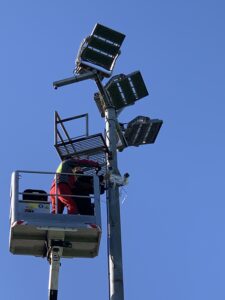
Launching Your Football Recording Journey with Financial Ease

Embarking on your football recording journey often involves navigating the financial constraints that come with significant upfront costs, especially for amateur and lower league clubs. Leasing a video camera emerges as a strategic solution to this challenge, providing clubs with the means to kick-start their football recording and analysis without incurring a significant upfront cost, as seen with other video camera solutions.

The financial flexibility offered by leasing allows clubs to allocate resources efficiently and strategically. The absence of large upfront costs associated with purchasing a camera outright provides clubs with the freedom to explore and implement football recording without being restricted by financial constraints.

Focus on recording football with no maintenance worries

In the competitive world of sports, particularly football, the focus should be on mastering the game rather than dealing with the intricacies of camera engineering. Opting to lease a video camera for football recording offers clubs a distinct advantage by transferring the responsibility of troubleshooting and repairs from the customer to the supplier.

This strategic shift allows football clubs to concentrate on their core competencies—winning matches and enhancing player performance with analysis—while leaving the technical aspects of camera maintenance in the capable hands of the supplier. The burden of ensuring the seamless functioning of the recording equipment rests solely on the supplier's shoulders, streamlining operations for football clubs and ensuring a hassle-free experience where technology serves as an enabler rather than a potential distraction.

zone14 ONE camera mounted on pole

Continuous Development of Your Football Recording Camera

The rapid pace of technological advancements demands a forward-thinking approach, especially in industries where innovation directly influences performance. Football recording is no exception, and the decision to lease a video camera becomes a strategic one, aligning with a commitment to continual development and improvement.

Choosing to lease ensures that clubs are not merely investing in a static product but are entering into a dynamic partnership. Suppliers actively work on enhancements over time, guaranteeing that the leased camera systems evolve with the latest technological advancements. This commitment to staying at the forefront of innovation guarantees that clubs always have access to a top-tier product, enhancing the overall quality of football analysis and player development.

At zone14, we are continually committed to developing our products to best suit the needs of our partner clubs. zone14 STATS ‎‎‎‏‏‎ ‎and LIVE are just two recent major developments to our football recording system. Learn more about our commitment to improvement with our recent ‘Fall Of Features’ campaign.

Heatmaps by zone14 (Zoomed)

Embracing Sustainability by leasing your camera for football recording

In the dynamic world of football, where every kick and goal is meticulously recorded for analysis and improvement, the environmental impact of our technological choices often slips under the radar. However, the choice between leasing and purchasing a video camera for football recording can play a pivotal role in promoting sustainability.

Opting for a leased camera system extends beyond the immediate benefits of football analysis; it contributes to a greener future by minimising electronic waste. Leasing allows for a circular economy approach, where cameras, once they've served their purpose for one user, can easily find a new home with other clubs or sports organisations.

Furthermore, leasing systems facilitate efficient replacement and reuse of parts, reducing the overall environmental footprint. This commitment to sustainability not only aligns with global environmental goals but also reflects a conscientious approach to technological advancements in the sports industry.

Mounted zone14 ONE camera system

In conclusion, the decision to lease a video camera for football recording offers a range of benefits which are particularly advantageous to amateur football clubs. It serves as a strategic choice that aligns with sustainability goals, offloads maintenance concerns, ensures ongoing technological relevance, and provides a cost-effective entry point for clubs looking to embrace the benefits of football recording.

Choosing to lease a video camera for football from zone14 for your recording is like scoring a hat-trick of benefits. It's not just about recording goals; it's about embracing an eco-friendly approach, hassle-free operations, continuous tech upgrades, and a budget friendly solution. With zone14, you're not just getting a camera; you're gaining a dynamic teammate committed to making your football recording and analysis process seamless.

Share on Facebook
Share on Twitter
Share on Linkedin

Table of Contents

Categories
Fußball Kamera

A question of perspective: fixed and mobile football cameras

Contents

A question of perspective: fixed and mobile football cameras

A football camera may seem like a simple tool at first glance, but its importance to a team's success should not be underestimated. In this post, we take an in-depth look at the differences and similarities between fixed and mobile cameras for recording and analyzing football training and games.
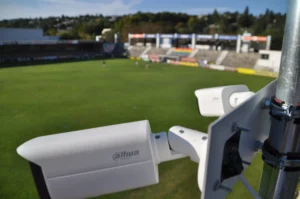
Fixed football cameras:

Advantages:

Stability and Continuity: Fixed cameras provide a stable and constant perspective, ideal for capturing tactical formations across the entire field.

Coverage: Wide-angle lenses allow fixed cameras to capture the entire field, which is crucial to understanding the dynamics of the game.

Accessories: Once set up and set up, a permanently anchored camera does not require additional, often expensive accessories such as a tripod. There is also no need to recharge it every time.

Disadvantages:

Lack of flexibility:They are fixed in their orientation and therefore do not offer the possibility of being used for away games.

Higher installation costs: Fixed cameras can take significantly longer to install and are potentially more expensive than mobile alternatives.

Mobile football cameras:

Advantages:

Flexibility and adaptation: Mobile cameras offer the opportunity to take pictures regardless of location depending on the situation. This enables targeted analysis of specific game situations or players, even in away games.

Cost-effectiveness: Compared to fixed cameras, mobile options are typically more cost-effective and require less installation effort.

Disadvantages:

Stability: They can be damaged by wind, weather or players, especially if the camera is not securely positioned or secured.

Limited Coverage: Mobile cameras may struggle to capture the entire field at once, which can be a hindrance when analyzing formations.

Similarities:

Despite their differences, fixed and mobile football cameras have common goals in analysis:

Image quality: Both options aim for high image quality to provide precise insights into plays, techniques and tactics.

Training Improvement: Both fixed and mobile cameras serve the purpose of improving training sessions and tactics, uncovering weaknesses and emphasizing strengths.

Tactical Insights: Both options help coaches, analysts and teams gain tactical insights to refine and optimize their strategies.

Whether it can be set up or permanently installed, both options have their advantages. There are numerous options on the market with different features and prices. To find the perfect football camera, you should consider important factors such as image quality, flexibility and cost-effectiveness. When investing in video analytics solutions, it is crucial to consider individual needs and choose a tailored solution. With the right balance between stability and flexibility, football analysis becomes a powerful tool for increasing the tactical brilliance of coaches and teams alike.

How is the zone14 fixed camera system mounted?

zone14 is revolutionising the way clubs at lower levels of the game are able to analyse and improve their performance with an innovative approach to football data. Through the integration of AI and Data into the realm of football camera technology with 'STATS' clubs are able to access player data through their our fixed camera system.

zone14’s easy to use 'REPLAY' System allows you to analyse and tag every moment. Furthermore, you no longer have to wait until after the match to begin your analysis. The zone14 ‘LIVE’ package makes it possible for you to carry out mid-game analysis and broadcast your match to viewers wherever they are in the world. With great commitment to accessibility and accuracy, zone14's one-time installation and fixed-mounting football camera provides high precision in data and football video capture. Take your football team to the next level all through one camera. The zone14 'LIVE' Package makes it possible for you to carry out mid-game analysis and broadcast your match to viewers wherever they are in the world. With great commitment to accessibility and accuracy, zone14's one-time installation and fixed-mounting football camera provides high precision in data and football video capture. Take your football team to the next level all through one camera.

The Importance of Camera Placement

Before delving into the installation process, it's crucial to understand the best practices for positioning your football camera. Optimal coverage requires strategic placement in the middle of the pitch, approximately 3 metres away from the sideline. The camera should be elevated to 6 metres above ground level to ensure a perfect view for in-depth analysis and recording.

Your Partner in Setup

Once you have purchased your zone14 football camera system our dedicated team will be on hand to guide you through the entire set-up process. We will discuss the ideal installation location with you, determine the required cable lengths and arrange a suitable date for the installation. You can rest assured that you are never alone with zone14 - you can always rely on our 24/7 support and expert advice.

Choosing the Right Location

Flexibility is always possible with your zone14 camera system. Common locations used by our clubs include floodlight poles, grandstand roofs, normal poles, and even in some cases more unique options like sturdy trees. Each location can effectively record matches and training sessions. Consider your ground layout and power accessibility when selecting the perfect spot. Our team will be there to assist you in making this crucial decision.

Setting Up the Camera and Box

All essential tools for installation are conveniently included in the shipment. You'll find a screwdriver (Torx), security cable, and installation guidance at your disposal. Depending on the mounting location, a ladder or high-riser machine might also be necessary for certain elevated positions.

Your football camera will arrive pre-connected to a mounting plate, simplifying the process. Securely attach it to your chosen location, remembering to affix the provided security cable for additional stability and security.

Once you have securely mounted your camera, further fine-tuning of individual camera positions may be necessary. Our team will be able to remotely connect to your cameras and guide you through this process, guaranteeing optimal camera placement for a clear and comprehensive view of the entire pitch.

Connecting the Cables

Proper cable connections are key to seamless operation. Two ethernet cables are provided in your shipment. Each ethernet cable will need to be wired from each camera and then down to the box. Ensure a reliable power source nearby, as the cameras require approximately a 1.5-meter power cable. This cable length will be tailored to your specific requirements. It is also important to remember your cables are secured with cable ties.

Final Set Up

With the mounting process complete, you are nearly ready to use video analysis to elevate your team to success. Record your first match or session, and our team will perform a final calibration, ensuring everything is optimised to deliver the highest quality football recording.

zone14 empowers clubs to elevate their performance through unrivalled football video analysis. Trust in our expertise and cutting-edge technology to take your team to the next level.

Share on Facebook
Share on Twitter
Share on Linkedin

Got any questions?
We'd be happy to hear from you.

Simply select a personal meeting for a product demo. 

Categories
Fußball Kamera

zone14 vs Veo - Cameras for football recording and analysis 2025

Contents

zone14 vs Veo - Cameras for football recording and analysis 2025

The demands on modern football camera systems are increasing - whether for match analyses, highlight videos or live streams. Two providers that have proven themselves particularly well in the amateur and youth sector are zone14 and Veo.

With the new zone14 TWO and the Veo Cam 3, both manufacturers have further developed their technology - focussing on better image quality, faster workflows and smart analysis functions.

In this article, we compare the two systems based on their current versions and show you which is better suited to your club: mobile vs. stationary, analysis vs. highlight, individual team vs. club solution.

Current models at a glance

zone14 TWO

  • Latest generation of stationary camera from zone14

  • 4K ultra-wide angle with improved low-light performance

  • Designed for permanent installation (floodlight poles, stadium roofs, etc.)

  • No battery required – always ready via power supply

  • Fully automated via REPLAY (video analysis), STATS (performance data) and LIVE (streaming)

Veo Cam 3

  • Successor to the popular Veo Cam 2

  • Two 4K lenses with improved stitching

  • Compact & mobile, suitable for location-independent use

  • Battery-operated, approx. 4 hours running time

  • Integrated SIM card for upload & live streaming

Both models bring progress compared to their predecessors - but the areas of application remain different.

Subscription vs. purchase model

zone14 TWO

  • Camera is included in the monthly subscription from €115/month

  • No additional costs for:

    • Zubehör, Halterung, Cloud-Speicher

    • Analyse-Tools (REPLAY, STATS)

    • Nutzung durch mehrere Mannschaften

  • Vorteil: Planbare Kosten ohne große Einstiegshürde

Veo Cam 3

  • Kamera kostet ca. 1299 € (zzgl. MwSt.)

  • Zusätzlich:

    • 67 €/Monat Grundabo (1 Team)

    • 30 €/Monat für Analysefunktionen

    • Zubehör wie 7,3 m Stativ & Transportkoffer optional

Fazit: Wer flexibel einsteigen möchte oder mehrere Teams betreut, profitiert von der Abo-Struktur bei zone14. Veo bietet dagegen Besitzrechte – für Teams mit fixem Budgetmodell ein interessanter Punkt.

3. KI & Analyse: Was wird erkannt?

zone14 TWO

  • KI basiert auf Spieler-Tracking

  • Analysiert taktische Bewegungen, auch ohne Ballbezug

  • Besonders geeignet für:

    • Training mit mehreren Bällen

    • Positionstreue & Raumverhalten

    • Tiefgehende Spielanalysen

  • Künftig auch individuelle Spielerstatistiken & Heatmaps

Veo Cam 3

  • KI folgt primär dem Ball & Spielgeschehen


  • Automatische Kameraführung


  • Analyse-Features (Veo Analytics) verbessern Highlight-Auswahl & Clip-Tagging


  • Für taktische Detailanalysen etwas eingeschränkter

Trainer*innen mit Fokus auf Spielerentwicklung & Systemanalyse greifen gerne zur zone14 TWO. Wer primär Spiele dokumentieren und teilen möchte, findet in der Veo Cam 3 eine Lösung.

Installation & Mobilität

zone14 TWO

  • Montageart: Stationär (z. B. Flutlicht, Dach)
  • Aufbauzeit: Einmalige Installation (~45 Min)

  • Stromversorgung: Netzstrom (dauerhaft verfügbar)

  • Wetterresistenz: Hoch (industrielle Fixmontage)

  • Zielgruppe: Vereine mit Heimspielstätte

Veo Cam 3

  • Montageart: Mobil (Stativ nötig)

  • Aufbauzeit: Vor jedem Spiel (~5–10 Min)

  • Stromversorgung: Akku (ca. 4 Std. Aufnahmezeit)

  • Wetterresistenz: Robustes Gehäuse

  • Zielgruppe: Mobile Teams & Turniernutzer

Wer einmal installieren und dauerhaft nutzen möchte, spart bei zone14 wertvolle Zeit. Wer regelmäßig an verschiedenen Orten filmt, profitiert von der Mobilität der Veo Cam 3.

5. Live-Funktionen: Streaming & Echtzeit-Coaching

zone14 LIVE

  • Livestream direkt auf YouTube oder eigene Website

  • Kein App-Zwang – abrufbar auf jedem Gerät

  • Live-Coaching-Ansicht für Trainer via REPLAY-Plattform

  • Echtzeit-Clips, Markierungen & Upload direkt nach Abpfiff

Veo

  • Streaming über Veo-App (per Mobilgerät abrufbar)

  • Zuschauer werden bei Live-Übertragungen benachrichtigt

  • Neues Design verbessert Overlay-Grafiken & Stream-Stabilität

Beide Systeme ermöglichen Livestreams. Wer gleichzeitig taktisch coachen will, bekommt bei zone14 mehr Möglichkeiten in der Echtzeitanalyse.

Leistungsdaten & Statistiken

zone14 STATS

  • Automatisch generierte Werte zu:

    • Laufdistanz, Geschwindigkeit, Intensität

    • Heatmaps & Positionsdaten

  • Kein GPS nötig – Analyse basiert vollständig auf Video & KI

  • Ideal für Trainer, die auch physischen Leistungsoutput im Blick behalten wollen

Veo Analytics

  • Bietet:

    • Ballbesitz, Torschüsse, Pässe, Heatmaps

    • Clip-Tagging & automatisierte Highlights

  • Keine physischen Leistungsdaten verfügbar

Für reine Spielereignisse & Highlights bietet Veo ein gutes Paket. Wer zusätzlich Laufleistung & Bewegung verstehen will, bekommt bei zone14 eine datenbasierte Erweiterung.

Conclusion

Beide Systeme haben ihre Stärken – die Veo Cam 3 punktet mit Flexibilität und Mobilität, ideal für Teams, die an verschiedenen Orten spielen. Die zone14 TWO hingegen bietet dank ihrer stationären Installation, einem planbaren Abo-Modell und fortschrittlichen, KI-gestützten Analysefunktionen einen leichten Vorteil für Vereine mit fester Heimspielstätte. Sie ermöglicht kontinuierliche Betriebsbereitschaft, tiefergehende taktische Einblicke und eine umfassende Unterstützung der Trainerarbeit. Daher könnte die zone14 TWO für Vereine, die langfristig in detaillierte Spielanalysen und nachhaltige Entwicklung investieren möchten, die passendere Lösung sein.

Share on Facebook
Share on Twitter
Share on Linkedin