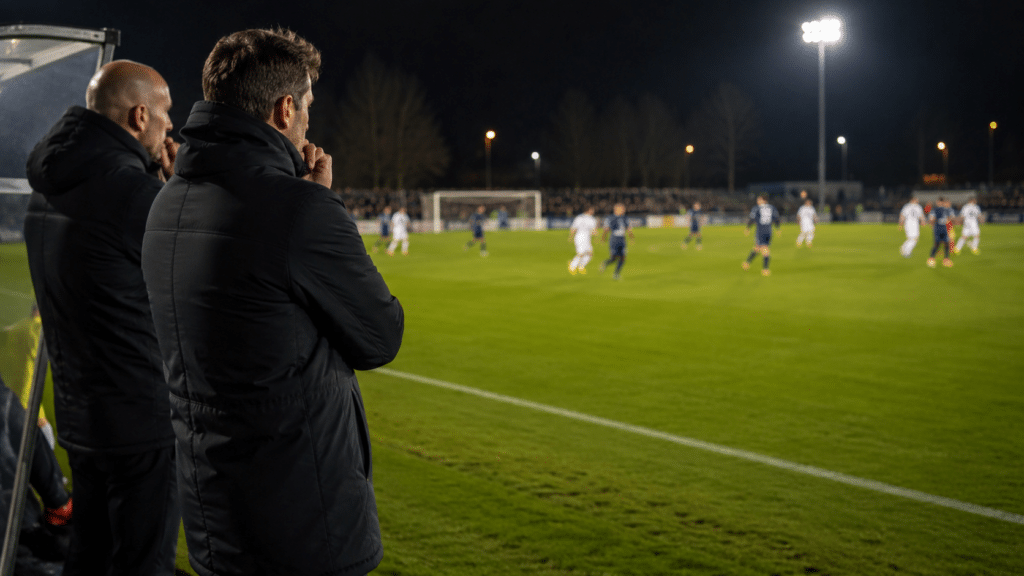
Categories
Game data

The Best Football Trackers 2026: A Comparison of GPS Vests, Wearables, and Video-Based Tracking

Contents

The Best Football Trackers 2026: A Comparison of GPS Vests, Wearables, and Video-Based Tracking

Tracking has long since arrived in soccer. What was once almost exclusively reserved for professional clubs is increasingly interesting today for academies, ambitious amateur clubs, youth teams, and individual players.

Coaches no longer want to rely on statements like: „We weren't intense enough,“ „We lacked runs,“ or „We got tired at the end.“ They want objective answers. How many kilometers were covered? How many sprints were there? Where did intense runs take place? How compact was the team? Which players were able to accelerate repeatedly even in the final phase?

This is precisely why the market for soccer trackers, GPS vests, wearables, and video-based analysis tools is growing. However, not every solution is made for the same purpose.

Some systems focus on individual performance data. Others measure technical actions like ball contacts or foot usage. Still others, like zone14 STATS, go a different way: They generate performance and tactical data directly from game video — completely without GPS vests or wearable sensors.

In this comparison, we show which football tracking solutions will be particularly relevant in 2026 and which solution makes the most sense for which club.

What is a football tracker?

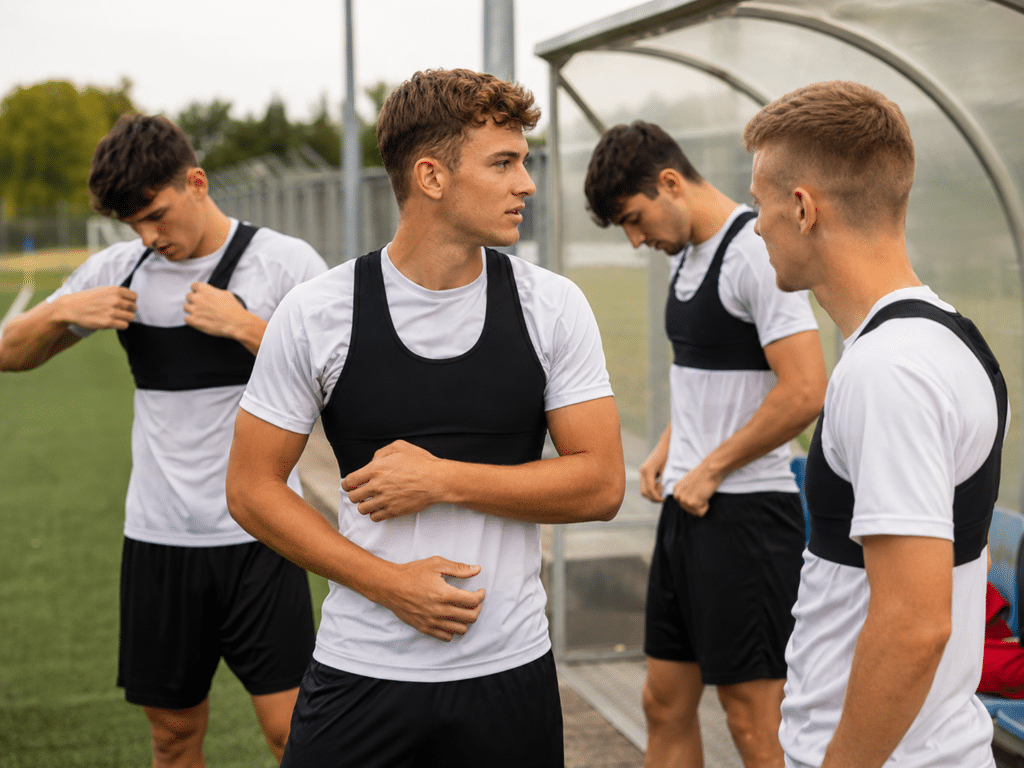
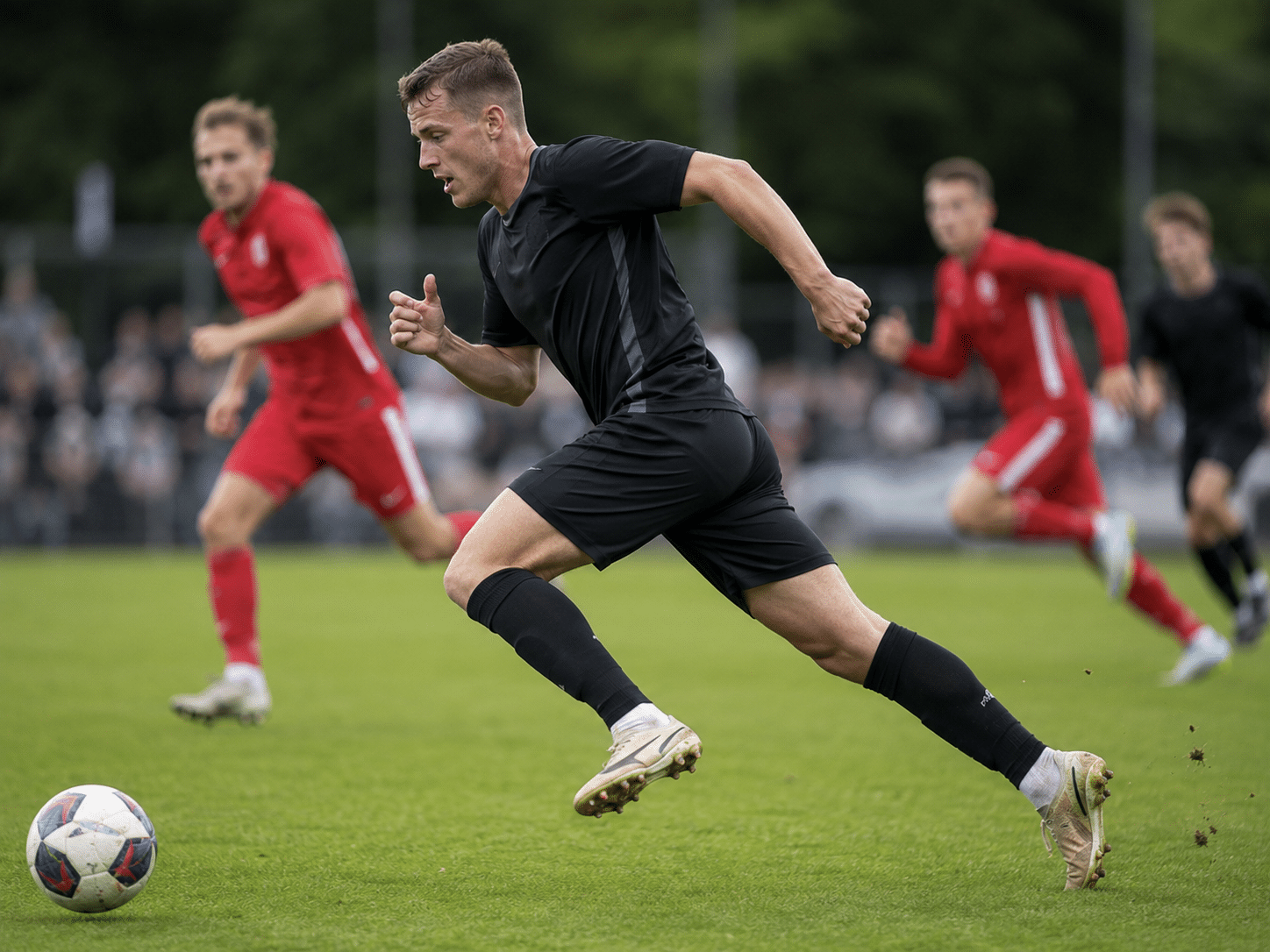
Soccer players prepare for a training session on the sidelines with black GPS training vests.

A football tracker is a system that collects performance data from players or entire teams. Many people's first thought is of GPS vests: the tight vests that players wear under their jerseys and which usually have a small sensor between their shoulder blades.

These devices measure classic physical data such as total distance, sprint distance, maximum speed, accelerations, or load. They have long been established in professional football, but academies and amateur clubs are also using them more and more frequently.

However, GPS vests are no longer the only option. Football tracking today includes, among other things:

  • GPS-Vests
  • wearable sensors
  • Sensors on the shoe
  • camera-based tracking systems
  • AI-powered video analysis
  • All-in-one platforms for video, data, and coaching

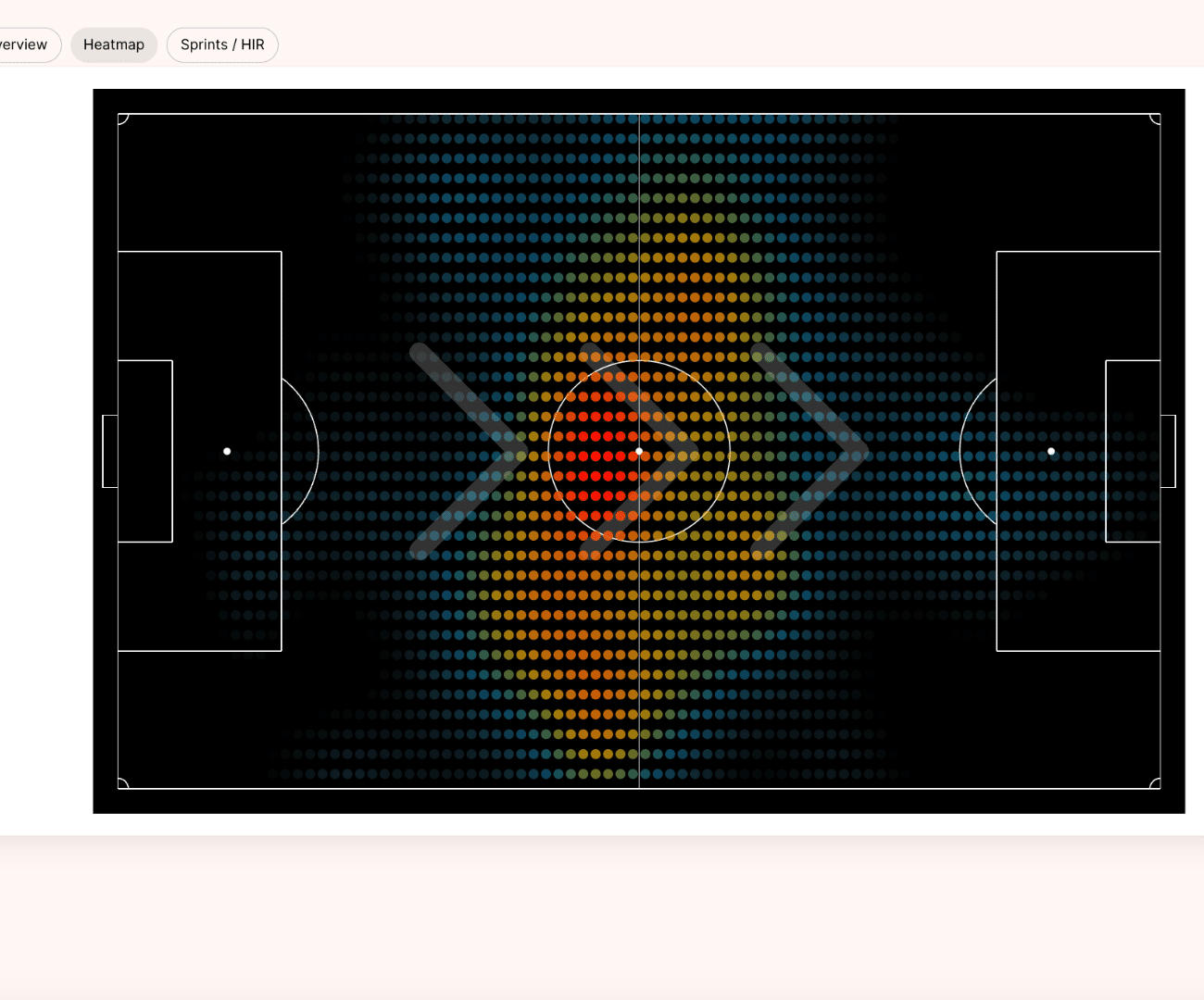
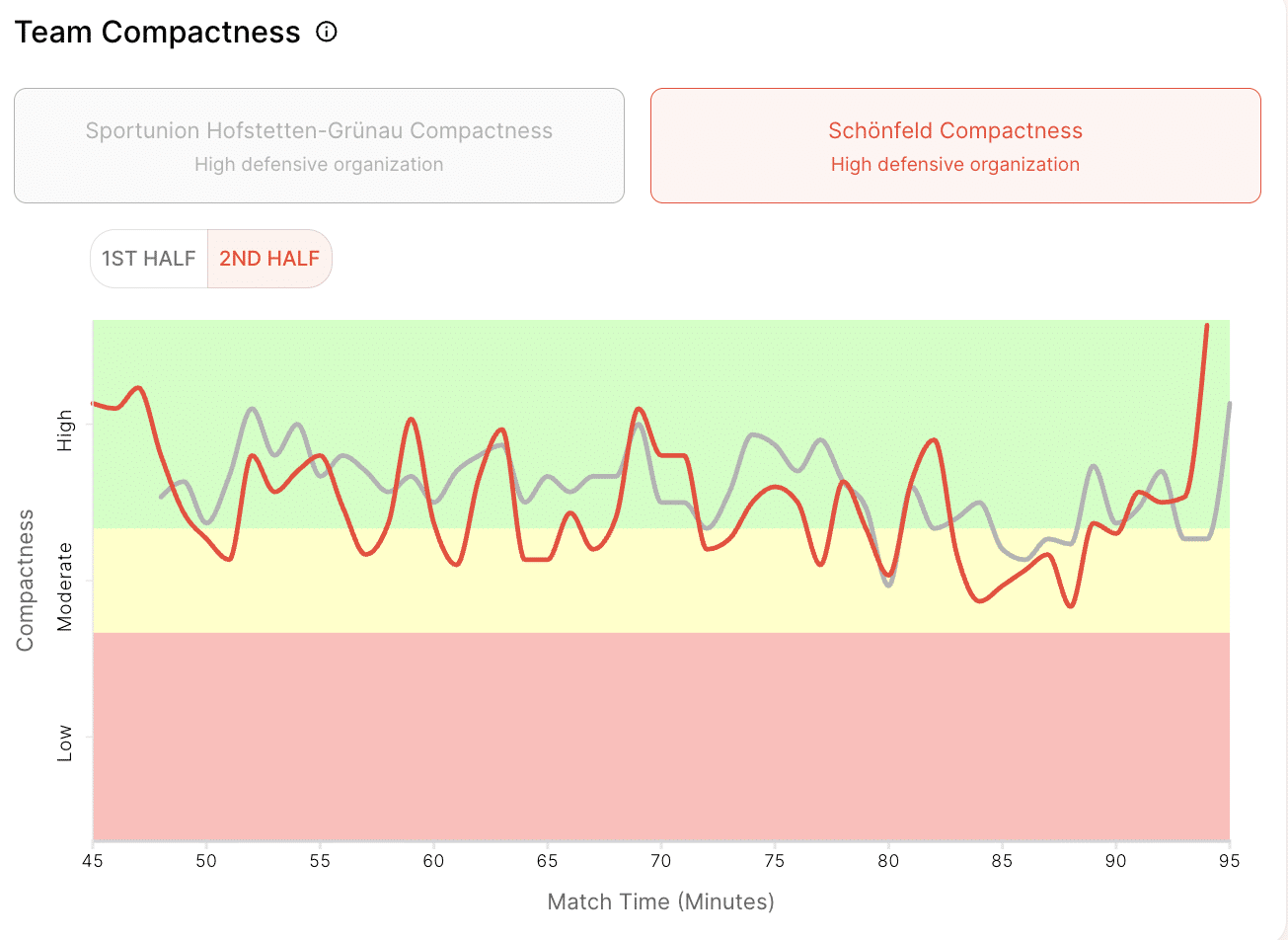
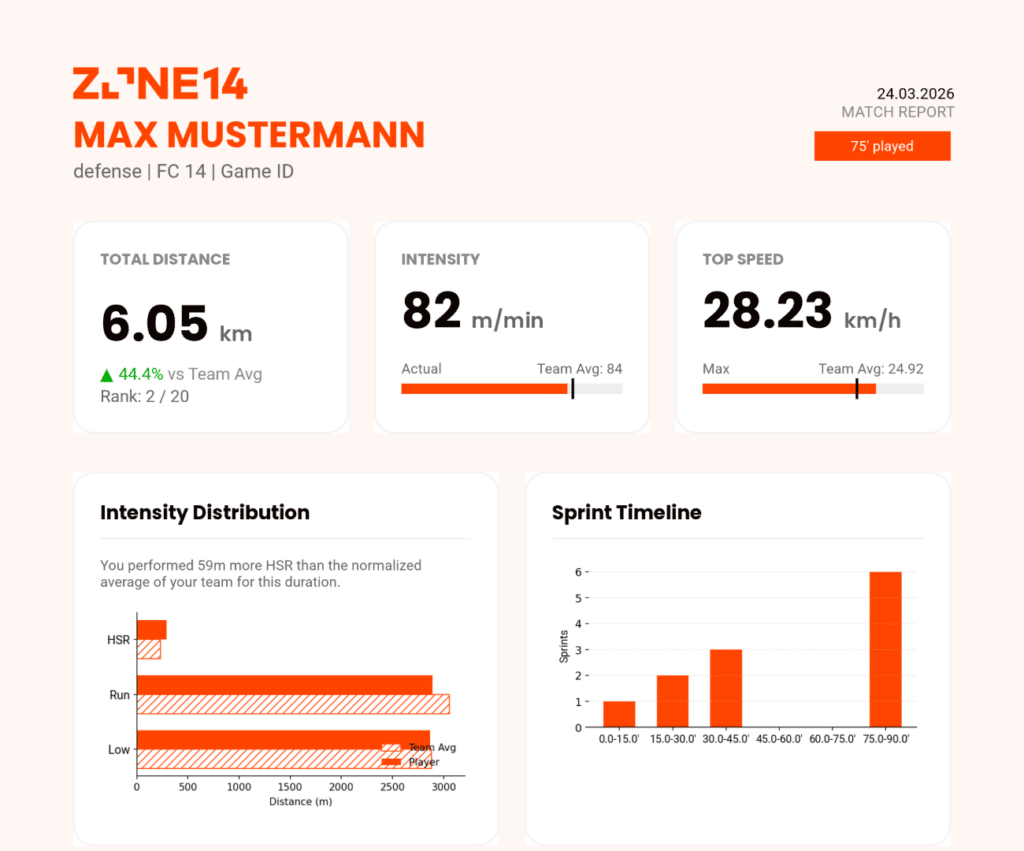
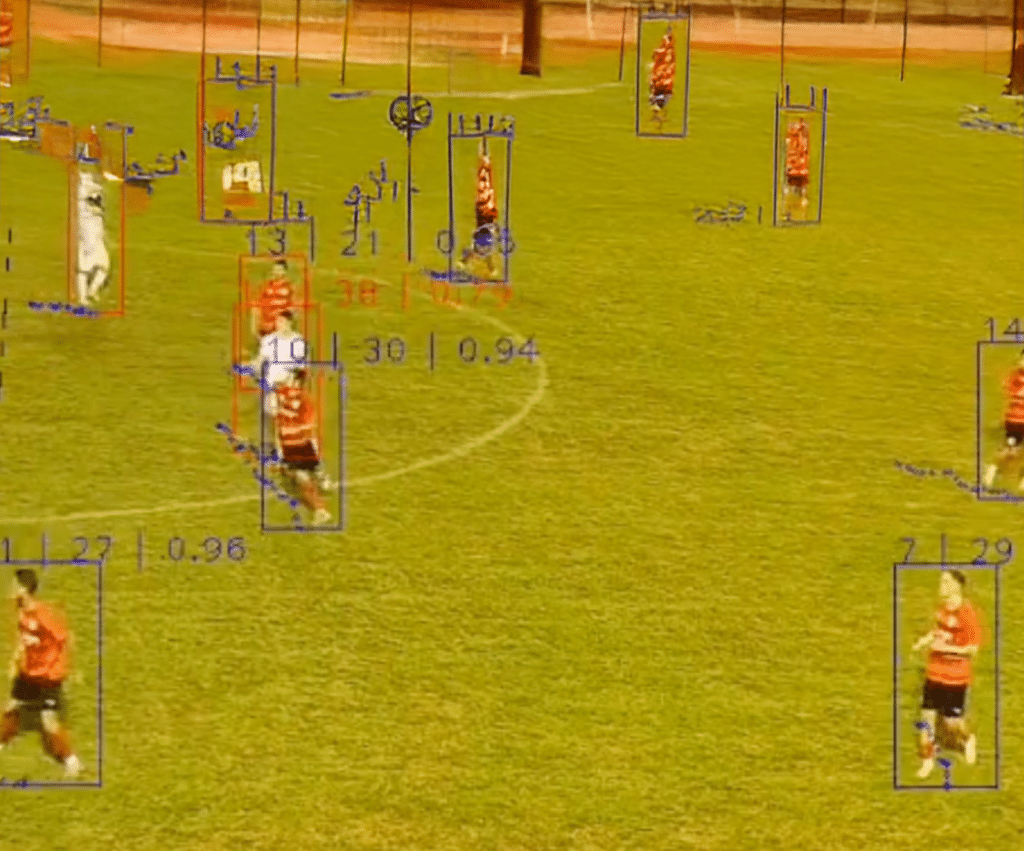
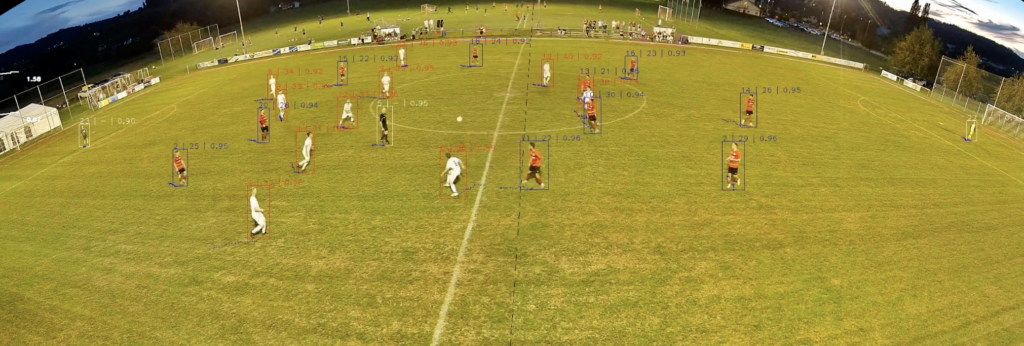
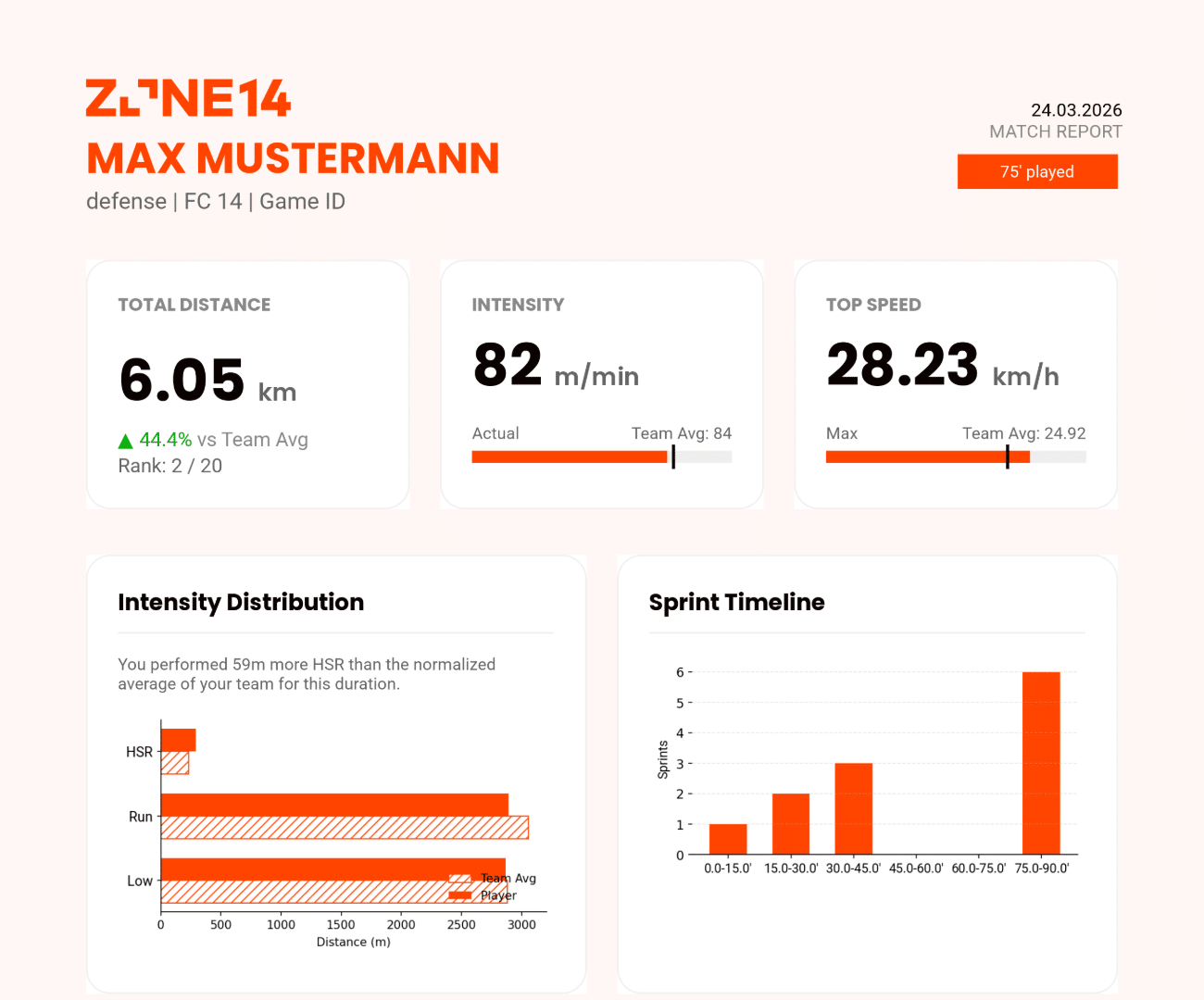
This last category includes zone14 STATS. Instead of equipping each player with a sensor, zone14 uses game video to capture performance data such as distances, sprints, sprint maps, Heatmaps, Team Compactness, to create team dominance and individual player reports.

zone14 STATS

Football Tracking without GPS vests

What should a good football tracker measure?

A good football tracker shouldn't just collect data. It should help coaches make better decisions.

Typical key figures in soccer tracking are:

  • Total distance traveled
  • Sprint distance
  • Number of sprints
  • intensive runs
  • Top Speed
  • Average speed
  • Accelerations and decelerations
  • Heatmaps
  • Sprint Maps
  • Player load
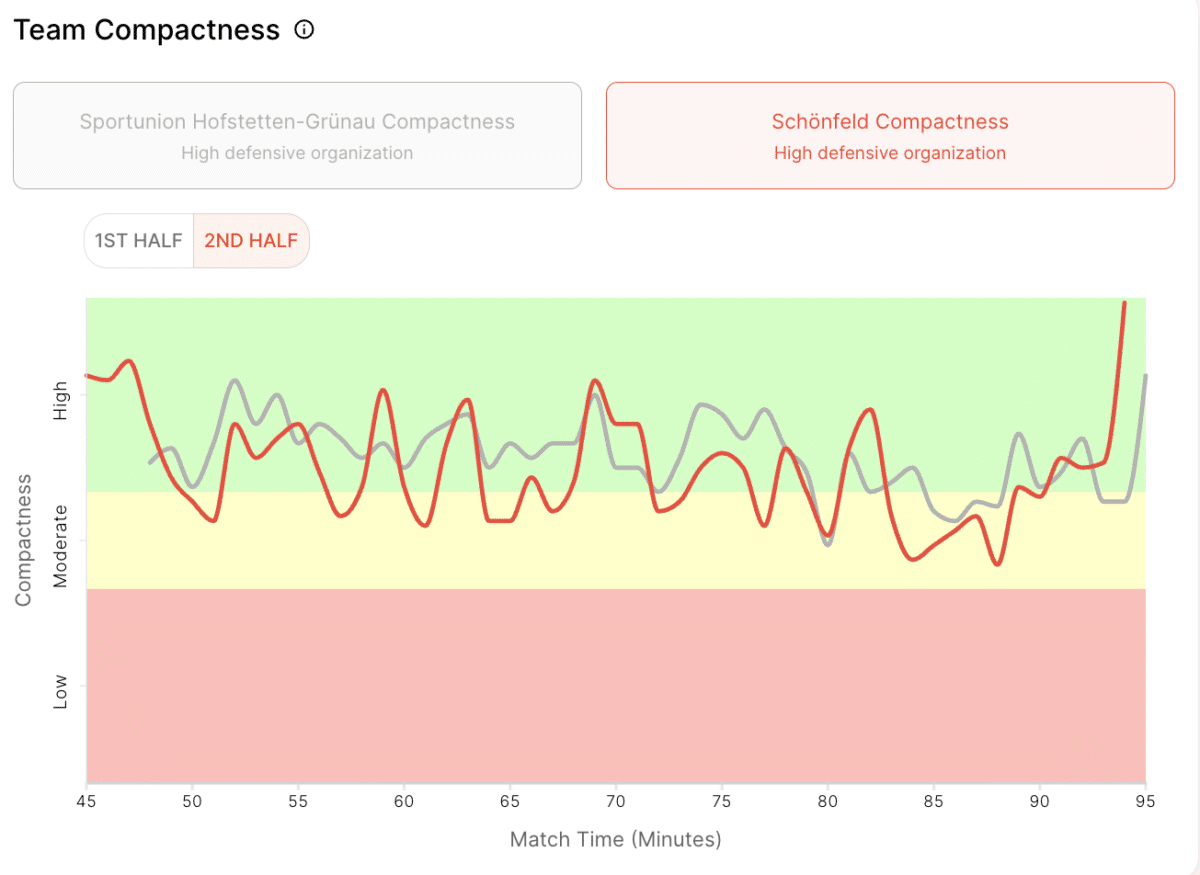
  • Team structure and compactness
  • Individual player reports

Classic GPS trackers are primarily strong in physical data. They show how far a player ran, how fast they were, and how intense their exertion was.

Video-based tracking goes a step further. It connects these numbers to the actual game. So, when a coach sees that a winger has made many sprints, they also see, where these sprints have happened, where you have created dangerous situations and how they fit into the team structure.

This is an important difference.

GPS provides player statistics.
Video-based tracking provides in-game statistics.

zone14 REPLAY

Analyse in minutes, not hours.

STATSports: Well-Known GPS Solution for Players and Teams

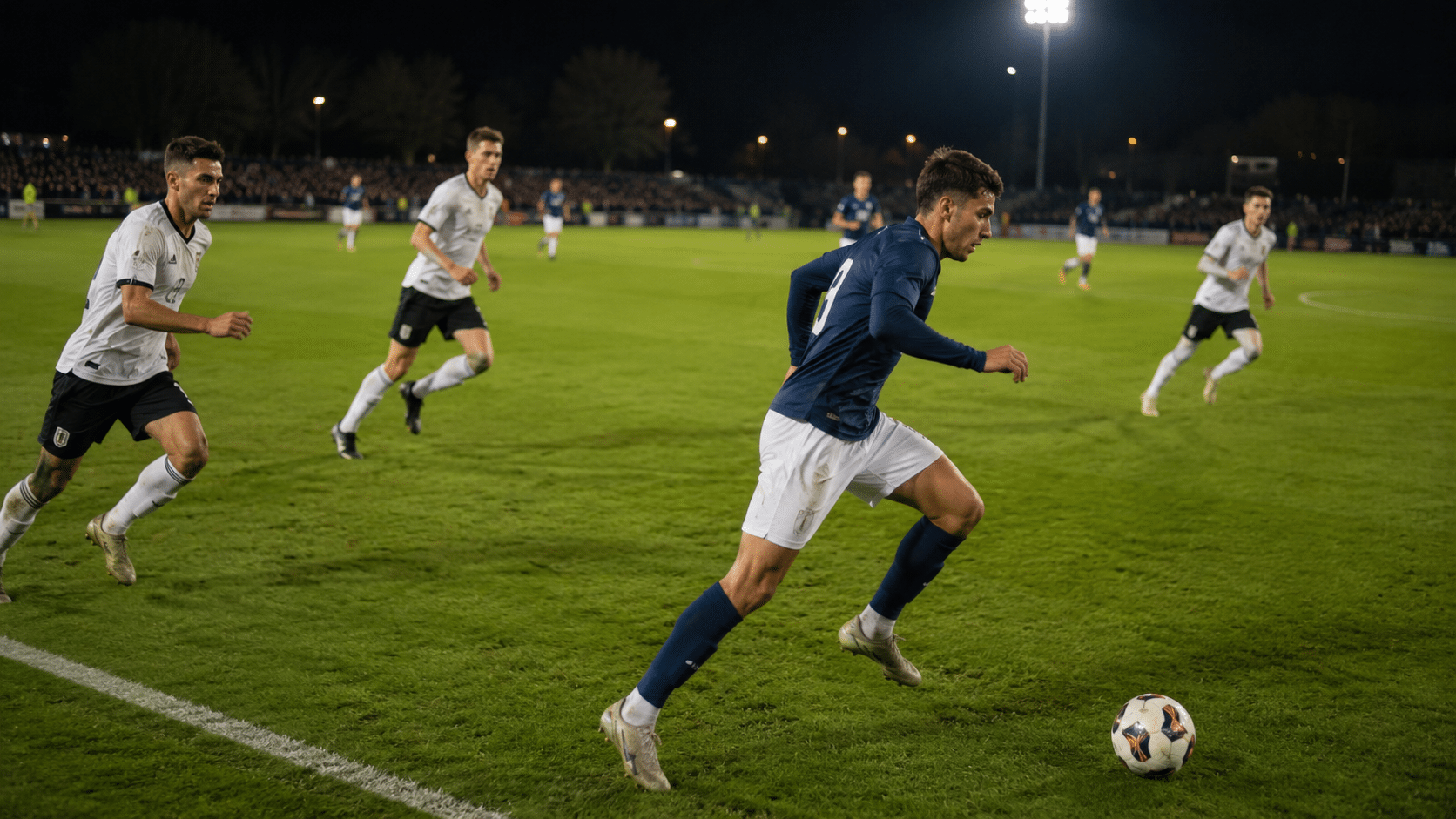
A soccer player sprints across the field at high intensity during a game.

STATSports is among the best-known brands in football GPS tracking. The name is particularly prominent in the professional and academy sectors. The systems capture classic performance data such as top speed, sprint distance, running volume, and load.

For individual players who want to track their own development, STATSports can be an interesting solution. Teams looking to specifically collect physical data from training and games will also find an established GPS system here.

Suitable for: Individual players, academy players, and teams who want to specifically use GPS data.

Strengths:

  • well-known brand in football
  • misses important physical performance data
  • suitable for individual development
  • Usable in training and games

Limits:

  • Players must wear GPS vests
  • Devices must be charged, assigned, and managed
  • Tactical video analysis is not automatically part of the workflow

For clubs, the question therefore arises: Is pure running data sufficient? Or does the coaching team need the connection between data, game video, and tactical context?

Catapult: GPS Tracking for Professional Performance Management

Catapult is also a major brand in sports technology and performance analysis. The systems are particularly interesting where clubs work with clear sports science processes and want to manage load over longer periods.

Catapult can record data such as sprint distance, total distance, top speed, and other load metrics. This can be very valuable for professional clubs, academies, and ambitious performance centers.

Suitable for: Professional clubs, performance centers, and teams focused on athletics and load management.

Strengths:

  • strong position in professional sports
  • good solution for physical performance data
  • helpful for training control
  • suitable for sports science workflows

Limits:

  • possibly too complex for many amateur or non-league clubs
  • Wearables require
  • Video analysis and tactical evaluation often run in separate systems

Catapult is a strong solution when a club knows exactly how it wants to integrate GPS data into its performance management. However, in everyday practice, many coaches don't just need more numbers, but understandable insights that are directly linked to game situations.

PlayerData: GPS Tracking for Clubs from Amateur to Professional

PlayerData positions itself as a GPS solution for teams from grassroots to professional levels. The focus is on wearable GPS trackers, team data, heatmaps, and practical use for clubs.

This makes PlayerData particularly interesting for teams looking to get into GPS tracking without immediately investing in a very complex professional system. Clubs can use it to better understand distance covered, intensity, and workload during training and games.

Suitable for: Amateur clubs, academies, and semi-professional teams that want to use GPS vests.

Strengths:

  • Practical approach for clubs
  • Team-oriented GPS tracking
  • Performance and intensity data
  • also interesting for smaller structures

Limits:

  • still dependent on portable devices
  • The West must be organized and managed.
  • Video analysis and tactical feedback are not automatically integrated

PlayerData shows well that GPS tracking is no longer just a topic for professional clubs. Nevertheless, it remains a wearable system. The club must therefore continue to manage devices, equip players, and then translate the data into daily training.

Playermaker: Wearable for technical player development

Playermaker differs from traditional GPS vests. The sensors are worn on the shoe and capture not only physical actions but also technical data such as ball contacts, foot usage, or specific movement patterns.

This makes Playermaker particularly interesting for individual player development. Those who want to measure technical actions more precisely will find data here that traditional GPS vests do not provide in this form.

Suitable for: individual players, technical development, and ball contact analysis.

Strengths:

  • missed technical actions and physical activity
  • interesting for individual development
  • Focus on ball touches and footwork
  • other data than classical GPS vests

Limits:

  • stronger focus on single player
  • No complete team and video analysis system
  • does not replace tactical game analysis

Playermaker is therefore less of a classic competitor to a club platform and more of a specialized tool for individual development.

zone14 STATS: Football Tracking Without GPS Vests

zone14 STATS takes a different approach. The performance data is generated directly from the game video. Clubs receive, among other things, distances, sprints, sprint maps, Heatmaps, Team Compactness, Team dominance and individual player reports — without GPS vests, without sensors, and without manual tracking.

This is especially interesting for clubs that film their games anyway or want to professionalize their analysis. zone14 is not just a tracker, but part of a larger analysis workflow.

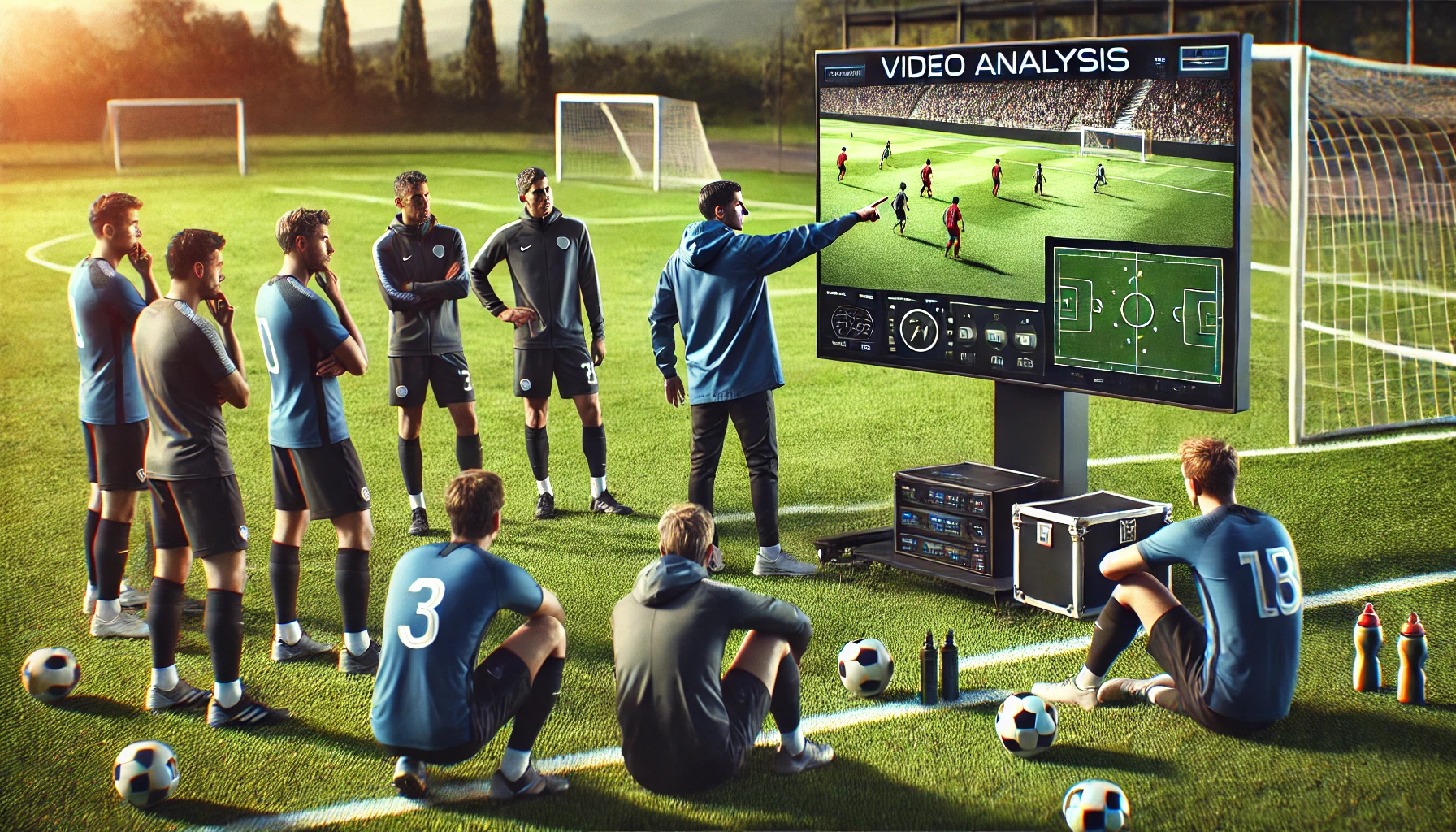
With zone14 TWO Can games be automatically recorded from a fixed 180-degree perspective? With zone14 REPLAY Coaches analyze video, create clips, build playlists, and share feedback with players. zone14 LIVE Can games be streamed? And with zone14 STATS The game video also becomes a source of objective performance and tactical data.

That's precisely where the difference lies.

A GPS vest can show how many kilometers a central midfielder has run. zone14 can additionally show where these runs took place, how they contributed to team compactness, and which game situations explain the performance.

Suitable for: Clubs, academies, non-league teams, and ambitious amateur coaches looking to utilize performance data, video analysis, and tactical context in one system.

Strengths:

  • No GPS vests needed
  • no sensors to load, distribute, or collect
  • Performance data is generated directly from the game video
  • Heatmaps, Sprint Maps, and Player Reports
  • tactical metrics such as team compactness and dominance
  • Data is directly connected to video analytics
  • Part of the larger zone14 system with camera, REPLAY, and LIVE

For many clubs, this approach is particularly practical. Coaches don't just want to collect data. They want to understand games, show players specific plays, and derive better training content from them.

zone14 STATS

Football Tracking without GPS vests

GPS vests or video-based tracking: What is better?

There isn't one right answer for every club.

If a single player wants to measure their own running data, a GPS vest like STATSports or Catapult can be useful.

If a performance center wants to monitor load, training control, and close-to-body data in great detail, GPS systems will still have their place.

When technical ball contact and foot actions are the focus, a tool like Playermaker is exciting.

If a club wants to connect match video, performance data, tactical insights, heatmaps, player reports, and coaching feedback in a workflow, then zone14 STATS the more complete solution.

This is especially true for amateur clubs, academies, and non-league teams. They often lack the time, staff, or budget to manage GPS vests for every player. What these clubs need is a simple process: record the game, analyze it, get the data, and clearly show the players what happened.

Conclusion: The Best Football Tracker for Clubs 2026

The best football tracker depends on what problem needs to be solved.

For individual physical data, GPS vests remain useful. For technical ball actions, shoe sensors can be interesting. For clubs that want to combine performance data with video analysis and tactical context, zone14 STATS offers the more comprehensive approach.

Modern match analysis means not just knowing how far players have run. It is crucial to understand, why they ran, where they ran, what that meant for the team structure and how these findings can be carried over to the next training session.

This is precisely where zone14 comes in.

With zone14 STATS The game video becomes more than just a recording. It becomes the foundation for objective performance data, tactical insights, and clear player feedback — all without GPS vests.

You want to use football tracking without GPS vests? Discover zone14 STATS and transform your game video into performance data, heatmaps, sprint maps, and individual player reports.

Categories
Game data

Team Compactness in Football: What it means, how to interpret it, and how coaches can use it

Contents

Team Compactness in Football: What it means, how to interpret it, and how coaches can use it

Compactness is one of the most important tactical principles in soccer. A compact team keeps the distances between players and team segments controlled. This makes it more difficult for the opponent to play through central spaces, pass between the lines, or isolate individual defenders.

For a long time, compactness was something coaches judged primarily by eye. You could pause a game video and say, „Here we are too far apart“ or „our midfield line is too far from the defense.“ However, without objective data, it was difficult to tell how compact a team truly was over the entire match.

That changes.

Thanks to video-based soccer tracking, compactness is no longer just a concern for professional clubs with GPS systems, analysis departments and expensive tracking infrastructure. Amateur and semi-professional clubs can also leverage team compactness today to support game analysis, player feedback, and training work on a data-driven basis.

In this article, we explain what team cohesion means, how coaches can interpret it, why it is important, and how zone14 STATS which helps analyze compactness without GPS vests.

In football, team compactness refers to how close players are to each other on the field, both offensively and defensively.

Team cohesion describes how closely or loosely a team stands together as a unit.

Simply put: a compact team controls the distances between players — both horizontally and vertically. Horizontal compactness describes how wide or narrow a team is spread across the pitch. Vertical compactness describes the distance between attack, midfield, and defense.

If a team is horizontally compact, it can better protect central spaces and more easily direct the opponent to the sidelines. If it is vertically compact, it reduces the space between the lines. This makes it more difficult to play dangerous passes into intermediate spaces.

This is especially important when defending in a block. A compact team makes the playing field smaller for the opponent. Passing lanes become narrower, outlets between the lines are harder to find, and your own players are closer together to support pressing or counter-pressing actions.

Compactness doesn't mean always standing as close as possible. The key is to control the right spaces according to your own playing style.

A team that defends deep often wants to keep central spaces very tight. A team that presses high needs compactness so that the first line, midfield, and defense can push up together. A team in possession can deliberately widen to stretch the opponent—but still needs enough connection between players to react after losing the ball.

The crucial question therefore isn't just:
„Were we compact?“

But rather:
„Were we compact at the right moments, in the right spaces, and fitting our game plan?“

zone14 STATS

Football Tracking without GPS vests

Why compactness is so important

Football is a game of space. Compactness is important because it helps a team control those spaces collectively.

When a team is compact, they can close off central passing lanes, reduce the space between the lines, better support pressing actions, protect dangerous zones, and transition to counter-pressing more quickly. The players are closer together, allowing them to support each other more rapidly.

When a team isn't compact, problems arise quickly. The opponent can become open between the lines. The midfield loses touch with the defense. Pressing becomes easier to overcome. Second balls are harder to win. Center-backs have to defend larger spaces, and full-backs often find themselves in isolated situations.

This is why compactness is not just a defensive issue. It affects pressing, counter-pressing, residual defense, build-up play, and transitions.

Here's an example: A team loses possession while both full-backs are positioned high up the pitch. If the midfield is too spread out and the defensive line is too deep at the same time, the team can hardly counterpress effectively. The problem then isn't just that players aren't tracking back quickly enough. The problem might have already occurred: the team was too stretched before losing the ball.

Compactness helps trainers recognize such structural problems more clearly.

How Coaches Can Interpret Compactness

Compactness data becomes valuable when combined with real game situations.

Against the ball, compactness helps to identify whether the team has stayed connected while defending. Were the distances between the lines controlled? Did the midfield protect the space in front of the defense? Did the first line apply pressure while the rest of the team stayed too deep?

In the press, compactness shows whether the team has acted together. Pressing only works if the first line is supported by the players behind them. If a striker presses alone, the opponent can often easily bypass the pressure. If the midfield pushes forward but the defense stays too deep, the team is pulled apart vertically.

Compactness is particularly important during transition moments. After losing possession, a compact team can initiate gegenpressing more quickly because the players are close enough to apply pressure, close passing lanes, and stop the counter-attack. A team that is too stretched may be able to react and run, but the distances are often too great to truly control the next action.

Compactness can also be relevant when in possession of the ball. Teams often spread out wider and deeper with the ball to create passing options. This is not automatically bad. It becomes problematic if the team becomes too disconnected as a result and loses access after losing possession.

The best interpretation therefore arises from the connection of data and video. The data shows that a team was stretched. The video explains why. Perhaps the opponent shifted the play. Perhaps the defensive line dropped too early. Perhaps the midfield didn't push up after a pressing trigger. Perhaps the score changed the team's behavior.

Compactness should therefore never be used as an isolated evaluation. It is a starting point for better tactical questions.

Compactness is not automatically „the more, the better.“

A common mistake is to understand compactness as a simple good-or-bad number.

That's not how it works.

A team can be compact and still defend poorly if they are compact in the wrong space or don't apply pressure on the ball. At the same time, a team can consciously be less compact if they want to open up the field when in possession and stretch the opponent.

A team defending a lead might play closer together and close down central spaces. A team chasing a deficit might take more risks and become more stretched as a result. A team pressing high can be very compact near the ball, but simultaneously offer space behind the defensive line.

That's why compactness always needs context:

  • What game phase were we in?
  • What was the score?
  • Did we press, defend deep, build up, or transition?
  • Did the opponent force us into a specific move?
  • Did our structure fit our game plan?


The goal is not to create the smallest possible team shape. The goal is to control the important spaces better.

zone14 REPLAY

Analyse in minutes, not hours.

Why compactness data is no longer just for professional clubs

In the past, compactness metrics were almost exclusively available in professional football. To measure team structures over an entire game, you needed tracking systems, GPS infrastructure, analysts, and a lot of time.

This created a clear gap. Professional clubs could analyze their team structure based on data, while amateur and semi-professional clubs often relied on manual video analysis, coach intuition, or individual still images.

Today, video-based tracking is changing this situation. Clubs no longer need to equip every player with a GPS vest to work with objective performance and team data. With the right system, game video itself can become the basis for analysis.

This is important because compactness isn't just about profit. Every team has spacing issues. Every team has to defend together. Every team has to control transitional moments. And every coach wants players to better understand spacing, timing, and team structure.

The difference is: coaches can support these messages with data today.

Instead of saying:
„We were too open in the second half.“

Can a coach say:
„Our team became noticeably stretched after the 60th minute, especially in defensive transitions. Let's look at three scenes where the midfield and defense were no longer connected.“

This is more concrete, understandable, and easier for players to implement.

How zone14 STATS helps in analyzing compactness

zone14 STATS delivers football performance data directly from game video—without GPS vests. This includes, among other things, distances, sprints, sprint maps, Heatmaps, Team Cohesion, Team Dominance, and Individual Player Reports.

For compactness analysis, this means coaches can view team structure as part of the overall game. Instead of relying solely on subjective impressions, objective team metrics help understand when the squad was connected and when it became too stretched.

With zone14 STATS, coaches can ask better questions:

  • Did we stay compact in defense?
  • Did our pressing actions have enough support?
  • Were the spaces between the lines checked?
  • Were we too stretched after turnovers?
  • Did fatigue affect our structure later in the game?
  • Did our team structure fit our game schedule?

Because STATS are based on gameplay footage, compactness can always be considered within the context of the actual game. This is crucial. The metric shows what happened to the team structure. The video helps understand why it happened.

This way, compactness also becomes easier for players to understand. Coaches can not only generally say that the team was too open, but can show specific scenes: moments when the team was well connected, and moments when gaps appeared.

How coaches can use compactness in coaching

Compactness analysis should not end with the match report. It should be incorporated into the training week.

If a team is stretched too vertically, the coach can work on the distances between defense, midfield, and attack. If the team becomes too wide when defending, the focus can be on horizontal shifting and protecting central spaces. If compactness is lost before turnovers, positional play during counter-attacks and counter-pressing can be trained.

The most effective combination is data, video, and training.

First, the pattern is recognized. Then, players are shown relevant clips. After that, an exercise is chosen in training that specifically addresses this problem.

For example: The team presses high, but the defensive line doesn't push up. Compactness data and video clips can show why the opponent was able to bypass the press. In training, the focus can then be on pressing triggers, pushing up, and distances behind the first pressing line.

This is how compactness goes from an abstract concept to a concrete coaching topic.

Analyze team compactness without GPS vests

zone14 STATS makes modern football metrics directly accessible from game video. Coaches can analyze team compactness, team dominance, Heatmaps, analyze Sprint Maps, Distances, Sprints, and individual player reports — without players needing to wear GPS vests.

This is especially helpful for clubs that want to leverage professional insights without introducing additional hardware or complicated workflows.

Would you like to see what video-based football data looks like in practice?

Request a zone14 sample player report and see how performance data can contribute to clearer coaching conversations.

Conclusion

Team compactness is one of the most important concepts in soccer because it shows how well a team controls space together.

A compact team is harder to play against, more connected in pressing, and usually better prepared for transition moments. At the same time, compactness should never be considered in isolation. It only becomes valuable when interpreted in the context of the game.

For coaches, it’s not just about knowing if the team was compact. It’s crucial to understand when compactness was lost, why it happened, how it affected the game, and what lessons can be drawn for training.

With zone14 STATS, compactness data is no longer exclusive to professional soccer. Coaches can use their own game footage to get objective team metrics, improve tactical analysis, and guide training work more precisely.

Ready to transform your gameplay video into tactical and performance insights?

Discover zone14 STATS and analyze team compactness, team dominance, heatmaps, sprint maps, and player reports—all without GPS vests.

Categories
Video Analysis

Best Video Analysis Software for XbotGo Falcon 2026 | Upload & Analyse Your Footage

Contents

Best Video Analysis Software for XbotGo Falcon 2026 | Upload & Analyse Your Footage

The launch of the XbotGo Falcon has changed the game for portable sports recording. By delivering a standalone 4K AI camera that captures every play with stunning clarity—all without a mandatory hardware subscription—XbotGo has given coaches a powerful, independent filming solution.

But as any experienced coach knows, recording the game is only the beginning.

Once the final whistle blows, you’re left with a full 4K match file—either on a microSD card or in the cloud. And while the Falcon excels at capturing the game, it doesn’t include built-in video analysis software.

To turn your recordings into real coaching insights, you need video analysis software for XbotGo Falcon, that allows you to upload and work with your own footage. In 2026, the most effective solution for this workflow is zone14 COACH.

What Can You Do With XbotGo Falcon Footage?

After recording with the Falcon, most coaches quickly realize that simply watching the match back isn’t enough. You want to understand, why nd why things happened—not just what happened. That means being able to isolate key moments, review tactical decisions, and build a clearer picture of performance over time.

In practical terms, coaches typically use zone14 COACH, to:

  • Review key phases of playwithout scrolling through 90 minutes of raw video.

  • Organize clips into themes (e.g., Corner Defense, Pressing Structure).

  • Track patternsacross multiple matches to see if errors are recurring.

  • Give clear, visual feedbackthat players can actually digest.

Without dedicated software, this becomes a manual and time-consuming process. With the right tools, your footage becomes something you can actively coach from—not just store in a "digital graveyard."

zone14 COACH

Your camera. Our cloud. Full flexibility.

Why Your Players Need More Than Just a 4K Recording

The Falcon is an elite cameraman—but it’s not a tactical analyst. Watching a full match from start to finish can give you a general impression, but it rarely reveals consistent patterns or recurring issues. Important details get lost in the noise, and feedback stays broad rather than actionable.

To properly develop your team, you need a way to break the game down into moments, themes, and decisions. Players—especially in youth academies—learn best through short, punchy clips. A 90-minute raw video is often overwhelming for them. zone14 COACH acts as the analysis layer on top of your XbotGo recordings, helping you turn raw footage into structured insight you can actually use in training and match preparation.

Upload and Store Your XbotGo Falcon Footage in the Cloud

One of the biggest advantages of using dedicated video analysis software for XbotGo Falcon is having a reliable system to upload and manage your footage.

Instead of moving files between SD cards, phones, and laptops, you can upload your matches into a secure cloud environment where everything is organized automatically. Over the course of a season, this becomes essential for monitoring player development.

Your full match library is accessible from any device, whether you’re reviewing games at home or preparing a session at the pitch. The platform also handles large 4K files efficiently, ensuring smooth playback during analysis—something that quickly becomes a limitation when working locally or via standard cloud drives.

Identify Tactical Patterns with Professional Playlists

Basic highlight clips show the "what," but our Playlist feature helps you understand the "how." In zone14 COACH, you can curate specific clips into thematic reels that serve a higher strategic purpose.

This allows you to move beyond isolated moments and understand how your team is consistently behaving:

  • Analyze Trends: Are you consistently losing possession in the same zone? In a playlist, these patterns become undeniable.

  • Monitor Player Development: Create a playlist of a specific player's involvements over four games to track their growth. It’s the ultimate tool for showing a player side-by-side clips of their technical execution.

  • Targeted Feedback: Produce specific, short reels for your units (Defenders, Midfielders, Attackers) to make your tactical meetings 10x more efficient.

zone14 REPLAY

Analyse in minutes, not hours.

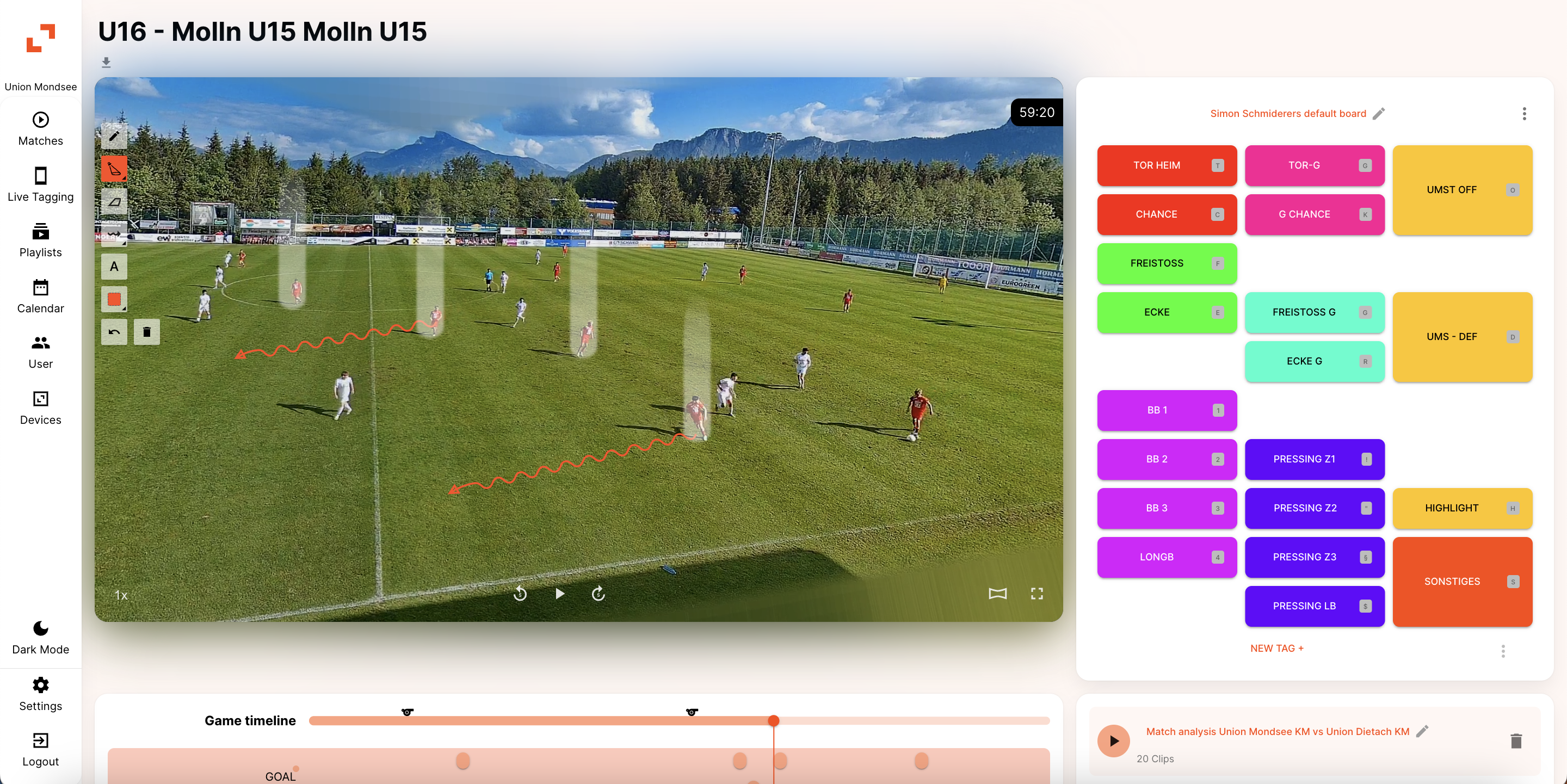
Analysis becomes significantly more effective when players can clearly see what you’re explaining. Within zone14 COACH you can pause your Falcon footage and draw directly onto the video to highlight positioning, movement, and space.

Whether you’re showing where a defensive line lost its shape or illustrating a missed run, these visual cues make feedback concrete. Because these annotations are saved within your clips, you’re always ready to present structured, visual feedback—whether in a team meeting or on the training ground.

Taktische Zeichnungen für dein XbotGo Material

Bring Analysis to the Pitch with Mobile Access

Coaching doesn’t happen behind a desk—it happens on the pitch. With mobile access through the zone14 REPLAY App you can take your analysis with you.

Clips can be reviewed during training sessions or shown to players immediately after a drill. This shortens the feedback loop considerably. Instead of describing a situation from memory, you can show it instantly, making your coaching more direct and easier for players to understand. You can also easily extract and download clipsto share via team messaging apps or for use in external presentations.

The Workflow: 4 Steps from Falcon to Feedback

The transition from recording to structured analysis is designed to be straightforward:

  1. Record: Capture the match with your XbotGo Falcon in 4K.

  2. Transfer: Move the file from your camera to your computer (or pull from the XbotGo Cloud).

  3. Upload Drag and drop the .mp4 into the zone14 Cloud.

  4. Analyse: Use your COACHdashboard to tag moments, draw tactical lines, and build your playlists.

Video Analysis Software for XbotGo and Self-Recorded Footage

Many traditional platforms are built around closed ecosystems or full-club infrastructure. While we offer the zone14 TWO for clubs wanting a fully automated, fixed-camera experience, zone14 COACH is designed for the modern, mobile coach.

If you’re specifically looking for football video analysis software that allows you to upload your own footage—rather than being forced into a specific hardware contract—this approach fits naturally alongside the XbotGo Falcon.

zone14 COACH

Your camera. Our cloud. Full flexibility.

Conclusion: Don’t Just Record. Coach.

The XbotGo Falcon gives you the ability to capture the game. zone14 COACH gives you the ability to understand it.

If your footage is only being watched back without structure—or not reviewed at all—you’re missing a major opportunity to improve performance. With the right video analysis software for XbotGo Falcon, every match becomes something you can learn from, build on, and use to guide your team forward.

Categories
Soccer camera

The 5 Best Cameras for Football Video Analysis 2026 | zone14, Veo, Hudl, XbotGo & Pixellot

Contents

The 5 Best Cameras for Football Video Analysis 2026 | zone14, Veo, Hudl, XbotGo & Pixellot

Finding the right camera for football video analysis will no longer be purely a technical question in 2026. It's not just about which system offers the highest resolution or is easiest to transport. For many clubs, the real question is much more strategic:

Do we want a mobile tool for individual teams — or reliable infrastructure for the entire club?

The market now offers very different solutions: permanently installed camera systems, portable AI cameras, streaming solutions for leagues, and platforms for professional video analysis. Each option has its strengths. The crucial factor is which solution suits your athletic goals, your club structure, and your daily routine.

In this comparison, we present five relevant camera systems for football video analysis in 2026: zone14, Hudl Focus, Veo Cam 3, XbotGo Falcon / Chameleon and Pixellot Air / Show.

Which system is the right fit for you?

Before you decide on a camera, you should answer three simple questions:

  1. Who will be the main user of the camera?
    A single team, even away from home? Or the entire club at their own home stadium?
  2. What is your primary goal?
    Do you primarily want to capture important game scenes? Or do you need a deeper tactical analysis of the entire team?
  3. What is your biggest everyday challenge?
    A tight budget? Or too little time and staff on game day?

If you want to remain flexible and record individual games, portable cameras like Veo or XbotGo can be a good starting point. However, if you want to relieve multiple teams in the long term, reliably record home games, and establish video analysis throughout the club, a permanently installed system like zone14 is usually the more sustainable solution.

1. zone14

The Foundation for the Entire Club

zone14 should be understood not as a single camera, but as a complete infrastructure for modern football clubs. The system was developed to solve two of the biggest problems in club football: lack of time on match day and lack of objective data for coaching teams.

Camera and system

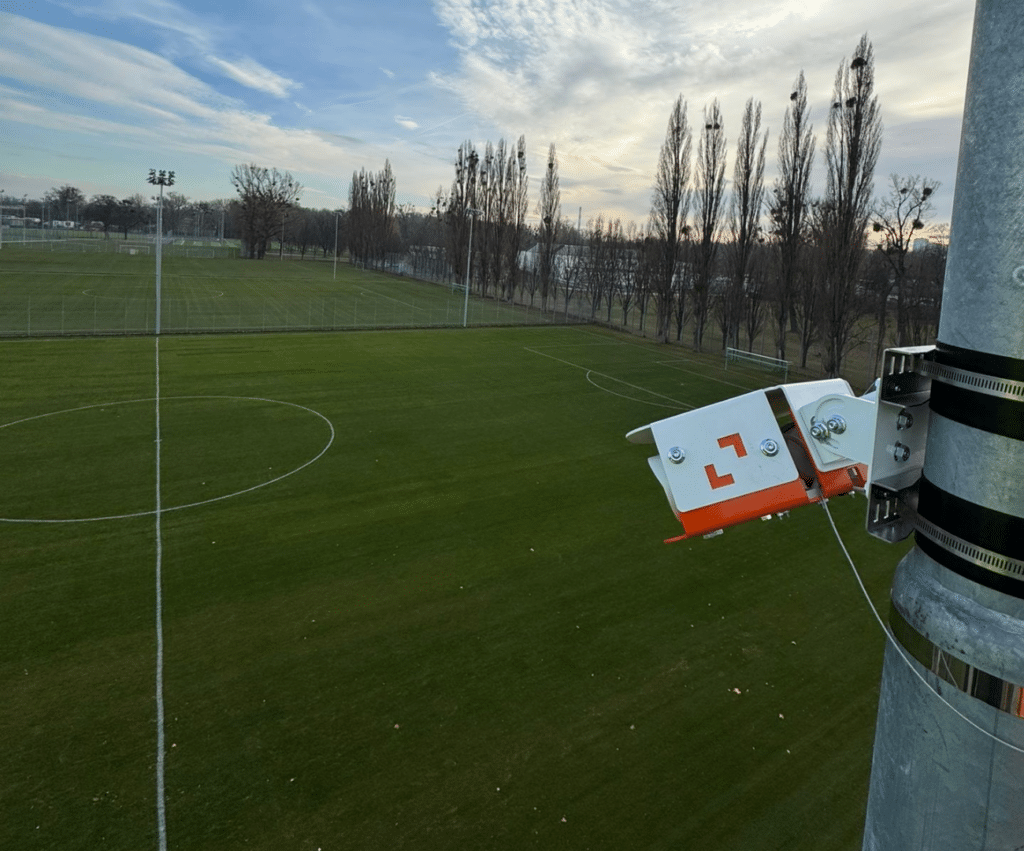
With zone14 TWO A permanently installed camera system will be mounted at the home stadium, for example on a floodlight mast or a suitable elevated position. The camera captures the field from a wide 180-degree perspective and automatically records games.

The big difference compared to portable systems lies in everyday use: the camera doesn't have to be set up, charged, transported, or started before every game. After installation, it becomes part of the club's infrastructure.

System type

Permanently installed camera system for automatic game recording, video analysis, live streaming, and performance data.

Analysis perspective

A high, broad perspective is particularly valuable for tactical analysis. Coaches can recognize not only individual actions but also distances between team segments, pressing behavior, shifting, rear defense, and spatial distribution.

For the analysis of an entire team, this perspective is significantly more informative than a low sideline view.

Main advantages

Automation and Relief
zone14 largely removes the recurring, matchday-related effort from the process. No one has to set up a tripod, check batteries, inspect memory cards, or start the technology ten minutes before kickoff. This relieves coaches, staff, and volunteers.

2. Tactical Perspective for Real Game Analysis
The elevated 180-degree view is particularly suitable for coaches who want to see more than just ball actions. Team spacing, build-up play, pressing heights, and movement patterns become much clearer.

3. Integrated Video Analysis with REPLAY
With zone14 REPLAY, coaches can cut, mark, tag, annotate, and share clips with players. This turns a pure recording into a true coaching workflow.

4. Performance data without GPS vests with STATS
zone14 STATS generates performance and tactical data from game video, such as running distances, sprints, heatmaps, sprint maps, team compactness, and player reports—without GPS vests or additional sensors. This makes objective data accessible even for clubs that do not want to manage wearables.

5. Livestreaming and Added Value for Associations
With zone14 LIVE, clubs can stream games, involve sponsors, and increase their visibility. This makes the camera relevant not only for coaches but also for fans, parents, sponsors, and the entire club.

The reality in the club

zone14 is a strategic investment in your own home stadium. It's not a camera that you quickly pack into a suitcase and take to an away game. Instead, it's a permanent solution that can support multiple teams week after week.

For clubs with their own facilities, this is precisely the decisive advantage: the camera is not dependent on a single person, a charged battery, or a correctly set-up tripod. It becomes part of the sports infrastructure.

Conclusion

zone14 is the best choice for clubs that want to reliably record their home games, relieve coaches, and establish video analysis throughout the club in the long term. The system is particularly strong for clubs that not only want to collect videos but also derive coaching scenes, performance data, livestreams, and genuine sporting development from them.

In short: zone14 is not the most flexible away camera. It is the most complete solution for clubs that want to use video analysis professionally and permanently.

Check in under 30 seconds if the zone14 camera fits your club.

2. Hudl Focus

The Choice for Data-Driven Performance Centers

Hudl is one of the best-known providers in the field of sports video, analysis, and coaching software. With Hudl Focus, the company offers automated camera systems that are closely integrated with the Hudl ecosystem. Hudl describes Focus as an AI sports camera that automatically records, follows the game, and provides content for analysis and streaming.

Camera and system

Hudl Focus is primarily of interest to clubs, schools, academies, and performance centers that are already working with Hudl or want to integrate their analysis strongly into this platform. Hudl Focus Outdoor is described as a fully automatic outdoor camera system that can automatically record, upload, and stream planned events.

System type

Mostly permanently installed, with portable options depending on the Hudl product and use case.

Analysis perspective

High-angle side view, suitable for game analysis, coaching, and integration into existing Hudl workflows.

Main advantages

Strong ecosystem
Hudl is particularly strong when video, analysis, sharing, scouting, and team organization are already handled through Hudl.

2. Automated Recording
Hudl Focus can automatically record and upload scheduled games. This significantly reduces manual effort.

3. Good solution for professional structures
For academies, schools, performance centers, and clubs with their own analysis department, Hudl can be a very powerful solution.

The reality in the club

Hudl is a powerful system, but not every club needs the full scope. For smaller European amateur clubs, the Hudl ecosystem can seem larger and more complex than everyday needs actually require.

If the main goal is: „We want to automatically record our home games, analyze them easily, and quickly relieve coaches in the club,“ a specialized club solution like zone14 might be more suitable.

Conclusion

Hudl Focus is a very good choice for clubs and academies that already work deeply within the Hudl ecosystem or are looking for a comprehensive analysis and scouting platform. For amateur clubs that primarily need a clear, simple, and club-wide video analysis infrastructure, zone14 might be the more practical solution.

3. Veo Cam 3

The Market Leader in Portability

Veo is one of the best-known names in the field of mobile sports cameras. The Veo Cam 3 is designed to automatically record, analyze, and share games. Veo itself positions the camera as an AI-powered sports camera for teams of all skill levels.

Camera and system

The Veo Cam 3 is a portable camera that is set up on a tripod. It's particularly suitable for teams that want to record their games in different locations, including away games or on changing fields.

System type

Portable Tripod Camera.

Analysis perspective

The perspective depends heavily on the setup. Usually, the camera is positioned on a tripod at the sidelines. This is practical and flexible, but not always ideal for deep tactical analysis.

Individual actions, dribbles, duels, and goals are easily recognizable. It becomes more difficult with distances between lines, pressing structures, or assessing the team's overall form.

Main advantages

1. Maximum mobility
Veo can be taken to home and away games. This is a big advantage for individual teams.

2. Established Platform
Veo offers tools for viewing, cutting, sharing, and analyzing game highlights.

3. Good starting point for individual teams
Teams looking for a simple way to regularly record games will find a proven solution in Veo.

The reality in the club

Veo's greatest strength is also its greatest operational challenge: the camera is mobile and therefore requires active supervision each time.

Someone has to take them, load them, set them up, position them correctly, and start recording. For a single team, this is often quite manageable. For an entire club with multiple youth and adult teams, this recurring effort can quickly become a burden.

Especially on game day, when coaches are already busy with lineups, warm-ups, opponent analysis, and organization, any additional technical task is noticeable.

Conclusion

The Veo Cam 3 is a strong solution for individual teams, away games, and clubs without a fixed home venue. Those looking for maximum flexibility and accepting manual effort will get an established portable system.

For clubs that primarily want to reliably record their home games without matchday stress, a permanently installed solution like zone14 is usually more sustainable.

4. XbotGo Falcon & XbotGo Chameleon

The budget-friendly entry into AI recording

XbotGo has positioned itself as an accessible alternative in the field of automatic sports recording. Importantly, a product called XbotGo X1 is not the correct designation at the moment. XbotGo officially lists, among other things XbotGo Falcon ‎‎‎‏‏‎ ‎and XbotGo Chameleon. Falcon is described as a standalone 4K sports camera with integrated AI tracking, while Chameleon is a smartphone-based AI camera system.

Camera and system

XbotGo Falcon is a portable AI sports camera for team sports like soccer, basketball, or hockey. It is designed to automatically follow the game and function without a separate smartphone.

XbotGo Chameleon works differently: It uses a smartphone in combination with an AI tracking system and is aimed at users who want to get into automatic sports recording on a smaller budget.

System type

Portable AI camera or smartphone-based tracking system.

Analysis perspective

Mostly low to medium tripod perspective from the edge of the field. This means similar tactical limitations apply as with other portable cameras.

Main advantages

Attractive entry-level price
XbotGo is particularly interesting for teams, parents, or smaller clubs looking for a more affordable solution for automatic game recording.

2. Simple Operation
The system is designed for quick use and easy control.

3. Flexible use
Because XbotGo is portable, it can be used in various locations.

The reality in the club

XbotGo is practical when price and flexibility are the priority. At the same time, it remains a portable system. It needs to be set up, charged, positioned, and supervised.

This can work well for individual teams or parents who want to record games. However, for clubs that need to regularly analyze multiple teams, a seamless workflow is often missing: automatic home game recording, central video analysis, tactical evaluation, performance data, and live streaming all from one system.

Perspective is also a topic. For highlight videos or simple game recordings, a tripod solution is often sufficient. For analyzing distances, shifting movements, and team compactness, a higher, permanently installed viewpoint is usually more valuable.

Conclusion

XbotGo Falcon and Chameleon are interesting solutions for budget-conscious users, individual teams, and anyone looking for an easy entry into automatic sports recording.

For clubs looking to build a permanent analysis infrastructure, zone14 remains the more complete solution — especially through its combination of automatic recording, REPLAY, LIVE, and STATS.

5. Pixellot Air/Pixellot Show

The automation solution for leagues, associations, and large streaming projects

Pixellot is strong in the area of automated sports production. The systems often target leagues, associations, schools, media platforms, and larger clubs that want to record and stream many games automatically. Pixellot describes its technology as an AI-automated solution for recording, streaming, and analysis across many sports.

Camera and system

Pixellot offers different systems, including portable and permanently installed solutions. Pixellot Air is described as a portable, AI-powered camera for automated sports recording. It can capture the field, follow the game, and provide content for analysis or streaming.

Pixellot Show is more focused on automated production and streaming on a larger scale. Pixellot itself positions Show as an end-to-end solution for AI-automated sports production.

System type

Portable or permanently installed AI camera systems, depending on the product and application area.

Analysis perspective

Wide broadcast perspective, especially suitable for viewers, streaming, and automated production.

Main advantages

Scalability
Pixellot is strong when many games are to be recorded or streamed automatically.

2. Streaming and Production
The systems are particularly interesting for leagues, associations, and larger organizations that want to publish content regularly.

3. Automation
Pixellot reduces the need for camera personnel and can cover large quantities of games.

The reality in the club

Pixellot thinks strongly from the perspective of production, streaming, and distribution. This is a clear advantage for federations, media platforms, and large sports organizations.

However, for individual coaches, the question arises of how quickly and easily concrete coaching scenes can be created from the video material. Depending on the package and setup, the workflow can be more broadcast-oriented than training-oriented.

This doesn't mean Pixellot is unsuitable for coaching. It just means its primary strength lies more in automated production and scaling.

Conclusion

Pixellot is particularly strong for leagues, federations, and larger organizations that want to automatically produce and stream many games. For clubs primarily looking for a simple, coach-friendly analysis infrastructure for their own facility, zone14 is often closer to the daily training and game operation needs.

Permanently installed or portable: What is better?

The most important decision is not the brand, but the system type.

Portable cameras are useful when…

  • you want to take on many away games;
  • you don't have your own home stadium;
  • a single team using the camera;
  • Flexibility is more important than automation;
  • you don't have a problem with setup, battery, and transport.

Fixed cameras are useful when…

  • you regularly record home games;
  • several teams in the club should benefit;
  • trainers and volunteers are to be relieved of their duties;
  • tactical analysis is important;
  • Livestreaming and sponsorships are part of your club strategy.;
  • you want to build a digital infrastructure in the long term.

For a single team, a portable camera might be sufficient. For a club with multiple teams, the greater added value often comes from a permanently installed system.

More than the purchase price: The true effort in club everyday life

When comparing cameras, people often only look at the price. That's understandable, but it's a shortsighted approach.

A cheap or portable camera might seem attractive at first glance. However, in everyday use, this leads to additional effort:

  • Who's bringing the camera?
  • Who is charging the battery?
  • Who is setting up the tripod?
  • Who checks the internet connection?
  • Who is starting the recording?
  • What happens if the person responsible is sick?
  • How are videos organized, analyzed, and shared?

These questions are crucial. Because a camera only provides real added value when it is used reliably.

For permanently installed systems, the greatest advantage lies not only in image quality but in repeatability. If every home game is automatically recorded, a constant analysis process is created. Coaches don't have to reorganize every time but can concentrate on the athletic work.

More than the purchase price: The true effort in club everyday life

The best camera depends on your goal.

If you're looking for a camera for a single team and are often on the go, a portable solution like Veo or XbotGo makes sense.

If you operate a large organization, league, or streaming platform, Pixellot can be a strong solution.

If you're already working deep within the Hudl ecosystem, Hudl Focus is a no-brainer.

But if you are looking for a solution that will relieve your club in the long term, automatically record home games, simplify video analysis, enable live streaming, and additionally generate performance data from the game video, then zone14 is the most complete choice.

FAQ: Soccer Cameras for Video Analysis

The best camera depends on the intended use. For individual teams, portable systems like Veo or XbotGo are interesting. For clubs with their own facilities, a permanently installed solution like zone14 is often stronger because it combines automatic recording, video analysis, live streaming, and performance data.

If you are looking for a portable camera, XbotGo or Pixellot Air can be alternatives. If you are looking for a long-term club solution for home games, tactical analysis, and automatic recording, zone14 is a stronger alternative.

For individual teams and away games, a portable camera is often more practical. For clubs that regularly record home games and want to support multiple teams, a permanently installed camera is usually more reliable and efficient.

Yes, some systems go beyond pure video recording. zone14 STATS generates performance and tactical data from the game video, such as running distances, sprints, heatmaps, sprint maps, team compactness, and player reports.

For a single team, a portable camera might suffice. For an entire amateur club with its own home ground, a permanently installed system is often more practical because it permanently relieves coaches and volunteers.

Conclusion: Your strategic decision for 2026

The choice of the right football camera is a directional decision.

Portable cameras are flexible, quick to deploy, and particularly interesting for individual teams. Permanently installed systems are less mobile, but more reliable, automated, and better suited for the development of an entire club.

The crucial question is therefore:

Do you want to record games occasionally, or do you want to permanently integrate video analysis into your club's structure?

If you primarily want to film individual games flexibly, Veo, XbotGo, or Pixellot Air are good options. If you are already working within the Hudl ecosystem, Hudl Focus might be the right choice.

However, if you're looking for a solution that automatically records home games, relieves coaches, enables tactical analysis, supports live streaming, and even provides performance data without GPS vests with zone14 STATS, then zone14 is the strongest solution for ambitious clubs.

With zone14 TWO, your home venue becomes an analysis platform—for coaches, players, fans, and the entire club.

Record every game scene in a perfect 180° view

Share on Facebook
Share on Twitter
Share on LinkedIn
More related content from zone14

Categories
Video Analysis

The Analyst's Dilemma: Hudl Sportscode vs. ONCE vs. zone14 – Which Software is Right for You?

Contents

The Analyst's Dilemma: Hudl Sportscode vs. ONCE vs. zone14 – Which Software is Right for You?

An honest look at the tools of the pros and why the best solution for your club might be one you haven't considered yet.

It's Monday morning. On your laptop, you have 90 minutes of video footage from the weekend. Somewhere in this digital maze of passes, tackles, and runs lie the answers to the questions that have been haunting you since the final whistle: Why didn't our press work? Where exactly was the gap before we conceded the goal? And how can we replicate that one brilliant play?

The search for the right video analysis software to find these answers often feels just like that: an impenetrable jungle. The choice of platform is one of the most important strategic decisions for the professionalization of any club. In this comprehensive comparison, we take an honest look at three of the most prominent names on the market: Hudl Sportscode, the undisputed industry standard; ONCE, the modern challenger for live analysts; and zone14, the architect of a holistic club ecosystem.

The Two Worlds of Football Data The "What" and the "How Much"

Before we compare the tools, we need to understand the two fundamental types of data in football, which often exist in separate worlds:

  1. Tactical Event Data (The "What?"): This data describes what happened in the game. A pass from A to B, a shot on goal, a tackle. It is the heart of tactical analysis and is traditionally captured manually by an analyst.
  2. Physical Performance Data (The "How Much?"): This data describes how much a player has physically invested. Running distance, number of sprints, top speed. It is the core of athletic analysis and is traditionally collected via expensive GPS vests.

The crucial question is: How well does a software solution represent these worlds and – more importantly – connect them?

The Providers: A Character Check – Three Philosophies, Three Worlds

Hudl Sportscode: The Architect
  • The Philosophy: Hudl Sportscode is the "Photoshop" of video analysis – infinitely powerful, endlessly customizable, and the standard in almost every professional club in the world. It is a software designed for the full-time professional analyst who is willing to endure a steep learning curve to create their own perfect, customized analysis universe.
  • A Day in the Life with Sportscode: The analyst spends hours programming complex tagging windows (Code Windows) with hundreds of buttons. In the meticulous post-match analysis, they click through the game, tagging every conceivable tactical event. The result is a massive amount of data and statistical dashboards. The strength lies in the incredible depth of data capture. The weakness? It's a pure tool for capturing event data and solves neither the problem of video recording nor that of physical performance data.
ONCE: The Live Reporter
  • The Philosophy: ONCE recognized the complexity of Sportscode and specialized in one thing: efficiency and live analysis. It is the tool for the modern, agile analyst who doesn't want to waste time.
  • A Day in the Life with ONCE: The analyst sits in the stands with their laptop during the game. They use ONCE's intuitive interface to tag the most important scenes live as they happen. A goal? One click. A key tactical change? One click. At halftime, they can already show the coach a finished playlist with the decisive moments on a tablet. The post-match work the next day is done in a fraction of the time.
  • The Limitations: ONCE is an excellent tool that solves one problem: the speed of event capture. However, it remains a highly specialized tool for the analyst. The question of video recording remains unanswered, and the world of physical performance data remains locked away, unless you invest in a separate GPS system.
zone14: The Integrated Brain of the Club
  • The Philosophy: zone14 asks a different question: Why should you have to choose between different tools, systems, and data worlds? Here, the software is not the sole product but the heart of a holistic ecosystem for the entire club. The target audience is the modern club looking for a simple yet powerful all-in-one solution.
  • A Day in the Life with zone14: The crucial difference begins even before the analysis: The zone14 TWO AI camera has automatically recorded the game. The coach opens the REPLAY App on their phone on the way home, reviewing the key moments suggested by the AI. The next day, with two clicks, they filter all scenes related to "turnovers in build-up." They notice that one player seemed unfocused after the 70th minute. A click on zone14 STATS reveals the truth: the number of his high-intensity runs dropped by 50% in the final phase. The coach now has the complete picture: the tactical decision (the "What?") AND the physical condition (the "How Much?") in a single, inseparable context.
  • Already have your own video footage, or want to test the waters with a software-only solution? zone14 COACH is your perfect entry point. It unleashes the full power of our REPLAY analysis platform as a standalone tool. Upload footage from any source—be it a tripod, phone, or drone—and you'll immediately access the same intuitive analysis tools trusted by users of our integrated system. It's the ideal way to elevate your analysis with the quality of zone14's software, before taking the next step to automate your entire workflow with our camera.
  • The Strength: zone14 is the only solution in this comparison that fuses the two data worlds without additional hardware like GPS vests.

The Comparison in Detail: Workflow, Data Philosophy, and Ecosystem

When it comes to the workflow, Hudl Sportscode's manual, extremely detailed post-match process stands in contrast to ONCE's fast, live-tagging-optimized workflow. zone14 goes a step further by automating the very first, often most tedious step – the recording.

In terms of data philosophy, the difference is greatest. Sportscode and ONCE are masters of tactical event capture: they measure what the analyst manually inputs. zone14 follows a hybrid approach: it not only captures tactical events but also enriches them with automatically extracted physical performance data (STATS) . This creates a complete, contextualized picture of player performance.

The decisive difference, however, lies in the ecosystem. ONCE is primarily an excellent software solution. Hudl offers a broad product range. zone14 is the only system in this comparison designed from the ground up as a fully integrated ecosystem: the automatic camera, the analysis platform, the mobile apps, the performance data (STATS), and the livestreaming work together seamlessly. It is a strategic platform for the development of the entire club, not just a tool for a single analyst.

Conclusion: Which Software DNA Fits Your Club? A Quick Self-Test

  • Are you a full-time professional analyst who loves to configure every detail yourself and dive into the deepest statistical evaluations? Then Hudl Sportscode is your powerful but demanding tool.
  • Are you an analyst or assistant coach whose main focus is on live analysis on matchday and maximum efficiency in tactical evaluation? Then ONCE is the perfect, modern solution for you.
  • Are you a head coach, sporting director, or club official looking for a holistic, easy-to-use, and integrated solution that eliminates the effort of recording and provides the complete picture of tactics AND performance data? Then the ecosystem approach of zone14 is second to none.

If your goal is a hassle-free, reliable, and qualitatively superior video analysis that provides a complete picture of your team and serves as the foundation for sporting success and new revenue streams, there is hardly any way around an integrated, intelligent solution like that from zone14.

Share on Facebook
Share on Twitter
Share on LinkedIn
More related content from zone14

Categories
Soccer camera

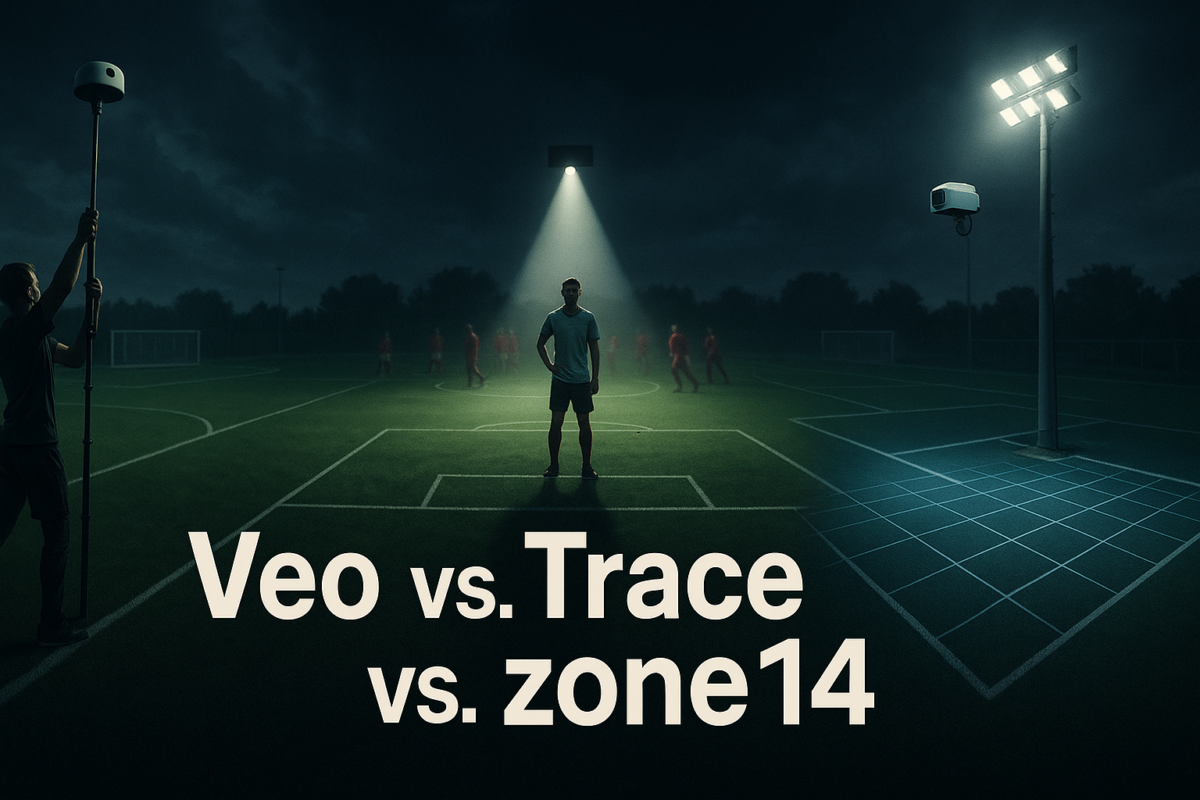
Video Analysis in Football: A Comparison of Camera Systems from Veo, Trace, and zone14

Contents

Video Analysis in Football: A Comparison of Camera Systems from Veo, Trace, and zone14

Which Philosophy Fits Your Club? A Decision-Making Guide Between Mobile Flexibility, Individual Highlight Focus, and Integrated Club Intelligence.

Video analysis has definitively conquered amateur and youth football. The question is no longer if, but how to use it. For clubs wanting to take the next step in their development, choosing the right automatic AI camera system is one of the most important strategic decisions of recent years. The market is full of promises, but the philosophies behind the providers could not be more different.

In this comprehensive comparison, we shed light on three of the most prominent names: Veo, the pioneer of mobile sports cameras; Trace, the specialist in player-centric highlights; and zone14, the architect of a holistic club ecosystem. We dive deep into the DNA of each system to help you find the solution that truly fits the goals, resources, and culture of your club.

The Crucial Questions Every Club Must Ask Itself

Before we compare the providers, we should sharpen the criteria that really matter in the often-hectic daily life of a club:

  1. The Human Factor & Effort: How much does the system tie up the scarce time resources of our volunteers on matchday?
  2. The Analytical Perspective: Does the camera provide a high-quality, tactical analysis of the entire game or just individual actions?
  3. The Data Capture Philosophy: Is the team, the individual player, or the entire game the focus of the technology?
  4. The Digital Ecosystem: Are we just getting a camera, or an integrated platform for analysis, communication, and even club development?

The Providers in Detail: Three Philosophies, Three Solutions

Veo: The Freedom of Mobility

Veo has established itself as a major player in the field of mobile sports recording. Their solution is well-known and used by many clubs.

  • Core Philosophy: Veo's DNA is flexibility. The system, consisting of a camera and a high telescopic mast tripod, is designed to be taken everywhere – to home games, away games, and training camps.
  • Practical Implementation & Consequences: The strength of mobility is simultaneously its greatest operational challenge. Every single matchday requires a dedicated volunteer who is responsible for transport, the time-consuming setup and teardown (often 15-20 minutes), and operation. The dependence on this one person is a constant risk in the analysis process. The good tactical perspective gained from the high mast is a clear advantage over ground-level recordings but can be compromised by wind and an uneven setup. Veo's analysis platform offers solid tools for coaches to edit the recorded game.
  • Ideal for: Clubs for whom recording away games is the highest priority and who have reliable personnel resources to handle the recurring effort on every matchday.
Trace: The Specialist for Individual Player Highlights

Trace pursues a different, very player-centric approach that is particularly popular in US youth and college sports. Here, the focus is not on the coach's tactical analysis, but on the experience and development of the individual player.

  • Core Philosophy: The focus of Trace is to automatically provide each player with their personal moments from a game. The system uses, similar to Veo, a mobile AI camera on a tripod that follows the action. The crucial difference lies in the software: after the game, an intelligent AI identifies the actions of each individual player on the field and automatically edits personal highlight clips for each player.
  • Practical Implementation & Consequences: The unbeatable strength of Trace is its automated and personalized content creation. After the game, every player receives their individual scenes (goals, ball touches, important actions) directly on their smartphone – without any further action from the coach. For young players who want to share their best moments on social media or compile them for applications to scouts and colleges, this system is a dream. It promotes self-motivation and makes one's own performance immediately visible.
    The downside of this strong player-centricity is that the overall tactical analysis for the coach often plays a secondary role. The camera perspective and the software are primarily optimized to capture individual actions well, which does not always provide the best total overview for assessing team tactical behavior. So, if the club's primary goal is an in-depth, coach-led analysis of the entire team, other systems might be more suitable. As with any mobile tripod solution, the recurring effort for setup and teardown on matchday remains.
  • Ideal for: Clubs and academies (especially in the youth sector) whose absolute focus is on the automatic creation of individual player clips for social media, scouting, or personal development.
zone14: The Integrated Brain of the Club

zone14 was developed with a clear focus on the reality and strategic needs of European club football at all levels.

  • Core Philosophy: zone14 focuses on maximum reliability, zero effort on home matchdays, and the creation of a holistic, digital ecosystem for the entire club. The motto is "Set-and-Forget."
  • Practical Implementation & Consequences: The zone14 TWO AI camera is permanently installed once and from that moment on is a fixed, always-available part of the club's infrastructure. The effort on matchday is reduced to zero, which completely relieves the volunteers and guarantees a seamless recording of all home games and training sessions. The always-identical, optimal tactical perspective from above is the basis for professional analysis in the panoramic view of zone14 REPLAY.
    However, the true strength lies in the integration: zone14 is not just a camera but a strategic platform. With zone14 STATS, performance data like running distances are extracted directly from the video without sensors, inseparably linking data and tactics. The REPLAY iPhone App also makes the analysis flexible and mobile. Furthermore, the system introduces a live dimension that elevates the matchday itself: All home games can be streamed effortlessly and without a paywall, enabling clubs to reach their fans and create new, attractive sponsorship opportunities. At the same time, coaches can use the REPLAY App to tag live from the sidelines, preparing their halftime analysis in minutes and allowing them to react immediately to the on-field action.
  • Ideal for: Clubs that see their home ground as their fortress and want to rely on uncompromising, professional, and reliable analysis conditions there. It is the solution for clubs that want to relieve their volunteers, professionalize their entire sporting and administrative operations, and grow sustainably through an integrated system of analysis, data, livestreaming, and sponsorship opportunities.
Start your video analysis.

Sign up now for a completely free demo account.

The Philosophies in Direct Comparison

Let's summarize: When we compare the systems directly, it becomes clear that it's about more than just technical data. It's about fundamentally different approaches.

Veo offers you the freedom to record anywhere but demands the price of constant manual effort. Trace gives every player their personal spotlight but puts team analysis on the back burner. zone14 offers you absolute peace of mind and professionalism at home, with a deeply integrated ecosystem that goes far beyond mere recording. The decision is therefore not a question of "better" or "worse," but a question of priorities.

Conclusion: Which DNA Fits Your Club? A Clear Decision-Making Guide

Choosing the right camera system is a strategic turning point.

  • Profile A: "The Nomad" – Mobility is Everything.
    If your top priority is recording away games and you have reliable and dedicated volunteers to handle the weekly setup and teardown, then Veo is an established choice that gives you the necessary flexibility.
  • Profile B: "The Talent Developer" – The Player is the Focus.
    If your main goal is the automatic creation of individual highlight clips for your youth talents to promote their development and visibility, and tactical team analysis is a lower priority, then Trace could be the right solution for you.
  • Profile C: "The Strategist" – Reliability, Professionalism, and Club Development.
    If, however, your goal is to turn your home ground into a fortress of analysis, to maximally relieve your volunteers, and to implement a holistic system for sporting success, fan engagement, and financial development, then the integrated approach of zone14, designed for reliability and professionalism, is an advanced and sustainable solution.

If your goal is a hassle-free, reliable, and qualitatively superior video analysis that serves as the foundation for sporting success and new revenue streams, there is hardly any way around a permanently installed, intelligent solution.

Share on Facebook
Share on Twitter
Share on LinkedIn
More related content from zone14
Categories
Video Analysis

The Ultimate Guide: The Best Football Video Analysis Apps 2026 in Detail Check

Contents

The Ultimate Guide: The Best Football Video Analysis Apps 2026 in Detail Check

Let's be honest, who among us hasn't stood on the sidelines after the final whistle or sat in the changing room later, mulling over the decisive scenes? That one pass that didn't connect, the gap in defense that led to the opponent's goal, or that brilliant play that brought us victory. Analysis is as much a part of football as the ball is to the goal. In the past, this often meant a notepad, vague memories, and perhaps, with a lot of effort, a shaky video from the stands. But the times when complex video analyses were reserved for professional clubs with their huge team of support staff are definitely over. Today, the revolution is right in our pockets – in the form of powerful apps on our smartphones.

These small digital helpers provide us with detailed insights and quick evaluations that can fundamentally change our work as coaches, analysts, and yes, even as forward-thinking club officials. The market for mobile video analysis apps is now huge and sometimes a bit overwhelming. From simple editing tools to complex, cloud-based analysis platforms, everything is out there. But which app really delivers on its promises and suits our needs in the often hectic everyday life of football? This guide aims to shed some light. We'll take a detailed look at some of the best and most well-known apps, examine their strengths, and compare what they can do for us in football. We'll pay special attention to an exciting new development: the zone14 REPLAY app for iPhone, which promises to take professional analysis power to a new mobile level. So, grab a coffee, sit back – it's going to get technical, but above all, practical!

What does a top-notch football video analysis app really need to have?

Before we dive into app presentations, let's briefly consider: What do we actually expect from a first-class mobile video analysis app in 2025? It's about more than just playing videos and drawing a few lines.

Solid video management is essential. How easily can I get my game footage – whether from the club camera, the cloud, or directly via phone recording – into the app? And how well can I organize my videos and projects there? At least as important are precise analysis tools. Clipping, i.e., creating short, relevant scene excerpts, must work quickly and accurately. And then there's tagging: Imagine being able to tag goals, missed chances, set pieces, or tactical errors with individual keywords during the game or immediately afterwards. That saves an infinite amount of searching later!

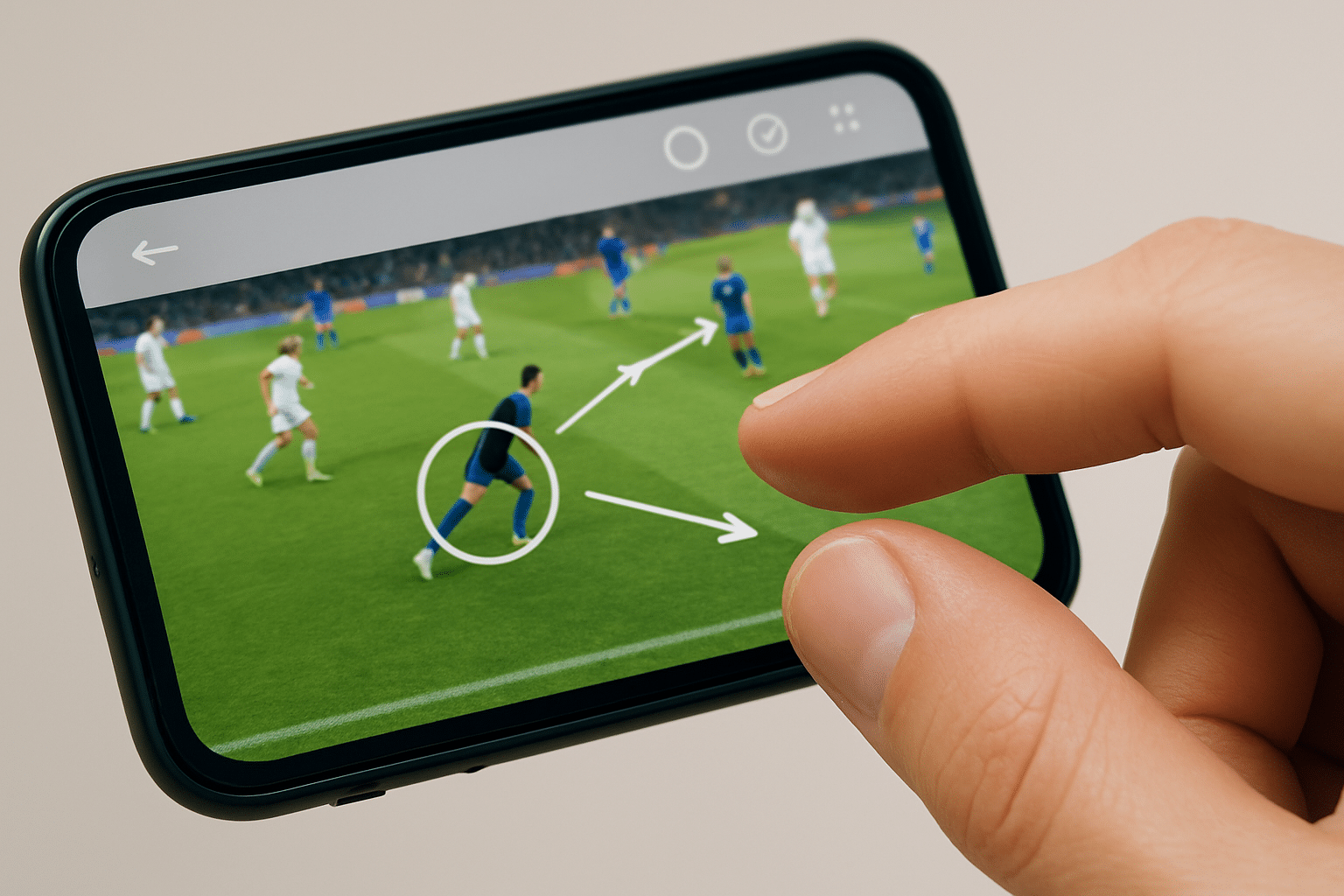
Of course, intuitive drawing tools are indispensable. Arrows for running and passing lanes, lines to illustrate distances or offside lines, circles to highlight players or important spaces, and text boxes for brief annotations – all of this makes our analyses truly understandable. Paired with flexible playback options like variable slow motion or frame-by-frame navigation, we can dissect every scene down to the smallest detail.

Often, features for team and player management are extremely helpful, as are uncomplicated collaboration and sharing options to quickly share analyses and clips with the coaching staff or individual players. And all of this, of course, must be packaged in an absolutely user-friendly interface that doesn't become a test of patience even on a smaller smartphone screen. Finally, integration capability plays an increasingly important role: How well does the app harmonize with our-perhaps-already-existing hardware, like the increasingly popular automated camera systems, or other software solutions in the club?

The Cream of the Crop: Mobile Video Analysis Apps Under Critical Scrutiny

The app jungle is dense, but some solutions have particularly stood out in football. Here's a closer look. (Please note that features and prices can change quickly, so current independent research is always worthwhile.)

The Pillars of Pre-Season Training

Hudl / Hudl Technique: The Established Industry Giant

Many of you are surely familiar with Hudl. It's an extremely comprehensive platform used worldwide by professional to ambitious amateur teams. While the main platform covers a huge spectrum from video exchange and scouting to team management, "Hudl Technique" has a strong focus on biomechanical analysis. Here you can study movement sequences in slow motion, measure angles, and directly compare athletes.
The strengths clearly lie in the detailed movement analysis and the extensive feedback tools, especially when it comes to individual technique. The cloud infrastructure is robust and ideal for large organizations.
However: For clubs where the main focus is clearly on tactical game analysis in football and a quick, uncomplicated mobile application, Hudl, with its huge range of functions and corresponding price structure, might sometimes overshoot the mark. The specific needs of smaller football clubs with limited resources are not always the top priority here.

Ideal for: Coaches with a strong focus on biomechanics, large sports organizations, and associations.

Coach's Eye (by TechSmith): The Intuitive All-rounder for Quick Feedback on the Go

Coach's Eye is something like the Swiss Army knife for quick, visual feedback. The app is known for its really simple operation. Record a video, draw a few lines or arrows, maybe add a voice note, and off it goes to the player.
The strengths are definitely the intuitive operation and the flexible sharing options. Everyone gets the hang of it quickly.
The consideration here: When it comes to in-depth, football-specific tagging systems, detailed team management, or seamless integration into a comprehensive club ecosystem, Coach's Eye reaches its limits compared to specialized football analysis platforms. The focus is clearly on individual scene analysis and quick, uncomplicated feedback.

Ideal for: Coaches looking for an uncomplicated tool for quick, multi-sport feedback, also great for parents.

zone14 REPLAY App (for iOS): Professional Analysis Power for Your Pocket

Now things get really exciting, because here comes a solution developed especially for us football fanatics: the new zone14 REPLAY app for iPhone. Many of you may already know the zone14 ecosystem with the automatic zone14 TWO AI camera and the powerful REPLAY desktop analysis platform. This new app is basically the mobile command center for it.
What distinguishes this app is its seamless integration. All your games recorded with the zone14 TWO camera, your scenes, tags, and analyses from the cloud are immediately available on your iPhone. You have the full professional analysis capabilities with the familiar, extensive zone14 drawing tools (perfectly adapted for touchscreens!), detailed mobile tagging and clipping, and you can create and share dynamic playlists for team meetings or individual player feedback. Despite this wealth of features, operation is surprisingly intuitive and optimized for mobile use. This allows for incredibly fast feedback directly on the sidelines or on the bus. Functions specifically optimized for football and the direct availability of all club data make it unique in this integrated approach.
A consideration: To exploit the full potential of this app and benefit from its unique integration, using the entire zone14 system (camera, desktop software) is, of course, ideal and the real kicker.

Ideal for: All football clubs and coaches looking for a comprehensive, integrated, and highly professional video analysis solution that now also meets the highest demands on iPhone. If you value attention to detail, efficiency, and a smooth workflow from recording to the finished mobile analysis, this is your thing.

Spiideo GO / Spiideo Perform: The Specialist for Automated Recording in Team Sports

Spiideo, similar to zone14, is a name often associated with intelligent, automated camera systems that record games without a camera operator. Spiideo GO serves as a mobile app for access and analysis, while Spiideo Perform is the more comprehensive cloud-based analysis platform. Their focus is clearly on football and other team sports.
The strengths lie in the very good integration with their own camera systems and a cloud platform with good analysis, tagging, and sharing functions tailored to team sports.
It should be noted here: The system often only unfolds its full potential in combination with Spiideo hardware. The mobile app often serves more as a supplement to the more powerful web platform and may not replicate all desktop features on mobile.

Ideal for: Ambitious clubs and performance centers looking for a fully automated recording solution and willing to invest in an integrated system.

KlipDraw: The Artist Among Analysis Tools

KlipDraw is less of an all-in-one solution and more of a specialist for sophisticated visualization. If you want to spice up your video clips with truly professional drawings, animations, and graphic elements to make tactical aspects or running paths extremely vivid, then KlipDraw is worth a look.
Its strength is the impressive range of detailed drawing and animation tools.
However, it is primarily a visualization tool and offers fewer functions for comprehensive video management or team organization. It often requires already edited clips from other programs.

Ideal for: Video analysts and coaches who want to enhance their presentations and analysis clips with high-quality graphics and are looking for a specialized add-on tool.

REPLAY on the go!

The new zone14 REPLAY app: Analyze on the go like the pros!

Your Personal Checklist: How to Find the App That Really Suits You

There is no "best" app universally – there is only the best app for your specific needs. So ask yourselves:

  • What exactly do we want to achieve? Individual feedback, tactical team analysis, opponent preparation, stylish highlights for social media?
  • How deep do we want to dive? Are simple lines and arrows enough, or do we need complex tagging systems?
  • How big is our team, who should work with it?
  • What's our budget?
  • How important is an easy-to-use interface to us?
  • Are we already using other systems (e.g., cameras like the zone14 TWO) that the app should be compatible with? This is a huge point for a smooth workflow!
  • Is there good support or tutorials from the provider?

If possible, try out free trial versions. Nothing beats your own practical test!

By coaches for coaches.

Learn more about the entire zone14 system for your club!

Conclusion: The Future of Football Analysis is Mobile, Intelligent, and Integrated

There's no question, mobile video analysis apps have revolutionized the way we coach, analyze, and learn in football. They make professional tools accessible to all of us, save us valuable time, and enable much more direct and therefore often more effective feedback. The market is exciting and diverse.

The newly released zone14 REPLAY app for iPhone is a particularly exciting candidate. It impressively manages to combine the analytical depth and professionalism of an established desktop platform with the unbeatable flexibility and immediacy of a mobile application. Especially for clubs and coaches who already rely on the well-thought-out zone14 ecosystem or are looking for a comprehensive, integrated solution that leaves nothing to be desired, from automatic game recording to detailed mobile analysis, this app is a real milestone.

The future of football analysis will undoubtedly be even more mobile, even smarter, and even more networked. Innovative applications like the zone14 REPLAY app are not only a reflection of this development but are actively shaping it. They give us, as coaches, analysts, and club officials, the tools to make the game we love even better and to lead our teams more successfully.

Share on Facebook
Share on Twitter
Share on LinkedIn
More related content from zone14

Categories
Soccer camera

The ultimate camera selection for sports streaming in 2026

Contents

The ultimate camera selection for sports streaming in 2026

The days when game analyses were based on handwritten notes and the best game scenes only existed in the minds of the spectators are long gone. Today, live streaming of football matches is booming across all leagues, and the demand for high-quality recordings – whether for the fan experience or detailed performance analysis – is steadily increasing. However, the technology landscape is vast and confusing, ranging from simple manual setups to complex, AI-driven professional systems. This guide aims to shed light on the subject and help you, the coaches, analysts, and dedicated club members, find the optimal camera solution for your specific football requirements.

Indispensable for Every Football Broadcast: The Most Important Camera Features in Detail

Before we delve into the various camera solutions and providers, let's take a look at the core functions a camera should have for use in football:

  • Autofocus & Image Stabilization: In dynamic football matches, a fast, precise autofocus that keeps the ball and players sharp even during rapid movements is worth its weight in gold. Good image stabilization (ideally optical) minimizes camera shake and ensures a smooth, professional image – essential for later analysis and pleasant for the viewer.
  • Battery Power for 90 Minutes Plus: A football match lasts. Your camera needs to last too. Look for long battery life or, even better, the option of an external power supply so you don't run out of juice at a crucial moment.
  • Zoom for the Large Field: From the center circle to the opponent's penalty area – a good optical zoom is essential to capture the action on the entire football field in detail, even if the camera is in a fixed position.
  • Video Quality & FPS for Smooth Action: Full HD (1080p) should be the minimum to clearly analyze game plays. A frame rate of 50 or 60 frames per second (FPS) ensures a smooth display of fast movements and facilitates the analysis of technical details or duels.
  • Clear Sound from the Pitch: The players' calls, the coach's instructions, the stadium atmosphere – good sound is important, both for the stream and for analyzing communication on the field. Connection options for external microphones, ideally with a windscreen, are a great advantage here.
  • Easy Streaming to the Web: For live streams, appropriate connections like direct streaming functions via Wi-Fi/Ethernet are important to easily get the signal to the desired platform.

Manual Sports Camera Setups for Football Streaming

Not every club needs or can immediately afford a fully automated AI solution. Manual setups often offer a good entry point and full control over the recording:

  • Action Cameras (e.g., GoPro, DJI Osmo Action): These robust and compact cameras are ideal for dynamic perspectives, shots directly behind the goal, from the coach's bench perspective, or to capture the atmosphere in the fan stands. However, for covering an entire football match as the main camera, they are less ideal due to their usually limited zoom and audio quality without external accessories. Their strength lies in complementary, creative viewpoints.
  • Camcorders: The classic camcorder remains a reliable choice, especially when a single person is responsible for recording the entire match. Its strengths lie in its often impressive zoom range that covers the entire field, long battery life, and comparatively simple operation. Look for models with good manual focus options and solid performance even in low-light conditions.
  • System Cameras (DSLR/DSLM): Those aiming for the highest image quality and cinematic aesthetics opt for mirrorless system cameras or DSLRs. With the right telephoto lenses, impressive recordings of football action can be created. However, they require more know-how to operate, are often more expensive, and can overheat during long recordings without special precautions. Accessories (lenses, batteries, tripods) play an even more significant role here.
Already have a camera but looking for an affordable analysis platform?

zone14 COACH is the solution

Why Your Smartphone Often Reaches Its Limits for Ambitious Sports Live Streams and Analysis

Sure, a smartphone might suffice for a quick clip from the fan stands. But when it comes to systematically capturing 90 minutes of gameplay for serious analysis or an engaging live stream, the limitations quickly become apparent: insufficient zoom for the large football field, shaky images during fast plays, battery problems, and often poor sound quality in wind and stadium atmosphere. For a professional approach, a dedicated camera solution is essential.

The AI Revolution in Football Streaming: Providers of Automated Camera Systems in Focus

Arguably the most exciting development in recent years is the integration of artificial intelligence into sports video analysis and production. These systems promise to replace or at least significantly relieve the camera operator and simultaneously provide valuable data for analysis.

How AI Replaces or Complements the Camera Operator in Football (and Often Does More)

AI camera systems use advanced algorithms to automatically detect and track game action (ball, players). The camera pans and zooms intelligently to keep the most relevant action in frame. Many systems go beyond this and can automatically generate highlights, tag game scenes, or even capture detailed performance data.

zone14

AI-Powered Football Analysis and Automated Streaming with a Focus on Data Depth
  • Philosophy & Target Group: The Austrian company zone14 has set itself the task of democratizing professional analysis and streaming tools for football clubs of all levels, with a strong focus on data-driven performance improvement and tactical development.
  • Technology Check for Football: The centerpiece is a camera system optimized for football pitches, whose AI camera guidance has been trained to precisely follow complex game action, rapid shifts in play, and set pieces. The „zone14 REPLAY“ analysis platform offers comprehensive tools for tactical game preparation and review, tagging scenes, and individual player analysis. The "zone14 STATS" feature captures detailed performance data such as running distances, number of sprints, and speeds – all without GPS vests. The AI analyzes player movements solely based on camera images. This data can be linked to specific game scenes to evaluate situations in the correct context. This gives coaches a well-founded insight into the physical performance of their players and allows them to control individual training measures in a targeted manner.
  • Advantages & Considerations for Football Clubs: The strength of zone14 lies in the combination of automated recording, streaming capability, and, above all, the in-depth analysis functions that provide coaches and analysts with valuable insights. The reduction in personnel (no dedicated camera operator needed) is another plus. The investment aspect and the specific focus on football, which is a clear advantage for pure football clubs, should be considered.

Veo

User-Friendly AI Camera for Uncomplicated Football Recordings and Quick Access
  • Philosophy & Target Group: Veo focuses on maximum ease of use and quick access to game recordings, not only for football but also for other team sports. The target group is clubs and coaches looking for an uncomplicated solution for game recording and basic analysis.
  • Technology Check for Football: Veo uses 180° camera technology that captures the entire field or a large part of it. The software creates a trackable stream from this and automatically detects highlights for typical football actions. The usability of the analysis platform is designed for intuitive use, and the workflow from recording to the availability of videos in the cloud is usually very streamlined.
  • Advantages & Considerations for Football Clubs: The very simple handling and quick setup process are clear advantages. The wide angle offers a good tactical overview. Cloud-based access facilitates video sharing. Compared to more specialized analysis tools, the range of analysis functions might be more limited for very data-driven analysts.

Pixellot

Comprehensive, Automated Video Sports Recordings for Professional Football Coverage
  • Philosophy & Target Group: Pixellot positions itself as a provider of scalable, fully automated solutions that enable high-quality football broadcasts for leagues, larger clubs, and media partners, aiming to match the aesthetics of professional TV productions.
  • Technology Check for Football: Unlike single-camera AI systems, Pixellot often uses multi-optic systems that seamlessly and panoramically capture the football field. The AI acts as a virtual director, dynamically selecting anchors, zooming, and panning to optimally follow the course of the game in football. An important aspect is the ability to automatically overlay graphics (score, time, logos) and potential production features like automatic highlights. They also often offer advanced distribution options for football content.
  • Advantages & Considerations for Football Organizations: The achievable production quality is often significantly higher and suitable for a wider audience. The systems are scalable for covering many games. However, they generally require higher investments and potentially specific infrastructure requirements at the venue.

Brief Outlook: Other Relevant AI Camera Providers in the Football Segment and Their Niches

There are other specialized providers on the market (e.g., Hudl with a strong focus on analysis, or regional providers) that may be interesting depending on specific requirements and budget. Thorough research is worthwhile.

Which Type of AI Camera Solution Fits Which Football Club or Organization? – A Deliberation

The decision heavily depends on the goals: Is it primarily about simple recording for internal analysis and occasional streams (then systems like Veo might be suitable)? Is the focus on in-depth tactical analysis and performance data capture to the same extent as live streaming options (zone14 could score)? Or is a professional production solution for a larger club desired (then systems like Pixellot would be a consideration)? Analysis needs, available personnel, budget, and the club's long-term vision are crucial factors here.

Provider Landscape at a Glance: Who Serves Which Niche in Football Streaming?

In short: Traditional camera manufacturers offer flexible tools for those who want full manual control or have very specific image design requirements. AI specialists, on the other hand, aim for automation, efficiency increases, and often the integration of analysis functions, which is particularly interesting for clubs with limited personnel resources or a strong focus on data-driven work. Both approaches have their merits and serve different needs in the broad field of football streaming and video analysis.

Making the Right Choice: Your Guide to the Optimal Camera Solution for Your Football Streaming Project

There is no "one best" camera – there is only the best solution for your specific requirements. Ask yourselves the following questions:

  • Needs Analysis for Your Football Project: What exactly do you want to achieve? Is it primarily about live streaming for fans, detailed tactical analysis for the coaching team, individual player development, or a combination of everything? What are your quality standards?
  • Realistic Budget Assessment: How much can and do you want to spend on camera hardware, potential software licenses or subscriptions, and accessories? Also consider possible ongoing costs.
  • Evaluate Personnel Resources and Technical Know-How: Who will operate the camera and manage the recordings? Is technical know-how present in the club, or is a "plug-and-play" solution preferred?
  • Long-Term Strategy vs. Short-Term Solution: Are you looking for a quick solution for the current season, or are you planning a long-term investment in your video analysis infrastructure?
Start your video analysis.

Sign up now for a completely free demo account.

How to Make Your Football Streaming Project a Success – Regardless of the Provider

  • Thorough Preparation and Tests: Familiarize yourself with the technology before the first "real" use. Test the entire setup, sound quality, and internet connection.
  • Stable Internet Connection at the Football Pitch: For live streams, a reliable and sufficiently fast internet connection (upload speed!) is paramount. Check the local conditions.
  • Good Lighting Conditions, Even for Evening Games: Ensure the best possible and even illumination of the playing field, especially for games under floodlights.
  • The Optimal Camera Position for Football: An elevated position near the anchos midline generally offers the best tactical overview of the entire field.

Achieving Gripping Football Streams and Valuable Analysis Data with the Right Camera Technology and Provider

Selecting the right camera technology for streaming and analyzing football matches is an important decision that can significantly influence your work as a coach, analyst, or club member. Whether manual control with camcorders or system cameras, user-friendly AI recording systems, or comprehensive automated production solutions – the market offers a suitable option for almost every need and budget.

Take the time to accurately define your requirements, compare the different providers and technologies, and choose a solution that not only fits today but also supports your future ambitions in video analysis and streaming. With the right equipment and good planning, nothing stands in the way of gripping football broadcasts and valuable insights for your team!

Share on Facebook
Share on Twitter
Share on LinkedIn
More related content from zone14
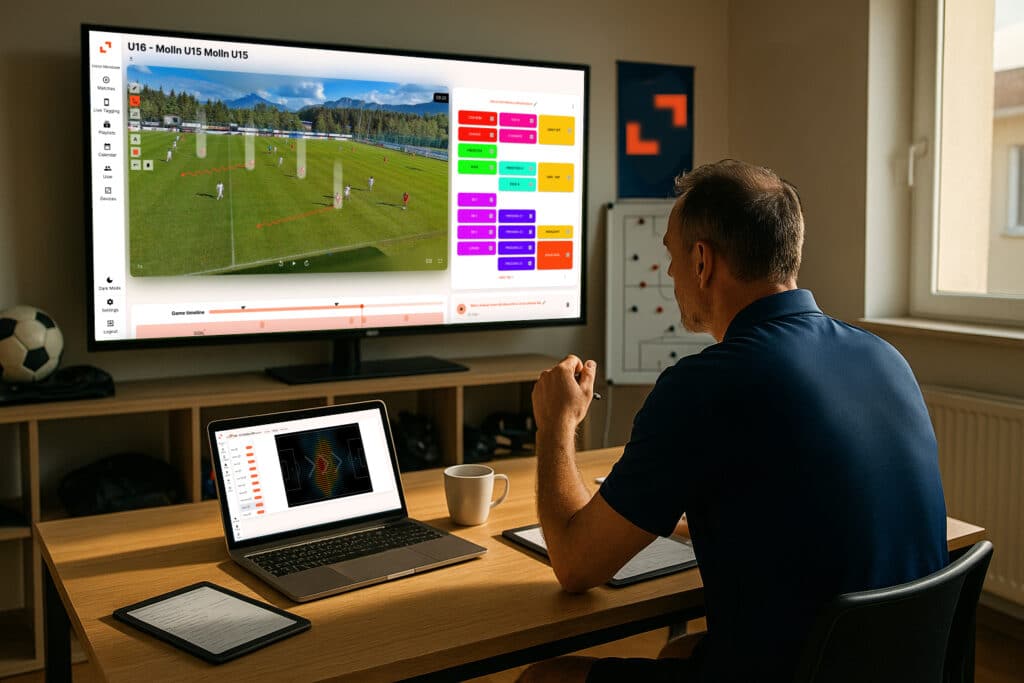
Categories
Video Analysis

Choosing the Right Football Video Analysis Solution: 2026 Comparison

Contents

Choosing the Right Football Video Analysis Solution: 2026 Comparison

In modern football, technology has become a vital part of the game. From grassroots clubs to professional teams, the ability to capture, analyse, and share match footage is transforming how teams train, strategise, and connect with their supporters. With numerous solutions on the market, it can be challenging to determine which platform best suits your needs.

In this article, we’ll delve into the key features that define today’s top football video analysis solutions: zone14, Veo, Pixellot, Staige, and Trace, and how each solution compares across important categories such as player tracking, camera setup, streaming capabilities, analysis tools, auto-detection features, and pricing. By the end, you’ll have a clearer understanding of which platform might be the best fit for your team.

A football video analyst is looking at a match recording and statistics on a computer screen.

Player tracking and data

Tracking player performance has become a cornerstone of modern coaching. Whether it’s analysing Heatmaps to identify movement patterns, reviewing key passes, or evaluating player fitness, detailed tracking data allows coaches to tailor their strategies and improve results.

zone14: zone14 uses AI-driven performance analysis to generate detailed player statistics and tactical insights directly from video footage. Unlike some other platforms, it does not require wearable GPS trackers, simplifying the setup process while still delivering advanced data such as Heatmaps ‎‎‎‏‏‎ ‎and running statistics for each player.
Veo: Veo’s AI-powered analytics provide heatmaps, shot maps, and general match statistics. While helpful for understanding team performance, it currently lacks the depth of individual player data found in zone14 or Trace.

Pixellot: Pixellot offers highly detailed player and ball tracking, ideal for clubs with a need for robust performance data. Basic match stats such as possession However, its setup is generally geared toward larger venues and organisations. For individual player running data, Pixellot are partnered with GPS device manufacturers Playermaker which is available at an additional cost. 

Staige: Staige focuses primarily on match recording and streaming, with little emphasis on individual or team tracking analytics.

Trace: Combining wearable GPS sensors and smart cameras, Trace creates individual highlights and performance metrics. While the player-specific approach is innovative, the reliance on wearables may complicate its use for larger teams and increase the cost for those on a restricted budget.

zone14 camera
Football camera and setup

The ease of setting up your video system can significantly affect your ability to capture every match and training session. A solution’s portability , power options, and field-of-view capabilities all play a role in its practicality.

zone14: zone14 uses a fixed, high-resolution 180-degree camera systeminstalled at venues. This ensures consistency and reliability but makes it less suitable for teams playing at multiple locations. However it means all teams at the club can make use of the camera system at no additional cost, supporting the development of youth players through video analysis. Having a fixed system also means reduced setup time for coaches and staff on matchday, as match recordings are able to be scheduled in advance. 
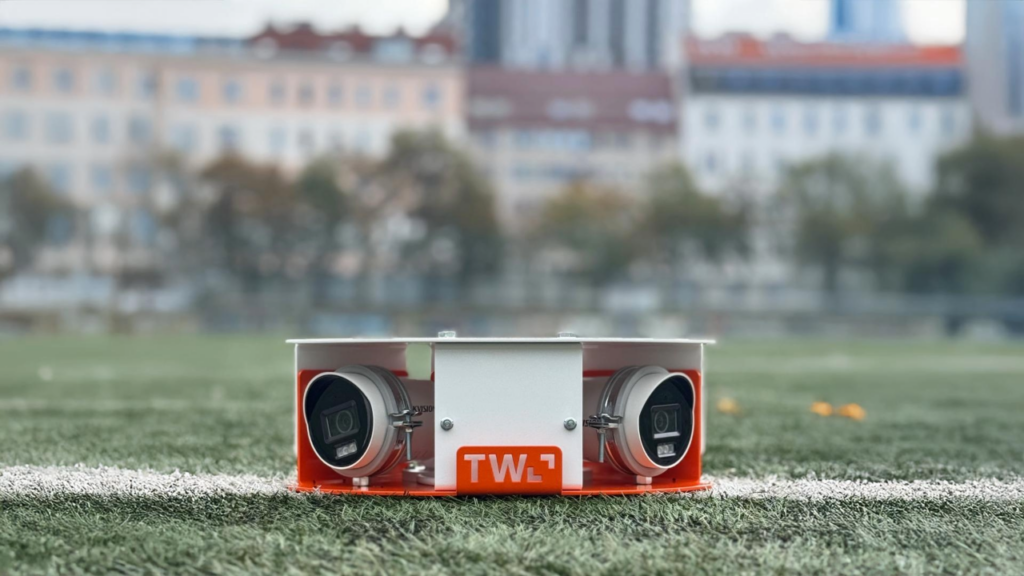
Veo: Veo offers a portable camera system designed for ease of use. It can be mounted on a tripod and powered by battery, making it ideal for teams that frequently change venues. It can however mean the footage is less stable in bad weather conditions and limits the current capability of its AI tracking algorithms.

Pixellot: Pixellot offers both fixed installations and the portable Pixellot Air, a lightweight solution with ‘professional-grade capture quality’. This flexibility makes it suitable for diverse use cases and means there are options for clubs of all levels

Staige: Staige relies on fixed camera setups, making it an excellent choice for clubs with permanent venues but limiting flexibility for those on the move.

Trace: Trace also uses a portable camera system, but its reliance on wearables adds complexity. This can be cumbersome for teams with larger rosters or those prioritising simplicity.

A live stream of a game on a TV, recorded with the zone14 AI live streaming camera.
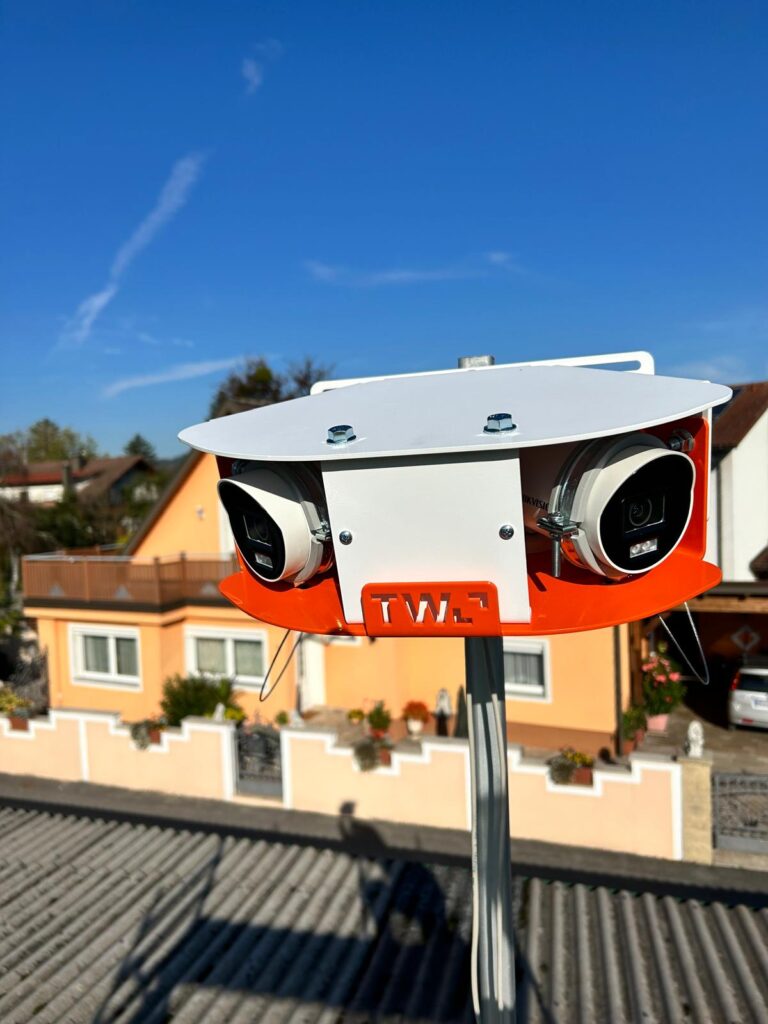
Live streaming and live football analysis

Live streaming has become an essential feature for football clubs aiming to engage their supporters and build their brand. Whether streaming to YouTube or a dedicated platform, the ability to broadcast matches in real-time is invaluable.

zone14: zone14 allows clubs to live stream matches via the zone14 LIVE package integrated with popular streaming platforms like YouTube which is accessible on all devices. This feature ensures all fans can follow the action in real-time, while coaches are also able to benefit from instant replays and live tagging tools on zone14 REPLAY ClubTV is also available to allow teams to have their own dedicated website page for sharing their streams and highlights.
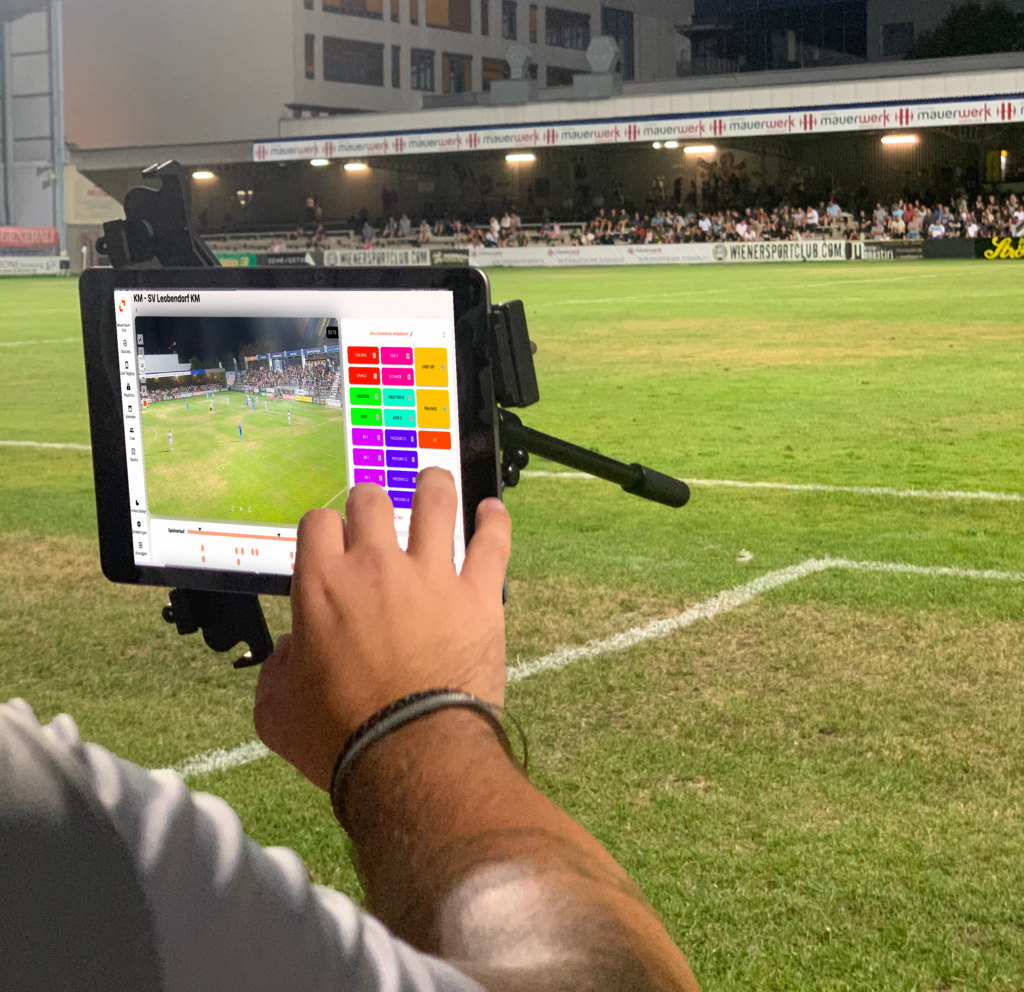
Veo: Veo offers live streaming as an add-on service. Matches are streamed directly through the Veo app or alternatively can be broadcast to popular social media platforms such as YouTube and Facebook. 

Pixellot: Pixellot’s professional-grade streaming solutions are geared toward large organisations and broadcasters. It supports customisable OTT platforms for monetisation but may be overkill for smaller clubs.

Staige: Staige.tv focuses on grassroots-level live streaming, helping clubs engage their local communities with high-quality broadcasts. Their dedicated platform, Staige.tv allows clubs to have their own dedicated page for streaming. Similarly they work directly with Austrian company Fan.at to bring a similar solution and platform to clubs in Austria.

Trace: Trace prioritises post-match highlights rather than live streaming. This approach is ideal for training and recruitment but doesn’t cater to fans wanting to watch matches live.

A coach and player are looking at video analysis in an office after a match.

Football video analysis tools and features

For coaches, the ability to analysefootage is just as important as capturing it. Tools like drawing overlays, tagging, and playlists are invaluable for breaking down tactical patterns and improving performance.

zone14: Intuitive analysis tools on zone14 REPLAY include drawing and tagging features, allowing coaches to highlight key tactical moments and create custom playlists. This makes it a comprehensive solution for post-match analysis. zone14 also offer a free trial of their analysis tool here. Additionally it is also available as a software-only package (zone14 COACH) for users who already have their own footage.

Veo: Veo offers a basic video editor for tagging key events and creating highlights. It focuses heavily on incorporating data such as passing statistics. 

Pixellot: Pixellot integrates with professional analysis platforms to deliver advanced coaching insights. However, this level of detail often requires additional software expertise/knowledge and may not be ideal for amateur/grassroots coaches.

Staige: Analysis tools are available as a paid extra however this is not the key focus in Staige’s platform. With Staige.tv focusing on delivering raw footage for playback and streaming rather than advanced analytics.

Trace: Trace creates individual player highlights automatically, making it an excellent choice for recruitment purposes and scouting but less suitable for team-wide tactical analysis.

Already have a camera but looking for an affordable analysis platform?

zone14 COACH is the solution

AI Auto Detection and Tagging Features

Automated event detection is a game-changer, saving coaches time by identifying key moments like goals, set pieces, and more.

zone14: zone14’s AI-driven event detection is currently able to automatically detect and mark goals, with more AI auto-detection features planned in the near future. This feature streamlines the review process, enabling coaches to focus on strategy rather than sifting through hours of footage.

Veo: Veo uses AI to tag events like goals. It is also able to detect passes and set-piece situations making it the most advanced currently for auto-detection features.

Pixellot: Pixellot offers advanced event detection as part of its high-end solution suite, catering to professional organisations needing comprehensive data.

Staige: Event detection features are limited, relying on manual inputs for tagging highlights.

Trace: Trace’s unique selling point is its personalised highlights for each player, using AI to compile individual reels for performance reviews. This is done by combining the AI camera footage together with the data from the GPS tracking devices.

Football Camera Pricing

Budget is always a critical factor when choosing a solution. The cost of hardware, software subscriptions, and any additional services must align with your club’s financial resources.

zone14: zone14 offers competitive pricing with transparent packagestailored to clubs of all sizes. Its all-in-one approach minimises hidden costs and expensive hardware costs, making it accessible to grassroots and semi-professional teams 

Veo: Veo operates on a subscription model, with an upfront cost for the camera and ongoing fees for its services. While affordable for many teams, additional costs for live streaming and advanced features can add up.

Pixellot: Overall Pixellot’s pricing reflects its professional-grade offering, making it more suited to clubs with larger budgets.

Staige: Staige’s pricing is competitive for grassroots clubs but may require additional investment for custom installations. Additionally with their partner platforms such as Fan.at there may be a requirement to sell a certain amount of subscriptions which can mean extra work for under-staffed grassroots clubs.

Trace: Trace’s wearable-centric model adds a layer of cost, especially for larger clubs of multiple teams that then need multiple devices.

A football coach presenting video analysis to players

Which is the best AI camera solution for your club?

Choosing the right football video analysis system depends on your club’s specific needs, budget, and goals. Veo offers a portable and user-friendly option, while Pixellot caters more to professional organisations with advanced analytics and streaming capabilities. Staige excels at live streaming for grassroots sports, and Trace shines in creating personalised player highlights.

However, zone14 stands out as the most well-rounded solution. With its fixed ‎camera system, advanced AI analytics, live streaming capabilities, and competitive pricing, it bridges the gap between grassroots affordability and professional-grade features. zone14 empowers teams not only to play better football but to understand the game on a deeper level.

zone14 REPLAY

Football video analysis software for everyone

Share on Facebook
Share on Twitter
Share on LinkedIn
More related content from zone14