Winter Break in Football 2026/27: Training Plan & Second-Half Preparation
Prepare for the second half of the season with a winter football training plan, mid-season video analysis, club preparation tips and a practical checklist.
Contents10 sections
- How long is the winter break in football?
- The four phases of winter preparation
- Phase 1: Recovery and individual winter training
- Phase 2: Use video analysis to review the first half of the season
- Phase 3: Build your football winter break training plan
- Phase 4: Use friendly matches to assess your progress
- Get your club ready for the second half: Build a better video analysis structure
- Your checklist for the perfect winter break
- Frequently asked questions
- Make the second half of the season count
How to help your players recover, learn from the first half of the season and get your club ready for the restart.
When the last league game before the winter break is over, most coaches already have a few things on their mind. Perhaps your team has been conceding too many goals from set pieces. Perhaps you haven’t been creating enough chances, or your players have struggled to maintain their performance over 90 minutes. There may also be problems off the pitch: matches that weren’t recorded, footage scattered across different devices, or simply not enough time to give players useful feedback.
The winter break gives you a chance to address these things without the pressure of preparing for another competitive match every weekend. Your players can recover, your coaching staff can take a proper look at the first half of the season, and your club can put better structures in place for the months ahead.
In this guide, we’ll look at how to organise winter training, use video analysis to set meaningful priorities and prepare your club for the second half of the 2026/27 season. There’s also a flexible preparation planner and a checklist to help you put it all into practice.
How long is the winter break in football?
The winter break varies considerably depending on the league, country and level of football. Some amateur clubs in Central Europe have several weeks or even months without competitive matches, while other competitions continue through the winter or only take a short holiday break.
Start with your first competitive fixture and work backwards. Confirm when players return to team training, when friendly matches can be played and how much time you have for individual preparation. The longer the break, the more important it is to plan the transition back to regular football rather than simply leave players to their own devices until training resumes.
The four phases of winter preparation
-
Recover
Players: Rest, recover and address injuries.
Coaching staff and club: Reflect on the first half and confirm key dates.
-
Review and maintain
Players: Gradual individual fitness work where appropriate.
Coaching staff and club: Analyse matches, set priorities and organise club structures.
-
Rebuild
Players: Progressive team training and football-specific conditioning.
Coaching staff and club: Turn analysis findings into training exercises and feedback.
-
Prepare to compete
Players: Friendly matches, tactical refinement and recovery.
Coaching staff and club: Record preparation games, assess progress and finalise matchday routines.
These phases can overlap. Your coaching staff can review footage while players are away, and the club can organise a new recording system well before the first team training session. The important thing is that each phase has a purpose.
Phase 1: Recovery and individual winter training
A break from competitive football is useful for players and coaches alike. At amateur level, players often balance training and matches with work, study and family commitments. Giving them time away from the usual routine is part of preparing them for the next half of the season.
Allow players to recover before introducing a more structured individual programme. Those returning from injury should follow appropriate medical or rehabilitation advice. For healthy players, a longer break can include manageable aerobic activity, mobility and strength work before gradually returning to football-specific movements.
The goal is not to make players reach peak fitness on their own over Christmas. It’s to help them return to team training in a condition that allows them to build up their workload sensibly. Agree on expectations, keep the programme realistic and avoid asking everyone to complete the same workload regardless of their previous match minutes or current fitness.
While players are recovering, the coaching staff has an opportunity to reflect on the season. Once everyone has had some time away, the next step is to look at what actually happened on the pitch.
Phase 2: Use video analysis to review the first half of the season
A league table tells you how many points you’ve collected. It doesn’t necessarily tell you why you’ve collected them.
From the touchline, it’s difficult to see every run away from the ball, judge the distances between players or remember how an attack developed several minutes before a goal. Video gives coaches another perspective and allows them to revisit comparable situations across different matches.
This is particularly valuable during the winter break. Instead of reviewing one game at a time, you can look for patterns across the first half of the season. Choose a few representative matches, including good performances as well as difficult ones, and ask whether the problems you remember are actually recurring. If recordings are incomplete, use what is available alongside your coaching notes, without treating a small sample as the whole season.
Team: How well is your game plan working? In and out of possession, transitions and set pieces.
Unit: How well do players work together? The back line, midfield support and coordinated pressing.
Player: What feedback can each player use? Strengths, one or two areas to improve, data in context.
Team analysis: How well is your game plan working?
Look at your team in and out of possession and during transitions. Are you creating chances through the areas you intended to attack? Does your defensive shape remain compact when the ball moves wide? What happens immediately after you lose possession? Review attacking and defending set pieces as well.
The aim is to identify two or three areas that deserve particular attention during winter preparation, rather than create a list of everything the team has done wrong. Include successful examples so players understand what they should keep doing.
Unit analysis: How well do players work together?
Move from the team as a whole to the relationships between players. Review how the back line shifts, how midfielders support one another and how forwards coordinate their pressing. A wide camera view is especially helpful here because the relevant movement often happens away from the ball.
With zone14 REPLAY, you can organise comparable scenes into playlists across multiple matches. Tactical drawings help make distances, passing options and positioning easier to explain. Instead of discussing a general problem, you can show the unit several examples of the same situation.
Individual analysis: Give players feedback they can use
The winter break is also a good opportunity for short individual development conversations. Prepare a few clips showing what a player does well and one or two situations that illustrate a specific area for improvement. Ask how they understood the situation before explaining your own observations.
Where physical performance data is available, it can add context. zone14 STATS provides metrics such as distance covered, sprint activity and heatmaps directly from recorded matches, without GPS vests. Compare similar roles and account for playing time, tactical instructions and match circumstances. Running data alone cannot tell you whether a player was motivated or made the right decision; review the footage alongside it.
For more detail on the individual stages of a review, see our football match analysis guide.
From a match observation to a winter training priority
Imagine your team has been conceding chances shortly after losing the ball in midfield. Your first impression might be that the defenders need to react faster. When you review several matches, however, you notice that both central midfielders frequently move ahead of the ball at the same time, leaving the defence exposed when possession is lost.
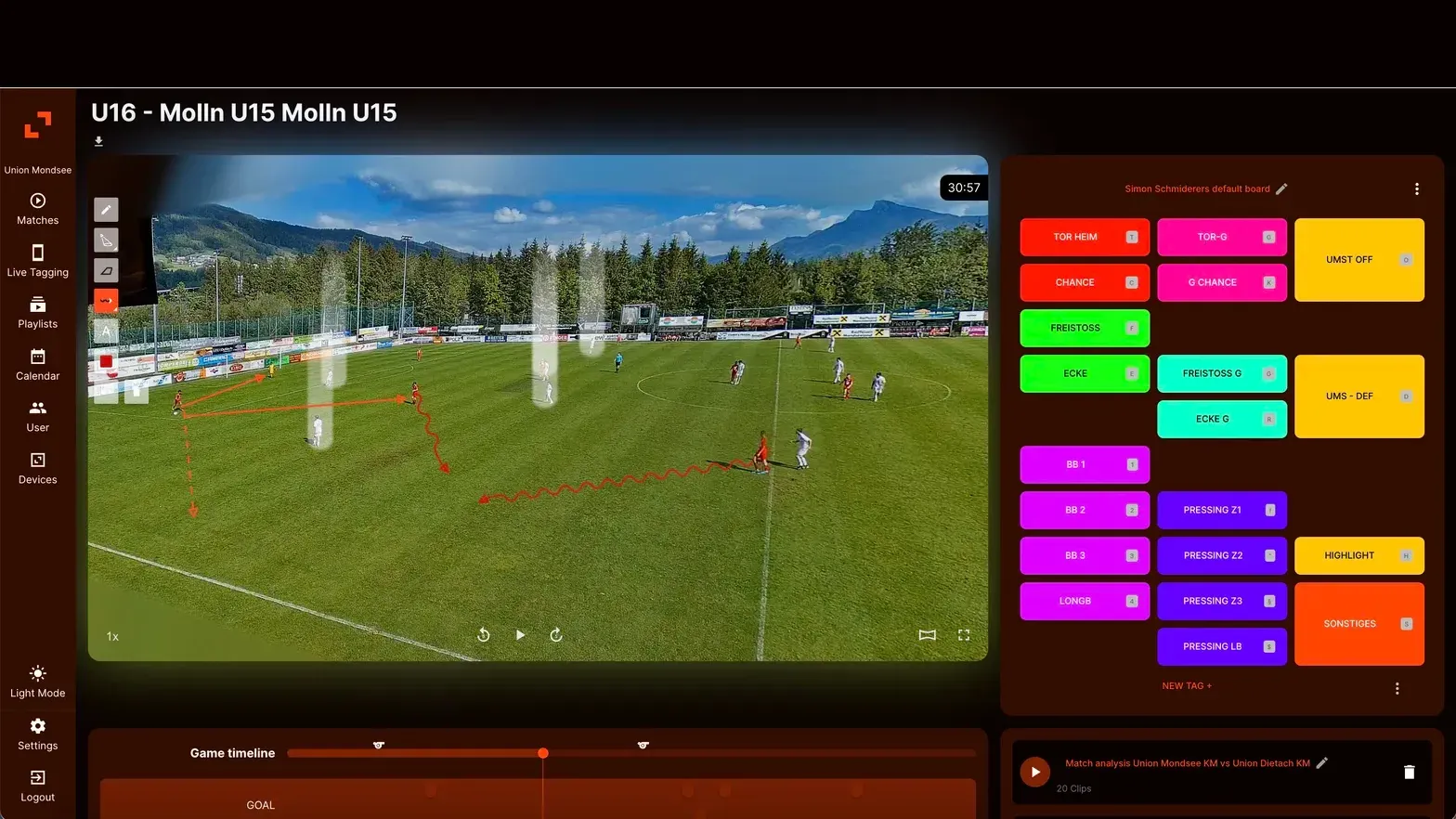
- Review: Collect several comparable turnovers from first-half matches using a custom tag.
- Explain: Create a short playlist and use tactical drawings to highlight the space behind midfield and show examples of better supporting positions.
- Train: Build exercises around maintaining balance in possession and reacting together after a turnover.
- Evaluate: Record a preparation match and review whether the midfielders are now providing better cover in similar situations.
This is where video analysis becomes part of coaching rather than an extra task after the match. You have a reason for choosing a training exercise, a clear way to explain it to the players and an opportunity to see whether the changes are being applied.
Already have recordings from the first half? With zone14 COACH, you can upload footage from your existing camera and use REPLAY’s tagging, drawing, playlist and sharing tools for €20 per month excluding VAT. The free demo uses a sample match, so you can explore the tools before subscribing. No zone14 camera is required.
Want more practical methods for your team and individual analysis? Our free football video analysis handbook brings the essentials together for coaches. Get it by email.
Free handbook on video analysis
Proven methods and tactical know-how for your coaching, from the basics to pro-level analysis: the football video analysis handbook, free by email.
Thanks!
We’ve sent the handbook to your inbox. Check your email (and your spam folder, just in case).
Test mode: no webhook is configured for this form, nothing was forwarded.
Phase 3: Build your football winter break training plan
Use the findings from your mid-season review to decide what your team needs to work on. Physical preparation is important, but fitness should not be the only objective. If your review shows that defensive organisation or build-up play is a recurring issue, make that a consistent theme throughout the preparation period.
For a team training two or three times a week, keep the priorities manageable. Combine conditioning with football exercises, allow for recovery and gradually introduce match-specific work. Agree on your objectives with the players and communicate them before the first friendly.
Example: A six-week winter preparation plan
| Week | Players and training | Coaching staff and club |
|---|---|---|
| Week 1 | Players and trainingRecovery and time away from football | Coaching staff and clubConfirm restart dates and reflect on performances |
| Week 2 | Players and trainingIndividual maintenance work where appropriate | Coaching staff and clubReview first-half video, agree tactical priorities, organise recording setup |
| Week 3 | Players and trainingProgressive return to team training | Coaching staff and clubIntroduce priority themes and individual feedback |
| Week 4 | Players and trainingFootball-specific conditioning and tactical exercises | Coaching staff and clubRecord a friendly if appropriate and review the targeted situations |
| Week 5 | Players and trainingMatch-specific training and friendly exposure | Coaching staff and clubCompare new footage with first-half examples and refine the approach |
| Week 6 | Players and trainingTactical refinement, set pieces and recovery ahead of competition | Coaching staff and clubFinalise roles, confirm recording schedule and prepare first league match |
This example assumes a six-week pause and a return to team training in week three. Adapt it to your league calendar, facility availability and player fitness. A short interruption may only allow a recovery period and a focused return to competition.
Build your own winter break plan
Choose the length of your break, when team training resumes and your main priority to create a realistic outline for the weeks ahead.
Only two weeks of team training: concentrate on one priority, and play a friendly only if the calendar allows.
An organisational outline, not a fitness prescription. Adapt the intensity to each player's readiness, your league calendar and your facilities.
Example training week: Three sessions and a friendly
| Day | Focus |
|---|---|
| Monday | Rest or individual recovery, depending on previous match exposure |
| Tuesday | Team training: football-specific conditioning and technical exercises |
| Wednesday | Rest or individual strength and mobility work |
| Thursday | Tactical training: work on a priority from your video review |
| Friday | Lower-volume tactical organisation, set pieces and friendly preparation |
| Saturday | Friendly match: test the changes and record the game |
| Sunday | Player recovery; coaching staff review relevant footage |
This is an illustrative schedule for a healthy adult squad during the team-development phase, not a fixed fitness prescription. Adjust the intensity and duration to each player’s readiness and the match schedule. If you need more guidance on the physical and organisational side, see our pre-season football training guide.
Phase 4: Use friendly matches to assess your progress
Friendly matches are a chance to see whether the work done in training is carrying over into games. Give the team a small number of clear objectives before kick-off and assess them afterwards. The score is only one part of the picture.
If you’ve been working on defensive transitions, for instance, look for the situations where possession was lost and review how the players reacted. Use the same tagging categories you used for your first-half analysis. This makes it easier to compare similar situations rather than rely on whether a friendly felt better than the last one. With live tagging in the zone14 REPLAY app, you tag those moments on your phone during the match, and the tags sync automatically to the recording’s timeline once it’s uploaded.
Record preparation matches consistently. Share a few relevant clips before the next session, refine the exercises and repeat the process. Our practical video analysis workflow explains how to make this a manageable routine throughout the season.
Get your club ready for the second half: Build a better video analysis structure
The winter break is not only an opportunity to improve the team on the pitch. It’s also a good time to address the problems that make coaching more difficult every weekend.
Who is responsible for recording matches? Where are the videos kept? Can all the relevant coaches access them? How do players receive feedback? And does the youth department have the same opportunities as the first team?
At many amateur clubs, recording depends on a volunteer being available. Even when matches are filmed, the footage may stay on someone’s computer or in a messaging group. The result is that valuable footage doesn’t always make it into the next training session.
Use the break to agree on a simple club-wide routine: schedule matches, record consistently, keep footage accessible to authorised staff, decide who reviews it and set aside time for feedback. Start with a process coaches can maintain during the competitive season.
One system for recording, video analysis, performance data and livestreaming
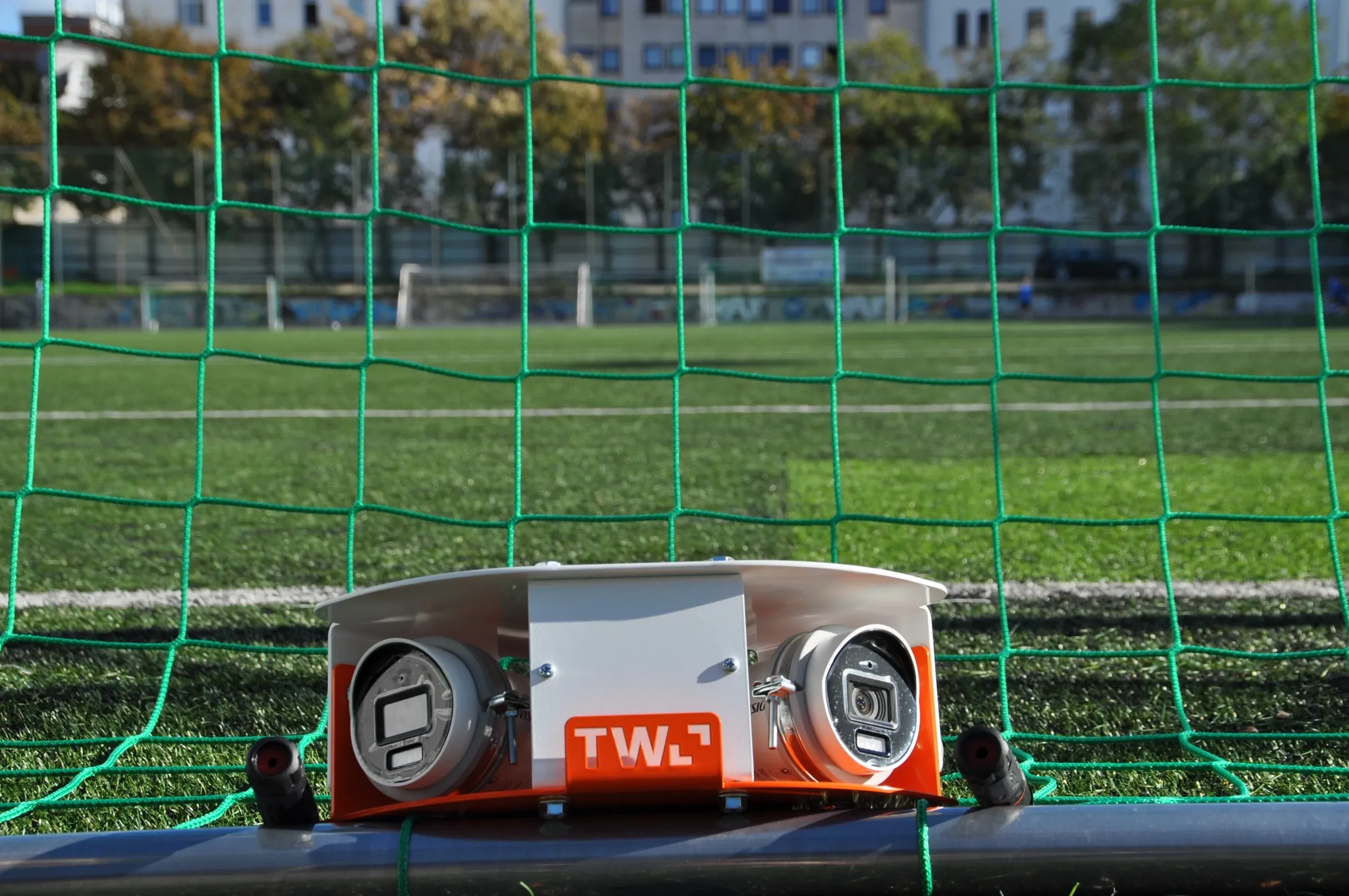
With zone14, clubs can bring these tasks together in one system instead of organising separate tools and matchday processes:
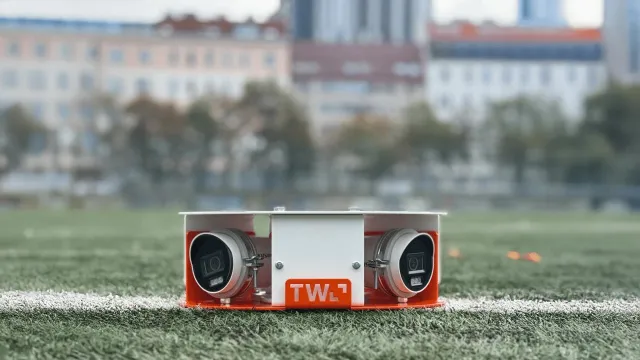
zone14 TWO: A permanently installed AI football camera automatically records scheduled matches. Your club doesn’t need a volunteer behind the camera every weekend, and the wide pitch view helps coaches assess off-the-ball movement.
zone14 REPLAY: Recordings are uploaded into the analysis platform automatically. Coaching staff can organise matches centrally, create tags, annotate tactical situations, build playlists and share feedback with the relevant players. Coaches tag moments live on their phone during the match, and the tags sync to the recording’s timeline automatically. The camera packages support club-wide use across teams and users.
zone14 STATS: Optional video-based performance data, including running metrics, sprints and heatmaps, adds another perspective to match analysis without requiring wearable trackers.
zone14 LIVE: Optional livestreaming lets clubs bring matches to supporters who cannot attend and creates additional opportunities for sponsor visibility.
The advantage for a club is not just owning a camera. It’s making match footage useful across the club, from the first team’s tactical review to individual player development in the youth department, with fewer manual steps between recording and analysis.
If you’re planning to introduce video analysis for the second half of the season, discuss the installation site, power and internet connection, coaching access and package options during the break. Aim to test your setup during preparation games so the staff has time to get comfortable with it before competitive football returns. Confirm delivery and installation availability with our team.
Start the second half with every match recorded. Let us show you how automatic recording, video analysis and optional performance data and livestreaming could work at your club.
Already have a camera? Start analysing your existing footage with zone14 COACH for €20/month excl. VAT per coach subscription, with no annual commitment.
Your checklist for the perfect winter break
Recovery and scheduling
First-half review and player development
Club structures and recording
Frequently asked questions
When is the winter break in football?
The dates depend on the country, league and level of competition. Many Central European amateur leagues pause from late autumn until winter or early spring, while other competitions continue throughout winter. Check your league’s official fixture calendar.
Should football players train during the winter break?
Players should first have sufficient time for physical and mental recovery. During longer breaks, appropriate individual fitness work can help maintain readiness for team training. The programme should reflect previous playing time, fitness, injuries and the date of the first competitive match.
How do you create a football winter break training plan?
Work backwards from the first competitive match. Allow time for recovery, individual preparation, a progressive return to team training and friendly matches. Use the findings from your first-half review to choose tactical priorities instead of focusing exclusively on fitness.
What should coaches analyse during the winter break?
Review recurring patterns in attacking play, defensive organisation, transitions and set pieces. Look at team units and individual players as well. Select a few meaningful priorities and use video clips to explain them to your squad. REPLAY helps you organise scenes with custom tags, drawings and playlists.
How many friendly matches should a team play before the second half of the season?
There is no universal number. The schedule depends on the length of preparation, the fitness of the squad, player availability and the league calendar. Friendlies should help players return to competition progressively and give coaches opportunities to evaluate tactical changes.
Can I analyse first-half matches without buying a new football camera?
Yes. zone14 COACH allows you to upload supported recordings from your existing camera and use the REPLAY analysis tools. It costs €20 per month excluding VAT per coach subscription, with no annual commitment. You can explore its features on a free sample-match demo before subscribing.
Is the winter break a good time to install a football camera?
Yes, the break can provide time to plan installation, organise coaching access and test the setup during friendly matches. With zone14 TWO and REPLAY, scheduled matches are recorded automatically and uploaded for analysis, with optional STATS and LIVE features available. Discuss your pitch and installation requirements with the zone14 team ahead of the restart.
Make the second half of the season count
A good winter break should leave your players ready to compete, your coaches clear about what needs to improve and your club better organised than it was at the start of the season.
Use the time to learn from your first-half performances and put a routine in place that lets you keep learning from every match. That might mean starting with the footage you already have or introducing an automatic recording and analysis system for the whole club.
The preparation period is temporary. The structures you put in place can continue to benefit your coaches and players long after the first league game of the second half.