
Filming a soccer game doesn't automatically mean you have an analysis. Only when 90 minutes of video material are transformed into clear observations, understandable feedback, and concrete training content is real added value created for coaches and players.
Without a fixed process, post-production can quickly take several hours. Scenes need to be found, cut, sorted, and distributed to the right people. A good video analysis workflow reduces this effort. It helps the coaching staff focus on a few relevant patterns and prepare them in such a way that the team can work with them.
This guide shows the complete process: from game recording to tagging and playlists, all the way to player feedback. The process works with an automatic soccer camera as well as with your own recordings from a smartphone, a GoPro, or any other camera system.
Video analysis begins before kick-off
Efficient game analysis doesn't start with the first click in the software, but with a clear question. Those who want to examine pressing, build-up play, transition play, set pieces, and every individual action simultaneously after the game usually collect too many clips and lose the main focus.
Therefore, establish two or three analysis questions before the game. They can arise from the training focus, the last game, or the upcoming opponent.
- How well are we breaking down the opponent's first pressing line?
- What happens in the first few seconds after losing possession?
- Are our wingers occupying the right spaces?
- How well does our defense control the space behind the last line?
These questions will later determine which scenes are marked and which actions are intentionally not pursued. The guide is especially useful for clubs that do not yet have a fixed procedure. How you can get started with football video analysis in your club.
Record the match correctly for video analysis
For tactical video analysis, it's not enough to just see the player with the ball. The recording should show as many players as possible, the distances between team sections, and off-ball movements. Therefore, an elevated and stable camera position is significantly more helpful than a close-up perspective at sideline height.
Fundamentally, there are two ways to bring game material into the zone14 workflow.
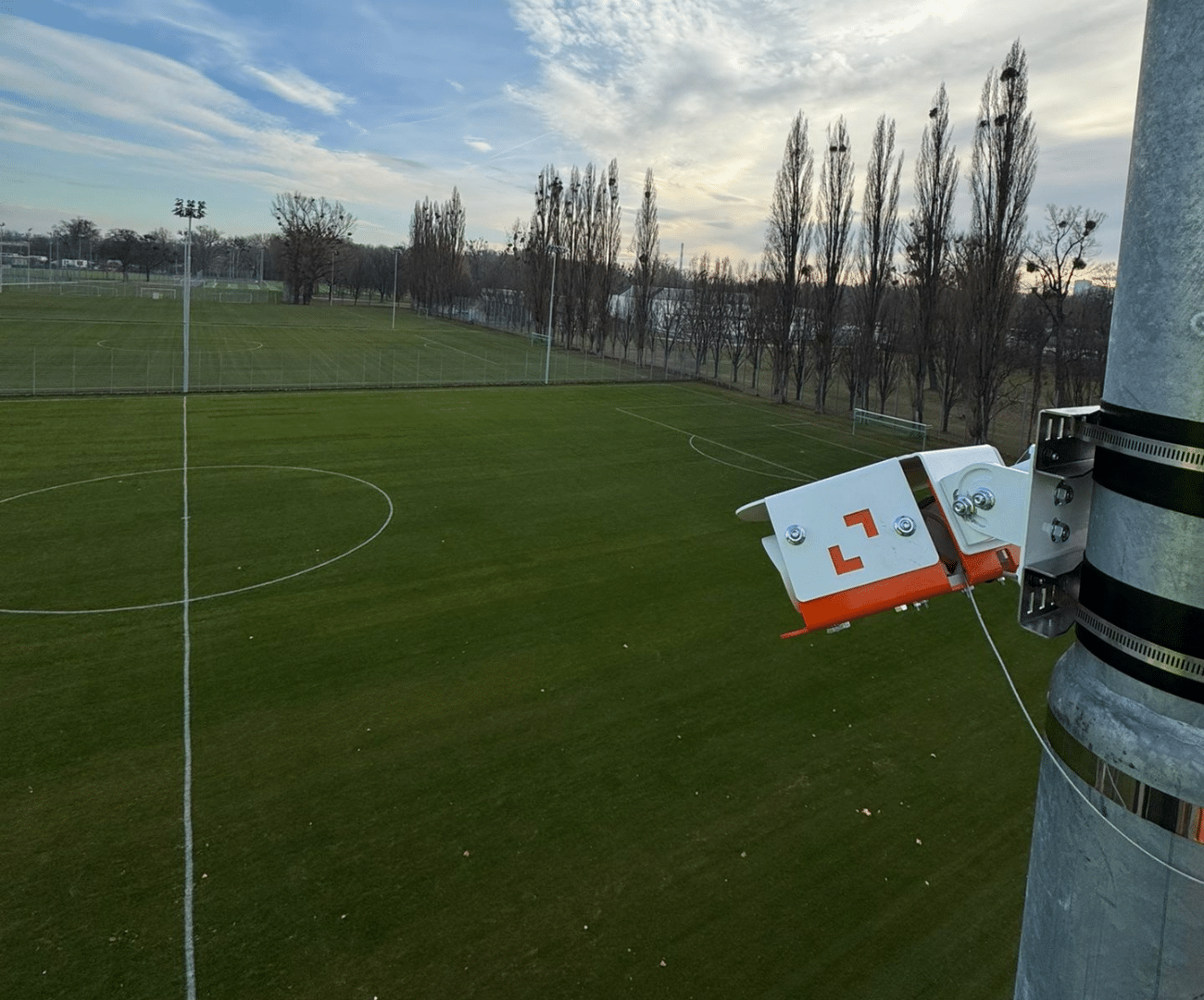
Automatic Game Recording with zone14 TWO
The zone14 TWO Soccer Camera is permanently installed at the sports field. Games can be scheduled, automatically recorded, and then made available directly in REPLAY. This saves time, especially for clubs that regularly film multiple teams and don't want to set up or operate a camera anew for every game.
The broad perspective facilitates the assessment of team spacing, pressing heights, runs, and open spaces. Anyone who wants to compare different fixed and mobile systems will find in the article on Best cameras for soccer video analysis an overview.
Your own video material with zone14 COACH
Existing recordings can also be analyzed. With zone14 COACH Teams can upload videos from a smartphone, GoPro, Veo, XbotGo, or any other camera system, and then edit them with tagging, drawings, and playlists.
When making your own recordings, the camera should be as still as possible and capture a large part of the playing field. Zooming too much or hectically tracking the ball makes tactical assessment difficult later on. The article provides practical tips on this. How to record football matches with your phone.
Organize game videos centrally
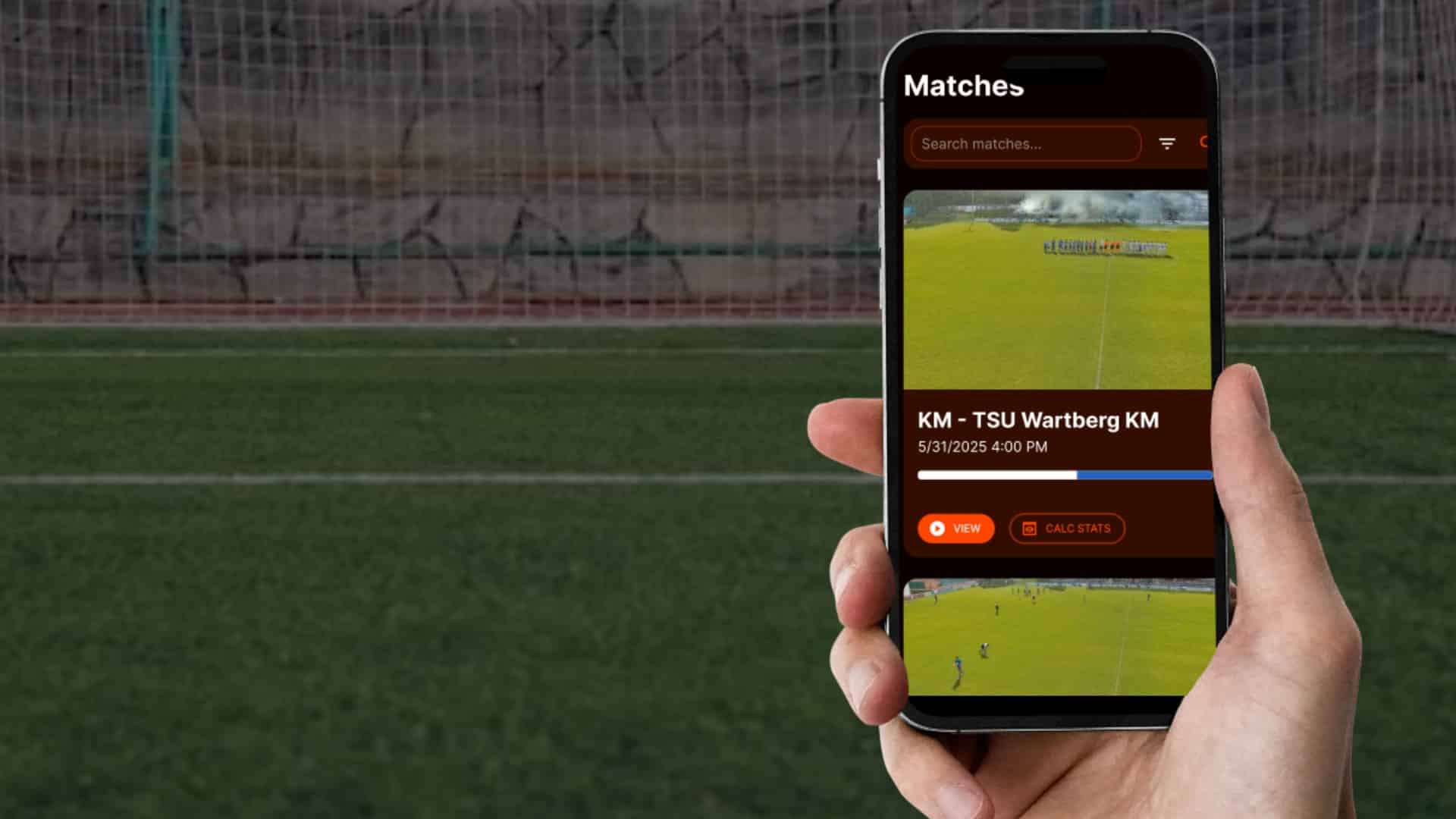
When videos are scattered across memory cards, personal laptops, messaging services, and multiple cloud folders, any analysis becomes unnecessarily complicated. A central match area ensures that coaches can find footage faster, collaborate on edits, and compare across multiple games.
In zone14 REPLAY Games are saved, scenes are marked, and analyses are organized into playlists. Recordings from zone14 TWO are automatically available. Your own video material enters the same analysis process via COACH.
Before diving into the details, it's worth briefly reviewing the events that fit the previously established questions:
- Scores and clear chances
- Turnovers and counterattacks
- Entries into the final third
- Set piece scenarios:
- striking changes in the opponent's formation
It's not about commenting on every action. What's crucial are the few patterns that can influence the next performance.
Tag key moments instead of searching through 90 minutes
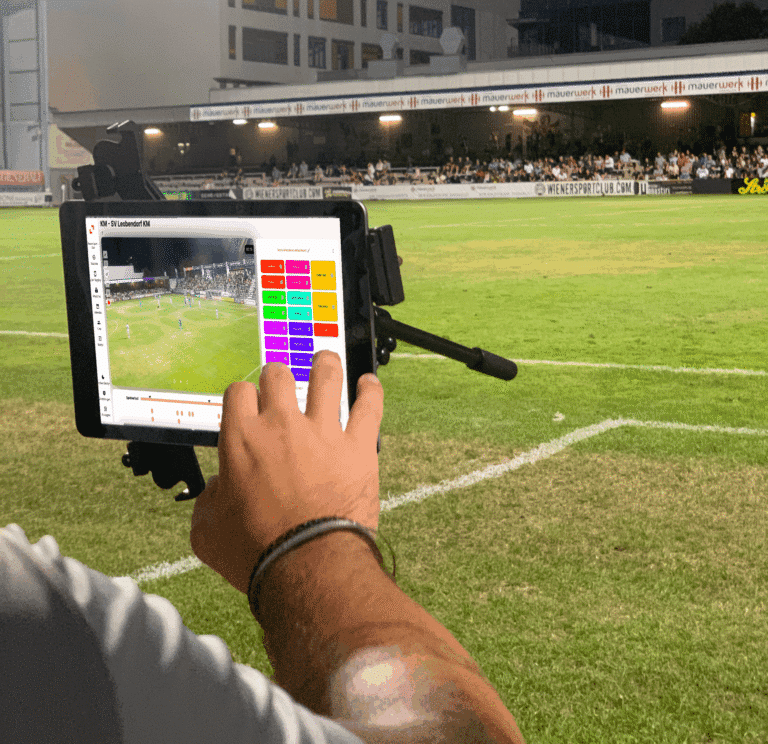
Tagging connects the complete game recording with the actual analysis. A tag marks a situation and assigns it to a category. This allows, for example, all scenes related to build-up play, counter-pressing, or a specific player to be called up directly later.
A simple tagging board can get by with a few categories:
- With ball: Build-up play, line breached, final pass, entering the penalty area, goal-scoring opportunity, loss of possession
- Against the ball Pressing trigger, ball recovery, compact formation, space behind the defense
- Switch Counter, counter-pressing, defensive recovery, backward movement
- Individual Positioning, pre-orientation, decision, technical execution
Every day should answer a question that will actually be evaluated later. A small, consistently used board is usually more helpful in practice than 30 categories that are only used occasionally. The post on the structure explains more about the Football Analysis Tagging Board.
Tags can be set after the game. It's even faster if important situations are already marked live. This allows the coaching staff to go directly to the relevant scenes after the final whistle. The The Advantages of In-Game Video Analysis in Football will be described in more detail in a separate article.
Recognize patterns instead of collecting individual mistakes
A single misplaced pass rarely explains a tactical problem. Only by comparing several similar scenes does it become clear whether it was an isolated decision or a recurring pattern.
Suppose a team allows three dangerous counter-attacks on the left flank after losing possession. The analysis should not end with the statement „The pass was bad.“ More concrete questions would be more helpful:
- Where were the nearest teammates before the turnover?
- Was the center adequately secured?
- Who put pressure on the ball-carrier?
- What was the distance between the midfield and defense?
- Does it address the same position problem in multiple scenes?
From this comparison, a clear coaching message can emerge: If the left full-back pushes high, the defensive midfielder closest to the ball first secures the center before shifting outwards.
This statement is much more helpful for players than a general hint like „We need to react faster after losing the ball.“ It describes the situation, the task, and the desired behavior.
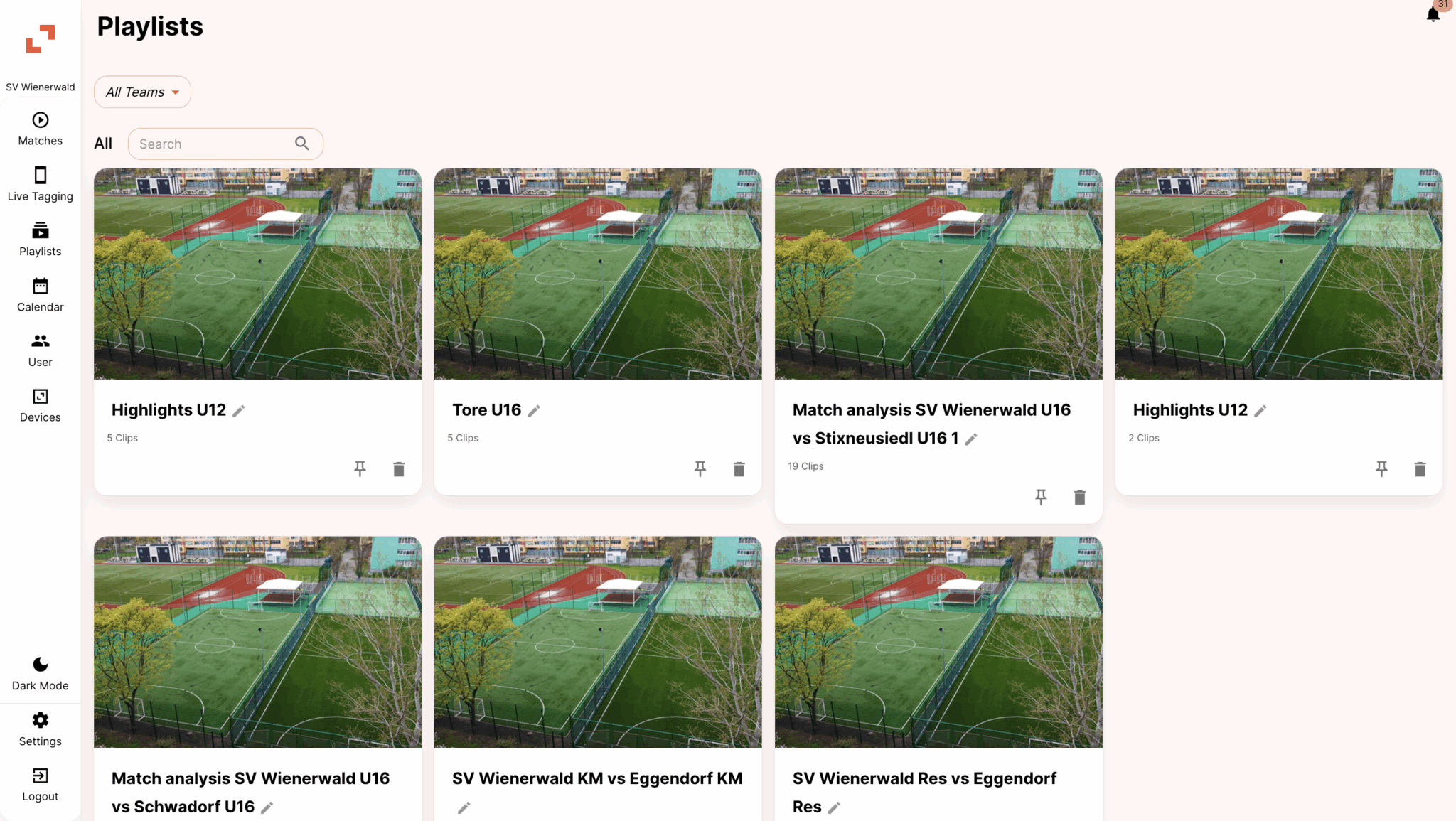
Making Scenes with Drawings and Playlists Easier to Understand
Players need to not only see what happened, but also understand why it happened. Arrows, marked spaces, and short replays can visualize passing lanes, spacing, and open zones. The key is: clear markings help. Too many elements distract from the main point.
The selected clips should then be sorted by target audience:
- Team Playlist: Two or three patterns that affect the entire team
- Position Group Playlist: Scenes for defense, midfield, or attack
- Custom Playlist: Situations for a role or a personal development goal
- Positive Playlist: Examples where the desired behavior already works
- Opponent Playlist: Recurring processes, strengths and weaknesses of the next opponent
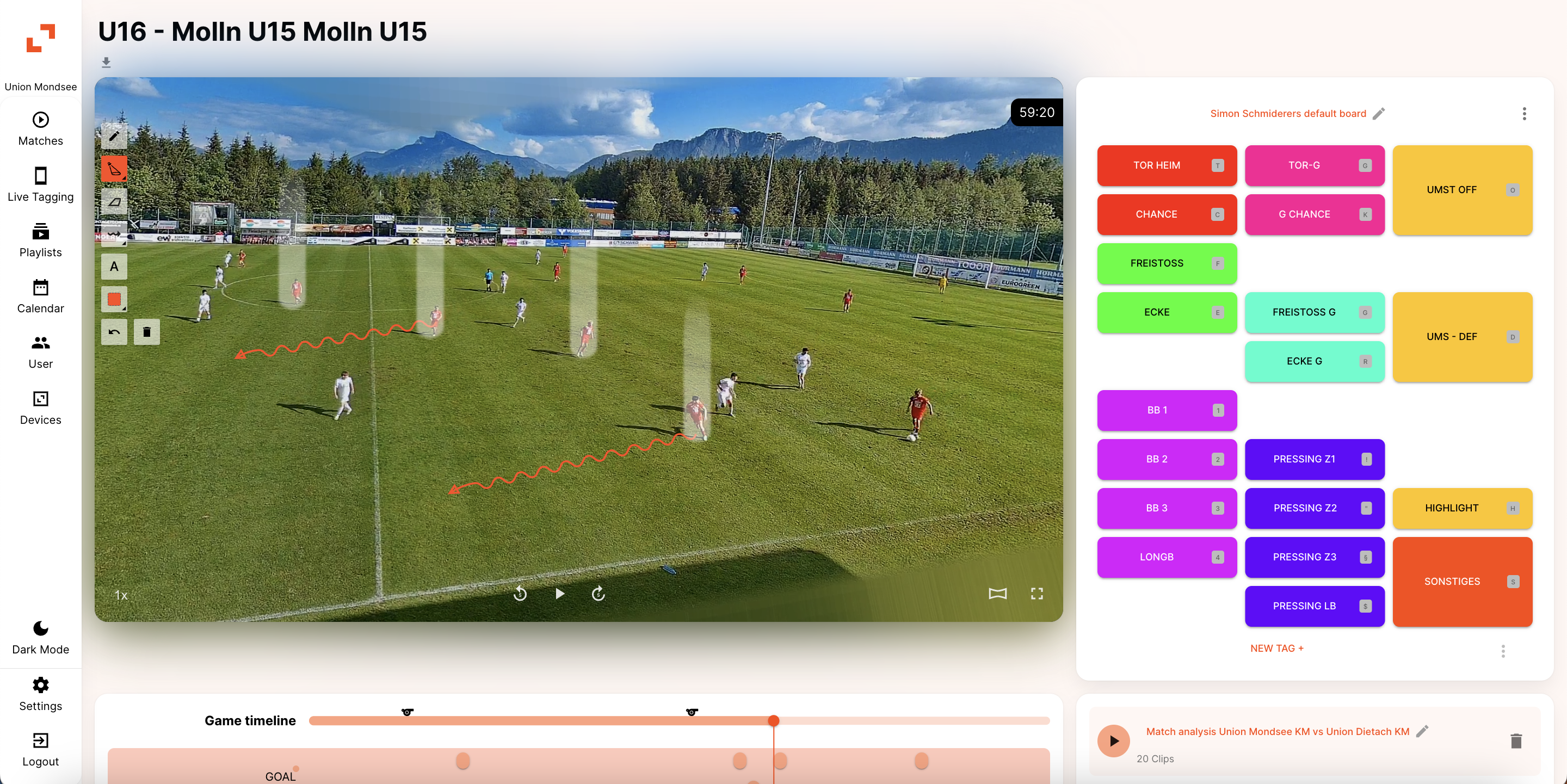
With the tagging, character, and playlist features of REPLAY for soccer video analysis These steps can be performed on the same platform. The finished analyses can then be shared with players and members of the coaching staff.
Keep player feedback brief and to the point
A video session doesn't improve by being longer. Select a few scenes that clearly demonstrate the pattern, and first give the players the opportunity to assess the situation themselves.
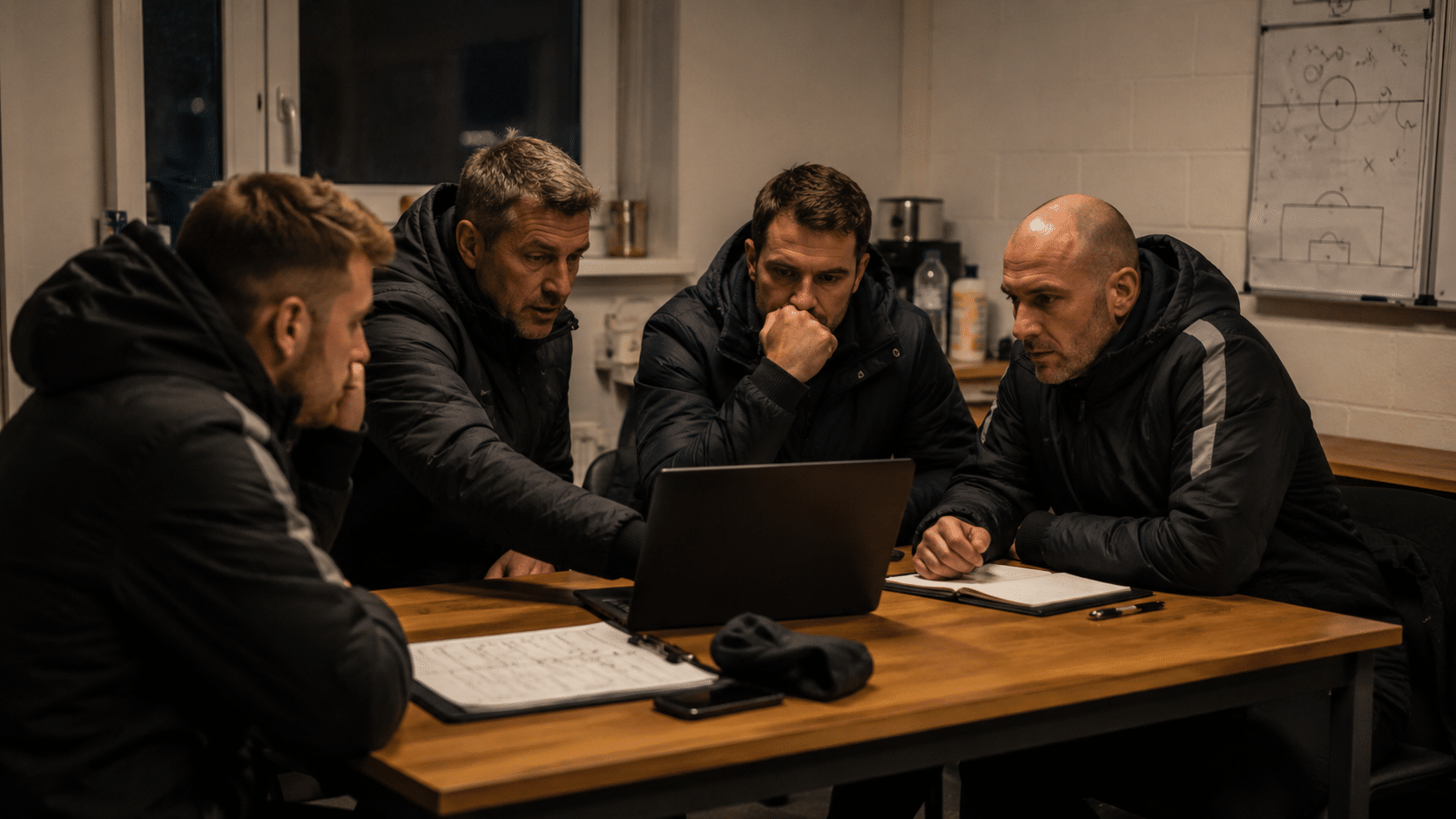
Helpful questions are:
- What information did you have before the action?
- What options were available?
- What happened off the ball?
- What solution would you choose next time?
This way, video analysis becomes a conversation rather than a one-sided error review. At the same time, the coach learns more about the player's perception and intention.
Team, group, and individual conversations require different playlists. An outside defender can receive three scenes on body positioning and timing. For the entire team, one of them might be enough to explain the shared structure.
Also, record successful actions. After the debrief, players should know what behavior to repeat. The articles about the offer further approaches to this. Individual Performance Analysis in Football and about how trainers Teach Soccer Through Video Analysis.
Transfer insights into training
An analysis only has sporting value when it leads to a concrete training task. Link every key observation to a coaching message, a suitable exercise, and a criterion for the next game.
| Observation in the video | Focus in training | Control in the next game |
|---|---|---|
| The center is open after turnovers. | Counter-game with clear tasks for the rearguard defense. | Number of opponent counters through central areas. |
| Outfielders receive the ball with a closed body shape. | Preliminary orientation and open stance during initial contact. | Successful forward actions after receiving the ball. |
| The defensive line falls back, even though there is no pressure on the ball. | Holding together and pushing forward the last line. | Distance between midfield and defense. |
| Run-up paths for set pieces are unclear. | Repeat roles, starting positions, and timing. | First contacts and closing deals according to your own standards. |
The process repeats from week to week:
Analyze → explain → train → observe again
This makes video analysis a standardized development process. Similar situations can be compared across multiple games, and the coaching team can verify if a training measure is actually showing results. The contribution Video analysis in training deepen this connection.
Free football video analysis manual
Implement structured video analysis in the club
The free zone14 handbook provides additional fundamentals, tactical approaches, and practical tips for coaches who want to systematically build their game analysis.
Video Analysis Workflow Checklist
✓ Before the game
- Set two or three analysis questions.
- Align the tagging board with the game board.
- Check the photo session or scheduled camera appointment.
- Clarify responsibilities within the coaching team.
✓ After the game
- Check live tags and important events.
- Compare recurring situations.
- Select only the clearest clips.
- Use drawings strategically.
- Create separate playlists.
- Connect insights with training tasks.
- Re-examine the behavior in the next game.
From the game video to the next training decision
The value of football video analysis lies not in the number of clips or in lengthy meetings. What's crucial is a clear path from observation to the next action.
With zone14 TWO, recording and uploading can be automated. Clubs with their own cameras can integrate their material via COACH. In both cases, zone14 REPLAY The central workspace for tagging, visual analysis, playlists, and player feedback.
This way, a complete game recording becomes not an additional administrative task, but a reliable basis for better discussions, more targeted training sessions, and traceable development.