← Back to the blogWomen’s football
Interview with Irene Göschl: Passionately advocating for more visibility for women in football
Irene Göschl on visibility, structural hurdles and the untapped potential of female players in Austrian football – and why passion alone isn't enough.
Contents7 sections
- Focus: Women in Football 2026
- Who are you and how did you get into football?
- What was the moment you realised: women in football don’t get the attention they deserve – and I want to change that, starting with social media?
- Which hurdles in elite and amateur football struck you most from your own experience – and where do you see the greatest need for reform?
- Which opportunity in women’s football is currently most underestimated – and what would have to happen for it to be seized?
- Women in Football: The Talk
- What is the most important personal message you want to give people who follow, support or are active in women’s football?
- Focus: Women in Football 2026
- Who are you and how did you get into football?
- What was the moment you realised: women in football don’t get the attention they deserve – and I want to change that, starting with social media?
- Which hurdles in elite and amateur football struck you most from your own experience – and where do you see the greatest need for reform?
- Which opportunity in women’s football is currently most underestimated – and what would have to happen for it to be seized?
- Women in Football: The Talk
- What is the most important personal message you want to give people who follow, support or are active in women’s football?
Focus: Women in Football 2026
As part of our “Focus: Women in Football” campaign, this time we are delighted to introduce a particularly committed voice from Austrian football: Irene Göschl. For years, she has been campaigning passionately for more visibility and recognition.
In this interview, she talks about her personal path into football, the experiences that shaped her and the structural challenges. With an impressive reach on social media, she shows how much potential lies in authentic, voluntary commitment – and where, in her view, decisive steps are still needed.
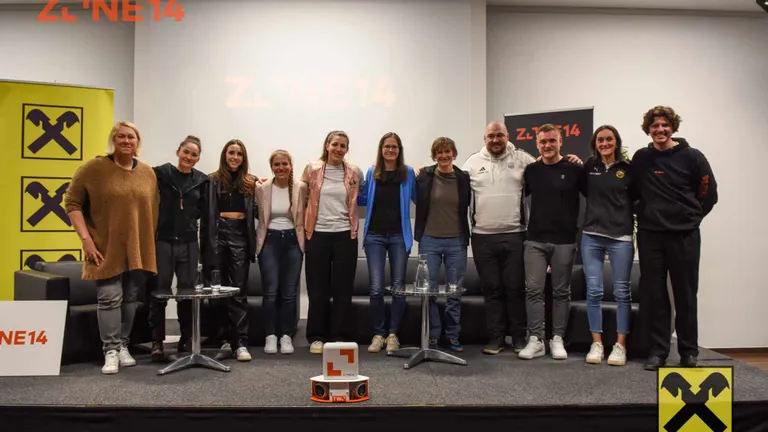
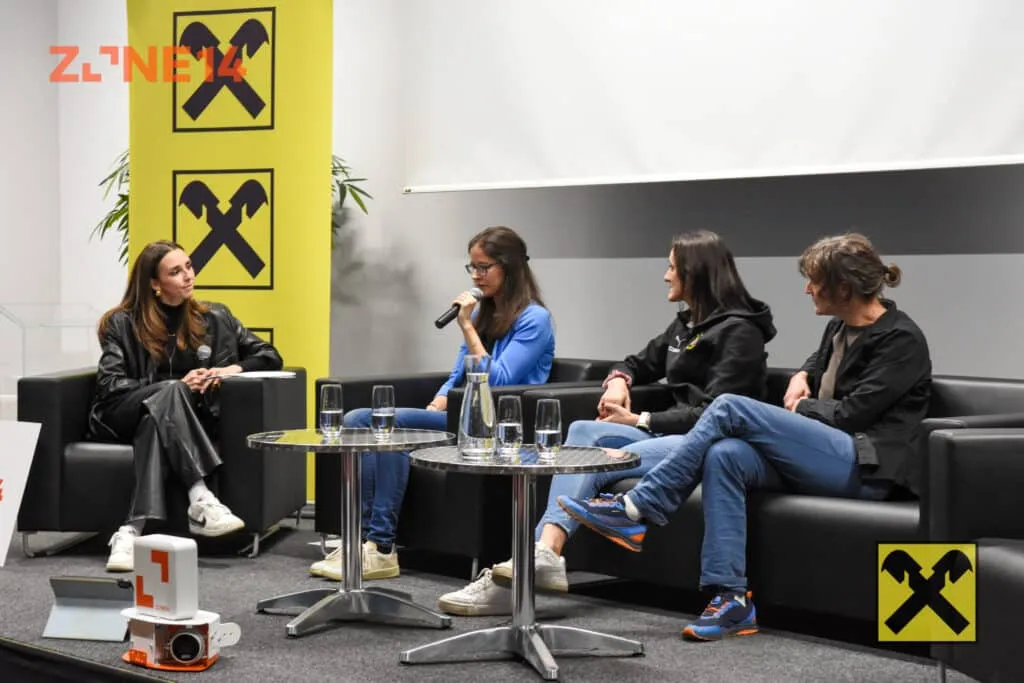
The highlight of our “Focus: Women in Football” campaign is “Women in Football – The Talk”, which takes place for the third time in 2026. It focuses on current developments, existing structural hurdles and concrete starting points for clubs, associations and education – followed by an open exchange and networking. Get your free tickets here.
Who are you and how did you get into football?
My name is Irene Göschl. I have been married to my husband Heimo for 27 years and I am the mother of two wonderful, now grown-up children, Julian (27) and Helena (21). My husband and I live in the beautiful Enns Valley (Ennstal) with a view of the Grimming. At home, the four-legged members of the family slightly outnumber us: our dog Amy and our two little tomcats Wasabi and Maki make sure things never get boring.
Football has been part of my life for as long as I can remember. As a child and teenager, I spent every free minute kicking a ball around with the boys – I simply loved it.
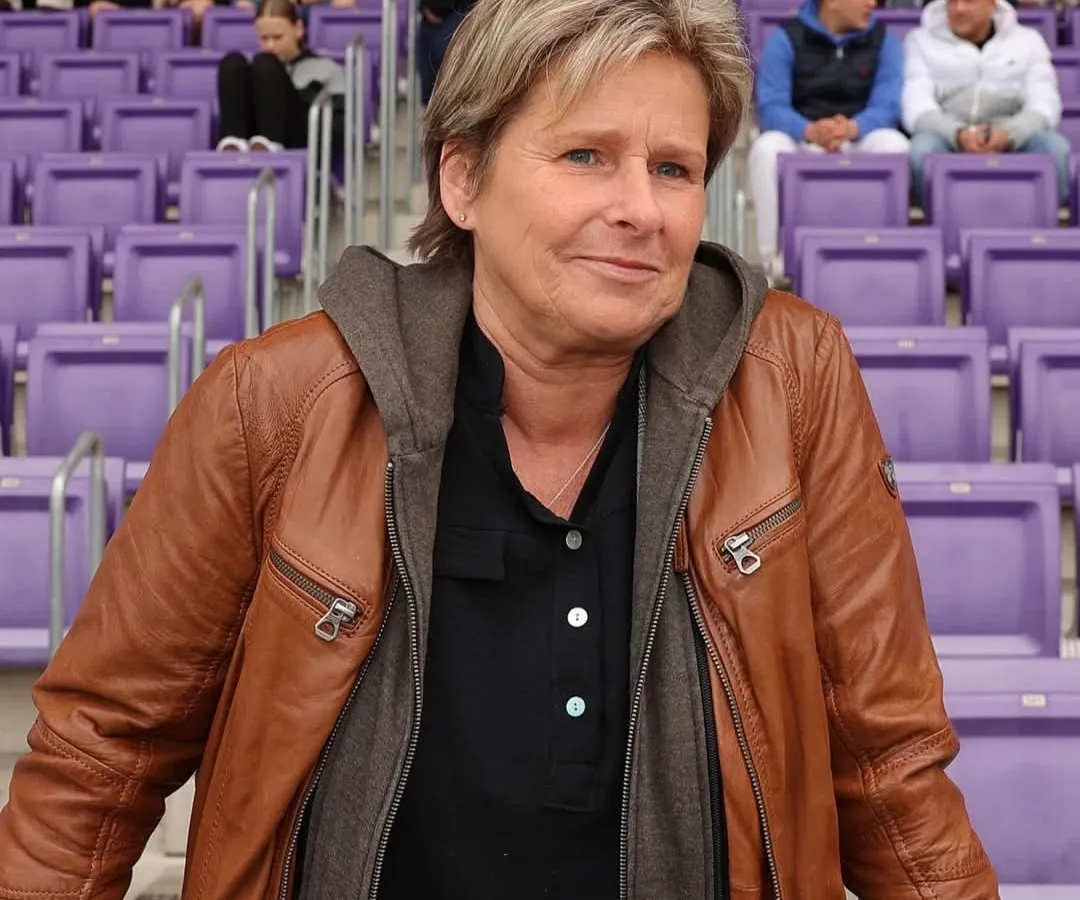
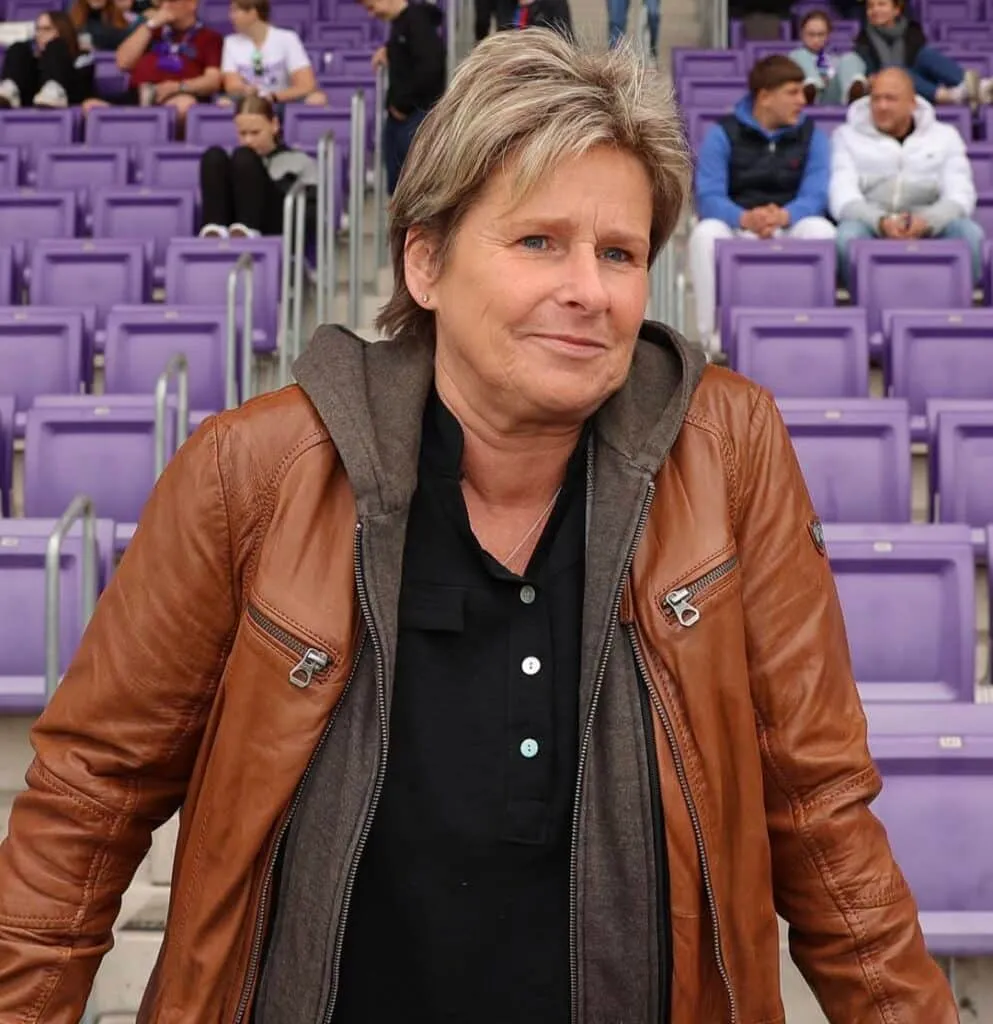 Irene Göschl at the Austria Wien stadium. Photo: Gerhard Breitschopf
There was even an offer from 1. DFC Leoben, then in the top division. For me, that would have been a dream. But my father had serious concerns about the risk of injury, because I was working in the family business. It was hard for me, but that’s just how things were back then.
I then devoted myself body and soul to men’s football until 2017. The turning point actually came on holiday in 2017. My daughter’s school friend Ines, who was at the LAZ (regional training centre) Stainach at the time, was travelling with us. And suddenly we weren’t just sitting on the beach together, but also in front of the TV watching the Austrian women’s national team at the Euros. I was absolutely thrilled.
When she later moved to the academy in St. Pölten and played at the U17 Euros in Bulgaria in 2019, I was there in Bulgaria. It was an unforgettable experience for me. That’s when I realised: this is more than just watching. This is heart and soul.
I started sharing pictures and impressions on my private Facebook and Instagram accounts. Because Ines played in the 1st Bundesliga, I was often at her matches in person – and at some point “posting a bit” on my private accounts turned into a real mission.
What was the moment you realised: women in football don’t get the attention they deserve – and I want to change that, starting with social media?
The decisive moment wasn’t a single instant, it was a process.
I saw the incredible effort players and parents put in, already at the LAZ and later at the St. Pölten academy. Travel, training times, organisation, the financial burden – and yet hardly any media attention, only minimal financial support and practically no recognition. At the same time, boys sometimes get considerably better support from as early as the Oberliga.
Something is simply wrong there.
I started posting more and more actively, sharing photos and writing comments on the pages of clubs, of the ÖFB (Austrian Football Association), everywhere I thought: now people really have to take notice!
I’ve been doing this very intensively for two years now. And to be completely honest: for someone who had little to do with social media before, it was learning by doing.
For health reasons I have been at home for years, the children have moved out, and women’s football has given me an incredible amount of strength. I could finally live what I wasn’t allowed to in my youth. Perhaps a few years late – but with full passion.
I have got to know players, coaches and parents, even though I actually lead a rather secluded life. And something has grown out of my private accounts that I never would have expected.
My day now starts with answering messages – and there are quite a few of them. Then I move on to content. It fulfils me to have a purpose again. One that makes sense.
Being a perfectionist doesn’t always make it easier – I always want to do even more. But my body always shows me very clearly where my limits are.
All the more grateful I am that my husband is a big fan of women’s football himself. He is incredibly understanding, drives me to matches – and supports me fully, and I am very grateful for that.
Which hurdles in elite and amateur football struck you most from your own experience – and where do you see the greatest need for reform?
Quite honestly: my biggest hurdle back then was simply that I wasn’t allowed to play. I would have given anything to take the pitch for 1. DFC Leoben.
Today I see other hurdles – structural ones.
And I don’t mean that women have to earn the same as men. That’s nonsense. But it’s about the basics:
- structured training programmes
- proper insurance
- access to fitness facilities
- physiotherapy
- sports psychology support
- and above all: recognition
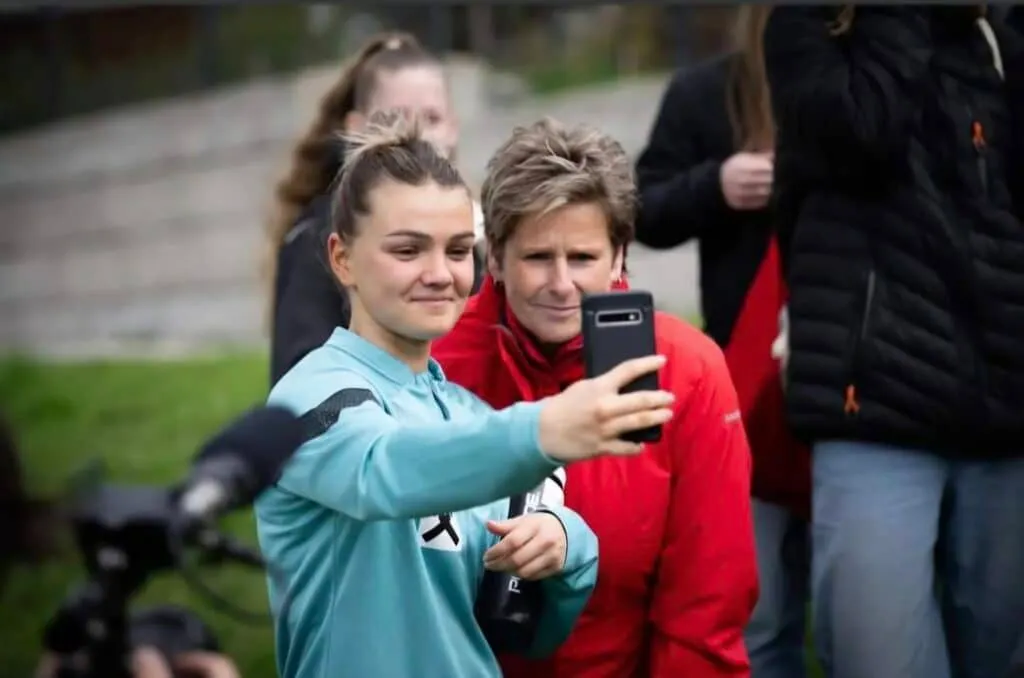 Irene Göschl with Laura Wienroither. Photo: ÖFB
The goal has to be that at some point you can make a living from football in the Admiral Frauen-Bundesliga. Maybe not tomorrow – but soon. If that isn’t the goal, then there is no vision.
Sadly, I sometimes have the feeling that women’s football in Austria is being held back rather than supported.
I am also sceptical about the new licensing regulations. Of course professionalism is needed – but it mustn’t end up with only the big clubs having a chance. The best should be the ones playing.
In my opinion, it would be far more important to expand the league to 12 teams. Germany went down this road long ago – the Women’s Bundesliga has already been expanded to 14 teams, and a further expansion is under discussion.
Austria has to be careful not to fall behind.
And then we come to social media – the biggest opportunity of all.
In the autumn season I had between 800,000 and 950,000 views. As a private individual. As a volunteer. Out of passion. At this point I would especially like to thank the many great photographers who provide me with their photos free of charge and so make a major contribution to making women’s football more visible.
Imagine what would be possible if there were professionally managed official accounts – from the ÖFB or the league – delivering high-quality content every day.
And very importantly: every club in the Admiral Frauen-Bundesliga should have its own well-managed account – not just tag along “somewhere” on the men’s club’s account. That isn’t recognition. Visibility starts with having your own stage.
Which opportunity in women’s football is currently most underestimated – and what would have to happen for it to be seized?
In my opinion, what is most underestimated is the emotional power of women’s football.
The level of identification is incredibly high. The players are approachable, authentic, down to earth – young girls have real role models who seem within reach. That is huge potential.
What would have to happen?
- More media presence
- Professional social media strategies
- Expanding the league
- A clear long-term vision
- And above all: courage
Women’s football is not a “by-product”. It is a strong sport in its own right with enormous growth potential.
And I will keep doing my part as best I can – with heart, with passion and probably still with very little time for my private life. But when I see young players developing and getting more attention, I know: it’s worth it.
Women in Football: The Talk
17 March | FH Technikum Wien
“Women in Football – The Talk” brings together experts, players and decision-makers to discuss the developments, challenges and future prospects of women in football. The event offers ideas, discussion and room for exchange.
What is the most important personal message you want to give people who follow, support or are active in women’s football?
My most important message is: take women in football seriously – and take yourselves seriously. Every player invests just as much heart, discipline and passion as any other elite athlete and deserves respect and fair conditions for it. Visibility doesn’t happen by itself – it happens when fans come, when decision-makers invest boldly and when we all talk about it. Women’s football is not a side issue, but a real opportunity with enormous potential. And if everyone contributes a little, together we can achieve great things.
On this remark: “Sadly, I sometimes have the feeling that women’s football in Austria is being held back rather than supported.”
After two very successful appearances at the Euros, each time there were big announcements that this opportunity must not be slept through again – and yet I keep having the feeling that women’s football in Austria is being held back rather than supported. The words are quickly spoken, but the actions that follow often seem half-hearted. It starts with the signals sent to the outside world: a match against the European champions in a small stadium like Wiener Neustadt, even though with the right planning much bigger stadiums could have been filled. It’s decisions like these that show how much women’s football is really valued.
On the sporting side, there seems to be a similar lack of follow-through. I think Irene Fuhrmann is a very good coach, but in my opinion the job of head coach came too early for her. Instead of using the opportunity to bring in a truly experienced solution for this strong generation, the post was filled internally – along the lines of “it’ll be fine”. We are seeing right now what that can mean. If nothing is done to change course quickly, I fear that in the near future we will qualify for neither the Euros nor the World Cup – and that would be especially bitter for the experienced players who have earned it.
On top of that there is the financial imbalance: in women’s football people are quick to say it’s too expensive or not feasible – while in the men’s game big budgets and huge delegations at major tournaments are taken for granted. Why isn’t funding in the women’s game finally being increased?
I have seen how strong teams like the Wildcats and Rapid are. That makes it all the more worrying to me that new licensing regulations in the Admiral Frauen-Bundesliga are becoming an issue right now – and that in the end they could hit clubs that are successful on the pitch but small, such as the Wildcats, because the conditions are suddenly set in a way that makes it barely feasible for some.
Sadly, this imbalance often shows in day-to-day practice too. Many people who work for the sport’s visibility – often as volunteers and with a lot of passion – run into unnecessary bureaucratic hurdles. When access to press material or official support is made so difficult, a lot of potential for greater reach goes untapped. It sometimes seems as if, when it comes to actively promoting visibility, people are getting in their own way. Yet that is exactly what would be the key to inspiring more people and giving women’s football the recognition it has long deserved.
We are delighted that “Focus: Women in Football” is now entering its third year. What began as an initiative has become a fixed part of our year. The continued support of the clubs and our partners shows how relevant this topic is. More visibility and equal opportunities for women in football don’t come from one-off campaigns, but from long-term commitment.
 Simon Schmidererzone14 - Co-CEO and co-founder