Categories
Frauen im Fußball

KURIER über unseren Partnerverein USC Litschau: Ein starkes Zeichen für Frauen im Fußball

Contents

KURIER über unseren Partnerverein USC Litschau: Ein starkes Zeichen für Frauen im Fußball

Fokus: Frauen im Fußball 2026

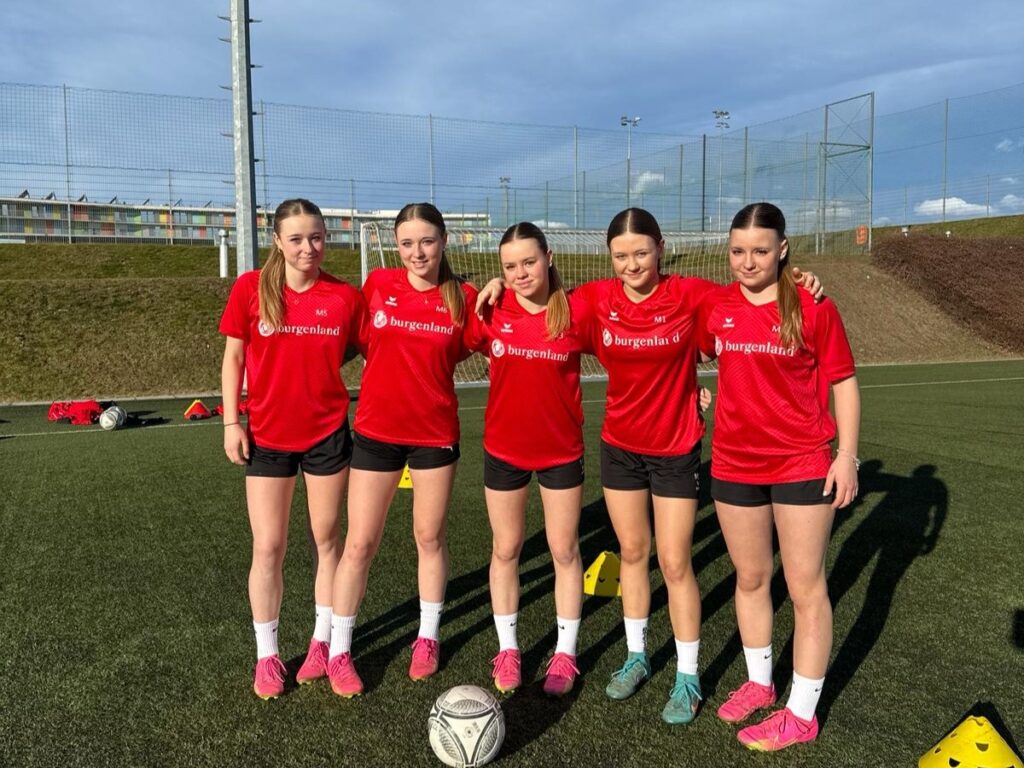
Im Rahmen unserer Initiative „Frauen im Fußball“ teilen wir mit freundlicher Genehmigung des Kurier den aktuellen Beitrag über unseren Partnerverein USC Litschau. Der Artikel beleuchtet die Entwicklung des neu gegründeten Frauenteams in der Gebietsliga und zeigt, mit welchem Einsatz und Zusammenhalt dort gearbeitet wird.

Als Teil unserer Community bei zone14 steht der USC Litschau beispielhaft für strukturellen Aufbau und kontinuierliche Entwicklung im Vereinsfußball. Der Beitrag macht sichtbar, was auf dieser Ebene tagtäglich geleistet wird – oft abseits großer Schlagzeilen.

Mehr über unsere Partnerschaft mit dem USC Litschau erfahren Sie hier.

Den vollständigen Originalartikel können Sie hier auf der Website von Kurier lesen.

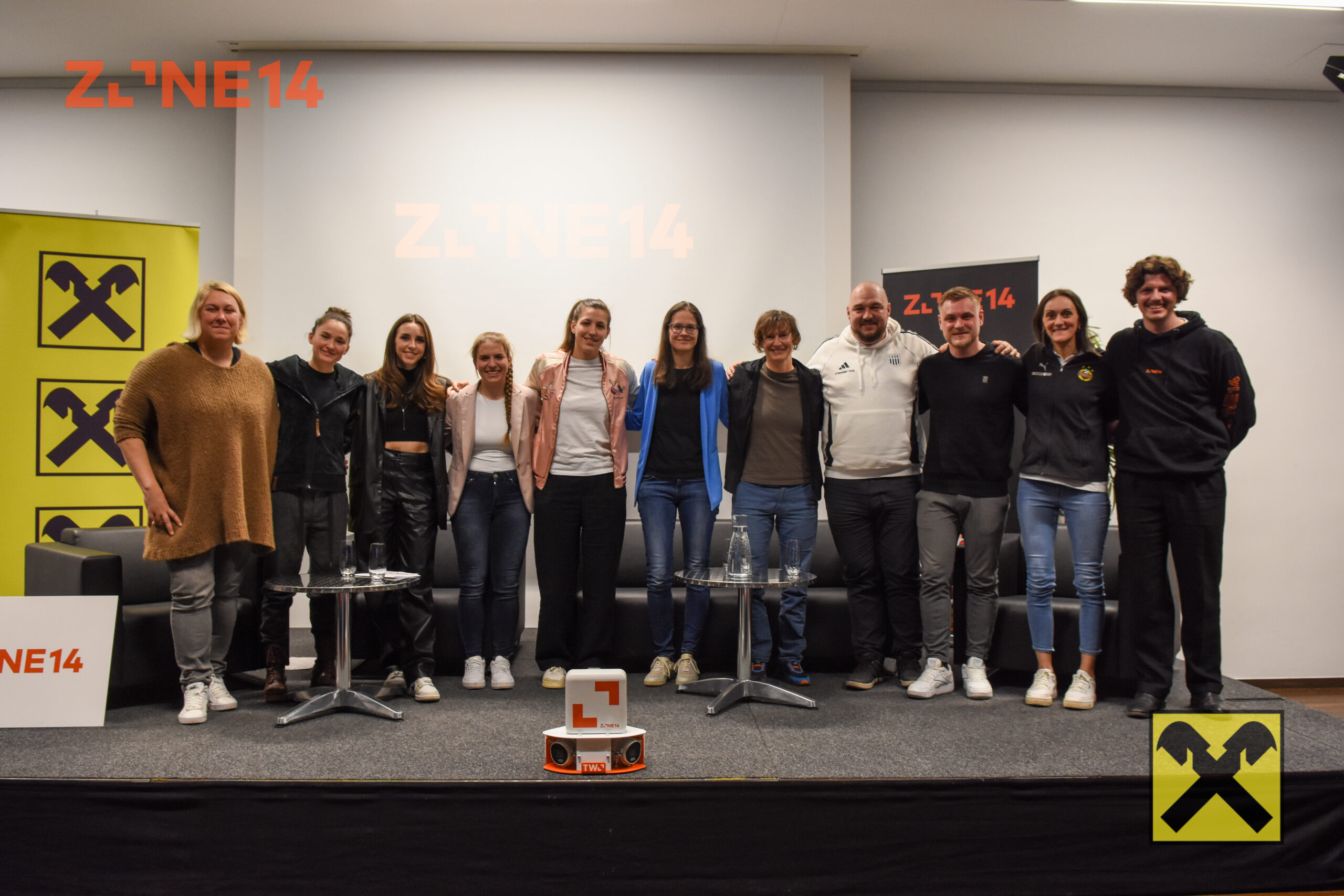
Der Höhepunkt unserer Kampagne „Fokus: Frauen im Fußball“ ist „Frauen im Fußball – The Talk“, der 2026 bereits zum dritten Mal stattfindet. Im Mittelpunkt stehen aktuelle Entwicklungen, bestehende strukturelle Hürden sowie konkrete Ansatzpunkte für Vereine, Verbände und Ausbildung – mit anschließendem offenen Austausch und Networking. Sichere dir deine kostenlosen Tickets hier.

Torverhältnis 0:60 - warum dieses Frauen-Team trotzdem Spaß hat

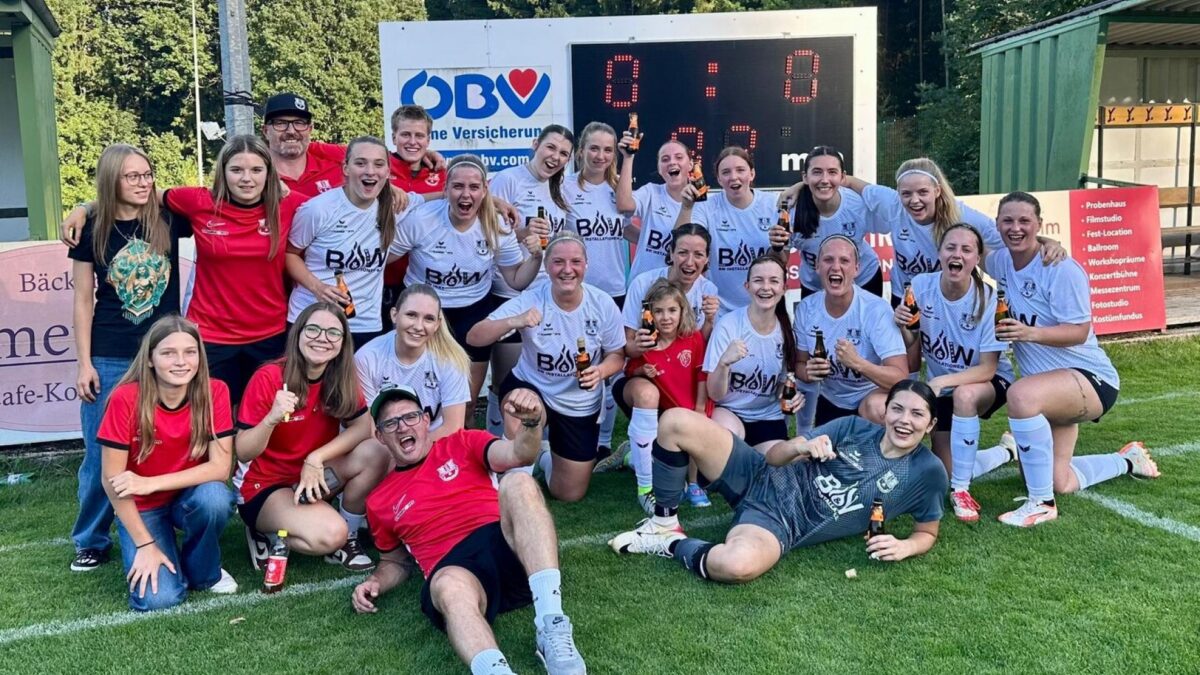
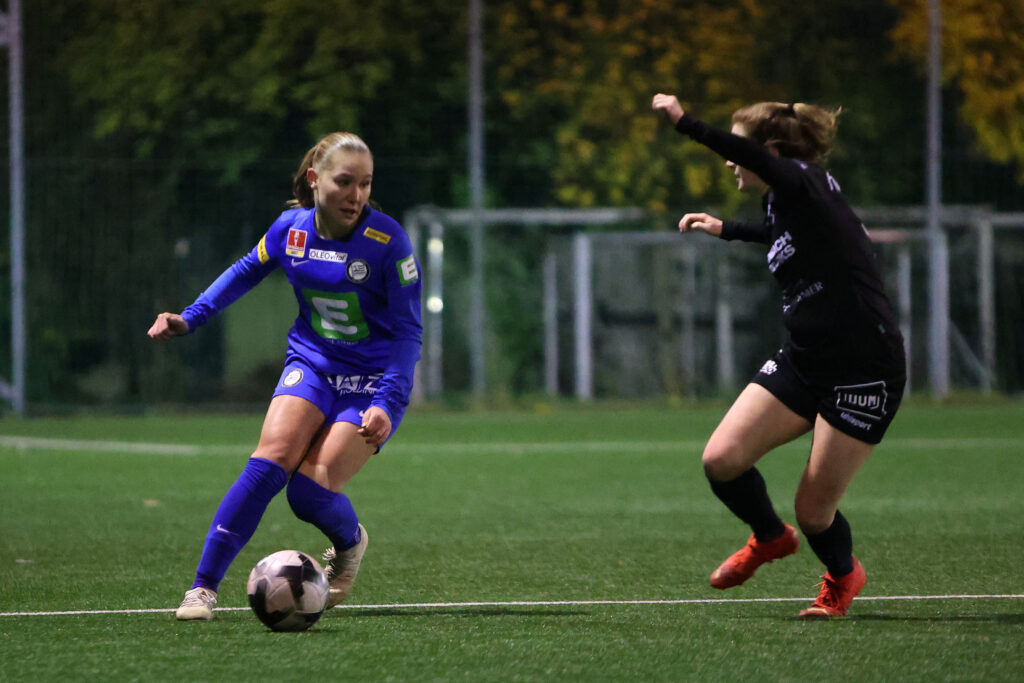
Die Frauen des USC Litschau haben noch keine Partie gewonnen und warten auch noch auf ihren ersten Treffer. Der Freude am Spiel tut das jedoch keinen Abbruch.

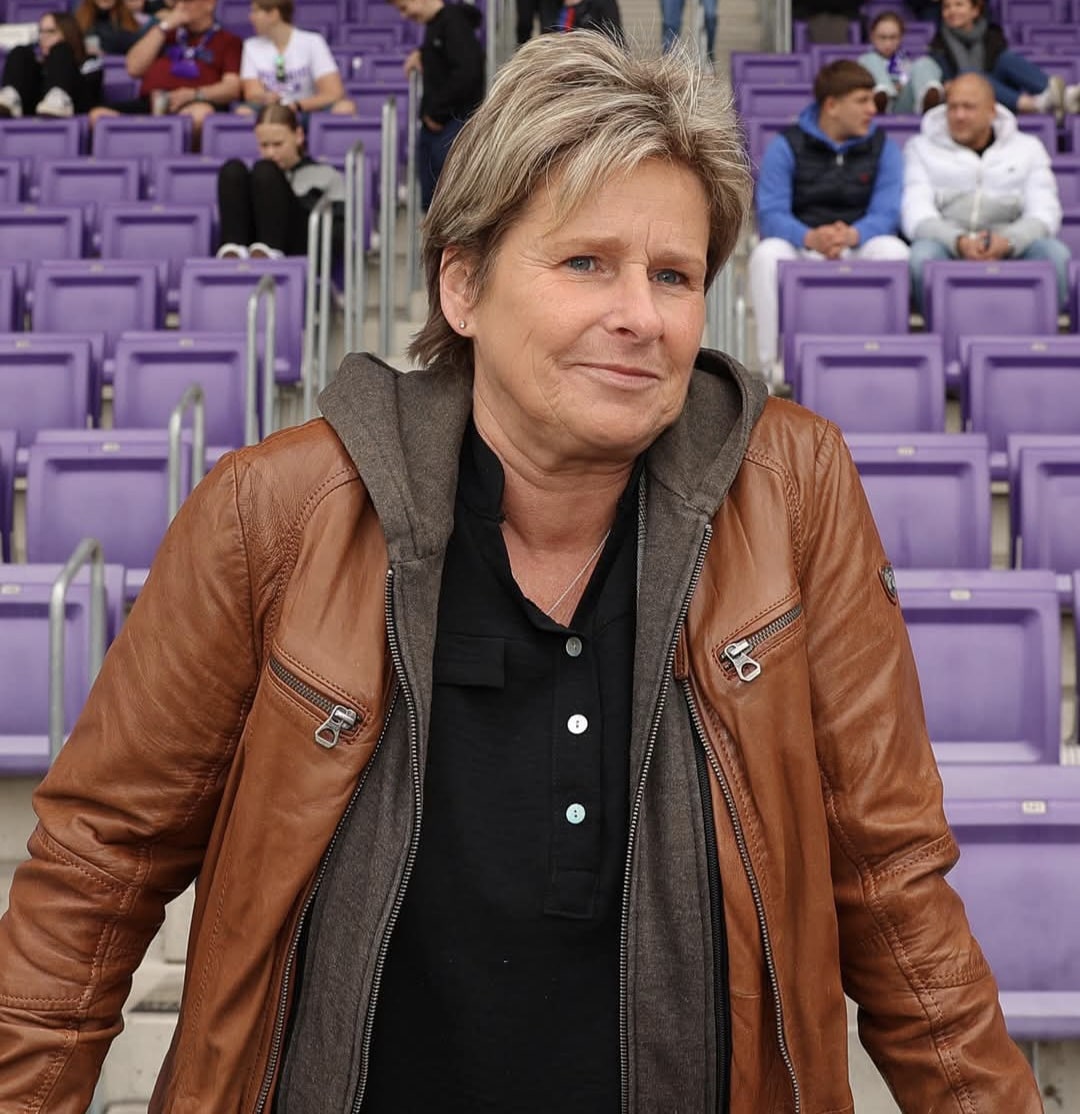
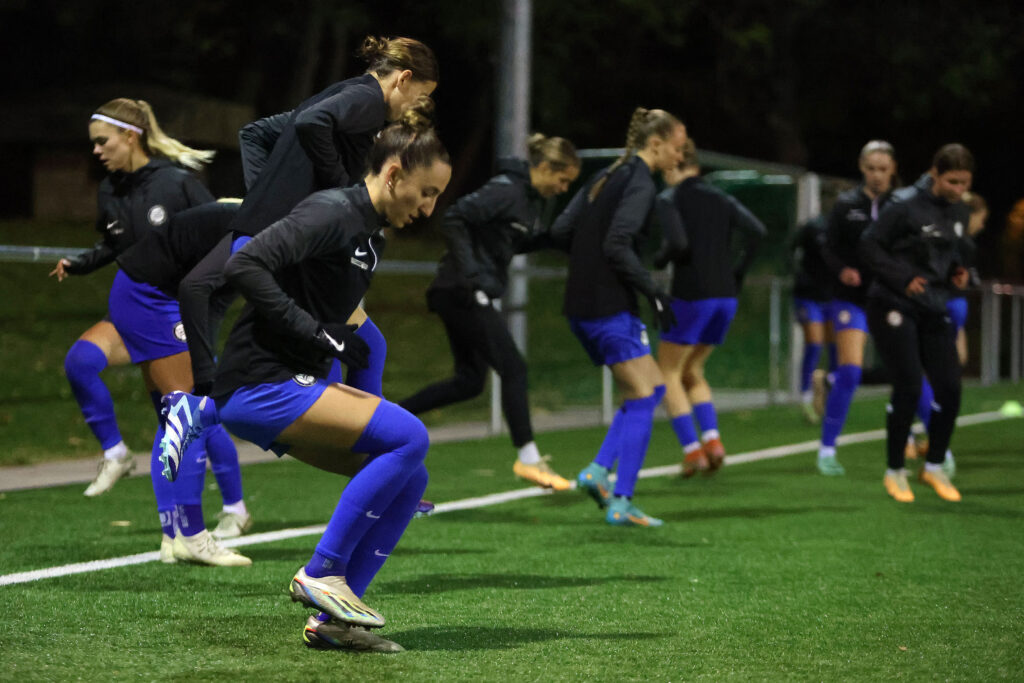
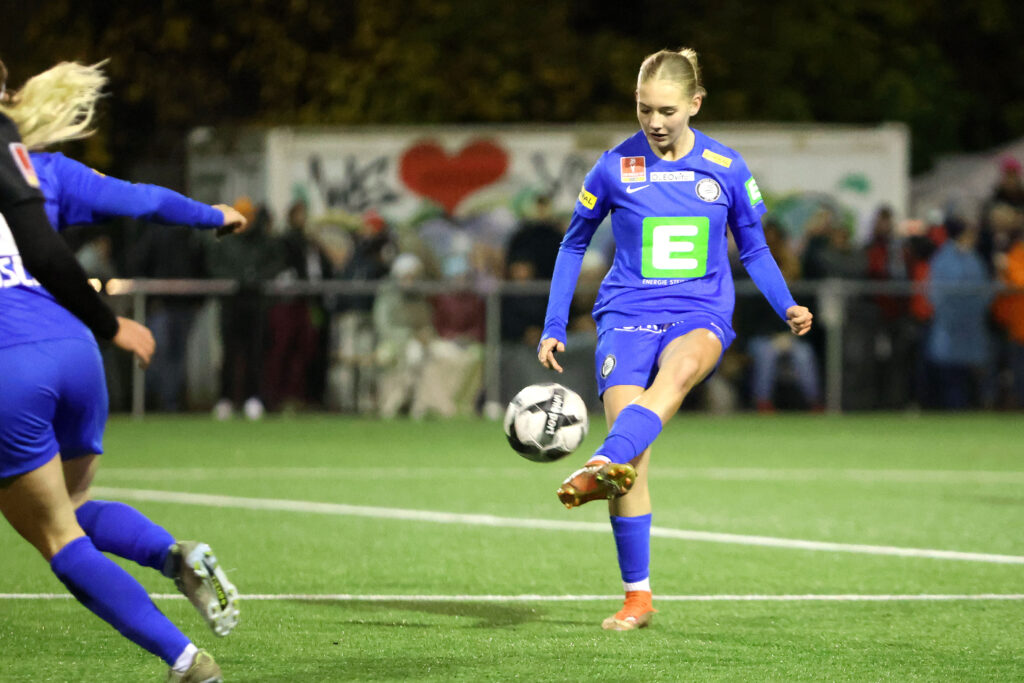
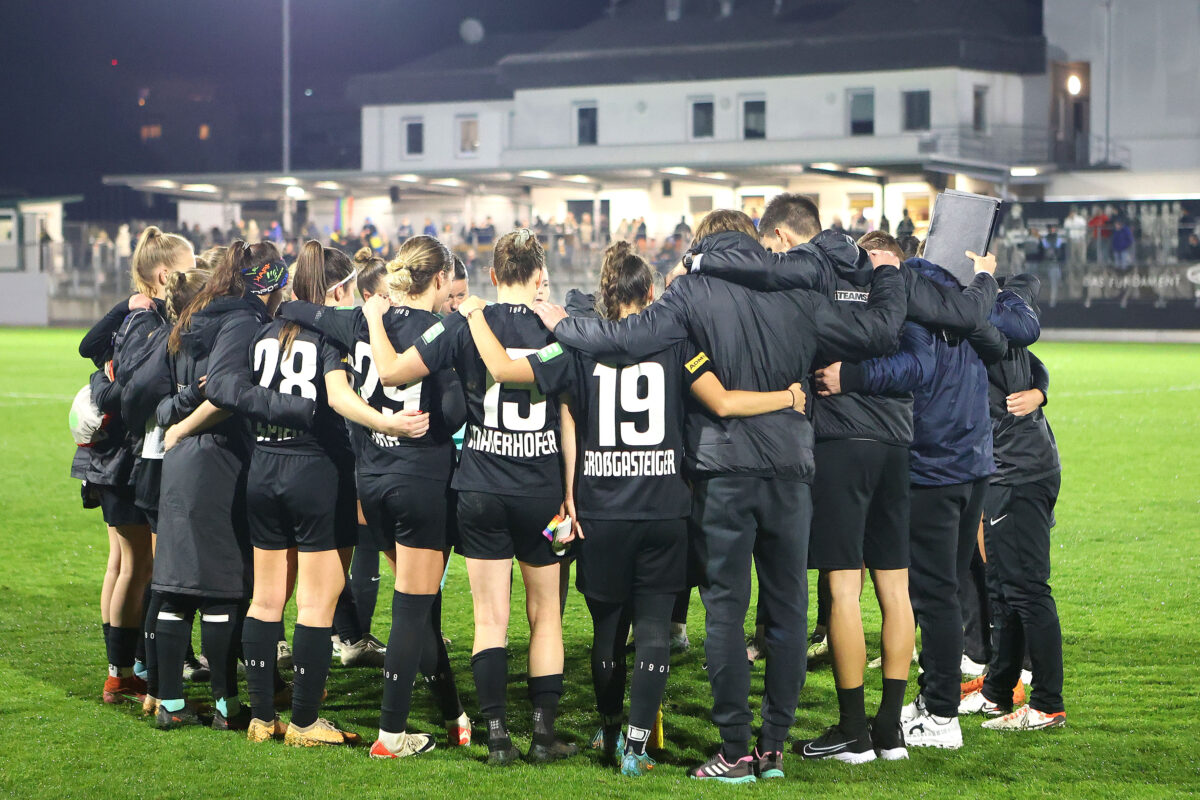
Wenn Nadine Polt, Hannah Zemansky, Angelika Hauer und Stefanie Altmann über Fußball reden, dann glaubt man nicht, dass sie bisher noch kein Spiel gewonnen haben. 60 Tore hat der USC Litschau in den neun Partien im Herbst kassiert, kein einziges geschossen. Immerhin steht aber ein Punkt auf der Habenseite. Die Motivation ist dennoch ungebrochen, die Vorfreude aufs Frühjahr groß. In der nördlichsten Stadt Österreichs, dort, wo der Ball schon einmal in Tschechien landen kann, wenn man nicht genau zielt, sind Siege und Tore nicht alles, was zählt. Aber schön wären sie schon.
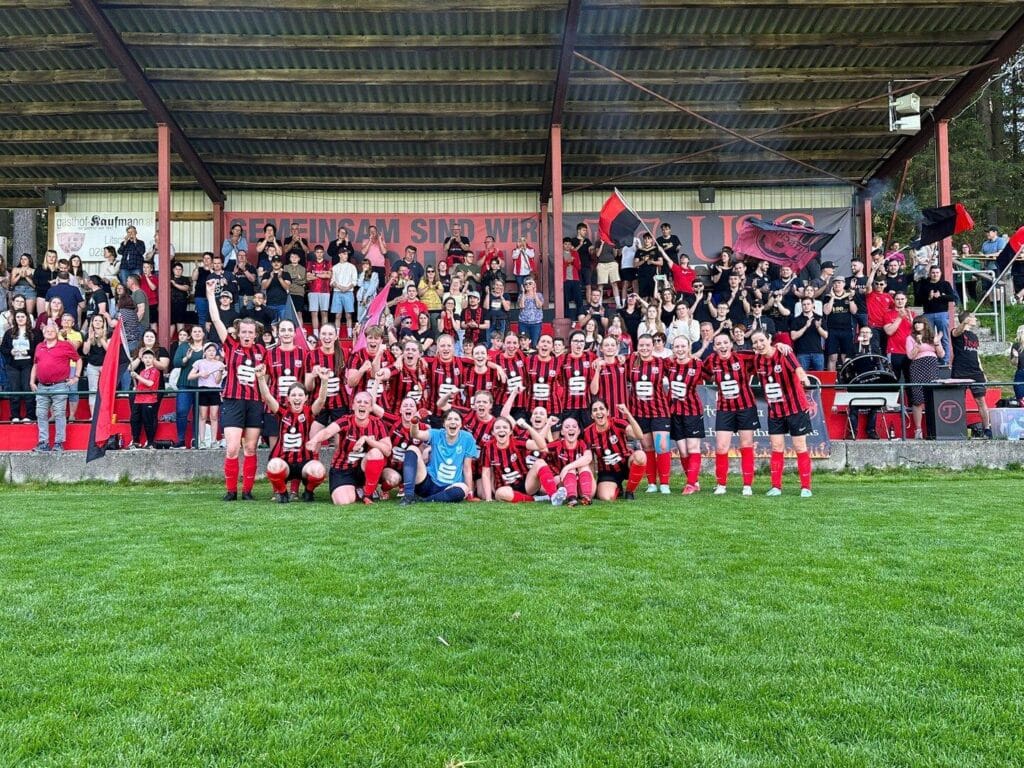
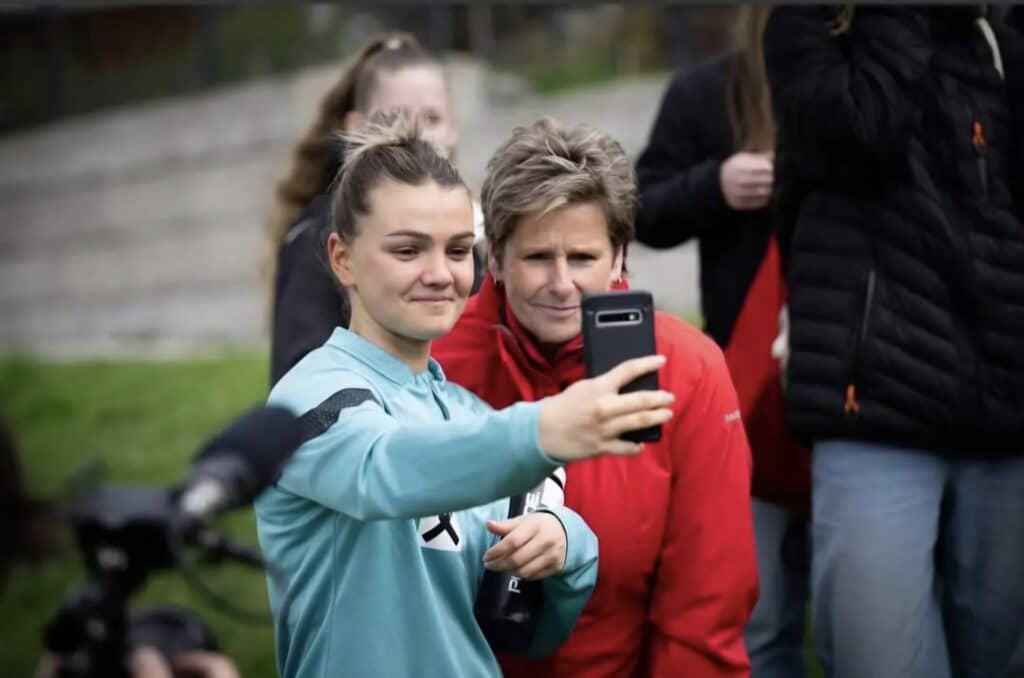
Es war im Herbst 2024, als sich Initiatorin Lina Blach und ein paar junge Frauen dachten, sie würden selbst auch gerne Fußball spielen. „Die Vorgabe des Obmanns waren neun, zehn Spielerinnen, dann könnten wir das ganze im Verein machen“, erinnert sich Hannah Zemansky. Und dann ist alles schnell gegangen. Aus einem Facebook-Aufruf wurde eine WhatsApp-Gruppe, wo dann auch das erste Training am 21. Dezember angekündigt wurde. Und es kamen tatsächlich mehr als 20 junge Frauen. „Der Verein ist von Anfang an voll hinter uns gestanden“, erinnert sich Nadine Polt. Bis zum ersten Spiel sollte es aber noch dauern, zunächst war Training angesagt.

Voller Einsatz

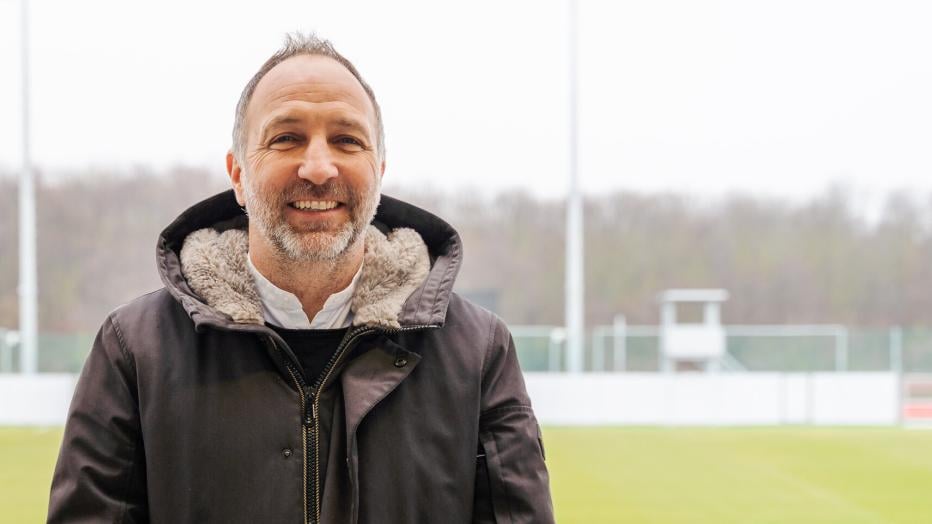
Und da kommt Trainer Markus Steiner ins Spiel, der gemeinsam mit seinem Co Markus Blach die Fäden zieht. Zu Beginn hat es auch noch Unterstützung von der Waldviertler Trainerlegende Werner Grubeck gegeben. „Wir schaukeln das mit den Mädels“, sagt Steiner stolz. Der 44-Jährige hat früher selbst gekickt, den Trainerjob bei einem Frauen-Team hat er nicht kommen sehen. „Das war Zufall. Ich bin da reingerutscht“, erklärt er. „Und jetzt kommt er nicht mehr los“, ergänzt Nadine Polt lachend. Der Spaß und die Gemeinschaft dürfen nicht zu kurz kommen bei den Frauen des USC Litschau, das merkt man sofort.

Im Rahmen des 100-Jahr-Jubiläums der Männer-Mannschaft gab es am 1. Mai 2025 ein erstes Match – das verloren ging. Aber der Hunger war geweckt. Im Sommer stieg Litschau in die Gebietsliga Mostviertel/Waldviertel ein.

Frauen im Fußball: The Talk

17. März | FH Technikum Wien

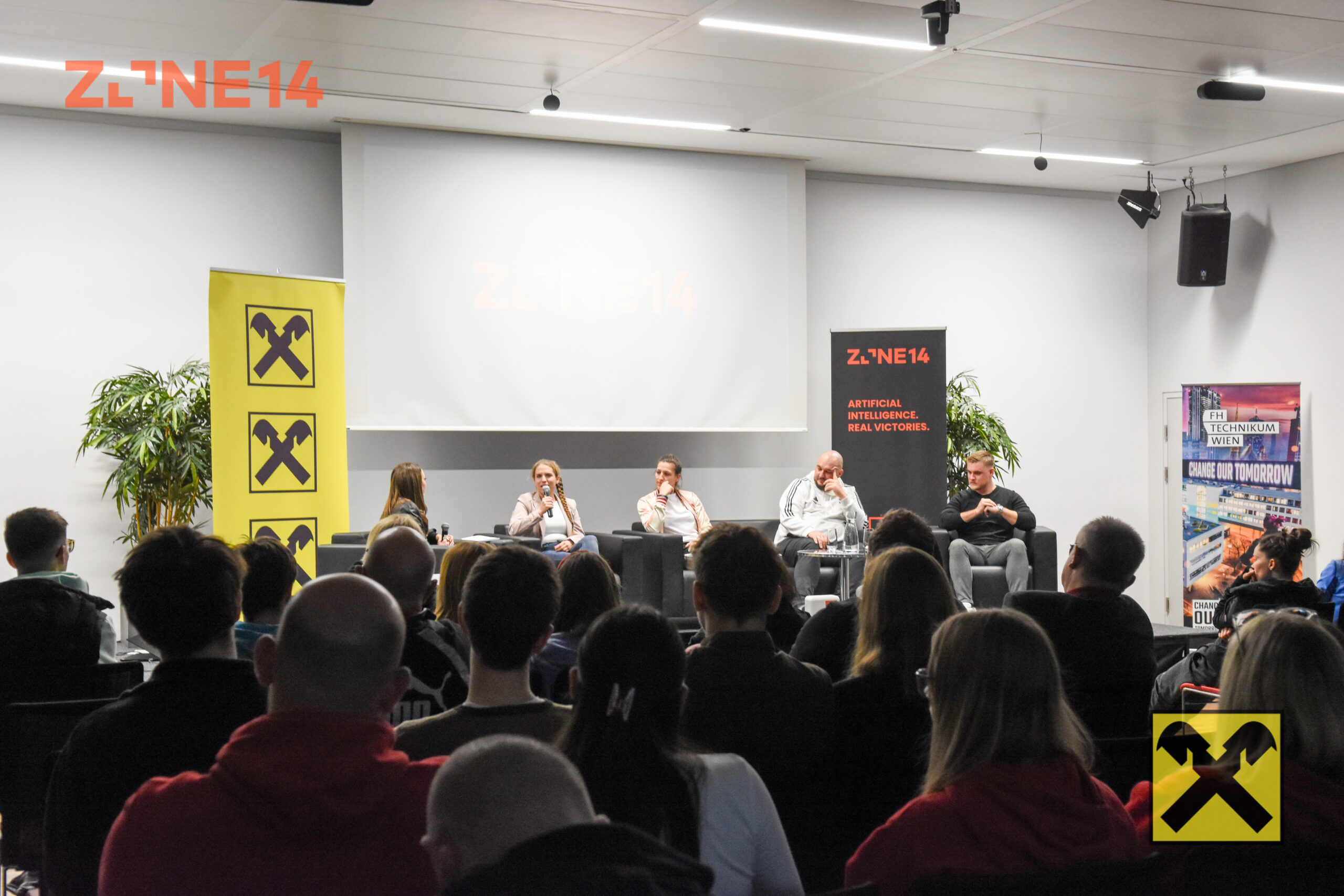
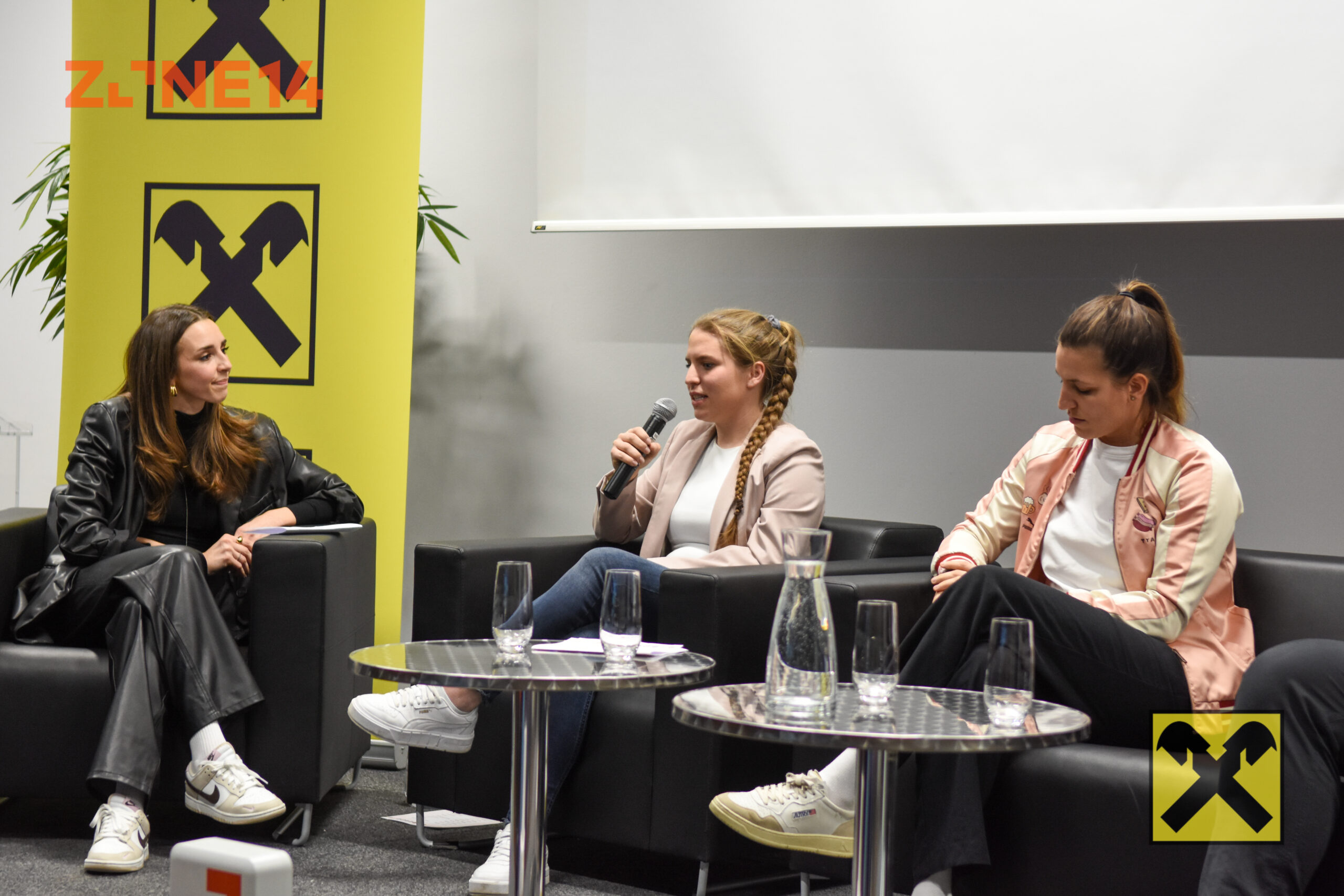
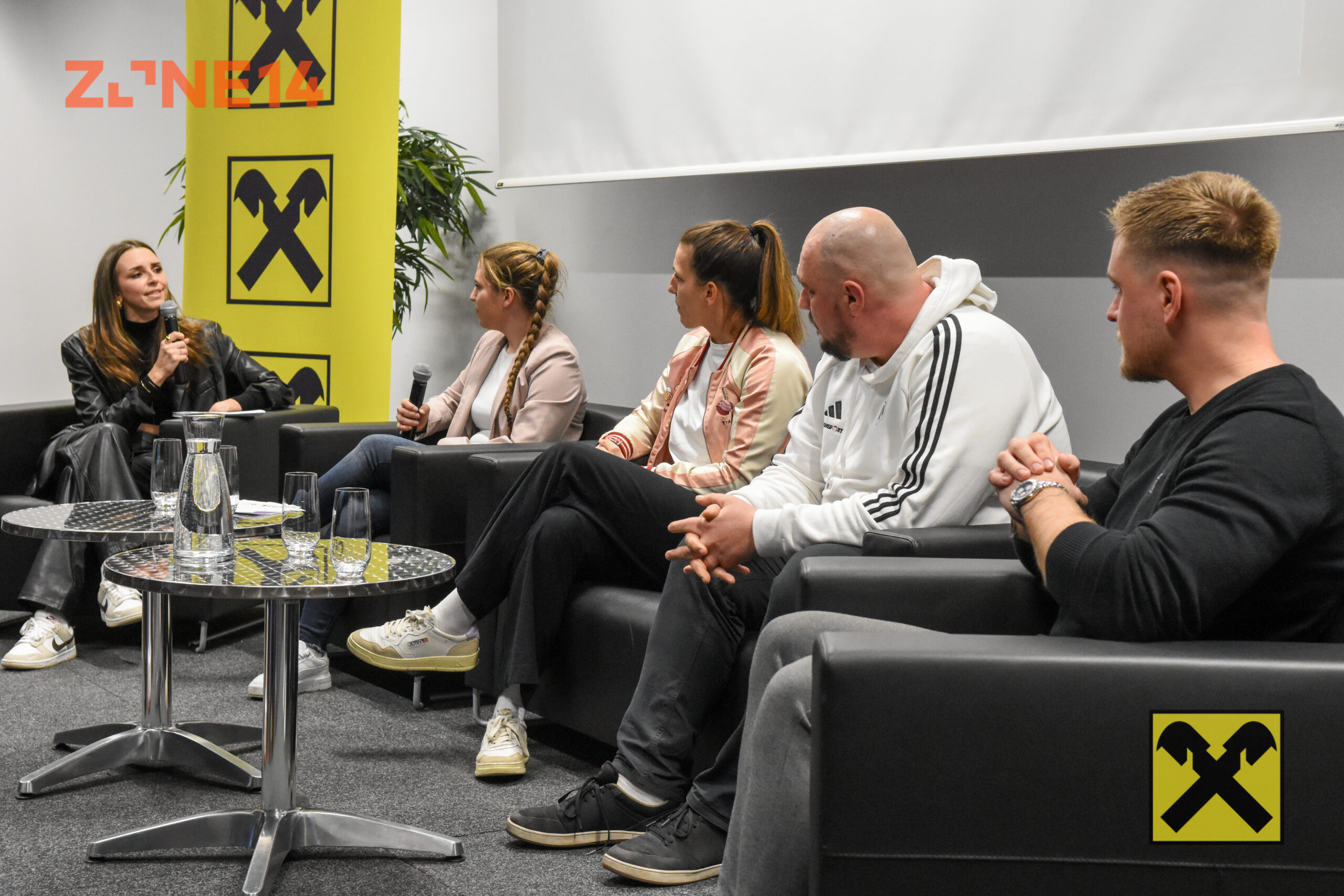
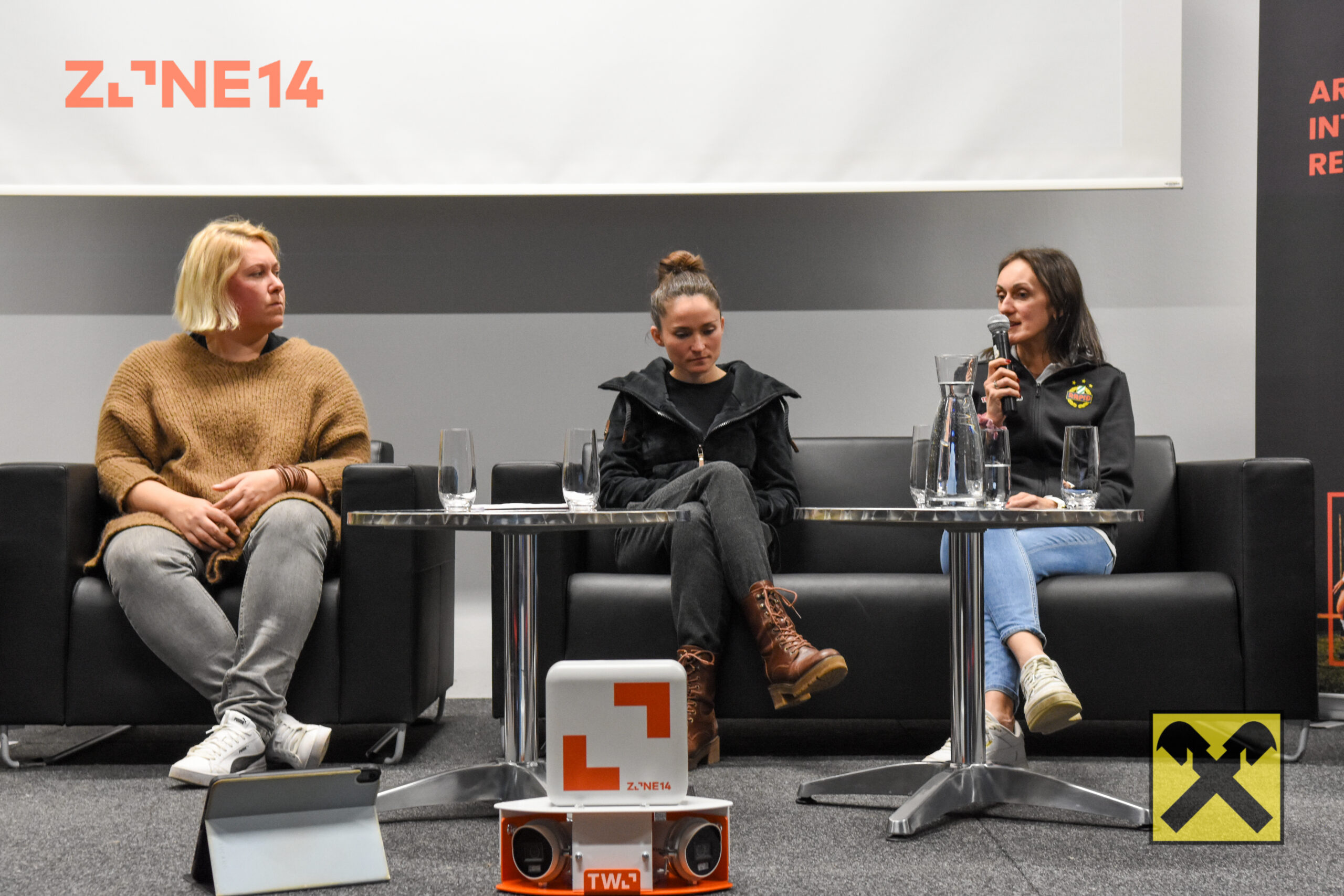
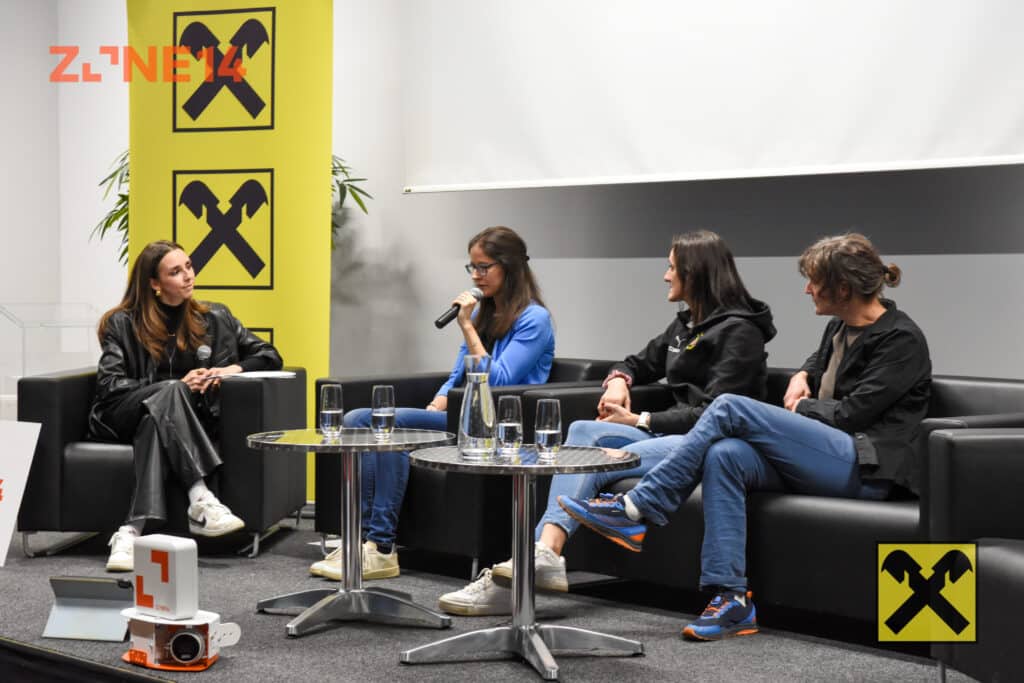
Frauen im Fußball – The Talk“ bringt Expertinnen, Spielerinnen und Entscheidungsträger*innen zusammen, um über Entwicklungen, Herausforderungen und Zukunftsperspektiven von Frauen im Fußball zu sprechen. Die Veranstaltung bietet Impulse, Diskussion und Raum für Austausch.
Auf den Punkt gebracht

Wer jetzt aber glaubt, dass in Litschau der Ernst des Lebens begann, der irrt. Der Spaß steht im Vordergrund. Das hat auch eine 0:20-Niederlage im ersten Liga-Spiel gegen Herzogenburg nicht geändert. „Im zweiten Spiel haben wir dann nur 0:7 verloren“, erinnert sich Coach Steiner, „und dann habe ich gewusst, dass ich den Mädels das Feiern nicht beibringen muss.“ Das Ziel, in der zweiten Partie einstellig zu bleiben, wurde erreicht – und Feste gehören nun einmal gefeiert, wie sie fallen. Der Zusammenhalt ist groß, die Truppe bunt durchgemischt. Altersmäßig ist von 14 bis 32 alles dabei, Schülerinnen, Lehrerinnen, Studentinnen, Schichtarbeiterinnen, Polizistinnen – und auch Mütter. „Das ist toll“, sagt der Coach, der sich über eine rege Trainingsbeteiligung freuen darf. „16 bis 18 sind schon jedes Mal da.“

Und so war auch das nächste Erfolgserlebnis nur eine Frage der Zeit. In der vierten Runde war Ferschitz/Neuhofen/Amstetten zu Gast. Die Stimmung war wieder einmal toll (Nadine Polt: „Unsere Fans unterstützen uns großartig“) – und die Gastgeberinnen brachten es auf den Punkt. Auf ihren ersten und bisher einzigen Punkt. Dass das 0:0 wie ein Sieg gefeiert wurde, muss nicht extra erwähnt werden.

Vom letzten Platz lassen sich die Mädels nicht verunsichern. „Bei uns steht die Platzierung nicht im Vordergrund, es geht mehr um die Entwicklung“, erklärt Kapitänin Polt. Und das nicht nur auf dem Feld, sondern auch abseits des Platzes. Was jetzt noch fehlt, weiß der Trainer: „Ein Tor.“ Wie sagt man so schön: Ein Tor würde ihrem Spiel gut tun. Und wenn dann auch noch der erste Sieg gelingt, dann sollte man die Party in Litschau keinesfalls verpassen.

„Wir freuen uns sehr, dass ‚Fokus: Frauen im Fußball‘ bereits in das dritte Jahr geht. Was als Initiative begonnen hat, ist zu einem festen Bestandteil unseres Jahres geworden. Die kontinuierliche Unterstützung der Vereine und unserer Partner*innen zeigt, wie relevant dieses Thema ist. Mehr Sichtbarkeit und Chancengleichheit für Frauen im Fußball entstehen nicht durch einzelne Aktionen, sondern durch langfristiges Engagement.“
Simon Schmiderer
zone14 - Co-CEO und Mitbegründer
Share on Facebook
Share on Twitter
Share on Linkedin
More related content from zone14
Categories
Frauen im Fußball

Interview mit Irene Göschl: Mit Herzblut für mehr Sichtbarkeit von Frauen im Fußball

Contents

Interview mit Irene Göschl: Mit Herzblut für mehr Sichtbarkeit von Frauen im Fußball

Fokus: Frauen im Fußball 2026

Im Rahmen unserer Kampagne „Frauen im Fußball – Fokus“ freuen wir uns, diesmal eine besonders engagierte Stimme aus dem österreichischen Fußball vorzustellen: Irene Göschl. Mit großer Leidenschaft setzt sie sich seit Jahren für mehr Sichtbarkeit und Wertschätzung ein. 

Im Interview spricht sie über ihren persönlichen Weg zum Fußball, prägende Erlebnisse und strukturelle Herausforderungen. Mit beeindruckender Reichweite in den sozialen Medien zeigt sie, welches Potenzial in authentischem, ehrenamtlichem Engagement steckt – und wo aus ihrer Sicht noch entscheidende Schritte notwendig sind.

Der Höhepunkt unserer Kampagne „Fokus: Frauen im Fußball“ ist „Frauen im Fußball – The Talk“, der 2026 bereits zum dritten Mal stattfindet. Im Mittelpunkt stehen aktuelle Entwicklungen, bestehende strukturelle Hürden sowie konkrete Ansatzpunkte für Vereine, Verbände und Ausbildung – mit anschließendem offenen Austausch und Networking. Sichere dir deine kostenlosen Tickets hier.

Wer bist du und wie bist du zum Fußball gekommen?

Mein Name ist Irene Göschl, ich bin seit 27 Jahren mit meinem Mann Heimo verheiratet, Mutter von zwei wunderbaren, inzwischen erwachsenen Kindern, Julian (27) und Helena (21). Mein Mann und ich leben im schönen Ennstal mit Blick auf den Grimming. Bei uns zuhause herrscht leichte Überzahl an Vierbeinern, unsere Hündin Amy und die beiden Katerchen Wasabi und Maki sorgen dafür, dass es nie langweilig wird.

Fußball begleitet mich eigentlich, seit ich denken kann. In meiner Kindheit und Jugend habe ich jede freie Minute mit den Jungs gekickt, ich habe es einfach geliebt. 

Irene Göschl im Stadion von Austria Wien. Foto: Gerhard Breitschopf

Es stand auch ein Angebot vom 1. DFC Leoben im Raum, damals höchste Liga. Für mich wäre das ein Traum gewesen. Aber mein Vater hatte große Bedenken wegen der Verletzungsgefahr, weil ich im elterlichen Betrieb mitarbeitete. War schon bitter für mich, aber damals war es halt so.

Ich verschrieb mich dann mit Haut und Haar dem Männerfußball bis ins Jahr 2017. Der Wendepunkt kam eigentlich im Urlaub 2017. Die Schulfreundin meiner Tochter Ines, damals im LAZ Stainach, war mit uns unterwegs. Und plötzlich saßen wir nicht nur am Strand, sondern auch gemeinsam vor dem Fernseher bei den EM Spielen der österreichischen Frauen-Nationalmannschaft. Ich war völlig begeistert.

Als sie später in die Akademie nach St. Pölten wechselte und 2019 bei der U17-EM in Bulgarien spielte, war ich in Bulgarien dabei. Dieses Erlebnis war für mich unvergesslich. Da habe ich gemerkt, das ist mehr als nur Zuschauen. Das ist Herzblut.

Ich begann, Bilder und Eindrücke auf meinen privaten Facebook- und Instagram-Accounts zu teilen. Weil Ines in der 1. Bundesliga spielte, war ich oft live bei ihren Spielen – und irgendwann wurde aus dem „ein bisschen posten“ auf meinen privaten Accounts eine echte Mission.

Was war der Moment, in dem dir klar wurde: Frauen im Fußball bekommen nicht die Aufmerksamkeit, die sie verdienen – und ich will daran etwas ändern und starte mit Social Media?

Der entscheidende Moment war kein einzelner Augenblick, sondern ein Prozess.

Ich habe gesehen, welchen unglaublichen Aufwand Spielerinnen und Eltern betreiben, schon im LAZ, später in der Akademie St. Pölten. Fahrten, Trainingszeiten, Organisation, finanzielle Belastung und trotzdem kaum mediale Aufmerksamkeit und nur minimale finanzielle Unterstützung und so gut wie keine Wertschätzung. Gleichzeitig bekommen Burschen teilweise schon ab der Oberliga eine deutlich bessere Förderung.

Da stimmt einfach etwas nicht.

Ich begann immer aktiver zu posten, Fotos zu teilen, Kommentare zu schreiben bei Vereinen, beim ÖFB, überall dort, wo ich dachte: Jetzt muss man doch hinschauen!

Seit zwei Jahren mache ich das sehr intensiv. Und ganz ehrlich: Für jemanden, der mit Social Media vorher wenig am Hut hatte, war das Learning by Doing.

Da ich aus gesundheitlichen Gründen schon seit Jahren zuhause bin, die Kinder sind ausgezogen und der Frauenfußball hat mir unglaublich viel Kraft gegeben. Ich konnte endlich das leben, was ich in meiner Jugend nicht durfte. Vielleicht mit ein paar Jahren Verspätung – aber mit voller Leidenschaft.

Ich habe Spielerinnen, Trainer, Eltern kennengelernt, obwohl ich eigentlich eher zurückgezogen lebe. Und aus meinen privaten Accounts ist etwas entstanden, womit ich nie gerechnet hätte.

Mein Tag beginnt mittlerweile damit, Nachrichten zu beantworten – und das sind nicht wenige. Danach geht es mit Content weiter. Es erfüllt mich, wieder eine Aufgabe zu haben. Eine, die Sinn macht.

Dass ich perfektionistisch bin, macht es nicht immer einfacher – ich will immer noch mehr machen. Mein Körper zeigt mir aber immer sehr deutlich auf, wo meine Grenzen sind.

Umso dankbarer bin ich, dass mein Mann selbst großer Fan des Frauenfußballs ist. Er bringt unglaublich viel Verständnis auf, fährt mich zu Spielen – und unterstützt mich voll und dafür bin ich sehr dankbar.

Welche Hürden hast du aus deiner eigenen Erfahrung im Leistungs- und Amateurfusball am Stärksten wahrgenommen – und wo siehst du den größten Reformbedarf?

Ganz ehrlich: Meine größte Hürde war damals schlicht und einfach, dass ich nicht spielen durfte. Ich hätte alles dafür gegeben, beim 1. DFC Leoben aufzulaufen.

Heute sehe ich andere Hürden – strukturelle.

Und ich meine damit nicht, dass Frauen das Gleiche verdienen müssen wie Männer. Das ist Blödsinn. Aber es geht um Grundlagen:

  • strukturierte Trainingsprogramme
  • ordentliche Versicherungen
  • Zugang zu Fitnessmöglichkeiten
  • Physiotherapie
  • Sportpsychologische Betreuung
  • und vor allem: Wertschätzung
Irene Göschl mit Laura Wienroither. Foto: ÖFB

Es muss das Ziel sein, dass man in der Admiral Frauen-Bundesliga irgendwann vom Fußball leben kann. Vielleicht nicht morgen – aber doch bald. Wenn das nicht das Ziel ist, dann fehlt die Vision.

Manchmal habe ich leider das Gefühl, dass der Frauenfußball in Österreich eher gebremst als gefördert wird.

Auch bei den neuen Lizenzbestimmungen bin ich skeptisch. Natürlich braucht es Professionalität – aber es darf nicht so sein, dass am Ende nur noch große Vereine eine Chance haben. Es sollten die Besten spielen.

Viel wichtiger wäre meiner Meinung nach eine Aufstockung auf 12 Teams. In Deutschland ist man diesen Weg längst gegangen – die Frauen-Bundesliga wurde bereits auf 14 Mannschaften erweitert und eine weitere Aufstockung steht im Raum.

Da muss Österreich aufpassen, nicht den Anschluss zu verlieren.

Und dann kommen wir zu Social Media – der größten Chance überhaupt.
Ich hatte in der Herbstsaison zwischen 800.000 und 950.000 Aufrufe. Als Privatperson. Ehrenamtlich. Aus Leidenschaft. An dieser Stelle möchte ich mich besonders bei den vielen großartigen Fotografen bedanken, die mir ihre Fotos kostenlos zur Verfügung stellen und damit maßgeblich dazu beitragen, den Frauenfußball sichtbarer zu machen.

Stell dir vor, was möglich wäre, wenn es von offizieller Seite professionell betreute Accounts gäbe – vom ÖFB oder der Liga – die täglich hochwertigen Content liefern.

Und ganz wichtig: Jeder Verein der Admiral Frauen-Bundesliga sollte einen eigenen, gut betreuten Account haben – nicht „irgendwo“ beim Männerverein mitlaufen. Das ist keine Wertschätzung. Sichtbarkeit beginnt bei der eigenen Bühne.

Welche Chance im Frauenfußball wird aktuell am meisten unterschätzt-und was müsste passieren, damit sie genutzt wird?

Am meisten unterschätzt wird meiner Meinung nach die emotionale Kraft des Frauenfußballs.

Die Identifikation ist unglaublich hoch. Die Spielerinnen sind nahbar, authentisch, bodenständig – junge Mädchen haben echte Vorbilder, die erreichbar wirken. Das ist ein riesiges Potenzial.

Was passieren müsste?

  • Mehr mediale Präsenz
  • Professionelle Social-Media-Strategien
  • Ausbau der Liga
  • Klare langfristige Vision
  • Und vor allem: Mut

Frauenfußball ist kein „Nebenprodukt“. Er ist eine eigenständige, starke Sportart mit enormem Wachstumspotenzial.

Und ich werde weiter meinen Teil dazu beitragen, so gut es mir möglich ist – mit Herz, mit Leidenschaft und wahrscheinlich weiterhin mit sehr wenig Zeit für mein Privatleben. Aber wenn ich sehe, wie sich junge Spielerinnen entwickeln und mehr Aufmerksamkeit bekommen, dann weiß ich: Es lohnt sich.

Frauen im Fußball: The Talk

17. März | FH Technikum Wien

Frauen im Fußball – The Talk“ bringt Expertinnen, Spielerinnen und Entscheidungsträger*innen zusammen, um über Entwicklungen, Herausforderungen und Zukunftsperspektiven von Frauen im Fußball zu sprechen. Die Veranstaltung bietet Impulse, Diskussion und Raum für Austausch.

Was ist die wichtigste persönliche Botschaft, die du Menschen mitgeben möchtest, die den Frauenfußball verfolgen, fördern oder selbst darin aktiv sind?

Meine wichtigste Botschaft ist: Nehmt den Frauen im Fußball ernst – und nehmt euch selbst ernst. Jede Spielerin investiert genauso viel Herzblut, Disziplin und Leidenschaft wie jeder andere Leistungssportler auch und verdient dafür Respekt und faire Bedingungen. Sichtbarkeit entsteht nicht von allein – sie entsteht, wenn Fans kommen, wenn Verantwortliche mutig investieren und wenn wir alle darüber sprechen. Frauenfußball ist kein Randthema, sondern eine echte Chance mit enormem Potenzial. Und wenn jeder ein kleines Stück beiträgt, können wir gemeinsam Großes bewegen. 

Zu dieser Anmerkung: “Manchmal habe ich leider das Gefühl, dass der Frauenfußball in Österreich eher gebremst als gefördert wird”.

Nach zwei sehr erfolgreichen EM-Teilnahmen wurde jedes Mal groß angekündigt, dass man diese Chance nicht wieder verschlafen dürfe – und trotzdem habe ich immer wieder das Gefühl, dass der Frauenfußball in Österreich eher gebremst als gefördert wird. Die Worte sind schnell gesagt, aber die Taten danach wirken oft halbherzig. Es beginnt bei den Signalen nach außen: Ein Spiel gegen die Europameisterinnen in einem kleinen Stadion wie Wiener Neustadt, obwohl man mit der richtigen Planung deutlich größere Stadien hätte füllen können. Genau solche Entscheidungen zeigen, welchen Stellenwert der Frauenfußball tatsächlich hat.

Sportlich wirkt es ähnlich konsequent los. Irene Fuhrmann halte ich für eine sehr gute Trainerin, aber das Amt als Teamchefin kam meiner Meinung nach zu früh. Statt die Chance zu nutzen, eine wirklich erfahrene Lösung für diese starke Generation zu holen, wurde intern nachbesetzt – nach dem Motto: „wird schon passen“. Was das bedeuten kann, sehen wir gerade. Wenn nicht rasch gegengesteuert wird, befürchte ich, dass wir in naher Zukunft weder EM noch WM erreichen – und das wäre besonders bitter für die erfahrenen Spielerinnen, die sich das verdient haben.

Dazu kommt die finanzielle Schieflage: Im Frauenfußball heißt es schnell, es sei zu teuer oder nicht machbar – während bei den Herren große Budgets und riesige Delegationen zu Großereignissen selbstverständlich sind. Warum wird im Frauenbereich nicht endlich aufgestockt?

Ich habe gesehen, wie stark Teams wie die Wildcats und Rapid sind. Umso mehr sorgt mich, dass neue Lizenzbestimmungen in der Admiral Frauen Bundesliga ausgerechnet jetzt zum Thema werden – und dass es am Ende sportlich erfolgreiche Vereine, aber kleine Vereine wie z.B. die Wildcats, treffen könnte, weil die Rahmenbedingungen plötzlich so gesetzt sind, dass es für manche kaum mehr machbar ist.

Diese Schieflage zeigt sich leider oft auch in der täglichen Praxis. Viele, die sich – oft sogar ehrenamtlich und mit viel Leidenschaft – für die Sichtbarkeit des Sports einsetzen, stoßen auf unnötige bürokratische Hürden. Wenn der Zugang zu Pressematerial oder offizieller Unterstützung so erschwert wird, bleibt viel Potenzial für mehr Reichweite ungenutzt. Es wirkt manchmal so, als stünde man sich hier bei der aktiven Förderung der Sichtbarkeit selbst im Weg. Dabei wäre genau das der Schlüssel, um mehr Menschen zu begeistern und dem Frauenfußball die Wertschätzung zu geben, die er längst verdient.

„Wir freuen uns sehr, dass ‚Fokus: Frauen im Fußball‘ bereits in das dritte Jahr geht. Was als Initiative begonnen hat, ist zu einem festen Bestandteil unseres Jahres geworden. Die kontinuierliche Unterstützung der Vereine und unserer Partner*innen zeigt, wie relevant dieses Thema ist. Mehr Sichtbarkeit und Chancengleichheit für Frauen im Fußball entstehen nicht durch einzelne Aktionen, sondern durch langfristiges Engagement.“
Simon Schmiderer
zone14 - Co-CEO und Mitbegründer
Share on Facebook
Share on Twitter
Share on Linkedin
More related content from zone14
Categories
Frauen im Fußball

Fokus: Frauen im Fußball | KURIER-Interview mit Alexander Schriebl

Contents

Fokus: Frauen im Fußball | KURIER-Interview mit Alexander Schriebl

Fokus: Frauen im Fußball 2026

Im Rahmen unserer Kampagne „Frauen im Fußball – Fokus“ freuen wir uns über die Partnerschaft mit Kurier, um die Sichtbarkeit von Frauen im Fußball weiter zu stärken und zentrale Themen einem noch breiteren Publikum zugänglich zu machen.

Mit freundlicher Genehmigung von Kurier veröffentlichen wir hier das Interview mit ÖFB-Frauenteamchef Alexander Schriebl, in dem er über die Entwicklung des Nationalteams, sportliche Zielsetzungen sowie die Herausforderungen auf dem Weg zur WM-Qualifikation spricht.

Den vollständigen Originalartikel können Sie hier auf der Website von Kurier lesen.

Der Höhepunkt unserer Kampagne „Fokus: Frauen im Fußball“ ist „Frauen im Fußball – The Talk“, der 2026 bereits zum dritten Mal stattfindet. Im Mittelpunkt stehen aktuelle Entwicklungen, bestehende strukturelle Hürden sowie konkrete Ansatzpunkte für Vereine, Verbände und Ausbildung – mit anschließendem offenen Austausch und Networking. Sichere dir deine kostenlosen Tickets hier.

Ein Jahr ÖFB-Teamchef: "Gegen Stärkere brauchen wir einen Plan B"

Ein Jahr, heißt es, braucht man, um in einem neuen Job anzukommen. Am 21. Jänner 2025 trat Alexander Schriebl, zuvor Coach des FC Bergheim, die Nachfolge von Irene Fuhrmann beim ÖFB-Frauenteam an. Im KURIER blickt er zurück und nach vorne.

Sind Sie in Ihrem Amt angekommen?

Ja. Man kennt die Abläufe, kennt die Spielerinnen. Am Anfang war es schon sehr herausfordernd. Es gab wenig Anlaufzeit, es ging sofort um Ergebnisse. Das Jahr ging schnell vorbei. Erst im Dezember, nach Trainingslager und Testspielen, war etwas Zeit zum Durchschnaufen und Zurückblicken.

Was hat sich verbessert in dem Jahr?

Ich bin sehr zufrieden mit dem Start. Und mit vielen Spielen, wenn auch nicht immer mit den Ergebnissen. Wir hatten riesige Herausforderungen, etwa die Verletzten vor den Play-offs – es war richtig toll, wie die Spielerinnen das gemeistert haben. Wir mussten uns erst finden: Wie wir spielen wollen, unsere neue Ausrichtung, eine Identität schaffen – einen Fußball mit Wiedererkennungswert.
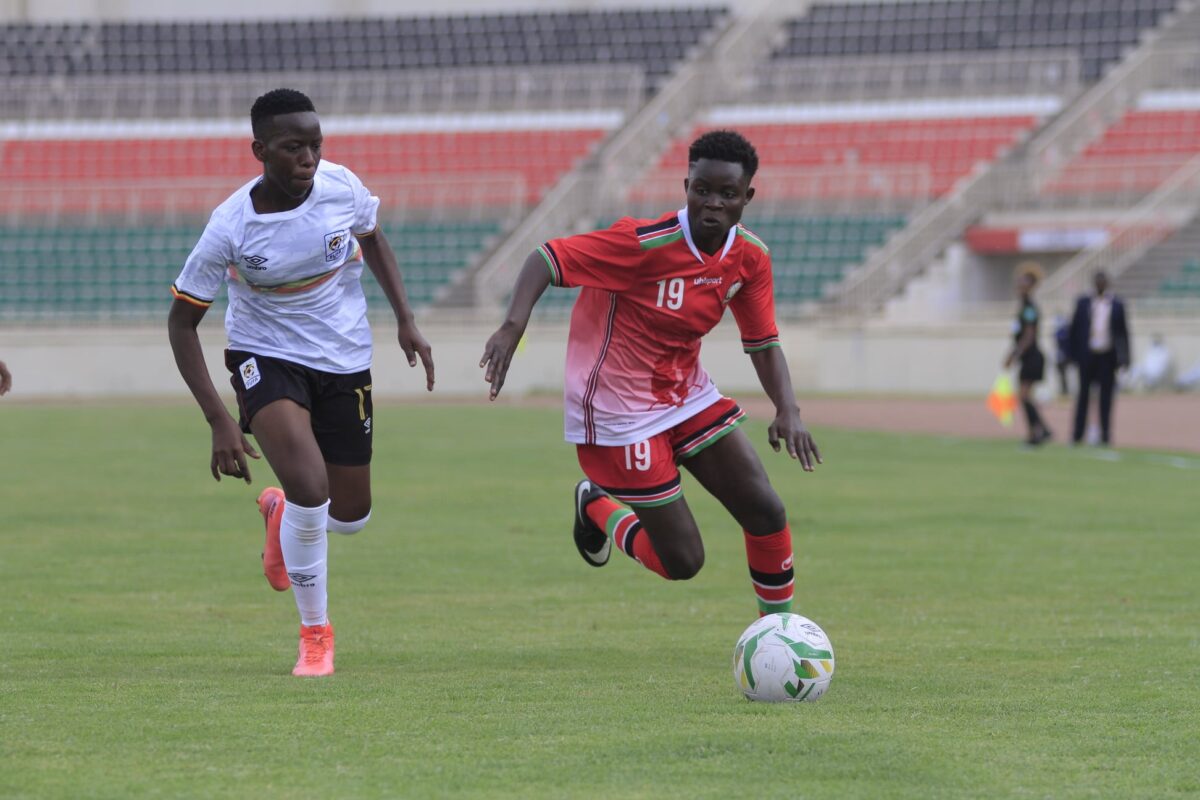
Dieser Spielstil hat auch Herausforderungen offenbart. Die hohe Intensität zum Beispiel. Wie kann man als Teamchef dafür sorgen, dass das intensive Spiel 90 Minuten durchgehalten wird?

In erster Linie braucht man das Commitment der Spielerinnen. Das war von Anfang an da. Dass man sich körperlich verbessert, ist etwas, das die Spielerinnen selbst übernehmen müssen – auch mit Unterstützung unserer Athletikabteilung. Wir können Gegner, die auf ähnlichem Niveau sind wie wir, mit unserer Spielweise kontrollieren, teilweise auch dominieren. Gegen Stärkere haben wir gemerkt, dass wir einen Plan B brauchen.

Was ist der Plan B?

Vielleicht eine andere Grundordnung schaffen, Pressinglinien verschieben. Wir wollen aber trotzdem, wenn wir den Ball haben, so schnell wie möglich unser Spiel durchziehen und wieder nach vorne kommen.

Wie kann man dem anfänglichen Mangel im Spielaufbau entgegenwirken?

Die Frage ist, wo man das Spiel aufbauen will. Es muss nicht immer vor dem eigenen Tor sein. Wir haben viele Chancen kreiert, auch wenn es nicht immer zu einem Tor gekommen ist. Wenn dann kein Tor fällt, ist die Chance schnell vergessen. Ich bin nicht der Meinung, dass wir die Spiele gewinnen, indem wir gut im Spielaufbau sind, sondern in der Spielfortsetzung und vor allem im Spiel gegen den Ball.
Wie steht es um Commitment und mentale Stärke im Team?

Daran fehlt es sicher nicht! Es braucht eben alles seine Zeit. Wir haben durch die vielen Verletzungen in kürzester Zeit fast 500 Länderspiele an Erfahrung verloren. Die „Wirbelsäule“ des Teams war weg – mit Manuela Zinsberger, Sarah Zadrazil und dann auch noch Marie Höbinger und Lilli Purtscheller. Auf einmal hast du eine Situation, in der von heute auf morgen andere in die Verantwortung rutschen.
Frauen im Fußball: The Talk

17. März | FH Technikum Wien
Frauen im Fußball – The Talk“ bringt Expertinnen, Spielerinnen und Entscheidungsträger*innen zusammen, um über Entwicklungen, Herausforderungen und Zukunftsperspektiven von Frauen im Fußball zu sprechen. Die Veranstaltung bietet Impulse, Diskussion und Raum für Austausch.

Sie haben die Chancenauswertung erwähnt. Fehlt dem Team der „Killerinstinkt“?

Das sind die Zusatzaufgaben der Profis. Daran kann jede nur selbst arbeiten. Manchmal kriegst du nur ein, zwei Möglichkeiten im Spiel, da sollte es dann funktionieren. Und wenn nicht, fängt man zum Überlegen an. Als Trainerteam legen wir nicht den Fokus darauf, dass die Chancen nicht verwertet werden, sondern darauf, dass wir sie uns erspielt haben. Natürlich wäre es schön, wenn wir aus jeder Chance ein Tor machen. Aber vielleicht sind wir das nicht. Vielleicht müssen wir daran arbeiten, uns die eine Chance mehr zu erarbeiten. Und wenn wir gut verteidigen, wird das auch reichen.

Haben Sie die richtigen – und auch genügend – Spielerinnen für Ihren Spielstil?

Wir haben auf jeden Fall die richtigen. Das war mir von Anfang an klar. Wenn alle fit sind, dann haben wir auf jeden Fall auch genügend.

Kommt genug nach im Nachwuchs? Tut Österreich genug für den Frauenfußball?

Es werden große Schritte gemacht. Wir sollten mehr in die Professionalität gehen, müssen mehr Mädchen zum Fußball bringen. Da setzen wir mit ÖFB und Frauenakademie die Schritte. In der Bundesliga kommen die Traditionsvereine immer mehr in Schwung, was dem Frauenfußball generell guttut.

Wo steht Österreichs Frauenfußball international?

An die Spitzennationen heranzukommen, wird schwer. Wir müssen darum kämpfen, die Position zu halten. Auch hinter uns wird investiert, ich denke an Polen und Finnland. Ein U23-Team würde uns guttun, damit der Sprung zur Kampfmannschaft nicht so groß ist. Wir müssen Werbung machen und auf Dinge hinweisen, die gut sind. Auf diese Weise können wir neue Vorbilder schaffen.

„Wir freuen uns sehr, dass ‚Fokus: Frauen im Fußball‘ bereits in das dritte Jahr geht. Was als Initiative begonnen hat, ist zu einem festen Bestandteil unseres Jahres geworden. Die kontinuierliche Unterstützung der Vereine und unserer Partner*innen zeigt, wie relevant dieses Thema ist. Mehr Sichtbarkeit und Chancengleichheit für Frauen im Fußball entstehen nicht durch einzelne Aktionen, sondern durch langfristiges Engagement.“
Simon Schmiderer
zone14 - Co-CEO und Mitbegründer
Share on Facebook
Share on Twitter
Share on Linkedin
More related content from zone14
Categories
Frauen im Fußball

zone14 startet die dritte Auflage der Initiative für mehr Sichtbarkeit von Frauen im Fußball

Contents

zone14 startet die dritte Auflage der Initiative für mehr Sichtbarkeit von Frauen im Fußball

Pressemitteilung

Fokus: Frauen im Fußball 2026

Wien, 18. Februar 2026 – Das Wiener KI-Unternehmen zone14 startet heute die dritte Auflage der Initiative „Fokus: Frauen im Fußball“. Von 17. Februar bis 17. März 2026 stehen Frauen im Fußball erneut im Mittelpunkt – mit digitalen Formaten, Interviews, Blog zusammen mit Partnern und einer spannenden Abschlussveranstaltung.

Ziel der Kampagne ist es, die Sichtbarkeit von Frauen im Fußball weiter zu stärken, erzielte Fortschritte sichtbar zu machen und den offenen Austausch über bestehende strukturelle Herausforderungen zu fördern. Gemeinsam mit Vereinen, Spielerinnen, Trainerinnen, Partnerorganisationen und Expert:innen möchte zone14 einen nachhaltigen Beitrag zur Weiterentwicklung und Professionalisierung von Frauen im Fußball leisten.

„Wir freuen uns sehr, dass ‚Fokus: Frauen im Fußball‘ bereits in das dritte Jahr geht. Was als Initiative begonnen hat, ist zu einem festen Bestandteil unseres Jahres geworden. Die kontinuierliche Unterstützung der Vereine und unserer Partner*innen zeigt, wie relevant dieses Thema ist. Mehr Sichtbarkeit und Chancengleichheit für Frauen im Fußball entstehen nicht durch einzelne Aktionen, sondern durch langfristiges Engagement.“
Simon Schmiderer
zone14 - Co-CEO und Mitbegründer

„Fokus: Frauen im Fußball“: The Talk

Den Höhepunkt der Kampagne bildet erneut die Veranstaltung „Frauen im Fußball – The Talk“, die am 17. März 2026 an der FH Technikum Wien (Höchstädtplatz 6, 1200 Wien) stattfindet.

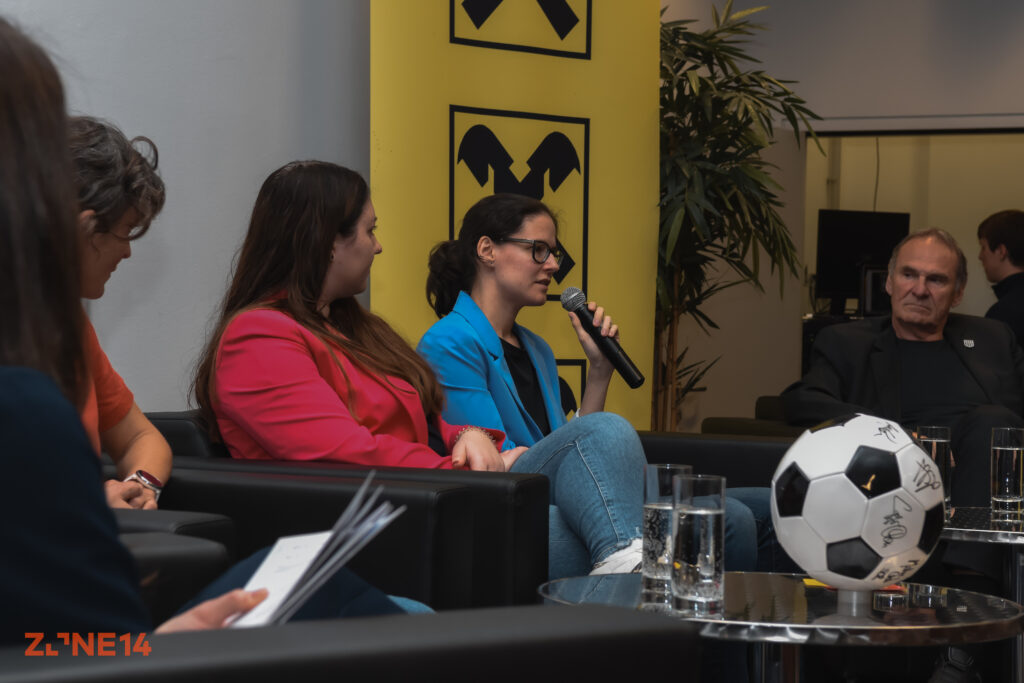
Im Rahmen einer hochkarätig besetzten Podiumsdiskussion diskutieren Spielerinnen, Trainer:innen und Vertreter:innen aus dem Sportbereich über aktuelle Entwicklungen rund um Frauen im Fußball, wirtschaftliche und strukturelle Herausforderungen, konkrete Handlungsfelder für Vereine und Entscheidungsträger:innen sowie die Rolle von Innovation und Technologie für mehr Chancengleichheit. Im Anschluss bietet die Veranstaltung Raum für Austausch und Networking.

Early-Bird-Tickets sind ab sofort kostenlos auf unserem Eventbrite erhältlich.

Get involved!

zone14 lädt Vereine, Sportler:innen, Unternehmen, Medienvertreter:innen und alle Fußballinteressierten ein, sich aktiv an der Kampagne zu beteiligen und Teil des Dialogs zu werden. Weitere Informationen zur Initiative sowie Details zur Veranstaltung finden Sie hier. 

About zone14:
zone14 ist ein Unternehmen im Bereich der KI-basierten Videoanalyse und spezialisiert sich auf innovative und zugängliche Lösungen für den Fußball. Ziel ist es, Vereinen aller Leistungsstufen professionelle Analysetools bereitzustellen und gleichzeitig Initiativen zu unterstützen, die Vielfalt und Chancengleichheit im Sport stärken.

Kontakt für Rückfragen
Oswald Schwarz
Tel: +43 664 3642015
E-Mail: oswald@zone14.ai

Meldemannstraße 18
1200 Wien

Share on Facebook
Share on Twitter
Share on Linkedin
More related content from zone14
Categories
Frauen im Fußball

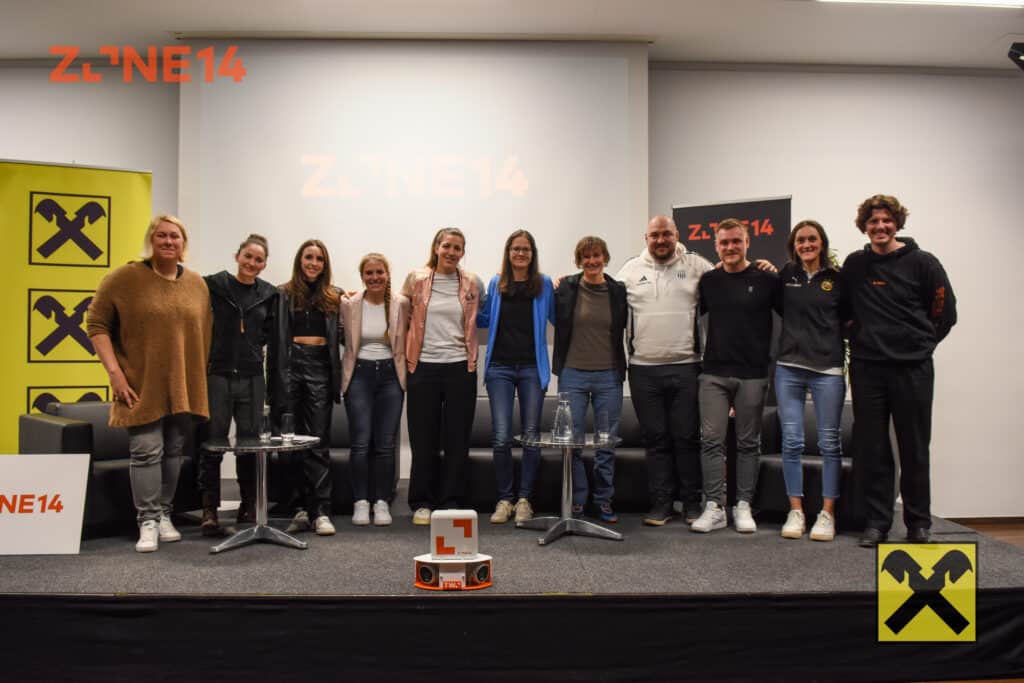
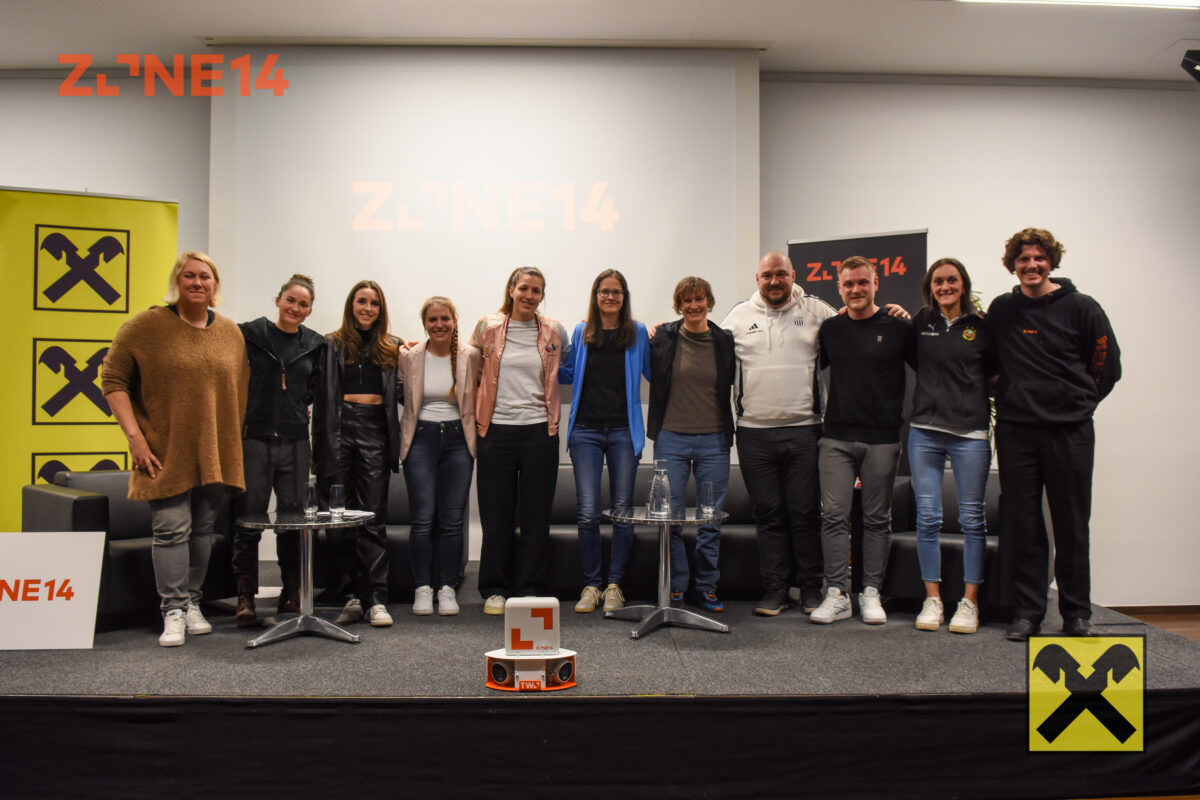
Women in football - The Talk 2025

Women in football - The Talk 2025

The second edition of ‘Women in football: The Talk’ was a complete success! 

In three highly interesting discussion rounds, key topics such as Equal opportunities, lack of media presence and the future of women in football illuminated.

High-calibre guests such as Katja Gürtler (Head Coach SK Rapid Vienna), Lisa Alzner (Head Coach St. Pölten), Lisa Makas (74-time ÖFB team player & Sports Director FK Austria Vienna), Michael Erlitz (Sports Director Sturm Graz) and Jürgen Tröscher (Sports Director LASK Linz) shared their thoughts and perspectives on current developments regarding women in sport.

Additionally enriched Nikola Staritz (Project Manager of the fairplay initiative), Nina Potz (League Manager Women's Bundesliga), Sara Telek (Bundesliga & UEFA referee) and Anna Ressmann (Women's Committee WFV) the discussions with valuable insights from various areas of football.

The evening was hosted by Sky reporter Nera Palinic.

Thanks to all participants and guests who made this evening so special!

Immerse yourself in the highlights of the evening.

Thank you!

Share on Facebook
Share on Twitter
Share on Linkedin
More related content from zone14
Categories
Frauen im Fußball

Interview mit Lisa Alzner: Mit 26 Cheftrainerin beim SKN St. Pölten Rush

Contents

Interview mit Lisa Alzner: Mit 26 Cheftrainerin beim SKN St. Pölten Rush

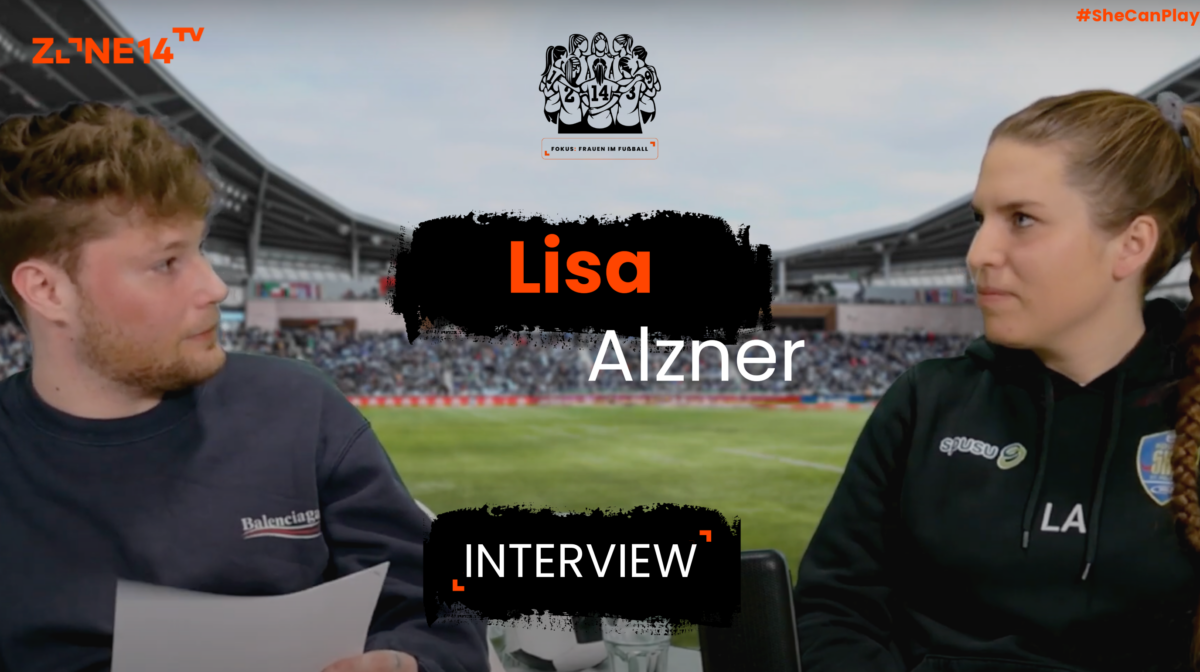
Als Teil unserer Fokus: Frauen im Fußball-Kampagne spricht Lisa Alzner über ihre Leidenschaft für den Fußball, ihren ungewöhnlichen Karriereweg und ihren Alltag als Cheftrainerin des SKN St. Pölten Rush – und das mit gerade einmal 26 Jahren. Wie sieht ihr Tagesablauf aus? Welche Herausforderungen bringt der Job mit sich? Und was treibt sie an?

Hier kannst du das Video-Interview mit Lisa ansehen:

Sei dabei! Frauen im Fußball - The Talk:

Banner FFF

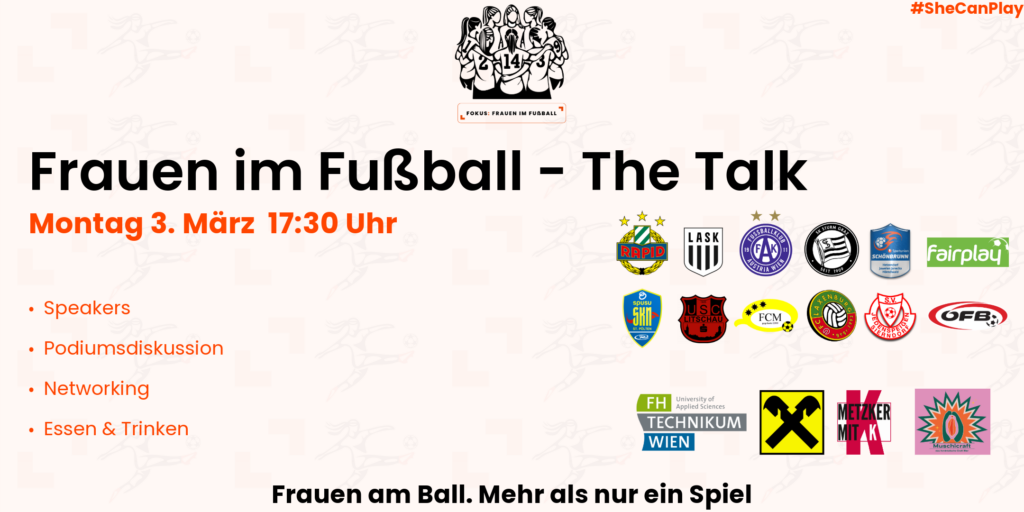
Erlebe spannende Podiumsdiskussionen mit Top-Gästen aus dem österreichischen Fußball! Am 3. März 2024 um 17:30 Uhr an der FH Technikum Wien rückt unser Event Frauen im Fußball: The Talk erneut die Rolle von Frauen im Fußball in den Fokus. Diskutiere mit, erhalte exklusive Einblicke und sichere dir jetzt dein kostenloses Ticket unter: zone14.ai/thetalk

Bleib mit zone14 am Ball!

Unser Fokus: Frauen im Fußball geht weiter – folge uns auf unseren Social-Media-Kanälen für aktuelle Updates, spannende Inhalte und exklusive Behind-the-Scenes-Einblicke:

📲 Instagram
📲 Facebook
📲 TikTok
📲 YouTube

🌍 Mehr Infos zur Kampagne: zone14.ai/fff

Share on Facebook
Share on Twitter
Share on Linkedin
More related content from zone14
Categories
Frauen im Fußball

Zwei WM-Tore & ein Traumduell gegen Barça | Interview mit Valentina Mädl

Contents

Zwei WM-Tore & ein Traumduell gegen Barça | Interview mit Valentina Mädl

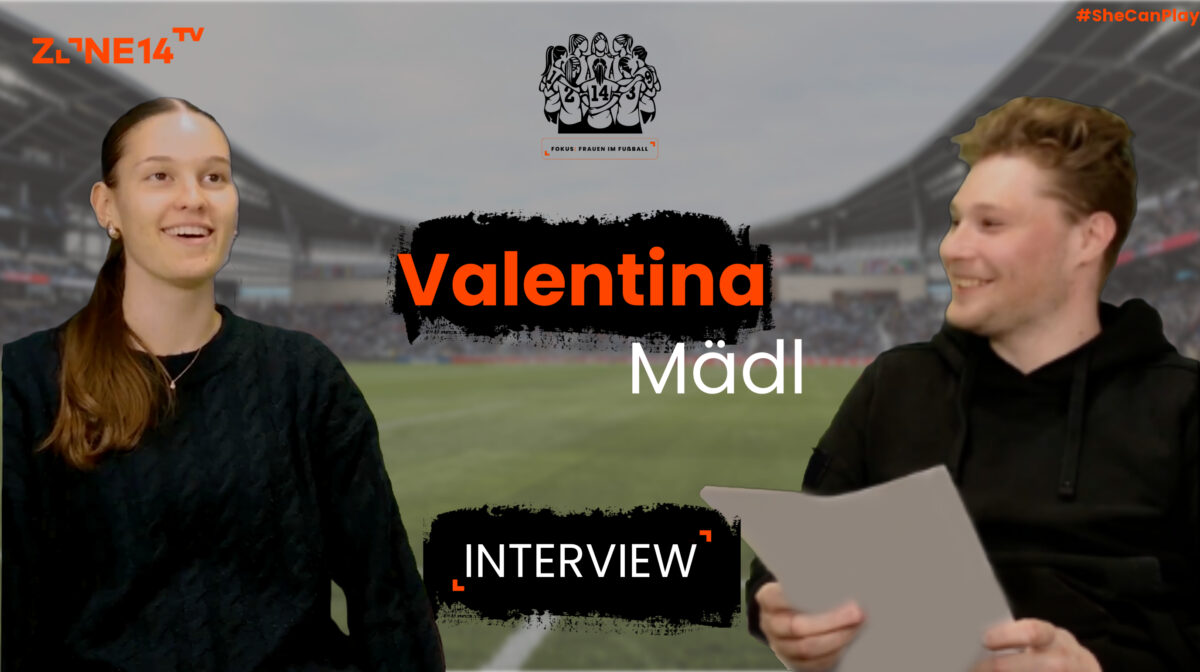
Valentina Mädl, Stürmerin des SKN St. Pölten, glänzte bei der U20-Weltmeisterschaft mit zwei wichtigen Toren – darunter eines gegen den späteren Sieger Nordkorea. Im Rahmen unserer Fokus: Frauen im Fußball-Kampagne spricht sie über diese besonderen Momente, die Bedeutung für ihr Team und die Reaktionen aus der Heimat. Außerdem erzählt sie von ihrem Champions-League-Erlebnis gegen den FC Barcelona: Wie fühlt es sich an, gegen die wohl beste Frauenmannschaft der Welt zu spielen – und das vor fast 9.000 Zuschauerinnen in Wien?

Hier kannst du das Video-Interview mit Valentina ansehen:

Sei dabei! Frauen im Fußball - The Talk:

Banner FFF

Erlebe spannende Podiumsdiskussionen mit Top-Gästen aus dem österreichischen Fußball! Am 3. März 2024 um 17:30 Uhr an der FH Technikum Wien rückt unser Event Frauen im Fußball: The Talk erneut die Rolle von Frauen im Fußball in den Fokus. Diskutiere mit, erhalte exklusive Einblicke und sichere dir jetzt dein kostenloses Ticket unter: zone14.ai/thetalk

Bleib mit zone14 am Ball!

Unser Fokus: Frauen im Fußball geht weiter – folge uns auf unseren Social-Media-Kanälen für aktuelle Updates, spannende Inhalte und exklusive Behind-the-Scenes-Einblicke:

📲 Instagram
📲 Facebook
📲 TikTok
📲 YouTube

🌍 Mehr Infos zur Kampagne: zone14.ai/fff

Share on Facebook
Share on Twitter
Share on Linkedin
More related content from zone14
Categories
Frauen im Fußball

Playing for money: Financial inequality in women's football

Contents

Playing for money: Financial inequality in women's football

In recent years, women's football has entered a deserved period of strong increase in popularity and visibility, with spectator attendance records being set and matches finally attracting the global attention they deserve. However, behind this success lies a harsh reality: the financial inequality between men's and women's football continues, putting doubt over the sport's potential for growth and financial sustainability. In this article, we look at some of the current challenges facing women's football in Austria, England, and worldwide, looking at some of the causes of current funding inequalities, whilst also highlighting some of the current initiatives aimed at solving these difficulties.

The Global Situation

The global landscape of women's football is currently marked by great progress but also continued challenges. The Women's World Cup 2023, hosted in Australia and New Zealand captivated large audiences and generated substantial sponsorship revenue. Post tournament, FIFA President Gianni Infantino announced the Women's World Cup, ‘broke even’ for the first time, generating US$570 million in revenue, the highest ever figure.

Whilst this is a great step forward for the women’s game, estimates suggest that the tournament's revenue falls significantly short of its male counterpart, clearly showing the strong disparity in financial support between the men’s and women’s game. The Men’s World Cup in Qatar in 2022, generated an enormous US$6.3 Million.

The Financial Situation in English Women’s Football

In England, women's football has followed the global trend and witnessed remarkable growth in recent years, with increased attendance, media coverage, and commercial partnerships.

But even in one of the world’s biggest footballing nations, and most well-funded, difficulties are still faced by clubs. Significantly in England, financial problems appear to be not just limited to grassroots clubs but also those right at the top level of the game. A recent study by researchers at the University of Portsmouth revealed a troubling trend: while club revenue has surged by 590% in the Women's Super League (top division of the Women’s game in England) from 2011 to 2019, club debt has rocketed by a seriously alarming 1,351%. This alarming number, again represents the precarious financial position of women's football clubs and raises concerns about the sport's long-term sustainability.

Women's football in Austria

At the end of the day, many female footballers in the Austrian Women's Bundesliga earn on average no more than €500 to €600 gross per month, while the average for men is well over €10,000 including bonuses.

In Austria, women's football also faces significant challenges, albeit within a smaller and less lucrative market.

As part of our focus month, we recently spoke to Jasmine Sommer,, a strong activist in Austrian women's football. Jasmine highlighted the stark funding disparities between men's and women's teams, noting that often women's teams receive minimal financial support, with even some female players playing in 2. Bundesliga (second division) only receiving fuel expenses in return for their hard work training and playing week after week. Austria is yet another example of the struggles to secure the same level of investment and recognition in female football as is received in the men’s game.

"Women only came along later, so they had to fight for a lot of things that men took for granted in football."
Jasmine Sommer
Real Girls Play Soccer

Where do these financial difficulties stem from?

Financial inequalities in women's football are not solely a result of economic disparities, unfortunately they are deeply rooted in historical injustices and barriers. The English Football Association's ban on women's professional football in England until 1971 deprived women's football of crucial resources and investment that the men’s game was allowed to continue to receive, meaning the women’s game has always been ‘playing catch up’ and getting neglected. The same can also be said in Austria, with the women's national team not forming until 1990, after pressure from stakeholders in the Bundesliga pushing for increased funding and equality after previous neglect.

As well as historical inequalities, continued biases in perceptions of performance quality and potential, have often limited sponsorship investors' willingness to commit funding to women's football, which of course limits the room of development and growth at all levels of the game.

"Why do they fail to notice that women's teams are always put in the second role? Men always get first priority, even when women's teams perform better. It's a question of money and sponsorship. Women's football is left behind. Until priorities change, women's football will remain in the shadows."
Lara Krampf
Player at DSG Dynamo Donau

Addressing Inequities

All efforts to bridge the funding gap in women's football must look to solve the underlying imbalances that lead to inequality. Initiatives such as FIFA's record prize money allocation for the Women's World Cup and increased investment in grassroots programs are all positive steps in the right direction, but more stronger action is still needed. By challenging and standing up to outdated perceptions and advocating for greater investment in women's football, stakeholders can pave the way for a more viable, inclusive and stronger future for the sport.

Success Stories and Pathways Forward

Despite the challenges, there are plenty of great success stories that offer hope for the future of women's football. Clubs like FC Barcelona and Lyon have demonstrated the potential for success through strategic and sufficient investment in their women's teams.

Spectator attendance records have been achieved and the profile of women's football on the global stage has been elevated by the great performance of these clubs. By prioritising talent development and marketing efforts, these clubs have shown that investment in women's football can bring significant returns. Both on and off the pitch they have experienced significant improvements in financial backing, thanks to the initial investment and resulting success.

Conclusion

The funding disparities in women's football appear to be a reflection of the general issue of inequality within the sports industry. While progress has been made, much work remains to be done to ensure that women's football and sport as a whole receives the recognition and support it truly deserves. The strong performances of female players, and increased interest in the sport in recent years should send a clear message to stakeholders of the game: women’s football is here to stay and female athletes deserve financial backing to help them fulfil their dreams and potential.

Share on Facebook
Share on Twitter
Share on Linkedin
More related content from zone14
Categories
Frauen im Fußball

Interview mit Lainie Fuchs: Comeback nach Kreuzbandriss & Erfahrungen in den USA

Contents

Interview mit Lainie Fuchs: Comeback nach Kreuzbandriss & Erfahrungen in den USA

Lainie Fuchs, Spielerin des First Vienna FC, hat bereits das österreichische Nationalteam auf U19-Ebene vertreten. In unserer zweiten Focus: Women in Football Kampagne spricht sie über ihren Reha-Prozess nach einem Kreuzbandriss, ihre Zeit in den USA und die Unterschiede im Frauenfußball zwischen Österreich und den USA.

Hier kannst du das Video-Interview mit Lainie ansehen:

Sei dabei! Frauen im Fußball - The Talk:

Banner FFF

Am 3. März 2024 um 17:30 Uhr geht unsere Event Frauen im Fußball: The Talk in die nächste Runde! Gemeinsam mit hochkarätigen Gästen aus dem österreichischen Fußball beleuchten wir die Rolle von Frauen in der Branche, diskutieren Herausforderungen und Chancen und werfen einen Blick in die Zukunft.

Wo? FH Technikum Wien

Kostenloses Ticket sichern: zone14.ai/thetalk

Nutze die Gelegenheit, dich mit Expert:innen auszutauschen, exklusive Einblicke zu erhalten und Teil einer spannenden Diskussion zu sein!

Bleib mit zone14 am Ball!

Unser Fokus: Frauen im Fußball geht weiter – folge uns auf unseren Social-Media-Kanälen für aktuelle Updates, spannende Inhalte und exklusive Behind-the-Scenes-Einblicke:

📲 Instagram
📲 Facebook
📲 TikTok
📲 YouTube

🌍 Mehr Infos zur Kampagne: zone14.ai/fff

Share on Facebook
Share on Twitter
Share on Linkedin
More related content from zone14
Categories
Frauen im Fußball

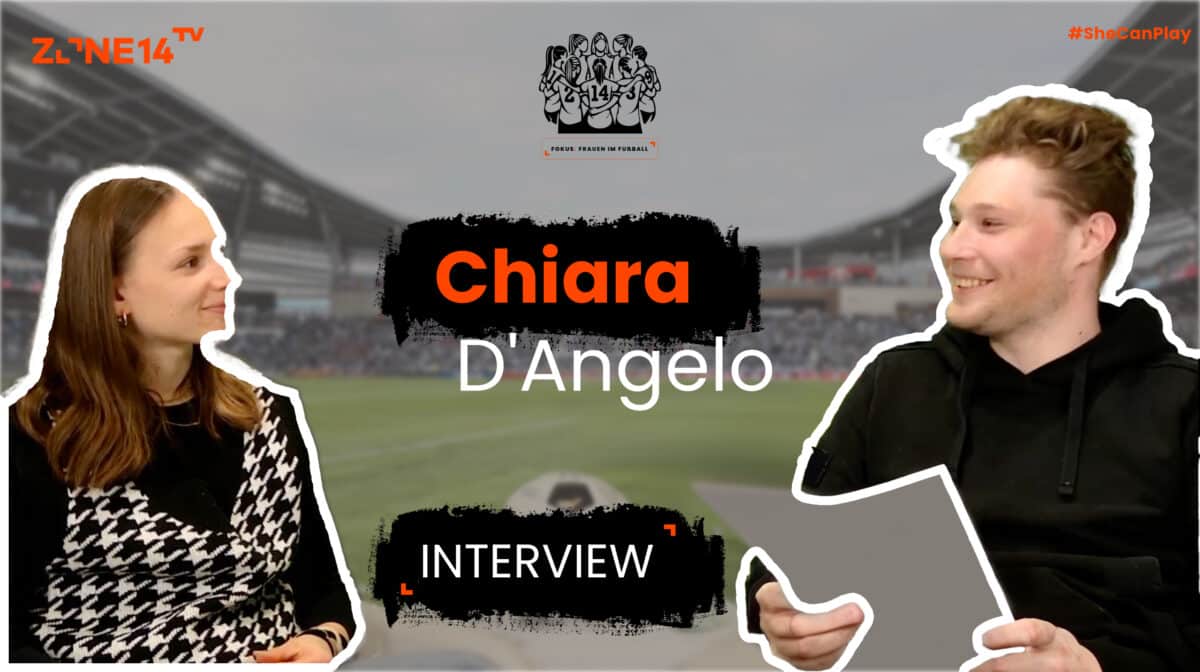
Erfahrungen als Kapitänin Österreichs bei der U20-Frauen-WM | Interview mit Chiara D’Angelo

Contents

Erfahrungen als Kapitänin Österreichs bei der U20-Frauen-WM | Interview mit Chiara D’Angelo

Die U20-Weltmeisterschaft in Kolumbien war für Chiara D’Angelo, Spielerin des SKN St. Pölten, ein unvergessliches Erlebnis – und eine große Verantwortung. Als Kapitänin des österreichischen U20-Teams stand sie nicht nur auf dem Platz, sondern auch abseits davon in einer besonderen Führungsrolle. In unserer zweiten Focus: Women in Football-Kampagne spricht sie über die einzigartige Atmosphäre des Turniers, den Umgang mit Verantwortung und die Herausforderungen, die mit ihrer Rolle verbunden waren.

🎥 Hier kannst du das Video-Interview mit Chiara ansehen:

Sei dabei! Frauen im Fußball - The Talk:

Banner FFF

Am 3. März 2024 um 17:30 Uhr geht unsere Event Frauen im Fußball: The Talk in die nächste Runde! Gemeinsam mit hochkarätigen Gästen aus dem österreichischen Fußball beleuchten wir die Rolle von Frauen in der Branche, diskutieren Herausforderungen und Chancen und werfen einen Blick in die Zukunft.

Wo? FH Technikum Wien

Kostenloses Ticket sichern: zone14.ai/thetalk

Nutze die Gelegenheit, dich mit Expert:innen auszutauschen, exklusive Einblicke zu erhalten und Teil einer spannenden Diskussion zu sein!

Bleib mit zone14 am Ball!

Unser Fokus: Frauen im Fußball geht weiter – folge uns auf unseren Social-Media-Kanälen für aktuelle Updates, spannende Inhalte und exklusive Behind-the-Scenes-Einblicke:

📲 Instagram
📲 Facebook
📲 TikTok
📲 YouTube

🌍 Mehr Infos zur Kampagne: zone14.ai/fff

Share on Facebook
Share on Twitter
Share on Linkedin
More related content from zone14
Categories
Frauen im Fußball

The history of women's football

Contents

Subscribe to our email list for news and updates

The history of women's football

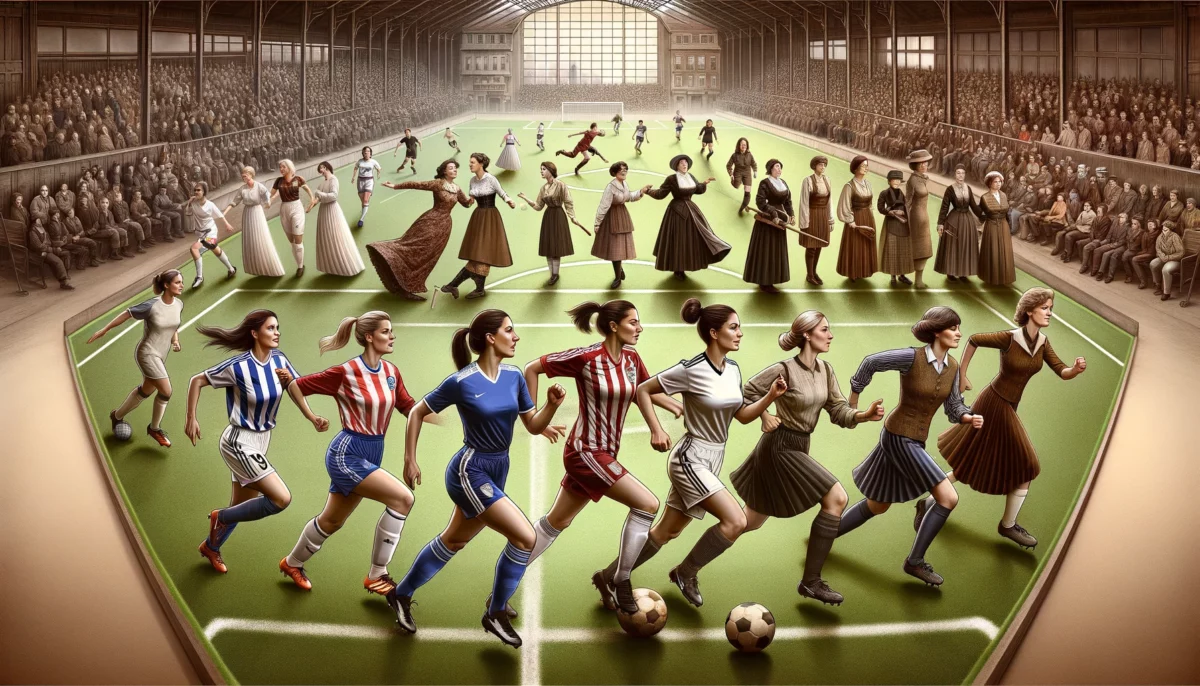
The history of women's football is not only a chronicle of sporting events, but also a fascinating reflection of social change and the ongoing struggle for equality. From its beginnings in England to recent global developments, the journey takes us through an exciting timeline. The dynamics of the sport reflect not only the development of women's football, but also changing social norms and values.

The beginnings of women's football

Great Britain, the birthplace of the game, played an important role in the development of women's football in the 19th century. It was not uncommon for girls to play the emerging sport in England's schools. On 23 March 1895, the first recorded women's football match took place between England North and England South. The bizarre anecdote that the players wore hats and skirts, rather than the typical sportswear of the day, illustrates the cultural norms of the time.

Long shadows of oppression

Instead, the promising development of women's football in England came to an abrupt end in 1921. Women were banned from stadiums on the dubious grounds that football was 'unsuitable' for women and should not be promoted. The ban lasted 49 years until 1970, when women were officially allowed to play in stadiums again. This dark period was not only a setback for the game, but also a sad chapter in the history of equality.

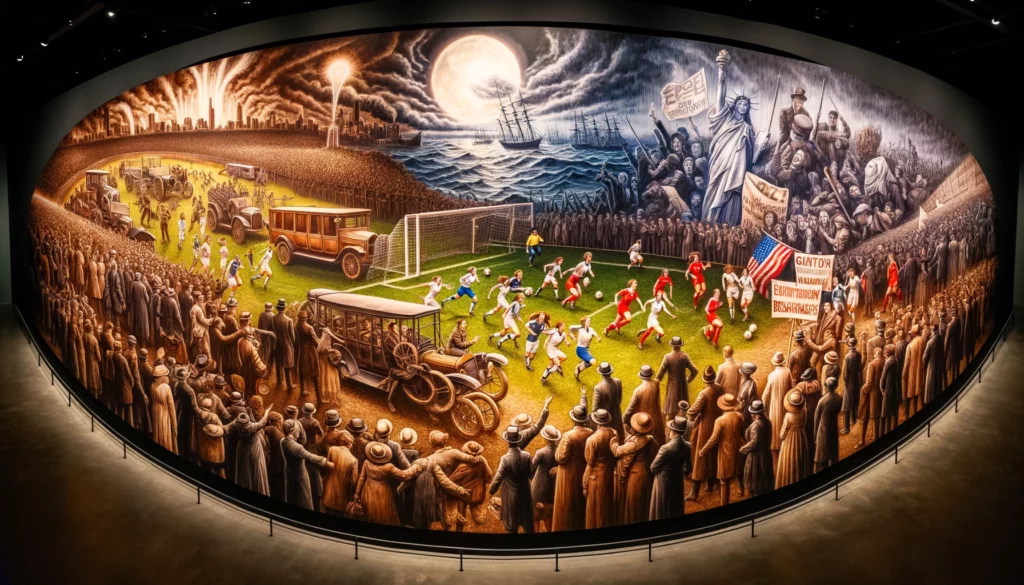
The problems and breakthroughs of women's football in one picture

Fight for recognition

The first women's football club was founded in Germany in 1930, but was disbanded after a year following violent protests. During the Nazi era, women were declared ineligible to play football because of their gender role. The German Football Association imposed an official ban on women's football in 1955, which was not lifted until 1970. In Austria, there was a women's football championship as early as 1936, but it was short-lived. The establishment of the women's league of the Austrian Football Association (ÖFB) in 1972 and the official recognition of women's football in 1982 illustrate the uphill struggle for acceptance and equality.

Ode to resistance

Women's resistance to oppression and discrimination in football is an inspiring story. Despite many setbacks and obstacles, the pioneers of women's football have helped to shape the sport we know today. Their determination not only scored goals on the pitch, but also opened doors for future generations of female footballers.

A milestone for equality

In 2019, a revolutionary moment occurred when the US women's soccer team won the World Cup. In response to discrimination, the team filed a landmark class-action lawsuit against the US Soccer Federation to receive the bonuses they would have received had they been paid according to men's rules. Setting an undisputed precedent for equal treatment, this resistance reverberated throughout the sporting world.

The legal path to equality

The US women's soccer players' lawsuit against the federation was not only a sporting landmark, but also a legal milestone. The fight for equal pay and conditions led to an intense debate about gender equality in sport. Although the case failed in court in May 2020, it set the tone for future discussion and change.

"Women only came along later, so they had to fight for a lot of things that men took for granted in football."
Jasmine Sommer
Real Girls Play Soccer

A look at existing barriers

The discussion about equality in women's football covers a number of areas. In addition to financial equality, it is also about equal training opportunities, access to quality pitches, and appropriate support from sponsors and the media. The existing barriers are increasingly recognised and require a joint commitment from sports organisations, the media and society.

Promising prospects

The history of women's football is not only a journey through ups and downs, but also a reflection of societal developments. But the current successes and growing recognition point to a promising future. Even if the road to equality is not yet fully paved, the positive developments show that the prospects for women's football are increasingly promising. The development of this fascinating sport is driven by ongoing efforts and the constant fight for equality.

Empowerment through women's football

The increasing visibility of women in football is not only leaving a legacy but also shaping the future of the sport. Young girls look to female players as role models who show them that there are no limits to their dreams. The growing participation of women at all levels of society promises a future where women in sport are recognised and celebrated as a matter of course.

Global triumph

Women's football has enjoyed an amazing resurgence around the world in recent years. International tournaments are becoming more and more popular, and the quality of the game is reflected in the growing number of spectators. Players are increasingly becoming role models, inspiring young girls and consolidating their role as key players in the sport.

A step towards normality

The growing success of women's football at international level is helping the sport to emerge from the shadows and be recognised as a discipline in its own right. The interest of sponsors, media and fans is growing and women's football matches are becoming major events. This global triumph is not only rewarding the players but also signalling social change.

Beyond the sport

Women's football is a catalyst for social change far beyond the pitch. It is helping to break down gender stereotypes and provide a platform for discussions about equality. From the introduction of fair bonuses to increased media coverage, women's football is actively challenging existing norms and paving the way for a more inclusive sporting landscape.

Women's football as a social statement

The presence of women in football is a symbol of the changing gender roles in society. Sport allows women to raise their voices and fight against prejudice. The active participation of women in football is not only a sporting act, but also a social statement in favour of equality and self-determination.

"Why do they fail to notice that women's teams are always put in the second role? Men always get first priority, even when women's teams perform better. It's a question of money and sponsorship. Women's football is left behind. Until priorities change, women's football will remain in the shadows."
Lara Krampf
Player at DSG Dynamo Donau

Conclusion

A look at the past, present and future of women's football shows that it is not just a game, but a powerful tool for change and equality. With each generation of players and fans, the resistance and determination to establish women's football as an integral part of the global sporting culture grows. The journey is far from over, but the path points in a direction of change that extends far beyond the pitch.

Share on Facebook
Share on Twitter
Share on Linkedin
More related content from zone14
Categories
Frauen im Fußball

Football and role models - Why is there a lack of female coaches?

Contents

Football and role models - Why is there a lack of female coaches?

Thought experiment

When you think of football, the sport's greats often come to mind: the older generation might think of Diego Maradona, Herbert Prohaska or Hans Krankl, the younger generation of Lionel Messi, David Alaba or Cristiano Ronaldo. Rarely do names like Megan Rapinoe, Alex Morgan or Alexandra Popp come to mind. The fact that football still has such a masculine connotation has to do with its history, but also with the lack of visibility of women in football. Female role models in football would be very important to create identification opportunities for young female players and future female coaches.

Who coaches the greats

Irene Fuhrmann was team manager of Austria for almost four and a half years. The coach herself can look back on many years of experience as a player before starting her coaching career. She was the first woman in Austria to obtain the UEFA Pro Licence, which entitles her to work in top-level sport. If you look beyond the borders of our country, the national coach is not always a woman. In 20 of the 32 teams that took part in the 2023 World Cup, the teams were coached by men. The current European champions (England) and world champions (Spain) are coached by women. Does it make a difference whether women or men coach?

Fußballerinnen die sich aufwärmen

A different point of view

Men's football is fast, technical and attractive. Women's football, on the other hand... Well, the exact opposite. At least, that's the story. However, a study from Zurich has shown that there is no qualitative difference between the way men and women play football. The only major difference is in the presentation of the players: Individual stoppages after fouls or substitutions last significantly longer in men's football than in women's. As a result, active playing time in women's football is higher than in men's football. This is also reflected in the attitude of coaches. Those who have been involved in football in one way or another and have internalised certain attitudes or playing mentalities will also pass these on in training.

Diversity in football

Diversity in football is a valuable element that enriches the sport. It is important to value the different perspectives, backgrounds and abilities of players. Women from different ethnic groups, nationalities and social classes should be more visible not only as players, but also as coaches and leaders in football. Promoting diversity not only creates a more inclusive football community, but also demonstrates that the sport is accessible and representative for all.

Frauen auf dem Sportplatz, die sich freuen

Empowering girls in football

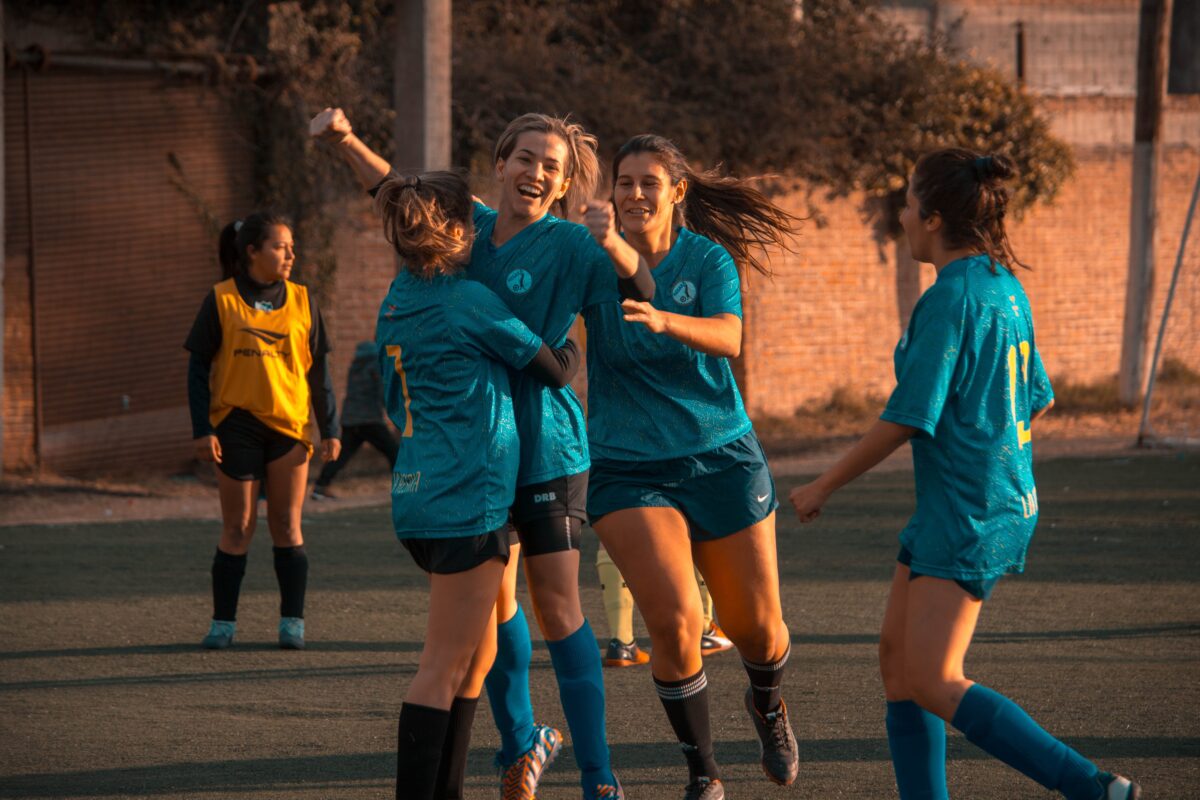
The empowerment of girls in football is crucial to the future of the game. Programmes and initiatives that encourage girls to participate in football are essential. Girls should have equal opportunities to develop in clubs and teams and be supported by strong female role models, be they coaches or players. Developing girls in football goes beyond the pitch, helping to build self-confidence, team spirit and leadership skills.

Faiplay am Sportplatz

How to become a coach in women's football

The best way to become a youth football coach in Austria is to attend a coaching course organized by your national association. These courses are usually offered several times a year - if there are enough registrations, some regional associations also offer courses for women only. In Burgenland there is additional financial support for all participants. During the course you will learn more about how to behave as a coach, the basics of football, pedagogical values and much more. All this prepares you to work in a club - after the theory comes the practice: you have to complete a certain number of practical hours at a football club. After that, you can start as a coach and train the youngest players up to U13. Further coaching courses are offered for higher age groups.

Perspectives

As mentioned above, female role models are essential to overturning male domination in football. The sport itself, in all its beauty and potential, should be the focus, not the typically 'masculine' or 'feminine' differences. To change this, we need female role models. We need female coaches who dare to enter men's football and have the confidence to train children and teach them the important values of football and, above all, the love of the sport. This includes the fact that it is perfectly normal for men and women to play football, that everyone has to stick together and that you can only win a game together. These are important values in football, but also in our society, and coaches need to pass them on, especially at youth level, so that children learn from an early age what football is all about - and not just football. More thoughts from the author are also available in an Interview on the topic: Women in football.

Share on Facebook
Share on Twitter
Share on Linkedin
More related content from zone14
Categories
Frauen im Fußball

Oliver Jakob on the development of women's football

Contents

Subscribe to our email list for news and updates

Oliver Jakob on the development of women's football

As part of our focus on women in football, we recently interviewed Oliver Jakob, who currently works for Austrian Women's Bundesliga club SCR Altach.

Introduction

zone14: Perhaps you could start by briefly introducing yourself and how you got into women’s football.

I'm Oliver Jakob, I'm 23 years old. I started working at Altach around four years ago. At the time, I didn't really have any connection to women's football apart from a few players I knew who went to school with me. 

In the winter of 2020, the project opened up that the FFC Vorderland women's team would be integrated into Altach and play in the Bundesliga.

I've been working full-time at Altach for a few months now and now focus my work here for the women's team.

Day to day work

zone14: What does a typical day in your life look like?

I don't think it's a typical day. The day usually starts at half past eight in the morning and goes on until 8.9 in the evening if there is training. You have lots of conversations with coaches and players, but also with many officials, player support staff, etc. Nevertheless, my working day is very varied and I see myself more in the role of first point of contact and mediator for many different topics. There is no such thing as a standard working day because many things happen spontaneously, it is very varied and very exciting.

How has women's football changed?

zone14: In your opinion, how has women's football in general changed over the last few years?

I know the development of women's football through Eileen Campbell, who I also played with in my youth. In the early days, it was quite amateurish, if I may say so. When she played for FFC Vorderland, you couldn't immediately tell that it was the highest women's league in Austria.

I can simply say that a lot has happened in the last 3 years. The arrival of a new league sponsor has also given the whole issue more impetus.

We in Altach in particular have set out to show how it should be done. With top training conditions, an excellent infrastructure and communication, we can score points and create an attractive atmosphere for every player. In addition, all games are played in the stadium. These things are important and have extreme added value. Of course, foreign players recognise this and we currently have 6 or 7 players who have already played in Germany.

If we see that big names such as Rapid and Salzburg are now also joining the academy leagues, then you push each other and create development in the area.

More could certainly have been made of the hype surrounding EURO 2017. In my opinion, the association overslept this somewhat because it may have lacked the resources.

In general, the last 3 years have been good and ok, but I think that there will certainly be further developments in the women's sector.

Resources and structure at SCR Altach

zone14: What do you do on a day-to-day basis differently to Rapid Vienna, for example, who only started with their women's setup this year? Do you use the same infrastructure as the men or do you divide it up? And what about the financial resources and resource distribution?

In terms of infrastructure, we have a professional campus where the men from each team are based. This is also where the weight rooms, physio rooms, etc. are located. But the women, the first team, also have their own cabins. The additional rooms, such as the video analysis room, weights room and physio room, are shared and used equally among the professional men’s and women's teams then of course the second teams as well.

The resources are distributed equally everywhere. We make sure that the training conditions are right. The games are played in the stadium, which means you no longer have to worry about the game being canceled in bad weather, which gives you more planning security.

But of course it's very important to make sure that the games aren't cut on top of each other or anything else. But it actually works quite well. And yes, that's how it developed three years ago. 

Of course it's an extreme step at the beginning. Then there's also a lot of talk about, yes, what do the women have to do now, why are they there and so on. But that also takes a bit of time to put everything into place.

And I would say that the first women’s home game for us had a very, very big impact on the entire club. A lot of people said, wow, that's really cool, they play good football, it's fun to watch. And that's how the whole thing developed.

If we come back to sponsorship or financial matters, the women's team is actually completely self-supporting. There is a small amount that is contributed by the men's company, but the rest is completely financed by sponsors, with our own main sponsor, and withmany of our own jersey sponsors. Our two sales staff are extremely supportive and push the whole thing every year.

We managed to get the LED sponsorship boards up and running for all women's matches this summer, selling them to around 20 different partners. That shows that women's football is extremely attractive in Vorarlberg, that companies are willing to invest money in it, but also that the day-to-day conditions are extremely good for taking the whole thing forward.

Success at SCR Altach

zone14: And success comes with this support?

Yes, that comes in passing.

Of course, several factors play a role here. It has often been said that when the men have not been so successful, the sports director should change positions and he can do it much better. But to be honest, it's just simply a lot easier for women.

Let me tell you, we brought Charlotte Voll from Paris Saint-Germain to us two years ago. In the men's game, it's unthinkable that a player like that would come here. But, she can get playing time, she wants to play, and secondly, the whole situation with the infrastructure.

We had our teething problems in the first year, we were in sixth place, we were under a lot of pressure because a lot of people had high expectations for players who were just starting out and a lot of people said that they were professional players and now they had to a high level. In the end it didn't work out with the coach and we had to change coaches in the winter. But since then, things have actually developed steadily.

Last year, we finished third with the same number of points as SK Sturm Graz, which was quite remarkable, but we didn't achieve anything in the end. Our goal was really not to slip into the European positions. In the end, you have to say that it’s part of our development, because we made progress, we won against SK Sturm, reached the cup final and gained a lot of experience.

As we've already said, there are a lot of steps in quick succession, which are often too fast and you skip things. Now it's the stabilization phase, where the whole thing comes together, when you take care of issues off the pitch, such as the administrative side, the coaching team, and just spend more time to make everything more professional all round. In the end, that will also have a beneficial effect on the team.

The next step already came in the summer with player sales for the first time, where it was shown that there is actually money to be made through selling players. There are clubs that pay transfer fees; Charlotte Voll was sold to Leverkusen in the summer and in January Eileen Campbell was sold to Freiburg. That also shows women’s football can also bring in money if you simply back the right people.

We've also managed to add two extra professionals in the summer, so we've gone from 8 professional players to 10. It'll just keep increasing, but you'll never be able to say that you're going from 0 professionals to 20, because it's extremely difficult for every club when you have to take those steps. It's also about the fact that there are a lot of deserving players in the team who might say, I can't do that, I can't accept professional status because my job outside of football is too important, for example.

It's also about finding a transition that simply works well. I also believe that if you put energy into it for a while, then the first successes will probably not be monetary and financial investments, but once it settles down and is successful, then I also believe that you can generate good income, even in women's football, not just in men's football. Certainly when I look at it that way, in England I think they sold a player for 500,000 and so on.

This is now happening gradually, it's progressing a bit, but in the end I also have to say that if you make transfer income this year, that is simply 10% of our total budgeted expenses, that's a nice amount and where I say, yes, I'll gladly take it. If I can manage to cover 10% of the expenditure every year simply through transfer income, it's very, very nice, but in the end it's also the goal that we say, we have to sell our players every year, because in the end we also want to be successful, we want to perform as well as possible internationally and then that's where we're heading. But it's just extremely remarkable to see how I can continuously improve the whole thing and how it then progresses.

No one is saying that success isn't fun, but I put a lot of work into it and a lot of difficult conversations, where it's just right to have them, but yes, it's a great task, but it hasn't been easy for the last three years. However, now all of us who were involved can be proud that we are now in the position we are in.

Differences between men's and women's football

zone14: What do you mean by differences, i.e. that the managers see it differently? Is it the club management or the coaches who have a different approach, because you can imagine that a coach who is now training a women's team has to behave a little differently than with an all-male group.

It is something completely different.

They are like two different sports. At the end of the day, the same thing is taught on the pitch, but the surroundings are completely different. I say the women are extremely, extremely appreciative.

It starts with two small things, when you put bananas in their changing room that are left over from the school in the morning, you get five thank-you notes, “so nice of you”, etc. Whereas with the men these things are just taken for granted. 

But also with the bigger things, like, I don't know, some recovery stockings that we've bought, or a cold pool, they're just so appreciative, because maybe they haven't known it to be like that in recent years, because they've had to buy a lot themselves, they've had to make sure that everything runs well. But in the end, it starts at the very top. If you have people for us who set the tone and say we want this and it's important that we have the same opportunities, then it works well.

But coming back to the coach, there are two different jobs between men and women. With the women, I have to be extremely empathetic. I don't think it would work at all if you went into the dressing room after a game and grilled the team because the next day there would be eight players saying what did I do and blah, blah, blah. They often take it very personally, but that's just the way it is and you have to accept it. 

As a man, you might see the motivating factor and think, wow, he's pushed me now, he's pissed me off, I certainly don't want him to be ashamed of me or anything else. But women interpret completely different things into it. You just have to approach things in a completely different way. Not in a negative way or anything, but simply conveying the whole thing a little differently. I'm saying it won't work if you go into the dressing room or get the team together on the pitch in front of the coach. You can't always be loud and that's clearly exhausting, but you have to be objective.

How can women's football develop further?

zone14: We're doing the campaign so that the visibility of the media presence benefits the women and girls a little and gives them a stage to present themselves, so to speak. What do you think, you mentioned before that something will happen in the next few years?

What do you think should be done to push women's football in particular even further? 

I think the most important thing would be to make an extreme effort with young talent. Simply that there are a lot more girls in the next generation, because in the end the top is defined by the width. The more width there is, the more top players there are.

The better top athletes there are. I simply believe that it will be extremely important to have more junior teams. We have now started an U14 team ourselves. We are also adding an U16 team in the summer, which is also extremely important. I say 100 probably still works, that the mixed teams play, but sooner or later the point will come again that you start an U12 or an U10. I say that handball is a bit of a role model in terms of behavior, because they actually start with an all-girls team from U10 onwards.

There are U10s, U12s, U14s, U16s and U18s. And at some point, the goal has to be for the big clubs to cover all of this and for the smaller clubs to try and somehow bundle it all together. Perhaps with joint teams, or together with clubs in the neighborhood or something for example. 

The goal is that more girls simply get into the sport. That is certainly an important point, as the quality of the players will simply increase, but there will also automatically be more leagues, more clubs playing and more interest from others. That makes the product even more interesting.

And the other issue is simply that there is certainly still a lot to be done in terms of professionalization in the league. Important steps have now been taken that are a good start, but much, much more still needs to happen. And when that happens, then we'll get to the point where we say, okay, the first division will become even more professional, the second division will become more professional and so on.

How can we get more girls playing football?

zone14: I can see that there are a lot of girls in the village, but they don't play football. How can you make that a bit more visible to get the girls into sport or football?

Yes, it starts at the schools. As a club, you probably have to go into the school, start other activities, maybe organize a school tournament for girls, where every class in the village is obliged to take part, so that the girls learn to play football, maybe do one or two training sessions at school beforehand. You play the tournament, and then you can already see which girls are interested. Also as a club you probably have to be a bit present and can take out a lot of calls.

That brings us back to handball. Every year they organize a handball tournament at the primary school, where all the girls and boys play in separate teams.

They all get a bag with an apple in it, a drink and a flyer with all the information on it, where you can go, where the training is, because the children always go home and say, ”Mum, we played handball or football today, it was so cool, it was so much fun!”

The most important point is certainly that you have to be extremely present in the schools, because you can draw the children out so well, but also do a lot of advertising, a lot of presence in the media, with campaigns and so on and then you can really achieve a lot.

Share on Facebook
Share on Twitter
Share on Linkedin
More related content from zone14
Categories
Frauen im Fußball

Understanding ACL Injuries in Women's Football

Contents

Subscribe to our email list for news and updates

Understanding ACL Injuries in Women's Football

Bare minimum was the past, we demand more

Helena Bates
by Helena Bates
Spieler bei Wiener Sport-Club

Women Football Stars and Their Battles with ACL Injuries

Sam Kerr, Leah Williamson, Beth Mead, Vivianne Miedema, and our own Laura Wienroither. These talented, powerful women are in the latest headlines for being the highest performers in the highest competitions, being role models for so many young women across the globe, fighting for the women’s game to be recognised for its worth, and having suffered from one of the most serious injuries in the game – an ACL tear. The numerous injury announcements have caused renewed concerns and resurrection of old myths.

The Anatomy of ACL Injuries and Recovery Challenges

ACL stands for Anterior Cruciate Ligament and is found within our knees. The ligament is short, thick, and powerful and is attached to our thigh bone and our shin bone. When it tears or ruptures it can cause some awful pain and a devastating injury for all.

Recovering from an ACL injury takes around 9 to 12 months, and it includes undergoing an operation, walking with crutches for several weeks, learning how to run stably and comfortably again, and months of physio exercises as well as multiple doctors’ appointments. As Arsenal players, Mead and Miedema, portray in their recent documentary titled ‘Step by Step’, this process takes a massive toll on your mental as well as physical health. Yet, it is vital as a viewer to understand that these two players have access to some of the best facilities and resources compared to most female football players in the game.

The Disturbing Trend of ACL Injuries in Women’s Football

Part of being a high-performing athlete means that you are going to be at risk of getting injured. Sadly, this is part of the job, and most sportspersons experience these highs and lows. Yet, having an ACL injury can change or at least have a massive impact on a career, especially without having good physical as well as mental support. According to Sky Sports, the last 18 months have shown a massive increase in around 195 elite players suffering from an ACL injury in women’s football . However, why is this especially occurring in women’s football? 

ACL Injury Gap: Biases and Breakthroughs in Women's Football

Recent research shows that female football players are four to six times more likely to tear their ACLs than men. The question of why females are more suspectable to this injury is being posed a lot currently especially in England. Many believe that this development proves that women should not be playing football or at least not professionally as it indicates that the female body cannot handle the physicality of the sport. This argument is a repeat of the type of sexism we experienced during the 50-year ban of women’s football in England from 1921 to 1971 as the sport was defined as unsuitable for women by the English FA. Many other football federations followed their lead and banned women’s football in their countries. However, many scientists and researchers are proving this theory wrong and are presenting quite concerning ideas as to why this epidemic has occurred.

The Role of Equipment in ACL Injury Risks

Football boots are one of the most important and basic needs for playing football regardless of what level. Deciding on which shoes to get is for some a very long process, especially with the range of styles, brands, and constant new models. Now imagine going into a sports shop and not finding a single boot that fits you well or is in your size and you must choose one from the limited children’s section. Many female football players buy their shoes from the children’s section or the male section - there is no female section. Studies are revealing that the lack of female-customised boots could be a reason why women are more likely to injure themselves.Yet, change is happening. IDA Sports took on an initiative a few years ago to make female football boots. Nevertheless, they are still the only solely female football boot-making company in the world. 

The Impact of Growing Popularity on ACL Risks in Women's Football

Many have been praising the recent growing interest in the women’s game as match attendances are rising, competitions are being held in bigger stadiums and more games are being played. Yet, the intensity of the schedule, the amount of travel, and lack of rest are also putting women more at risk. FIFPro’s chief medical officer found evidence of the linkage between elite players who had played a high number of matches, had less rest periods, and more travel, consequently suffering from ACL injuries. 

Not only are competitions and governing bodies not working together to protect players but as Vivianne Miedema points out in the documentary , these elite sportswomen are not used to and have not prepared to take on such a workload throughout their careers in comparison to the male athlete who received top facilities from a young age. For instance, in the past many players (and many still) are introduced to strength and conditioning training quite late. Also, many women have, and many still do, started playing adult football from the age of sixteen which also puts them at higher risk. Ten years ago, women’s football was not where it is today, and even the highest-performing athletes were not training and being prepared the same way some girls are being trained today. 

However, despite the recent positive developments in gaining more access to good quality pitches, facilities, coaches, and other resources, the changes to access are still very uneven across countries but also nationally. For example, the difference in pitches in most countries between professional and semi-professional football is huge. Despite it being semi-professional football, games are being played on grass pitches with massive holes, uneven ground, or questionably small, hard artificial grass, putting players at risk.

Gender-Specific Challenges in Training and Recovery

Furthermore, the highest performing players are being treated like ‘little men’ and many areas of the female body still go under-researched or “undiscovered” such as the menstrual cycle. Female football players are being given strength and conditioning programs that would apply to a little man. The differences like different physical structure and needs are being completely ignored and taboo topics like the menstrual cycle are not being considered when thinking about how to get a player back into shape. Studies have shown that this denial of acknowledgement is another fundamental factor that is destroying women’s careers. Again, only in some of the highest leagues are medical teams adjusting players’ training schedules according to their cycle. 

However, as discussed in ‘Step by Step’, the menstrual cycle is being identified as a factor, not the cause. Katrine Kryger, an expert in female biomechanics and sports equipment, believes this is critical to understand so society does not turn this into an argument against women’s football. If the injury was caused by the menstrual cycle, then men wouldn’t suffer from ACL injuries too. Yet, understanding the effects of the menstrual cycle to help players perform at their best and protect them from injuries at different points of their cycle is essential. It is part of several diverse factors that are contributing to this epidemic. Women’s football must be careful to not let topics that dictate women’s lives and purpose interfere with learning how to protect their bodies while doing what they love. 

Personal Perspectives on the ACL Injury Experience and Treatment in Austria

Despite there being a high number of cases in England, the rate of ACL injuries is also high in other countries. I have played football for around 13 years and have seen several cases of ACL injuries amongst girl’s and women’s football. During my 10 years playing in Vienna, I experienced multiple girls and women go through this demanding recovery process mostly by themselves. Due to girls and women’s football still developing and not all clubs having the same amount of access and resources, many must find external help including doctors and physios to get back onto the pitch. Not only does this require time and effort and can cause them a sense of exclusivity, but also not every girl or woman can financially afford to find this extra support.

Speaking from personal experience, coming back from two operations is extremely difficult and takes a lot of energy. I was fortunate enough to have the support of my family and friends as well as the chance to receive very good medical care. Yet, despite playing in the reserve team of a first-league team, I had to find medical care outside of the club. In the last few years, the game has developed greatly in Austria, but there is still so much that needs to be talked about and enforced. It is critical that support is invested equally amongst the leagues and that a girl or woman of any level can access the support she needs, especially when suffering from an ACL injury.

The Way Forward: Acknowledging and Addressing the Women's Needs

Medicine and sports science have mostly focused on the male body as the prototype and only recently has the female been analysed separately. Players and staff need to learn more about the female body and how to keep it at its best. We are different from men, and that’s not a bad thing. It must be normalised that we talk to our medical staff, physio, or coach about our menstrual cycle and how it affects us. People need to treat women equally to men but that also means understanding what a female football player needs. In the past, we have not been able to share what we love to do openly so we accepted the bare minimum: any shoes we could have, any pitch we could play on, and any coaching or support we could receive. But that was the past, now we demand more. 

Conclusion: Demanding More for Women’s Football

Austria has now the chance to become part of a movement towards equality between men and women by acknowledging that the women’s game needs to be seen separately from the men’s. Clubs must start to understand and talk to their female players about issues that concern them and develop training sessions that are valuable for them. With such a strong national team and so many striving, young players, Austria has the potential to be considered one of the best places to be as a female football player if we join this movement that is now being initiated in England. Learn to understand your players, treat them with respect, and give them the chance to reach their full potential with the right means. Give the next generation the best chance to have a successful and healthy career.

FAQ

ACL injury refers to the tearing or rupturing of the Anterior Cruciate Ligament, a key ligament in the knee, leading to severe pain and a lengthy recovery process.

Research indicates that biomechanical and physiological factors contribute to a higher incidence of ACL injuries in women compared to men.

Recovery from an ACL injury typically takes about 9 to 12 months, including surgery, rehabilitation, and gradual return to play.

Adapting equipment like football boots, ensuring adequate rest and recovery time, and providing female-specific training and medical care can help reduce the risk of ACL injuries.

Share on Facebook
Share on Twitter
Share on Linkedin
More related content from zone14
Categories
Frauen im Fußball

Women in Football: Interview with Anna Ressmann

Contents

Women in Football: Interview with Anna Ressmann

As part of our focus on women in football, we recently spoke to Anna Ressmann, who, in addition to her role as head of women's football at FC Mariahilf currently sits on the board of the women's committee of the Vienna Football Association .

Can you briefly introduce yourself and how you got into football?

My name is Anna Ressmann. I actually got into football through my godfather Rudolf Czech. At the time, he was at St Rochus, a football club that played in the DSG and also had a league team (junior team). My sister and I played with the boys there a few times. Then at some point Rochus had a women's team. We were about 17 years old then. We played there for two or three seasons and then I switched to Mariahilf. That was in 2006 and I joined the board in 2008. I've been the women's football manager at Mariahilf since 2011. In 2017, I also joined the Women's Committee of the WFV. And at the moment I'm responsible for the national league there, so I'm deputy chairwoman of the WFV women's committee for the national league and responsible for the Girls' leagues.

How many all-female teams are there in Vienna?

Basically, we have three major large pitch leagues in Vienna. Unfortunately, the Landesliga, the strongest of the three, only has eight teams this year. The first division has eleven teams and the second class has six teams. There are around 25 large field teams in total. And then we also have the small pitch teams. That's another eight plus a few in the DSG league.

How has this developed in recent years?

There has been little development, or rather almost regression, in the women's leagues. The fact is, that we are constantly losing teams, and as a result the number of teams is stagnating or far too low. Sometimes there are fewer, sometimes more. The positive thing is that in Vienna we now have 3 leagues again, whereas recently there were only 2. We hope that the Newcomer League will develop more large pitch teams and thus increase the number of teams. But in November at least I have the latest data on the girls' and boys' leagues. And in women's football, the number of new registrations is increasing. Of course there was a significant slump in corona times. After that, however, there is an increase again. Therefore there are now also girls' leagues, at least in spring there are 30 girls' teams, who also play in the girls' leagues. These teams still existed a year and a half ago and they are the basis for more women's teams. So there is already a development and the number of female players in Vienna is increasing. But we still make up a very small proportion. In percentage terms, 7% of footballers are girls and women.

How has women's football changed in recent years?

I think things have generally improved. More clubs are now offering girls' and women's football. So something has already happened. In terms of spectator numbers, I don't think much has changed. I don't know how we compare to the
men's national league, but far below that and also in terms of money. In the men's national league, the players already receive a decent salary, while in the women's national league, the players pay a membership fee. In financial terms, of course, we are far below that. Structural problems are still a major difficulty. That's what we want to tackle now. If you look at the distribution of pitches, so many clubs have no space for girls' and women's football. They have ten youth teams, so ten boys' teams and two men's teams. But then there's no space for the girls' or women's team? And that's exactly where we want to highlight these problems. Where we want to point this out together and make it transparent so that we can then work together to develop funding programmes to reward the clubs that offer the space. Unfortunately, many clubs still prefer to take on a subtenant because it brings in money directly or they are simply not interested enough.

How important is the right youth work to encourage more girls to develop a passion for football?

Girls used to play in mixed programmes with the boys. Later there were some clubs that offered girls-only training. But it was difficult for them to to keep the girls happy. It was difficult to organise friendly matches. And joining the boys' leagues was really only for the better ones. And not every club can have the best 10 or 20 per cent of girls. That is simply not possible.

We then sat down with the clubs and looked at the areas in which age groups. So last spring we founded the girls' league. You can already see a strong increase. We started with 17 teams in the girls' leagues. There were 17 new teams that didn't exist before. We also had to realise, however, that some of the teams had to give up, so it's not so easy, but there is a positive development.

And the young girls are also the important thing, they are actually the basis. You need young talent to produce good players later on. And they have to be start as early as possible.

Is there a general tendency for girls to start playing football later than boys?

Yes, definitely. That was also one of the reasons why we set up the girls' leagues because girls simply start much later on average. And then you have the problem that when they play against boys, there's a big difference in experience from a sporting point of view. Because the girls start only at 13, 14 or even 15 and older.

Are there reasons why this is still the case?

There are several reasons. It is still partially anchored in society, that football is a men's sport, and it is often not even known which clubs offer football for girls. And also that some clubs simply don't offer girls what they want. Unfortunately, this is still the case right now, although there is an upturn in opportunities.

What role do sponsors and partners play in the development and support of women's teams and how can these relationships be strengthened?

Well, from a general point of view, the Women's Bundesliga has a sponsor this year. Apart from the Bundesliga, however, there is no other women's league in our country. national association that has a sponsor. The women's cup is not supported by a sponsor. I don't know how the individual clubs are doing, whether they already have major sponsors on board or not. However, it is more likely that, if there are sponsors, they are more often at the Bundesliga clubs. So there is definitely room for more sponsors in our game and our leagues

Perhaps it is also an opportunity for companies to set trends?

Yes, definitely. - The new London Underground line as an example, it was named after the lionesses. Internationally, there are some really good examples that are being set. So if anyone would like to sponsor the girls' league or the Viennese women's leagues, companies are very welcome to get in touch.

What other problems are there at the moment apart from financial resources?

In addition to the aforementioned structural problems of finding volunteer functionaries. The girls' teams sometimes can't find enough players. We have tried to recruit with Sara Telek and Kickmit, for example. Because they are working directly in the schools. The clubs can then write to Sara and invite players to come to training. But it all takes a lot of time. Nowadays of course, you can find many new players via social networks. But you also need Resources and a bit of expertise to do this and I think you cannot just use one recruitment method.

What about roles for women off the pitch?

The world of officials is very male-dominated, which is understandable because simply there are many more footballers. And in the end, some of these footballers will become officials at some point. It's the same with female footballers and the number of players is slowly increasing which means hopefully at some point, the number of female football officials will also increase. But as a woman, you then have to also have to think about whether, in such a male-dominated field, you can really feel welcome, that's one thing. You also have to think about whether you as an association welcomes women on the board - unfortunately, this is sometimes not yet the case. Then we also have to look at whether and how we can make women feel comfortable and at ease who want to work for us. On the other hand, it is generally the case that there are simply too few footballers who are able or willing to put in the time to make a difference. I think if a few people say, okay, we want to make a difference now, then it will work. But you need a few motivated people and that's not so easy to find.

What can/must the regional organisations do to increase the importance of the women's football?

Well, most of the work in the Vienna Football Association is done by volunteers. achieved. What I would actually recommend is a lot more young people on the Board. I would like to see a rejuvenation of the structures, the majority of the players are in an age that is not represented on the Board at all. I think I'm the youngest member of the board and I'm already in my late 30s, so I'm a long way from my early 20s. There are also only two women on the entire Executive Board. We are also currently working on a five-year plan for girls' and women's football in Vienna. And, there will be a joint meeting to work out common goals. There we want to prepare everything we want to achieve in girls' and women's football and also outline a path and develop concepts on how to get there.

What influence do professional female footballers have on changes in women's football?

It's gotten a lot better, because when I was young there was simply no one I could talk to or I could identify with. There was nothing on television or anyone that I could relate to as a could have looked up to a role model. Things are much better nowadays. If you look at the young players, they have different answers as to who their role models are, sometimes male, sometimes female role models, but they are present, they know the National team players. It has now also been seen in Vienna in the friendly match against France. The stadium was full, so the potential is definitely there that enough people come and watch.

Why should girls start playing football?

I still play football myself and have now started again after a break. It's a team sport that's a lot of fun and gives you a lot in return. Playing together and training is something very special and a pleasure and the joy that you experience on the pitch is just insanely fun. My dream is that every girl and woman in Vienna can play football. Unfortunately, there are not yet enough clubs. I would like everyone to have the opportunity to play football.

Anna Ressman at Frauen im Fußball - The Talk
Share on Facebook
Share on Twitter
Share on Linkedin
More related content from zone14
Categories
Frauen im Fußball

Sara Telek on her experiences as a referee

Contents

Sara Telek on her experiences as a referee

In a fascinating interview, experienced Bundesliga and UEFA referee Sara Telek gives us an in-depth insight into her multifaceted journey through the world of sport. From her beginnings as a schoolgirl playing football in the school playground at break time to her impressive career as a referee. A unique insight into the challenges and triumphs in the life of a woman asserting herself in a male-dominated industry.

She not only talks about her own career, but also expresses her views on important football topics such as the VAR, the development of women's football in Austria and her experiences as a referee in an environment characterised by emotions. Her frank and clear words not only give us an insight into her personal development, but also provide valuable perspectives on current trends and challenges in football, particularly in the context of women's football.

Video-Interview: Sara Telek

From brushes to football

zone14:  Sara, how did you get into football from an artistic background? 

Sara Telek: It actually came about during art school, because back then I used to play football with my friends in the courtyard during breaks.

And that's how I developed a passion for football, which gave me more passion for this sport than I had for art.

Beginnings as a footballer

zone14:  You played for ASC Erla, Wiener Viktoria, Wiener Sport-Club and you were also one of the founders of the Dornbach Girls. Was it ever your goal to become a professional?

Sara Telek: No, I realised that I started too late.

I didn't start playing football until I was 14, in sixth grade. I realised that I had potential with my feet and with the ball and that I had a talent for the sport because I was a very quick learner. I thought it was a bit of a shame that I hadn't found my way into football at an earlier age because I think there would have been options and opportunities for me then.

I realised from the start that I was just doing it for myself and for the fun of it. Playing football in the park was something I really enjoyed. And for me, it was just for the feeling, for the joy, for the fun. That was how I started.

For a long time, I wasn't even aware that there was an opportunity to play in a club. I come from a family that doesn't like sports, where football was never a topic. As a result, I didn't have access to sports clubs, sports training or football training. I took this path quite accidentally.

The path to becoming a referee

zone14: So how did you become a referee? 

Sara Telek: Certain rules have to be followed during a 90-minute match. I thought it would be an advantage if I, as a player, was interested in the rules and knew them. At least to know them. That was the motivation for me to sign up for the refereeing course.

It was never my goal to referee a game, I just wanted to go through the theory and learn it for myself. But then you automatically have a test after you've learnt the theory. Then you've got the first game and then the next game and then you kind of automatically get into it. It just took its course.

Paths to the top

zone14:  What paths do you take to get to the top?

Sara Telek: To get to the top first of all, you have to know where you want to go. Otherwise, it's just like being a player, you can go up and down. You will also be scored, which means you can earn points based on how you perform in the games. Things like fitness and knowledge of the rules are also taken into account.

It is exciting, of course, and you will have guidance in the early stages of your career. You will get a lot of feedback as well as an observer who will write reports and provide input. The more you get involved and the more you are in this world with your colleagues, the more you understand the whole system. Then you also understand the opportunities that open up. That you can go from junior leagues to competitive, and from competitive to pros. Then you can get into the list of the best talents, and you can become an international assistant or even referee. There are a lot of options and opportunities, and of course, ambition quickly makes you want to pursue more.

Personal experiences and challenges

zone14: What kind of challenges have you had to face in your experience as a referee?

Sara Telek:  I think the early stages are always very challenging for a referee. Everything is new. You don't have the confidence, the routine. You also have to learn how to assert yourself. You're under a lot of pressure from the outside world and sometimes you're not even aware of it. If you can get through this phase and stick with it, you can make it. 

The dropout rate is particularly high at the beginning because a lot of people have negative experiences and maybe have completely different expectations. And then they get disappointed. Or they find it difficult to deal with the criticism they receive on the pitch. Not just game-related criticism, but also personal criticism. You just have to learn to distance yourself from it very early on. Criticism, insults, whatever comes your way. You don't let it get to you, because it's not about you personally, it's about the function and the role that you're playing, where you might not be perfect or you might struggle at the beginning. 

It's always challenging, every game is different, every game is in a different location, and you've got 22 different personalities out there and that makes it very exciting, varied, and challenging.

Fairness and leadership on the pitch

zone14: You have refereed over 300 matches and have shown a total of 463 yellow cards, 21 second yellow cards, and 17 straight red cards. Would you say you are a strict referee? 

Sara Telek:  No, I wouldn't really say I'm strict. I'm more of a referee who lets things happen, and who also thinks from the perspective of the game. As a player, I liked to play physically myself, but now I don't think I'm a referee who is quick or easy to show a card. Unless a certain limit is reached.

I've just found a good instinct, I suppose. I know when to let a game go. Of course, I can't let every game go straight away, sometimes players or challenges are just too heated. You just have to be aware and know that you can't let go too much or let the game become too physical. Otherwise, it becomes more difficult to manage.

A feel for characters

zone14: Would you describe yourself as a good judge of character? In the sense that you quickly understand the personalities within the teams?

Sara Telek: I think this ability has helped me a lot. If you can read people or characters from the beginning and recognise situations in advance or before they happen, then you've already gained a lot. You can prevent things from going too far in the first place because you can see that things are about to get critical. In other words, I think that if you are good at interpreting facial expressions or gestures, the role of a referee will be easier for you.

Concerns and downsides

zone14: Have you ever had doubts during a match? About your performance, but also about comments from fans and players.

Sara Telek: I think I've had one or two matches, especially at the youth level, where I've realised that I have a lot to learn or work on and that one match certainly wasn't my best day.

I may have been overwhelmed at the time, but I don't think I ever considered giving up. That was certainly over ten years ago now. But I think it's a problem for a lot of my colleagues. You need a tough skin, and I'm sure I've developed that over the years.

Same playing field, different criticism

zone14: Are there any differences between a woman and a man in charge of the game?

Sara Telek:  Basically, I think it doesn't really make a difference if we assume that they both perform at the same level as a referee. If someone isn't good, isn't recognised or accepted, then it doesn't matter if you're a man or a woman. Then there will be criticism or confrontation from the players. 

I think any weaknesses are just picked on, criticised, and used to insult. And in the case of a female referee, it's probably the issue of women being asked to go into the kitchen, whereas in the case of a male referee, it's some other characteristic, maybe he's a little bit fatter, a little bit shorter, maybe he's bald or wears glasses. Then you look for some detail that stands out.

Fair play against prejudice

zone14: What about misogyny in the workplace? Have you experienced anything like that?

Sara Telek:  Of course you hear about it, especially from the crowd, there are sexist reports. Rarely from players and coaches. I think everyone is aware of their responsibilities and their role. Of course, there are moments when players don't pull themselves together or, let's say, make verbal comments. And depending on how out of line it is, I react accordingly. If it doesn't bother me, I ignore it. Sometimes it's something where I have to say something back to them and give them a bit of a verbal slap. Or if it's really something where I say it's no longer acceptable and the game can’t continue, then you have to apologise, work in a disciplined way, and explain it to the other players.

Technology as support

zone14: As a technology start-up, we are naturally also interested in your opinion on VAR, i.e. video assistance for referees. Has it made life easier for referees? If so, is there still room for improvement?

Sara Telek:  Yes, definitely. On the one hand, VAR has made football fairer, as the statistics show. But it has also made it more difficult because there is now another component to it, the technical one. In my opinion, the most important thing here is communication, on-field communication. The referee team is on the pitch, but so are the players. And in the background, with the video referee, you have to make sure there are no misunderstandings. Nevertheless, in the end, everything is more transparent now, which I think is very positive.

Potential, professionalisation and the future

zone14: In our campaign we are focussing on women in football, in which direction is women's football currently moving in Austria?

Sara Telek:  Women's football has come a long way in the last 10 years and a lot has been done to improve it. However, I believe and am convinced that there is still so much potential. We have to be careful not to stand still or even go backwards. You have to keep going and keep moving forward, create additional structures, and build professionalism. It is clear that Austrian football is developing, also in the professional sector. From a financial point of view, of course, the first movers will benefit enormously in the long run and will almost certainly be the winners in the long run. Those who only move up step by step will find it very difficult to catch up or maintain their level.

But overall, I think Austria can be proud of what it has done. I just think that the broad masses are perhaps still not reached enough. Quality comes from quantity, and I believe that the more young players are exposed to the game and simply have fun, enjoyment, and passion for the game, the more potential there is for the future. Not just in terms of players, but in football in general. To get more coaches, referees, and officials, at all levels and in all areas. To create even more diversity and therefore more opportunities.

Share on Facebook
Share on Twitter
Share on Linkedin
More related content from zone14
Categories
Frauen im Fußball

Sylvia Makungu: From the Korogocho slums to Wacker Innsbruck

Contents

Sylvia Makungu: From the Korogocho slums to Wacker Innsbruck

Sylvia Makungu, a forward for FC Wacker Innsbruck in the Austrian Women's Bundesliga, is not just making waves on the field but also off it with her commitment to improving lives in her hometown, the Korogocho Slums in Nairobi. From her challenging upbringing to her rise in international football, Makungu's journey is a testament to resilience, dedication, and the power of sports. Beyond her athletic achievements, she's using her platform to drive positive change in her community, embodying the role of an athlete-activist. As she continues to excel with FC Wacker Innsbruck and the Kenyan national team, Makungu's story is an inspiring reminder of how passion and purpose can create impactful legacies. Dive into our interview with Sylvia Makungu as she shares her remarkable journey, aspirations, and mission to uplift her community through football.

Introduction to Sylvia Makungu: Rising Star in Women's Football

– Please briefly introduce yourself, your current team, and your position.

– Hello, my name is Sylvia Makungu. Since 2013, when I was just 10 years old, I have been playing for Acakoro Football Academy. On the pitch, I primarily play as an attacking midfielder, adept at playing on both the right and left sides. 

– Give us a brief overview of your journey in football so far, how and when you started playing football.

– I started playing football in 2013 with Acakoro, which is in a tough area, in the slums. It hasn't been easy, but I've always tried to work hard and keep pushing.

Empowering Future Female Footballers: The Role of Acakoro Academy in Sylvia's Development

– How was your experience playing at Acakoro Academy in Kenya and how were they able to support you in your development?

– My time at Acakoro Academy in Kenya was incredibly rewarding, offering me the motivation needed to pursue football from a young age. The academy supported my education as well as developed my football skills.

Transition to Professional Football in Austria with FC Wacker Innsbruck

– How did the opportunity come around to move to Austria and play for FC Wacker Innsbruck?

– The opportunity to move to Austria and play for Innsbruck materialized thanks to my hard work, discipline, and unwavering determination. It came as a surprise, as I wasn't sure if I would ever play for the big teams in Europe. Therefore, I was thrilled to have the chance to showcase my talent abroad.

– What are the big differences between living in Kenya and Innsbruck and also what are the differences in terms of football?

– Life in Kenya versus Innsbruck is quite a stark contrast, as well as in football. In Kenya, it's harder for players to get noticed because we don't have many good pitches to play and it's always busy. In Innsbruck, life is easier, with lots of places to play and it's not too crowded.

The Battle for Equality and Support in Women's Football

– What are some challenges you see in women's football today?

– A significant challenge in women's football, from my perspective, is the absence of support for female athletes, including the lack of training kits, scholarships, and adequate attention compared to male players. This makes it hard for us to stay motivated.

– How do you think women's football can be improved or grow?

– The growth of women's football could be significantly enhanced by increased support. Witnessing women work hard to win their leagues or Champions League, shows we have a lot to offer. Scholarships and broader support could inspire more girls to pursue football. We just need more help and encouragement.

International Success and Future Goals

– You made your senior international debut in 2020 and have since become a regular player for your country, how has this experience been for you?

– At first, I was scared to play because I was very young. But then I saw I could do well and even got called up to the Kenya National Team. However, realizing my potential and receiving a call-up to the Kenya National Team motivated me to aim higher and work harder to represent my country proudly. It is a good experience that makes me want to work hard every day to get more call-ups for my country.

– What are your dreams in your football career?

– My plan for my future career in football is to play for the Manchester City Women’s team and help other ladies achieve their dreams too.

Empowering the Next Generation of Women in Football

– What advice would you give to other women who want to pursue a career in football?

– My advice to other women is to not give up on football. Training hard and thinking smart can really change your life. Football is a great way to make a difference in your life and the lives of others.

Share on Facebook
Share on Twitter
Share on Linkedin
More related content from zone14
Categories
Frauen im Fußball

Football and gender: Do we really still need initiatives?

Contents

Football and gender: Do we really still need initiatives?

Football on the rise

In general, Austrian football is currently on the upswing - the success of the Austrian national team is making football more popular, in both women and men's game. More and more people are interested in football in general and want to play it. This can also be seen in the next generation: The number of youth teams is many times higher than it was five years ago. This is partly due to the reform of the youth system that has been implemented in Austrian football.

Burgenland as a pioneer

In addition to the number of youth teams, the number of girls' teams in Burgenland has also increased: 40 teams currently take part in the youth championship. That's something to be proud of. No other federal state has so many girls' teams, not even Vienna. One wonders what makes Burgenland different from other provinces - after all, it is the smallest province in Austria in terms of population. The answer is simple: an initiative.

Aka Burgenland Frauen

How can such initiatives be organised?

Women's football is currently undergoing dynamic development and is gaining in prestige and popularity worldwide. In this context, such initiatives have a crucial role to play as they can make an important contribution to the growth and sustainable development of women's football. The following section provides a detailed insight into various aspects of how targeted initiatives can have a sustainable and positive impact on women's football:

Developing young talent

The development of young talent is a cornerstone of football's success. Initiatives should not only aim to attract girls to football at an early age but also to develop individual talents and skills. Identifying and developing promising young talent will lay the foundations for a successful future for women in football.

1 against 1 in a match

Building structures in the youth sector

Establishing solid structures at the youth level is crucial to enable girls to make a seamless transition into adult football. Initiatives can help to establish girls' teams, promote participation in regional and national youth championships and run targeted programmes in schools and communities. This will provide a solid foundation for the development of promising female players.

Equal distribution of resources

Die Schaffung gleicher Bedingungen und Ressourcen im Frauenfußball ist entscheidend für seinen Erfolg. Initiativen sollten sich aktiv dafür einsetzen, dass Frauen- und Männerfußball gleichermaßen finanzielle Unterstützung, Trainingsmöglichkeiten, hochwertige Ausrüstung und Infrastruktur erhalten. Dies schafft eine ausgewogene Basis und fördert die Gleichberechtigung in diesem Bereich. 

But why is there still such financial inequality in the world of football?

A heated situation in a match

Integration into club structures

The seamless integration of girls and women into existing club structures is key to developing women's football. Establishing girls' teams and women's sections in football clubs increases the acceptance of women's football and its visibility. This is crucial to fostering long-term loyalty and enthusiasm for the sport.

Raising awareness of women's football

Effective initiatives should raise public awareness of women in football and overcome existing stereotypes. Campaigns that highlight the successes of women's football teams and players help to break down prejudices and increase general interest in women's football. The basis for broad acceptance in society is created through targeted awareness-raising.

Training and developing coaches

Targeted training and development of women's football coaches is essential. Initiatives can help to provide financial support for coaching courses in order to attract more qualified women as coaches. They will then act not only as sports coaches, but also as role models for young female players, which will strengthen identification and loyalty. 

But why exactly is there still a lack of female trainers?

Creating opportunities for competition

Actively supporting initiatives to organise women's football competitions and leagues not only creates incentives for players, but also increases the visibility and recognition of women's football at regional and national level. Playing in tournaments builds competitive spirit and helps develop top players.

Partnerships with schools and institutions

To facilitate girls' access to football activities, initiatives must work with schools, sports clubs and other institutions. Targeted partnerships not only raise awareness of women's football, but also create more opportunities for young girls to get involved in the sport. These collaborations create a sustainable basis for the development of women's football on a broad societal level.

Women warming up before a match

Real Girls Play Football - An initiative comes to life

Yvonne Lindner and Nina Potz are project managers of the initiative real. girls. play. SOCCER. which works closely with the Burgenland Football Association. The two have set themselves the goal of promoting girls' and women's football in Burgenland. Both have plenty of experience in football - they used to play football themselves.

Co-operation from an early age

One initiative picks up where others leave off. While Disney's Playmakers (an initiative of the Austrian Football Association in cooperation with Disney) is aimed at getting girls of kindergarten age to play football, Real Girls Play Soccer is aimed at the next age group: primary school. Together with ASVÖ, special training sessions were organised for girls in primary schools across the country. They were then invited to attend training sessions at the club. The traditional try-outs have been moved to schools to give the girls an initial exposure to the sport and to the people at the club. Support centres were set up in all districts so that girls who wanted to play football could do so on a district-by-district basis and hopefully move on to a club in their area.

Own Projects

Another pilot project will be girls' school leagues, which will ensure that girls and boys have equal opportunities in school sport. Previously, girls could only play in the boys' school leagues. This meant that they were often outnumbered. This girls' school league is only possible thanks to government funding, which covers the costs. A football talent development programme has been set up to support talented players at district level. To get more girls interested in football, one thing is needed above all else: female role models. Football still has a very masculine connotation. The majority of coaches are male. Real Girls Play Soccer has a solution to this problem as well: part of the cost of the coaching course is covered by the project. This is a further incentive for clubs to target women for coaching training. The financial barrier is removed.

In Burgenland, girls are encouraged to play football from an early age: It pays off. Although Burgenland is currently the only province without a women's league, this is set to change in the coming years. Nina Potz and Yvonne Lindner are certain of this, as this is the age group that is missing in girls' and women's football and one of the goals that the two have been working towards since the initiative was founded.

First touch and receiving the ball

The outlook for the game

We need more initiatives like Real Girls Play Soccer. For equality to finally prevail in football, all children must have access to the same basic conditions. The development of girls' and women's football in Burgenland is impressive. It is to be hoped that more initiatives based on this model will be established and that girls' and women's football will receive the attention it deserves throughout Austria.

Share on Facebook
Share on Twitter
Share on Linkedin
More related content from zone14
Categories
Frauen im Fußball

Lara Krampf: A game about equality in football

Contents

Lara Krampf: A game about equality in football

It even makes sense to educate youth coaches on gender competence.
Lara Krampf
Spielerin bei DSG Dynama Donau

Introduction: Lara and her passion for football

(Stefan Bartl) Hallo Lara, schön, dass du in unser Büro gekommen bist.

(Lara Krampf) Hello Stefan.

We're working with you and Jasmine Sommer on the Focus: Women in Footballproject to put the spotlight on women's football. Could you introduce yourself and tell us how you got involved in football?

(L) Yeah sure, I'm 23 years old, I live in Vienna and I love playing football. I've always been very sporty and I discovered football when I was eight since then I've played for ASV 13, Altera Porta, Wiener Sportclub and now I play for Dynama Donau . In my day-to-day life, I'm learning the Grinberg--Methode und bin froh, heute hier zu sein.*

Challenges in women's football: inequalities and media attention.

(S) We have launched a campaign “Focus: Women in Football” in part to highlight the inequalities and injustices that still exist in women's football. Why do you think the sport does not have the status it deserves?

(L) I believe that there are clear reasons for this disparity, which can be attributed to the pervasive influence of patriarchy on our society. It is evident that women's football receives significantly less media coverage and attention compared to men's football. Looking at the attendance figures in stadiums on weekends, it is clear that there is less attention and awareness of how cool and exciting women's football is. Financial and other support are also lacking for women's football. Unfortunately, many women still don't even have the opportunity to play. It is worth noting that women often face a financial barrier when it comes to playing football in a club, which is not the case for men who may even earn money. This can shape our perception of women's football. Girls don't have an easy start in football as it is a relatively niche sport. Opportunities for them to make a career out of it are limited. All in all, there are still several aspects that make it problematic and cause women's football to lag behind men's game.

Nachwuchsförderung: Vorbilder und Trainerinnen im Frauen*fußball

(S) Do young girls and adolescent women lack role models in sports, especially considering the scarcity of female coaches and athletes in general? How can we address this issue and increase the number of female coaches in football?

(L) Raising awareness that football is a cool sport is a crucial starting point. In classic children's books that are still being sold and produced, girls are never portrayed as footballers or other athletes. Instead, they are often still depicted as cooking, baking, or flying around with sweets as fairies. I think the problem starts with representation in childhood when football is often portrayed as a masculine activity and the focus is on male players like Ronaldo, Neymar, Messi and Mbappe. And it continues into adolescence. Unfortunately, female footballers such as Mapi León, Alex Morgan, and Laura Feiersinger are not given the same level of attention. Despite their impressive skills, they are rarely mentioned in the media, and when they are, it is often in a brief article buried in the back pages of a newspaper. I believe that clubs are often male-dominated, and unfortunately, some men can exhibit toxic, unpleasant, and sexist behavior. This can make it unappealing for women to work in these environments and advance their careers. Similarly, female referees may still face challenges in a male-dominated field. It can be very discouraging to be the only woman in a room full of male referees during training. The problem is currently deadlocked and requires additional financial resources and attention. “Focus: Women in Football" is a great opportunity to provide the necessary push.

Gender discrimination in sport: a personal view

(S) Thanks we are very excited about this campaign too. Regarding sexism, I recall a situation about half a year ago involving the Spanish federation and a kissing scandal . What was your opinion on this whole situation?

(L) It was extremely frustrating that Spain won the World Cup and played a fantastic game and yet the media focused on the offensive behaviour of one individual. Although it was disheartening that it happened in front of a global audience, I think it was ultimately positive. It was important to show that such behaviour is unacceptable and has consequences, which ultimately led to the association sacking him (note: Luis Rubiales) These things often happen behind the scenes and it is only in situations like this that they come to light. I also read an interview about the incident afterwards. It seems that he was also harassing the players in the dressing room. It was not the first time he had behaved in this way and they had to put up with it because they needed his support. The coach also tolerated it to a certain extent. So it is important that this issue has come to light.

Funding and support for women's football

(S) Many women's teams are struggling to keep playing due to a lack of funding and sponsorship. Why is it that men's teams now receive more funding than women's teams?

(L) I've spoken to club managers about this issue because I find it incomprehensible. If you make a direct comparison, sometimes the women's teams in a club can be even better than the men's teams, which means they are higher up in the leagues. But at the end of the day, it's a question of income, of course, because the men simply have more spectators and get more sponsorship. It's often a question of deciding where to put more money, and once you've got a bit of money coming in, you have to make some tough decisions, and that often leads to women's football being left behind. As long as that is the case, women's football will always be left behind and never go as far as possible. Well, only in terms of attention and spectatorship, not the quality of football. It seems to me that women can get very far without money, and I also think that the amount of money that goes into men's football has reached an absurd level.

Visibility and Infrastructure: National and International Perspectives

Academy Burgenland Women

(S) On the subject of visibility, and a little comparison between countries, the Austrian national team played in England, in Wembley Stadium, in front of 70.000 spectators at Wembley Stadium, and then they played the return match in Wiener Neustadt, in front of 2,000 people. Why is the interest so low still in Austria? Why is women’s team still not playing at the Ernst Happel Stadium?

(L) Phew, to be honest I can't say. I was at Wiener Neustadt for this game and I think it's embarassing for the national team to play in front of such a small audience at an international level. It's an absolute disrespect and it just shouldn't go on like this. This stadium is also quite inaccessible, you need about 20 or 30 minutes from the station, with irregular bus services. Often, one has to take a taxi or drive there, which can be tedious. Hence it’s logical that few people come to watch, and meanwhile, infrastructure in Vienna is there, it should just be used. It's a question of prioritising, and Austrian football is clearly still lagging behind in this respect, we need more awareness and more drive. Another significant issue is the lack of women in management positions. As a man, one may not have experienced inequality in their career, resulting in less understanding, awareness, and drive to change the status quo. It would be beneficial if the ÖFB actually took a look at what is going wrong and analysed the reasons behind the lack of spectators in women's football, particularly at international matches. They could consider engaging with younger people to explore potential solutions. Opening up a dialogue could be a positive step, as there are many talented and motivated young female footballers. Unfortunately, I am not aware of how they achieved this in England. However, it is very obvious that they made significant progress in women's football in recent years., driven by the influx of energy and money into the sport.

Sexism and Machismo: Personal Experiences and Challenges

(S) Let's address the darker side of women's football. Did you have any stories of sexism or machismo during your playing career?

(L) Yes, quite a few stories, really. I played for ASV 13 until I was 14. Then, I was poached by Altera Porta and played in the 2nd Bundesliga. It was an all-women's club with a great structure, and I felt comfortable there. Later, I wanted to develop further and joined Wiener Sport-Club. I have heard real stories from other clubs in Vienna, where a coach went to court for sexually abusive behavior towards women. I have also heard stories that suggest this behaviour is not uncommon in women's football, with girls being subjected to it repeatedly. It is disheartening that such situations are considered normal and are not questioned or disputed. I have also experienced instances where men or coaches take up an excessive amount of space and seek attention from women. It is important to address and challenge such behaviour. These actions can create uncomfortable situations. That’s why I am delighted to be a part of Dynamo Donau, a self-organised club with a supportive coach, we even occasionally have female players lead training sessions. Although we face challenges due to our self-organised structure, we aspire to have female coaches or individuals who are knowledgeable about sexism and discrimination.

How to facilitate change in women's football coaching?

(S) Are there any female coaches, officials, or clubs setting a good example? You mentioned Dynamo Donau as an example. What is the coach doing differently to others who have not yet experienced this change of heart? How can older coaches learn from this coach?

(L) I believe it is important to be aware of one's own behaviour and reflect on any negative or unhealthy actions towards players. It is crucial to remain respectful, even in emotionally charged situations, and maintain a calm mindset. It is also important to be aware of one's power and position and act accordingly. There are free awareness training courses and workshops on sexism and discrimination offered by 100% Sport . These resources can help individuals take action against discrimination. Additionally, there are places that facilitate self-reflection and awareness of one's behaviour. Developing willingness and sensitivity is key. It is important to note that coaching women should not be limited to men. I believe it is crucial to address the lack of female coaches in the industry. Existing coaches should acknowledge their position and learn from the insights of women in their teams. It is also important to move away from unhealthy power structures within clubs by distributing responsibilities and avoiding centralisation of power.

(S) That would be a good topic for a coaching course, introducing gender competence in a certain direction. It may not be relevant for youth coaches at present, but it could be useful for higher levels. What do you think?

(L) I think, it makes sense to educate even youth coaches because kids learn a lot. They are like sponges, soaking up everything and developing every day. Just look at how quickly children grow and how many development steps they take in a day. Proper gendering boosts people's self-confidence and prevents them from feeling like they don't belong or aren't integrated.

Visionen für die Zukunft und Wünsche für den Fußball

(S) Let's come to the end. If a fairy could give you a magic wand and you could instantly change three things about women's football, what would they be?

(L) I would like to provide all women's teams with the necessary equipment and training facilities that suit all players, giving them a sense of belonging and inclusivity. So firstly, improve resources. Secondly, I would like to have friendly coaches who are competent and non-discriminatory, and who use gender-neutral language. Thirdly, it is crucial for women's football to be inclusive of all individuals on the gender spectrum and to have uniform rules. In Germany, for instance, trans individuals can play without any issues and are not discriminated against based on their gender identity. The focus should be on playing football, a beautiful sport, and not on one's gender identity. This would be my third wish.

Share on Facebook
Share on Twitter
Share on Linkedin
More related content from zone14
Categories
Frauen im Fußball

Interview with Jasmine Sommer: Women in Football

Contents

Interview with Jasmine Sommer: Women in Football

As a part of our campaign Focus: Women in Football we met with Jasmine Sommer from „real. girls. play. SOCCER“. In an interview, she talks to us about how she feels, where she stands and where she wants football to go.

Video interview: Jasmine Sommer

How did Jasmine get into football?

- Hello Jasmine, thank you for finding the time to talk to us. Can you briefly introduce yourself and how you got into football? 

- Well, I grew up in a family where football has always been very important. My mum played football, and my dad played football, so I was more or less born into football. And I started playing it very early on. Women's football is very important to me, which is why it makes perfect sense for me to get involved in "Focus: Women in Football 2024".

The current status of women's football

- Okay, thank you. Why do you think women's football, as it is now, is not as important as it could and should be? 

- I think it's quite simple. When you think of football, you first think of the men’s game. It's mainly male footballers who come to mind and not so much female footballers. The fact is that football is very male-dominated and that's why the status of women is not as high as it should be. Also because women's football was banned in Austria for a while. 

A look at gender equality in sport

How do you perceive the current situation in this area and how did this rethink come about in recent years and where are we heading? 

- On the one hand, there is now more funding, fortunately, and that's why it's easier for women's football to be played. The overall conditions have also changed. There are more and more girls' and women's football teams. There is a greater focus on girls and women in football and they are given the space they need to achieve something. And a lot has already happened, especially in terms of visibility and the successes that have contributed to the way things are.

Greater visibility for women in sport

- How can we, how can you, how can society as a whole ensure greater visibility, and not just for women in football, but for more equality in sport in general? 

- I think it starts with the coverage. If you open a normal newspaper, the space given to women in football is often very small. If you talk more about women in football or women in sports in general, then the picture changes and then it's completely natural that women get exactly the same space that men get.

Lack of female coaches in women's football

- Do you think it has anything to do with the fact that there are fewer women coaches in general? Or what is your experience? 

- Yes, there are far too few women coaches. One reason is that I think women can be less confident. So if you ask them, men immediately say, yes, I'll do it, I'll dare to do it, and women can be very shy. ISo I think you have to address them specifically and maybe also offer them some funding opportunities, as is currently the case in Burgenland, where women are supported if they want to do a coaching course, there is financial support from the state. I think that could be a first incentive.

Inequality in the funding of men's and women's football

- You mentioned funding earlier. What causes the inequalities between women and men in general? Why do women's teams get less funding than men's teams?

- I think it was just that the funding was given to men because that's the way football developed. Women came later, so they had to fight for many things that men took for granted in football. Like getting kits or other sponsorships. To some extent, that's still not the case for women. I think in the Austrian second Bundesliga they get a car mileage allowance and that's it. If you compare that with the men, there is still a huge imbalance. 

Football - the beautiful game

- We've often compared men and women in this conversation. Let's talk about general topics for a moment. What is the beauty of playing football and sport in general for you? 

- I think football is an incredibly enjoyable sport because you achieve things together. You win together, you lose together, and you sit together afterward and think about what you could have done differently. It's just a great team sport and it shows that you can achieve a lot more together than you can alone.

Personal experiences and challenges in women's football

- What negative experiences have you had in the past and how have you dealt with them? 

I had the experience of being the only girl on the team. When you're alone in front of a goal and you don't get the ball because you're a girl, it really hurts. It was very hard for me. My dad was my coach and he always tried to support me. But at some point, you wonder if you're good enough and you lose interest in the sport. That was the reason why I stopped playing football.

Sexism and misogyny in football

- What is the current situation regarding machismo, sexism and misogyny on the pitch? 

- I think it's diminishing a bit. It's not as bad as it was a few years ago, but it's still there. You just have to look at the comments online. When our women's national team does well, you can still find a lot of very sexist comments. And unfortunately, the further you go into the countryside, the worse it gets. People still say women can't play football. In some places, there's still a very sexist attitude. Success is also denied. It's not nice.

Women's Football in Austria

- Let’s talk about the national team. It's been getting better and better over the years and it's been coming more and more into the limelight. Yet, I think it was a European Championship qualifying match against England, who were European champions at the time.And they played at a sold-out Wembley. And in the second leg, when they played in Austria, they played in front of 2000 people in Wiener Neustadt. What's your opinion on that? What do you think is the difference between Austria and England?

- Difficult. I think it's also something that has grown historically in Austria. We were relatively late in establishing the women's national team. I think it was in the '90s. It wasn't that long ago. And that's why I think the awareness isn't there yet. If you compare our national team with those of other countries, we can really hold our own. These are successes you don't have to hide behind. I think it just needs to reach people across the board. For people to support them and say that women can really play football. There was an interesting study about that. They showed pixellated scenes of men and women. The general opinion was that it was really good football. And only afterward were they told that they were women. And everybody was really surprised. I think sometimes you have to let go of the fact that they're women. I think it should be about the sport itself.

Pioneers and role models

- Now let’s talk about your community. Do you have any good examples or clubs that are leading the way and working well in this area? Managers, coaches, or players who are committed to increasing the importance of women's football in Austria or in general? 

- Yes, in my area. We started this project in Burgenland. "real. girls. play. SOCCER.„. We now have a lot of female coaches in my area and a lot of clubs that are really making a difference. I think a lot is happening in Burgenland. And I think it's great that the women's representative of the Burgenland Football Association is also very supportive. 

- What exactly are you doing at "real. girls. play. SOCCER."? 

- We have launched several initiatives. One of them is the pilot project for girls' school leagues. So that girls can play in school leagues just like boys and also get support at school. We have this financial support that I've already mentioned. We have set up various support centers so that the talented players can be supported in the same way as the boys. Ganz, ganz viele Sachen.

Hopes for the future of women's football

- Lastly, if a fairy handed you a magic wand and you could change three things about women in football, what would they be? 

- Equal pay for men and women in football. Give women and girls the same opportunities, i.e. all the support that men and boys get. And more visibility for women in sport or football.

Share on Facebook
Share on Twitter
Share on Linkedin
More related content from zone14