Contents
Team Compactness in Football: What it means, how to interpret it, and how coaches can use it
- Nathan George
- Game data
Compactness is one of the most important tactical principles in soccer. A compact team keeps the distances between players and team segments controlled. This makes it more difficult for the opponent to play through central spaces, pass between the lines, or isolate individual defenders.
For a long time, compactness was something coaches judged primarily by eye. You could pause a game video and say, „Here we are too far apart“ or „our midfield line is too far from the defense.“ However, without objective data, it was difficult to tell how compact a team truly was over the entire match.
That changes.
Thanks to video-based soccer tracking, compactness is no longer just a concern for professional clubs with GPS systems, analysis departments and expensive tracking infrastructure. Amateur and semi-professional clubs can also leverage team compactness today to support game analysis, player feedback, and training work on a data-driven basis.
In this article, we explain what team cohesion means, how coaches can interpret it, why it is important, and how zone14 STATS which helps analyze compactness without GPS vests.
In football, team compactness refers to how close players are to each other on the field, both offensively and defensively.
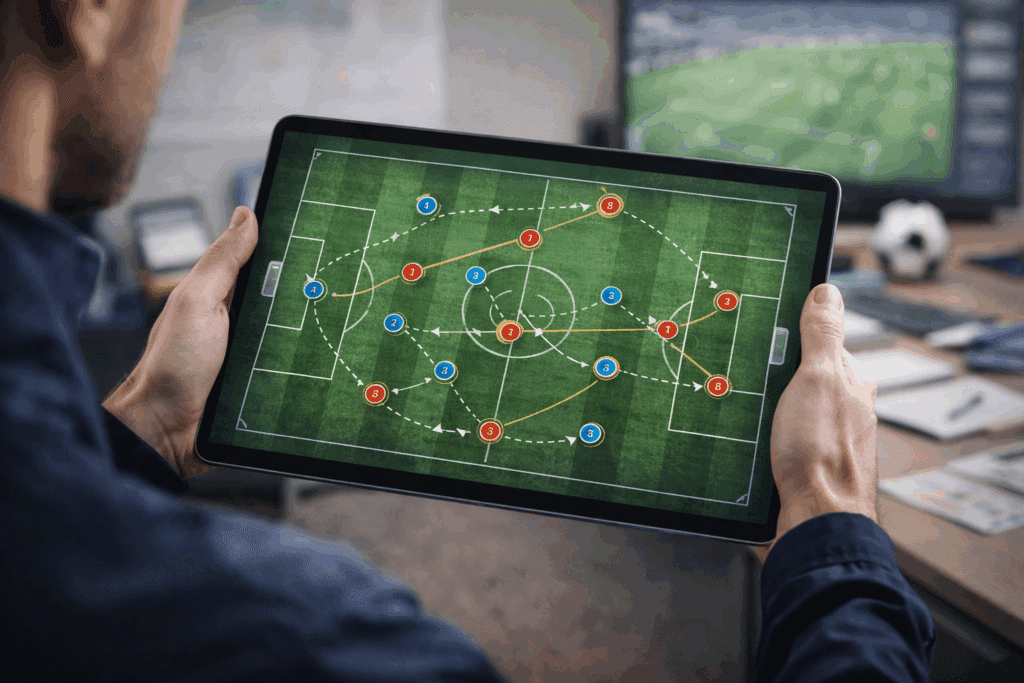
Team cohesion describes how closely or loosely a team stands together as a unit.
Simply put: a compact team controls the distances between players — both horizontally and vertically. Horizontal compactness describes how wide or narrow a team is spread across the pitch. Vertical compactness describes the distance between attack, midfield, and defense.
If a team is horizontally compact, it can better protect central spaces and more easily direct the opponent to the sidelines. If it is vertically compact, it reduces the space between the lines. This makes it more difficult to play dangerous passes into intermediate spaces.
This is especially important when defending in a block. A compact team makes the playing field smaller for the opponent. Passing lanes become narrower, outlets between the lines are harder to find, and your own players are closer together to support pressing or counter-pressing actions.
Compactness doesn't mean always standing as close as possible. The key is to control the right spaces according to your own playing style.
A team that defends deep often wants to keep central spaces very tight. A team that presses high needs compactness so that the first line, midfield, and defense can push up together. A team in possession can deliberately widen to stretch the opponent—but still needs enough connection between players to react after losing the ball.
The crucial question therefore isn't just:
„Were we compact?“
But rather:
„Were we compact at the right moments, in the right spaces, and fitting our game plan?“
Why compactness is so important
Football is a game of space. Compactness is important because it helps a team control those spaces collectively.
When a team is compact, they can close off central passing lanes, reduce the space between the lines, better support pressing actions, protect dangerous zones, and transition to counter-pressing more quickly. The players are closer together, allowing them to support each other more rapidly.
When a team isn't compact, problems arise quickly. The opponent can become open between the lines. The midfield loses touch with the defense. Pressing becomes easier to overcome. Second balls are harder to win. Center-backs have to defend larger spaces, and full-backs often find themselves in isolated situations.
This is why compactness is not just a defensive issue. It affects pressing, counter-pressing, residual defense, build-up play, and transitions.
Here's an example: A team loses possession while both full-backs are positioned high up the pitch. If the midfield is too spread out and the defensive line is too deep at the same time, the team can hardly counterpress effectively. The problem then isn't just that players aren't tracking back quickly enough. The problem might have already occurred: the team was too stretched before losing the ball.
Compactness helps trainers recognize such structural problems more clearly.
How Coaches Can Interpret Compactness

Compactness data becomes valuable when combined with real game situations.
Against the ball, compactness helps to identify whether the team has stayed connected while defending. Were the distances between the lines controlled? Did the midfield protect the space in front of the defense? Did the first line apply pressure while the rest of the team stayed too deep?
In the press, compactness shows whether the team has acted together. Pressing only works if the first line is supported by the players behind them. If a striker presses alone, the opponent can often easily bypass the pressure. If the midfield pushes forward but the defense stays too deep, the team is pulled apart vertically.
Compactness is particularly important during transition moments. After losing possession, a compact team can initiate gegenpressing more quickly because the players are close enough to apply pressure, close passing lanes, and stop the counter-attack. A team that is too stretched may be able to react and run, but the distances are often too great to truly control the next action.
Compactness can also be relevant when in possession of the ball. Teams often spread out wider and deeper with the ball to create passing options. This is not automatically bad. It becomes problematic if the team becomes too disconnected as a result and loses access after losing possession.
The best interpretation therefore arises from the connection of data and video. The data shows that a team was stretched. The video explains why. Perhaps the opponent shifted the play. Perhaps the defensive line dropped too early. Perhaps the midfield didn't push up after a pressing trigger. Perhaps the score changed the team's behavior.
Compactness should therefore never be used as an isolated evaluation. It is a starting point for better tactical questions.
Compactness is not automatically „the more, the better.“
A common mistake is to understand compactness as a simple good-or-bad number.
That's not how it works.
A team can be compact and still defend poorly if they are compact in the wrong space or don't apply pressure on the ball. At the same time, a team can consciously be less compact if they want to open up the field when in possession and stretch the opponent.
A team defending a lead might play closer together and close down central spaces. A team chasing a deficit might take more risks and become more stretched as a result. A team pressing high can be very compact near the ball, but simultaneously offer space behind the defensive line.
That's why compactness always needs context:
- What game phase were we in?
- What was the score?
- Did we press, defend deep, build up, or transition?
- Did the opponent force us into a specific move?
- Did our structure fit our game plan?
The goal is not to create the smallest possible team shape. The goal is to control the important spaces better.
Why compactness data is no longer just for professional clubs
In the past, compactness metrics were almost exclusively available in professional football. To measure team structures over an entire game, you needed tracking systems, GPS infrastructure, analysts, and a lot of time.
This created a clear gap. Professional clubs could analyze their team structure based on data, while amateur and semi-professional clubs often relied on manual video analysis, coach intuition, or individual still images.
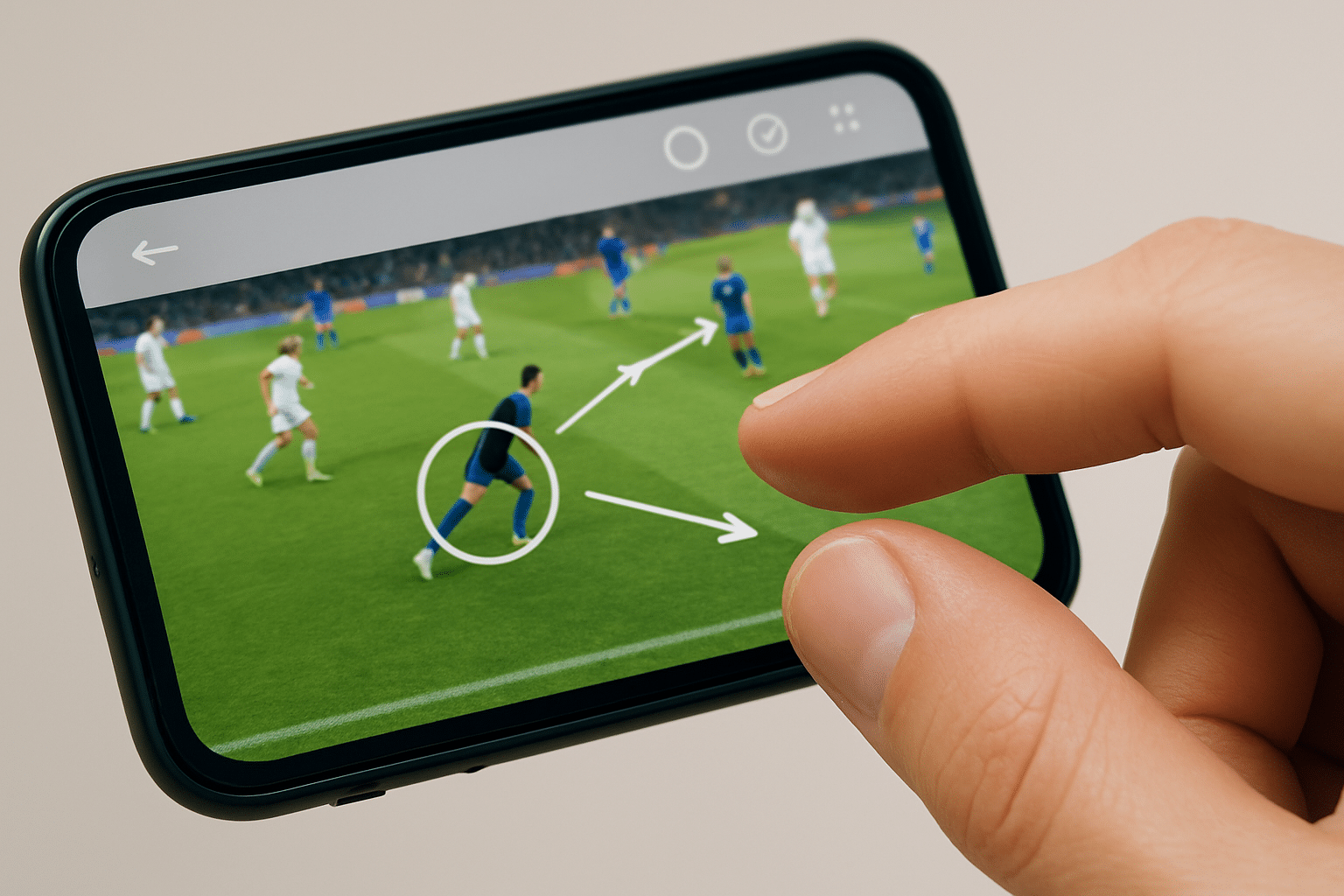
Today, video-based tracking is changing this situation. Clubs no longer need to equip every player with a GPS vest to work with objective performance and team data. With the right system, game video itself can become the basis for analysis.
This is important because compactness isn't just about profit. Every team has spacing issues. Every team has to defend together. Every team has to control transitional moments. And every coach wants players to better understand spacing, timing, and team structure.
The difference is: coaches can support these messages with data today.
Instead of saying:
„We were too open in the second half.“
Can a coach say:
„Our team became noticeably stretched after the 60th minute, especially in defensive transitions. Let's look at three scenes where the midfield and defense were no longer connected.“
This is more concrete, understandable, and easier for players to implement.
How zone14 STATS helps in analyzing compactness
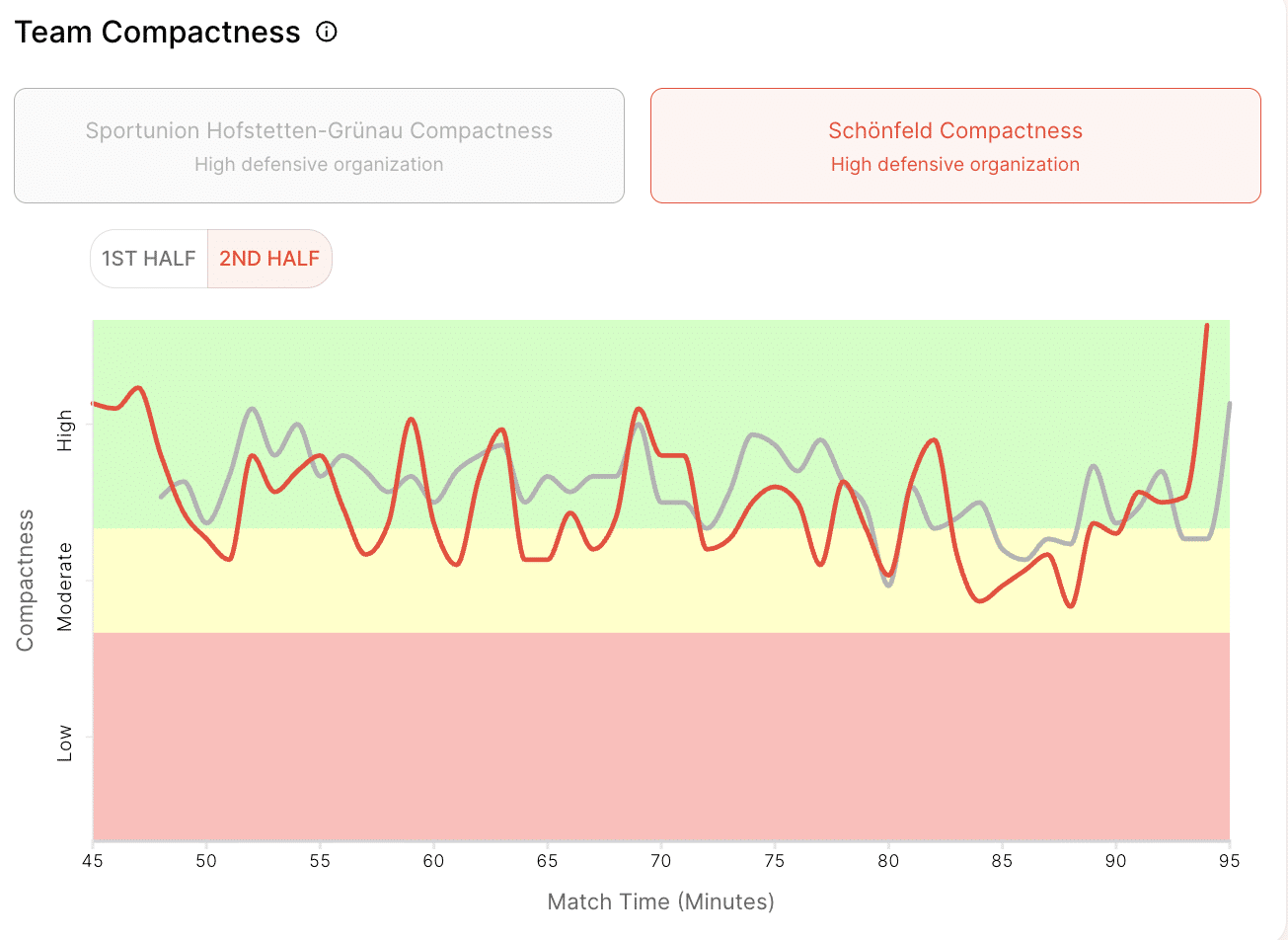
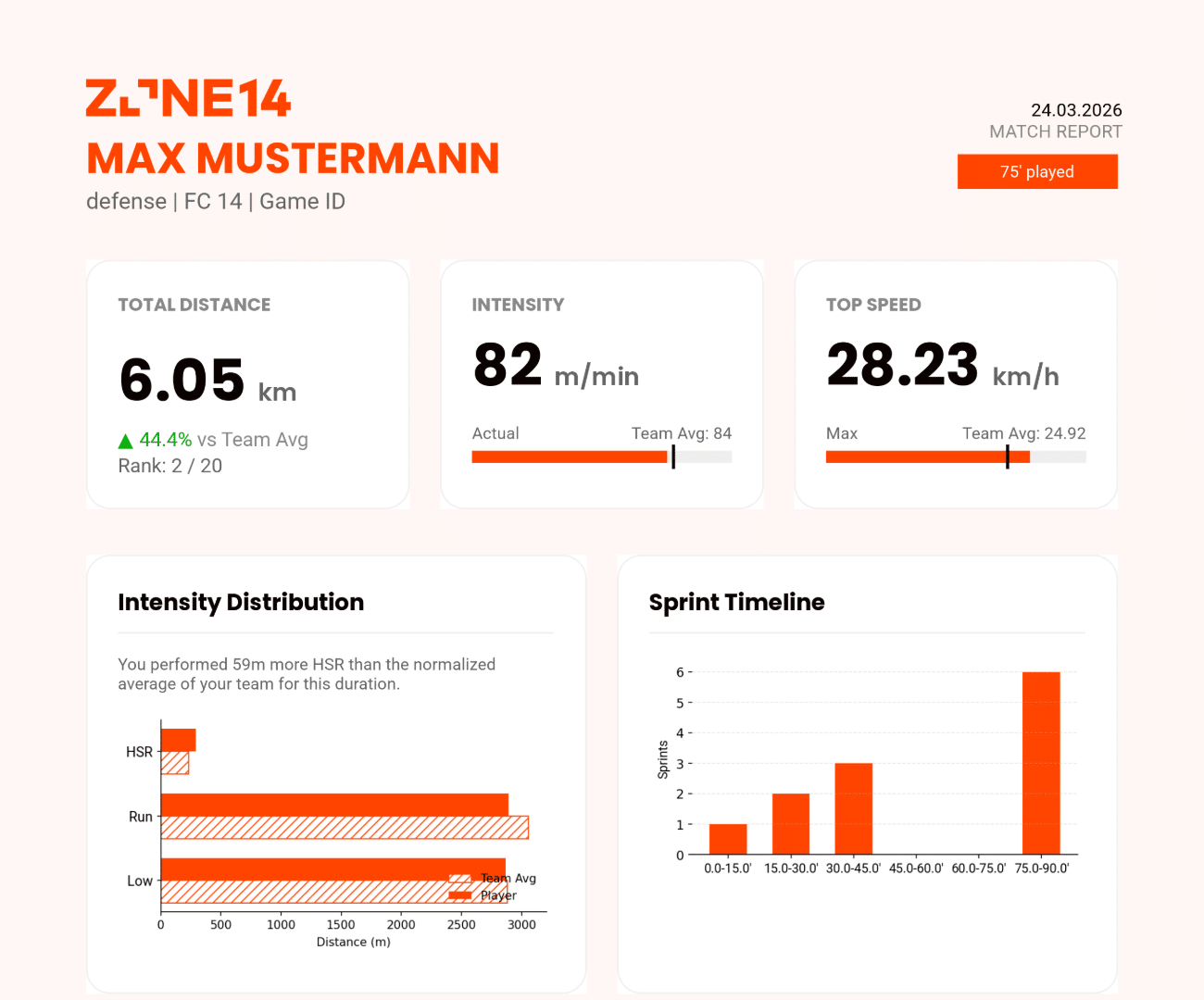
zone14 STATS delivers football performance data directly from game video—without GPS vests. This includes, among other things, distances, sprints, sprint maps, Heatmaps, Team Cohesion, Team Dominance, and Individual Player Reports.
For compactness analysis, this means coaches can view team structure as part of the overall game. Instead of relying solely on subjective impressions, objective team metrics help understand when the squad was connected and when it became too stretched.
With zone14 STATS, coaches can ask better questions:
- Did we stay compact in defense?
- Did our pressing actions have enough support?
- Were the spaces between the lines checked?
- Were we too stretched after turnovers?
- Did fatigue affect our structure later in the game?
- Did our team structure fit our game schedule?
Because STATS are based on gameplay footage, compactness can always be considered within the context of the actual game. This is crucial. The metric shows what happened to the team structure. The video helps understand why it happened.
This way, compactness also becomes easier for players to understand. Coaches can not only generally say that the team was too open, but can show specific scenes: moments when the team was well connected, and moments when gaps appeared.
How coaches can use compactness in coaching
Compactness analysis should not end with the match report. It should be incorporated into the training week.
If a team is stretched too vertically, the coach can work on the distances between defense, midfield, and attack. If the team becomes too wide when defending, the focus can be on horizontal shifting and protecting central spaces. If compactness is lost before turnovers, positional play during counter-attacks and counter-pressing can be trained.
The most effective combination is data, video, and training.
First, the pattern is recognized. Then, players are shown relevant clips. After that, an exercise is chosen in training that specifically addresses this problem.
For example: The team presses high, but the defensive line doesn't push up. Compactness data and video clips can show why the opponent was able to bypass the press. In training, the focus can then be on pressing triggers, pushing up, and distances behind the first pressing line.
This is how compactness goes from an abstract concept to a concrete coaching topic.
Analyze team compactness without GPS vests
zone14 STATS makes modern football metrics directly accessible from game video. Coaches can analyze team compactness, team dominance, Heatmaps, analyze Sprint Maps, Distances, Sprints, and individual player reports — without players needing to wear GPS vests.
This is especially helpful for clubs that want to leverage professional insights without introducing additional hardware or complicated workflows.
Would you like to see what video-based football data looks like in practice?
Request a zone14 sample player report and see how performance data can contribute to clearer coaching conversations.
Conclusion
Team compactness is one of the most important concepts in soccer because it shows how well a team controls space together.
A compact team is harder to play against, more connected in pressing, and usually better prepared for transition moments. At the same time, compactness should never be considered in isolation. It only becomes valuable when interpreted in the context of the game.
For coaches, it’s not just about knowing if the team was compact. It’s crucial to understand when compactness was lost, why it happened, how it affected the game, and what lessons can be drawn for training.
With zone14 STATS, compactness data is no longer exclusive to professional soccer. Coaches can use their own game footage to get objective team metrics, improve tactical analysis, and guide training work more precisely.
Ready to transform your gameplay video into tactical and performance insights?
Discover zone14 STATS and analyze team compactness, team dominance, heatmaps, sprint maps, and player reports—all without GPS vests.
More related content from zone14