Innovation in football through artificial intelligence
How artificial intelligence, data analytics and tracking are changing football: from heatmaps and running data to scouting and automated video analysis.

Contents12 sections
- Introduction
- Basics of artificial intelligence
- Tactical insights from data visualisation and heatmaps
- Player tracking and running statistics
- AI-driven video technology
- Predictive models and real-time analysis
- Scouting and talent identification
- Individual training programmes and injury prevention
- Data analytics at major tournaments
- The human element remains decisive
- How zone14 uses AI
- Conclusion: football’s data-driven future
- Introduction
- Basics of artificial intelligence
- Tactical insights from data visualisation and heatmaps
- Player tracking and running statistics
- AI-driven video technology
- Predictive models and real-time analysis
- Scouting and talent identification
- Individual training programmes and injury prevention
- Data analytics at major tournaments
- The human element remains decisive
- How zone14 uses AI
- Conclusion: football’s data-driven future
Introduction
Football, known across the globe as “the beautiful game”, has undergone a remarkable transformation in recent years. Artificial intelligence (AI), detailed data analytics and sophisticated tracking technologies have redefined the football landscape, providing coaches and players with insights that were previously unimaginable. Teams now routinely optimise player performance, strategic decision-making and injury prevention through data-driven methods. In this article, we look at where AI is used in football today, how it changes training and match analysis, and how we use it at zone14.
Basics of artificial intelligence
Artificial intelligence refers to systems or machines that mimic human intelligence to perform tasks and learn from experience. AI applications range from simple processes such as speech recognition to more complex functions such as decision-making in uncertain environments. They are based on algorithms and models that analyse data, recognise patterns and make predictions or decisions on this basis.
In sport, the use of AI is steadily increasing, because it offers enormous advantages in performance analysis, strategy development and fan engagement. Data can be evaluated more precisely and quickly, which noticeably improves training and competition strategies.
Tactical insights from data visualisation and heatmaps
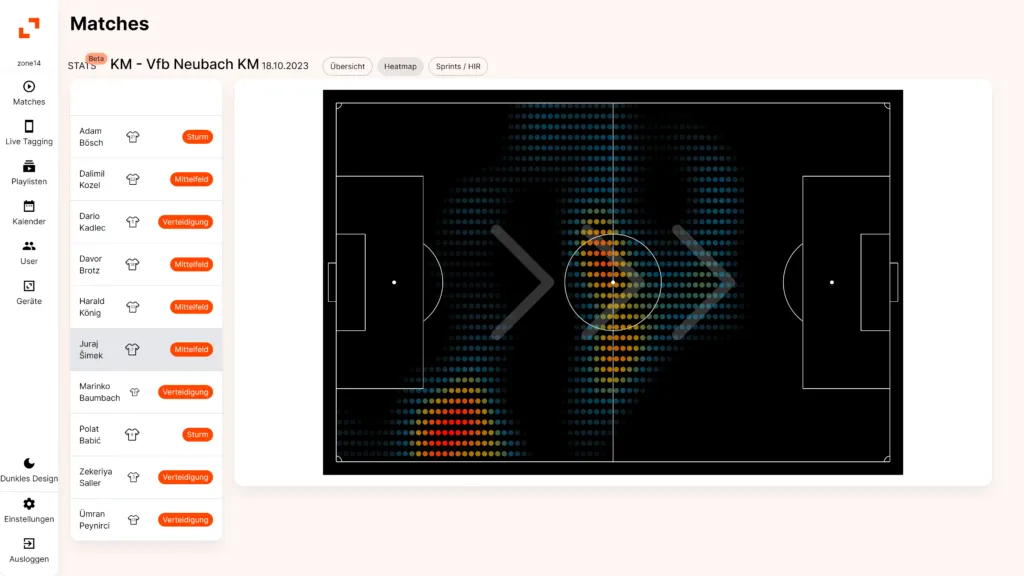 zone14 STATS
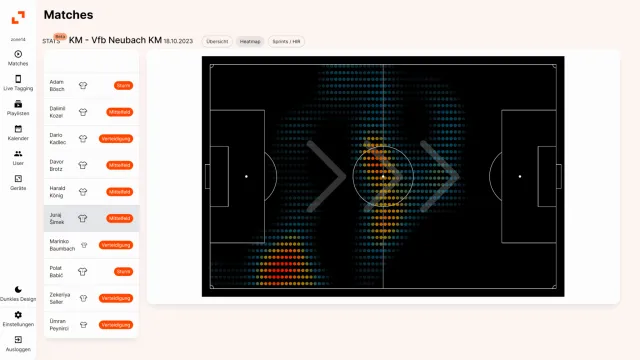
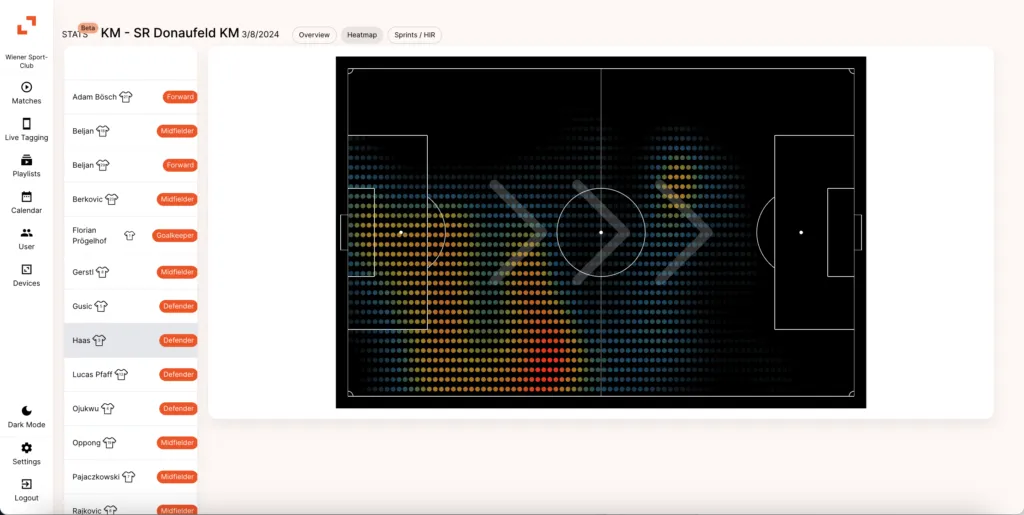
Data visualisation techniques such as heatmaps are a key aspect of tactical analysis in football. Heatmaps visually represent player positions, movements or interactions with the ball, translating complex data sets into easily actionable insights. Coaches rely on heatmaps to identify positional trends, highlight important zones in attacking play or reveal potential tactical vulnerabilities.
Our detailed exploration of heatmaps demonstrates their value in evaluating attacking strategies. By assessing whether a team consistently attacks through certain flanks, coaches can adjust tactics accordingly and make their attack more versatile. Similarly, defensive heatmaps identify frequent points of opposition breakthroughs, informing tactical adjustments to strengthen the defensive structure.
AI tools for tactical match analysis go one step further: they search the footage, recognise the opponent’s tactical patterns, moves and formations, and reveal weaknesses that coaches can respond to with targeted instructions. Combined with AI, heatmaps also enable predictive analysis, taking tactical planning from reactive to proactive. Thanks to tracking, these visualisations are now available to teams that work with video footage alone.
Player tracking and running statistics
Running statistics have become essential in football analytics, offering objective assessments of a player’s physical contribution on the pitch. Metrics such as total distance covered, high-intensity sprints, acceleration and recovery times provide deep insights into players’ fitness levels and tactical roles. Running has become an increasingly important aspect of the modern game, with top coaches demanding high intensity with and without the ball.
Advanced algorithms in automated player tracking capture the movements of every player on the pitch without the need for physical sensors. Midfielders, who generally cover more ground than other positions, require tailored fitness regimes, while forwards and wingers typically focus on explosive movements and speed. Teams can use running data to manage workloads and significantly reduce injury risks.
 Read also · Match dataImproving Performance Through Running Statistics in Football
Advanced football analytics software integrates these running statistics into dashboards or visualisations, giving coaches immediate visibility into player conditioning and enabling timely decisions about rest, recovery or training intensity.
AI-driven video technology
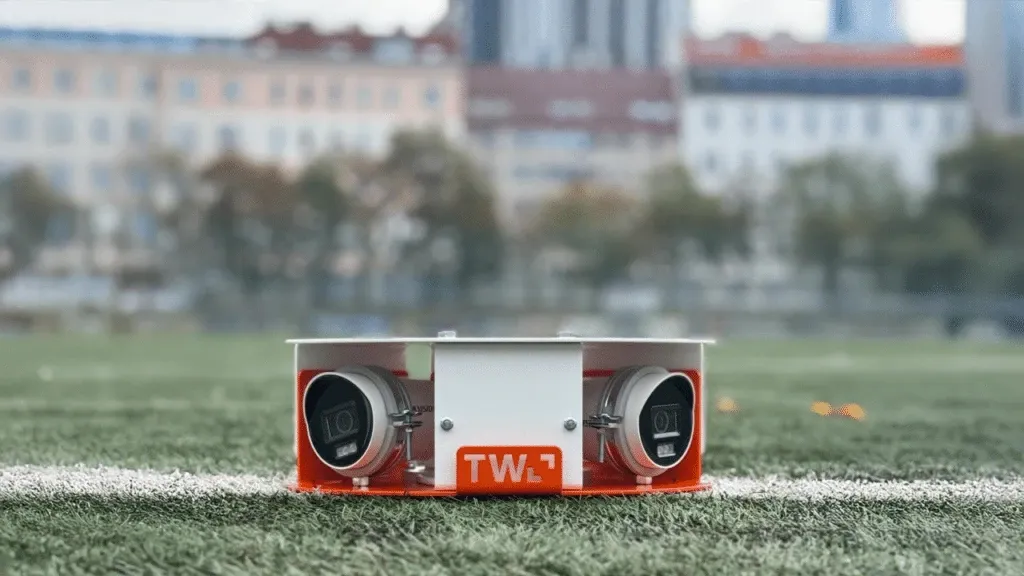 zone14 TWO A.I. football camera system
Video analysis has moved away from manual recording to advanced AI-powered camera systems such as zone14 TWO, which record every match automatically. As technology advances, intelligent algorithms can now also identify and categorise key moments such as goals and set pieces automatically, saving coaches even more time when reviewing footage. Whereas fully analysing a match used to take hours, AI now makes it possible in less than 30 minutes.
AI-powered football cameras not only support coaches in analysis, they can also make live streaming possible for clubs that would not normally have the resources. Every match can be broadcast on platforms such as zone14 TV: fans who can’t make it to the stadium can still be there, and highlights, replays and exclusive content can be put together to strengthen fan loyalty.
Predictive models and real-time analysis
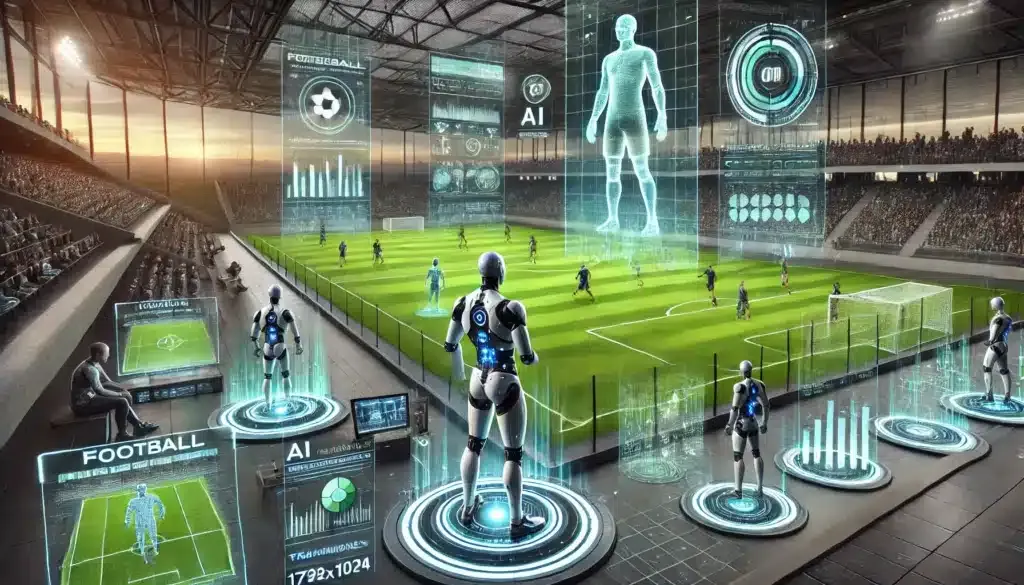
Artificial intelligence in football extends far beyond video analysis. AI-driven predictive models can process vast amounts of historical and real-time data to forecast match outcomes, anticipate player performances and uncover the opponent’s tactics. For example, Liverpool FC has been working with Google DeepMind on an AI model that predicts corner kick outcomes and advises coaches on the best tactical strategies for these situations.
The availability of real-time interactive analytics during a live match is also changing the way tactical decisions are made. Coaches and analysts can access data that is updated during the game and make immediate strategic adjustments. This ability to react to dynamic developments can significantly influence the outcome of a match.
Scouting and talent identification
AI has also significantly transformed scouting. Traditional subjective evaluations are increasingly complemented by AI-powered analytics that objectively assess player performance across multiple competitions and seasons. AI analyses large amounts of match data and performance statistics to identify potential candidates. This makes scouting faster, more cost-effective and more far-reaching: scouts can discover talent in lesser-known regions and leagues, and the data-driven approach reduces bias in recruitment.
Individual training programmes and injury prevention
Individual training programmes based on detailed data analysis are designed around the needs of each player. AI systems evaluate performance data and physical conditions, taking into account playing position, physical condition and previous injuries, to maximise performance and minimise the risk of injury.
By analysing player movements and match loads, potential risk factors for injuries can be identified early. Predictive models and real-time data processing enable medical teams to recognise warning signs before serious injuries occur, and to tailor preventive measures to each athlete’s limits.
Optimising performance with football GPS vests
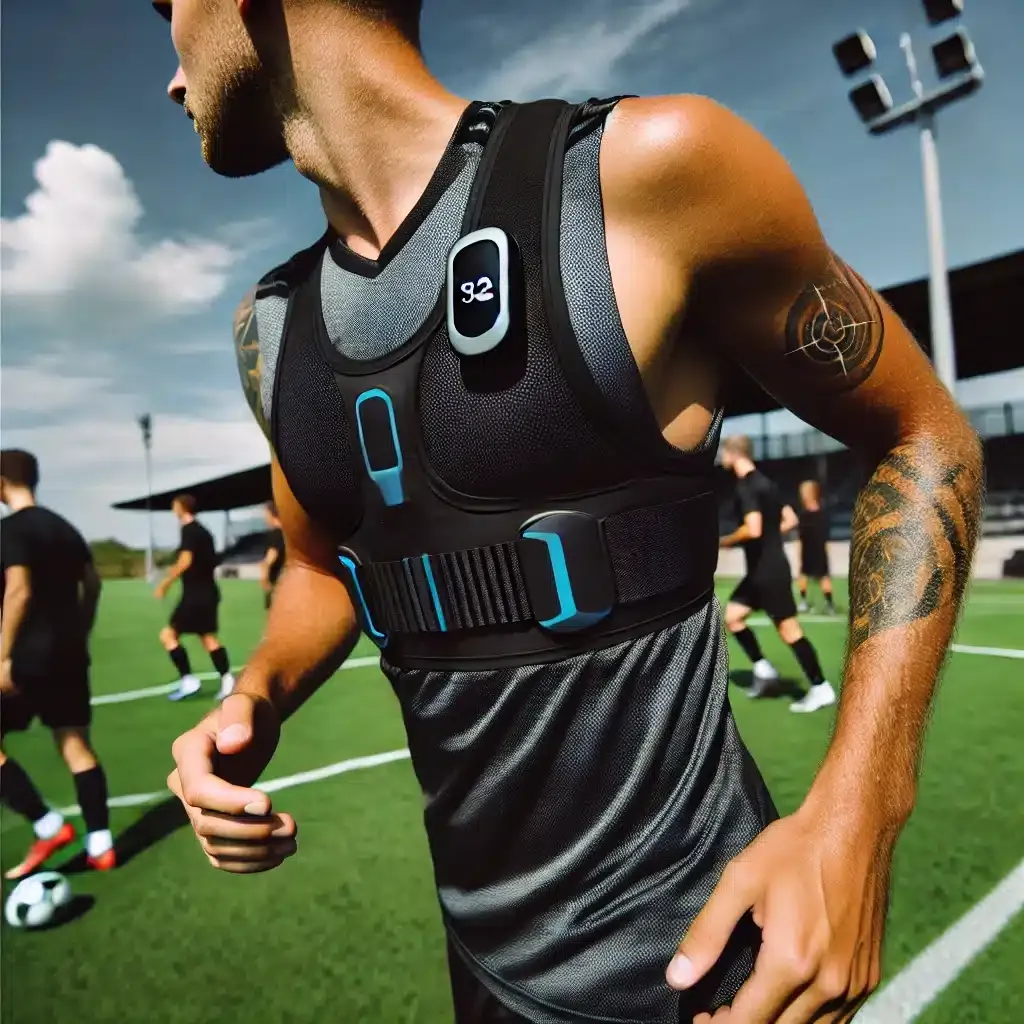
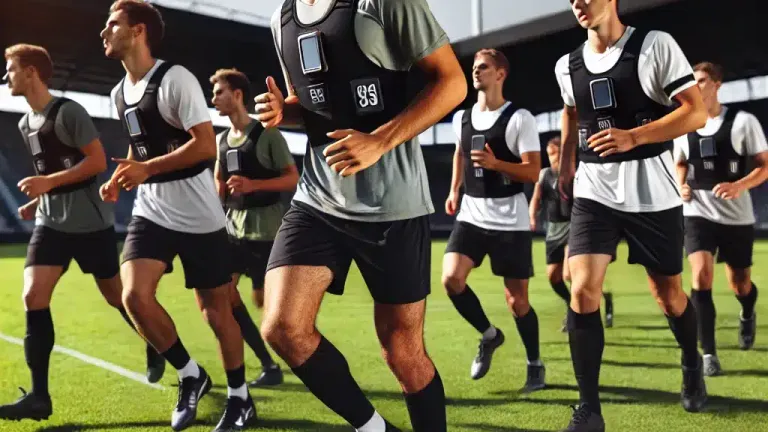
GPS technology has drastically reshaped player monitoring in professional football. You may have noticed professional footballers wearing vests that contain GPS tracking devices. GPS vests capture critical real-time data such as player movements, speed, acceleration and physiological metrics, including heart rate. Coaches and medical staff use these insights to optimise training loads, manage player fatigue and significantly reduce injury risks.
GPS technology is now used not just in professional teams but also in semi-professional and grassroots football. At the same time, more and more teams are using AI camera tracking solutions that deliver the same insights without any vests.
The expanding role of wearable technology
Beyond GPS vests, wearable technology includes a growing range of devices such as heart rate monitors, accelerometers and gyroscopes. They provide physiological and biomechanical data that are critical for player safety, performance optimisation and injury prevention. Our analysis highlights innovations such as smart insoles that measure foot pressure distribution and provide valuable data for preventing injuries and improving biomechanical efficiency.
Data analytics at major tournaments

Data analytics have become central to match preparation at major tournaments such as the UEFA European Championship and the FIFA World Cup. Where teams once relied on basic statistics, they now use advanced analytics to understand their opponents’ tactics, set-piece routines and individual player tendencies.
In this article we looked at how teams use detailed analytics to anticipate opposition strategies. And the use of AI is not limited to performance analysis: at EURO 2024 in Germany, AI tracking also supported crowd management.
The human element remains decisive
Although analysing data and video is crucial for technical assessment, human qualities such as empathy, emotional intelligence and communication skills remain essential in the coaching team. The insights gained from data must be communicated effectively so that they reach the right people at the right time. This was exactly the topic of the fußballtraining24.de interview with one of our founders, Lukas Grömer.
AI can and should only ever serve as an aid that supports human trainers, but never replaces them.
 Lukas GrömerProduct & Data science
How zone14 uses AI
zone14’s vision is to democratise football through artificial intelligence: every club, regardless of size or budget, should have access to the analysis tools that until now were mainly used in the top leagues.
An AI-based analysis platform
Our solution for football clubs consists of a specially developed 180-degree football camera and associated software that does not require any additional hardware such as GPS trackers. The strength of our AI lies in recognising individual players during the game and following their actions in detail: our ‘Follow-Cam’ technology captures the whole game, and REPLAY turns it into heatmaps and detailed player analyses after every match.
zone14 STATS: player tracking without GPS
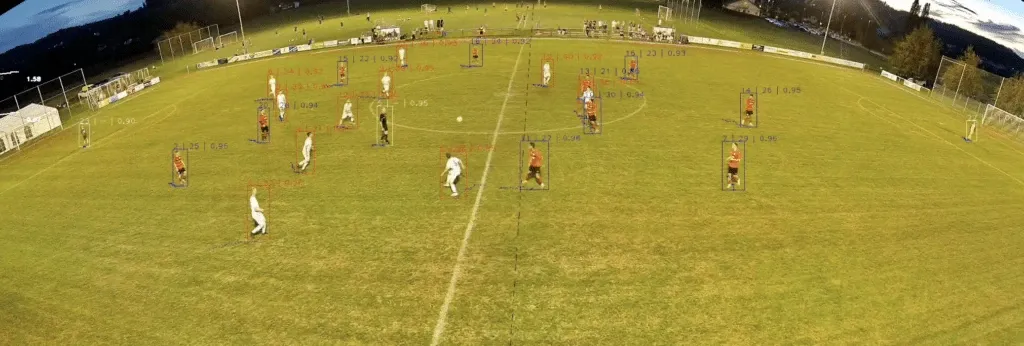
With zone14 STATS, we offer accurate player tracking and analytics without traditional GPS hardware. Using AI and computer vision, it tracks detailed player movements, positional data and tactical formations exclusively through the zone14 TWO camera system. This simplifies data collection, spares players any hardware and makes setup much easier. Coaches and analysts get an intuitive interface with instant, actionable insights, making elite-level performance tracking accessible and affordable for clubs at every level, from grassroots teams to professional clubs.
Learn more about zone14 STATS!
Example: Wiener Sportclub
One concrete example of our technology in use is Wiener Sportclub. There, our AI analyses all youth matches and helps the coaches support the development of young talent. Time and financial resources are used more efficiently while the quality of training and match analyses increases.
What comes next
We are continuously developing our algorithms to recognise even more specific events during a match. In future, our AI is to create individual training plans based on the collected data to improve players’ fitness and performance in a targeted way. We are also experimenting with voice processing to support communication between coaches and players through automated, data-based feedback.
Conclusion: football’s data-driven future
The integration of AI, advanced data analytics and sophisticated tracking technologies has profoundly reshaped modern football. From heatmaps and running statistics to scouting, predictive models and player tracking without GPS, these advances have revolutionised how the game is analysed, coached and played.
As these technologies continue to evolve, football analytics promises even deeper insights for team performance, tactics, player welfare and recruitment. What matters is that AI is used responsibly and supports coaches instead of replacing them. Teams embracing this data-driven approach will help shape the future of the beautiful game. Learn more about what the future of video analysis in football could look like.
zone14 STATSStatistics for football without a GPS trackerDiscover now