Contents
The 5 Best Cameras for Football Video Analysis 2026 | zone14, Veo, Hudl, XbotGo & Pixellot
- Julius Oppel
- Featured, Video Analysis
Finding the right camera for football video analysis will no longer be purely a technical question in 2026. It's not just about which system offers the highest resolution or is easiest to transport. For many clubs, the real question is much more strategic:
Do we want a mobile tool for individual teams — or reliable infrastructure for the entire club?
The market now offers very different solutions: permanently installed camera systems, portable AI cameras, streaming solutions for leagues, and platforms for professional video analysis. Each option has its strengths. The crucial factor is which solution suits your athletic goals, your club structure, and your daily routine.
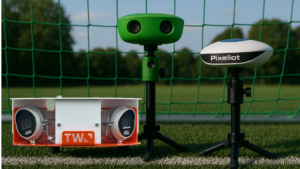
In this comparison, we present five relevant camera systems for football video analysis in 2026: zone14, Hudl Focus, Veo Cam 3, XbotGo Falcon / Chameleon and Pixellot Air / Show.
Which system is the right fit for you?
Before you decide on a camera, you should answer three simple questions:
- Who will be the main user of the camera?
A single team, even away from home? Or the entire club at their own home stadium? - What is your primary goal?
Do you primarily want to capture important game scenes? Or do you need a deeper tactical analysis of the entire team? - What is your biggest everyday challenge?
A tight budget? Or too little time and staff on game day?
If you want to remain flexible and record individual games, portable cameras like Veo or XbotGo can be a good starting point. However, if you want to relieve multiple teams in the long term, reliably record home games, and establish video analysis throughout the club, a permanently installed system like zone14 is usually the more sustainable solution.
1. zone14
The Foundation for the Entire Club
zone14 should be understood not as a single camera, but as a complete infrastructure for modern football clubs. The system was developed to solve two of the biggest problems in club football: lack of time on match day and lack of objective data for coaching teams.
Camera and system
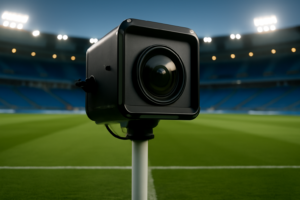
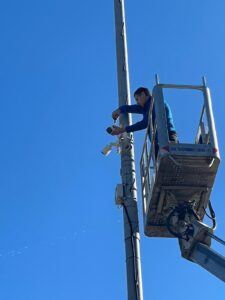
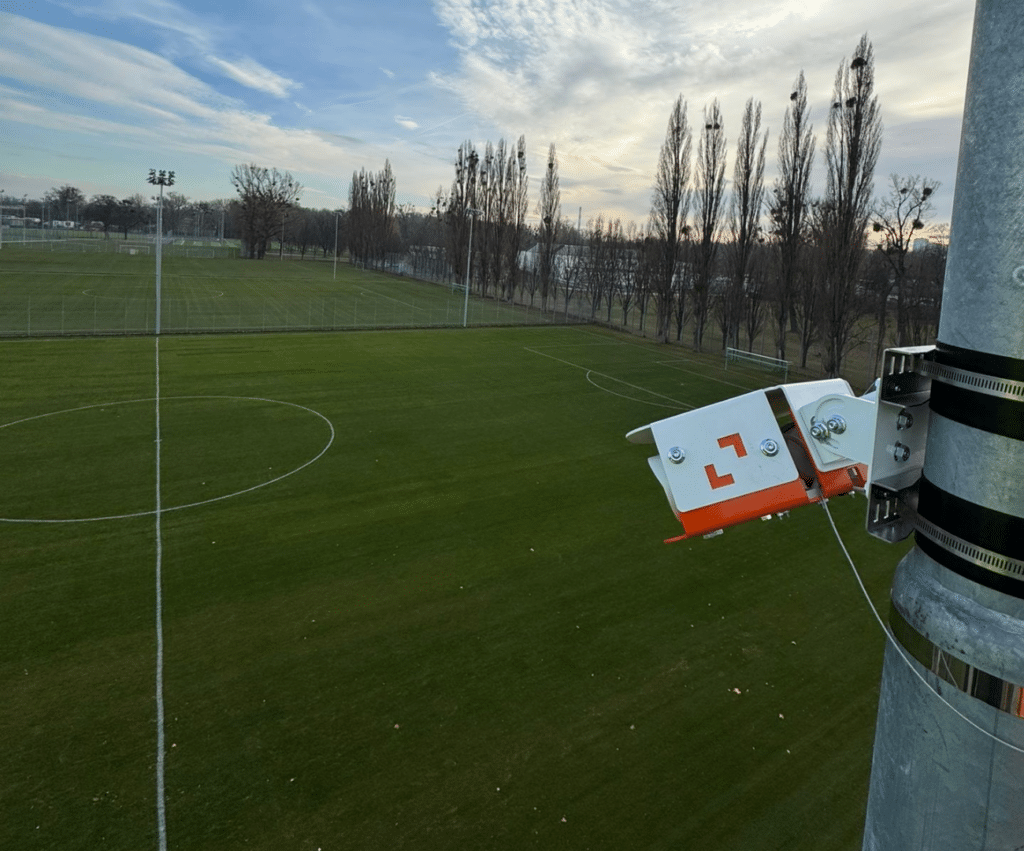
With zone14 TWO A permanently installed camera system will be mounted at the home stadium, for example on a floodlight mast or a suitable elevated position. The camera captures the field from a wide 180-degree perspective and automatically records games.
The big difference compared to portable systems lies in everyday use: the camera doesn't have to be set up, charged, transported, or started before every game. After installation, it becomes part of the club's infrastructure.
System type
Permanently installed camera system for automatic game recording, video analysis, live streaming, and performance data.
Analysis perspective
A high, broad perspective is particularly valuable for tactical analysis. Coaches can recognize not only individual actions but also distances between team segments, pressing behavior, shifting, rear defense, and spatial distribution.
For the analysis of an entire team, this perspective is significantly more informative than a low sideline view.
Main advantages
Automation and Relief
zone14 largely removes the recurring, matchday-related effort from the process. No one has to set up a tripod, check batteries, inspect memory cards, or start the technology ten minutes before kickoff. This relieves coaches, staff, and volunteers.
2. Tactical Perspective for Real Game Analysis
The elevated 180-degree view is particularly suitable for coaches who want to see more than just ball actions. Team spacing, build-up play, pressing heights, and movement patterns become much clearer.
3. Integrated Video Analysis with REPLAY
With zone14 REPLAY, coaches can cut, mark, tag, annotate, and share clips with players. This turns a pure recording into a true coaching workflow.
4. Performance data without GPS vests with STATS
zone14 STATS generates performance and tactical data from game video, such as running distances, sprints, heatmaps, sprint maps, team compactness, and player reports—without GPS vests or additional sensors. This makes objective data accessible even for clubs that do not want to manage wearables.
5. Livestreaming and Added Value for Associations
With zone14 LIVE, clubs can stream games, involve sponsors, and increase their visibility. This makes the camera relevant not only for coaches but also for fans, parents, sponsors, and the entire club.
The reality in the club
zone14 is a strategic investment in your own home stadium. It's not a camera that you quickly pack into a suitcase and take to an away game. Instead, it's a permanent solution that can support multiple teams week after week.
For clubs with their own facilities, this is precisely the decisive advantage: the camera is not dependent on a single person, a charged battery, or a correctly set-up tripod. It becomes part of the sports infrastructure.
Conclusion
zone14 is the best choice for clubs that want to reliably record their home games, relieve coaches, and establish video analysis throughout the club in the long term. The system is particularly strong for clubs that not only want to collect videos but also derive coaching scenes, performance data, livestreams, and genuine sporting development from them.
In short: zone14 is not the most flexible away camera. It is the most complete solution for clubs that want to use video analysis professionally and permanently.
Check in under 30 seconds if the zone14 camera fits your club.
2. Hudl Focus
The Choice for Data-Driven Performance Centers
Hudl is one of the best-known providers in the field of sports video, analysis, and coaching software. With Hudl Focus, the company offers automated camera systems that are closely integrated with the Hudl ecosystem. Hudl describes Focus as an AI sports camera that automatically records, follows the game, and provides content for analysis and streaming.
Camera and system
Hudl Focus is primarily of interest to clubs, schools, academies, and performance centers that are already working with Hudl or want to integrate their analysis strongly into this platform. Hudl Focus Outdoor is described as a fully automatic outdoor camera system that can automatically record, upload, and stream planned events.
System type
Mostly permanently installed, with portable options depending on the Hudl product and use case.
Analysis perspective
High-angle side view, suitable for game analysis, coaching, and integration into existing Hudl workflows.
Main advantages
Strong ecosystem
Hudl is particularly strong when video, analysis, sharing, scouting, and team organization are already handled through Hudl.
2. Automated Recording
Hudl Focus can automatically record and upload scheduled games. This significantly reduces manual effort.
3. Good solution for professional structures
For academies, schools, performance centers, and clubs with their own analysis department, Hudl can be a very powerful solution.
The reality in the club
Hudl is a powerful system, but not every club needs the full scope. For smaller European amateur clubs, the Hudl ecosystem can seem larger and more complex than everyday needs actually require.
If the main goal is: „We want to automatically record our home games, analyze them easily, and quickly relieve coaches in the club,“ a specialized club solution like zone14 might be more suitable.
Conclusion
Hudl Focus is a very good choice for clubs and academies that already work deeply within the Hudl ecosystem or are looking for a comprehensive analysis and scouting platform. For amateur clubs that primarily need a clear, simple, and club-wide video analysis infrastructure, zone14 might be the more practical solution.
3. Veo Cam 3
The Market Leader in Portability
Veo is one of the best-known names in the field of mobile sports cameras. The Veo Cam 3 is designed to automatically record, analyze, and share games. Veo itself positions the camera as an AI-powered sports camera for teams of all skill levels.
Camera and system
The Veo Cam 3 is a portable camera that is set up on a tripod. It's particularly suitable for teams that want to record their games in different locations, including away games or on changing fields.
System type
Portable Tripod Camera.
Analysis perspective
The perspective depends heavily on the setup. Usually, the camera is positioned on a tripod at the sidelines. This is practical and flexible, but not always ideal for deep tactical analysis.
Individual actions, dribbles, duels, and goals are easily recognizable. It becomes more difficult with distances between lines, pressing structures, or assessing the team's overall form.
Main advantages
1. Maximum mobility
Veo can be taken to home and away games. This is a big advantage for individual teams.
2. Established Platform
Veo offers tools for viewing, cutting, sharing, and analyzing game highlights.
3. Good starting point for individual teams
Teams looking for a simple way to regularly record games will find a proven solution in Veo.
The reality in the club
Veo's greatest strength is also its greatest operational challenge: the camera is mobile and therefore requires active supervision each time.
Someone has to take them, load them, set them up, position them correctly, and start recording. For a single team, this is often quite manageable. For an entire club with multiple youth and adult teams, this recurring effort can quickly become a burden.
Especially on game day, when coaches are already busy with lineups, warm-ups, opponent analysis, and organization, any additional technical task is noticeable.
Conclusion
The Veo Cam 3 is a strong solution for individual teams, away games, and clubs without a fixed home venue. Those looking for maximum flexibility and accepting manual effort will get an established portable system.
For clubs that primarily want to reliably record their home games without matchday stress, a permanently installed solution like zone14 is usually more sustainable.
4. XbotGo Falcon & XbotGo Chameleon
The budget-friendly entry into AI recording
XbotGo has positioned itself as an accessible alternative in the field of automatic sports recording. Importantly, a product called XbotGo X1 is not the correct designation at the moment. XbotGo officially lists, among other things XbotGo Falcon and XbotGo Chameleon. Falcon is described as a standalone 4K sports camera with integrated AI tracking, while Chameleon is a smartphone-based AI camera system.
Camera and system
XbotGo Falcon is a portable AI sports camera for team sports like soccer, basketball, or hockey. It is designed to automatically follow the game and function without a separate smartphone.
XbotGo Chameleon works differently: It uses a smartphone in combination with an AI tracking system and is aimed at users who want to get into automatic sports recording on a smaller budget.
System type
Portable AI camera or smartphone-based tracking system.
Analysis perspective
Mostly low to medium tripod perspective from the edge of the field. This means similar tactical limitations apply as with other portable cameras.
Main advantages
Attractive entry-level price
XbotGo is particularly interesting for teams, parents, or smaller clubs looking for a more affordable solution for automatic game recording.
2. Simple Operation
The system is designed for quick use and easy control.
3. Flexible use
Because XbotGo is portable, it can be used in various locations.
The reality in the club
XbotGo is practical when price and flexibility are the priority. At the same time, it remains a portable system. It needs to be set up, charged, positioned, and supervised.
This can work well for individual teams or parents who want to record games. However, for clubs that need to regularly analyze multiple teams, a seamless workflow is often missing: automatic home game recording, central video analysis, tactical evaluation, performance data, and live streaming all from one system.
Perspective is also a topic. For highlight videos or simple game recordings, a tripod solution is often sufficient. For analyzing distances, shifting movements, and team compactness, a higher, permanently installed viewpoint is usually more valuable.
Conclusion
XbotGo Falcon and Chameleon are interesting solutions for budget-conscious users, individual teams, and anyone looking for an easy entry into automatic sports recording.
For clubs looking to build a permanent analysis infrastructure, zone14 remains the more complete solution — especially through its combination of automatic recording, REPLAY, LIVE, and STATS.
5. Pixellot Air/Pixellot Show
The automation solution for leagues, associations, and large streaming projects
Pixellot is strong in the area of automated sports production. The systems often target leagues, associations, schools, media platforms, and larger clubs that want to record and stream many games automatically. Pixellot describes its technology as an AI-automated solution for recording, streaming, and analysis across many sports.
Camera and system
Pixellot offers different systems, including portable and permanently installed solutions. Pixellot Air is described as a portable, AI-powered camera for automated sports recording. It can capture the field, follow the game, and provide content for analysis or streaming.
Pixellot Show is more focused on automated production and streaming on a larger scale. Pixellot itself positions Show as an end-to-end solution for AI-automated sports production.
System type
Portable or permanently installed AI camera systems, depending on the product and application area.
Analysis perspective
Wide broadcast perspective, especially suitable for viewers, streaming, and automated production.
Main advantages
Scalability
Pixellot is strong when many games are to be recorded or streamed automatically.
2. Streaming and Production
The systems are particularly interesting for leagues, associations, and larger organizations that want to publish content regularly.
3. Automation
Pixellot reduces the need for camera personnel and can cover large quantities of games.
The reality in the club
Pixellot thinks strongly from the perspective of production, streaming, and distribution. This is a clear advantage for federations, media platforms, and large sports organizations.
However, for individual coaches, the question arises of how quickly and easily concrete coaching scenes can be created from the video material. Depending on the package and setup, the workflow can be more broadcast-oriented than training-oriented.
This doesn't mean Pixellot is unsuitable for coaching. It just means its primary strength lies more in automated production and scaling.
Conclusion
Pixellot is particularly strong for leagues, federations, and larger organizations that want to automatically produce and stream many games. For clubs primarily looking for a simple, coach-friendly analysis infrastructure for their own facility, zone14 is often closer to the daily training and game operation needs.
Permanently installed or portable: What is better?
The most important decision is not the brand, but the system type.
Portable cameras are useful when…
- you want to take on many away games;
- you don't have your own home stadium;
- a single team using the camera;
- Flexibility is more important than automation;
- you don't have a problem with setup, battery, and transport.
Fixed cameras are useful when…
- you regularly record home games;
- several teams in the club should benefit;
- trainers and volunteers are to be relieved of their duties;
- tactical analysis is important;
- Livestreaming and sponsorships are part of your club strategy.;
- you want to build a digital infrastructure in the long term.
For a single team, a portable camera might be sufficient. For a club with multiple teams, the greater added value often comes from a permanently installed system.
More than the purchase price: The true effort in club everyday life
When comparing cameras, people often only look at the price. That's understandable, but it's a shortsighted approach.
A cheap or portable camera might seem attractive at first glance. However, in everyday use, this leads to additional effort:
- Who's bringing the camera?
- Who is charging the battery?
- Who is setting up the tripod?
- Who checks the internet connection?
- Who is starting the recording?
- What happens if the person responsible is sick?
- How are videos organized, analyzed, and shared?
These questions are crucial. Because a camera only provides real added value when it is used reliably.
For permanently installed systems, the greatest advantage lies not only in image quality but in repeatability. If every home game is automatically recorded, a constant analysis process is created. Coaches don't have to reorganize every time but can concentrate on the athletic work.
More than the purchase price: The true effort in club everyday life
The best camera depends on your goal.
If you're looking for a camera for a single team and are often on the go, a portable solution like Veo or XbotGo makes sense.
If you operate a large organization, league, or streaming platform, Pixellot can be a strong solution.
If you're already working deep within the Hudl ecosystem, Hudl Focus is a no-brainer.
But if you are looking for a solution that will relieve your club in the long term, automatically record home games, simplify video analysis, enable live streaming, and additionally generate performance data from the game video, then zone14 is the most complete choice.
FAQ: Soccer Cameras for Video Analysis
What is the best camera for football video analysis 2026?
The best camera depends on the intended use. For individual teams, portable systems like Veo or XbotGo are interesting. For clubs with their own facilities, a permanently installed solution like zone14 is often stronger because it combines automatic recording, video analysis, live streaming, and performance data.
What is the best alternative to Veo?
If you are looking for a portable camera, XbotGo or Pixellot Air can be alternatives. If you are looking for a long-term club solution for home games, tactical analysis, and automatic recording, zone14 is a stronger alternative.
Is a permanently installed football camera better than a portable camera?
For individual teams and away games, a portable camera is often more practical. For clubs that regularly record home games and want to support multiple teams, a permanently installed camera is usually more reliable and efficient.
Can a soccer camera generate performance data?
Yes, some systems go beyond pure video recording. zone14 STATS generates performance and tactical data from the game video, such as running distances, sprints, heatmaps, sprint maps, team compactness, and player reports.
What camera is suitable for amateur clubs?
For a single team, a portable camera might suffice. For an entire amateur club with its own home ground, a permanently installed system is often more practical because it permanently relieves coaches and volunteers.
Conclusion: Your strategic decision for 2026
The choice of the right football camera is a directional decision.
Portable cameras are flexible, quick to deploy, and particularly interesting for individual teams. Permanently installed systems are less mobile, but more reliable, automated, and better suited for the development of an entire club.
The crucial question is therefore:
Do you want to record games occasionally, or do you want to permanently integrate video analysis into your club's structure?
If you primarily want to film individual games flexibly, Veo, XbotGo, or Pixellot Air are good options. If you are already working within the Hudl ecosystem, Hudl Focus might be the right choice.
However, if you're looking for a solution that automatically records home games, relieves coaches, enables tactical analysis, supports live streaming, and even provides performance data without GPS vests with zone14 STATS, then zone14 is the strongest solution for ambitious clubs.
With zone14 TWO, your home venue becomes an analysis platform—for coaches, players, fans, and the entire club.
Record every game scene in a perfect 180° view
More related content from zone14